Josna Rege

Archive for the ‘Stories’ Category

663. Toots and the Maytals. . .

In Britain, culture, Inter/Transnational, memories, Music, people, singing, Stories on June 1, 2026 at 9:35 pm


. . .without Toots or the Maytals. 

While in London this summer Andrew and I have been looking out for the chance to hear bands we might be familiar with; but to be honest, there haven’t been many whose names we even recognize. Just across the road from where we’re staying is the home base of the duo, The Paisley Daze, whom we wouldn’t even have known was a band except that on occasional sunny weekends they have been coming out on their balcony and giving an impromptu performance to anyone who cares to gather on the grassy bank across the street. Later this month we have tickets to hear Pauline Black, leader of the 2-Tone band The Selecter, perform in Margate with original Selecter drummer Charlie ‘H’ Bembridge. We also hope to act on our musician friend Marcia Mello’s advice and take in an open mic night at the Kilburn Arms. But the first show we managed to catch was “Toots and the Maytals Featuring Leba Hibbert” at the Electric Ballroom in Camden Town. 

Now, any of you who are fans will know that, sadly, Frederick Nathaniel ‘Toots’ Hibbert of Toots and the Maytals, that gentle giant of reggae music, was taken from us by Covid back in 2020. Andrew and I got out and played our old vinyl LPs, remembering the many, many times we had sung our way through them over the years, and the two times we had been able to see Toots perform live, most memorably in the late 1970s, when we had the honor of accompanying our late friend Eugene ‘Geno’ Williams to interview him after a show in Harvard Square. So when, even before leaving for London, we came upon the announcement that Toots’ daughter Leba would be in the UK on a Reggae Got Soul Tour, in honor of her father and the 50th anniversary of the release of the album of the same name, we didn’t think twice. 

It turned out that the Electric Ballroom is a storied venue just a short bus ride away from where we have been staying. My cousin Sue warned us to look out for pickpockets and for trip risks on their uneven floors. Looking up the place ahead of time I learned that it was an open floor plan with very few seats we resolved to arrive early so as to be able to grab one of them. Our days of getting as close to the stage as possible and being squashed and pummeled by a wall-to-wall crowd are over. (To be honest, we had never been into that scene.) 

We did get there early and were one of the first few people to get in. We did find a terrific place to sit and stand, in the front and center of the only balcony, overlooking but a little set back from the stage. Robin Catto, a well-known reggae DJ, warmed up the crowd with old favorites, followed by a warm-up band who were just all right. Finally, the top-billed band came onto the stage with a great deal of fanfare, well-deserved but solely on the strength of the lead singer’s relationship to the dear departed singer. She herself was still an unknown. The happy, nostalgic crowd, at least half of them old-timers like us, was willing to cut her all the slack she needed, as long as she and the band performed enough of her father’s hits. And that she did.

“Toots and the Maytals Featuring Leba Hibbert,” Electric Ballroom, 13 May 2026

I thought I had written them all down but can’t find the scrap of paper. Thankfully I found a playlist from another performance on the same tour. Here are the ones I knew, though they were interspersed with a few of Leba Hibbert’s own songs, which I’m afraid pretty much passed me by.  

Six and Seven Books
Never Grow Old
Pressure Drop
Time Tough
Sweet and Dandy
Love is Gonna let Me Down
Reggae Got Soul
Bam Bam
Funky Kingston
You’ve Got A Friend (sung by Leba Hibbert with her father toward the end of his life)
Take Me Home, Country Roads
Louie Louie
54-46 Was My Number
And for the encore:
No More War (this recording from a performance on the 2026 tour)
Monkey Man

(Did they sing “True Love is Hard to Find”? I’m not sure, but just in case, here it is.)

What did I love about the concert? Being at a performance in which more than half of the audience clearly knew the songs and readily sang along, as did I. Seeing the mix of old-timers and curious younger people drawn by the legendary name, Toots and the Maytals. And of course, there was the nostalgia of revisiting the music of our twenties in the city of my birth, where reggae had always had a huge following, where it had been mainstream, not just a niche genre. 

What did I not love as much? Well, despite being his daughter and singing his songs with a good band that included veteran reggae musicians, Leba Hibbert was not her father. The rich, fluid quality of his voice is unmatched and unmatchable. In my opinion the songs were rushed, both in their tempo and in the arc of each one, where it seemed to default too soon to exciting the crowd into a crescendo, chanting key words over and over again and ending with a burst of drumbeats. Sometimes this was fun, but it didn’t allow for the slower numbers to simmer and, in at least one case, it was at odds with both the mood and message of the original. “Time Tough” is about the unaffordable cost of living as it gets higher and higher—something that is still relevant and resonant with a contemporary audience, as in the chorus: 

Time Tough (Time Tough)
Everything is out of sight, so hard
(So hard) so hard (so hard)
Time Tough (Time Tough)
Everything is going higher and higher
(Higher and higher)

Instead, Leba Hibbert attempted to whip the crowd into a frenzy, inciting them to chant “higher and higher” in a completely different sense. It just didn’t feel right.

But let me return to what I loved and the nostalgia factor I mentioned earlier. Two of the songs moved me to tears as I sang along. First, the wedding song, “Sweet and Dandy,” one of two of Toots and the Maytals’ numbers in the soundtrack of the reggae blockbuster movie, The Harder They Come (starring the late great Jimmy Cliff). It had been a favorite of my mother, ever the incurable romantic, and I could just hear her singing with me. The other was “Take Me Home, Country Roads,” Toots and the Maytals’ cover of the John Denver song that I firmly believe is better than the original. 

Almost heaven, West Jamaica. . . 

A group of us lived on a farm out in North Central Massachusetts when our children were small, and Maile, our friends’ Mark and Ruth’s daughter, chose this song to walk with her parents on either side of her down the “aisle” of a newly mown field outside her childhood home on her wedding day. Listening to that song brought a whole era of my life back to me, one that now seems so far from me as to be irretrievable. Here too I found myself weeping as I sang along with the crowd to a song that has meant so much to me. 

We had a terrific time that evening, and I’m very glad that Andrew and I were able to pay tribute to a singer and a band that we have loved and listened to over so many decades. But of course, however good Leba Hibbert and her band and back-up singers were, they could never have measured up. How could they have? After all, they were Toots and the Maytals. . . without Toots or the Maytals. 

Tell Me Another (Contents to Date)

Chronological Table of Contents

662. Jan Morris and the Kenwood Ladies’ Bathing Pond

In Books, Britain, culture, Inter/Transnational, Nature, people, places, Stories, women & gender on May 24, 2026 at 5:01 am


Andrew and I have been in the U.K. for nearly three weeks, mostly in North London, with a magical five-day trip to North Wales where it was cold, rainy, and windswept. Back in London the city is undergoing a heatwave and I’m feverish in bed with a summer cold. It’s miserable, because I am itching to be out walking, but it’s also making me slow down and reflect on our trip so far.

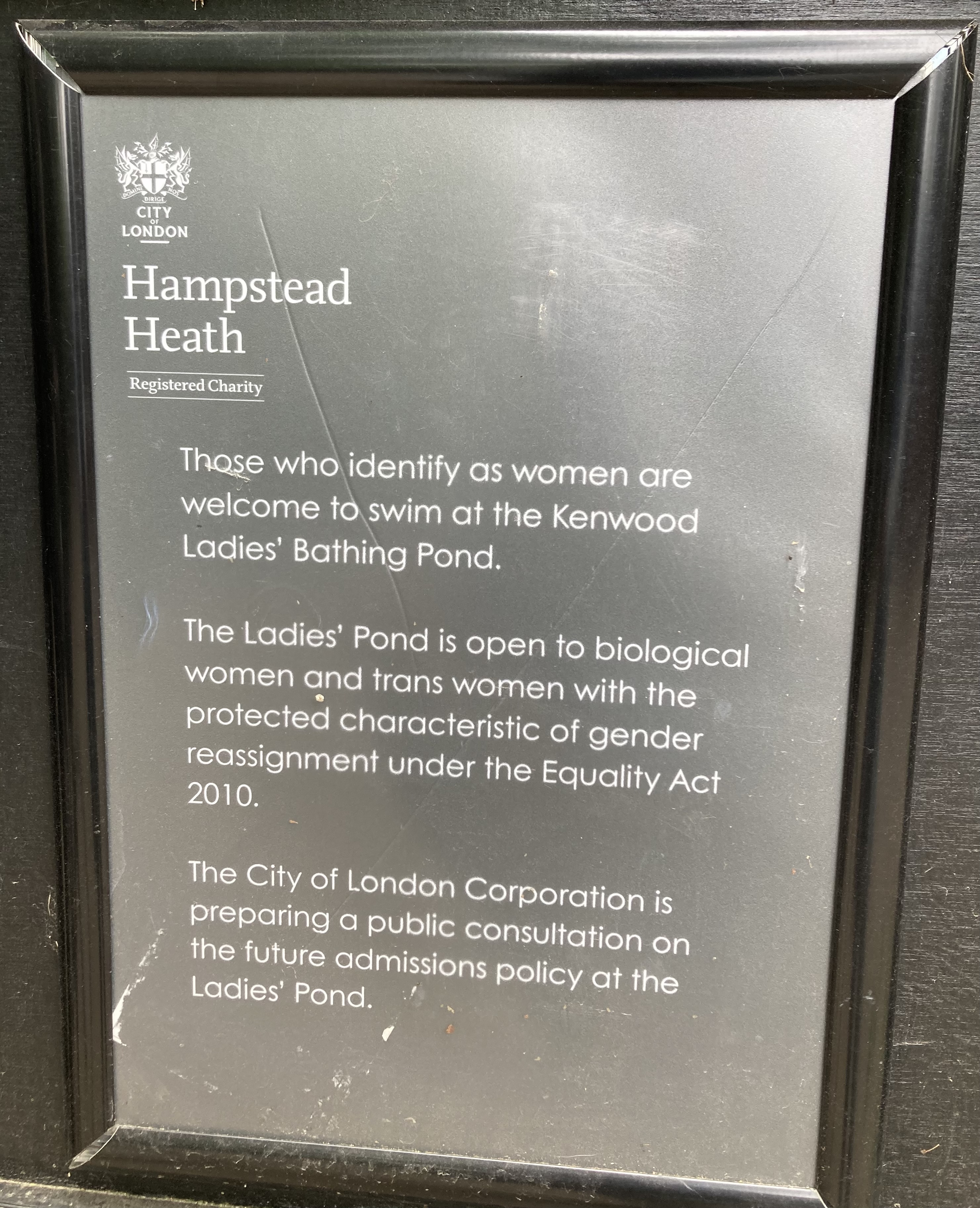
On Day 3 we set out for a walk over Hampstead Heath—one of my very favorite places in the whole world—with no particular destination in mind, soon passing the Dog Pond, the Highgate Men’s Bathing Pond, and the Kenwood Ladies’ Bathing Pond. (There is also a mixed bathing pond.) In early May it was far too cold for me to contemplate swimming there, but I may yet be able to screw up the courage to do so. I found myself taking a photo of the signs on the gate. One read: “Women Only. Men not allowed beyond this point.” The other was longer, and I only read the first sentence at the time: ”Those who identify as women are welcome to swim at the Kenwood Ladies Bathing Pond.” I thought to myself, Well said, Hampstead Heath. Clear and sensible.

Since then I have learned that the U.K. Supreme Court ruled in April, 2025 that the legal definition of a woman under the 2010 Equality Act should be based on biological sex. An organization called Sex Matters then challenged the City of London Corporation, which runs the Heath, in court, but in January, 2026 the court dismissed the case. Meanwhile, the Corporation carried out a consultation, polling more than 38,000 people on the issue, and “86% of the respondents support[ed] the existing trans-inclusive access arrangements.”

Sex Matters is likely to take up the issue again, and Trans advocacy groups such as Translucent are speaking up as well. But a spokesperson for the City of London Corporation said, “The findings [of the consultation] will be presented to City Corporation committees, which will consider them alongside legal duties, equality impact assessments, safeguarding responsibilities and operational considerations. In the meantime, the current admission rules will remain in place until a final decision has been made by members. Further announcements will be made in due course.”

I like the “in due course.” As in the U.S., transgender exclusion has become a weapon in the culture wars and has generated much more heat than is warranted, especially given that most people nowadays, especially young people, don’t see their transgender family and friends as a problem. Perhaps it’s best to pause the litigation, think the issue through, and work toward a resolution that, rather than whipping up unnecessary fears, can lay them to rest.

But why have I taken up this matter at all? Let me go back to our trip to North Wales. Arriving in Llandudno en route to the island of Anglesey, we found a snack shack atop Great Orme outside an ancient copper mine dating back to the Bronze Age, 4,000 years ago. Since we weren’t planning to go down the mine, the kind man at the shack (where the wind was so fierce that it knocked Andrew over), told us that we could take our hot drinks into a second-hand bookshop inside the mine’s gift shop.


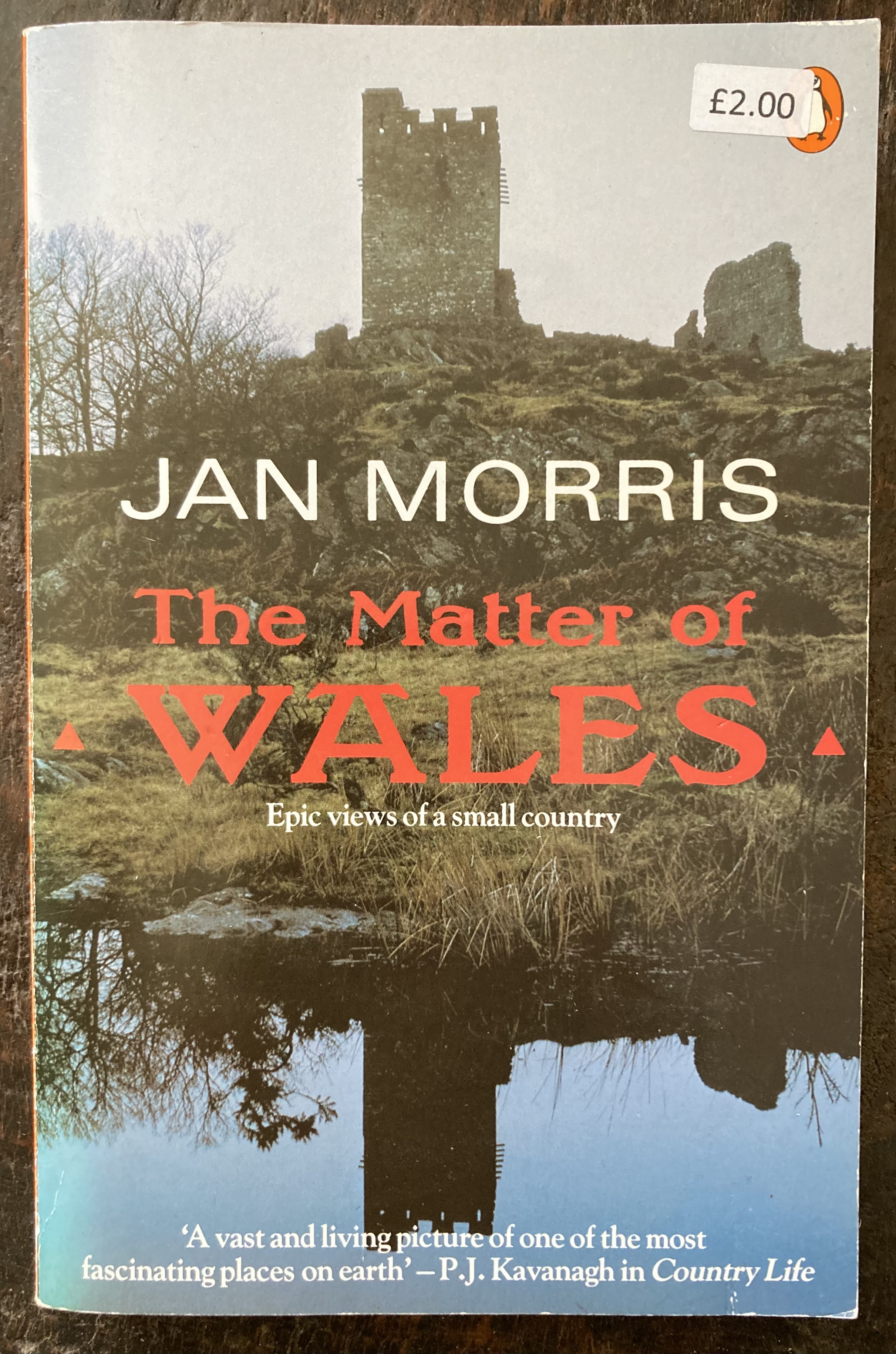
What a terrific bookshop it was! I was extremely disciplined and came away with only three books, one of which was The Matter of Wales: Epic views of a small country (1984), by one Jan Morris, a fascinating book that I have continued to read since our return from Wales. It was useful from the outset, with a helpful guide to Welsh pronunciation, and it conjured up the spirit of Wales along with its natural world, history, relationship to England, and resistance to foreign domination.

What I didn’t expect to learn, when looking up the author to learn more about her, was that Jan Morris was born James Morris, who made a name for himself as an intrepid journalist for the Times of London and then the Manchester Guardian covering the ascent of Everest in 1953, the Suez crisis in 1957, and the Cuban revolution in 1959, just to mention some of his early work. But James Morris had known from the age of four that he was female in his innermost self, and being who he was, set out to do something about it. Not only was Morris one of the first well-known people to undertake gender reassignment surgery, but she was one of the first to write a book, Conundrum (1974), about her transition. When Conundrum was published, she was attacked quite viciously by some of the mainstream media and even by feminists like Rebecca West and Germaine Greer (who said that she wasn’t a woman), but the outpouring of letters of thanks from readers more than made up for the negativity.

Morris died in North Wales in 2020 at age 94, and just last month, in April, 2026, a biography, Jan Morris: A Life, was published, written by Sarah Wheeler. Here’s Morris’ obituary in the Guardian and a review of Wheeler’s biography. You might also be interested in watching Michael Palin’s 2016 video interview with Morris in her home in Wales when she was 90 years old and in reading a Guardian article on her at the very end of her life.

What Jan Morris would have made of the current anti-trans crusades, I do not know, but it was interesting to me that I came across her fascinating book on Wales, one of more than 50 that she wrote in her lifetime, at this particular moment in time. When she made the transition from male to female, she took the negative criticism in her stride and continued to write as prolifically as she had been doing all along, but in coming out publicly as she did in 1974 she also made life that much easier for the many people who could not even be recognized at the time. I’m glad that the City of London Corporation is also taking the bathing pond controversy in its stride and keeping the current inclusive policy in place—for now, at least. “Further announcements will be made in due course.”

Tell Me Another (Contents to Date)

Chronological Table of Contents
661. Zimbabwe

In blogs and blogging, Books, culture, history, Inter/Transnational, Politics, postcolonial, United States on May 1, 2026 at 5:58 am


For the month of April, as part of the annual A to Z Challenge, I will be endeavoring to write a short personal post every day on the subject of war and peace—short because of time, War and Peace because of the times. To make things more bearable, I will endeavor to include music in every post.

I have chosen Zimbabwe as my last entry in this year’s A to Z on war and peace. Both literary and family connections have given me a special feeling for this beautiful country. Sadly, the wars that have been fought in Zimbabwe during my lifetime and the ongoing suffering of its people are not uncommon in formerly colonized countries as they continue to strive for self-determination. 

In the late 1970s we identified strongly with African freedom struggles. Using a linoleum cut and a hand-cranked press, Andrew designed and printed a poster announcing a talk by a visiting representative of the Zimbabwe African National Union (ZANU), then waging a nationalist struggle for independence from white settler-colonial rule. It was the very first poster we printed, even before we set up our letterpress printing business, Whetstone Press.

As she was completing her medical studies in the UK the late 1970s and early 1980s, my cousin Jacky worked in South Africa in one of its so-called Homeland areas, where, due to the vicious system of apartheid, inadequate medical care was the norm and expatriate doctors from across the African continent and around the world had to step into the breach. When, after a protracted struggle, neighboring Zimbabwe won its independence from colonial rule, Jacky was one of many foreigners who offered their services to the new nation. She and her husband, also a medical doctor, lived and worked in Zimbabwe for several years in the late 1980s, and their son was born there. 

Throughout this period, Reggae music was part of the soundtrack of our lives, and as we worked we sang along in solidarity with the movements for freedom in Angola, Mozambique, South Africa, and Zimbabwe. My favorite writer, Doris Lessing, had grown up in the white settler colony then known as Southern Rhodesia, and, banned from the country as an opponent of the color bar, she had written extensively of the white settler ideology and the conditions suffered by the majority black population. In the late 1980s I entered graduate school to study postcolonial literature and began to read the work of black African writers, including the Tsitsi Dangarembga from Zimbabwe, whose debut novel Nervous Conditions won the Commonwealth Writers’ Prize.

But where am I going with all this? Let me pick up the pace and get to the point. After 75 years of British colonial rule, from 1964-1979, Zimbabwe (then Rhodesia) was racked by a violent and protracted armed struggle among three different forces—the white minority government led by Ian Smith, the Zimbabwe African National Union (ZANU), and the Zimbabwe African People’s Union (ZAPU). Cold War politics also exacerbated and further militarized the conflict. Eventually, in 1979, Britain brokered an election in which the people voted decisively for ZANU, and Zimbabwe won its independence under the leadership of ZANU’s Robert Mugabe. 

On April 18, 1980, there was a tremendous sense of hope as Zimbabwe celebrated its independence in Rufaro Stadium in Harare, cheered on by 40,000 people, including world leaders in attendance and Bob Marley performing for the crowd, both on that day, and then again on the next, for the masses of people who were unable to enter the stadium the day before. My cousin Jacky’s husband was there on that golden day.

Alas, a people’s struggle for self-determination—indeed, for survival—does not advance in a straight line. Between 1983 and 1987 ZANU, the majority Shona ruling party, was responsible for the Gukurahundi, a genocidal ZANU campaign of ethnic cleansing—including massacres—of thousands of Ndebele and Kalanga people and supporters of the ZAPU opposition leader Joshua Nkomo. Land struggles continued, with white settlers still holding most of the arable land, since under colonial rule blacks had been driven off their land and into reserves. And Robert Mugabe grew more and more authoritarian, holding onto power and attempting to silence his political opposition. Political turmoil was compounded by drought, runaway inflation, deterioration of the country’s educational system, spectacular corruption, and a dramatic impoverishment of the country. By 2017, after a series of elections that observers declared to have been rigged, a military coup finally removed Mugabe from power. Emmerson Mnangagwa is now serving his second term as President and Zimbabwe’s future, though somewhat improved economically, is still uncertain.

In that 1980 concert in Rufaro Stadium, Bob Marley sang the anthem, Zimbabwe, an impassioned plea for unity, warning of the forces attempting to divide them. 

No more internal power struggle
We come together to overcome our little trouble

Now we find out who is the real revolutionary
‘Cause I don’t want my people to be contrary


Brother you’re right, you’re right, you’re right, you’re so right
We’ll have to fight we gonna fight, fighting for our rights

Divide and rule will only tear us apart
In every man’s chest there beats a heart

Soon we find out who is the real revolutionary
And I don’t want my people to be tricked by mercenaries.

In 1992, Doris Lessing published African Laughter, in which she recounts the four return visits she had made to the Zimbabwe since 1980, when Independence had ended her 25-year exile from the country. In it she writes lovingly of the people’s will to live and desire to learn, despite almost overwhelming odds, and minces no words as she condemns both the colonial ravaging of this once-wealthy land and Mugabe’s neglect and corruption amidst an environmental crisis and an AIDS epidemic. 

While most postcolonial nations still struggle with the legacy of European colonial rule, it is no longer possible to blame the colonizers for all their ills. Certainly, the divisions exploited by the colonial rulers and the various Cold War powers have left their mark; so have the impoverishment and underdevelopment of the countries during colonial rule. Climate change, to which the countries of Africa have hardly contributed, is disproportionately affecting them. The new rulers of formerly colonized nations are still selling out to foreign energy and mining interests and enriching themselves in the process, so that the distribution of wealth continues to get more and more unequal. Of course, this greed is not exclusive to post-colonial countries; but in countries where people are already living at subsistence level, largely disregarded by the international community, a year of drought or a spike in inflation can mean the difference between life and death. 

I can only close with a call of the anti-apartheid movement in South Africa: 

Mayibuye iAfrika!” 
May Africa return! or Come back Africa!

The song for Z:

Zimbabwe, Bob Marley & the Wailers, from  the Survival album (1979)

(This links to their live performance at Harvard Stadium in Cambridge, Massachusetts, July 1979. Andrew and I were there that day!)


Tell Me Another (Contents to Date)

Chronological Table of Contents
660. Yes-Men

In blogs and blogging, culture, Politics, singing, Stories, United States, Words & phrases on April 30, 2026 at 4:25 am

Yes-men: sycophants, suck-ups, lackeys, book-lickers, brown-nosers, chamchas, toadies, kissers of arses, curriers of favor, obsequious hangers-on.

The Oxford English Dictionary agrees: a yes-man is “a person, esp. a man, who habitually agrees with or assents to the proposals of a superior; an obsequious subordinate.” The term is a colloquialism of American origin, and “usually disparaging.” (Duh!) Here’s another definition, with examples.

Granted, people do like to surround themselves with like-minded people—people who understand and share their worldview, and who don’t annoy them by disagreeing, let alone contradicting. It’s soothing, reassuring, and okay, yes, ego-boosting. 

But when a person has life and death in their hands—other people’s life and death, that is—the prospect of that person surrounding himself (and I use “himself” advisedly) with yes-men can be terrifying, for them, of course, but also for the rest of us. For then there is no one to offer a different, perhaps moderating viewpoint. “Why don’t we just imprison them, Your Majesty, and not execute them?” And the reply, in a furious roar: “Off with his head!” (Or at least: “You’re fired!”).

On March 6, 2026, less than a week after the United States and Israel launched their war on Iran, the New York Times ran an opinion piece entitled Going to War with Iran, Surrounded by Yes Men. In it, co-author Jamelle Bouie said, “Wars require a decision-making process that is open, that allows all kinds of opinions, even ones that challenge your own intuitions to enter the fray.” 

Four weeks later, April 3, 2026, the Quote of the Day in the Hindustan Times addressed the same subject, in a scathing quote from General Sam Manekshaw (who, if you don’t remember, was the celebrated Indian chief of army staff, later Field Marshal, calling the shots during the India-Pakistan War of 1971 that led to the creation of Bangladesh as a separate state): 

A Yes Man is a dangerous man. He is a menace. He will go very far. He can become a minister, a secretary or a Field Marshall, but he can never become a leader, nor ever be respected. He will be used by his superiors, disliked by his colleagues and despised by his subordinates. So, discard the Yes Man. 

In the piece, author Debapriya Bhattacharya went on to comment pointedly on the meaning of this quote and, in particular, its relevance today. It’s worth quoting the closing section in its entirety:

The modern world is one that is shaped by narratives. If any information is not an advertisement, it is propaganda. What is more troubling is the fact that leaders themselves often fall into the trap of their own propaganda and start to lose track of reality.

Inflated egos that are carefully nurtured in their own bubbles have started many conflicts. And the greater number of people being blind followers of such leaders and climbing the ladder of power has created a dearth of leadership material in the upper echelons.

Thus, Sam Bahadur’s
[Sam the Brave’s] words ring true and loud today, and it would likely do well for both the leaders and ordinary people around the globe to pay heed to them.

There is a comedy group called The Yes Men, formed in 1999 at the time of the Seattle protests against the World Trade Organization, who engage in brilliant political theater often involving culture-jamming, “that uses the language and rhetoric of mainstream culture to subversively critique the social institutions that produce that culture.” Their mission is to:

support positive change around issues that matter, generally ones that don’t already get the attention they deserve;
—cheerlead other activists, bringing joy and humor to struggles that can sometimes feel hopeless (but aren’t);
—mobilize communities, helping turn affected bystanders into full-fledged participants.

In 2009, one of their most elaborate hoaxes, the week after Barack Obama’s election as President, was the production of a fake issue of the New York Timesannouncing, among other things, the end of wars in Iraq and Afghanistan. The Yes Men: Pranksters Against War documents people’s varied reactions–from disbelief to delight–to reading these headlines. “One of the group’s leading members, Andy Bichlbaum, [said] of the group’s motivation, ‘We’ve elected Obama, but so what. Now we all have to push to make things actually happen.’”

Pranksters Against War shows us a different possible facet to yes-men: they urge us, not to simply acquiesce passively to mainstream consumer culture, but to deliver an affirmative Yes to the change we need by making it happen, rather than by waiting in vain for politicians to deliver it. In their account of the newspaper project, The Yes Men wanted to bring “the much needed ‘good news’ to a war weary public.” Goodness knows we need it.

A song for Y:

Your Flag Decal Won’t Get You into Heaven Anymore John Prine, 1971

Well I got my window shield so filled with flags I couldn’t see
So I ran the car upside a curb, right into a tree
By the time they got the doctor down I was already dead
And I’ll never understand why the man standing in the Pearly Gate said:

But your flag decal won’t get you into heaven anymore
We’re already overcrowded from your dirty little war
Now Jesus don’t like killin’, no matter what the reason for
And your flag decal won’t get you into heaven anymore.


Tell Me Another (Contents to Date)

Chronological Table of Contents
659. Xenophiles

In blogs and blogging, Books, culture, people, Stories, United States on April 29, 2026 at 4:29 am

For the month of April, as part of the annual A to Z Challenge, I will be endeavoring to write a short personal post every day on the subject of war and peace—short because of time, War and Peace because of the times. To make things more bearable, I will endeavor to include music in every post.

Words ending with -phile and -phobe have gotten a bad rap, because of some of their unsavory associations. All these endings literally do is modify the noun with, “-loving” and “-fearful”—admittedly, sometimes too loving and too fearful—as in pedophile or homophobe.

Many of these words have ambiguous meanings. Take Anglophile, for example: an Anglophile may simply admire or have an interest in English history or culture, but may also have an intense fascination with anything and everything English. It is enough to hear someone speaking with an English accent to send them into raptures, never mind if the person is talking utter rubbish.

Sometimes -phile/philia and -phobe/phobia signify a disease or a psychological disorder, as in hemophilia or claustrophobia.

We know that a xenophobe is someone who is afraid of foreigners or outsiders. The person may or simply be uncomfortable around them or may hate them passionately. In the former case, their fear may simply stem from a provincial upbringing with lack of exposure to anyone different from themself. In the latter case, though, their fear may fly into into a panic or descend into a hatred based on irrational prejudices about a certain race, ethnicity or nationality.

Who, then, is a xenophile? As the antonym of xenophobe, it is a person who loves, is attracted to, or has an appreciation of people, manners, customs, or cultures that are not their own. It may be an expansive, all-embracing love, or it may be restricted to a particular culture, nationality, or region of the world.

Funnily enough, although xenophobes and xenophobia seem to be everywhere, xenophiles don’t get much press. Why is that, I wonder? As a corrective, an antidote, let me tell you about one of my favorite xenophiles, my sister-in-law Vera.

By all accounts, when Vera was a girl she was not someone who was attracted to difference, particularly when it came to food. Her mother was a very accomplished and experimental cook, but Vera liked plain American food, nothing unfamiliar, certainly nothing spicy. Rice Krispie Treats were one of her favorite snacks. But at university, Vera joined the international students club, and in the summer, got a job showing newly arrived students around Boston and helping them to get acculturated. With few exceptions, all her college friends were from elsewhere, and she developed a particular interest in all things Japanese, including the language. After university this home-loving young woman went to Japan completely on her own and taught English for a year; after returning, she took a job with a Japanese family for a time. At one point, she moved to a neighboring state to be closer to her boyfriend, but returned saying that it was too provincial. Eventually she did move there to marry her boyfriend, and joined the board of the Japan Society.

Working in early childhood education, Vera joined a group that celebrated cultures and cuisines of the world, sharing feasts that featured the specialties of a different country every month. This was a time when she took a giant leap from her childhood. It started with trying out the national dishes of dozens of countries, but then went much further, from the food to the culture, from the culture to a deeper understanding of the people, many of whom were immigrants. Still later, as a children’s librarian, she delighted in collecting books from or about different parts of the world and dedicating each library story hour to one in particular, with books on hand in both English and the language of that country–and plenty of snacks on hand. She would make a point of reaching out to families from that country, inviting them to attend and participate.

Someone who was the shyest member of the family as a child has blossomed into the most outgoing of all her siblings, someone who reaches out to strangers of all ages and ethnicities and actively cultivates friendships with them. She has become a xenophile in the best sense of the word—someone who, far from having a fear of people who look and sound foreign or come from elsewhere, instead takes an unmitigated delight in them and their cultures. Hers is not a merely a fascination with difference, though, neither is it a tokenistic multiculturalism; Vera incorporates into her own life the elements of cultures that she most admires and appreciates.

Perhaps some would consider Vera’s behavior a little too friendly. I think that it is a wonderful—and necessary—corrective to the flagrant xenophobia that is currently on display.

Rice Krispie Treats


Tell Me Another (Contents to Date)

Chronological Table of Contents

658. War

In 1960s, 1970s, blogs and blogging, culture, Inter/Transnational, people, Politics, singing, Stories, United States, Words & phrases on April 28, 2026 at 3:45 am

For the month of April, as part of the annual A to Z Challenge, I will be endeavoring to write a short personal post every day on the subject of war and peace—short because of time, War and Peace because of the times. To make things more bearable, I will endeavor to include music in every post.

War is defined as a state of usually open and declared armed hostile conflict between states or nations. More generally it is a state of hostility, conflict, or antagonism; a struggle between opposing forces or for a particular end (Merriam-Webster). 

In the classroom I always found it odd that war was one of those things students were defeatist about, and defensive to boot. If the idea of ending war was raised, someone was sure to ask, Haven’t there always been wars? Isn’t war hardwired into us as humans?

First of all, if you really want to end war, then why preemptively announce the impossibility of your goal? Second, even if war is a survival instinct from pre-historic times, why deny the possibility of evolution?

On January 27, 2026, the Science and Security Board of The Bulletin of the Atomic Scientists set the Doomsday Clock at 85 seconds to midnight, the closest it has ever been. If war is not only no longer necessary for survival (if it ever was) but, on the contrary, something that threatens the survival of all life on our planet, wouldn’t it be a good idea to school ourselves to overcome our baser instincts and cultivate instead the peaceful resolution of differences? 

I recall Edward Said’s observation about the necessity of learning how to live together. Much of Said’s thinking on this subject was in the context of Israel’s dispossession of the Palestinian people, but also more generally in a world free from domination and imperial conquest. Said felt that partitioning countries had never worked; instead, he saw the solution in learning how to live with their differences in one state. In an enlightening conversation, On justice and education: a conversation with Edward Said’s work, Sophie Rudolph and Arathi Sriprakash consider how, in Said’s view, peaceful co-existence could be achieved. “Said saw education as a cross-cultural struggle towards understanding of difference; an anti-imperial quest for a radical humanism. And through this process justice might be possible.” 

War is deeply embedded in our language, which, in turn, structures and limits our cognition. I’m sure we can all think of examples. In learning how to de-militarize language we free ourselves to begin thinking differently. in the Women’s Movement of the 1970s and 1980s, feminists sought to make language more inclusive by re-balancing its patriarchal bias. Perhaps we need to do the same in this context: balancing war with peace. Demilitarizing Language, David Smith’s article in Peace Magazine, shows how we frame everything in terms of war and conflict. He offers an approach to “critical language education” that begins with awareness and the ability to be more self-critical, and ends with using “alternative metaphors.” Smith writes, “Suppose instead of thinking about argument in terms of war, we were to think of argument as a pleasing, graceful dance? How would such a metaphor cause us to conceptualize argument in a different way?” Said does the same when he frames differences between groups in society not as automatically giving rise to conflict, but like contrapuntal motion in music, in which there is a play of difference, giving rise to tension, interaction, and new harmonies.

Yesterday I went to the town transfer station, which we still call the dump. Because we are a town that values education highly, we have a book shed at the dump where people bring boxes of books they are letting go of, and they are organized by category. Of course I never pass up the opportunity to have a quick browse-through; yesterday, what should I find but a spotlessly clean edition of a book entitled The War at Home: The United States in 1968 (Mary Turk, Perfection Learning, 2002). I could tell that it had never been read: the spine showed no sign of having been cracked open. Its focus was on the parallel war raging at home in the United States as it waged war on Vietnam. It spoke of the political assassinations, the draft and anti-war protests, the war on the protesters, the rise of the Black Panthers and the violent crackdown on them, COINTELPRO, the turbulent lead-up to the presidential elections, and the election of Richard Nixon. The book, perhaps designed for middle- or high-school students, ends:

Despite the war and despite the killings, hope never quite died. . . New dreams—and new dreamers—are born every year (Turck. p. 64)

This year we lost Jesse Jackson, who worked closely with Martin Luther King, Jr.. After Dr. King’s assassination in 1968, Jesse Jackson devoted the rest of his life to the realization of his dream. Who can forget his “Keep Hope Alive” speech at the Democratic National Convention in 1988? Here’s a videorecording and here’s the transcript. Jesse Jackson’s Rainbow Coalition, like Edward Said’s play of differences, celebrated diversity rather than stoking fear of it. He urged young people to dream of peace:

You must never stop dreaming. Face reality, yes, but don’t stop with the way things are. Dream of things as they ought to be. Dream. Face pain, but love, hope, faith and dreams will help you rise above the pain. Use hope and imagination as weapons of survival and progress, but you keep on dreaming, young America. Dream of peace. Peace is rational and reasonable. War is irrational in this age, and unwinnable.

Songs for W:

What’s Going On, Marvin Gaye, on the album of the same name (1971).

War, Bob Marley & the Wailers, on the album Rastaman Vibration (1976)

Life During Wartime, Talking Heads (1979) 

Where Have All the Flowers Gone? Sung here by Joan Baez at Pete Seeger Tribute

While My Guitar Gently Weeps, George Harrison, on The Beatles/White Album (1968) 

The War After the War, Mary Gauthier, 2018


Tell Me Another (Contents to Date)

Chronological Table of Contents
657. Veterans

In blogs and blogging, Family, history, Inter/Transnational, singing, Stories, United States, Words & phrases on April 27, 2026 at 2:02 am


For the month of April, as part of the annual A to Z Challenge, I will be endeavoring to write a short personal post every day on the subject of war and peace—short because of time, War and Peace because of the times. To make things more bearable, I will endeavor to include music in every post.

In my (admittedly limited) experience, people who have actually served in the military are the least likely to glorify war. My dear Uncle Bill, for example, my mother’s loving brother-in-law, was at Dunkirk. I only know because my Uncle Ted has written about it. Bhai-kaka, my Dad’s elder brother, rarely talked about his illustrious service in the Indian army, and never about the border conflict in which he won a national honor for his bravery. He preferred to go for long walks on his own or read comic books to his grandchildren.

In a recent comment on this blog my grad school friend Maureen, who served in the military in West Germany, wrote, “As a veteran, I’m always troubled by folks who think starting a war is a solution to anything.”

It is no surprise, then, that war veterans have played an important part in modern peace movements. While politicians organize patriotic parades and trot out old war heroes for propaganda purposes, it is often veterans themselves who have the courage to come forward and tell the truth about what war is really like. 

I remember the passionate young John Kerry, newly returned from military service, coming to speak at Brookline High School in the Spring of 1970, or perhaps my senior year, in 1970-1971. Students had voted to suspend business as usual and organize a day of teach-ins, and Kerry came with a small contingent from Vietnam Veterans Against the War (VVAW). Soon afterwards, in April, 1971, he was to testify in Washington, D.C. speaking on behalf of VVAW before the Senate Committee on Foreign Relations. Here is the CSPAN footage of his testimony, in which he declares that there was nothing in Vietnam that could possibly be a threat to the United States, and delivers a devastating indictment of both the actions of the U.S. military in Vietnam, and U.S. government inaction in support of returning soldiers. Here is a transcript of the full text. 

VVAW logo

Founded in 1967, VVAW played an important role in the anti-Vietnam War movement. Here’s an excerpt from the “About “ page on their website:

[VVAW] was organized to voice the growing opposition among returning servicemen and women to the still-raging war in Indochina, and grew rapidly to a membership of over 30,000 throughout the United States as well as active duty GIs stationed in Vietnam. Through ongoing actions and grassroots organization, VVAW exposed the ugly truth about US involvement in Southeast Asia and our first-hand experiences helped many other Americans to see the unjust nature of that war.

VVAW also advocated for the needs of returning veterans. They developed rap (consciousness-raising) groups for what would later be called readjustment counseling, shone a light on the neglect of disabled veterans in VA Hospitals, and helped draft legislation to improve educational benefits and create job programs, fought for amnesty for war resisters, and helped make public the negative health effects of exposure to Agent Orange. They continue to speak out against U.S. support to repressive regimes around the world and for justice for veterans.

Today, Veterans For Peace is one of the most active and visible U.S. veterans’ groups at protests and vigils against illegal and unjust wars, whether abroad or at home. Among other recent initiatives, they have opposed continued U.S. arms shipments to Israel while it is in violation of the ceasefire agreed upon in Gaza; condemned the killings of civilians in Minneapolis by “militarized federal agents”; and most recently, called for resistance to the illegal U.S.-Israeli war on Iran. Here is their Statement of Purpose:

We, as military veterans, do hereby affirm our greater responsibility to serve the cause of world peace. To this end we will work, with others both nationally and internationally:

–To increase public awareness of the causes and costs of war
–To restrain our governments from intervening, overtly and covertly, in the internal affairs of other nations
–To resist racism and repression in our home communities
–To oppose the militarization of law enforcement
–To end the arms race and to reduce and eventually eliminate nuclear weapons
–To seek justice for veterans and victims of war
–To abolish war as an instrument of national policy
–To promote a sustainable and peaceful world.


To achieve these goals, members of Veterans For Peace pledge to use non-violent means and to maintain an organization that is both democratic and open with the understanding that all members are trusted to act in the best interests of the group for the larger purpose of world peace. 

US military veterans protesting the Iran war arrested by US Capitol Police. (Sunday Guardian X/CCW)

On April 24, 2026, more than 60 military veterans and family members were arrested after staging a peaceful protest at the Capitol in Washington, D.C. to oppose the war against Iran, listen to the transcript of NPR coverage of the action here. The action was organized by About Face: Veterans taking action against militarism and endless wars, as part of a coalition including Veterans For Peace, the Fayetteville Resistance CoalitionMilitary Families Speak Out50501 Veterans, and the Center on Conscience & War (CCW). 

In this March 23, 2026 interview with CCW’s Executive Director Mike Prysner on Democracy Now!, Prysner talks about the growing opposition to the war on Iran within the U.S. military: “You know, I haven’t talked to any service member who said that they are scared of dying in a war that they don’t believe in. They’re scared of killing in a war that they don’t believe in. They’re scared of the long-term moral consequences of their actions in this moment right now.”

Two songs for V: 

Vietnam, Jimmy Cliff (1970)

Take the Star Out of the Window, John Prine,
on Diamonds in the Rough (1972) 


Tell Me Another (Contents to Date)

Chronological Table of Contents

656. Uncle Tich

In blogs and blogging, Britain, Family, Inter/Transnational, poetry, singing, Stories, Words & phrases on April 25, 2026 at 5:50 am

For the month of April, as part of the annual A to Z Challenge, I will be endeavoring to write a short personal post every day on the subject of war and peace—short because of time, War and Peace because of the times. To make things more bearable, I will endeavor to include music in every post.

Uncle Tich, my mother’s maternal uncle, was born weak and small (hence ‘Tich’), was always inclined to nervousness, and never grew taller than 4’10”.  Nevertheless, His Majesty’s Government saw fit to conscript him into the army in the latter half of the Great War (what the British called the First World War before they knew how soon there would be a second). Apparently all the able-bodied men had already been called up and killed, so they took Uncle Tich. After a time they sent him home with a medical discharge and a hole in his skull patched with a metal plate. 

Although no one actually used the term shell shock, this is how Mum described his nervous habits: he could not venture across an open room. If you were on the other side, he would make his way round to you hugging the walls.

Now, from everything I have read, the Great War was characterized by trench warfare. Men would hunker down in the cold, muddy trenches, never daring to raising their heads above the parapets. Then, on orders, they would emerge from the trench and advance. This is when they would be wide open to enemy fire from the trenches on the other side. 

No wonder poor Uncle Tich was terrified. 

Another habit of his, which Mum and Uncle Ted have both described: When starting to say something, he would suddenly stop short in anxiety and embarrassment. To cover himself, he would pretend that he had never been speaking at all, but only singing to himself. La la la la la—his words would trail off into a little song. 

Perhaps this came from having orders barked at him and having been required by his superior officers to be seen and not heard–or else. 

From reading the family history written by my Uncle Ted, I see that Uncle Tich lived until two years after I was born, but I don’t know if we ever met. Everything I know about him comes from my mother’s loving stories and Uncle Ted’s insightful and equally affectionate account. Because of his diminutive stature and odd behavior, he was always the butt of other people’s jokes; but apparently he always took the jibes in gentle good humor.

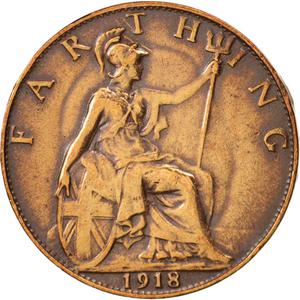
After being demobilized, Uncle Tich moved back in with his widowed mother. Each of them had a tiny pension, but they lived very frugally and managed. Uncle Tich was fearful of venturing out, but found joy in gardening a small plot in their housing complex. When his mother died, he had to go out to work part time to supplement his pension, and, in a late blossoming, overcame some of his fear of the outside world. He was always generous with what little he had; Mum remembered that every week he would give each of his nieces and nephews a farthing—one quarter of a penny—to buy sweeties with. 

In Uncle Tich’s time, ordinary soldiers were simply sent home to manage, somehow. Some of them were hospitalized and diagnosed with what was called shell shock, where a host of symptoms—from nightmares to hallucinations to mutism and paralysis—rendered them unfit for service. At that time a nervous breakdown was often considered a sign of weakness, unmanliness. Men were mocked and shamed for being cowardly and using a breakdown as an excuse not to fight. Some were treated with electric shocks until they decided to return to the front. (My knowledge of all this comes from reading Pat Barker’s brilliant Regeneration Trilogy, especially the eponymous first novel, and from teaching some of the War Poets, esp. Wilfred Owen’s Dulce et Decorum Est.) During the Vietnam War, the cluster of symptoms that dogged veterans was called combat fatigue or Post-Vietnam Syndrome. It was not until 1980 that they coalesced into the term Post-Traumatic Stress Disorder (PTSD). 

A song for today: 

Sam Stone, by John Prine (1970)

the years that he served had shattered all his nerves
and left a little shrapnel in his knee

This song tells a very sad story, but it will be a familiar one to people returning from military service. Although Uncle Tich’s situation was truly pitiable, his life was not irredeemably sad. Many veterans are not so lucky. In the next post I will write more about war veterans, including how they have organized to support each other, to heal from the trauma of war, and to protect other young people from the horrors they encountered.


Tell Me Another (Contents to Date)

Chronological Table of Contents

655. Till by turning, turning we come round right

In blogs and blogging, culture, seasons, singing, Stories on April 24, 2026 at 6:54 am

For the month of April, as part of the annual A to Z Challenge, I will be endeavoring to write a short personal post every day on the subject of war and peace—short because of time, War and Peace because of the times. To make things more bearable, I will endeavor to include music in every post.

No words today. 


Tis the Gift to Be Simple, Yo-Yo Ma and Alison Krause (1998)


Turn! Turn! Turn! (To Everything There is a Season) Pete Seeger and Ecclesiastes
sung by The Byrds (1965)


A time for peace, 
I swear it’s not too late.


Tell Me Another (Contents to Date)

Chronological Table of Contents
654. Sovereign States

In Stories, United States, Inter/Transnational, 1960s, Politics, history, blogs and blogging, postcolonial, Aging on April 24, 2026 at 5:20 am

For the month of April, as part of the annual A to Z Challenge, I will be endeavoring to write a short personal post every day on the subject of war and peace—short because of time, War and Peace because of the times. To make things more bearable, I will endeavor to include music in every post.

As a schoolgirl in India I had to memorize the name of the Secretary-General of the United Nations. (It was U Thant—the things that stick in your head.) In the 1960s we looked up to the UN as an institution charged with the task of maintaining world peace and friendly relations among its member nations in accordance with international law. After two world wars in less than half a century, nations signing the UN Charter in 1945 pledged to respect the principles of equal rights and self-determination, and the idea that all independent nations should have national self-determination, the right to run their own governments, and to control affairs within their own territories. When conflicts arose between nations, they were to attempt to use peaceful means, such as diplomacy, to resolve them (Preamble and Article 1, United Nations Charter).

First among the principles that guided the UN was that of the “sovereign equality of all its Members” (Article 2.1. UN Charter). This meant that, large or small, rich or poor, an independent nation-state had control over its territory and its internal affairs. Remember, in the 1960s, equality and national sovereignty were not abstract ideals. Many nations of the world had only recently emerged from colonial rule, whereby they had been invaded and occupied by force of arms, their people exploited and their natural resources plundered. So we were hyper-vigilant on behalf of the newly liberated nations who had joined the UN as sovereign states. We had had quite enough of other nations interfering with our internal affairs, thank you very much. 

This is why those of us raised with the founding principles of the United Nations find it hard to believe how brazenly they are being violated today. Carrying out “pre-emptive strikes” on nations that haven’t attacked you but might do so in the future; bombing other nations when you have not declared war on them; kidnapping and assassinating the leaders of foreign countries; targeting medical personnel and journalists; deliberately destroying civilian infrastructure. Is this right? Increasingly, it appears, the answer is that it is right if the perpetrating nation has the power to do it and no one else has the power to stop it. It’s like the Wild West: 

United Nations: “Stop that, you bully!”

Cowboy Nation: “Whatcha gonna do about it?” 

Rather than giving the UN the opportunity to do its job, United States policy of late seems to have been to make it irrelevant by disregarding it, undermining it, or attempting to take over its functions. A case in point here is U.S. President Trump’s newly constituted “Board of Peace”, whose stated purpose is one of promoting peacekeeping around the world and of which Trump himself has suggested that it might replace the UN. Time after time, the U.S. has exercised its veto power against UN security council resolutions. For decades, the U.S. has failed to pay its membership dues, now amounting to nearly four billion dollars. In February, 2026, the UN reported that 95% of its overdue payments are owed to it by the United States. 

Coming back to the idea of sovereignty, the case has been made that when a nation is in flagrant violation of international humanitarian law, committing atrocities against its own people or threatening the safety and security of others, the rest of the world has a right, perhaps even a responsibility, to intervene. Even if that is the case, though, force should only be used a last resort, after all other options, including diplomatic ones, have been exhausted. And however dangerous a nation’s behavior may be, a single nation should never act against it without the support of the international community.

Whatever arguments are mobilized to justify naked aggression–somehow making it acceptable to drone-bomb wedding parties, wipe out a nations’s entire leadership, commandeer its natural resources, and murder schoolchildren in cold blood–I resolutely close my ears to them. That was not how I was raised.  

A song for today:

Hymn to Nations (to the tune of Ode to Joy), sung by Pete Seeger

and here, by Paul Robeson

Build the road of peace before us
Build it wide and deep and long
Speed the slow, remind the eager
Help the weak and guide the strong
None shall push aside another
None shall let another fall
Work together, oh, my brother
All for onе and one for all
.


Tell Me Another (Contents to Date)

Chronological Table of Contents

Design a site like this with WordPress.com
Get started