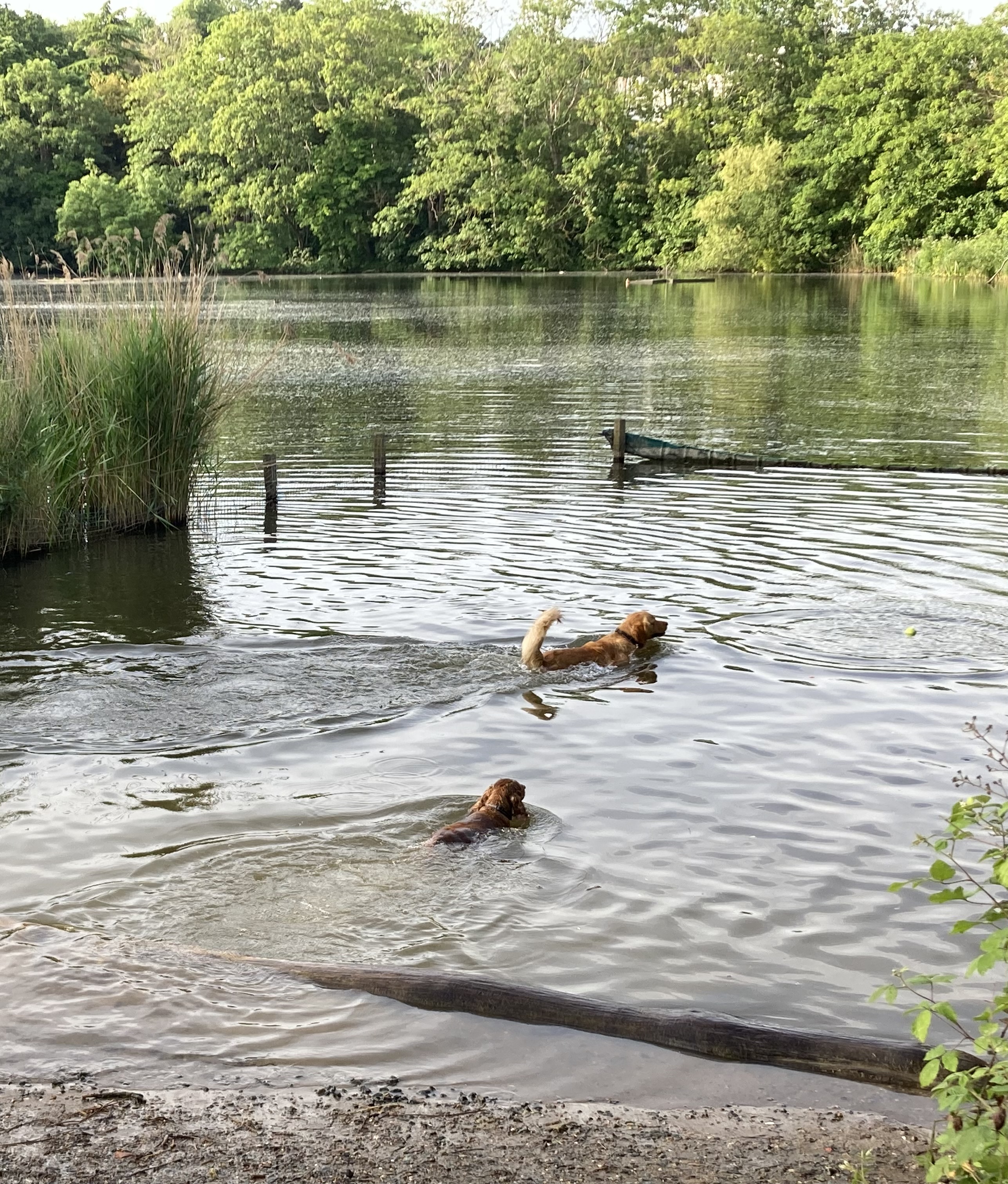
Andrew and I have been in the U.K. for nearly three weeks, mostly in North London, with a magical five-day trip to North Wales where it was cold, rainy, and windswept. Back in London the city is undergoing a heatwave and I’m feverish in bed with a summer cold. It’s miserable, because I am itching to be out walking, but it’s also making me slow down and reflect on our trip so far.
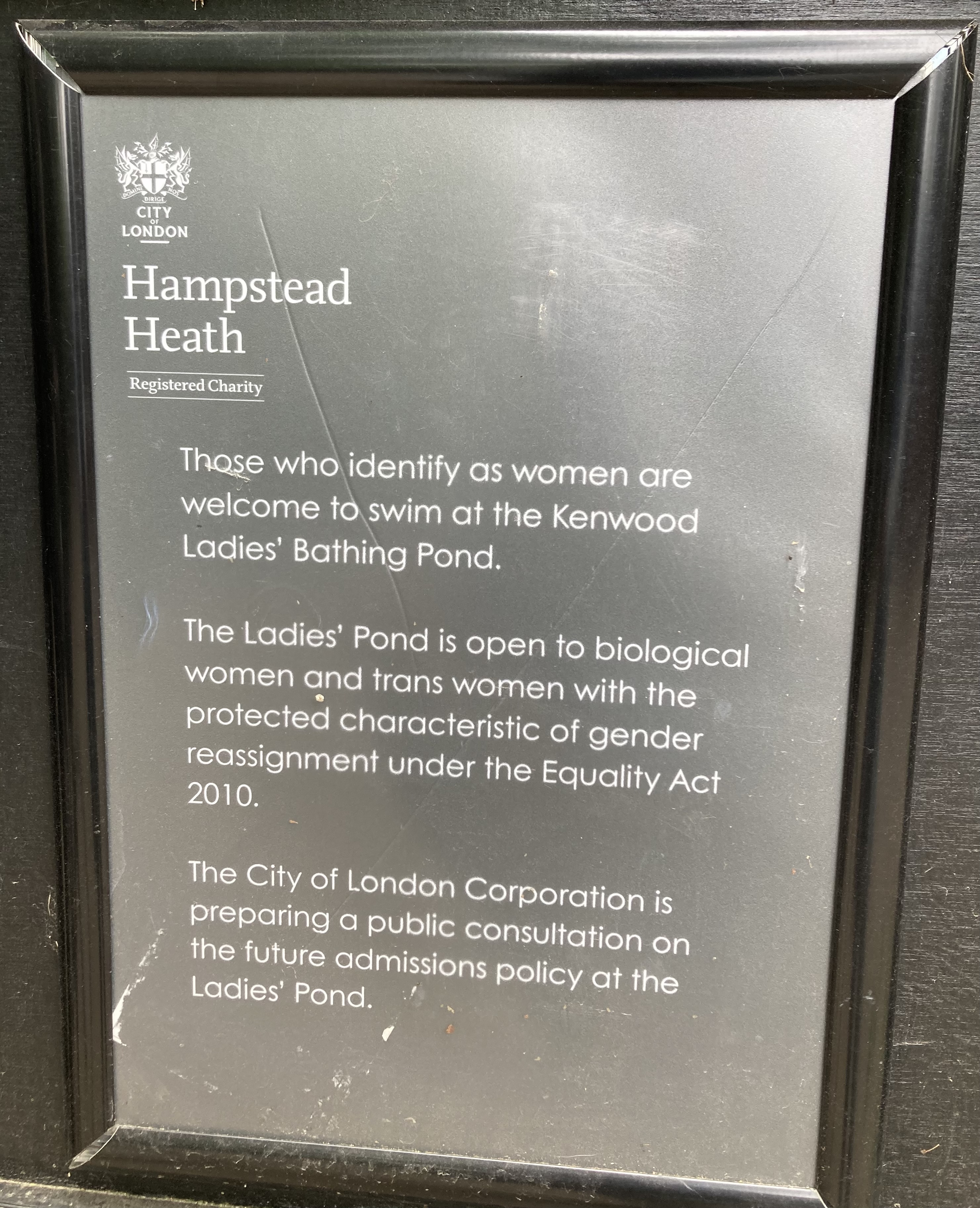
On Day 3 we set out for a walk over Hampstead Heath—one of my very favorite places in the whole world—with no particular destination in mind, soon passing the Dog Pond, the Highgate Men’s Bathing Pond, and the Kenwood Ladies’ Bathing Pond. (There is also a mixed bathing pond.) In early May it was far too cold for me to contemplate swimming there, but I may yet be able to screw up the courage to do so. I found myself taking a photo of the signs on the gate. One read: “Women Only. Men not allowed beyond this point.” The other was longer, and I only read the first sentence at the time: ”Those who identify as women are welcome to swim at the Kenwood Ladies Bathing Pond.” I thought to myself, Well said, Hampstead Heath. Clear and sensible.
Since then I have learned that the U.K. Supreme Court ruled in April, 2025 that the legal definition of a woman under the 2010 Equality Act should be based on biological sex. An organization called Sex Matters then challenged the City of London Corporation, which runs the Heath, in court, but in January, 2026 the court dismissed the case. Meanwhile, the Corporation carried out a consultation, polling more than 38,000 people on the issue, and “86% of the respondents support[ed] the existing trans-inclusive access arrangements.”
Sex Matters is likely to take up the issue again, and Trans advocacy groups such as Translucent are speaking up as well. But a spokesperson for the City of London Corporation said, “The findings [of the consultation] will be presented to City Corporation committees, which will consider them alongside legal duties, equality impact assessments, safeguarding responsibilities and operational considerations. In the meantime, the current admission rules will remain in place until a final decision has been made by members. Further announcements will be made in due course.”
I like the “in due course.” As in the U.S., transgender exclusion has become a weapon in the culture wars and has generated much more heat than is warranted, especially given that most people nowadays, especially young people, don’t see their transgender family and friends as a problem. Perhaps it’s best to pause the litigation, think the issue through, and work toward a resolution that, rather than whipping up unnecessary fears, can lay them to rest.
But why have I taken up this matter at all? Let me go back to our trip to North Wales. Arriving in Llandudno en route to the island of Anglesey, we found a snack shack atop Great Orme outside an ancient copper mine dating back to the Bronze Age, 4,000 years ago. Since we weren’t planning to go down the mine, the kind man at the shack (where the wind was so fierce that it knocked Andrew over), told us that we could take our hot drinks into a second-hand bookshop inside the mine’s gift shop.
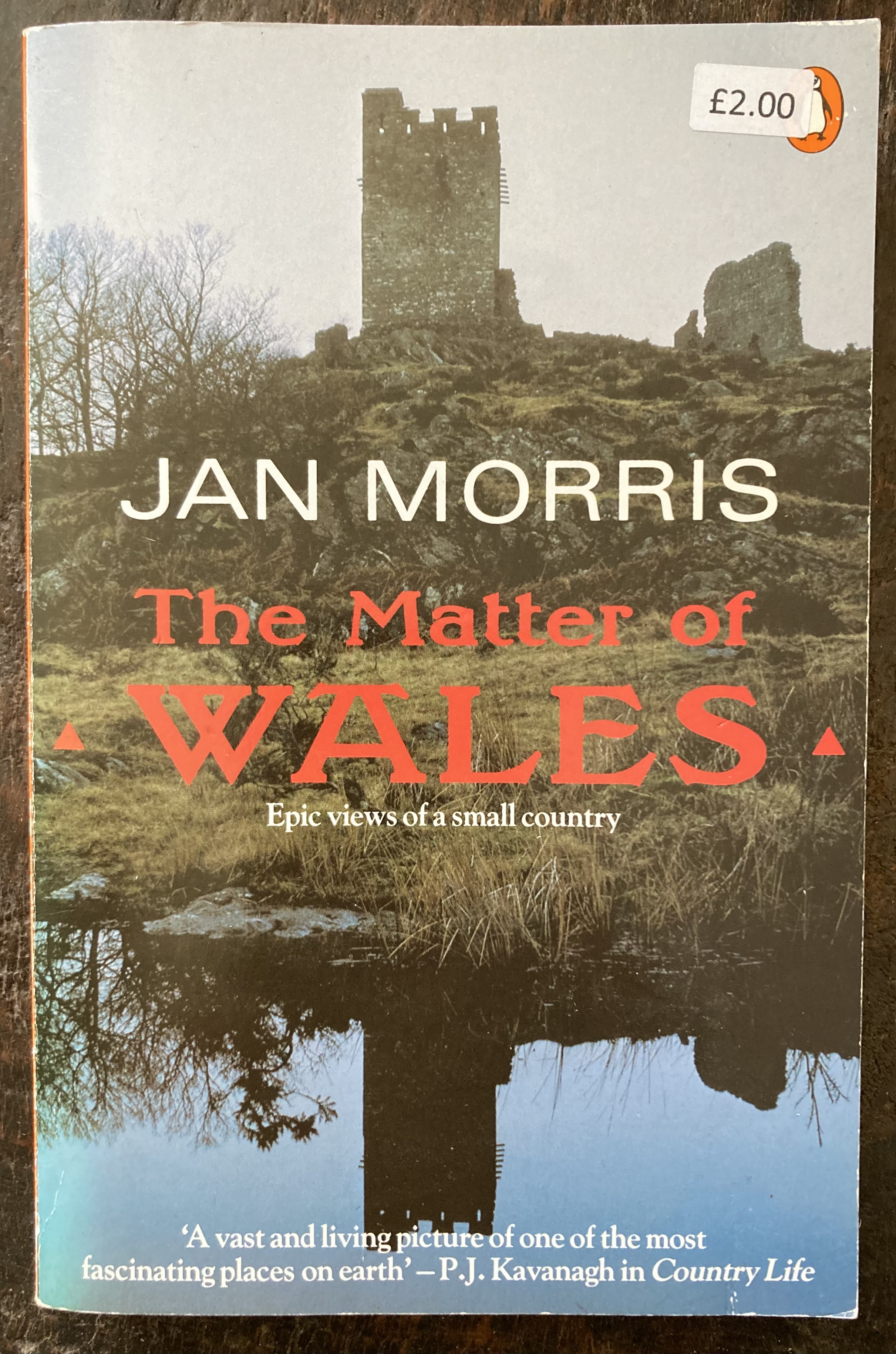
What a terrific bookshop it was! I was extremely disciplined and came away with only three books, one of which was The Matter of Wales: Epic views of a small country (1984), by one Jan Morris, a fascinating book that I have continued to read since our return from Wales. It was useful from the outset, with a helpful guide to Welsh pronunciation, and it conjured up the spirit of Wales along with its natural world, history, relationship to England, and resistance to foreign domination.
What I didn’t expect to learn, when looking up the author to learn more about her, was that Jan Morris was born James Morris, who made a name for himself as an intrepid journalist for the Times of London and then the Manchester Guardian covering the ascent of Everest in 1953, the Suez crisis in 1957, and the Cuban revolution in 1959, just to mention some of his early work. But James Morris had known from the age of four that he was female in his innermost self, and being who he was, set out to do something about it. Not only was Morris one of the first well-known people to undertake gender reassignment surgery, but she was one of the first to write a book, Conundrum (1974), about her transition. When Conundrum was published, she was attacked quite viciously by some of the mainstream media and even by feminists like Rebecca West and Germaine Greer (who said that she wasn’t a woman), but the outpouring of letters of thanks from readers more than made up for the negativity.
Morris died in North Wales in 2020 at age 94, and just last month, in April, 2026, a biography, Jan Morris: A Life, was published, written by Sarah Wheeler. Here’s Morris’ obituary in the Guardian and a review of Wheeler’s biography. You might also be interested in watching Michael Palin’s 2016 video interview with Morris in her home in Wales when she was 90 years old and in reading a Guardian article on her at the very end of her life.
What Jan Morris would have made of the current anti-trans crusades, I do not know, but it was interesting to me that I came across her fascinating book on Wales, one of more than 50 that she wrote in her lifetime, at this particular moment in time. When she made the transition from male to female, she took the negative criticism in her stride and continued to write as prolifically as she had been doing all along, but in coming out publicly as she did in 1974 she also made life that much easier for the many people who could not even be recognized at the time. I’m glad that the City of London Corporation is also taking the bathing pond controversy in its stride and keeping the current inclusive policy in place—for now, at least. “Further announcements will be made in due course.”
Tell Me Another (Contents to Date)
Chronological Table of Contents


 Tell Me Another