Monday Notes: 5 Ways to Become a Writer

I’ve written since I was in elementary school, fifth grade to be exact. However, I didn’t consider myself a writer until 2014. Once I accepted this part of my identity, I started observing and listening to writers and “aspiring” writers. I’ve determined if you want to be a writer, then this is what you’ll have to do:

START WRITING

Now that my writing is public knowledge, people confide in me. Cousins, the man at the Florida Writers Association conference, and the woman who asked me to ghostwrite her novel each want to write. But when I ask them what they’ve written so far, the answer is nothing. I advise each of them the same. Start writing. Whether it’s a public blog or a private diary, the first step is to begin.

MAKE TIME TO WRITE

I often thought my job was getting in the way of writing. That wasn’t the truth. And because no one was going to offer me more time in the day, I had to shift my priorities. Instead of watching TV every morning, I wrote for two hours. Then, I began my regular day. Where could you shift your priorities so that you can make time to write?

TAKE TIME TO EDIT

After you’ve written something, consider that your first draft. All writers have first drafts, and second, and thirds, and … you get the picture. As a former English teacher, rarely have I seen a masterpiece written in one fell swoop. When you take time to write, that means you might find yourself pondering over the use of the word stroll, saunter, or walk because you know each one of those words will change the connotation and flow of your sentence. So take the time to think about the words you’ve written in a meaningful way.

YOU THINK YOUR STORIES HAVE ALREADY BEEN HEARD

Probably. I mean an infinite number of books have been written and read. But not yours and not the way you can write it. Comments about The Unhappy Wife validated this concept. Years ago, Story Teller Alley approved me to sell my book on their site. One of the reasons it was accepted is because of originality. A reviewer said,

Although stories of unhappy marriages have been told before, because these are all true stories and each person is different, the stories are all different.

In Search of a Salve reviews have been similar. A BookLife reviewer said this:

Stories of addiction and recovery are familiar, but Garland’s memoir shines in its willingness to expose the author’s darkest, ugliest moments: In Search of a Salve is uniquely unsparing and, ultimately, triumphant.

I’m glad the innovation of my words shines through. Sometimes people read titles and assume they know what’s inside. But it’s a false assumption. Likewise, if I would’ve thought these book concepts were trite narratives, then I might not have written either of these books. So my advice? Don’t worry about it. Somebody wants to read it the way you’ve written it.

YOU’RE WORRIED ABOUT WHAT OTHER PEOPLE THINK

On my blog, I write about many things that have happened in my life. Stories include family, friends, and people I barely know. I couldn’t write half of what you read here if I stopped to worry about someone’s hurt feelings and revisionists forms of history. Initially, an Anne Lamott quote helped me forge ahead with authentic writing. Lamott said, “If people wanted you to write warmly about them, they should have behaved better.” That quote changed my entire creative nonfiction writing life. The other part that has helped me write the truth is to separate fact from emotion. For example, it’s a fact that my dad packed up my belongings in the middle of the night while I slept. However, the emotion I experienced was abandonment. Stick to the facts and make clear when you’re describing an emotion.

I hope one of these sparks the writer in you. Trust me. Someone, somewhere is waiting to hear your voice, even if the someone is you.


(Virtual) Writer’s Workshop: Character Driven

On Saturday, February 21st from 1:00-3:00 PM (EST), I will be teaching a 3-hour workshop centered on character-driven narrative. Character-driven narrative is exactly what it sounds like—it’s where the characters drive the story. My memoir, In Search of a Salve is an example of this type of storytelling. Although there is a clear plot, each chapter is devoted to one character, who they are, what their motives seemed to have been, as well as how I perceived the influence the person had in my life. Subsequently, how I described each character shaped the memoir.

For those of you who haven’t read Salve, you can get a sense of what I mean by character-driven narrative or understand how I developed my grandmother’s character over several years, through varied published pieces through my craft essay, Writing My Grandmother into Being: The Art of Honest Characterization.

If you’re interested in learning from me through a virtual platform, then please register here: Character Driven: Master 5 Strategies to Develop Your Character-Driven Narrative.

Let’s say none of this appeals to you…then please consider passing on this information and opportunity to a writer, whom you think would benefit.

Writer’s Workshop: Improve FLOW by Removing 3 Words

I love writing that flows. When I read a book, I like to feel as if I’m riding a wave or listening to a smooth melody where the notes come together in concert to create beautiful harmony. When writing flows, you don’t want to abandon it. In fact, you may re-read sentences just to appreciate the beauty.

How do writers combine words to create flow? One way is to follow a specific rule. Now, I know in the last Writer’s Workshop I told you to dismiss rules, but I should’ve added the word sometimes.

So, here’s the advice: Remove these three words as much as possible: that, adverbs ending in -ly, and the.


THAT is considered a filler word, meaning it just adds space on the page. As much as possible go through your writing and try to delete “that.” It will make your writing and message much cleaner. Here’s an example:

She had made Daddy promise that he would come straight home.

*She had made Daddy promise he would come straight home.

Do you see what I mean? The word “that” doesn’t add more meaning to this sentence. It just increases your word count. This isn’t to say you never need “that” in writing. Sometimes there’s no way around it. But if you can do without “that,” remove it.


ADVERBS ending in -ly can also be cumbersome. The rule here is to replace -ly words (i.e., quickly, smoothly, etc.) with actual descriptions of what you’re talking about. Here’s an example of replacing adverbs.

“Well, I guess I’ll sit out here and keep you company. You sure look pretty.” He smiled sheepishly and nodded approvingly.

*“Well, I guess I’ll sit out here and keep you company. You sure look pretty.” He smiled and nodded at approval of my dress.

Sheepishly and approvingly drag the sentence along. Here you have two choices: remove the adverb altogether or remove the -ly and add descriptions instead as this author did.


THE is a little trickier, which is why I’ve left it for the end. Although it is natural to use “the” when speaking, a lot of times this small word can bog down your writing. “The” is not always necessary. Don’t believe me? Go check out your favorite piece of writing. I bet “the” is used sparingly. Here’s an example of what I mean:

            We cut out the clothing we thought would look good on me.

            **We cut out clothing we thought would look good on me.

Here, “the” isn’t needed. If you can understand the sentence without using “the,” then ditch it.

I hope these three tips help to improve your writing, but I suggest trying one rule out at a time and only after you’ve written a draft. Editing and writing at the same time can oftentimes destroy your flow.


*The first two examples come from Mbinguni’s Looking for Hope, which I also recommend reading.

**The third example is from Sister Souljah’s A Deeper Love Inside.

Both were written perfectly in their books. I added the fake, bold first draft example.


If you’re interested in hearing more about my personal writing process and flow, then my talk with the Pasadena City College English Department may interest you: PCC Visiting Writer K. E. Garland.

Writer’s Workshop: Studying the Craft

There are many ways to study the craft of writing. You can earn a bachelor’s degree in English. You can attain an MFA in creative writing. You can even take a few classes here and there to learn from experts.

But what should you do if you’re like me and have no intention on setting foot in another university as a student?

Read. That’s what! Writers read, and it’s important to read books in the genre in which you intend to publish. For me, that’s memoir.

Writers read, and it’s important to read books in the genre in which you intend to publish.

So, in 2018, I read ten memoirs to learn what bestsellers are made of and to understand what the pulse of a “good” memoir is. Here’s what I found out.

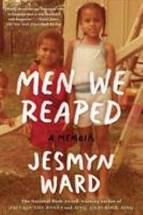
A “good” memoir focuses on one theme. My favorite memoir that demonstrates this basic principle is Jesmyn Ward’s Men We Reaped. The overarching question is why have so many of the men in her community died? The quick answer is the interrelated nature of racism, poverty, and gender. The long answer is her 256-page memoir, where chapters are written in a seesaw fashion. One chapter is devoted to understanding one man’s in-depth story, while the next chapter reflects Ward’s life as it was related to each man. By the end of the memoir, Ward has clearly made a case for how systemic racism affects human beings.  

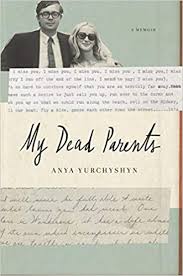
A “good” memoir has to present a bigger purpose. A bigger purpose doesn’t mean theme, necessarily, but it should answer the question: why is this author telling these stories? In My Dead Parents: A Memoir, Anya Yurchyshyn spends the first half of her book describing how much she disidentifies with her parents, how much she hates them, and how much their deaths don’t affect her. Part two digs deeper and explores who her parents really were prior to marriage and children and how this showed up in her life. This is ingenious. Anyone can write a book about why they dislike their parents. But she researches their histories as a way to see their identities, and then analyzes their lives outside of being her parents.

A “good” memoir weaves back and forth through time. This is a skill. Tara Westover’s Educated is superb at showing how to write a linear/not-linear story, which is important. While the overall story should be a cohesive narrative, it should travel back in time and then snap or slowly crawl back to the near present. For example, Westover remembers one of her brother’s violent acts from when she was an adolescent and then moves the story forward to a more recent memory of when she planned to visit home. The memory of the violence is important for how she will return and interact with her family in the book’s present.

A “good” memoir fits into a clear subgenre. Issa Rae uses humor for The Misadventures of Awkward Black Girl, which is a coming-of-age memoir. Kenan Trebinčević’s The Bosnia List: A Memoir of War, Exile, and Return is obviously a historical memoir, and so is The Girl Who Escaped Isis (Farida Khalaf and Andrea C. Hoffmann). Celebrity memoir is a thing, but more literary leaning ones, like Trevor Noah’s Born A Crime demonstrate sociocultural lessons. Finding Your Creative Muse explains more about these categories.

There’s nothing wrong with taking classes or seeking degrees; however, if you’d like to see what works for published authors, then I suggest reading in the genre you plan to write. I am also in no way advocating that you imitate the style of your favorite author. To me, that’s a no-no, but studying and learning about how others put words together? That’s a win for you and your growing body of work.

Are you intending to publish a book one day? Who’s your favorite author? What’s your favorite genre? What makes a book good?


Writer’s Workshop: Voice

My first blog post was “Why I Refuse to Judge Any Mother.” In it, I describe my observations of a friend’s mother, juxtapose her mother with how I felt about my own mother, and then explain how I hope my own daughters will see me as a mother—when they eventually begin to reflect.

Out of all the texts I received, I appreciated my journalist friend’s the most.

“Kathy, this is good,” she said. “You have what they call voice. In grad school, they used to always talk about how you should have voice in writing. You have it.”

In literature, “voice” refers to the rhetorical mixture of vocabulary, tone, point of view, and syntax that makes phrases, sentences, and paragraphs flow in a particular manner.

https://www.masterclass.com/articles/how-to-find-your-writing-voice

Whenever I write, I want the reader to experience exactly what I was thinking or feeling.

But how do I do this?

Brace yourself.

I may tell you something that goes against what you’ve been told before:

I pretty much write how I talk and think. Even that last sentence is an example. I promise you a grammar program will tell you to remove “pretty much” because it’s unnecessary, but I left it in because that’s how I talk and think. If we were together, and you asked me how do I write? I’d say I pretty much write how I talk and think.

What is also helpful is my brain’s duality. I was raised in a family that valued so-called standard English, so I grew up learning the syntax appropriate for news personalities and job interviews. However, I was also raised on the West Side of Chicago, which by all accounts is the hood. I quickly learned how to switch the verb “to be” around or to insert a cuss word so as not to be accused of talking like a White girl. I’m not special. Many Black people know how to codeswitch in this way.

What this means for my writing is I can create a sentence that appeals to White folks and Black people…or should I say Black folks and White people. You see how just interchanging those two words—folks and people—shifts meaning and tone?

I also want my writing to be accessible. I want to have a conversation with you. In order to do that, I have to write how I would talk if we were together having a latte, green tea, or Caipirinha. So, sometimes I stop, and address you directly. Maybe I’ll add a question, like what do ya’ll think to invite you into this conversation we’re having, while also throwing in the southern dialect I’ve acquired from living in Florida for over two decades.

Most of my in-real-life friends who read my blog say, “Girl, I could hear you saying…” And that’s what I want.

To reiterate, if you’re concerned with developing voice in writing, then you have to determine what “vocabulary, tone, point of view, and syntax” you want to use and why. Only you know what that is.

And remember, voice, kind of like personality, cannot be imitated because it’s something only you possess. (Full disclosure: I sat here for five minutes flip-flopping between the word possess and own).


Do you worry about voice in writing? Does it matter?

Writer’s Workshop: Indie Korner: The Basics of Self-Publishing

Hey everyone!

I’m very excited to share that I, along with Yecheilyah, a friend of mine (and WordPress blogger) will be presenting a workshop focused on how to self-publish.

This workshop is separated into two parts:

PART I is focused on writing.

You wouldn’t believe how many people tell me they want to publish a book, but they haven’t written a book, or they’ve written something, but it is a rough draft that hasn’t been edited. So, in Part I, I will share how to write an ah-mazing book. I’ll walk everyone through the difference between first drafts, revisions, and professional editing. We’ll even talk about how to choose an appropriate genre.

PART I is Sunday, June 22, 2025, 2:00–3:00 PM (EST).

PART II is focused on publishing.

Due to the influx of self-publishing, people tend to think that anyone can write a first draft and then upload it to Amazon or Lulu, and this just isn’t true. Well, it’s true, but it’s not right lol In fact, it’s one of the reasons Yecheilyah and I believe independent publishing gets a bad rep.

So, in Part II, Yecheilyah will explain the difference between traditional, vanity, hybrid, and self-publishing. She’ll also share how to avoid publishing scams, and she’ll outline the foundational steps you need to move closer to publishing your manuscript at the highest professional level.

PART II is on Monday, June 23, 2025, 7:00–8:00 PM (EST).

Register for Part I, Part II, or both by Sunday, June 15th.


Writer’s Workshop: Wanna Take a Class With Me?

Hey Good People! I have some news.

In January, I’ll be teaching a 3-part virtual class called, “Stand in Your Power: How to Share Your Truth with Authenticity and Respect” through Literary Liberation. With this course, you will learn how to write about a family story and how it has impacted you.

If you’re interested, details can be found on Literary Liberation’s Substack: Register Here!


Writer’s Workshop: Indie Publishing Woes for In Search of a Salve

In an age of curated information and toxic positivity, I want to be as honest as possible about my experience as an indie author. After all, everything hasn’t been rainbows and unicorns.

BOOK BLURBS

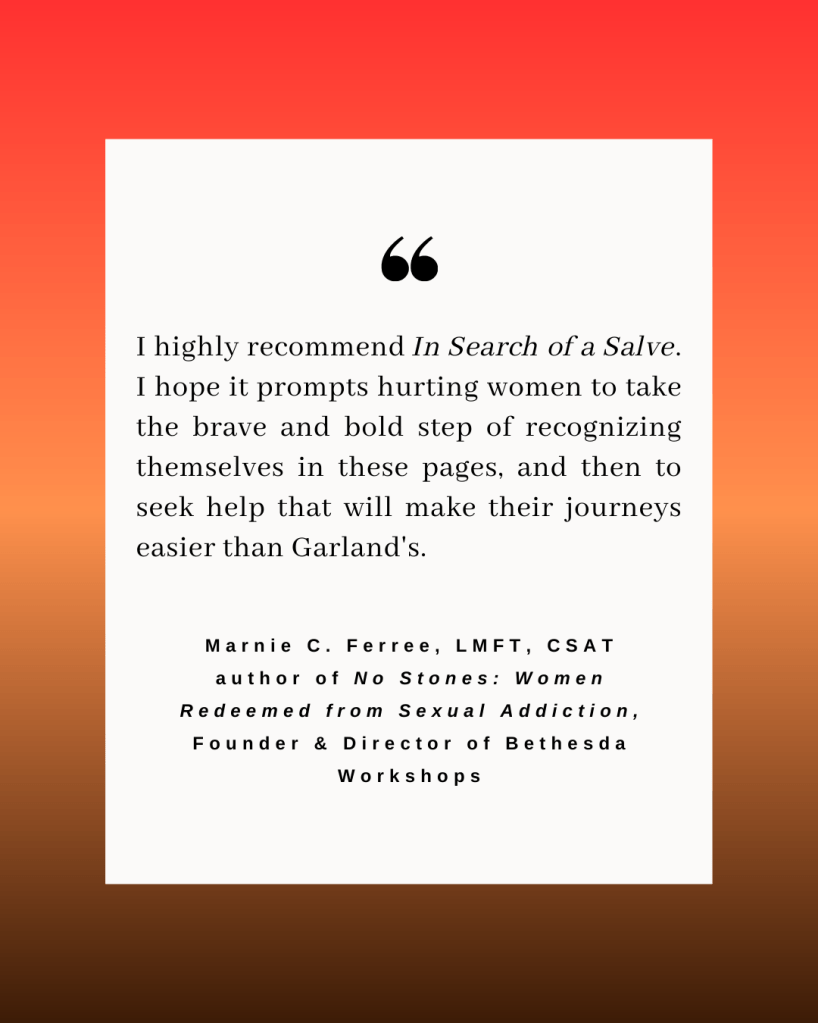
One of the first things that disappointed me is when I used my six degrees of separation to ask a well-known author to blurb In Search of a Salve. The answer was no. I wasn’t given details, and honestly, I prefer it that way. Not a big deal, I thought. I’ll just move on to the next ask. I was good, until I saw that the author had blurbed a book, which I didn’t think was very good. Months later, I saw the author’s written blessing on another book that I thought was not great. It hurt to see the author cosign others’ books and not mine. And although you shouldn’t, it’s hard not to take these things personally. It’s the kind of thing that causes imposter syndrome to resurface. However, I forced myself to move through this emotion. Ultimately, I received the blurbs that were made just for me. Thank you to Erica Garza, Marnie Ferree, Camille Hayes, and Josh Shea.

INDIE BOOKSTORES

As an indie author, I thought it would be seamless to shelve my book at independent bookstores and to hold events there. I was wrong. All independent bookstores do not support independent authors. Not only can garnering their support be more challenging, but also, some owners are not very kind.

For example, there was the Detroit bookstore owner who said, “If you want to talk about your book, then you should just have a house party with your friends and family. You don’t have to have it at my bookstore.”

A Kalamazoo bookstore owner told me to email him the details of the book reading. Then, he never returned the email. When I followed up, he instructed me to email again. A month later, he replied and said they were booked and that I should’ve contacted him sooner.

A bookstore owner in Charlotte, North Carolina said she doesn’t shelve indie books at all. One requirement for a bookstore owner in Jacksonville, Florida to carry an indie book is that it has to have 100 Amazon reviews, a goal that seems to be nearly impossible.

Thank goodness I didn’t focus on these responses. It opened space for places like 57th Street Books, Tall Tales Bookshop, Chamblin’s Uptown, Medu Bookstore, and Happy Medium Bookstore & Cafe to support my art and me.

PROFESSIONAL REVIEWS

I knew prior to publishing how important it was to attain professional reviews. Therefore, early on, I chose Kirkus. Kirkus has an independent publishing section, which means your book is not rated against traditionally published books. It is a paid review that is respected in the literary community.

When I submitted my $450, I understood the fee was for an honest review, not necessarily a good one. However, I didn’t think the commentary was going to sound a bit judgy and include spoilers. Thankfully, two things helped me not to brood over these results. First, my sister suggested I reach out to the company to see if the review could be revised. I was happy when the answer was yes. I completed their process to request a revision; subsequently, they made a few changes. Next, I submitted to the BookLife prize. Similar to Kirkus, BookLife has an indie section, and in addition to being entered into their contest, you can receive a critic’s review.

Not only was my BookLife review much more pleasant, but I also received an 8.2/10, and Salve was rated #32 in a long list of entries.

I would not be truthful if I said I’m grateful for these experiences. I am not. However, enduring them has reinforced lessons I still needed to learn, like how to move through challenges without taking things personally or agonizing over disappointments when things don’t go my way. And I’ve learned not to dwell on the so-called bad, so I can move through and receive what’s meant for me.


It’s Salve’s one-year anniversary. I’ll be sharing thoughts, impact, and commentary all month!


Monday Notes: 3 Rules I’ve Followed for Sustainable Blogging

I write when I can.

Because we live in a capitalistic society that requires money and because I desire a certain level of lifestyle, I work fulltime. Therefore, I typically prioritize my day job before all else. Once work is done, I give attention to my business, and I write. That means, I write when I can.

I always have ideas, but I don’t always have time to flesh them out; subsequently, Monday Notes was born. When I have time, I scroll through my cellphone’s notes and choose something to write about.

The idea of writing when I have time is important for me because I need un-rushed hours, space, and quiet to delve into an idea. I cannot have a work task lingering in the back of my brain or a client’s document waiting to be edited, while trying to create. My brain must be free and clear to put forth the best message.

I schedule posts.

Seldom have I eked out an essay and then immediately hit publish. There have been rare occasions where I was so full with emotions that I feverishly wrote on a plane ride. But even when that happens, I still take a minute to think about if what I’ve written is what I want to share. When I do, then I wait until there’s a free Monday and schedule it under Monday Notes.

When I have a book project, like the one that is releasing September 26th, then I schedule what I want to say around Monday Notes. For example, I began posting some book news under Writer’s Workshop because I wanted to preserve the sanctity of Monday Notes’ subscribers. Those of you who subscribe to that series deserve to read regular degular stuff, not be bombarded with reasons you should buy my book. The same goes for photography. Wordless Wednesdays are scheduled and named as such so that people who want to engage with photography can do so, and those who don’t can delete.

I don’t use the blog as a diary.

There’s journaling and then there’s blogging. They are different. I have a journal for tarot, a journal for relationships, a journal for book publishing and thoughts, a journal for gratitude, etc. No matter what, journaling is just for me. Long ago, when I began this blog, I vowed that I wouldn’t use it as a diary or journal. I promised myself that I’d only share experiences I thought would help someone, and I would write them in such a way, so they would, indeed, be helpful.

Blogging in this way has helped me to be accountable to myself. It has assured that I don’t blog to be petty. For example, there have been times when friends and family have deeply hurt me, and I began typing like that Kermit gif. But when I have that urge, I do as my husband suggests, and “take a beat.” I never want to weaponize my words simply because I have a platform, or simply because I can. Plus, can you imagine what a noncurated version of my blog would look like 👀

Anywho, the bible says, “To whom much is given.” You know the rest. Separating blogging from journaling has helped me to be responsible.

That’s how I’ve sustained blogging for eight years. There is no “right” way, so I’m interested to hear how you’ve done it. How do you keep blogging in a way that works for you?


Writer’s Workshop: Securing Advanced Reviews for Your Back Cover

When my publisher said she wanted me to attain reviews for the back cover of my memoir, I started to panic. Who would write these reviews? How would I ask someone to write a review? What if they don’t like the book? These questions and more rattled around in my brain. But I didn’t tell her that.

Instead, I said, “Okie dokie,” and began to strategize.

At first, I didn’t think I knew anyone, and I was partially right. Writing is a solitary event, especially the way I do it. I’m not a member of any writing groups, and I don’t frequent writing conferences. But I do write, and I have been published in quite a few anthologies, so I began by contacting one of the editors I’d worked with and had met in person—Deborah Santana. Yes. Santana’s ex-wife. I’d participated in a book reading for All the Women in My Family Sing a few years ago, and she told me if I’d ever needed anything, to let her know. Luckily, I hadn’t asked for anything, so I was able to cash in on this favor. While Deborah isn’t a reader, she did know women who were, so she sent me a list. After re-reading their essays, I chose three authors. In my email, I dropped Deborah’s name, complimented each woman on her work, and explained why I thought they would be interested in my book. I was completely surprised when Camille Hayes agreed.

Next, I thought about my memoir’s subject matter. I’ve alluded to quite a few scholars in the book, but two were integral. Both are sex-addiction specialist, whose ideas I’ve woven throughout to qualify my experiences. The trick this time was that I didn’t personally know either of these people. I literally googled their names, read more about them, and found their emails. You could’ve knocked me over with a feather when one of them emailed me back. Her name is Marnie C. Ferree, and she is one of the leading female sex-addiction specialists in the States. She’s counseled and healed women for 30 years. Anywho, not only did she read the book, but she and I have also become fast friends.

I thought it was also important to include a successful and traditionally published author. Due to six degrees of separation, I have access to a few, so I reached out to my contact, who reached out to three of her friends. There’s no success story here; they declined. I lamented for a bit, and then, did something else risky…I contacted two authors who have written about female sex addiction. About five minutes after I hit send, one of them replied—Erica D. Garza, author of Getting Off: One Woman’s Journey Through Sex and Porn Addiction. Again, I thought I was going to faint. She said she would be “honored to read and review” my book!

The last two reviews are from people I kind of know. The first, Joshua Shea, is an expert on porn addiction. We met via WordPress. Like many of you, he and I developed an online connection that ventured over to Instagram. He was more than willing to read and review, and I was appreciative because I wanted a male’s opinion. The fifth person is Mbinguni (Celestial Holmes), author of an excellent fiction novel, Looking for Hope. We met via a book club years ago, prior to her becoming an author. We are also on the same imprint, and her book is one of the reasons I felt confident publishing with NEW Reads.

So, that’s how I secured reviews for my back cover. I used my professional author contacts, asked people who had content related to my book’s topic, and took calculated risks. With a lot of alignment and a little bit of luck, five reputable people have endorsed In Search of a Salve. At some point, I’ll explain how I used my advance review copy (ARC) to attain other reputable reviews.