
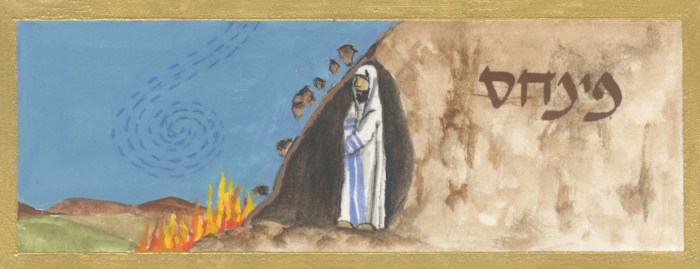
The Torah reading “Pinchas” deals with different types of leadership seen through Moses, Pinchas, Joshua, Zelophehad’s daughters and Elijah.
In this parsha Moshe was once again told that he would die before reaching the Promised Land. Knowing this Moshe asked God to appoint someone to take over his role as leader. Beautifully he said, “…so that Gd’s community will not be like sheep without a shepherd.” (Numbers 27:17). God told Moshe to appoint Joshua, son of Nun , to take over the leadership.
This choice may have been unexpected. The Torah reading begins by focusing on Pinchas, Levi and Aaron’s grandson. He was a passionate and zealous man who killed two idolators in front of the אוהל מועד, the holy Tent of Meeting. It was a shocking act, but it averted God’s wrath. God rewarded Pinchas by giving him hereditary priesthood because of his zealousness for God. Why was Joshua chosen rather than this hero and man of action?
Joshua appears several times in the Torah. The first time he appeared, he was appointed to lead a group of refugees from Egypt to fight in the war against Amalek. He must have had leadership qualities and experience to have been chosen to lead untrained men into battle. Later, when Moshe went up Mount Sinai, Joshua accompanied him and waited 40 days and 40 nights until his leader descended. Joshua and Caleb were two of the 12 leaders Moshe appointed to spy out the land of Canaan. They were the only men enthusiastic about the land. Joshua’s confidence in B’nei Yisrael’s ability to conquer their enemies made him an excellent choice as leader.

Daughters of Zelophehad before Moses, book illustration, 1908
This parsha includes the story of five exceptional, independent women. The division of land between tribes and families was being discussed. Five sisters, Mahla, Noah, Hoglah, Milcah, and Tirzah, from the tribe of Menashe, came forward. They told Moshe their father Zelophehad had died. There was no son to take the land. They asked for their father’s portion to preserve their father’s legacy and name.
They challenged a situation, demonstrating their insight and leadership. Moshe’s reaction as judge and arbiter also shows his wisdom in leadership. Unsure how to answer, he turned to God. God answered that the women were correct and should receive their father’s portion.
The haftarah tells the story of Elijah confronting Ahab and Jezebel. At the end of the narrative, Elijah appoints Elisha to take over from him. This is another recognition and change in leadership.
We see different abilities, strengths, and skills in each player participating in this week’s parsha and haftarah. Each set of abilities was appropriate for a specific task or role. That same skill will create a leader in one situation but not another. Hopefully, our leaders will be chosen for the skills that will improve our communities and the world.
Shabbat Shalom,
Laya
Please join me! I will be giving three lectures on ZOOM during the month of July. They are being sponsored by Beit AviChai in Jerusalem.
Inspiration Between Sorrow and Consolation.
My three lecture topics are The Tree Weeks of Rebuke, Tisha B’Av, and The Weeks of Consolation. I will speak about the prophets Jeremiah and Isaiah, and share art from various artists and art from my haftarah series.
The lectures are free, and you have to register through this link.
https://www.bac.org.il/en/events/?eventID=18731

 Zechariah by Michelangelo, Sistine Chapel
 Cervera, Spain, c. 1300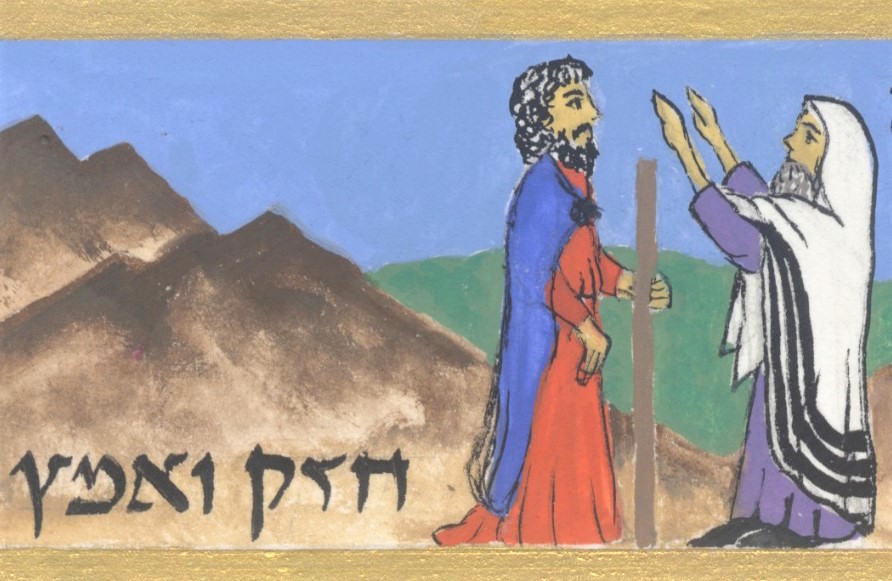
 Rahav and the Spies by Laya Crust
![1_Jericho-walls-falling-earthquake[1]](https://layacrust.wordpress.com/wp-content/uploads/2013/05/1_jericho-walls-falling-earthquake1.jpg)


 Laya Crust