Autism Speaks ~ Are You Listening? Neurodiverse Awareness ~ Repost


The following is written by my beautiful daughter, Kai, who is diagnosed as Autistic, as is one of her children. She is an advocate for the Autistic/Neurodivergent community. Her empathetic and compassionate insights shine an educated light on the realities people on all levels of the Autistic Spectrum face.

I’ve been thinking about something a lot.

Low support needs autistic people aren’t fully welcome in the autistic community OR in the non-autistic community.

(Low support needs is just like it sounds – an autistic person who doesn’t need as much help doing everyday tasks as someone who is high support needs or medium support needs but is still autistic.)

What I mean is there’s a “war” of sorts going on between parents of “high support needs” autistic people (who are generally non-speaking) and “low support needs” autistic adults (who are generally speaking or semi-speaking.)

These parents refuse to listen to the lived experiences of adult low support needs autistics because they, the parents, assert that even though they’re not autistic, themselves, they are experts in their own children more than any stranger on the internet could ever be, autistic or not, and say that since we don’t face the exact same challenges that their children do, our experiences are irrelevant to them.

As a parent, I can actually totally understand that. One of my children isn’t autistic and the other one is. Even though I’m not non-autistic, myself, I certainly know my non-autistic child better than some random non-autistic person.

However, a random non-autistic person might actually be able to give me unique insight into my non-autistic child’s behavior and needs that I never would have considered, so I don’t fully understand the total embargo that parents of “high support needs” autistics have on listening to “low support needs” autistic people.

I’ve associated with “high support needs” non-speaking or semi-speaking autistic people before. I do understand that I have an advantage of sorts over them in that I am not only able to speak, but because of my brain’s instinct and ability to mask, I am better able to blend in.

But what no one seems to realize, certainly not the parents of “high support needs” autistics who absolutely refuse to listen to someone like me (because in their mind I can more or less get along fine because I can speak and blend in) is that I DON’T “get along fine.”

I DON’T seamlessly blend in with neurotypical society. My mask can only fool someone into thinking I am neurotypical/non-autistic for a very short time. And not only that, but I have the same sensory challenges and meltdowns and shutdowns as “high support needs” autistics do.

It’s not like I’m Neurotypical Lite or something. Being autistic in this society IS a disability. I AM disabled purely by being autistic, and also by the many comorbid physical and cognitive conditions I have which are more prevalent in autistic people.

But it’s like no one believes that, not these warrior parents, and not the neurotypical world. They both share in common the belief that since I am good at (for a short time) hiding my disability that I am pretty much not disabled, and therefore any time I talk about disability, I am being disrespectful to the people who are “really” disabled, like “high support needs” autistic people.

SO, NO ONE TAKES MY EXPERIENCE SERIOUSLY.

There’s an old meme about this very thing and I of course can’t find it, so I’ll badly paraphrase it:

“Person: You’re so weird. Why are you so weird?

Me: I’m autistic.

Person: Oh. Then why are you so normal?”

It’s not that neurotypicals don’t notice that someone like me is “weird” and a little bit “off” according to neurotypical social standards, it’s that when they do and I say that I am autistic, almost without fail the response is: “wOw YoU mUsT bE sO hIgH fUnCtIoNiNg i NeVeR wOuLd HaVe GuEsSeD.”

It’s that for whatever weird reason, people assume if you’re not THE MOST this thing or THE MOST that thing, you don’t qualify to identify with that thing. There is just zero room for nuance.

And that means there’s zero room for autistics like me, anywhere. We’re somehow simultaneously too weird and too normal.

But the fact of the matter remains: I AM autistic. I AM disabled. It DOES impact me every single day. Yet on top of my challenges, I have to deal with people basically insinuating that I’m appropriating someone else’s disability, that I’m trying to lump myself in with others who are “really” disabled.

It’s like these parents, and neurotypical society, feel that I am trying to invalidate their struggles as caregivers to autistic people who DO need more care than I do, in saying that I am autistic and disabled.

It’s like they hate me before they even know a single thing about my actual reality. They assume that speaking is the end all be all and that if I can do it, I cannot possibly understand their or their children’s day to day realities. And you know what? MAYBE I DON’T. But why the HELL does that mean I have no right to MY OWN reality!?

Why is it that since I don’t need help going to the toilet and I’m not intellectually disabled and I can speak, this invalidates the rest of my experience as an autistic person. Why?

Why is it that it seems like no one is willing to believe it’s a SPECTRUM, with each autistic person having a different combination of traits and struggles that are unique to them?

Neurotypical people accuse autistic people of having “black and white” thinking but if being unable to see autism as a spectrum isn’t black and white thinking, I don’t know what is.

Refusing to understand that autistic people may manifest autistic traits to varying degrees and in varying ways and in general look and present differently from one autistic person to the next IS black and white thinking.

Believing you’re either super super super super disabled by your autistic traits and challenges, otherwise you’re not “really” autistic, is black and white thinking.

I think at least PART of the reason low support needs autistics, like myself, have drawn so much fire is that the vast majority of us oppose brutal therapies like ABA and try to educate these “warrior parents” on the harm it causes. We have said things like “since your child can’t speak, they can’t tell you whether or not the ABA is harming them but speaking autistics who have gone through it and now have PTSD can say that ABA harmed them.” They then get REALLY offended at the idea that A) someone else other than them has a right to speak for their child (but ironically listen to every single word of “experts” who say their child needs this therapy) and B) that they could unknowingly be harming their child.

So, we really get villainized for trying to advocate against this multi-billion-dollar organization which lies to parents like these warrior parents and forces these kids who CAN’T speak for themselves into essentially conversion therapy that does cause them harm.

But even without that being factored in, we just get “othered” wherever we go.

Except, you know what? When I’ve had the chance to interact with “high support needs” autistic kids and adults? I’ve interacted really well with them. THEY didn’t make me feel othered. We had a rapport. I even had caregivers of “high support needs” autistic kids tell me they were shocked how much I was able to get their child to speak or open up.

So no, I don’t know someone’s kid as well as they do, BUT I might be able to offer SOME insight into the autistic experience, even if I do not, myself, fully understand what it is like to never speak, or to take care of a child who never speaks. I have never claimed to speak for those parents or those kids or high support needs autistic adults.

But I sure as hell would LOVE to be able to speak for MYSELF without people from all sides coming in to tell me I don’t know what I’m talking about since I’m not high support needs. No, I’m not high support needs. I am probably more like medium support needs but because I am high-masking, I was diagnosed as low support needs. And my viewpoint is STILL VALID even if I don’t speak for every damn autistic person out there.

Like anyone I can ONLY speak for myself. And I wish people would just fucking let me already. You have no idea how awful it feels to go through life feeling like you don’t belong anywhere.

I do belong. I belong to myself and to a group of people who are medium to low support needs, like myself. Our experiences may be unique on the spectrum but that doesn’t negate the validity of those experiences or our right to talk about them. You don’t have to be THE MOST disabled you could possibly be in order to have the right to talk about the level of disabled you are.

Get used to us speaking up for ourselves because we’re not going anywhere.

***

Thank you, very much Kai, for your enlightening sharing on this blog. This was first posted August 20, 2022 in this blog.

God Bless Everyone Everywhere

What The Ghosting Ghost Doesn’t Realize


Emotional healing is possible, both for the victim of emotional abuse, as well as for the one, including the family member, who is deciding to use emotional abuse by ghosting. It is also possible to heal from the extended victimization of emotional blackmail when it is focused on additional family members who are threatened with being included in the ghosting should they try to intervene with the emotionally crippled ghost.

Have you ever had someone related to you drop out of your life for years, or have them only say they will never talk to you for the rest of your life, but give you no reason why they are doing this? This is called “ghosting.” The term “ghosting” became mainstream about seven years ago alongside the surge in online dating; it became an official entry in the Merriam-Webster dictionary in 2017. Interestingly, though, the term was actually used as far back as the 1990s.

On one hand, everyone has a right to privacy and staying safe in these days of online profiling and dating. However, ghosting in the 2000s has been taken to new lows, with grown children deciding to cut loving parents out of their lives, with no explanations. There have been cases where the adult children have shunned parents and even grandparents, hurting them to the core.

I asked one engaged woman, who told me matter-of-factly, that she hasn’t spoken to her mother in years. When I asked her why she decided to do that, she simply shrugged off the question, not aware that it was herself she was also hurting. Another woman said she was “getting rid of bad chi,” yet others in her circle who knew her well had no such memories in that relationship. There are sad stories of grandparents who lost one of their adult grandchildren to ghosting. One of the grandparents who had been ghosted confided in me that the ghosting adult grandchild was not to be allowed to attend his funeral, since his hurt was so deep.

While ghosting may be especially hurtful to those on the receiving end, causing feelings of ostracism and rejection, ghosting is a passive-aggressive form of emotional abuse, a type of silent treatment or stonewalling behavior, and emotional cruelty.

According to Psychology Today, when asked why people ghost, the article said, “People who ghost are primarily focused on avoiding their own emotional discomfort and they aren’t thinking about how it makes the other person feel.”

The lack of mutual social connections for people who met online also means there are fewer social consequences of dropping out of another’s life. The more it happens, either to themselves or their friends, the more people become desensitized to it, and the more likely they are to do it to someone else.

  • “Ghosting is one of the cruelest forms of torture dating can serve up.”

This post is not addressing harmful relationships that include violence, extortion, or situations where your life is in jeopardy.

Ghosting does not only occur in dating. It is also emotionally painful in mother/daughter, father/son, grandparent/grandchild, and sibling relationships.

Intentional brokenness and heartless depravity are part of the ghosting craze feeding the frenzy of hurt feelings these days, even in immediate families. It happens in human relationships when people decide to give up on each other void of empathy and ordinary care. The ghosts decides to remove themselves without explanation, from what they predetermine to be the end of the relationship.

The only problem with this action is that they also harm themselves in the process. It is a show of lack of character development and positive self-esteem at the root of such ghosts.

Many articles have been written about how bad ghosting makes the victim, the ghostee feel, but this post centers around the dysfunction the ghost brings on to his and/or herself.

When this happens in families, most ghosts do not know ahead of time that they have chosen a life of their own making that includes replacing normalcy with the constant attention from then on to shun, justify, and blow things out of proportion, in order to continue on in part of their life they have cut off. They have to constantly protect their online presence, if they have one at all. Everything is cloaked with altered names and usually threats to other family members that if they go against the ill wishes of the ghost, then they too will be ghosted. It is a constant being in the fight or flight mode in their mental and emotional state, always being on guard to not cross paths or be detected.

This is not normal. Just because it has become more common place these days, does not mean it is becoming more normal. It is a dysfunctional, mental crutch. It is a lack of character development, lack of honesty, and lack of integrity. In psychological terms, those getting between the ghost and the ghostee are triangulating.

Those triangulating stop any possible healing in the relationship between the ghost and the ghostee, often saying they simply do not want to get in the middle of the situation. But once threatened by the ghost, they are already in the middle. Often the reason for that is that the person who is triangulating, as mentioned above, has been threatened to be cut out of the life of the ghost if they do not go along with this disastrous manipulation and obligation technique, usurping the free will of the person caught in the middle.

Fear is the motivating force.

If the person the ghost is ghosting shows up unexpectedly at a social event, they will flee in order to keep up the pretense that their ghostee is not really there. The fragile glass house of the ghost might crumble into shards of denial.

Ghosts will tell you that they do not want to be around what they perceive as the negative energy anymore, as if that will work without any harm to themselves. The problem with this self-delusion is two-fold. First, they are planting seeds of dysfunction. Second, from the moment they act by ghosting others, they must then live in a pretend-reality that the other does not exist, when in actual reality, they do.

Ghosting is different from communicating, person-to-person, especially to a family member, you no longer want in your life, coming to a mutual understanding of the end of the relationship. The key here is communication. Sometimes relationships do not work out. That is life. The healthy way to handle the end of a relationship is for mutual communication, however difficult.

There are valid reasons for walking away from relationships that are not working. It is the way mature adults decide to handle relationships, either with empathy or cruelty that makes the difference in ghosting.

Can we ever go back and fix the relationships we broke by our walking away through lack of empathy?

Ghosts tend to have tunnel vision, choosing to only see or remember the parts of their lives that they keep a constant drum beat of the offences, arguments, or one major eruption by which they felt slighted or injured. They keep its beat as close as the beat of their heart, hardening their hearts with every dysfunctional memory.

Some ghosts do not want to heal. Their pride and ego means more to them than the relationship. There is a mantra learned by every energy worker, holistic healer and everyone in the healthcare field. It is, “Are you ready, willing and able to heal?”

It is up to the ghost whether or not they want to heal. No one will heal if they do not want to. It is not the perceived offender who is stopping their healing. It’s themselves.

As in all relationships, more than one person is involved. It requires both parties being ready, willing and able to heal. If both parties want to heal, healing can take place.

There are some situations where the ugly head of gear, obligation, and guilt (aka FOG) are used as motivating forces. These outside forces, including manipulation, can be applied by others in the circle of the ghost. Ghosts may be under the manipulation of others, that if they do not conform, they themselves will be ostracized from the other relationship, club, or social circle.

All manipulators have painfully learned the lessons of guilt and manipulation by being manipulated themselves. It can become their survival technique, and how to get others to do their bidding.

For example, has anyone ever said to you, “If you talk with so-and-so, I will never talk to you again?” Also, manipulators often force others to manipulate, such as statements like, “I do not want you ever to talk about so-and-so to me. If you do, I will never talk to you again either.”

How do you like being manipulated?

Does that work for you?

Have you given your personal power away to the person manipulating you?

Do you want to heal emotionally?

The dawning of social media spawned a growing social awkwardness. In some cases, with the breaking down of communication, it became easier not dealing with people face-to-face. Why talk when you can text? Why say whole words when you can shorten to a few letters? Why have the need to communicate at all?

While social media and dating apps became popular in the 2000s, the more common reason for the malaise of ghosting is lack of empathy. We see lack of empathy all around us, in relationships, social settings, and even politics.

There is an inherent ambiguity in ghosting—the person being ghosted does not know whether they are being rejected for something they or somebody else did, whether the person doing it is ashamed or does not know how to break up, or is scared of hurting the other’s feelings.

In the dating scenario, the ghost may simply not want to date the victim anymore, or may have started dating someone else while keeping the ghostee as a reserve option in case a relationship does not work out with said other date, as well as they can be facing serious problems in their lives. It may become impossible to tell which it is, making it stressful and painful.

While “ghosting” refers to “disappearing from a special someone’s life mysteriously and without explanation,” numerous similar behaviors have been identified, that include various degrees of continued connection with a target. For example, “Caspering” is a “friendly alternative to ghosting. Instead of ignoring someone, you’re honest about how you feel, and let them down gently before disappearing from their lives.” A possible response to ghosting has been suggested with “ghostbusting”: forcing the “ghoster” to reply.

Then there is the sentimental and positive, but also ghost-related in origin, “Marleying,” which is “when an ex gets in touch with you at Christmas out of nowhere”. “Cloaking” is another related behavior that occurs when an online match blocks you on all apps while standing you up for a date. The term was coined by Mashable journalist Rachel Thompson after she was stood up for a date by a Hinge match and blocked on all apps.

Whatever newfangled terms we come up with, nothing replaces honesty and integrity in relationships as much as face-to-face communication, especially in the making-up phase.

Reconciliation is always possible as long as both people are still living. Life is too short to continue ghosting. It takes self-correction, forgiveness of self and others, and the magnanimity of spirit to be empathetic rather than cruel.

God Bless Everyone Everywhere

Virtues As Explained By Ezekiel 18:21-28


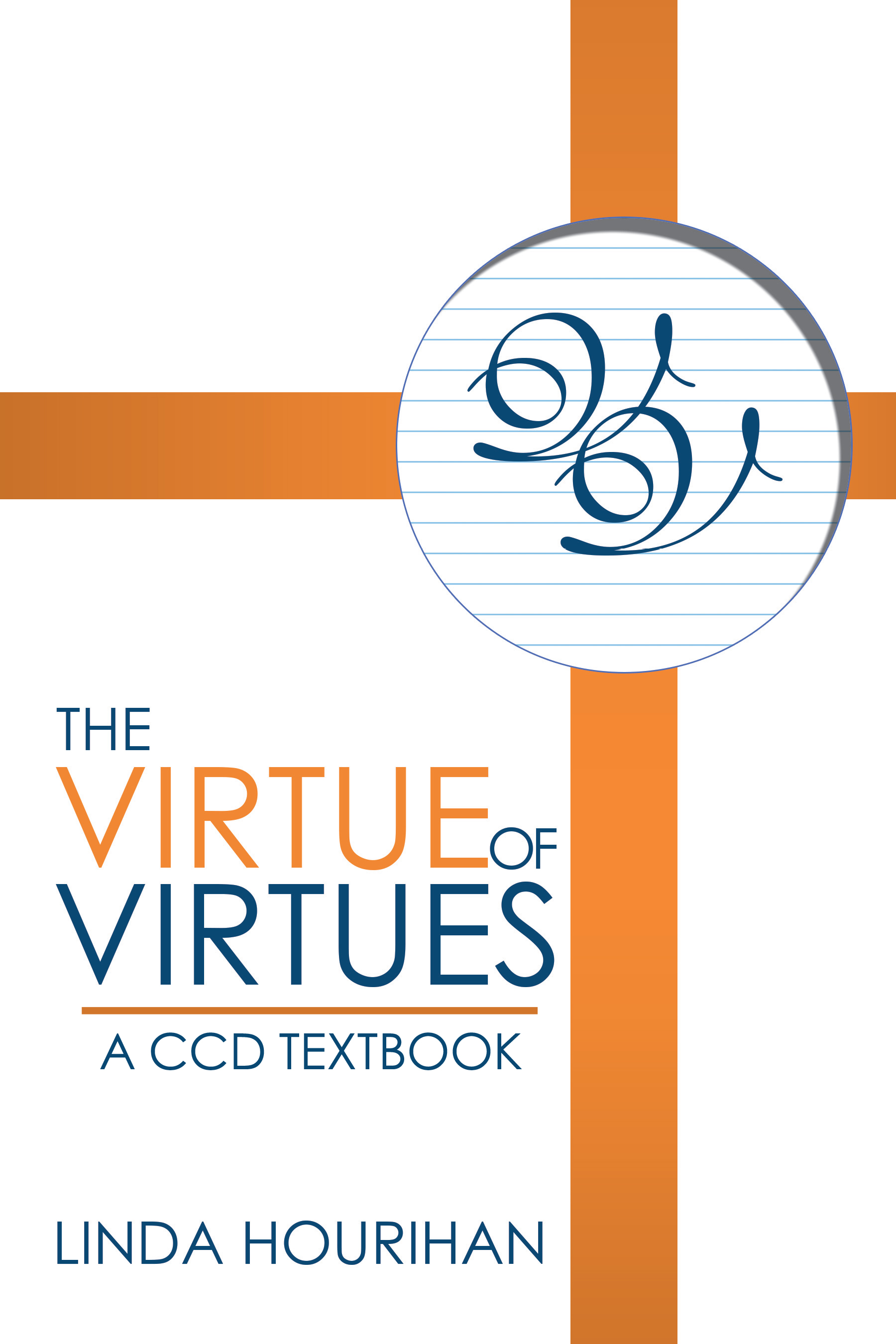
It’s as if Ezekiel was in my head this morning as I continue to promote The Virtue of Virtues all over the world. Virtues are given to us by God, exemplified by Jesus, and bolstered by the Holy Spirit. And here was Ezekiel in chapter 18, verses 21-28 in this morning’s first reading:

“Thus says the Lord God: If the wicked man turns away from all the sins he committed, if he keeps all my statues, and does what is right and just, he shall surely live, he shall not die. None of the crimes he committed shall be remembered against him; he shall live because of the virtue he has practiced. Do I indeed derive any pleasure from the death of the wicked? says the Lord God. Do I not rather rejoice when he turns from his evil way that he may live?

“And if the virtuous man turns from the path of virtue to do evil, the same kind of abominable things that the wicked man does, can he do this and live? None of his virtuous deeds shall be remembered, because he has broken faith and committed sin; because of this, he shall die. You say, “The Lord’s way is not fair!” Hear now, house of Israel: Is it my way that is unfair, or rather, are not your ways unfair? When someone virtuous turns away from virtue to commit iniquity, and dies, it is because of the iniquity he committed that he must die. But if the wicked, turning from the wickedness he has committed, does what is right and just, he shall preserve his life; since he has turned away from all his sins that he committed, he shall surely live, he shall not die.”

Surely today we are past the diverting and separatist point of insisting “man” be changed to “man and woman” or to the less correct and more generic plural of human or human beings in Ezekiel’s writing, which was not meant to be insulting to anyone. All of us are included in that “man.”

Ezekiel is an Old Testament prophet and writer who relied on the law of the Ten Commandments. Ezekiel wrote about history from 613 BCE to 536 BCE, during the Babylonian exile. He preached the same message as did Jeremiah: Repent and be well. Ezekiel brings out personal accountability using the virtues as signposts.

Jesus arrives on the scene around 2536 years later and give us the Beatitudes in Matthew 5. It seems, even then, we forgot how to be virtuous, doing what is right and just, so we need to be reminded. It seems we keep forgetting about the virtues, with the vices shining so brightly in our society. We get distracted, even the most well-meaning among us.

The key is to begin again … and again … and again …

Fortitude is one of the virtues that can help us stay faithful to our promises, faithful to our promises to God and to one another.

9781532094613_pap.inddLet us have the fortitude to begin again to study and practice the virtues, teaching them along the way. The Virtue of Virtues is a great help to get back on track to a virtuous life, or to help us maintain a virtuous life in times of trials and tribulations.

To get your copy of The Virtue of Virtues, go to:

https://www.iuniverse.com/en/bookstore/bookdetails/809142-the-virtue-of-virtues

ISBN: 978-1-5320-9461-3 is $10.99 for soft cover

ISBN: 978-1-5320-9462-0 is $ 3.99 for eBook

BORN TO MANIFEST THE GLORY


“Our deepest fear is not that we are inadequate.10423747_10153050671147625_2308527722364642074_n

Our deepest fear is that we are powerful beyond measure.

It is our light, not our darkness, that most frightens us.

We ask ourselves

who am I to be brilliant, gorgeous, talented and fabulous?

Actually, who are you not to be?

You are a child of God.

Your playing small doesn’t serve the world.

There is nothing enlightened about shrinking so that

other people won’t feel insecure around you.

We are born to make manifest the glory of God

that is within us.

It’s not just in some of us; it’s in everyone.

And as we let our light shine, we unconsciously

give other people permission  to do the same.

As we are liberated from our own fear,

our presence automatically liberates others.”

– Nelson Mandela

1994 Inaugural Speech


When we choose to carry an imbalance of self-worth within us, we are making the active choice to go into fear, or stay in fear-based, erroneous thought. It is a choice, conscious or unconscious. We choose to think our thoughts. We are not a victim here, unless we choose to be.

The fact that our self-worth is a direct product of what we feed our mind with can be upsetting to some people who do not yet realize that they are in charge of their thoughts, moods, words and actions.

Our thoughts, moods, words and actions do not choose us. We choose them. It is our deciding to believe either what we tell ourselves, or others tell us that can sabotage us.

How do we remedy this?

One way to move past dysfunctional and self-sabotaging habits of the past that have stifled our growth mentally, emotionally, physically and spiritually, is to begin, or begin again to allow ourselves to think new thoughts.

If we do not like how we are feeling, we need to change how we are thinking. This concept helps with every facet of life, even physical illness. We may not be able to change the past and many other things in our life, but what we choose in our response, of what we to do next, which is the answer to peace, love and joy for the rest of our life.

Remember, it takes 21 days to change a deeply ingrained dysfunctional habit. During these first 21 days of deciding to think, say and do things differently, infusing hope, peace and forgiveness – especially of ourselves; start and re-start again. If we catch ourselves in the old habit, we need to remind ourselves to STOP, and start yet again.

The reason I say to infuse forgiveness – especially of ourselves, is that we can be the harshest of critics, holding grudges to ourselves, which never allows for healing. So, if we really want to grow in self-esteem, to realize that we are perfect as we are, we need to let go of what no longer serves us. Our thoughts, words and actions may have served us in the past. But now is time to wake up and move on. We need to liberate of ourselves from the misguided concepts of perfection.

We are perfect as we are created by the glory of God, which we can radiate, if we allow ourselves to do just that. It is what we choose with our free will once we become aware of the limitless possibilities and opportunities before us that shape our future.

Now is the time to manifest the glory of God in each one of us.

God Bless