Isn’t it Interesting that so Few of St. Stephen’s Words Are Preached from Pulpits when They Are in the Bible in Acts 6-7


December 26 is the Roman Catholic Feast Day of St. Stephen, martyr of the faith taught to him by Jesus Christ. Stephen spoke against popular traditions then which humanity still loves now.

Many sources say that Stephen was stoned to death and one source even mentions Christmas, but what is the Christmas connection?

“Our celebration of St. Stephen today reminds us that Christmas is not all about eating and drinking. It is a celebration of the SACRIFICIAL LOVE of God for us. If God so loved us, we must love one another. If God so loved us even when we were His enemies, we must love our enemies and pray for them.” online source: https://dailymasses.blogspot.com/2023/12/what-st-stephen-teaches-us-about.html

Why mention Christmas at all if Stephen was not stoned for his teaching about the current Christmas celebrations in his time?

Stephen was murdered because of his words against Christmas traditions which are many of the same traditions of Saturnalia. He spoke the longest speech in the New Testament, Acts 7:2-53., which is why he was publicly stoned to death.

His words of truth that no one wanted to hear earned him death.

Stephen was one of the seven “deacons.” The apostles present felt they were too important to serve food. Instead, they felt they should be teaching and preaching and therefore chose seven men to serve the food. They dubbed the seven chosen by the apostles to help with the distribution of food “deacons.” Stephen was also known for his preaching and miracles and helping the poor. What he said at the time angered those present so much they made up false charges of blasphemy against him. He was called in to the Sanhedrin to answer the charges. It was Stephen’s speech before the Sanhedrin, the Jewish council, that led to his stoning.

What did Stephen say?

Many of the words of Stephen have been silenced and substituted with other words telling the human flocks of sheep what to think, say and do, specifically about Christmas. These words are not silent in the Bible in Acts 6-7, but you won’t hear that preached from any pulpit during the Christmas season, nor today, December 26 on the Feast Day of his stoning.

Stephen told them they were worshipping the pagan gods, Molech and Rephan. 

Molech is the god of Saturn., the god of the Old Testament, the same god who makes a covenant in the Dead Sea Scrolls, in The Temple Scroll, II. It is there you will find the covenant between this god and the Jews wandering in the desert, if they would build him a Temple and supply him with bulls and blood, grain and wine, he would kill all their enemies.

Rephan is the god in the Old Testament called Baal, who is most is associated with the sacrifice of human babies during old rituals of Saturnalia.

Stephen challenged that the true God has no need of a Temple, that Jesus taught that every human being is a Temple of the Spirit of God, now known as Eternal Universal Light Force Energy, or the Light within you as Jesus taught in Luke 17:20-21.

When Stephen taught what Jesus taught him, Stephen was stoned to death for speaking against the current Christmas customs. How dare Stephen stop their fun and merriment through an inconvenient truth.

How are our Christmas traditions the same as the ones Stephen spoke against?

“During Saturnalia, work and business came to a halt. Schools and courts of law closed, and the normal social patterns were suspended.

“People decorated their homes with wreaths and other greenery, and shed their traditional togas in favor of colorful clothes known as synthesis. Even enslaved people did not have to work during Saturnalia, but were allowed to participate in the festivities; in some cases, they sat at the head of the table while their masters served them.

“Instead of working, Romans spent Saturnalia gambling, singing, playing music, feasting, socializing and giving each other gifts. Wax taper candles called cerei were common gifts during Saturnalia, to signify light returning after the solstice.

“On the last day of Saturnalia celebrations, known as the Sigillaria, many Romans gave their friends and loved ones small terracotta figurines known as signillaria, (those baby faces signifying making their first born ‘walk through the fire’ on Molech’s sacrificial alter) which may have referred back to older celebrations involving human sacrifice.

“Saturnalia was by far the jolliest Roman holiday; the Roman poet Catullus famously described it as “the best of times.” So riotous were the festivities that the Roman author Pliny reportedly built a soundproof room so that he could work during the raucous celebrations.” Source: https://www.history.com/topics/ancient-rome/saturnalia

Acts 6:2 says, “So the Twelve gathered all the disciples together and said, “It would not be right for us to neglect the ministry of the word of God in order to wait on tables.”

According to the Bible, on the 26th of December, while they were celebrating and feasting, Stephen said, “You have taken up the tabernacle of Molek and the star god Rephan, the idols you made to worship. Therefore I will send you into exile’ beyond Babylon.” Acts 7:43: https://biblehub.com/acts/7-43.htm

I suggest the party was the ever-popular Saturnalia festival which never stopped being celebrated, even by other religions, including the Jewish and new Christian people in Stephen’s time.

Let’s go back one verse, in Acts 6:1. What is going on here?

“In those days when the number of disciples was increasing, the Hellenistic Jews among them complained against the Hebraic Jews because their widows were being overlooked in the daily distribution of food.” New International Version (NIV)

It is said that Stephen was either a Greek or a Jew who had studied in Greece. He was also concerned that the Greek Jews, specifically the women, were not being considered in the daily allotments of food.

Remember that Stephen spent much of his time devoted to feeding the hungry, both Greek and Hebrew Jews, but his more important role was to teach what Jesus taught him, that everyone has the Kingdom of God, or the Light of God within each of them.

Stephen took offense at being expected to be a server of food at a pagan Saturnalia festival, which Jesus taught against.

During Stephen’s lengthy debate in Sacred Scripture, in Acts 7:2-53, and specifically in Acts 7:44-53, Stephen questions the audacity of Jewish belief that the god of the Old Testament is the same God, Almighty Father of Jesus Christ, especially in verses 48-50: “However, the Most High does not dwell in houses made by human hands. As the prophet says:

“Heaven is My throne and the earth is My footstool.

“What kind of house will you build for Me, says the Lord,

“or where will My place of repose be?

“Has not My hand made all these things?’” Isaiah 66:1-2

Stephen says in Acts 7:51-53, “You stiff-necked people with uncircumcised hearts and ears! You always resist the Holy Spirit, just as your fathers did. Which of the prophets did your fathers fail to persecute? They even killed those who foretold the coming of the Righteous One. And now you are His betrayers and murderers—you who received the law ordained by angels, yet have not kept it.”

The rational teaching of Jesus coming from the lips of Stephen could not be heard nor understood due to their misunderstood indoctrination. They did not recognize that prophecy was unfolding before their eyes.

During one debate with Diaspora Jews, Stephen’s speech in a temple so offended them that they accused him of blasphemy. He was arrested and charged with speaking against “this holy place and the law.” Stephen’s spirited defense included the implication that the Temple was idolatrous, comparable to Aaron’s golden calf.

“At this they covered their ears, cried out in a loud voice, and rushed together at him. They dragged him out of the city and began to stone him. Meanwhile the witnesses laid their garments at the feet of a young man named Saul, who condoned the stoning of Stephen. ” Acts 7:57-58

Saul was a Pharisee, and was the son of a Pharisee, mentioned in Acts 23:6. Saul, renamed Paul (after his vision of Jesus on the road to Emmaus), was an adopted apostle after the crucifixion of Jesus.

“While they were stoning him, Stephen appealed, “Lord Jesus, receive my spirit.” Falling on his knees, he cried out in a loud voice, “Lord, do not hold this sin against them.” And when he had said this, he fell asleep.” Acts 7:59-60

It is vitally important to understand that forgiveness is ours when we come to see the error of human because we too have been indoctrinated.

It is only when we personally come to terms that the Light of God dwells within each of us, that we truly are the Temple of God on Earth.”

God Bless Everyone Everywhere

Where Do Christmas Customs Come From?


The shepherds could only be out in the fields with the sheep as late as September or October, not December 25, when the fields were filled with snow and ice. The birth of Jesus was put on Mithras birth date, December 25. Mithra practiced child sacrifice.

“To be ignorant of the lives of the most celebrated men of antiquity is to continue in a state of childhood all our days.” Plutarch

The Christmas tree, the wreath, the mistletoe, the holly, the presents, the feasts and the parties, did they really originate with the birth of Jesus?

No.

Most of today’s Christmas celebrations began as the pagan celebration of Saturnalia revolving around the harvest god Saturn, for providing people with abundant crops. Saturn’s feast day was celebrated on December 17. That celebration was so popular that in the days of Nimrod, the great hunter who set himself up in opposition to the God, decided to establish a celebration of the sun god, Mithras (Mithra) on December 25, the birthday of Mithra. Nimrod, and no other person, claimed that the god of the sun, would be celebrated on December 25. Then it was decided to have the celebration last for a week. It was a week of orgies and anything goes – including all forms of debauchery with wild abandon, like thieving and murder, eating foods sacrificed to idols, and of course, child sacrifice. After his death, it was said that Mithra was Nimrod reincarnated, so that he would never die.

The myth of Santa Claus has many variations, including the Norse mythological god named Wodin, also known as Odin, who had a long white beard, in the land to the north called Vilhalla. There was also the Norse god Thor, a god of peasants and the common people. He was a jolly man with a rolly-polly belly. Thor’s element was fire and his color was red. These myths began in Iceland, with lots of fireplaces included in the myths. Thor rode in a chariot pulled by two white goats named Cracker and Gnasher. Thor successfully fought ice and snow giants and became known as the yule-god.

Then there was the real Nicholas, a teenage orphan who inherited wealth from his rich parents, and who was later termed a saint by the Catholic Church due to his secret generosity to the poorest people of his time. Nicholas only entered the Christmas story after the third century, after the birth of Jesus. Nicholas was one of the bishops who attended the Council of Nicaea in the year 325 A.D.

St. Nicholas is best remembered as the bishop who helped out a poor family with three daughters. They were so poor that they did not have dowries to get married. The night before the first daughter was to be sold as a slave, she had washed her stockings and left them in front of the fireplace to dry. In the morning she found a bag with gold in it. The same thing happened with the second daughter on the next night, and the third daughter on the night after that. They discovered it was Nicholas who saved them from being sold into slavery. He did not believe that people should own people. From then on, he was called St. Nicholas, helper of the poor and of children.

Another famous story, about St. Nicholas as told in my book, MYSTERY OF THE STURBRIDGE KEYS, occurs at the Christmas By Candlelight celebration which takes place each year in real time at Old Sturbridge Village in Sturbridge, Massachusetts each Christmas season. In this chapter, Santa Claus is relating this particular real-life story of St. Nicholas:

“Here is another quick story of how St. Nicholas helped a child. The oldest story of St. Nicholas did not become known until well after his death. In the town of Myra, which today is Anatalya in a Province of Turkey, the townspeople were celebrating the Feast of St. Nicholas, December 6. All of a sudden, a band of Arab pirates from Crete, the largest of the Greek islands, came into the district, stealing treasures from the Church of St. Nicholas, to take as booty. As they were leaving, they kidnapped a young boy named Basilios, and brought him to their king to make him a slave.

“The Arab king chose Basilios to be his personal cupbearer because he did not know the language, and would not know what the ruler was saying to those around him. Basilios did this job for a whole year, while his mother grieved for him and missed him very much, especially since he was her only child. As the next Feast of St. Nicholas Day came, the mother did not celebrate it since it was a day of mourning for her. Instead, she offered prayers for the safety and return of her son….

“Meanwhile, as Basilios was doing what he had been doing every day that year, serving the king, he was suddenly whisked away. St. Nicholas appeared to him, blessed him, and brought him back to his home in Myra. He appeared before his parents, still holding the king’s gold cup. Sailors took this story across the seas to other lands. This is how St. Nicholas also came to be known as the patron saint of sailors.

How far back does the Christmas tree tradition go? Do we have any biblical references?

Yes.

Jeremiah 10:3, “Their ways are futile and foolish. They cut down a tree and carve an idol, and decorate it with gold and silver and fasten it securely in place with hammer and nails, so that it won’t fall over, and there stands their god like a helpless scarecrow in a garden! It cannot speak, and it must be carried, for it cannot walk. Don’t be afraid of such a god for it can neither harm nor help, nor do any good.”

The Christmas tree tradition goes back to the days of Nimrod and Ishtar. It is one of the customs begun at that time as part of the festivals of the harvest god, Saturn and the sun god, Mithras. Remember, Nimrod was mad at God for sending the flood and set himself up in opposition to God. The Christmas tree is one of the customs he began to have people celebrate something other than anything to do with God.

Santa Claus and his helpers have their mythical stories. Santa is also known as Sinterklass, Santeclaus, and Christkind, and in Germany, had not only elves, but also a weird, mysterious sidekick who people have given many names to, like, Knecht Ruprecht, and Black Peter. In the Middle Ages, Knecht Ruprecht appeared along with St. Nicholas. But while St. Nicholas was known to give presents like bags of candy, chocolate, gingerbread, peanuts and mandarin oranges to the children whose behavior was good on St. Nicholas Day, which was on December 6; Knecht Ruprecht would give switches and coal to children whose behavior was bad. Knecht Ruprecht wore either a brown or black robe, or fur. He also had a long beard, and carried a bag of ashes. Like St. Nicholas, he also rode a white horse. Knecht Ruprecht is also connected in German Folklore with Black Peter, because of the soot that covered him from his sliding down chimneys. Black Peter was a lot like the mythical house spirits and elves who were known to punish the misdeed of children.

This story is said to have circulated so parents could maintain order in their homes and in society. These little dark, impish characters were also known as Pelznickle, Ru-Klas, Swarthy, Dark One, Dark Helper, Hans Trapp, Krampus, Grampus, Zwarte Piets, Furry Nicholas, Rough Nicholas, and Julbuk.

Some Christian sects of the 1830s are said to have known him as a demon, evil one, the devil and Satan.

Back when Constantine ruled the Roman Empire, at the end of his life, he became Christian and wanted to rule the world. He thought this would best be accomplished by using religion, namely Christianity. Isn’t there a Roman Catholic Church in just about every city and town worldwide? To sway people over to Christianity, since the pagan Saturnalia was so popular as well as most of the Mithra celebrations, Constantine decided to put the birth of the Son of God, Jesus Christ, on the birth of the sun god, Mithra. In that light, every time we celebrate today’s Christmas holiday, we are still honoring a pagan god on his feast day.

What is wrong with that?

Stephen is the first martyr of the Christian faith, stoned to death on December 26. The apostle Paul was in complete agreement with the stoning of Stephen prior to Paul’s conversion when Jesus Christ, appeared to him post-resurrection on the road to Damascus. Paul was trained as a Pharisee as his father had been.

Why was Stephen martyred?

Stephen preached against the pagan Saturnalia and Mithra rituals, including orgies, breaking the Ten Commandments, eating foods sacrificed to idols and for speaking against child sacrifice on December 25. These rituals were to be celebrated under penalty of death. If anyone did not offer your first born to be burned to death at the temple, then they also got to be burned to death at the temple. They thought this supreme sacrifice would bring them enlightenment. Fear was a tremendous motivating force, as some still use it today.

We say we are really celebrating the birth of Jesus. If we really want to do that, we would celebrate when Jesus was actually born, when the shepherds were still out in the fields, watching their flocks by night. This means Jesus was born between September and October, when it was still warm enough to do that. Also, the census of the entire world would not have taken place at the time of year when the roads would have been tough to travel laden with ice and snow. Mary and Joseph traveled on foot, with Mary riding on a donkey, to Bethlehem, to the city of David to register, not possible on December 25.

It is good to have more information on where our Christmas customs and traditions come from so we can be clear on what we choose to celebrate, or not, and why.

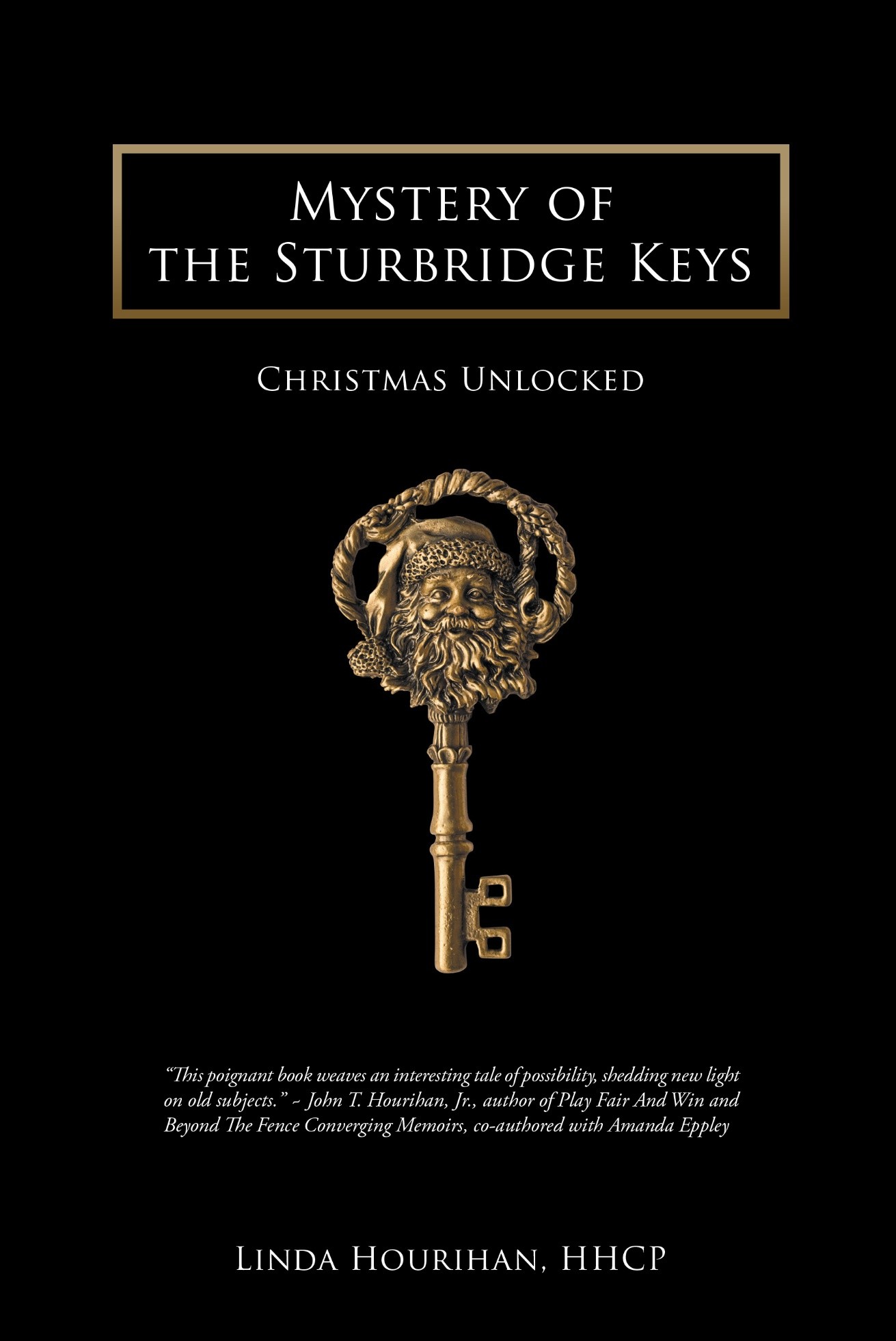
My book, MYSTERY OF THE STURBRIDGE KEYS, which is subtitled, CHRISTMAS UNLOCKED is a fiction book for pre-teens to adult about accurate history, pre-history and antediluvian history; featuring Bree, a 13 year old, female protagonist at a time in this world is in need of such a heroine. She babysits Jesus when he is 2 years old, meets the Magi, and also goes back in time to meet Noah and the Nephilim. This book is available at:

http://bookstore.iuniverse.com/Products/SKU-001108064/Mystery-of-the-Sturbridge-Keys.aspx

softcover / ISBN: 978-1-5320-0761-3 / $13.99

eBook / ISBN: 978-1-5320-0762-0 / $3.99

Namaste

Jesus Was Born In September Or October Not December 25, The Feast Day of Pagan god Mithras


No one knows the real birthday of Jesus. But one thing is for sure. It is not on December 25. Several facts point to the actual birth of Jesus taking place in September or October.
Let us look at the facts. At the time of the birth of Jesus, when that big new star was shining in the night sky, shepherds were out in the fields, watching their flocks by night. Shepherds were able to keep their flocks of sheep out in the fields day and night during the summer and into the early fall months, until the rainy season began. They went by the Jewish months in the Torah. The rainy season was called Heshvan, in what is now fall. When the winter months arrived, it was too cold with frost and snow to keep the sheep out in the fields. Shepherds were not out in the fields during the winter.

Remember that the reason for Mary and Joseph to go to Bethlehem was to register for the census. It was the first registration of people of the earth of its kind. Caesar Augustus sent out a decree for all the inhabited earth to be registered. Even the Syrian Governor Quirinius was interested in the outcome. Everyone belonging to the house of David had to register in Bethlehem. This census would not have taken place in the winter when the roads would have been treacherous with ice and snow.

So why was the celebration of the birth of Jesus moved to December 25?

At the time of the decision to put the birth of Jesus on December 25, (the Iranian god Mithras’s (their sun god) birthday was on December 25, established by none other than Nimrod of Babylonian fame); the Roman Empire was in charge. Nimrod and Ishtar, who self-dubbed herself as “Semiramis, Goddess of the Moon.” They created popular new customs that became instantly popular, like cutting down evergreen trees and decorating them with silver and gold ornaments, putting up wreaths and mistletoe, and Yule logs. Sound familiar?

People did not want to give up these popular customs, which also included celebrating the god of sowing and harvest, Saturn, which was celebrated on December 17 (in today’s calendar). Nimrod expanded the celebrating time between December 17-25 as a time of unbridled revelry, anything goes, wild parties, drunken orgies, and decadent food.

When the Roman government wanted to rule over the entire world, it was decided to put the celebration of the birth of Jesus on Mithras’s feast day, December 25, as a way to entice new Christians to switch over to belief in Jesus, instead of celebrating Mithras as the “Sun god.” They thought they could trade the “Sun god,” for the “Son God.” However, all of the customs and traditions that celebrate the false, man-made god Mithras (man-made by Nimrod and Ishtar), remain to this day.

All of the other religious holiday traditions likewise replaced secular feast days and celebrations, like the Spring and Fall Equinoxes and the Summer and Winter Solstice celebrations.

Many Christians today are taking a closer look at Christmas as the “reason” to celebrate the birth of Jesus. If Christians truly believe that Jesus is the “reason for the season,” then we ought to be celebrating the birth of Jesus when he was actually born, in September or October, not on a false, pagan god holiday, complete with all of the false God’s customs and traditions, on December 25.

Have you ever asked yourself why there are so many Roman Catholic Churches in every city and state in the world?

There is much that has been misunderstood about the life of Jesus, including what has been neatly carved out of modern bibles, which does appear in the hidden scriptures found at Nag Hammadi and the Dead Sea Scrolls. The Books of Enoch hold such pearls from which even Jesus has quoted.

There is so much more for us to know that the convenient stories that have repeated on an infinity loop since what has been taught since sixth grade.

God Bless Everyone Everywhere

Where Do Christmas Customs And Traditions Really Come From? Was Jesus Really Born On December 25?


“To be ignorant of the lives of the most celebrated men of antiquity is to continue in a state of childhood all our days.” Plutarch

The Christmas tree, the wreath, the mistletoe, the holly, the presents, the feasts and the parties, did they really originate with the birth of Jesus?

No.

Most of today’s Christmas celebrations began as the pagan celebration of Saturnalia revolving around the harvest god Saturn, for providing people with abundant crops. Saturn’s feast day was celebrated on December 17. That celebration was so popular that in the days of Nimrod, the great hunter who set himself up in opposition to the God, decided to establish a celebration of the sun god, Mithras (Mithra) on December 25, the birthday of Mithra. Nimrod, and no other person, claimed that the god of the sun, would be celebrated on December 25. Then it was decided to have the celebration last for a week. It was a week of orgies and anything goes – including all forms of debauchery with wild abandon, like thieving and murder, eating foods sacrificed to idols, and of course, child sacrifice. After his death, it was said that Mithra was Nimrod reincarnated, so that he would never die.

The myth of Santa Claus has many variations, including the Norse mythological god named Wodin, also known as Odin, who had a long white beard, in the land to the north called Vilhalla. There was also the Norse god Thor, a god of peasants and the common people. He was a jolly man with a rolly-polly belly. Thor’s element was fire and his color was red. These myths began in Iceland, with lots of fireplaces included in the myths. Thor rode in a chariot pulled by two white goats named Cracker and Gnasher. Thor successfully fought ice and snow giants and became known as the yule-god.

Then there was the real Nicholas, a teenage orphan who inherited wealth from his rich parents, and who was later termed a saint by the Catholic Church due to his secret generosity to the poorest people of his time. Nicholas only entered the Christmas story after the third century, after the birth of Jesus. Nicholas was one of the bishops who attended the Council of Nicaea in the year 325 A.D.

St. Nicholas is best remembered as the bishop who helped out a poor family with three daughters. They were so poor that they did not have dowries to get married. The night before the first daughter was to be sold as a slave, she had washed her stockings and left them in front of the fireplace to dry. In the morning she found a bag with gold in it. The same thing happened with the second daughter on the next night, and the third daughter on the night after that. They discovered it was Nicholas who saved them from being sold into slavery. He did not believe that people should own people. From then on, he was called St. Nicholas, helper of the poor and of children.

Another famous story, about St. Nicholas as told in my book, MYSTERY OF THE STURBRIDGE KEYS, occurs at the Christmas By Candlelight celebration which takes place each year in real time at Old Sturbridge Village in Sturbridge, Massachusetts each Christmas season. In this chapter, Santa Claus is relating this particular real-life story of St. Nicholas:

“Here is another quick story of how St. Nicholas helped a child. The oldest story of St. Nicholas did not become known until well after his death. In the town of Myra, which today is Anatalya in a Province of Turkey, the townspeople were celebrating the Feast of St. Nicholas, December 6. All of a sudden, a band of Arab pirates from Crete, the largest of the Greek islands, came into the district, stealing treasures from the Church of St. Nicholas, to take as booty. As they were leaving, they kidnapped a young boy named Basilios, and brought him to their king to make him a slave.

“The Arab king chose Basilios to be his personal cupbearer because he did not know the language, and would not know what the ruler was saying to those around him. Basilios did this job for a whole year, while his mother grieved for him and missed him very much, especially since he was her only child. As the next Feast of St. Nicholas Day came, the mother did not celebrate it since it was a day of mourning for her. Instead, she offered prayers for the safety and return of her son….

“Meanwhile, as Basilios was doing what he had been doing every day that year, serving the king, he was suddenly whisked away. St. Nicholas appeared to him, blessed him, and brought him back to his home in Myra. He appeared before his parents, still holding the king’s gold cup. Sailors took this story across the seas to other lands. This is how St. Nicholas also came to be known as the patron saint of sailors.”

untitled (2)How far back does the Christmas tree tradition go? Do we have any biblical references?

Yes.

Jeremiah 10:3, “Their ways are futile and foolish. They cut down a tree and carve an idol, and decorate it with gold and silver and fasten it securely in place with hammer and nails, so that it won’t fall over, and there stands their god like a helpless scarecrow in a garden! It cannot speak, and it must be carried, for it cannot walk. Don’t be afraid of such a god for it can neither harm nor help, nor do any good.”

The Christmas tree tradition goes back to the days of Nimrod and Ishtar. It is one of the customs begun at that time as part of the festivals of the harvest god, Saturn and the sun god, Mithras. Remember, Nimrod was mad at God for sending the flood and set himself up in opposition to God. The Christmas tree is one of the customs he began to have people celebrate something other than anything to do with God.

Santa Claus and his helpers have their mythical stories. Santa is also known as Sinterklass, Santeclaus, and Christkind, and in Germany, had not only elves, but also a weird, mysterious sidekick who people have given many names to, like, Knecht Ruprecht, and Black Peter. In the Middle Ages, Knecht Ruprecht appeared along with St. Nicholas. But while St. Nicholas was known to give presents like bags of candy, chocolate, gingerbread, peanuts and mandarin oranges to the children whose behavior was good on St. Nicholas Day, which was on December 6; Knecht Ruprecht would give switches and coal to children whose behavior was bad. Knecht Ruprecht wore either a brown or black robe, or fur. He also had a long beard, and carried a bag of ashes. Like St. Nicholas, he also rode a white horse. Knecht Ruprecht is also connected in German Folklore with Black Peter, because of the soot that covered him from his sliding down chimneys. Black Peter was a lot like the mythical house spirits and elves who were known to punish the misdeed of children.

This story is said to have circulated so parents could maintain order in their homes and in society. These little dark, impish characters were also known as Pelznickle, Ru-Klas, Swarthy, Dark One, Dark Helper, Hans Trapp, Krampus, Grampus, Zwarte Piets, Furry Nicholas, Rough Nicholas, and Julbuk.

Some Christian sects of the 1830s are said to have known him as a demon, evil one, the devil and Satan.

Back when Constantine ruled the Roman Empire, at the end of his life, he became Christian and wanted to rule the world. He thought this would best accomplished by using religion, namely Christianity. To sway people over to Christianity, since the pagan Saturnalia was so popular as well as most of the Mithra celebrations, Constantine decided to put the birth of the Son of God, Jesus Christ, on the birth of the sun god, Mithra. In that light, every time we celebrate today’s Christmas holiday, we are still honoring a pagan god on his feast day.

What is wrong with that?

Stephen is the first martyr of the Christian faith, stoned to death on December 26. The apostle Paul was in complete agreement with the stoning of Stephen prior to Paul’s conversion when Jesus Christ, appeared to him post-resurrection on the road to Damascus. Paul was trained as a Pharisee as his father had been.

Why was Stephen martyred?

Stephen preached against the pagan Saturnalia and Mithra rituals, including orgies, breaking the Ten Commandments, eating foods sacrificed to idols and for speaking against child sacrifice on December 25. These rituals were to be celebrated under penalty of death. If anyone did not offer your first born to be burned to death at the temple, then they also got to be burned to death at the temple. They thought this supreme sacrifice would bring them enlightenment. Fear was a tremendous motivating force, as some still use it today.

We say we are really celebrating the birth of Jesus. If we really want to do that, we would celebrate when Jesus was actually born, when the shepherds were still out in the fields, watching their flocks by night. This means Jesus was born between September and October, when it was still warm enough to do that. Also, the census of the entire world would not have taken place at the time of year when the roads would have been tough to travel laden with ice and snow. Mary and Joseph traveled on foot, with Mary riding on a donkey, to Bethlehem, to the city of David to register, not possible on December 25.

It is good to have more information on where our Christmas customs and traditions come from so we can be clear on what we choose to celebrate, or not, and why.

My book, MYSTERY OF THE STURBRIDGE KEYS, which is subtitled, CHRISTMAS UNLOCKED is a fiction book for pre-teens to adult about accurate history, pre-history and antediluvian history; featuring Bree, a 13 year old, female protagonist at a time in this world is in need of such a heroine. She babysits Jesus when he is 2 years old, meets the Magi, and also goes back in time to meet Noah and the Nephilim. This book is available at:

http://bookstore.iuniverse.com/Products/SKU-001108064/Mystery-of-the-Sturbridge-Keys.aspx

softcover / ISBN: 978-1-5320-0761-3 / $13.99

eBook / ISBN: 978-1-5320-0762-0 / $3.99

God Bless

Jesus Was Born In September – October


No one knows the real birthday of Jesus. But one thing is for sure. It is not on December 25. Several facts Image result for pictures of birth of jesuspoint to the actual birth of Jesus taking place in September or October.

Let us look at the facts. At the time of the birth of Jesus, when that big new star was shining in the night sky, shepherds were out in the fields, watching their flocks by night. Shepherds were able to keep their flocks of sheep out in the fields day and night during the summer and into the early fall months, until the rainy season began. They went by the Jewish months in the Torah. The rainy season was called Heshvan, in what is now fall. When the winter months arrived, it was too cold with frost and snow to keep the sheep out in the fields. Shepherds were not out in the fields during the winter.

Remember that the reason for Mary and Joseph to go to Bethlehem was to register for the census. It was the first registration of people of the earth of its kind. Caesar Augustus sent out a decree for all the inhabited earth to be registered. Even the Syrian Governor Quirinius was interested in the outcome. Everyone belonging to the house of David had to register in Bethlehem. This census would not have taken place in the winter when the roads would have been treacherous with ice and snow.

So why was the celebration of the birth of Jesus moved to December 25?

At the time of the decision to put the birth of Jesus on December 25, (the Iranian god Mithras’s (their sun god) birthday was on December 25, established by none other than Nimrod of Babylonian fame); the Roman Empire was in charge. Nimrod and Ishtar, who self-dubbed herself as “Semiramis, Goddess of the Moon.” They created popular new customs that became instantly popular, like cutting down evergreen trees and decorating them with silver and gold ornaments, putting up wreaths and mistletoe, and Yule logs.

People did not want to give up these popular customs, which also included celebrating the god of sowing and harvest, Saturn, which was celebrated on December 17 (in today’s calendar). Nimrod expanded the celebrating time between December 17-25 as a time of unbridled revelry, anything goes, wild parties, drunken orgies, and decadent food.

The celebration of the birth of Jesus was then put on Mithras’s feast day, December 25, as a way to entice new Christians to switch over to belief in Jesus, instead of celebrating Mithras as the “Sun god.” They thought they could trade the “Sun god,” for the “Son God.” However, all of the customs and traditions that celebrate the false, man-made god Mithras (man-made by Nimrod and Ishtar), remain to this day.

Many Christians today are taking a closer look at Christmas as the “reason” to celebrate the birth of Jesus. If Christians truly believe that Jesus is the “reason for the season,” then we ought to be celebrating the birth of Jesus when he was actually born, in September or October, not on a false, pagan god, complete with all of the false God’s customs and traditions, on December 25.

MYSTERY OF THE STURBRIDGE KEYS ~ CHRISTMAS UNLOCKED


http://bookstore.iuniverse.com/Products/SKU-001108064/Mystery-of-the-Sturbridge-Keys.aspx

My fiction novel is now available for purchase. I hope you enjoy it. front-cover

Brie is the thirteen year old protagonist of this fiction novel, at a time when a young, strong, female character is so needed in the world. She deals with individuality and relationships, and comes to realize there is only one race, the human race. She time travels to  the birth of Jesus in a stable, hears the choirs of angels sing, and babysits Jesus.

In other chapters, Brie gets captured by the Nephilim, meets Noah and his family, and travels to the Sanctuary of the Great God’s in Greece.  Her cousin Abby, Grammy Rose, and Aunt Cher share the adventures.

Brie and her family sails the Mediterranean Sea with Dodanim of Noah’s lineage, helps save the day during the Roman wheat shortage, hears Jesus first hand give the Sermon on the Mount, meets Apostles Paul and Timothy on the island of Samothrace, and learns why Stephen, the first Christian martyr, was stoned to death.

Angel ChristmasWhile Brie and part of her family time travel, her remaining family is attending Old Sturbridge Village’s 70th Anniversary in 2016, featuring the Christmas By Candlelight annual celebration.  Brie’s mother, Sarah, her brother Greg and her cousin Abe, who is Abby’s twin, enjoy  a fascinating journey through the Underground Railroad with Harriet Tubman, Abraham Lincoln, Charles Darwin,  Charles Dickens, Panic of 1837, an introduction to the Rev. Adin Ballou, angels and Santa Claus; all presented in the many historic buildings that make up the Village.

The snow filled evening is complete with a Christmas turkey dinner, horse drawn sleigh and carriage rides, a moving wall, a hidden library, a ring of antique keys, antique locked books and adventures with Bactrian camels, wolves, to allow a family to learn little known historical connections between Noah’s sons, and the Babylonian, Mede-Persian, Greek and Roman Empires.

This book is inspired by a set of large keys handed down to me from my grandfather, F.

win_20160722_193644
Pepere’s keys and tin cup made in Old Sturbridge Village

Louis Tetreault. I am sure these keys went to the farm on Blackstone Street, Mendon, Massachusetts, either to the barn, locked chests, equipment, or to the house both he and my grandmother, Maria (Benoit) Tetreault lived in. My mother is number thirteen of fourteen children. Mom, aunts, uncles and cousins, I love you all. I am so glad my Canadian French grandparents had so many children, or else I would not be here, or have had so many cousins to make my childhood so happy.


Or the keys might have belonged to my grandparents’ Vermont cottage or the shed on Sheldon Hill Road, with the Wardsboro Brook directly behind it, where my sister, cousins and I would brave the icy waters flowing into our tiny, dammed up swimming spot. When I was young, I would often spend weeks and months living with them in their home away from home, while my mother, as a single parent, worked full time painting radon on watch hands so they would glow in the dark. Both my beloved grandparents have since passed away, and were very dear to me. I treasured them and everything about them, even these keys.

back-cover-copyThe book’s timely publication covers the April 20, 2016 announcement by the United States Treasury planning to put Harriet Tubman’s picture on the front of the $20 bill, moving President Andrew Jackson to the back in the year 2020. Fascinating information between President Abraham Lincoln and Charles Darwin is also included in this work of fiction. The names of Old Sturbridge Village including all of the buildings at this location, and the Christmas by Candlelight celebration are real. However, I have never attended the Christmas by Candlelight celebration, and the adventures in this book are pure exciting fiction.

Also real names in this area are: Thai Place, Annie’s Country Kitchen, The Bird Store and More, Brimfield Antique Center, Southwick’s Zoo, McLean Hospital, Harrington Hospital, B.T.’s Smokehouse, and the Sturbridge Tourist Center.

MYSTERY OF THE STURBRIDGE KEYS ~ CHRISTMAS UNLOCKED is available at:

http://bookstore.iuniverse.com/Products/SKU-001108064/Mystery-of-the-Sturbridge-Keys.aspx

It is available in softcover for $13.99, and in 3-4 weeks as an  eBook for $3.99.