
“No matter how far you run, distance might not solve anything.”
― Kafka on the Shore”
Mid-August is the time of “Obon”, the festival that according to Japanese tradition is a time when the spirits of ancestors return to visit their loved ones. “Obon”, derived from the Sanskrit word, “ullambana”, refers to the suffering of the spirits. The festival is seen as a time when the living might free them of their troubles, though I suspect the custom works more to the contrary. One of the last happy moments I shared with my mom was at an “Obon-odori”, a festival dance. And while I do keep a family shrine, it’s merely to maintain some sense of place within the images it shelters. Among its photos is one of my dad.
Despite being close to my dad, I’ve never written much about him. I think there’s just too much that I don’t have the means, or maybe even the knowledge to properly explain. While I loved and respected my father, I wasn’t anything 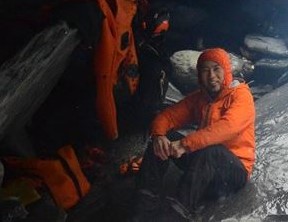 like him. He was a committed pacifist and observant Buddhist, things my teenage mind attributed merely to naivete and superstition. I really only began to understand him near the end of his life.
I first started running with my dad when I was twelve years old, mostly just because it was a way to spend some time with him. As I grew older, I followed along with more of his activities. He taught me how to ski in old free-heel gear, and how to use a rope, and how to climb… and sometimes just to sit in stillness. Years after he was gone, I discovered that the latter were among the things that he had learned from his own father. But the running was his own, and lasted until the day that he died.
Much of my dad’s idealism went down the drain with the collapse of Japan’s progressive movement in the 1970’s. He had come to the conclusion that too many of the people with the passion to drive change are also affected by too much of a compulsion to fight, so that the conflict ends up overshadowing the message. I don’t think he would have been much surprised by recent events in both Hong Kong and in the US. But he never lost his personal sense of responsibility in compassion for others. And despite never really understanding its source, that was probably what most impressed me in my youth.
I was my dad’s firstborn. My older sister is actually my half-sister, her “koseki”, or legal family registry entry in Japan recording a different family name. But she’s always insisted that my father never treated her as anything but his own, and that she was as much a part of his family as were my brother and myself. Like Mrs. Murasaki, the older woman who was our live-in “nanny” when I was very young, or the Japanese couple who lived with us for two months after the wife lost her baby in the US… that was my dad.
Not long after moving to the US in the mid 70’s, a man approached my father asking if he could, “spare some change”. As my dad handed him what was probably a couple of dollars, the man explained that he had just ridden a train into the city and was wondering if there was a place to get a coffee. I commented that it must be fun to travel on a train. But the man responded that it was better to have a good place to belong, while gesturing to my father.
My dad watched as the man walked away, eventually going after him. In the distance, they talked for a moment before my dad handed him something else. I could hear the, “Thank you!” and, “God bless you!” in the distance. My dad explained to me later about Americans traveling on freight trains.
My dad’s character was certainly the product of many things. But I suspect that much was the result of a single event in his life, a tragic diffusion of responsibility that happened a little before his ninth birthday. I didn’t know much about it until I was older, but I think it left him with a sort of existential angst to express his own will in “doing the right thing”. I’m certain that it played a role in his considering himself an ethical Buddhist and in becoming a physician, though he always said the latter was merely something expected of a second son.
I’m still grateful that he was willing to break those old traditions, as I was not even a “son”. But he saw me suffering through the old family customs, and let me follow his lead instead. So I was at least able to share in some of his adventures. And quietly perhaps, he even encouraged a few of my own. Still, I have no photograph of that understanding image of my father that lives in the shrine of my mind.
Quietly returning home from his rounds, a dark silhouette would emerge in the back yard of our homes in both Japan and the US. My father would watch the gathering darkness in silence, sunsets having become the focus of silent meditations on the impermanence of things. But if I sat next to him, he would put an arm around me and I would know I had a place. And as I grew into an adult, he would also sometimes share his thoughts. A few of them even became my own. And sometimes, I’ll think about them on a long run.

 Luminous Aether
You must be logged in to post a comment.