Mormon Station and Genoa

Territory is but the body of a nation.
The people who inhabit its hills and valleys are its soul, its spirit, its life.

In them dwells its hope of immortality.

– President James A. Garfield

“Mormon Station” is located in the town of Genoa, at the edge of the eastern Sierra Nevada mountains in Nevada.  The station was built in 1851 as a trading and supply post along the Carson Route to California, and the town grew around station. The town is known as Nevada’s first permanent, non-native settlement.

Both the station and the town of Genoa were established by “Mormon” pioneers, or members of the “Latter Day Saints” religious and cultural movement, who had originally settled in what was the Mexican territory of Alta California. But at the formal conclusion of the Mexican-American War in early February of 1848, Mexico ceded its territories in the present day southwestern United States.

In late January of 1848, however, gold had been found at Sutter’s Mill in Coloma, not far from the town of Placerville (aka “Hangtown”) in the western foothills of the Sierra Nevada mountains. This discovery would ultimately bring around 300,000 new immigrants to California, many of whom would need to cross the Sierras after traveling from the eastern United States on horseback or by wagon. This placed an immediate pressure on the United States to consolidate its new land claims to the west.

In 1849, leaders of the “Church of Jesus Christ of Latter-day Saints” (“LDS Church”) based in what is today the state of Utah, proposed that much of this new southwestern US territory be included in a new state of “Deseret”. A provisional state government was established by church leaders, but it was never officially recognized by the United States. Instead, the “Utah Territory” was created in 1850 by an act-of-Congress. 

This new territory respected a southern boundary based in the Missouri Compromise, and a western border with the newly established state of California. Extending from the Rocky Mountains on the east, it traversed present day Utah to the still unsurveyed California border in the Sierra Nevada mountains on the west.

Brigham Young, the leader of the Mormon movement, was inaugurated as the first governor of the Utah Territory. And in 1851, a Mormon settler named John Reese brought horses, cattle, and twelve wagon-loads of supplies with the intent of establishing a permanent trading post near the new territory’s western boundary.

Within a year, the settlement around the trading post had expanded into a full-fledged town, complete with sawmills, a blacksmith, and even a U.S. Post Office. And despite a Mormon tenet to abstain from alcohol, in 1853 the town also became host to Nevada’s oldest drinking establishment. In 1856, an official from the LDS Church, Orson Hyde, arrived to survey and record the area’s lands, and officially named the town “Genoa” on maps, after the Italian city.

Travelers preparing to cross the Sierra Nevada mountains via routes to the south of Lake Tahoe could stop at Mormon Station to acquire items such as clothing, dried beef and bacon, beans, flour and sugar, as well as tobacco and coffee. The original trading post stood until 1910, when it was burned in a fire that swept through much of the town. However, the Kinsey House, which was built on the grounds in 1856 survived, and remains as one of Nevada’s oldest original residences.

Between 1856 and 1876, the US Post Office at Genoa was also the eastern stop for “Snowshoe Thompson(Jon Albert Thompson, born Jon Torsteinsson Rue), who carried mail across the Sierras, year-round, between Placerville and Genoa. Despite his nickname, Thompson actually used Norwegian back-country styled, ten-foot (3-meter) skis, with a single pole during his winter passages. Over his twenty years of carrying mail, Thompson was never actually paid by the US government for his services as a postal contractor.

Present day Mormon Station is a reconstruction built in 1947, and transferred to the Nevada Division of Parks in 1957. The main building is used as a museum, with various larger items also displayed within the stockade grounds. The surrounding area also includes a park shaded by many large trees. The adjacent town of Genoa is also host to the annual “Candy Dance”, a popular regional event first started to help raise funds for reconstruction after the 1910 fire.

Central Genoa is today little more than Mormon Station, a small collection of eateries, stores and shops, and a few older residences. Most of the town’s current population of about a thousand people is spread along the main road to the north of the town. Since the post-Covid California exodus, the area has been host to much upscale residential development. From a supply stop for weary travelers, Genoa has become a destination in itself.

Sunlight and Ground

Some time on February 5th of 1999, Mutsumi Fukuhara stepped from the balcony of her Osaka apartment. Sunlight and ground became one.

Someday I’ll melt into the ground,
And be fertilizer for the earth,
So better than too fast the stream of time,
Is too slow the universe turning.
Still I battle with questions of love.

This is my life.
Only one life in this Role Playing Game.”
S.J.M.
R.P.G.

Getting myself grounded in an only marginally familiar culture after moving to Japan in mid 2002 was a difficult process. Viewed from the outside, Japan is a peaceful country… clean, safe, orderly…
Too orderly.

The peace of Japanese culture conveys the spirit of “wa” (), a concept usually interpreted in English as “harmony”. But wa isn’t really something that can be properly translated in a single word.

Wa describes a kind of communal harmony based in valuing social conformity over individual concerns; and it’s a central concept in Japanese society. Many both formal and informal Japanese social structures exist primarily as means through which to ensure this harmony. To disregard their expectations is to be as the proverbial “nail that sticks out”, and the recipient of a sort of passive-aggressive hammering down.

Individually, this results in what are known as “honne” and “tatemae”. Honne (本音, “true sound”) refers to one’s inner feelings, desires, or opinions. Tatamae (建前, “facade”), however, refers to one’s expected pattern of public expression through which wa is maintained.

Understanding this is important to understanding social interaction in a culture where people rarely say what they mean. Personal expression and negative reactions aren’t prevented; but they don’t encourage future connection. The Western saying goes that, “If you don’t have anything nice to say, don’t say anything at all.” But in Japan, even silence leaves a chill.

Like the passions of honne hidden beneath a veneer of tatemae, the Japan I experienced in the early 2000s concealed a surprisingly expressive wilderness beneath that external facade of conformity, neatness and order. At the time, cities like Tokyo and Osaka hosted entire networks of discrete, underground music establishments known as “live houses”.

Often little more than transitory basement dives, they’d be ignored by police so long as the local yakuza assured that nothing unseemly made it onto the streets. But especially in places where art-communities or vice tended to congregate, some were more established.

You can dance your dance. you can talk hard loud.
you can live your own life with your POPO…
you can walk your way. you can scream in this way.
I can live my own life!

S.J.M.POPO Bar

East Asian kids learn early on to be self-reliant. This is rooted in a Confucian ethic that one shouldn’t be a “problem” for parents, family or others. The Japanese term, “meiwaku” (迷惑) means to be troublesome, or a nuisance or annoyance. And it’s a kind of criticism most Japanese children learn to avoid. Meiwaku is more than just an expression of annoyance at another’s behavior; it’s a disruption to the communal harmony of wa.

Adults unfamiliar with meiwaku often perceive East Asian children brought up with this internalized principle as easy. But a lot of these kids are simply struggling with not getting the care or attention they need. And for those who are called out as troublesome, it can become a sort of hammering down that deeply affects self-worth.

Just like weapons (Yes) WORDS kill me
Just like weapons (Yes) WORDS kill people I love…

At some point … we must forget the WORDS
To the broken body, gentle lights
To the open pupil, Sweet liquid
To the blocked up ears, bird-like sounds
To the closed mouth, Song from stones.”

S.J.M.The WORDS

Stumbling into this music scene, I never really thought much about it having emerged from something cultural that had preceded my own time in the country. Japan was the “Asian Tiger” of the 1980s. In a mere two generations, the country had accomplished an economic “miracle”, taking itself from the ashes of WWII to a nation seemingly poised to simply purchase the world. But near the end of 1989, that all changed.

The fevered inertia of economic enthusiasm collapsed as “zombie companies” kept alive by endless injections of investment capital from over-leveraged banks eventually resulted in a stock-market crash. Then, equity and property values collapsed. Early 90s Japan marked the start of more than two decades of near total economic stagnation. But more importantly, it also represented a broken promise in the Japanese social contract.

Many lifetime jobs, once the hallmark of Japanese corporate employment, were replaced by temporary workers. Wages stagnated. And real household earnings fell as the purchasing power of a weakened Yen resulted in inflation. A generation of youth approaching adulthood were greeted by uncertain futures as families struggled. And Japan’s young population became caught up in an atmosphere of anxiety and frustration.

The era bathed in light disappears,
And new seeds are born,
Spreading branches envelop my body,
Colors flow and fill the gaps,
The empty time becomes a crimson sea,
The empty time becomes a crimson forest,
The empty time becomes a crimson sky,
The empty time becomes crimson waves,
The forging of memories… of sharp memories.

S.J.M.Forged Memories (from Japanese)

Against this backdrop, the almost mythically notorious all-female Japanese band, Super Junky Monkey, would emerge in 1991. Known for raucous performances that frequently hosted masses of stage-diving youth, their music defied any particular niche… aside from that of being “anti-mainstream”. Too experimental and unrestrained for popular domestic consumption, they remained mostly live-house performers in Japan.

Overseas, however, a 1993 live album the band had produced was getting noticed. And in 1994, they were picked up by Sony Records. Taking cues from genres like funk, metal, hardcore punk, grunge, stoner rock, and avante-garde, the band continued to skillfully navigate a wide range of sounds that utterly defied categorization.

A big part of Super Junky Monkey’s success was that all four members of the band, percussionist “Matsudaaaahh!!“, bassist Shinobu Kawai, guitarist Keiko, and vocalist Mutsumi Fukuhara, were all talented musicians. But it was frontwoman Mutsumi’s brashly charismatic performances and vocals that really gave the band its unique character, especially in  live performances.

If we were deaf and blind, could we still kill each other?
If we were able to fly, then would borders still fence us in?
If the human beings could love, would we live as equals?
If we were happy innocent and… dumb as dorks,
Would there still be wars?
Would we still want more?
Would there be users controllers and hierarchy?
Can you give me the answers?

S.J.M.IF

By all accounts, Super Junky Monkey was a successful band, producing four LPs, two EPs, and a number of videos, while developing significant followings both in Japan and abroad. They traveled extensively, performing in some larger venues in the UK, the US, and Canada, while receiving both foreign and domestic awards for their work. And in Japan, they blazed the trail for other all-female bands that also broke the usual Japanese “cuteness” mold for women as performers.

After a brief hiatus, Super Junky Monkey began performing live sets in the latter part of 1998 that pointed toward a new direction. The music was just as difficult to pigeonhole, but more contemplative and mature.

Moving away from the gritty sounds and Hip-Hop narratives that once invited stage-diving youth, Mutsumi’s voice instead began to echo into a distance that slowly disappeared into a kind of musical chaos. Her feverish leaps and long flailing ponytail were replaced by hands that slowly reached toward a calling sky. There was clearly some new inspiration to the compositions, perhaps reflecting her having had a child. 

I never saw Super Junky Monkey perform; I was hunkered down in the conformity required of my own life in the US during the band’s peak. And by the time I found myself in Japan, Mutsumi was gone, and the rest of the band had moved on. But I wish I had seen them. It would have added a great deal of context to what I witnessed in the Japanese music scene of the early 2000s.

Sometimes, success isn’t really what it’s all about. A lot of these musicians were simply pouring out their souls…
Sometimes, until there was nothing left.

Storm is gone
Earthquake is gone
Time is gone
Sunlight dazzled my eyes
Sunlight surround me
Sunlight and ground became
Congenial to each other

S.J.M.Towering Man

Fire-Horse Nation

You cannot control your own population by force;
but it can be distracted by consumption.

– Noam Chomsky

Despite decades of government programs intended to encourage having children, Japan has now experienced nine consecutive years of population decline. And current trends don’t seem to be pointing in the right direction. August 2025 numbers released by Japan’s Ministry of Internal Affairs showed the country’s total population for 2024 as 122,631,432, a 1.51% decline in a single year! Moreover, the birthrate had dropped by another 5% last year, to its lowest ever. And next year will bring a Fire Horse!

As an overpopulated island country, bearing children has always been a balancing act for the Japanese. For most of the country’s recorded history, a third child could earn an entire family the status of a community burden. The Edo-era (1600-1868) euphemism, “mabiki” (間引き), meaning “thinning”, was an eastern Japanese reference to infanticide. In some parts of the country, it was a common enough practice to actually reduce local populations. It wasn’t until Japan opened to outside resources in the mid-1800s that a typical family might have four or more children.

“Replacement-level fertility” refers to the total number of children per female needed to keep a population size stable over time, without migration. It’s generally considered to be around 2.1 for most countries, although it can vary according to factors such as child mortality rates, average lifespans, or an overall population age distribution. After WWII, the fertility-rate in Japan was sufficient to keep its population growing through the 1960s. Oddly, however, very few children were born in 1966.

This was due to 1966 being a “Year of the Fire Horse”. An Edo-era story from puppet theater and popular books alleged that women born in such a year in the sixty-year cycle of twelve zodiac animals and five traditional elements of wood, earth, metal, water and fire were hot-tempered, and that they would rather gruesomely kill their own husbands. These years are consequently seen as an inauspicious time in which to risk bearing a potentially murderous female child.

So few children were born in 1966 that eighteen years later, Japanese college entrance acceptance rates surged by over 50% due to the lack of competition. The number of births bounced back in 1967. But then overall fertility-rates began to drop fairly steadily after 1970. And since 1975, the year my family left Japan, they have remained below replacement-levels.

With the exception of some mid-80s economic bubble years, the fertility-rate trend stayed downward until 2006, when government incentives combined with a strong Yen to encourage bigger families. But within a decade, birthrates had again started to drop. And since the pandemic years, the decline has been precipitous. In 2024, the country’s total fertility-rate fell to just 1.15.

Japanese women are simply choosing not to have children for a variety of reasons. Some are economic, such as cost-of-living, missing work or high childcare costs. Work pressures, such as long hours and a stigma associated with working mothers also discourage women who work from having children. And the Japanese social reality is that as populations have increasingly shifted from close-knit countryside communities into the fast-paced blaze of city life, the social foundations once provided by family have been replaced by conspicuous consumption

Concurrent to its low number of yearly births, Japan is now also experiencing a “mass-mortality” phenomenon due to the high average age of its population… which could be “good” or “bad” depending upon one’s perspective. But the net effect is to also elevate replacement-level fertility numbers as the country’s overall population plunges. If one walks around some of the central neighborhoods in Tokyo, this phenomenon has become visible as shuttered local businesses and abandoned homes… or homes that merely appear abandoned because the people who live in them are simply too old to care for the properties anymore.

Japan’s new Prime Minister, Sanae Takaichi, has called this population decline the country’s “greatest problem”. As a response, she instituted the creation of a new government department known as the “Population Strategy Headquarters”. Its primary purpose will apparently be to establish local family social services, and to improve rural living conditions in ways that would attract a younger population. But in an interesting rhetorical reference to immigration, it will also develop ways to “promote coexistence with foreign talent.

Immigration is, however, a currently somewhat controversial topic. Japanese society places enormous emphasis on community harmony, social order, and collective responsibility. The social structures, expectations and relationship-building aspects of Japanese culture extend from the workplace into general societal norms. And these social expectations define much of what it means to be “Japanese”.

This is why Japan has a reputation as one of the world’s safest and most efficient countries. It’s a cooperative mono-culture, where mutual trust provides the social currency necessary to maintain a high standard-of-living. When a society doesn’t have to expend resources repairing vandalism, insuring theft, policing crime, or housing criminals, then those resources can be applied to infrastructural benefits such as healthcare, transportation, human-services or disaster-relief. But it also means that Japanese culture has little ability to tolerate disorder.

Foreigners only account for about 3% of Japan’s total population. Contrast this with the high standard-of-living and tiger-economy of Singapore, where 13% of its citizens are permanent-resident immigrants, and a whopping 29% of the population is temporary-immigrant labor. Immigrants in Japan, however, are mainly associated with a disproportionate number of crimes. The majority of those crimes involve immigration violations, such as overstaying visas or working without proper authorization, which aren’t threats to public safety. Unfortunately, however, Japanese immigrants have also become associated with more serious crimes.

Official data shows the number of arrests of foreigners for major crimes, such as murder and robbery, have indeed increased over the past decade. And per-capita crime rates are overall significantly higher among foreigners when compared to native Japanese. But much of this represents a broad interpretation of what are in actuality localized phenomena. A recent example is with regard to a Turkish refugee population in Kawaguchi City in Saitama Prefecture, which has a per-capita violent-crime rate that’s over fifteen times that of the native Japanese population. In response, Economic Security Minister, Kimi Onoda, has suggested that it’s time to start deporting those immigrants who don’t want to coexist with Japanese society. 

Unfortunately, Japanese media often generalizes coverage of such incidents, which contributes to overall negative perceptions of immigrants. This has resulted in a current proposal to offset the monetary costs of immigrant crime by raising foreign residency fees from an equivalent of a few tens-of-dollars per year to as much as $400 next year, and later to perhaps as much as $1,000. Regardless, when crime statistics are interpreted according to individual immigrant groups, most actually show serious crime rates fairly consistent with the native Japanese population… or lower. In fact, many immigrants do assimilate and even go on to raise families in Japan. 

How Japan can address its collapsing population while maintaining its cultural identity in the process raises difficult questions. Such a regimented society makes for an admirable harmony; but it can also be stifling. For a new generation of Japanese families, the nation will also need to sell its young population on a future that promises more than the mere distraction of consumerism. And if the solution is to arrive as immigrants, then the native Japanese population may need to accept the loss of some parts of its culture. Regardless, Japan’s rapidly declining population portends a social and economic conflagration that the country will be forced to extinguish.


Further Reading and References:

Fifty years since the decline of total fertility rate to below 2.1 | Japan Center for Economic Research. (n.d.).
https://www.jcer.or.jp/english/fifty-years-since-the-decline-of-total-fertility-rate-to-below-2-1

Hernon, M. (2025, November 21). Japan to significantly raise foreign residency fees from 2026. Tokyo Weekender.
https://www.tokyoweekender.com/japan-life/news-and-opinion/japan-raises-foreign-residency-fees/#691f9a2466098

Kincaid, C. (2025, November 23). Could South Korea or Japan disappear? Japan Powered.
https://www.japanpowered.com/japan-culture/south-korea-japan-disappear
(Chris Kincaid’s article at Japan Powered looking at this issue from a longer-term perspective is what precipitated this post.)

Kirkegaard, E. O. W. (2025a, April 14). Blog. Clear Language, Clear Mind.
https://emilkirkegaard.dk/en/2025/04/race-and-crime-in-japan/
Related data from the Saitama Prefectural Police Department (Japanese):
https://www.police.pref.saitama.lg.jp/documents/31689/reiwagonennohannzai.pdf

McCartney, M. (2025, November 20). Japan says population crisis is ‘Biggest problem.’ Newsweek.
https://www.newsweek.com/japan-says-population-crisis-is-biggest-problem-11078544

Weekender Editor. (2025, May 1). Japan’s Population Crisis: Why the Country Could Lose 80 Million People. Tokyo Weekender.
https://www.tokyoweekender.com/japan-life/news-and-opinion/japans-population-crisis-why-the-country-could-lose-80-million-people/

Please Get Out of My Way.

…if a man has not discovered something that he will die for,
he isn’t fit to live.

Martin Luther King, Jr., Walk to Freedom, Detroit, 23 June 1963.

I’ve been watching the 2024 version of Shōgun, the historical drama based on the 1975 novel by James Clavell. I have to say, I’m rather impressed. Most of the actors are Japanese, a majority of the dialogue is in Japanese (if somewhat “jidaigeki), and the production is pretty authentic to what I know of 16th-century Japan.

I’ve never read Clavell’s novel, which while fictional in detail is based on actual people and events from late 16th-century Japanese history. This was a pivotal moment in Japan, marking the end of the country’s Feudal period, or 418-years of near continuous civil war.

Japan’s Feudal period began in the late 12th-century when the “shōguns”, powerful Japanese military leaders, replaced the imperial court as the country’s central government. Generals loyal to the shōgun were compensated with land and regional powers, becoming the feudal lords known as “daimyo”. But some among the daimyo would eventually grow in power enough to challenge the authority of the shogunate with their own private armies.

This resulted in the rise of the “samurai”, or more accurately, “bushi” (武士), who were an elite professional warrior class. For bushi, war was a way of life that often included entire families. The term “samurai” more accurately denotes service as a trusted retainer to a daimyo. So for bushi as samurai, this amounted to pledging one’s life to a daimyo.

Alliances of convenience among the daimyo, and sometimes even the civil authority of the imperial government, would form and wane through generations as power shifted. And by the mid 15th-century, Japan had become a society that existed in a state of almost constant internal warfare. During this time, Zen Buddhism began to strongly influence the development of a bushi philosophy and an associated code-of-behavior. Much of this emphasized salvation through self-discipline, applying it to Confucian ideals of loyalty and duty.

After 415-years, this pattern of endless warfare would ultimately culminate in the monumental, “Battle of Sekigahara” on 21 October 1600, in which at least 30,000 combatants would lose their lives. But the result would be a subsequent two-and-a-half centuries of peace, economic and cultural development, and isolationism under the unified leadership of the “Tokugawa Shogunate” during Japan’s subsequent “Edo period“. It was during this time that the bushi philosophy would become consolidated into various forms of a doctrine known as “Bushido”, or the “way of the warrior”.

Japanese samurai are usually associated with the use of swords, and primarily the “katana”. With its long curved blade and single sharpened cutting edge, it is intended to be drawn and used quickly in a single slashing motion. In 1588, the right to carry swords was restricted only to samurai, making the wearing of swords also a display of elite social status. However, the sword was not typically the first weapon of choice in warfare.

Especially before the introduction of firearms, the primary weapon of a samurai was actually the “yumi”, an asymmetrical longbow with a shorter lower limb. This design allowed for the bow to be more easily used from horseback, or from behind protection. At over two meters in length, properly drawing and releasing arrows from a yumi requires significant strength and years of training.

Regardless, a skilled samurai on horseback could accurately release an arrow every few seconds while riding at full gallop. These arrows, called “ya”, would be tipped with a variety of different types of steel points depending upon the intended target. In warfare, this allowed for long-range attacks before closing on an adversary.

At closer quarters, however, foot soldiers especially would utilize a type of gripped spear known as a “yari” (). Yari were usually equipped with a long and thin, pointed steel tip intended to puncture through armor. These steel tips also sometimes included cross bars or hooks, which were intended to keep an impaled enemy from pushing any closer. But there was also another common polearm.

The “naginata” (薙刀, “mowing sword”) consists of a metal or wooden pole with a long, single-edged, curved blade on its end. The pole extended the reach of the blade, which was intended primarily for slashing and cutting. During warfare, these could be swung at an enemy in order to break lines or to combat cavalry, and were sometimes used by mounted samurai and foot soldiers, as well as warrior monks.

A form of the naginata, the somewhat lighter “ko-naginata”, is the iconic weapon of women of the Japanese nobility. Nearly all women of status were trained to use these weapons to protect themselves, as well as their homes and children. Because of its reach, it could be used to sweep an area clear, or to keep an attacker at a distance. The naginata was also effectively used by female warriors. The legendary female samurai, Tomoe Gozen (“Lady Tomoe”), was said to have wielded the weapon with great skill.

Sixteenth-century feudal Japan was an at once extraordinarily beautiful, and extraordinarily violent society. And the introduction of Western weapons, such as early firearms and cannons to Japanese battlefields only served to amplify the latter. Important to the context of what the story is attempting to illustrate, the 2024 Shōgun doesn’t shy away from depictions of this violence. It was a utility to the Japanese society of the time. Life was seen as but a fleeting moment in which to appreciate beauty. Purpose came only from dedicating one’s self to something greater.

I won’t get into the plot or the story-line of Shōgun, which is placed during the lead-up to the Battle of Sekigahara, as there are plenty of other sources. But a pivotal character in Clavell’s story is “Toda Mariko” [family name, given name], who is based on the historical, Akechi Tama (明智たま), also known as Hosokawa Gracia (細川ガラシャ).  From an aristocratic bushi family, she lived from 1563 until her death on August 25th of 1600. After learning both Latin and Portuguese, she was baptized as a Christian in 1587, taking the name Gracia

In 1600, the feudal lord Ishida Mitsunari attempted to force Gracia’s husband into joining his side in the coming battle by effectively holding her hostage at Osaka Castle. Unwilling to accept the disgrace, Gracia was said to have had a family retainer end her life since her Christian beliefs would not allow suicide. Her death severely damaged Ishida’s reputation, causing him to lose the support of many generals, several of whom were probably also Christians themselves. These defections would ultimately result in Ishida Mitsunari’s defeat at the Battle of Sekigahara.

Clavell’s version of the real-life Gracia in the character of “Mariko” illustrates the feudal Japanese ideal of samurai bushi, while also bringing together much of the preceding story through her use of the ko-naginata. Meaning is established through a formalized, but unyielding loyalty, even if to fight against one’s own destiny is futile. Whether or not such a death is worthwhile is left to the viewer, as Clavell didn’t take a side in what constitutes “barbarity”.

Warning! Bloody content:


Notes about some of the images:

“A Medieval Japanese Archer” is a lithograph by Émile Théodose Thérond (1821–1883), and Jean Gauchard (1825-1872). I believe that it was drawn from a photograph with a posed subject, probably taken around the end of the Edo era in 1868 or shortly thereafter. Personal collection.

The arrow points (“yanone” or “yajiri”) are all Edo era (1603-1868). The longer-shafted points were sourced from the Kobe/Osaka region. The others are from the Tokyo/Chiba area (Edo). Some of the smaller points were made with the same craftsmanship as that seen in traditional blades, and were signed by their makers. Personal collection.

Japanese Print, “「英勇一百伝」 「巴御前」” (“One Hundred Tales of Heroes” “Tomoe Gozen”), by Utagawa Kuniyoshi (1851).
At the Tokyo Metro Library: https://ukiyo-e.org/image/metro/H020-004

Battlefield Archery: This is a link to a ceremonial demonstration of “kyujutsu”, or battlefield archery. The archers first demonstrate a “Sashiya”, where a group of archers release a steady stream of arrows. This is followed by a “koshia”, where the archers advance in alternating ranks. This was intended to pin-down enemy archers, allowing spearmen from their own ranks of a “kumiyumi”, or a group of archers and spearmen who have trained to work together, to move forward. The headwear signifies that these archers have been temporarily blessed as Shintō priests while they perform as entertainment to the gods of the shrine.
https://www.youtube.com/watch?v=tJVC6ExVUi4
There’s a good article here.

Dealing with Feudal Bureaucrats  Partially just for fun, but also because it depicts a fairly accurate use of the katana, or long sword. These were not “fencing” weapons; rather, they were a utility. This is the sequence preceding the accumulation of bodies (and body parts) visible in the background during Mariko’s confrontation with the replacement entry guards. The bushi-samurai assigned to Mariko-sama by Lord Toranaga would indeed have followed her direction without question. Observing appropriate formality, however, the samurai bows respectfully in recognition of the bureaucratic status of the official in charge of the gate. What follows is an example of “Iaijutsu” (居合術).

This is a response to an attack starting from the “saya”, or the katana’s sheath. As the gate official reaches for his weapon, the samurai immediately disables his would-be attacker in a single move of the katana from the saya (takes off his opponent’s fingers), dispatches his assistant, returns to conclude his business with the official, shakes the blood from the katana, and then replaces it back into the saya in a span of five seconds. Efficiency!


The Water of Kiyomizu-dera

“What water is there for us to clean ourselves?
– Friedrich Nietzsche, The Parable of the Madman (1882).

Among the first destinations of many visitors to the Japanese city of Kyoto is the UNESCO World Heritage site of Kiyomizu-dera. The mountainside location is a Buddhist temple complex founded in 780 AD, during Japan’s “Heian” period. The temple was originally associated with the Hossō school of Buddhism. This is a unique and interesting branch of Buddhism which originated in Nara in 654 AD, and that drew ideas from the Yogachara approach to Mahayana Buddhism.

Kiyomizu-dera’s original construction was commissioned by the Shogun, Sakanoue no Tamuramaro. But in 805 AD, the site was officially designated as an imperial temple. The current temple complex structures date to 1633, when the Shogun, Tokugawa Iemitsu, ordered that they should be rebuilt. Between 2008 and 2020, several of the buildings within the temple complex were also heavily renovated.

The temple’s full name, Otowa-san Kiyomizu-dera (音羽山 清水寺), literally “Otowa Mountain Pure Water Temple”, is drawn from the mountainside waterfall, the Otowa-no-taki, around which the temple complex was constructed. The waterfall feeds into the “Three Sacred Streams”, three small streams of water emanating from overhead outlets in a shrine below the falls. Visitors would traditionally stand in the shrine, beneath the small jets of water. Then they would reach out with a shrine cup to catch some of the falling water to drink for blessings.

The water shrine is visible from the “Kiyomizu no Butai”, or the “Stage”, an open deck behind the Hondō or the temple complex main hall. Views from the 13-meter (45-foot) high Stage, as well as views of the structure itself are among the most photographed and well recognized images of Kiyomizu-dera.

Perhaps just to illustrate that viral messaging and stupidity aren’t anything new, an idea somehow circulated during Japan’s Edo period that if one leapt from the Stage and managed to survive, that his wish would be granted. Afterward, 234 people apparently jumped, with a surprising 199 recorded to have survived. However, I haven’t been able to find any record of wishes being granted. And the Kyoto government officially banned any further Stage-diving in 1872.

While I don’t have much of a fear of heights, Kiyomizu-dera does mark one particularly terrifying experience. Beneath the Zuigu-do Hall, a large structure to the northwest of the Hondō and the Stage, is a less well known location called the “Tainai Meguri”, or the “Journey to the Womb”. It’s essentially a long, winding, pitch-black passage beneath the Zuigu-do Hall, symbolic of finding one’s way through darkness, and subsequent rebirth.

Did I mention that I’m extremely claustrophobic?

After a small fee of 100 yen, removing your shoes, and assuring that there will be absolutely no flashlights, photography, or peeking whatsoever, individuals are led to the bottom of a flight of stone steps. And from there, it’s a one-way journey into the absolute darkness of the womb of the female Bodhisattva, Daizuigu. The only guidance is a chain of wooden beads that can be felt along in one’s left hand. For most people, this probably wouldn’t have been such a big deal. Regardless, I was fortunate to have had someone who could push me along from behind (contractions?) while I clenched my sweating palms and tried to keep from passing out in the darkness.

With regard to its more reverent status as a religious site, Kiyomizu-dera remains an important location for Buddhist pilgrimages, with each area of the complex dedicated to a different Buddhist deity. Perhaps most importantly, however, the temple is known as a “Kan’non Reijo”. The term “Kannon” refers to the Buddhist deity of mercy and compassion. And a “Reijo” is a holy or reverent location. The particular Kannon revered at Kiyomizu-dera is known as the “Henge Kan’non” (変化観音), or the “Transformational Kannon”. It’s depicted in a form that dates to around the 9th century.

Henge Kan’non can be identified by their 11 heads, visible on the Kiyomizu-dera representation in its crown. The three front faces represent the Kannon’s compassion. Three faces to the left watch over us, while three faces to the right encourage our own determination. A face on the back is said to “laugh-off evil”. And the face on the top, known as “Butsomen”, represents truth.

The Kannon is usually described as having “1,000 arms”. But around the 8th century, common physical depictions included 42 arms, with each hand having a specific meaning, either through a particular hand position, or by holding an object. The Kiyomizu-dera Kannon includes two arms with hands in prayer, and two arms holding a smaller statue above its head, both somewhat unusual in Japanese depictions of Kannon. I don’t have any photos, as the Kiyomizu-dera Kannon is considered a “hibitsu”, or “hidden Buddha”; so any photography would have been extraordinarily disrespectful. But the link below is to their site for pilgrimages, and it has some images.
https://www.kiyomizudera.or.jp/en/pray/

Kiyomizu-dera is a popular and well-known tourist destination, so there are many sources of information available to visitors. But one thing I’ve never seen noted anywhere is that there’s actually a small Shinto shrine located at the very center of this Buddhist temple complex. It’s dedicated to the goddess, Benzaiten, a water deity associated with dragons, fortune, creativity, and love. Located on a small island in the middle of a pond, it’s accessible via two walkway bridges.

Leaving the temple complex on foot, the most direct route toward the Gion District where one might hope to see some of the city’s traditional Geisha and Maiko, is to the northwest through the Nio-mon Gate and down the narrow, and touristy, Matsubara-dori. This is actually a really nice walk along a route past the old shops and food vendors, and into the surrounding neighborhood… if it’s not too crowded. Lately, however, the masses of tourists along this narrow road have been overwhelming.
But there is a lesser known and considerably more peaceful alternative to the southwest, if you don’t mind the company…
down the route through the massive and ancient Otani Cemetery

Japan’s Great Empress

All men are influenced by class-feelings,
and there are few who are intelligent.

Seventeen-article Constitution, Japan (603CE?).

The “Nihon Shoki” is a written account of early Japanese myth and history, compiled around 720CE. Among the events listed in its pages is the reign of the Emperor Kinmei. Claiming direct descent from the sun goddess, Amaterasu, Kinmei reigned as the traditional 29th emperor of Japan from 539CE until his death in 571. Most Japanese historians view Kinmei as the earliest archaeologically verified traditional Japanese monarch.

To secure his political status, Kinmei had established himself as the central leader of the “Yamato”, a powerful confederation of various feudal clans. His consort, Princess Kitashi, came from the powerful Soga clan. And according to the Nihon shoki, Kitashi gave birth to a daughter, the Princess Nukatabe, during the middle of the monarch’s reign in the year 554.

Precedent excluded Princess Nukatabe from inheriting her father’s authority, though there were powerful female rulers in various regions of ancient Japan. The princess’s official role, however, would be to further solidify the power of the Soga clan by becoming the consort of her own half brother, the Emperor Bidatsu, in 576 at the age of twenty-two, and with whom she would give issue to five daughters and two sons.

As the new leader of the Yamato confederation, Bidatsu sought also to consolidate a relationship with Korean Kingdoms, in part by adopting Buddhism. However, this led to conflicts with the Mononobe clan, who opposed abandoning the traditional Japanese gods through which they justified their own authority. This dispute would occupy much of Bidatsu’s attentions until his death in 585, apparently as one of the first recorded cases of smallpox in Japan.

Princess Nukatabe’s brother, Yōmei, would then take the throne. But his turbulent reign would last only two years before his own death at the age of forty-six. Fighting would then erupt between the Shintoist/anti-Buddhist forces of the Mononobe, and pro-Buddhists including the Sogas. But after the leader of the Mononobe clan was killed along with his own pretender to the throne, pro-Buddhist factions including the Sogas ultimately established complete control over the Yamato confederation.

By this time, the princess’s uncle, Soga Umako, had established himself as wielding the actual force behind the imperial monarch. And he used this power to effectively appoint Princess Nukatabe’s cousin, Sushun, to the throne. However, many Japanese scholars suspect that the person actually in control was in fact the princess herself, backed by her uncle, and with Yōmei and Sushun merely acting as male figureheads.

So in 592, when it looked as though the Emperor Sushun might have been consolidating a little too much independent power, Soga Umako arranged to have him assassinated. And with no acceptable male heirs, Umako requested that the then thirty-nine year old Princess Nukatabe should step in to fill the power vacuum. And thus, Princess Nukatabe became…

Empress Suiko, “Great Queen of Yamato”, and the 33rd monarch of Japan.

In her new role as now Empress Regnant, Suiko was already well versed in court politics. So she immediately established herself as more than another mere figurehead by appointing her then 19-year old nephew and Emperor Yōmei’s son, Shōtoku, as Prince Regent. This placed an influential hereditary buffer between herself and Soga Umako, despite their amicable relationship. Thus, Empress Suiko’s reign as the first traditional and archeologically verifiable female monarch of Japan would remain secure for thirty-six years.

Empress Suiko would continue endeavors to improve relations with other East Asian powers. In 594, she established Buddhism as the official religion through the “Flourishing Three Treasures Edict”. This helped to open relations with two large Korean kingdoms. But it also shrewdly served to further weaken the power of rival clans who continued to justify their own claims to authority as descendants of Shintō gods.

Shortly thereafter, Korean Buddhist monks familiar with Chinese culture arrived in Japan, establishing “Hōryū-ji”, a Buddhist temple presently known as including the world’s oldest existing wooden buildings. This cultural exchange also introduced many Chinese arts, technologies, traditions and practices to Japan. The Chinese calendar was adopted, and the Chinese writing system was adapted into the Japanese language, thus facilitating the very texts that would record the Empress Suiko’s own history. The empress also began a series of public infrastructural developments, including road and irrigation projects intended to interconnect cities and territories, improve trade, and to secure agricultural productivity.

Chinese construction techniques were also used in the building of a new imperial palace at Oharidano-miya in present-day Nara prefecture, which was completed in 603. Subsequently, Empress Suiko established a Chinese-based meritocratic, “rank and cap” systems into Japanese government. This bureaucratic reformation also led Empress Suiko to establish Japan’s first written constitution, the “Seventeen-article Constitution”. Rather than outlining a political system or set of laws, the document established a set of moral values and virtuous behaviors drawn from Confucian traditions and expected of government officials:
Harmony is to be valued, and an avoidance of wanton opposition to be honored. All men are influenced by class-feelings, and there are few who are intelligent. Hence, there are some who disobey their lords and fathers, or who maintain feuds with the neighboring villages. But when those above are harmonious and those below are friendly, and there is concord in the discussion of business, right views of things spontaneously gain acceptance.

During this time, Empress Suiko also softened her stance on Shintoism, encouraging its coexistence alongside Buddhism. This served both to prevent conflict and to help in the administration of state affairs. It also allowed for the peaceful introduction of Chinese cultural ideas, and began the uniquely Japanese syncretic blending of the two religions.

In 607, Empress Suiko sent the envoy, Ono no Imoko, to Sui China, where he presented a letter to to the Sui Emperor, Yang. Yang was infuriated by the letter’s content, which introduced the Japanese empress as an equal. Regardless, Chinese political intrigues compelled Yang to recognize Japanese sovereignty, thus aligning himself with the Korean kingdoms of Baekje and Silla. This first established Japan as a nation that was at least diplomatically commensurate to China.

Imoko, accompanied by a Sui envoy and a large group of scholars and monks would return to Japan, bringing knowledge of Sui dynasty Chinese cultural, legal, centralized government, and taxation systems with them. And they also brought strategically valuable information about events in China and on the Korean Peninsula that would further assist Empress Suiko in her dealings with the various power-shifts among mainland kingdoms.

The Nihon Shoki records Empress Suiko’s reign as overall a period of relative peace and prosperity for Japan under the guidance of a wise and compassionate ruler. Ultimately, she would outlive her nephew, Prince Regent Shōtoku, who would die at the age of forty-nine in 622, just days after the death of his consort. And she would also outlive the man who had first facilitated her rise to the throne, Soga Umako, who died in 626. But when Umako’s son, Soga no Emishi, took on his authority, imperial succession again became a source of conflict.

According to the Nihon Shoki, recognizing the approach of her death at a time of famine, Empress Suiko instructed that no resources should be consumed in constructing a mausoleum. Her final wish was that she instead be entombed with her first son, Prince Takeda, who it is believed died around the time of Suiko’s enthronement. Empress Suiko died on April 15th in the year 628, at the age of 74. She was given the Japanese Buddhist “shigō”, or posthumous name, Empress Toyomikushiyatahime, the Chinese kanji used to write the name suggesting that she had worked to feed her people.

The Nihon Shoki records that Empress Suiko was entombed with her son at the Ueyama Tumulus located at Gojono, in Kashihara City, Nara Prefecture. And archaeologists have indeed found two stone coffins at the site, believed to have been the original resting places of the empress and of her son. However, at some unknown later time, both were apparently reburied at Shinaga no Yamada no Misasagi (the Yamada Imperial tomb in Shinaga, a.k.a. the Yamada Takatsuka Tumulus) at Yamada, Taishi-cho, Minami Kawachi-gun, Osaka Prefecture.

Despite a traditionally patriarchal lineage to the Japanese imperial throne, there would be seven more Japanese empresses through the 18th-century. Two culturally founding empresses are also traditionally considered to have reigned well before Suiko, though their histories have become intertwined with mythology. Indeed, the Emperors of Japan are traditionally considered direct descendants of the goddess, Ameterasu, who is ranked highest among the Shintō hierarchy of gods. And the paleolithic religious traditions of Japan’s earliest inhabitants, still preserved in the Ryukyuan religious beliefs of the archipelago’s far southern islands, are uniquely matriarchal.

As a final note, the Nihon Shoki is as much about Japanese mythology as history. Even the kanji, or Chinese characters used to represent “Suiko” suggest a “push” against “antiquity”, echoing a time when Japan would transition into a new era. So while the Empress Suiko certainly existed as an actual person, some historians view her narrative merely as a justification for Shōtoku’s political power as Prince Regent, and suspect that the Seventeen-article Constitution was probably a later forgery. But while it can be difficult to discern historical truth from exaggeration, Empress Suiko’s reign did mark the emergence of Japan as a nation among nations. And her story remains at the very least an allegory for both pragmatic and compassionate leadership.


Images:

The legendary Empress Jingu, apocryphal 15th monarch of Japan, by Tsukioka Yoshitoshi (1880).
https://en.wikipedia.org/wiki/File:EmpressJinguInKorea.jpg

Portrait of the Empress Suiko by Tosa Mitsuyoshi of Eifuku-ji (temple) in Taishi, Osaka (1726).
https://en.wikipedia.org/wiki/File:Empress_Suiko_by_Tosa_Mitsuyoshi_1726_Eifukuji_Osaka.png

Painting of Empress Suiko (554 – 15 April 628) in the Asuka period, unknown artist.
https://en.wikipedia.org/wiki/File:Empress_Suiko_painting.png


Regression to Mediocrity, Part 2

“Medianocrity”

One wanders to the left, another to the right. Both are equally in error, seduced by different delusions.”  —Horace

A “median” is the point at which 50% is above, and 50% is below. Imagine lining up 99 people by height. Person number 50 would be at the median. It’s the point of 50/50 odds for the individual. A “mode” is simply the most frequently seen value, or the high-point of a distribution curve. But if extreme cases off to one side create a long “tail”, the median will move in that direction.

Much has been made of the fifth-grade level vocabulary and grammar of our current voice from the bully-pulpit. But that’s also the “readability” level of U.S. Air Force maintenance manuals for nuclear weapons. And most Americans have gone from reading their news in a morning paper to watching it on TikTok anyway.  So the surprisingly articulate speeches given by this same person at the Arab Islamic American Summit in 2017, and again at the US-Saudi Investment Forum last May might surprise some in the US.

A Flesch-Kincaid score of the 2017 text resulted in a 9.5 grade-level as a speech, and a reading level at the “10th to 12th grade (fairly difficult to read )”. But most political addresses are actually the result of speech-writers who also know about things like medians, modes and “bell-curves” as they relate to audiences…


“Regression to the mean” was the statistical phenomenon Sir Francis Galton discovered in his 1877 analysis of heredity patterns in human populations. Galton explained this as resulting from an as then unknown mechanism of inheritance. The mathematics of random chance in this process would cause the offspring of extraordinary parents to revert increasingly toward some average, or statistical “mean” over successive generations, what Galton termed, “regression to mediocrity”.

“Mediocrity”, however, can range in definition. Fifty-percent would be “mediocre”, if a measure of the accuracy of predicting outcomes in random coin tosses. But ninety-percent might be a “mediocre” score in a class full of committed students with a competent instructor. The “mediocrity” of being in the statistical median of that particular classroom simply means being in the middle of the pack. Just where that middle is located is something else entirely.

Galton seized upon just this idea when developing “eugenics”. He proposed that a society might work to skew the median toward beneficial inherited physical potentials through selective human reproduction. In the nutshell version, people of good health and high intellect would be encouraged to reproduce from among others of similar stature, with the objective of improving odds within the inheritance-pool.

Of course, it’s not too difficult to imagine how this could turn into a dystopian nightmare as the concept of “family” becomes more like the breeding of racehorses. Indeed, the racial ideology of “Nazism” encouraged selective child-bearing by those with “Nordic” or “Aryan” traits, and used this to justify involuntary sterilization and mass-murder.

Appealing instead to economic incentives, Singapore attempted to encourage a voluntarily shift in fertility-rates toward its college-educated population in the 1980s. Still, ethnic controversies rapidly shuttered the program. Regardless, modern genetic manipulation may render natural approaches to changing the odds in human heredity a moot point, another dystopian possibility examined in the 1997 film, Gattaca. But there are other ways to change the odds in societies.

From a person simply learning a new skill to the choosing of mates with desirable characteristics, skewing probabilities to our own favor is an innately human endeavor. Humans can bend the odds of nature, moving the zone “mediocrity” to our own benefit.

For people born in Nigeria in 2023, the expected at-birth “average” lifespan is 54.5-years (World Bank). However, it’s 84.6-years in Japan, almost half-again as long! Genetics may play some role in this difference. But far more likely is that it reflects conditions that affect rates of infant-mortality, or conversely premature deaths among the elderly. And these create tails that skew distribution curves that plot ages-at-death.

So a “mediocre” lifespan in Nigeria versus Japan probably says more about societal access to medical care, healthy food, clean water, and a safe environment. “Mediocrity” is consequently relative, and can be changed by both individual and collective human behaviors. But this kicks the legs from beneath an intellectual sacred cow.

“Cultural relativism” is the idea that societies should be evaluated only relative to their own cultural norms, values, and practices, rather than as compared to other cultures. It’s a criticism of ethnocentrism, instead emphasizing the evaluation of differing cultures without external bias. The perspective is intended to present a more empathetic and humanistic understanding of societies.

From the perspective of objective study, this makes perfect sense. Evaluating the social function of a tradition, religion, or system of hierarchies might require observation from an entirely unfamiliar perspective. And unfamiliarity with cultural meanings can leave traditions open to misinterpretation… consider a “crucifix”. But there is a limit to this kind of objectivity when evaluating cultures in terms of their relative reciprocal benefits to and from the individuals that comprise them.

Most people would probably choose to live in Japan as opposed to Nigeria based solely on those longer expected lifespans. But they also imply a relative cultural stability that allows for more productive individual development, such as education, work-skills, and the accumulation of wealth. And conversely, these individual benefits can feed back into the society, helping to provide that medical care, healthy food, clean water, and safe environment.

The result is that an ordinary expectation in one society becomes divergent from the norm in the other. And this results in a kind of cultural inequality that can’t easily be resolved. This can even happen among sub-cultures in a larger society, and especially when there are forms of sectarianism.

This was much of the point in Charles Darwin’s 1871, The Descent of Man, and Selection in Relation to Sex. With regard to the reciprocal benefit of societies and individuals, Darwin proposed that a society which extends the instinctive bonds found in family to a greater population works to strengthen both its individual members as well as the society itself.

Even accepting that Darwin was a product of a nineteenth-century British perspective, each successive generation can still make the same comparative assessments. And Darwin viewed the human-driven (by female choice) selection for both physiological fitness and compassion as an ongoing process central to the evolution of healthy civilizations.

Societies and their norms are consequently not equal in what they produce, whether for their members, or for themselves. The values and traditions that they select for and hand down are the heredity of civilizations. And they are subject to the same skews and even regression to mediocrity seen in physical traits if they are left to the odds of nature, whether mother’s or human.

That nature doesn’t give a damn about “equality” is an unpleasant truth, and especially in societies where we value the conflicting perspectives of compassion versus merit. In the US, we accept that all people are intrinsically endowed with, “…certain unalienable rights.” But we also enshrine the idea of an “American dream” that is meritocratic, that, “…to become a great and a happy people. …they who live under its (the United States’) protection should demean themselves as good citizens.” (George Washington, 1790)

Whether either Darwin or Washington would be all that impressed with the present-day United States, whether we’re really all that much more compassionate, or even better citizens, I can’t say. At some point, the US managed to skew its median into an expectation that attracts the attentions of half of the Earth’s human population.

But, which half?


Sources, References, and whatnot:

Carnegie Mellon University. (n.d.). Most presidential candidates speak at grade 6-8 level – News – Carnegie Mellon University.
https://www.cmu.edu/news/stories/archives/2016/march/speechifying.html

Ekman, P. (2010). Darwin’s compassionate view of human nature. JAMA, 303(6), 557.
https://doi.org/10.1001/jama.2010.101

Ekman, P. (2023, December 10). Survival of the kindest. Lion’s Roar.
https://www.lionsroar.com/survival-of-the-kindest-november-2010/

Eugenics: Its Origin and Development (1883 – present). (n.d.). Genome.gov.
https://www.genome.gov/about-genomics/educational-resources/timelines/eugenics

Population Research and Policy Review (Vols. 5, No. 1). (1986). Springer Nature.
https://www.jstor.org/stable/40230009

President Trump’s speech to the Arab Islamic American Summit – the White House. (2017, May 21). The White House.
https://trumpwhitehouse.archives.gov/briefings-statements/president-trumps-speech-arab-islamic-american-summit/

Schumacher, E., & Eskenazi, M. (2016). A Readability Analysis of Campaign Speeches from the 2016 US Presidential Campaign. arXiv (Cornell University).
https://doi.org/10.48550/arxiv.1603.05739

University of Virginia Press. (n.d.). Founders online: From George Washington to the Hebrew Congregation in Newport . . .
https://founders.archives.gov/documents/Washington/05-06-02-0135

World Bank Open Data. (n.d.). World Bank Open Data (accessed 6/6/25).
https://data.worldbank.org/indicator/SP.DYN.LE00.IN?most_recent_value_desc=false


Acceptance and Courage

When one loses the deep intimate relationship with nature,
then temples, mosques and churches become important.

–Jiddu Krishnamurti

Japan is known for its mountains. And its mountains are known for the extraordinary numbers of Japanese who climb to their summits. Probably the best known of Japan’s mountains is “Fuji-san”, or Mount Fuji. A 3,776 meter (12,388-ft.) dormant volcano, Fuji-san is considered the traditional symbol of Japan, as well as the dwelling place of the goddess, Konohanasakuya-hime (shortened, “Sakuya-hime”), the “Cherry-Tree Blossom Princess”.

Fuji-san’s summit hosts several shrines to Sakuya-hime, whom the Japanese Shinto religion reveres as a bringer of healing, rebirth and spiritual happiness, encouraging many to seek peace by climbing the mountain. And during the 2024 summer climbing season, almost 205,000 people attempted the journey.


“Yamabushi” 山伏 (ones who bow to the mountain) are Japanese ascetic monks who worship the mountains as the dwelling-places of powerful spirits. Their practices combine ancient Shinto beliefs in nature spirits, or “kami”, with esoteric Buddhist traditions in a practice known as “Shugendō”.

Shugendō dates to the 7th-century, when it was ostensibly founded by En no Gyōja (役行者), or “En the Ascetic”. At Kongōsan Tenhōrin-ji, a Shugendō temple near Osaka, En is regarded as a “Bodhisattva”, or a spiritually awakening individual approaching Buddhahood. Most depictions of En, however, date from the Kamakura period (1185-1332) or later, and are usually associated with the mountain ascetic traditions practiced in Japan’s Ōmine mountains.

Accordingly, the traditional center of Shugendō is considered to be the sacred, Mount Ōmine, in the Yoshino-Kumano National Park, south of the city of Nara and west of the central Shinto shrine complex in Ise. And while the edict can’t actually be enforced in modern Japan, Shugendō still considers the mountain and its shrines and temples as sacred grounds, and thus off-limits to women.

Shugendō is a syncretic, “Kami-Buddhist” practice developed during the Heian era (794-1185), blending both Shinto and Buddhist beliefs. Shinto is an indigenous religion to Japan that recognizes a vast pantheon of gods and natural spirits, or “kami”, which may inhabit various locations, or even natural phenomena. The emperor of Japan was believed to be a direct descendant of the heavenly Shinto Sun-Goddess, Amaterasu.

After Buddhism was introduced into Japan during the 6th-century, Buddhist temples began to be constructed alongside Shinto shrines on many sacred mountains. The powerful Shinto kami considered to reside on these peaks were then also treated as Buddhist deities, thus merging both Shinto and Buddhist beliefs. This fusion of Shinto with esoteric Buddhism thus allowed the two religions to coexist without challenging imperial authority.

Shugendō’s Buddhist aspect is strongly influenced by both Tendai and the more esoteric Shingon sects of Buddhism. Tendai promotes faith in the Lotus Sutra, Amida (Pure Land) worship, and Zen concepts. And Shingon philosophy centers around complex esoteric, mystical and occult practices. Combined with Shinto beliefs, the practice treats the natural environments of mountains as sacred spiritual locations.

Among the more well-known (and public) of these mountain-top complexes is the temple of Enryaku-ji, located on the summit of Mount Hiei, northeast of Kyoto.  The temple is central to the present-day, “Marathon Monks”, mountain ascetics who practice a Shugendō meditation known as Kaihōgyō, or “circling the mountain”. In its traditional form, Kaihōgyō practitioners spend 1,000-days over seven-years walking more than 45,000-kilometers along mountain trails, all while following a very strict regimen.

The several thousand historical Yamabushi warrior-monks of Enryaku-ji were far from pacifist, and renowned for their tenacity and endurance. Any who resolved to continue beyond the 100th day of Kaihōgyō’s walking meditations committed either to completing the entire course, or to taking his own life. But in 1571, the warlord, Oda Nobunaga, decided to put an end to the temple’s power by laying siege to Hiei-zan with a massive army, eventually burning its temples and slaughtering its entire population. 

The current temple complex was reconstructed during the late 16th to early 17th centuries, and is central to the Tendai sect of Japanese Buddhism. Contemporary practitioners may still carry a dagger and hemp rope as a reminder of their commitment. But having reached the limit of my own endurance at the summit of Hiei-zan in 100-degree F (38C) heat and the steamy mists of 100-percent humidity, neither would have been required to have ended my own meditations.

Far to the north, however, are the seasonally snow-covered “Dewa Sanzan”, three mountains that also remain sacred to Shugendō and the Yamabushi… Mount Haguro, Mount Gassan, and Mount Yudono. The historical Yamabushi of the region were notably less militant, but no less committed than those of Hiei-zan. There are 21 known “Sokushinbutsu” in northern Japan who trained at Dewa Sanzan’s Mount Yudono. These were monks who observed a form of ascetic meditation the point of eventual self-mummification.

The contemporary Yamabushi of northern Japan follow a more life-affirming approach to Shugendō through the philosophy of “Uketamo”, which emphasizes developing both acceptance and courage. In many ways, this might be considered analogous to the Protestant theologian Reinhold Niebuhr’s 1930s philosophy that would later be encompassed in the Serenity Prayer: “The victorious man in the day of crisis is the man who has the serenity to accept what he cannot help and the courage to change what must be altered.

Each mountain of the Dewa Sanzan has a shrine, with the main shrine located on the summit of Mount Haguro. Each year, many Shugendō practitioners and Yamabushi monks make the pilgrimage to the Dewa Sanzan. However, unlike Mount Ōmine, lay practitioners, including women, are also permitted to make the journey to the various mountain shrines, so long as it’s done with observance and respect.

After purification ceremonies on Mount Haguro, travelers make their way the summit of Mount Gassan, the highest and least accessible of the three peaks. This is where the spirits of the dead are said to reside before moving on to the “Pure Land”, the realm of the Amitabha Buddha, who is also seen as a manifestation of the Shinto Tsukuyomi-no-Mikoto, the Kami of the Moon. Mount Gassan is consequently known as both the “mountain of the moon”, and the “mountain of death”.

Mount Yudono is the final destination. Considered the “mountain of rebirth”, it is treated as especially sacred. And yet, there is no shrine building. Rather, the shrine is the mountain itself, making it a sacred area in its entirety. Shoes may thus not be worn on the mountain, requiring visitors to walk barefoot along its trails. No photography is allowed, and visitors are not to talk about anything they see or hear there. Experiencing the mountain and its environment is consequently entirely personal… something unique in an age of selfies on social media.

At the conclusion of the Dewa Sanzan, the Yudono-san Sanrojo is located beside the massive tori gate at the bottom of the Mount Yudono Mountain Shrine. The facility offers a place for those who have traveled the mountains to stay and to contemplate the journey, as well as a hot spring for bathing.

Following the Meiji Restoration in 1868, the Japanese government officially disallowed Shintō-Buddhist amalgamations, declaring Shintō alone as the official state religion. Shugendō consequently became an officially banned practice until after World War II, when it re-emerged as a minor spiritual movement.

In its contemporary form, Shugendō is fundamentally an ascetic meditation based in the development of self-discipline through an interaction with the mountain environment, combined with a complex set of esoteric practices. As an alternative to the Western Stoic version of mindfulness and acceptance, it offers a more direct and visceral approach to meeting the unknowns and the challenges of life through its deep and intimate relationship with nature.

Red Sparrows

The bureaucracy takes itself to be the ultimate purpose of the state.
– Karl Marx, Karl Marx Frederick Engels Collected Works, Volume 3 (1843-1844).

I’ve been imagining all this free money we’re being promised for paying off student loans, buying homes, child tax credits (tripled for newborns), and upper-middle income tax cuts… supposedly to be funded by taxing the same corporations and wealthy individuals financing the campaigns of the those making the promises. Indeed, Wharton can’t get it to balance without firing up the printing presses. And even with the Fed’s inverted yield, China’s buying gold now, not dollars.

But then there’s the vague alternative of consumer-funded tariffs, slashing tax revenues by trillions, deporting the cheap labor, and allowing unlimited state tax deductions for wealthy Californians. Never mind that eating and staying warm costs 30% more, no one’s walking away away from their 3% fixed-rate 30-year mortgages, and universities now graduate students who have no clue what I’m talking about anyway.

The Right likes to shout that inflation happened because the Federal Reserve irresponsibly dumped $5-trillion in funny-money into the economy… and then people tried to use it to buy stuff. The Left respond that as long as the economy grows proportionally to the money supply, then it’s no problem. It’s the old Keynesian measure of inflation as a ratio, with the numerator as the supply of Monopoly money, and the denominator as the number of hotels in the game.

2020 marked the start of what could possibly go wrong, unburdened by what has always worked before. Americans were jacked up on $5-trillion in “stimulus” while the doors to the mall were locked down with the economy. Then in 2021, the starting gun was fired and everybody swarmed at the merch like a mob of drunken looters at a burning Costco.
There was no possible way to meet the demand. Short supplies and bulging wallets spiked up prices, causing what the Fed assured was just a “transitory” form of inflation. But then the competition for staffing in order to meet all that demand also drove up wages, inflating labor costs. And that’s something that sticks.

Political pressure pushed the Fed to wait a year before hiking rates because no one wanted to admit that they’d so badly screwed-up the US economy. It wasn’t until 2022 that they even started to suggest that inflation was demand-driven. And it was 2023 before Americans’ long-COVID addled memories had faded enough for it to become politically feasible to fully admit what was going on.

The politicians knew up front that what they were doing would cause massive inflation… or at least they should have. Eleven-year olds trading Pokemon cards saw this coming. But they approved the lockdowns while sending out the checks anyway (the politicians, not the eleven-year olds), because the new regime couldn’t fess-up to not having a better plan than their overtly ignorant predecessor.

According to the Consumer Price Index, grocery store prices are now about 25% higher than when this all started. And according to the U.S. Bureau of Labor Statistics, energy prices have risen by 32%.  Those responsible cry that it’s because of “price gouging”, since it gives them a sound-bite solution that excuses even more economic meddling. Never mind that most large grocery chains are running at only about a 2% profit margin, and energy rate increases haven’t even kept up with inflation in most states, which doesn’t leave much slack for resurrecting the zombie-economics of a Nixon-esque wage-and-price freeze.

This may all have been well-intentioned, at least at the start. And (most) everyone got their de-facto $15/hour minimal wage with which to buy their $600 Epi-Pens. But putting distant authority in charge of such overarching policy simply drives home why politically bureaucratized governance rarely works, no matter how good it sounds. So as November 5th approaches, I’m just trying to decide what might be best to stock up on before the next calamity.

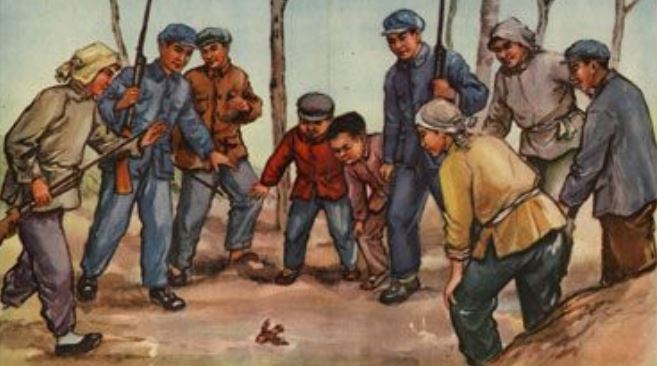
The Great Leap Forward was Mao Zedong’s centralized bureaucratic road map to a Red Chinese socialist utopia. Departing from the nation’s ancient Daoist traditions rooted in seeking harmony with nature, Mao would instead mobilize China’s massive human population to subdue nature for the benefit of the people. The Four Pests Campaign would seek to eradicate rats, flies, mosquitoes, and sparrows as threats to health and to agriculture. What could possibly go wrong?

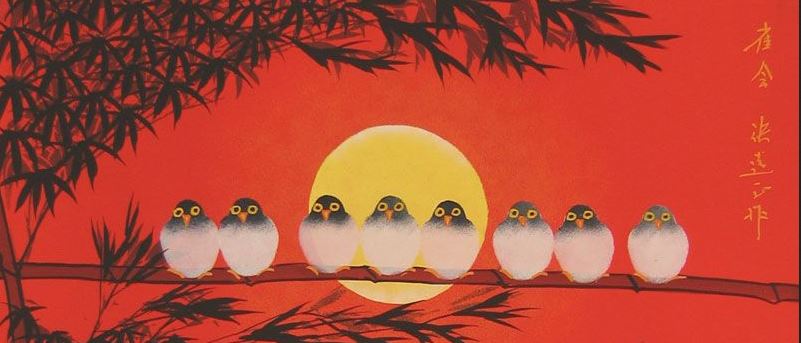
The Asian tree sparrows that swarmed through fields were estimated to consume nearly ten-pounds of grain per bird each year. Targeted as agricultural pests, a mass extermination campaign combined with the disruption of nesting resulted in a drastic population collapse among the previously ubiquitous birds. But this had unknowingly disrupted a delicate ecological balance.

The old landlords understood that the sparrows also consumed locusts, knowledge lost in the purges of land redistribution to the peasantry. And without the sparrows, locust populations exploded exponentially, disastrously swarming entire fields of both rice and grains. The resulting catastrophic agricultural failures would play a significant role in the deaths by starvation of as many as 30 million people, perhaps more.

Politically expedient governance produces little more than conveniently simplistic solutions, the harbingers of unnatural disasters. Sometimes, if we’re lucky, they fail in ways that result in nothing at all; no one seemed to miss the rats, flies and mosquitoes. Sparrows, however, are now a protected species in China, and killing more than twenty is a punishable criminal offense. But it only takes one Red Sparrow to destroy an entire system. And American politics seems able to produce them at will, and from thin air.

So good luck to those trying to buy a house, or land, or gold, or anything else that might maintain some value over the next few years. Maybe those investment portfolio artworks or Venezuelan Bolivars will make a comeback. But when that tax-refund won’t buy a bag of groceries or keep the lights on through the next month, just remember that the rules were changed by people who aren’t even in the game.

Thomas Paine and Free Money

This is Part 1 of 2 regarding Universal Basic Income (UBI) in the United States, and covers Sam Altman’s recent UBI study. Part 2 can be found here.


Money often costs too much.
–Ralph Waldo Emerson

Following the usual lazy American approach to “news”, several such media outlets have recently posted the press-release versions of results from Sam Altman’s three-year Universal Basic Income (“UBI”) study. It’s an idea that I’ve long thought interesting. And since no one from any of the news outlets reporting on the study appear to have actually read through its several-hundred pages of data and results, I decided to read it myself.

UBI refers to the idea of government guaranteeing some regular, minimum income each month. Exact approaches can vary; but most contemporary versions guarantee some standardized monthly payout from the government to each adult citizen. By making the payout the same regardless of income (or lack thereof), the hope is that the always-reliable source of cash will help to alleviate poverty while not discouraging earning more through engaging in productive work.

There have been some smaller UBI studies in the US. And several developed countries have variously experimented with UBI projects, usually by drawing upon dividends from national investments. Finland, for example, implemented a multi-year program that gave 560 euros (around $630) per month to a study group of unemployed individuals. But the idea has recently re-entered US consciousness in a manner relevant to recent trends in technologies.

During our latest otherwise inconsequential Democratic Party presidential primary, dark-horse candidate, Andrew Yang, proposed a $1,000-a-month “Freedom Dividend” for all Americans. Yang’s rationale for the proposal was that the emergence of “Artificial Intelligence” (AI) will likely render many current forms of employment superfluous.

Ideally, Yang’s proposal would be funded by some of the profits from AI. However, such asset-financed UBI isn’t a recent American proposal. Thomas Paine, one of the original Founders of the United States, also argued for something similar in his 1797 pamphlet, Agrarian Justice.

The fundamental intent of UBI, whether today or during Paine’s time, is to alleviate poverty through the government guarantee of some economically equalizing minimum income. Paine observed that long-term wealth can really only be acquired through the ownership of a productive asset. And in his time, that was primarily agricultural land. Conversely, token wealth, such as money based on a perceived value relative to other intrinsically valuable assets will inevitably lose its worth.

A contemporary example can be illustrated by the dollar value of American homes over the last decade. During that interval, a median-value homeowner would have watched its asset value more than double, while a person merely saving cash would have watched its token value decrease by one-third.

This means that people who, for whatever reason, never attain “asset wealth”, also never achieve financial security. They are at best the temporary recipients of depreciating monetary wealth, and consequently in perpetual risk of falling into poverty. Ideally, UBI attempts to level the playing field.

Agrarian Justice was an effective declaration that the idea of “property” central to the ideological foundations of the United States conflicts with two great American mythologies, that of the “self-made man”, and that of “equality”. It distinguishes an asset class from those who merely work for a living. And it suggests that movement between those classes can be difficult, if not impossible. Paine’s treatise, however, wasn’t motivated by either a compassionate Christian perspective, or some proto-Marxist appeal to property redistribution.

Many prominent Christians of Paine’s time asserted that poverty was simply a natural condition. Poor Laws in various European nations which channeled relief-taxes through churches were intended merely to manage and control the effects of poverty. They existed only to prevent social unrest, food riots, and to protect private properties from the poor. They weren’t intended to relieve poverty, or even to be humane.

Paine, however, saw poverty as an artificial condition, created by the same social systems that produced wealth. He wasn’t opposed to property rights or to the accumulation of wealth. However, Paine termed assets intended to produce wealth, such as agricultural land, “artificial property”, socially and economically justified by one’s applied and productive labors. For example, a farmer might claim some right-of-possession by having mixed his labors with the soil in a purposeful occupation of the land, but without any natural right to its individual ownership.

Regardless, this creates a paradox of accumulating wealth through property ownership versus reliance only upon the constantly devaluing token of one’s labors, which is certainly not especially meritocratic. And this is where Paine proposed a Universal Basic Income as a means to redistribute of some of the shared natural wealth of the land itself.

The modern day parallel to Paine’s example of agrarian land ownership could be exemplified in technologies such as Artificial Intelligence, robotics, and automation. Those who hold both intellectual and physical property rights to today’s technologies also have a disproportionate access to productivity. And both Altman and Yang observe that this will inevitably serve to economically lock-out a significant segment of the US population.

Economically, however, it seems to me that there’s a bit of a perpetual-motion fallacy to all of this. Somehow, any form of UBI still has to economically return more than what is invested.  If everyone is paid from the profits of a farm, then where does the money come from to pay for those profits? If everyone is financially compensated with some portion of the profits from the technologies that take their jobs, then what creates the difference in capital needed to actually purchase the things those technologies produce? It’s even the First Law of  Thermodynamics… you can’t get something from nothing.

Altman has hinted at this problem with an alternative proposal, a sort of techno-Marxist property redistribution where each American is simply given a share in AI itself. But this reveals the fundamental economic problem with any UBI proposal. The bottom line is that it has to be somehow economically beneficial in order to pay for itself. Otherwise, it’s merely a way of shifting money through taxation or borrowing, or a parceling out of ever smaller dividends through an inflationary Ponzi-scheme facilitated by printing money.

So what of Altman’s “Open Research” UBI study, which gave an unconditional $1,000 per month to 1,000 individuals for three-years? Was there a return on the investment? And was it sufficient to justify the $60-million spent?
I’ll get to that…