Heavenly Synchronicity

…la Providence était le nom de baptême du Hasard,…
[“…Providence was the baptismal name of Chance;…“]

-Nicolas Chamfort (1741-1794), Maximes et Pensées [Maxims and Thoughts] (1795, posthumous).

Four astronauts just launched toward the Moon for the first time in more than a half-century. To be clear, they won’t land on the Moon. They won’t even be going into orbit around the Moon. Rather, they will be following what is known as a “free-return trajectory”. 

This is actually just an elongated orbit around the Earth that extends to a distance beyond the moon. Timed correctly, the passing Moon’s gravitational influence will then bend this Earth-orbit into a tight figure-eight that will send the spacecraft almost directly back. This was how the Apollo 13 astronauts managed to return to the Earth.

How the Earth’s single, relatively large Moon came to exist is still something of a mystery. No one really knows the exact mechanisms of how it was formed, or how it ended up in its current orbit. There are a number of theories. But every idea has some underlying technical difficulty.

Lunar rocks brought back from the moon during the Apollo missions appeared to show that the moon’s surface is made from material virtually identical to that found on the Earth. This means that both the Earth and the Moon had to have formed together in the same region of the early solar system, and that the moon wasn’t simply captured after forming elsewhere. But the physics doesn’t provide any simply way for this to have happened.

One popular idea, known as the “giant impactor”, proposes that a proto-planetary object about the size of Mars collided with the early Earth, mixing their crustal materials together while ejecting debris into an orbit around the Earth where it would eventually coalesce into the Moon. However, computer simulations show that this would have required a very precise collision. And the calculated overall spin of the resulting system wouldn’t account for the Earth/Moon system’s present “angular momentum”.

While the Artemis II crew won’t be staying at the Moon, they will get a view of its mysterious far side. This is an aspect not visible from the Earth due to the Moon being “tidally locked” to the Earth. This gravitational effect results in the Moon having a spin-rate that exactly matches the length of its orbit around the Earth. As a result, we always see the same side of the Moon.

The Moon’s hidden face, however, appears very different from the side that we can see from the Earth. Its far side is heavily cratered. And it also lacks the dark, lower-lying basins, or “maria”, that comprise the cloud-like patterns humans have long described as a “man”, a “rabbit”, or as “seas”. Measurements made in 2012 also revealed that the Moon’s far-side crust is thicker, and that it includes an extra layer of material.

Several ideas have been suggested to explain the difference between the Moon’s near and far sides. Among them is that a dwarf planet in orbit around the sun collided with the moon some time after its formation. Simulations show that if an object about 480 miles (780 km) in diameter hit what is now the near side of the moon at around 14,000 miles-per-hour (22,500 kph), it would have resulted in a cloud of debris that would have fallen onto the Moon’s far side to a depth of from 3 to 6 miles (5 to 10 km).

Regardless, the moon’s existence has played a significant role in the development of life on the Earth. Its pockmarked face would have provided some shielding from large comet and asteroid impacts in the early solar system. And the early, much closer moon would also have created powerful tides, intermittently flooding tidal zones where prebiotic materials may have collected to form the Earth’s first life. And the moon also helps stabilize the Earth’s spin axis, keeping its seasons from fluctuating wildly.

However the Earth-moon system formed, it initially resulted in a much faster rate-of-rotation for the Earth, creating an about 5-hour day. This would have been fairly close to the physical limit of angular momentum for the formation of a planet within the proto-planetary disk. But the short days would have helped to stabilize planetary temperatures at a time when the the sun was at only about 70-percent of its present luminosity.

The Earth’s rapid spin, however, places a tidal drag onto the Moon. And this slowly transfers some of the Earth’s “angular momentum”, or spin-energy, into the Moon’s orbit. This gravitational transfer of energy gradually expands the Moon’s orbit while slowing the Earth’s rate of rotation. Even today, the Moon grows more distant from the Earth by about 1.5-inches per year as the Earth day lengthens by about 1.7-milliseconds every 100 years. In fact, an Earth day would currently be around 60-hours if not for various mediating influences from the Sun.

When the Moon first formed about 4.5-billion years ago, it was at a distance of only about 15,000 miles (24,000 km) from the Earth, and took a mere 11-hours to complete an orbit. But as the Earth’s rotation gradually slowed from its original 5-hour day to our present 24-hour day, the tidal energy transferred into the Moon’s orbit expanded it out to its present-day, almost 239,000 mile (385,000 km) distance. Today, about 80-percent of the Earth-moon system’s total angular momentum (its overall spin-energy) is concentrated in the Moon’s 27.3-day orbit. But this leads to an intriguing coincidence.

Anatomically modern” humans have been on the Earth for only around 500,000 years. And their “pre-modern” ancestors who first developed larger brains and then migrated out of Africa only date back perhaps 1.8-million years. This represents such minds having perhaps looked toward the heavens in wonder for a mere 0.04%, or four ten-thousandths of the time in which the Earth/Moon system has existed.

And yet, humans have existed during a brief interval in which to witness both the Sun and the Moon covering the same arc in the sky. The Moon is about 400 times smaller than the Sun. But at just this point in the Earth’s long history, the Moon’s orbit also just happens to have reached a distance from the Earth that’s about one four-hundredth the distance to the Sun. In fact, the balance is so close that just the difference in the Moon’s slightly elliptical orbit can create both “total” and “annular” eclipses of the Sun.

It’s a curious coincidence; and it won’t last forever. As the Moon continues to drift away from the Earth, it will also continue to appear smaller. And in about 300-million years, there will never again be a total solar eclipse.

The Way Home

I wrote this initially about two decades back, ironically during an apparently rather tedious, science-related conference. I first posted it at another, now defunct website.  I re-posted it again at WP in September of 2015, just before some travels to the general area where I witnessed this event.
I was eleven-years old, and it left a deep impression on my still young mind.


“不知周之夢為蝴蝶與,蝴蝶之夢為周與。”
Did a man dream he was a butterfly,
or is a butterfly dreaming it is a man?

Zhuāngzǐ (c.369 BC – c.286 BC).

Science has been at the center of nearly all of my adult life. Ironically, however, I find some reassurance in that science doesn’t have answers to every question. To be honest with myself, I don’t want to know everything.

Bewilderment can be a marvelous sensation, hinting at possibilities that some wondrous magic perhaps awaits just behind the curtain. The joy in watching a good magician is in the mystery. And life itself is filled with mysteries — experiences that liberate stories far more wonderful than anything possibly rendered into mere description.

Finding myself alone one autumn afternoon in the years before being endowed with the all-knowing condition of teenager-hood, my eyes fell upon one of those magnificent, but mysteriously unexplainable phenomena. Rounding a corner along a trail through the hills near my childhood home, the very landscape suddenly transformed into a rolling, whirling, orange and yellow cloud of pulsating wings.

A tremendous gathering of monarch butterflies had settled into a ravine of wild oaks and milkweed near the edge of the Forest of Nisene Marks, draping everything in a living fabric of what entomologists refer to as the “imago stage of lepidoptera” — or “butterflies” for the rest of us.

In one of life’s great mysteries, scientists have no idea how, or even why tens-of-millions of monarch butterflies travel thousands of miles across the North American continent, ultimately to converge on just a few locations. Moreover, a single migration is accomplished through generations. Each delicate butterfly’s life enduring only a fleeting few weeks, it will be the offspring of many generations on who complete the cyclic annual journeys started by distant ancestors.

Of course, scientists know some things. Experiments show that southward migrations can be triggered by cold weather. But this only tells us that the butterflies don’t like to get too cold, and that’s not really very surprising.

Some also think that monarchs orient themselves to the sun during their travels. But they don’t know how the insects compensate for the sun’s different positions over a day, or at different latitudes. And even more mysterious is how a butterfly, so many generations removed from any who previously congregated at some special location deep in a Mexican forest, can ultimately return to that exact spot.

Scientists are also just as mystified by how monarchs form “roosts” along their migratory routes, such as the one I happened upon in the local hills near my childhood home. These delicate insects don’t travel in flocks, like birds. Rather, they migrate alone.

Yet, these sudden gatherings of sometimes vast numbers of butterflies will form spontaneously over a few hours, with members converging from every direction onto a single location. It’s as if countless flyspeck minds suddenly resolved that this particular place should be called “home.”

And just as suddenly, they’re gone.

Maybe there was a message for that solitary witness. After all, what is “home”, and what is it that draws us to gather in such places? And why is it that just when we might think we’ve discovered such a place, it just as suddenly disappears?

The world around us changes. The young and the old alike, move on. New generations take their places. We awaken to a changed landscape, perhaps even one in which we no longer find refuge. Maybe home isn’t a place after all?

And so we migrate. And if not in our bodies, then in our hearts. We go on to what comes next and gather anew. We gather with our friends and fellow travelers, our families, lovers and companions, or perhaps just our faith in something greater. That, or we die alone.

And how we know when it’s time to travel is not by the temperature of the air, or by the positions of the sun or the stars, or by changes in some physical field. Instead, we look inward, toward something else entirely, to something unquantifiable. We turn to a counsel for which there is no science.

Standing within a swirling sea of pulsating wings, some brushed my face while others took momentary refuge upon outstretched arms. I stood in place until my muscles ached, until I knew that I’d be missed among my own. But the warm memory of the experience remained, like the magical iridescence of orange dust that was left on my skin afterward.

Returning to that same spot the next day, but for a few lifeless husks they were gone. Now even the hills where nature once performed that blissfully mysterious act of magic for an awestruck child have been tamed by other humans in search of homes for themselves. And I too have moved on. But every journey has a destination, even if we don’t know what it is.


“Nobody” Will Read This

The strong do what they can, and the weak suffer what they must.” 
Thucydides, History of the Peloponnesian War (411 BC).

Melos was a free state, on an island in the Cyclades. It had remained neutral in the war between the Athenian empire and Sparta. But in 416 BC, the Athenians landed troops on the island and demanded that the Melians surrender and become a tributary colony to Athens. The Melians refused. So the Athenians, finding the Melian defenses too strong to overcome by direct force, instead blockaded their supply routes. The Melians, eventually starved into submission, surrendered the following winter. The Athenians then executed all of the young men of Melos, sold the women and children into slavery, and resettled the island with Athenian colonists.


About a week or so back, I noticed a strange occurrence with my WP page. It seemed that every article that wasn’t password protected had been visited twice. If that had been all, I’d simply have figured that I’d been discovered by some A.I. training engine. However, about a dozen pages were visited up to six times, two old articles were visited 14 times, and one particular article had been visited 48 times.

I don’t post regularly. My writing here is merely for a little self-expression; I even have the site set for “Search Engines Discouraged”. And the vast majority of others whom I’ve “followed” on WP over the years have long since disappeared.

How often I post depends mostly on external factors… work, the weather, what’s going on locally, visitors, travel, or whether or not I have anything to say. So, I’m accustomed to the stats jumping around. Still, I would consider 20 visits to a new post to be unusual. So 54 hits just seemed odd.

The older article with the 48 hits is titled “〇”, and it’s almost impossible to find in a title search without a copy-and-paste. The character in the title isn’t a letter, nor is it a Japanese “kana” or “kanji”. Rather, it’s an ideographic character used to represent a kanji’s meaning in certain contexts.  The kanji used in Japanese is pronounced “rei”, and traditionally written in Japanese as “零”. It means “nothing”.

At the time I wrote the article, my word processing software wouldn’t display the correct character for the title. And WP wouldn’t display the correct character for the kanji. As of now, however, both issues seem to have been mostly resolved. Although, the phonetic Japanese kana to kanji selection in my word processor still comes up with only the “simplified”, or Mainland Chinese rendering for the kanji.

Dead Internet Theory” proposes that most Internet activity is now the product of bots, algorithms, and automated systems. Originally, the idea was seen as a fringe theory, having more in common with claims of state surveillance systems, COVID having escaped from a Chinese bio-lab, or the existence of networks for underage sex-trafficking to the super wealthy. But AI tools are now capable of producing content that mimics human creativity.

Indeed, much of YouTube has been buried under masses of AI-generated “clickbait” sufficient to render searches for legitimate or historical uploads almost useless. But AI can also be used to gather information useful for eliciting large-scale social patterns that can later be exploited. And some of the channels for collecting this type of information aren’t so obvious.

For anyone following the policy trail, this was the real reason for the transfer of Tik-Tok management onto US-based servers. No one in the US government actually cares whether some Chinese corporation or government official has your personal information. Rather, they’re more concerned with what the Chinese know about people’s mindless media preferences.

Using this data, algorithms could be utilized to target emotionally charged clips at certain, particularly receptive demographics. Timed deliberately, these could be an effective psychological warfare strategy intended to internally destabilize US society at some critical moment. Think, armed and angry flash mobs. And the “information” driving these emotionally charged crowds can now be entirely AI manufactured.

About a month ago, I left a comment on a slick YouTube video that has since disappeared. It was presented as a comparison of the US system of governance versus that in Mainland China. It was a fairly well presented argument… if rather one-sided. And I’m sure it was AI generated.

Concluding that the Chinese system was clearly superior to that of the US, the video referred to a 2014 Princeton paper that I recognized immediately as a flag for Chinese propaganda pieces. The paper, one of the more blatantly biased and statistically manipulated pieces of research I’ve encountered, has since been removed from the Princeton archives. But I posted a link to a copy at the Internet Archive, with a notation that it would take some careful reading to see how they had generated their results.

My own YouTube page is a fairly innocuous collection of playlists, music, records of bike rides, and one brief commentary on the local traffic. Most of it is private. But what isn’t certainly became popular shortly after I left my comment. And within a few days, I also started receiving unsolicited text messages asking about my political views on various topics. I’ll just block the phone numbers; but a new question from a new number will arrive few days later. Today’s simply asked whether I was a Democrat or a Republican.

Over the last couple of weeks, I’ve also started receiving Japanese-language email messages from various “charities”, either thanking me for my donations, or for upping my donation amounts. They’re clearly fishing. But it’s an interesting strategy given that anyone who’s read through my posts will know that I have been involved with some Japanese-based organizations.

If you’ve followed Japanese politics at all lately, you might have caught that Japan’s Prime Minister, Sanae Takaichi, just won a landslide in a snap election, while also securing a single-party super-majority in Japan’s more powerful Lower House. Takaichi, who was slated to hold office for two more years, called the election in order to gain both a public mandate and the legislative strength to introduce a sweeping conservative agenda. And a part of that agenda is taking a tougher stance toward China while rebuilding Japan’s military.

Acknowledging that Japan’s shipping lanes, and thus its economic lifeline would be at risk should China impose a naval blockade of Taiwan, Takaichi publicly removed any ambiguities about how Japan would view such an action. On November 7 of last year, Takaichi openly affirmed that any Chinese blockade or attack on Taiwan would constitute a “national emergency”, and that this could very well trigger the deployment of Japan’s Self Defense Force (JMSDF).

Xue Jian, China’s consul general in Osaka, responded by writing on X that, “We have no choice but cut off that dirty neck that has been lunged at us without hesitation. Are you ready?” But rather than being taken as a withering threat, the remark ended up merely confirming to many Japanese citizens that Takaichi’s assessment of China was correct. And this has driven the CCP’s propaganda machine into overdrive.

Internally, the CCP has been whipping up nationalist fervor with horrific images of atrocities committed by Imperial Japanese soldiers during its occupation of China during the lead up to WWII. Externally, we’re seeing things like the YouTube video that I mentioned. And that’s why I think the particular post attracted so much attention. Just as with using a platform such as Tik-Tok to divide a nation’s population, potentially to the point of inciting violence, CCP messages now seek to divide the various alliances that have formed to resist Mainland Chinese regional threats.

” ends with mention of the Japanese “Zero”, an exceptionally fast and maneuverable Japanese fighter aircraft, feared by Allied fliers at the start of WWII. An industrial and technological symbol of Imperial Japan’s rise to great military power, it would ironically also end up amounting to nothing. But I have to wonder if that may have meant something to a large information gathering system tasked with conveying the futility of defending an island.

Emergence – part 1, Patterns

Accept whatever comes to you woven in the pattern of your destiny,
for what could more aptly fit your needs?

Marcus Aureleus, Meditations.

Around the time I started college, the video-game, “Sim City” became popular. It was a city-building simulation game, where players tried to create a viable metropolis with infrastructure, neighborhoods and sources of economic production such as factories and businesses. The goal of the game was to improve the standard-of-living for the city’s residents over time by investing tax-revenues, without  going bankrupt or destroying its own environment.

Sim City was a slow, problem-solving game. But it was possible to have a little short-term, if perhaps sociopathic fun by doing things like burning down a city’s crappy neighborhoods or misappropriating the tax revenues from a future Superfund site. But around 2000, the game spun-off a more human simulation in “The Sims”.

The Sims was a sort of “virtual doll house” without any particular goals or objectives. Players simply created digital simulations of people, or “Sims”, put them into homes that could be designed in various ways, and then tried to direct their simulated humans’ actions by slightly adjusting their moods and desires. Later versions of the game added to what players could do with their Sims, eventually diverging into some fairly preposterous territories.

Will Wright, the original developer of The Sims, said that the game’s initial intent was merely to satirize US consumer culture. Taking ideas from 70s-era architecture and urban design philosophies, Abraham Maslow’s “Theory of Human Motivation and Hierarchy of Needs”, and Charles Hampden-Turner’s “Maps of the Mind”, he came up with a sort of primitive artificial intelligence that would direct the actions of the game’s simulated humans.
In other words, it was pointless.

I’m not aware of anyone ever considering Sims as conscious, self-aware beings. But computers, and especially the software they can run have now reached a point where it can be pretty difficult to distinguish an exchange with another human-being from a digital simulation of one. Artificial Intelligence systems now produce “art”, have friendly conversations, or even discuss philosophy. So questions about machine self-awareness or consciousness now elicit at least some degree of debate.

In 1949 the English mathematician and computer scientist, Alan Turing, proposed a test to answer the question, “Can machines think?” The “Turing test” as it’s come to be known, is a measure of a machine’s ability to act in a way that is equivalent to that of a human. Turing proposed that if a human communicatively interacting with a machine can’t reliably distinguish it from another human, then it must be assumed to be equivalent, and thus to be able to think.

Turing made it clear that his proposed test’s results weren’t dependent upon actual “consciousness”, or even correct responses. Rather, it implies that the only observable distinction that humans can make regarding other humans is based on behaviors. Consequently, anything behaviorally indistinguishable from a human must be assumed to have the same capacities. Of course, it could be argued that the “mind” is something non physical, or that it at least has some non-physical properties that can’t be measured. But Turing’s point was simply that when observing the universe, all we actually see are its patterns.

Fundamentally, this is what defines “science”. As a discipline for revealing knowledge, science is based in the observation and measurement of patterns. Science moves forward by searching out, questioning, testing, and then cataloging the valid patterns which define our universe. And this also sets the limits for science.

In his autobiography, the physicist and originator of Quantum Theory, Max Planck, asserted that accurate knowledge about the universe requires accepting only that which can be observed and measured. “The belief in miracles must retreat step by step before relentlessly and reliably progressing science…” But Planck also acknowledged that those same patterns must have their foundations in something we cannot observe. Mathematics, for example, is the means through which the patterns of science are described. And yet, it exists as a concept emergent from something that can’t be held. “Modern Physics impresses us particularly with the truth of the old doctrine which teaches that there are realities existing apart from our sense-perceptions…” 

In 1931, the mathematician, Kurt Gödel, presented two theorems of mathematical logic that describe the limits of logical provability in formal theories. The first of these theorems demonstrates that a complete and consistent set of “axioms”, or foundational truths for all of mathematics is impossible. And the second theorem shows that there exist cases where certain “true” patterns will have no mathematical algorithms through which to prove that they are true. 

None of this refutes either science, or that the universe is defined by patterns. However, it does suggest that what we perceive in the universe around ourselves is based in something potentially unconstrained by any of the rules that govern our own existence. What we experience as “reality” could be little more than our own interpretations of patterns held in something otherwise unknowable.

A “computation” is simply a consistent pattern within some system. In a “computer”, like the one you’re probably reading this on right now, the patterns are simply electrical “ons” and “offs”, which can be represented as numerical ones and zeroes. Patterns are created when these “ones” and “zeroes” interact according some simple set of rules, like light switches flipping in predesignated responses to other lights being either on or off. And a software engineer can represent this pattern with numbers.

A “computer”, however, can work by any means of interactions. It can be waves that interact, or tubes, or wheels and gears, or levers and buckets of water… or something we can’t even imagine. All that’s important is that there is enough consistency to maintain an overall pattern.

In the metaphysical computer of my imagination, I see an infinitude of interconnected meta-water buckets, pouring into one-another as they’re tipped by a system of interacting levers. A trillion, trillion, trillion, trillion buckets slowly shift in its first computation… a “Planck time”, the shortest meaningful interval in the overall pattern. Standing at a great enough distance, and watching over a great enough number of shifts, the buckets create a beautiful pattern of waves propagating in various directions, sometimes recycling, or interacting to form new patterns.

Merely a vast infinitude of shifting buckets and spilling water, one particular collection of patterns describes the interactions of an incredibly complex murmuration and all of its environmental interactions. Examining it carefully, the numbers that represent full and empty buckets and their up or down positions describe places where some patterns are blocked, and others where they are able to pass through. Water spreads through the system, temporarily collecting in some areas, and irretrievably dispersing into others… decaying meta-hydrodynamics.

Sima knows nothing… can know nothing of those metaphysical buckets, despite her sometimes wondering. Watering the pepper plants in her kitchen window, she looks out, admiring the beautiful sunset and the trees swaying in the wind.

Home in a Flash (part 2)

Following a winding trail through the snow, Flash and Candy Cane descended into a valley with high cliffs on either side. “Be very quiet through here,” whispered Flash. “This is the Yōsei no tani, the Fairy Valley.

Oh! Fairies? How wonderful!” replied Candy Cane.

Yeah, one or two I guess,” Flash said quietly. “But then they’ll swarm you like mosquitoes looking for handouts. Get everywhere… You’ll find them hiding under a collar or in a pocket a week later. Make a big mess in the laundry.” Flash glanced up at the sheer cliffs on either side. “And whatever you do, don’t smack them! The noise might cause an avalanche!

At the far end of the valley, Flash steered the team up a side trail toward the base of the mountain. After a short distance, they reached a snow-covered meadow with a stream running through it, and Flash pulled the team up to a stop at a place where the reindeer could get a drink. Suddenly, a voice called across the snow as an extraordinarily beautiful and elegantly attired elf emerged… “Furashiyu! Anata no?!

It was Flash’s sister, Shiho! After a cheerful greeting, Flash introduced her to Candy Cane, explaining that her sister was, as her name implied in Japanese, a protector of the valley. English names just happened to be trendy around the time when Flash was born. Pronounced as “Furashiyu”, however, it evoked images of spilling hot water. Consequently, Flash’s having traveled abroad to take a job with better insurance benefits.

Flash explained to her sister about Jynx Shadowheart, and why she had to find the Kirin. But her sister said that no one had seen the magical chimera for several months, despite many efforts to call for it. And so, the valley had gradually fallen into more frequent misfortune as the good luck the Kirin had spread was gradually fading. As magical East Asian animals will sometimes do, the Kirin had simply retired quietly into the mountains. But no one knew why.

After a fond farewell that included directions to the currently fastest course up the mountain, Flash and Candy Cane departed to the trail. As the route grew steeper and more treacherous, any other team wouldn’t have been able to make the passage. But the twelve feisty reindeer wouldn’t be stopped. And with nowhere to land a flying sleigh along the dangerous cliffs, hoofing it was the only way to make the approach. Santa had picked the right team for the job!

Candy Cane peered uneasily out over the edge of a cliff as the team negotiated another hairpin turn on the narrow trail. “I don’t understand,” she said. “If the Kirin isn’t a unicorn, why is Jynx Shadowheart hunting it?

If we can find it, you’ll understand. The Kirin has hooves and the body of a deer, but with scales and a flowing mane like fire. And it has a single horn, so people sometimes confuse it with a unicorn.” Flash continued, “It’s gentle and kind, and it brings good fortune, prosperity, and protection. It’s one of the four noble animals, along with the Dragon, the Phoenix, and the Tortoise. The peace of the whole valley depends on its presence. If Jynx manages to find it first…

But if no one has even seen the Kirin in months, how will we find it?” asked Candy Cane… not entirely sure that she really wanted to hear the answer.

We’re going to have to climb to the top of the mountain,” Flash replied. “But don’t worry, I brought a rope. If you slip off the cliff, you’ll only fall a few feet. I can hold you.

Candy Cane suddenly realized that Flash wasn’t actually all that tall, or strong looking. And her shirt was still inside-out.

By early afternoon, the team couldn’t go any farther. The route up had turned into a narrow ledge along the cliff, only a few inches wide. Flash unhitched the twelve reindeer, set them up with a shelter, food and water, and gave them instructions to go back down the mountain without her if she wasn’t back by morning.

Then Flash reached into the big red sack in the back of the sled and pulled out a rope and some climbing gear. She tied one end of the rope to Candy Cane, and then handed her a mountaineer’s ice axe. “We’re off to the summit!” exclaimed Flash, as she started onto the ledge.

Two-hours later, Candy Cane opened her eyes again. The view was spectacular! They were above the clouds, and she could see what seemed like forever in every direction. So this was why Flash loved the mountains.

Beautiful, ne?” said Flash, with a slightly wistful tone while staring off into a familiar distance from the edge of the cliff. 

Yes…” replied Candy Cane from a safer distance. Then turning to spy something in the corner of her view, “Uh Flash… I don’t think we’re alone.

Home in a Flash (part 1)

‘Twas the morning after New Year, and Santa’s elf, Flash, was feeling unusually un-flashy and didn’t didn’t want to wake up. She had been standing next to the ginormous bowl of Chef-Salvo’s special peppermint-chocolate bark during the late night flying reindeer show at the North Pole, with the chipmunks Wilder and Angel on each shoulder so that they could have a clear view over the crowd. But every time Flash would glance down at the celebratory snacks, Wilder would whisper into her ear, “Eat some!” Then Angel would whisper into her other ear, “You heard him, eat some!

The alarm sounded, and Flash pushed the snooze button on the clock and shoved it under the bed. Why was the alarm clock on anyway? It was the start of vacation for Santa’s elves. Even the toy shop’s after Christmas clean-up and inventory elves were off. It was minus 25 degrees-Fahrenheit outside, and only slightly warmer in the bedroom. So she pulled her thick goose down comforter up over her head for a do-over.

“Bleep, Bleeep, Bleeeep!” The alarm kept getting louder and more insistent. Suddenly, Flash realized that it wasn’t the alarm clock… it was Santa’s emergency alert! She sat up instantly and picked up her phone.

Re-fueled by a second morning four shot espresso, Flash rushed off to meet Candy Cane who already had Flash’s team of reindeer ready to go. Candy Cane noticed that Flash’s socks didn’t match, her shirt was inside-out, and that her hair was frozen into a pillow-perm that looked suspiciously like something from a punk rock concert. She watched as Flash tossed a large red bag into the back of the sleigh as she climbed aboard.

Hey! Isn’t that Santa’s…” Candy Cane started to ask before Flash suddenly shushed her.

I’m ready to go!” said Flash. “But how are we going to get there? You know Santa grounded my team after that little Christmas Eve thing?

“I have Santa’s golden key. He said that I’m supposed to be in charge of it while we’re traveling.” Candy Cane looked down a little sheepishly. “I don’t think he trusts you with it.” Then she smiled. “So where are we going for our vacation adventure? A tropical island? The Swiss Alps?

Flash answered in an uncharacteristically low voice. “I’m going home.

Japan?! What fun! Tokyo? Kyoto? Will we get to go skiing in the mountains or go to a hotsprings and sit in the hot water… Oooh, a warm bath. How nice that would be!” said Candy Cane as her breath froze in the air.

No. None of those,” Flash replied. “We’re going to the Unmei no Kuromori… the Black Forest of Destiny.” She pulled out a map of Japan and pointed to remote spot in the north. “We need to get to an uncharted mountain in the middle of the forest. I know how to get there quickly from this town to the east. But we have to hurry. We’re in a race!

Candy Cane shook her head in acknowledgment, pulled a golden key from around her neck, and touched it to the map. And just like that, they disappeared into a billowing cloud of golden glitter.

No offense, but I sincerely prefer flying,” said Flash, while shaking bits of glitter from her hair and clothes. “But Santa said that if I could take care of this, that he’d be willing to forgive the little Christmas fiasco and restore the team’s aviation abilities.

Candy Cane didn’t say anything, but her ears turned a bit red. She knew about Flash’s impromptu Christmas Eve music performance in Tokyo.

I just wanted to bring a little Christmas cheer to some overworked salarymen. I didn’t mean to turn half of Shinjuku into a mosh pit.” Flash smiled. “Anyway, the repair elves managed to get everything fixed by the New Year… Did you know that they can make a whole window, glass and everything, or even a fire-hydrant out of just a piece of wood?!

It was dusk when the pair set off into the forest. Flash’s twelve reindeer may not have been allowed to fly, but they were still the fastest team at the North Pole. She sang out their names:
“Hey!
Havoc! Hey Shred! Hey Pogo, Hey Led!
Now,
Thrasher! Now, Crasher! Now Reckless and Vexen!
Go,
Misfit! Go, Scarlet! Go, Rebel and Raven!

Soon, they were dashing through the snow toward the mysterious mountain. The trees of the forest became a dark wall as the sun set. But Flash knew the way by heart. Every now and then, Candy Cane would catch a glimpse of some shadowy shape moving in the darkness, or of eyes watching them.

So why did Santa want you to come here?” asked Candy Cane.

We’re trying to reach the lair of the Kirin before Jynx Shadowheart finds it. Hang on!” Flash suddenly turned the team sharply to the left. “I want to avoid the yokai who lives in the Black Swamp. He’s always hungry.

Candy Cane looked confused, “Jynx Shadowheart? A hungry yokai?”

Don’t worry about the yokai,” Flash quipped. “It’s Jynx Shadowheart that’s the problem. She’s one of the best unicorn hunters in the world. And since canned unicorn has gotten so expensive, she’s been traveling the world looking for game.

So there’s a unicorn in this forest?

No!” burst out Flash. “It’s not a unicorn that lives here.
It’s a ‘Kirin’!

They traveled all through the night. Suddenly, Flash veered the team sharply to the right where they deftly squeezed between two large boulders, and then emerged over a ridge to a spot where they could see out over the forest. In the distance, the sun was just rising over a rugged mountain. “That’s where we’re going.”

In the darkness behind them, a gloved hand reached down to pet two humongous dogs. “Bruiser, Thor… It seems you’ve led us in the right direction after all.

Apophenia

Alice Sara Ott, Gnossiennes No.1, Gymnopédies No.1, & Gnossiennes No.3, by Erik Satie.

Je suis fatigué de toujours mourir avec le cœur brisé.”
[
I am tired of always dying with a broken heart.“]

– Erik Satie

“Apophenia” is the human perception of patterns in otherwise unrelated or meaningless information. It’s the experience of seeing faces in clouds, or of sensing order in random events.

The experience is an ordinary and usually benign product of brain function. But in extreme cases, it can result in behaviors such as unreasonable gambling, superstitious actions, or irrational beliefs. In statistics, it can result in what is termed “Type-I error”, or a false positive.

The brain is an instrument of pattern-recognition, constantly searching for relationships between the sensory inputs it receives. And it changes throughout a life as it attempts to make sense of an external world by matching the patterns of its experiences to other established patterns. We discover clues to our existence by connecting perceptions, defining our bodies and the spaces around them, learning when to feel fearful or safe, and the communicative meanings of words and of sounds.

The very reality we experience in our minds is the result of how we construct these relationships. But always, the brain looks for patterns, even in the random occurrences that fill the world, even if they don’t exist.

When I was much younger, I thought of music as a sort of universal language, that people all sensed pretty much the same thing in its patterns of rhythms, melodies, harmonies. But over time, I’ve come to realize that’s not entirely the case. We may all hear the same things, and even connect certain instinctive responses. Regardless, interpretation is emergent; music is a product of mind.

The power of music is in its evoked emotional response, but without the need for any apparent linguistic or semantic context. It can express emotion while itself remaining abstract. But the experience of music is still an interpretation. So not everyone necessarily feels the same things from the same combinations of sounds.

This isn’t about those who seem to have super-abilities to hear things most of us cannot. Simply getting older reduces the physical ability of our ears to register higher frequencies. But “music” as an experience is something different. It’s more than just combinations of sounds; it’s what emerges from the mind.

About one in ten-thousand people have “perfect pitch”, or an ability to exactly identify notes without hearing a reference. This isn’t a “good ear”, or an ability to accurately perceive the relative notes of an instrument. Tuning a piano requires good relative pitch; but a piano-tuner will still use something like a tuning fork as a reference.

Perfect pitch is an ability to bypass that interpretation of sound, and to instead have direct access to the neurological connections within the ear itself. Likewise, it tends to become less acute with age, mirroring the physical decline of hearing’s mechanics. So it’s an ability that, while developed with exposure to music, also seems to bypass the relational character of music itself.

Conversely, “congenital amusia” refers to cognitive music deafness, which apparently affects about 4-percent of the general population. Amusics can usually tell whether one note is higher or lower than another, but they can’t consciously distinguish differences in pitch. Most people can reflexively experience the difference between an “octave” and a “major 7th”, the first sounding harmonious and latter discordant. Those with amusia cannot, nor can they distinguish major and minor chords.

Somewhere between these extremes is where the patterns that give rise to mind create the experience of “music”, with perhaps a sliding scale. And “audio pareidolia” might be the extreme, a form of apophenia where people may experience music in even the random noise of anything from wind to the sound of a motor.

As with perfect pitch, exposure to music, especially when young, probably has an influence in how sounds are interpreted in our awareness. And for that, I thank my mom especially for the music she taught my young mind to perceive.

“Frisson” (French for “shivers”), sometimes called, “goosebumps, is a response to certain emotionally stimulating experiences. The sensation includes a feeling of tingling skin, and may occur as a pleasurable emotional response to music. Many, myself included, strongly experience this effect when listening to emotionally evocative pieces of music. And yet, about one-in-three people have never had such an experience.

Frisson is a psycho-physiological phenomenon. It’s a physical response of the human body to a stimulus that, in the case of music, is merely created by the brain. It’s a reflexive manifestation of mind, of something entirely imagined.

When I was very young, my mom would encourage me to lay on the floor, eyes closed, and to imagine something while listening to a piece of music. And later, after we moved to the US, she would encourage the same while she played the piano. Several of my favorite pieces were by the French composer and pianist, Erik Satie.

Satie expressed an absurdist sense of a world that shouldn’t be taken too seriously. And many of his compositions were written in such a way as to encourage those who performed them to make their own interpretations. So my mom would sometimes play these pieces slightly differently, and then challenge me to see how how the story had changed.

What my mom was trying to teach me was how to experience those faces in the clouds that hide in the patterns that give rise to music… that it becomes what we experience and what we feel. Life is indeed an absurd performance, filled with joy and with sadness, with passion, and with irony. But when we take the stage, we at least get to choose what to evoke in our own renderings of its script.

Music is to me as standing in the clouds, surrounded by the wind, an arrangement of incantations read from some ancient, esoteric text. Voices sometimes whispered, sometimes singing in a bell, summon something magical, a radiant tingling glow.


Ada Zhao, playing the Italian composer, Benvenuto Terzi’s, “Carillon” (Bell Carol).
Yes, this is two overlapping parts being played on a single guitar. The melody is tapped out with the left hand, while the harmony is played in bell-like single-hand harmonics with the right hand.
Talent, skill, and a lot of passionate practice!


References and stuff:

Bowling, D. L. (2023). Biological principles for music and mental health. Translational Psychiatry, 13(1). https://doi.org/10.1038/s41398-023-02671-4

Jain, A., Schoeller, F., Horowitz, A., Hu, X., Yan, G., Salomon, R., & Maes, P. (2023). Aesthetic chills cause an emotional drift in valence and arousal. Frontiers in Neuroscience, 16. https://doi.org/10.3389/fnins.2022.1013117

Satie, Erik: Why and where Satie composed | Gnossiennes – Mara Marietta. (2024, June 8). Mara Marietta. https://www.maramarietta.com/the-arts/music/classical/satie/

Schoeller, F., Jain, A., Pizzagalli, D. A., & Reggente, N. (2024). The neurobiology of aesthetic chills: How bodily sensations shape emotional experiences. Cognitive Affective & Behavioral Neuroscience, 24(4), 617–630. https://doi.org/10.3758/s13415-024-01168-x

The Editors of Encyclopaedia Britannica. (2025, March 21). Erik Satie | Biography, Music, gnossiennes, & Facts. Encyclopedia Britannica. https://www.britannica.com/biography/Erik-Satie


Acceptance and Courage

When one loses the deep intimate relationship with nature,
then temples, mosques and churches become important.

–Jiddu Krishnamurti

Japan is known for its mountains. And its mountains are known for the extraordinary numbers of Japanese who climb to their summits. Probably the best known of Japan’s mountains is “Fuji-san”, or Mount Fuji. A 3,776 meter (12,388-ft.) dormant volcano, Fuji-san is considered the traditional symbol of Japan, as well as the dwelling place of the goddess, Konohanasakuya-hime (shortened, “Sakuya-hime”), the “Cherry-Tree Blossom Princess”.

Fuji-san’s summit hosts several shrines to Sakuya-hime, whom the Japanese Shinto religion reveres as a bringer of healing, rebirth and spiritual happiness, encouraging many to seek peace by climbing the mountain. And during the 2024 summer climbing season, almost 205,000 people attempted the journey.


“Yamabushi” 山伏 (ones who bow to the mountain) are Japanese ascetic monks who worship the mountains as the dwelling-places of powerful spirits. Their practices combine ancient Shinto beliefs in nature spirits, or “kami”, with esoteric Buddhist traditions in a practice known as “Shugendō”.

Shugendō dates to the 7th-century, when it was ostensibly founded by En no Gyōja (役行者), or “En the Ascetic”. At Kongōsan Tenhōrin-ji, a Shugendō temple near Osaka, En is regarded as a “Bodhisattva”, or a spiritually awakening individual approaching Buddhahood. Most depictions of En, however, date from the Kamakura period (1185-1332) or later, and are usually associated with the mountain ascetic traditions practiced in Japan’s Ōmine mountains.

Accordingly, the traditional center of Shugendō is considered to be the sacred, Mount Ōmine, in the Yoshino-Kumano National Park, south of the city of Nara and west of the central Shinto shrine complex in Ise. And while the edict can’t actually be enforced in modern Japan, Shugendō still considers the mountain and its shrines and temples as sacred grounds, and thus off-limits to women.

Shugendō is a syncretic, “Kami-Buddhist” practice developed during the Heian era (794-1185), blending both Shinto and Buddhist beliefs. Shinto is an indigenous religion to Japan that recognizes a vast pantheon of gods and natural spirits, or “kami”, which may inhabit various locations, or even natural phenomena. The emperor of Japan was believed to be a direct descendant of the heavenly Shinto Sun-Goddess, Amaterasu.

After Buddhism was introduced into Japan during the 6th-century, Buddhist temples began to be constructed alongside Shinto shrines on many sacred mountains. The powerful Shinto kami considered to reside on these peaks were then also treated as Buddhist deities, thus merging both Shinto and Buddhist beliefs. This fusion of Shinto with esoteric Buddhism thus allowed the two religions to coexist without challenging imperial authority.

Shugendō’s Buddhist aspect is strongly influenced by both Tendai and the more esoteric Shingon sects of Buddhism. Tendai promotes faith in the Lotus Sutra, Amida (Pure Land) worship, and Zen concepts. And Shingon philosophy centers around complex esoteric, mystical and occult practices. Combined with Shinto beliefs, the practice treats the natural environments of mountains as sacred spiritual locations.

Among the more well-known (and public) of these mountain-top complexes is the temple of Enryaku-ji, located on the summit of Mount Hiei, northeast of Kyoto.  The temple is central to the present-day, “Marathon Monks”, mountain ascetics who practice a Shugendō meditation known as Kaihōgyō, or “circling the mountain”. In its traditional form, Kaihōgyō practitioners spend 1,000-days over seven-years walking more than 45,000-kilometers along mountain trails, all while following a very strict regimen.

The several thousand historical Yamabushi warrior-monks of Enryaku-ji were far from pacifist, and renowned for their tenacity and endurance. Any who resolved to continue beyond the 100th day of Kaihōgyō’s walking meditations committed either to completing the entire course, or to taking his own life. But in 1571, the warlord, Oda Nobunaga, decided to put an end to the temple’s power by laying siege to Hiei-zan with a massive army, eventually burning its temples and slaughtering its entire population. 

The current temple complex was reconstructed during the late 16th to early 17th centuries, and is central to the Tendai sect of Japanese Buddhism. Contemporary practitioners may still carry a dagger and hemp rope as a reminder of their commitment. But having reached the limit of my own endurance at the summit of Hiei-zan in 100-degree F (38C) heat and the steamy mists of 100-percent humidity, neither would have been required to have ended my own meditations.

Far to the north, however, are the seasonally snow-covered “Dewa Sanzan”, three mountains that also remain sacred to Shugendō and the Yamabushi… Mount Haguro, Mount Gassan, and Mount Yudono. The historical Yamabushi of the region were notably less militant, but no less committed than those of Hiei-zan. There are 21 known “Sokushinbutsu” in northern Japan who trained at Dewa Sanzan’s Mount Yudono. These were monks who observed a form of ascetic meditation the point of eventual self-mummification.

The contemporary Yamabushi of northern Japan follow a more life-affirming approach to Shugendō through the philosophy of “Uketamo”, which emphasizes developing both acceptance and courage. In many ways, this might be considered analogous to the Protestant theologian Reinhold Niebuhr’s 1930s philosophy that would later be encompassed in the Serenity Prayer: “The victorious man in the day of crisis is the man who has the serenity to accept what he cannot help and the courage to change what must be altered.

Each mountain of the Dewa Sanzan has a shrine, with the main shrine located on the summit of Mount Haguro. Each year, many Shugendō practitioners and Yamabushi monks make the pilgrimage to the Dewa Sanzan. However, unlike Mount Ōmine, lay practitioners, including women, are also permitted to make the journey to the various mountain shrines, so long as it’s done with observance and respect.

After purification ceremonies on Mount Haguro, travelers make their way the summit of Mount Gassan, the highest and least accessible of the three peaks. This is where the spirits of the dead are said to reside before moving on to the “Pure Land”, the realm of the Amitabha Buddha, who is also seen as a manifestation of the Shinto Tsukuyomi-no-Mikoto, the Kami of the Moon. Mount Gassan is consequently known as both the “mountain of the moon”, and the “mountain of death”.

Mount Yudono is the final destination. Considered the “mountain of rebirth”, it is treated as especially sacred. And yet, there is no shrine building. Rather, the shrine is the mountain itself, making it a sacred area in its entirety. Shoes may thus not be worn on the mountain, requiring visitors to walk barefoot along its trails. No photography is allowed, and visitors are not to talk about anything they see or hear there. Experiencing the mountain and its environment is consequently entirely personal… something unique in an age of selfies on social media.

At the conclusion of the Dewa Sanzan, the Yudono-san Sanrojo is located beside the massive tori gate at the bottom of the Mount Yudono Mountain Shrine. The facility offers a place for those who have traveled the mountains to stay and to contemplate the journey, as well as a hot spring for bathing.

Following the Meiji Restoration in 1868, the Japanese government officially disallowed Shintō-Buddhist amalgamations, declaring Shintō alone as the official state religion. Shugendō consequently became an officially banned practice until after World War II, when it re-emerged as a minor spiritual movement.

In its contemporary form, Shugendō is fundamentally an ascetic meditation based in the development of self-discipline through an interaction with the mountain environment, combined with a complex set of esoteric practices. As an alternative to the Western Stoic version of mindfulness and acceptance, it offers a more direct and visceral approach to meeting the unknowns and the challenges of life through its deep and intimate relationship with nature.

Thanksgiving

The best definition of ‘man’ is: a being that goes on two legs and is ungrateful.
– Fyodor Dostoyevsky
, Notes from Underground (1864).

It would be cyberspace, and a slight grammatical misinterpretation, that would result in the planet Earth’s downfall to a predatory lender.

World leaders from ruthless dictators to conniving politicians had been squabbling for years upon the pages of a long abandoned, dark-web forum originally intended for writers of political rhetoric, policy debates and speeches. And it was while incessantly flaming within that virtual universe that they had come across a link to one of those too-good-to-be-true offers, a short-term loan service of a magnitude that offered to plug the holes in an entire nation’s, or perhaps even the world’s fiscal problems.

The temptation to kick-the-can of debt a little farther down the road by further borrowing a way out of reality during the economic downturn of the early 21st-century had proven just too difficult to resist.  Keeping the masses of one’s own nation in check wasn’t cheap, whether through bribery or by intimidation. And maintaining world peace through Mutually Assured Destruction was a costly proposition.

At first, some of the world’s more obstinate leaders had objected… if only slightly. But a few back-room real-estate deals disguised as unanticipated border wars or regional conflicts, and it was surprising how quickly even the most rancorous of ideologues could come to agreement. And so, the Secretary General of the United Nations pressed “send” to an on-line application, and a loan-contract arrived via special courier the very next day.

Of course, the contract was in some inscrutable form of financial legalese. An expert commission including some of the world’s most accomplished financial authorities and international lawyers spent weeks poring through the documents, finally concluding that they were entirely incomprehensible — but that it looked like a good deal. A few tens-of-trillions would be enough to tide things over for a couple of years, until things either improved or more could be borrowed.

But an odd comma-shaped mark in the interest-rate section had been misinterpreted as a typographical error… when it was in fact a foreign accounting reference to a logarithm.

– – –


The mysterious craft approached slowly from the east, leaving a wake of thick, black smoke that settled in swirling plumes onto the sea below. Strangely unchallenged by the usual shows of power that had come to be expected from the nation over whose territory it so openly intruded, the airship belched its eye-watering pall across the breadth of New York’s Long Island. The collective attentions of an utterly insolvent nation turned upward to take in this astonishing sight.

Legs extended from the bottom of the craft as it crossed the East River and began to descend more steeply. Its blackened undercarriage appeared scraped and dented in places, with exposed plumbing and a loose piece of sheet-metal flapping in the air. Forward motion slowed, then stopped, and its destination became clear. A loud noise variously described as something like a washing-machine’s spin cycle and, “a rattling bag of spanners,” or, “skeletons wankin’ in a sardine tin,” announced the otherworldly machine’s arrival as it descended toward the United Nations complex.

Settling into the middle of the Central Plaza fountain, the craft unceremoniously knocked over its bronze, Single Form sculpture as a swirling plume of soot and fumes billowed over the landscape and onto the nearby Library Building windows. The loud whirling-rattle gradually wound down as the machine came to rest on its legs.

As the cloud of smoke drifted into the nearby streets, a small hatch on the side of the ship suddenly popped out and swung open. A collection of loose objects fell from the opening and into the fountain, some floating on the blackened water. And then, the hatch quickly slammed closed as a large ramp opened toward the glass-wrapped Secretariat Building. Several, small cylindrical objects rolled haphazardly down the ramp, making empty metallic sounds as they dropped onto the driveway.

The rhythmic clanking of footsteps announced a large humanoid robot as it navigated stiffly down the ramp. The giant silvery mechanoid slowly shuffled its way toward the front entrance of the building, positioning itself next to the door. There, it unceremoniously sprayed a yellow substance onto the glass before inscribing patterns into the splatter with an energy-beam emanating from its single eye. Then the robot turned around and moved back to the edge of the steps, where it stood fixed and motionless.
Eventually, the ramp lifted back into the craft while its whirling-rattle restarted, gradually increasing to a deafening clatter. An immense cloud of asphyxiating fumes and black smoke belched from the craft, billowing over the crowd of gaping onlookers as the spaceship slowly climbed over the General Assembly building and then turned back toward the east.

After the choking pall had sufficiently dispersed, a few brave souls edged past the apparently inert robot to inspect what had been left on the glass. Etched upon the yellow-stained surface were the same words, repeated in the text, kanji, glyphs, and various chicken-scratches of all 6,428 languages of the planet Earth. It read…
By order of the Galactic Resources Economic Exchange Department: Notice of Foreclosure and Eviction – All residents are hereby directed to vacate this planet within 7 local-days of delivery of this notice.
Public auction to be conducted at noon local time one day thereafter.

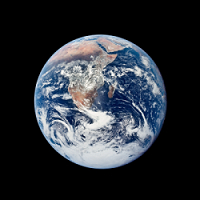
Humans had not, perhaps, presented themselves as the best custodians of the little blue sphere that they had called “Earth”. But now it was no longer theirs upon which to wrest their petty grievances. The auction would take 16-milliseconds, accepting over thirty-million bids before determining a winner. And humanity, as it turned out, had not been so bad when compared to the heavily-leveraged intergalactic consortium of mining investors who were the new landlords.

Those who would follow in the sulfurous light of a smoke-shrouded sun would hear of the “glory days.” Those times when humans merely fought and stole from one another, and vexed nature — before the mountains had been pushed aside, before the poles were melted and the seas emptied — those times were recalled with splendor. And to have lived in them, for that I am thankful.

The Amazement of the Gods

A Movie Review… sort of.

“Love is the joy of the good, the wonder of the wise, the amazement of the Gods.”
Plato

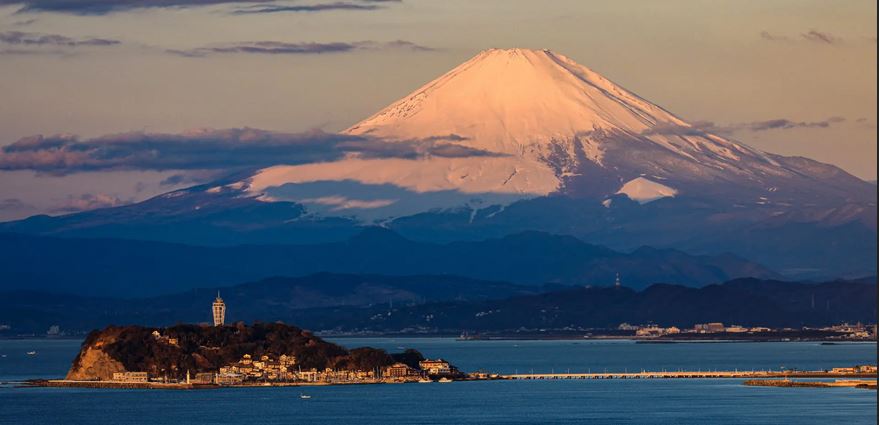
About an hour southeast of Tokyo, at the mouth of the Sakai River, is the island of Enoshima. About a half-mile from shore, it can be accessed from the mainland via a bridge. The island is best known for the legend of a terrible dragon who was pacified by his love for a goddess who lived there. And so, its shrines are a destination for lovers and for those seeking love.

– – –

While visiting family in Japan last year, I ended up watching a “Jun-ai” (“true-love”) movie with my middle-school aged niece. It’s a popular genre in East Asia, with stories usually based on the trope of finding love only to have that happiness somehow doomed. I’d have been unlikely to have watched the film on my own. But set in the Shonan region along the coast of the Sagami Bay, and using the island of Enoshima as a focal point, it ended up being an intriguing story.

Based on a light novel by Osamu Koshigaya, the 2013 film, Girl in the Sunny Place
(陽だまりの彼女, Hidamari no Kanojo) [I think a better translation is “Sunshine Girl”] is a G-rated, young romance in which two middle-school friends are separated, and then find each other again. But woven into the story is a mysterious undercurrent that something isn’t as it seems. And a warning here that, while I’m not revealing everything, there are spoilers in the summary that follows…

Kosuke Okuda is a reserved, 25-year old advertising executive, bored with life and finding that he’s missed a chance at romance. Meeting a new client, however, he recognizes the radiant woman in the doorway as an old middle school classmate, Mao Watarai. It has been more than a decade since Kosuke last saw Mao, when his family moved away from his childhood home.

Recounting those times, Mao was an odd new student at his middle-school, socially awkward, disheveled, failing at her classwork, and seen as “stupid” by the other students. Naive to the constant bullying she receives, she’s the focus of malicious rumors such as that her parents aren’t actually her parents, and that she was found walking around the streets naked one night.

Kosuke, however, stands up for Mao, sometimes assertively, resulting in trouble for his family and a distancing from his schoolmates. But Mao responds to Kosuke’s kindness, and begins accompanying him to a park after school. Helping Mao with her schoolwork, Kosuke discovers that she is actually very intelligent. She has apparently just never been to school. And Mao eventually admits that she’s a foster child.

After Mao receives a perfect score on a kanji exam, the couple share a first kiss. But this leaves Kosuke feeling awkward, and he becomes more distant. He hasn’t told Mao that his family is moving from the town due to Kosuke’s problems at school. And the last he sees of an irreconcilably distraught Mao is her frantically waving as she watches him depart.

Years later, Mao has grown into a beautiful woman who is well-educated and respected at her workplace. But it becomes apparent that there’s something more to Mao’s quirkiness as a romance develops. Subtle clues to the truth are hidden throughout the story-line.

Kosuke’s parents welcome Mao after he introduces her. But Mao’s parents are discouraging, and her father warns against a relationship. He tells Kosuke that he needs to understand more about Mao, and warns that she will eventually forget him. Mao then confesses to Kosuke that she has no memory of anything beyond the last twelve years of her life.

After an evening spent drowning their disappointments, the two decide to elope. Eventually moving into their new apartment, Kosuke suggests getting a dog. Mao, however, sternly refuses. Kosuke then recalls how the two scars on his hand were from the only animal he’d ever cared for, a kitten he’d rescued from the rocks on Enoshima. It was so frail that he had taken it home and nurtured it back to health. But the kitten eventually disappeared. Mao replies that it’s his kindness that has made her happy to have married him; and they eventually settle on some goldfish, which also seem to mysteriously disappear.

The couple are happy together. But Kosuke eventually finds a bundle of cash hidden in Mao’s dresser. And he’s surprised when he discovers an “omamori”, a small silk-enclosed written prayer paper that he recognizes from Enoshima. Mao’s father also reveals that she was, in fact, found wandering naked through a residential area at night. As the town’s Police Chief, he and his wife had taken her in. And meeting Mao was not a coincidence; she had been searching for Kosuke relentlessly for years.

Meanwhile, Mao is becoming uncharacteristically less energetic. And noticing that her hair has been falling out and that a ring he’d given her had become loose, Kosuke takes Mao to see a doctor. However, the doctor doesn’t find anything wrong.

Returning from the hospital, they hear cries from
Mrs. Hiraiwa in the adjacent apartment. Her young son has slipped from their fifth-floor balcony, and she is struggling to hold him by one arm. Kosuke rushes to help but can’t reach the boy before he slips from her grasp.

Kosuke is stunned and confused by what he sees next, as Mao leaps from a third-floor balcony to catch the boy in mid-air. They both emerge miraculously uninjured as Mao looks up at Kosuke from the ground. Later, she tells a silent Kosuke only that, “My life is almost over“; but seeing his shock, claims that she was joking. The next morning, after happily preparing breakfast, Mao goes out to get the morning paper. But she never returns.

Increasingly distressed, Kosuke contacts anyone who might know of Mao’s whereabouts. But the Hiraiwa’s act as if the events of the previous day had never happened. Mao’s parents ask who he is. And Mao’s workplace reply that, “There is no such person here.

Photos and objects associated with Mao have also disappeared. The only physical traces of her are the omamori and the money that she had hidden in her dresser, along with a note that reads, “I’ve moved my money here because I’m sure my bank account will disappear with me.

From here, the story takes a very Japanese turn, as Kosuke puts together enough to understand the truth about Mao, and rushes back to a special place on Enoshima Island. But there are limits even to the powers of the gods, with the message that we create ourselves through how we choose to exist in the moments granted to our lives.

This isn’t quite a movie review. I don’t watch enough to be able to discern what qualifies as “good” anyway. But I thought this was a beautiful film, fun to watch, and a worthy alternative to the usual Japanese pop-cultural references to manga and anime. And the story engenders a compassionate message while appealing to several Japanese folk and cultural motifs in its mystery. With the caveat that the ending may not entirely make sense to some non-Japanese viewers, it was an interesting twist that caught my American senses off-guard. So, I’m giving it a “thumbs up”.