Link to part 1: Birth of the Lion State
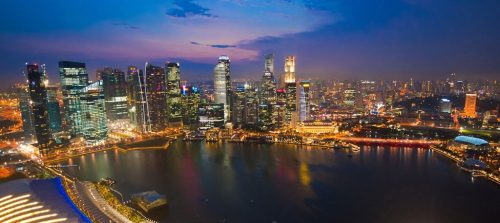
“People want economic development first and foremost… They want homes, medicine, jobs, schools.“
— Lee Kuan Yew (1997), Lee Kuan Yew: The Man and His Ideas.
Had Singapore been on the stock market when it became a nation in 1965, it would likely have been the target of short-sellers placing bets on a quick bankruptcy. But fifty-five years later, those same harbingers-of-doom would have lost $533 for every one they had gambled. From a “Gross Domestic Product” (GDP) of $700-million in 1970, Singapore’s 2020 GDP was an astounding nearly $400-billion. And this is for a country with a total population of fewer than 6-million people.
In 2020, the International Monetary Fund (IMF) rated Singapore #2 in the world for per-capita “Purchasing Power Parity” GDP, or the real value of national earnings per person, at almost $96,000; and the world Bank placed that same number at over $101,000. In both cases, this represented half-again that of Americans. Unsurprisingly, nearly four in every hundred Singaporean individuals is a millionaire, and one in six Singaporean households is worth more more than $1,000,000 US. And that’s not accounting for property, businesses, or other physical assets.
Today, Singapore is known as a peaceful, safe and ultra-modern country that suffers from few of the troubles afflicting so many other developed nations. Serious crimes, drug addiction and homelessness are rare exceptions. At its height in shut-downs during the 2020 pandemic, unemployment reached a mere 3.2-percent. And while eighty percent of the population live in various forms of either fully or partially subsidized public housing, 92-percent own their homes, most of which would be considered first-class accommodations by American standards.
Singapore’s citizens, as well as its 13% permanent resident population, also receive universal health care through a system of government subsidies, compulsory medical savings, and national healthcare insurance. With low traffic death rates, almost non-existent violent crime, clean air, the world’s safest drinking water, the world’s highest rate of births attended by skilled health personnel, and the world’s lowest mortality rates for cardiovascular and chronic respiratory diseases, the country’s population is ranked 3rd in the world for life expectancy, and 2nd in the world for overall health.
So how did Singapore do it?

Lee Kuan Yew in 1955.
Singapore’s transition from Malaysia’s rejected stepchild to one of the world’s most successful nations wasn’t without roadblocks. When the Malaysian state of Singapore became the independent Republic of Singapore on 9 August 1965, it was far from a peaceful democracy. The elected People’s Action Party (PAP) Prime Minister, Lee Kuan Yew, and President, Yusof bin Ishak, inherited a nation divided by ethnic conflict, and threatened by both communist uprisings and a hostile neighboring Indonesia.
Both leaders promoted multiculturalism, attempting to restore peace in the aftermath of the 1964 race riots that had, in part, resulted in Singapore’s expulsion from Malaysia in 1965. However, riots again broke out in 1969, and President Yusof died suddenly in November of 1970. Prime Minister Lee’s response was to emphasize rapid economic growth and support for entrepreneurship, quelling economic drivers of discontent by sinking unemployment to 3% while increasing the country’s real GDP by 8% per year over the next decade.
From the start, Lee had an overarching vision based in developing Singapore’s economy through meritocratic systems that would be supported by a government and civil service intolerant of corruption or favoritism. To this end, Lee was often justifiably criticized for promoting authoritarian restrictions to democratic governance in order to maintain the integrity of commitments to long-term social and economic plans. But this also allowed for the rapid and efficient implementation of massive public housing and infrastructural projects that encouraged a high degree of public confidence in the government.
Lee also championed a multi-ethnic culture as fundamental to achieving his economic goals in a stable society. He promoted English as a common, but neutral language that could help to integrate Singapore’s Chinese, Malay, Tamil and Indian sectors while also serving to facilitate international trade. However, individual ethnic identities would also be validated and preserved through officially endorsed bilingualism in universally well-funded public schools with high academic standards. In this way, Lee proposed to develop the small island country’s one available resource, human capital.
By the 1980s, the return on Singapore’s investment in its own population was undeniable. The country’s economy began a shift toward high-tech industries and international finance, leveraging its labor pool into more profitable forms of production and management. Meanwhile, the city-state took further advantage of its strategic location by opening the impressive Singapore Changi Airport in 1981 and forming Singapore Airlines, while the Port of Singapore was grown into one of the world’s busiest sea-trade and transit hubs.
Singapore emerged as an “Asian Tiger” economy during this time, providing financial resources for long-term investments toward developing itself into Lee’s dream of a “Garden City”. Land reclamation, environmental management, and infrastructural projects improved the quality of living conditions and environment. Urban planning and architecture emphasized creating public and residential spaces where people would want to live. And districts that represented Singapore’s cultural centers, historical areas, and various natural green-spaces were intentionally preserved.
By the time Lee Kuan Yew stepped down from his seventh term of office as the world’s longest serving prime minister on 28 November 1990, Singapore was virtually unrecognizable as the same socially imploding economic backwater  abandoned by both the British and Malaysia just a generation earlier. Lee continued to remain politically active within the PAP, either officially or unofficially, but always insisted that authority was in the hands of Singapore’s elected government. Regardless, the course that Lee had set for the island nation would continue with great momentum into the decades that followed.
Lee Kuan Yew’s leadership was undeniable in Singapore’s impressive rise. But to say that his 31-year tenure as Prime Minister was without controversy would be a significant omission. Some of his own expressed views plied the edges of social and political correctness, even for many of his supporters.
Lee was an unapologetic proponent of eugenics. And in the mid 1980s as Singapore’s fertility rate was declining, he advocated for programs to reward the voluntary decisions of women from academically low-performing families who chose to undergo sterilization after the birth of a third child. The program was so controversial that it was ended within a year, and further programs intended to encourage women from academically high-performing families to have more children were shelved.
Lee has also been accused of having been an autocrat, and a heavy-handed, authoritarian leader, promoting strict laws utterly intolerant of challenges to social order. He also employed Singapore’s courts to harass and to bankrupt political opponents and media that challenged him, effectively setting precedents restricting free political speech. Political power has consequently remained within the People’s Action Party, and opposition parties such as the liberal-democratic Singapore Democratic Party (SDP), or center-left Workers’ Party of Singapore (WP) are generally viewed as having no realistic chance of gaining control over Singapore’s unicameral parliament.
Ironically, Lee was also sometimes controversial in ways that were viewed as too progressive. In 2007, he urged Singaporeans to accept that homosexuality was not simply a lifestyle choice and should be decriminalized, and in 2011 went on to condemn religious intolerance of homosexuals. Lee then quit Singapore’s Cabinet after a 2011 election, when a relatively poor performance by the PAP was in part blamed on his being out of touch with a current generation of voters.
Unknown to the public, Lee Kuan Yew had silently struggled with his grief at the passing of his wife of 63-years, Kwa Geok Choo, in 2010. Where Lee had been Singapore’s guide and champion, she had been his. Lee’s health declined  in subsequent years, developing peripheral nerve disease and a severe heart arrhythmia. He died on 23 March 2015 at the age of 91 due to pneumonia. An estimated 1.5-million Singaporeans paid their respects throughout the country, and nearly a half-million filed by his coffin over the next several days as it lay in state in Parliament.
One-hundred seventy dignitaries and world leaders attended Lee Kuan Yew’s state funeral, including former US President Bill Clinton, Indian Prime Minister Narendra Modi, Indonesian President Joko Widodo, Japanese Prime Minister Shinzo Abe, Australian Prime Minister Tony Abbott, and UK House of Commons leader William Hague. And tens-of-thousands of Singaporeans stood in a pouring rain, lining the route of the funeral procession to remember Singapore’s equivalent of America’s “George Washington”, the man who came to be known by his fellow citizens as simply, “LKY”.
Regardless of how Lee Kuan Yew might be perceived as having led Singapore, it would be difficult to overestimate the singular effect of that leadership. Perhaps the lion that the Palembang prince, Sang Nila Utama, claimed to have seen on the island that came to be known as “Singapura” was in a vision of its future. By inspiring the combined ambitions of an entire population, a wealthy and successful nation was built upon the sheer, unleashed power of its own human resource. At his funeral service, Lee Kuan Yew’s son and then Prime Minister, Lee Hsien Loong, summed up his father’s legacy in the words, “From the ashes of separation, he built a nation.”


 For two years, I lived in a one-room house with an outdoor, communal kitchen in the city of ChiangMai in northern Thailand. It wasn’t a big or luxurious place by American standards. But it was safe, clean, comfortable, and friendly. It too was a good quality of life. In the US, I choose not to live in a city at all. It’s no less convenient, no more expensive, far safer, much friendlier, and more aesthetically appealing to live in a small town. The quality of life is good. But I’ve also lived at the edge of Tokyo, the most populous city in the world.
 Luminous Aether
You must be logged in to post a comment.