8 steps to begin your pleasure practice (& why it matters)

Pleasure puts us back in our bodies, this time shame-free, invites us to take up space, faces our inherent worthiness, & rewards our courage for staying present with good feelings. 8 steps to begin your pleasure practice.

To take your pleasure practice to the next level, sign up for January of Pleasure – a free month-long experience – happening the first month of 2021!

Dear Ones, I write to you from the early days of 2021, a bright blue cloudless sky beaming from outside my window here in Albuquerque, New Mexico. As the wheel begins another turn around the sun, it is the third quarter moon day and I am on day 13 of my cycle – a delicious transition day from the maiden Spring into my mother Summer. And in our collective northern hemisphere winter, I am blessed with 50-degree days. Still, what a provocative time to practice life-giving pleasure! And that is just what we are doing this month inside January of Pleasure, a free month-long pleasure practice experience. Come join the fun!

I’ve recently renamed my role from self-care coach to Divine Feminine Self-Love Coach. To me, this better captures my desire for work that helps folks heal internalized shame culture & shift external shame culture through the badass medicine of the Divine Feminine. I define these gifts as the shameless pursuit of rest, pleasure, & community. These really are the ultimate middle fingers to a shame culture, aren’t they? Patriarchy hands women and enbys shame, & we say, “F that! I’m going to receive pleasure in my beautiful body!” White supremacy hands black and indigenous people of color shame, & they say, “F that! I’m going to engage in nap activism & stop giving away my emotional labor for free.” Capitalism hands us shame, & we say, “F that! I’m going to reject the lies that I have to do it all perfectly & alone, and instead claim my birthright to belonging.”

What is pleasure?

Pleasure is perhaps the most radical of these 3 Divine Feminine gifts. It puts us back in our bodies, this time shame-free, invites us to take up space, faces our inherent worthiness, & rewards our courage for staying present with good feelings. It can be the long road home to accepting your erotic nature, the sexual healing you didn’t know you needed that uncoils decades of tightly-wound inner shame. Pleasure is the portal through the body by which we meet our spirit. It negates the lie that being in your body has to always be painful, difficult, courageous, or “work”, instead giving us a framework for actually enjoying our lives, regardless of our privilege, access, or ability. Literally, it is the good vibrations, positive feelings, sense of fulfillment, satisfaction, a full body YES! To me, pleasure is necessarily sensual, meaning it is perceived through one or more of our five senses. We must stop pushing it away, fearing it, making stories up about it, and resisting it. We must instead get curious, explore, experiment, request, demand, & claim it for ourselves.

Eros/erotica is specifically sexual pleasure. To me, erotica is a subset of pleasure, but it’s not the full story. A HUGE part of the healing we as a culture need to do is to come home to our wholeness through sexual healing. And I think it’s interesting how quickly our minds dart to deep, dark, shameful, sexual places when we hear the word “pleasure”. It’s almost as though we’ve been conditioned to lump all good things in with sex, and then label it all as immoral and wrong… 😉 Perhaps for you, the gateway is to start with sex. In my experience as a an ex-evangelical Christian, raised in the purity movement, brought up on the myth of virginity, I had to start elsewhere and work my way in. A gateway for you may be audio/visual pleasures or the pleasures of food/scent before exploring touch/the body. Or, if you already have a yoga, dance, meditation, or other somatic practice, using this as a bridge can be a helpful way to sink into your unique body wisdom and pleasure.

In her article, “Uses of the Erotic”, Audre Lorde writes: “The erotic is a measure between the beginnings of our sense of self and the chaos of our strongest feelings. It is an internal sense of satisfaction to which, once we have experienced it, we know we can aspire. For having experienced the fullness of this depth of feelings and recognizing its power, in honor of self-respect we can require no less of ourselves.” So eros can therefore be wielded in honor of our own self-respect, or self-worth. I just love that.

What is a pleasure practice?

A pleasure practice is a regular commitment to exploring pleasure each day. It can be as long or short of an activity as you wish; maybe you want to mindfully masturbate every day for a week and see what happens. Maybe you want to eat a slow meal with no distractions, gaze at the moon, choreograph your own musical – whatever! No one needs to know what you do, this is just for you! The idea is to approach each practice in a way that is both MINDFUL & EMBODIED. For pleasure is the container by which we are inviting in more presence, meaning, & beauty into our lives.

To take your pleasure practice to the next level, sign up for January of Pleasure – a free month-long experience – happening the first month of 2021!

Why should we incorporate a pleasure practice?

Pleasure boosts the immune system, reduces pain, and increases libido. Pleasure connects us to our abundance, proving our own worth to ourselves, reducing shame, & healing from a society of scarcity. Pleasure connects us to spirit, the Divine, & to all beings everywhere. Pleasure reduces anxiety, relieves stress, & helps us lead calmer, more fulfilled lives. And if that weren’t enough, pleasure sticks it to shame culture – Patriarchy, White Supremacy, & capitalism – which would rather see us entranced under the lie that we are shameful and undeserving of pleasure. Pleasure is a vital sign of life, & reminds us that we are safe, we are present, we are here. As far as we know, we can only experience pleasure in and through our physical bodies, so we might as well get to (self) pleasing while we inhabit them!

Accepting and radically loving our bodies is the last thing the beauty and diet industrial complexes would have us do. As Sonya Renee Taylor says in The Body is Not an Apology: “There is a reason we hate our bodies, and it isn’t because of Curtis, our mamas, or even our low self-esteem. We are saddled with body shame because it is an age-old system whose roots and pockets are deep. Body shame flourishes in our world because profit and power depend on it.” To slap some stats on that quote, the average American woman spends $15K on beauty products over the course of her lifetime. In 2018, the US diet industry hit a record-breaking $72 billion in value! Think of all the good we could do with those resources, think of all the power behind these numbers and the lengths those who hold it would go to in order to keep the stream of shame coming.

Pleasure is an act of social justice. In the same book, Taylor unpacks how, we all have bodies, the great equalizer, and we’re all taught to get out of them as soon as we can through escaping, shaming, and numbing ourselves. To practice radical body love includes embracing ALL bodies – all genders, races, abilities, sexualities, etc. This isn’t one-way liberation. She writes: “Without compassion for ourselves, we will never stay on the road of radical self-love. Without compassion for others we can only replicate the world we have always known. Radical self-love is not about ‘getting it right.’ ‘Getting it right’ is a body-shame paradigm. Radical self-love is honoring how we are all products of a rigged system designed to keep us stuck in stigma and shame. The only way to beat that system is by giving ourselves something the system never will: compassion.”
Preparing for your pleasure practice

1. First, get crystal clear on your intention. Why do YOU want to start a pleasure practice? Do one or none of the reasons above resonate with you? What do you want to see shift in your life, relationship to self, relationship to others? How do you want to feel in your pleasure? What do you need to unlearn about pleasure? What needs healing through pleasure?

2. Maybe you like to fly by the seat of your pants each day, & feel into what would be most pleasurable for you that day. Or maybe you like having a structure where you focus on one of the five senses each weekday. Perhaps you’d like to start compiling your own bank of pleasure prompts – an excel spreadsheet, a paper list, a bunch of torn-up pieces of paper you draw from a hat, whatever! You could group practices by sense, by energy level, time commitment, or season of your cycle when you might be most into it. Whatever container you can create for yourself that would make you feel most held, do that.

3. If it helps, schedule in 10-20 minutes each day for your pleasure practice or set alarms to remind you. For me, saving it till just before my wind-down ritual usually works best. Like a little treat at the end of the day. Perhaps you are more receptive in the morning or afternoon. Above all, remain flexible: Allow each practice the time it requires, & allow your body the time it may need to fully drop into each experience.

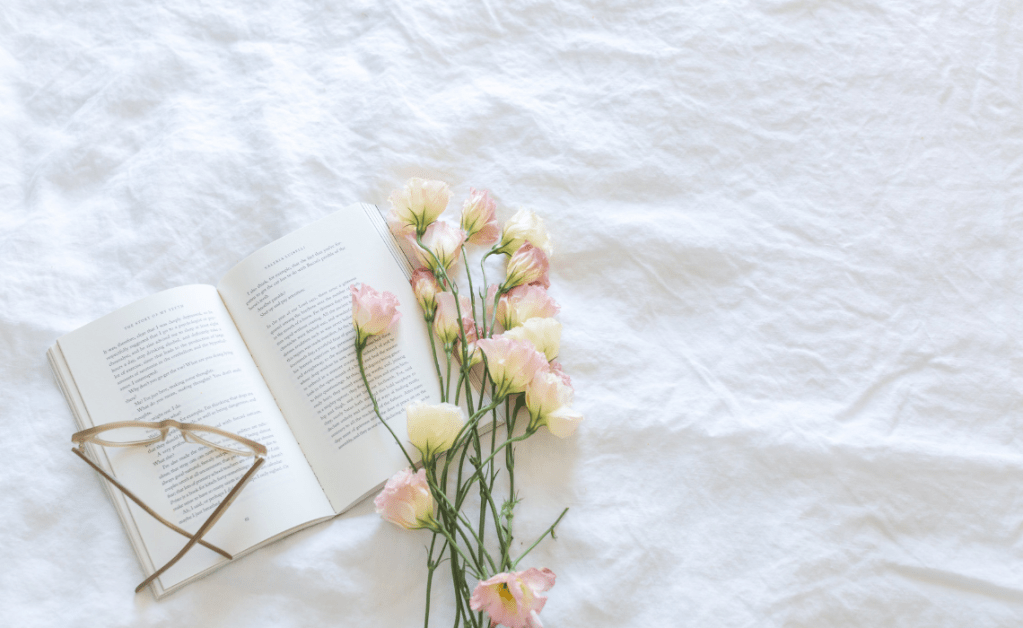
4. Create your pleasure toolkit or altar, a basket or pile of objects that inspire pleasure from around your house. Grouping together some flowers you bought yourself, chocolates you can’t wait to consume, a bottle of wine, throw pillows & blankets – anything that encourages rest, pleasure, & relaxation – in an altar space can help remind you of your intention this month AND function to support spontaneous practice! Creating a pleasure mantra can also be helpful, & hanging it where you can see it each day. For example, “Pleasure is safe. I am worthy of feeling good. I trust my desires. I belong to what I long for.”

How to start your own pleasure practice

5. Begin by getting consent from your body. If you have some idea of what you’d like to do for your practice on any given day, perhaps hold an object you will be interacting with and feel your body’s response. Do you subconsciously rock forward? Does your heart skip a beat? Do you feel a full-body yes? Or do you rock backward, protecting your heart? Get to know what both a yes and a no feel like in your body. Creating a culture of consent begins with incorporating a sense of safety and trust in our own bodies during these solo practices. How else will we know what we consent to with others?

6. Make it mindful – Whatever you choose, devote your whole attention & awareness to it. Put boundaries around it. Set a timer if it helps, lock the door if it makes you feel more safe. Become curious not only about the objects you may be interacting with or activities you may be doing, but about your body’s resistance or receiving of them.

7. Make it embodied – Likewise, get the whole body involved in your pleasure practice each day. Make it a full-body experience by doing a body scan from the soles of your feet to the crown of your head before, during, & after. Incorporate touch & full body awareness whenever possible, remembering to let the body lead the entire experience.

8. Make meaning – Take time to reflect on the experience afterward, getting super curious about any shifts that have occurred. Questions such as – What was your resistance before? When were you finally able to let go? How did you feel differently afterward? Would you do it again, what would you change? Unpack the memories, shadows, & stories that arose throughout the experience.

To take your pleasure practice to the next level, sign up for January of Pleasure – a free month-long experience – happening the first month of 2021!

Got pleasure prompt ideas? Other ways to make a pleasure practice the most powerful & sustainable? Hit us up in the comments below!

Good luck on your pleasure journey, Dear One. You are worthy!

why I’m renaming my business & my role

I am renaming my business from Luminous Leanings to Ellen Gilbert Coaching. I am claiming my name fully, no longer hiding behind a cute phrase that quite frankly I had to correct and explain at every turn (“Luminous Learnings” was the most common mistake)! And I am renaming myself from self-care coach to self-love coach. This comes with a new website, all new grown-up branding, and of course a new story, which I will tell here. I want to honor and embrace my origin in its fullness.

To name oneself is a powerful act of agency. It is perhaps one of the most empowering actions we can take as humans. To say, “I’ve been called this, but from henceforth I shall be called something else.” 

Although I’ve already announced it in my newsletter, in this post I more publicly announce (and explain the reasons why) I am renaming my business from Luminous Leanings to Ellen Gilbert Coaching. I am claiming my name fully, no longer hiding behind a cute phrase that quite frankly I had to correct and explain at every turn (“Luminous Learnings” was the most common mistake)! And I am renaming myself from self-care coach to self-love coach. This comes with a new website, all new grown-up branding, and of course a new story, which I will tell here. I want to honor and embrace my origin in its fullness. So snuggle up and settle in for a little story.

Why Luminous Leanings?

Luminous Leanings was born in my apartment in Rockville, Maryland in the summer of 2018. At the time, I was working in the international women’s space and was very inspired to put what I was learning about self-care, personal development, and meditation into words. I knew if I shared them in blog form, I would be held accountable to continue doing the digging and unpacking for myself. 

The name “Luminous Leanings” came from a desire for alliteration, an attachment to the concept of light (my name Ellen means light), and a liking of the blog name Brain Pickings, where each post was a picking making the whole collective the plural – “pickings”. 

I was also very interested in the concept of positivity, ease, and lightness being at seeming odds with our natural negativity bias, which my Buddhist psychology studies was teaching me about. I wanted to inspire folks to lean toward the light rather than get pulled into the darkness of the ego and our social constructs. (This was before I started delving into shadow work and a more nuanced understanding of light and dark, and even toxic positivity.)

It was around this same time that I experienced a spiritual awakening, which I’ll get into more later. For the first time, I delved into Buddhist spirituality and philosophy and was able to observe my own thoughts without judgment or identification, which changed everything. Within a few months, I was teaching meditation here and there to friends, coworkers, and others in my professional networks, and beginning to research a career in coaching.

Fast forward to 2.5 years later and I’ve quit my job, moved across the country to New Mexico, completed my coaching certification, and plunged headfirst into the world of entrepreneurship. While at first choosing to focus exclusively on mindfulness & self-care, only a few months in, I noticed my language getting more and more femininst, goddess-y, and magical. 

Then, about a year ago, I started a Moon Circle here in Albuquerque, and – despite my fear that it would resonate with no one – overnight we had 30+ members, today we have well over 100. The language I used in that womxifesto as I called it (my siren’s call to others who might wish to join me) was unapologetically divine feminine… and it worked. I truly feel I channeled what I wrote from a higher power – the words simply flowed through me, as they have every time since that I’ve taught on Divine Feminine concepts. This experience, combined with my personal exploration of goddess, menstrual cycle awareness, and healing inner patriarchy, has led me to become exclusively devoted to Divine Feminine topics. As terrifying as it is to leave the general “light and love” world of Luminous Leanings behind, I am deciding to leap and be caught by my faith in the Divine Feminine and the absolute abundance of what awaits me here…

But what the heck is the Divine Feminine?

In case you’re totally lost or confused, let me explain! The Divine Feminine, to me, is the reclaiming of those aspects of ourselves that have long been downcast and downgraded in society as lesser than – softness, vulnerability, grace, humility, creativity, rest, pleasure, slowing down, community, collaboration, joy – and calling them something more than human, something God-like that is beautiful, radical, and has the power to save all of humanity and the planet earth.

To witness, touch, and proclaim these aspects within us is to come home to our own true Goddess nature, regardless of where we identify on the gender spectrum or not. The world’s obsession, objectification, and relegation of women only makes this claiming for ourselves all the more radical. It is the simultaneous inner healing of internalized patriarchy and the outer shift of culture.

Because of a history of patriarchy, extractive capitalism, and white supremacy, we have all internalized oppression through shame. Meaning – we all use self-shame, self-judgment, and self-hatred to keep ourselves in line. This is the domestication of self, an undoing of the wild within us, a taming as Glennon Doyle calls it. 

And it affects us all – regardless of gender, race, religion. Even those who stand to gain and benefit the most from these systems suffer under them. Because they don’t allow their full expression – specifically, they don’t allow their feminine energies. This is true for white women like me, who benefit under white supremacy and patriarchy through aligning themselves more with their white male counterparts than with their women of color counterparts.

To reject the feminine parts of ourselves is to align ourselves with patriarchy, to prioritize the male gaze because, after all, it is with and through men that we find our protection. So we suppress our nature which goes against the very grain of patriarchy and capitalism – the parts buried deep within the body that cry out for rest, to step off the conveyor belt and smell the roses, to connect human to human with deep eye contact, to move our bodies in a slow way just because it feels good. 

Under an over culture that prioritizes the masculine and distorts the divine masculine – qualities like productivity, action, aggression, success, dominance – all players suppress their divine feminine. It has been historically unsafe for men to express vulnerability, authenticity, and softness, leading instead to a masculine fragility that can’t handle being talked down to, losing face, or being undercut. We all need the divine feminine more than ever to heal our inner shame and outer structures.

A divine feminine shift of power looks like the prioritization of Mama Earth, social safety nets, mental health care, and the arts. It urges us to listen to our bodies as we create policies, to understand that body, spirit, planet are one. That from love we all come and to love we all return.

Divine Feminine Self-Care & Self-Love

Divine feminine self-care, as I’ve defined it here, is one that prioritizes acceptance of what is while shamelessly pursuing rest, community, & pleasure. It’s an approach to wellness which says, I’m going to care for myself in this moment because it feels good & I am worthy. It rejects the claim that you need to buy another product, wait till you’re more perfect, or do it all on your own. It inherently welcomes a diversity of perspectives and connects care of the earth to care of the body. It intrinsically connects an individual’s self-care to the peace and wellbeing of all beings everywhere.

I used to call myself a self-care coach, and you’ll still see this language from time to time even after my full transition. I think of self-care as the activities – discreet rituals and routines – we undertake in an effort to shift how we feel – to relieve our suffering and simply feel better. I’ve felt the call to shift into self-love coach territory for many reasons, not the least of which is the misunderstanding of what self-care is. I believe the term has been co-opted by our capitalist over culture and polluted in many arenas to describe only those “instagram-worthy” activities we do, that usually come with a hefty inaccessible price tag. This is completely missing the point of the Divine feminine, which promises we don’t need a single thing to practice caring for ourselves. 

I’ve also decided to shift from care to love, because to me, love encompasses both the activities of self-care and the entire relationship to self. Self-compassion is arguably the thing that set me on this course to begin with. The thing that, when I discovered it, I truly didn’t believe I was allowed to practice. It was so foreign, the concept that I could attend and befriend my inner life, and that it would actually make a difference. And what a difference it has made, I mark this entering into a relationship of compassion with myself as the beginning of my personal spiritual awakening. 

Compassion is the heart of Buddhism, it has been said, and self-compassion is the heart of compassion. It is the natural care that attends our suffering. The “metta” or loving kindness we all desperately long for, and have the power to give ourselves. When we relate to our discomfort in this way, instead of pushing it away or judging it as bad or wrong, there is a natural softening, expansion, and ease that arises in its place.

My New Role

As a Divine feminine self-love coach, I will be shifting my content specifically to discuss subjects like feminism, mysticism, Goddess work, the moon cycles, menstrual cycles, healing internalized patriarchy and capitalism, shifting external patriarchy and capitalism, tending to Mama Earth, and law of attraction or what I call “Womanifestation” work, which is the divine feminine principle within manifestation. I will continue to offer Become Your Own Soul Mate – likely with a few more feminine tweaks, like a community element – and Womanifest, a group program coming in 2021. 

You can also be sure that nothing is set in stone here. As the captain of this ship, I reserve the right to ride whatever waves may come however my intuition & the goddess guide me. And that includes the power to change my mind. 🙂

May we all relax and release into the trust of the changing nature of all things. May I specifically release my desire to over-explain or control this natural evolution coming in its own time. May we all ease into the slower pace of winter, the feminine and regenerative darkness, trusting that our dreams and visions and purposes will burst free of their cocoons in their own time. 

Until then, Dear Ones, may you rest and play in divine feminine self-love.

Power, Vulnerability, & Feminine Self-Care

Let’s talk about the 4 types of power, feminism, feminine self-care, & how it all comes together in this gasping breath moment of patriarchal demise to save us as individuals & collectively.

Let’s talk about the 4 types of power, feminism, feminine self-care, & how it all comes together in this gasping breath moment of patriarchal demise to save us as individuals & collectively.

To go deeper on this topic, sign up for RESILIENT – a free 5-day challenge kicking off November 9th!

I believe we are in a last stand moment for the old ways that prioritized a masculine approach. This has led to many dangerous strong men leaders around the world in recent years rising up & practicing a power that dominates through fear.

Brené Brown says,  “I think we are seeing the last stand of ‘power over.’ ‘Power over’ is about believing that power is finite, like pizza–you have to hoard it and you don’t want people who are different from you to have it.” 

I had the pleasure of working for a lean, impactful grassroots organization called JASS in my early international affairs career in DC. Founders Lisa Veneklasen & Valerie Miller are the authors of A New Weave of Power, People & Politics, which breaks down the 4 types of power in a guidebook for social activists and policy makers. They describe Power Over as the taking of power from others, often associated with strong arming, coercion, or force. The other 3 types are alternatives to this most commonly recognized model of power, and include Power With, Power To, and Power Within.

Many have described these 3 alternatives as a feminist approach to power, meaning more equitable, circular, and non-hierarchical. Power With, of course, is collaborating across identities and viewpoints to build an expansive power which is more inclusive. Power To is the ability of each individual to make an impact, and is necessary for the other two. Power within is about self-empowerment, finding hope and agency within oneself in order to effect change in their lives and in the world. When these three powers are woven together, they give us a feminist and more feminine form of power, built upon strength and resilience. Of course when we talk about masculine and feminine, we are talking about potential qualities within all of us, regardless of where we fall on the gender spectrum.

When power is not fear-based, then, it must follow that it is the type of power rooted in courage. And what is courage, wagers Brené Brown, than sheer vulnerability? The ability to be soft, open, & authentic in the face of great fear is definitely what feminine power is all about. And if this is the death rattle of the old ways – exploitative capitalism, white supremacy, & the patriarchy – then may the world we imagine into & birth be a world that recognizes this type of power.

I believe we all have inner & outer work to do to bring this about. We must never grow stagnant in our external activist work, the work of the Black Lives Matter movement, of protecting our environment, of defending women’s rights, LGBTQI rights, & any group that falls outside of the white cisgender straight Christian American male archetype. And self-care should not be viewed as an alternative to this activism, but rather a parallel sustainer & expander of that vital work.

And we must do the inner work of softening, of rewiring our perception of strength from the traditional, masculine “Power Over” model to one of new, feminine “Power With,” “Power To,” & “Power Within.” This includes the discomfort of challenging everything we’ve been handed – not only by a faceless evil patriarchal society, but by parents and a spiritual community we may love. And continuing to challenge “Power Over” wherever it pops up – from commercials to conversations with dear friends to our own deeply embedded beliefs.

A masculine approach to wellness may be one that views the body as a product, a tool for wooing a mate (aka resources), asserting dominance, or out-competing others, whether through the attainment of beauty standards or physical strength. It may bring a logical thought-based approach to achieving optimal health in order to live a long, productive life, while ignoring an embodied presence which lives for intrinsic pleasure & experiencing of what’s right here.

I define feminine self-care, on the other hand, as one that prioritizes acceptance of what is while shamelessly pursuing rest, community, & pleasure. It’s an approach to wellness which says, I’m going to care for myself in this moment because it feels good & I am worthy. It rejects the claim that you need to buy another product, wait till you’re more perfect, or do it all on your own. It inherently welcomes a diversity of perspectives and connects care of the earth to care of the body. It intrinsically connects an individual’s self-care to the peace and wellbeing of all beings everywhere. Let’s break this definition down, piece by piece…

Acceptance:

A traditional “Power Over” approach operates out of the fear that what is isn’t enough, which is a lack mentality. There isn’t enough time, there isn’t enough resources, there isn’t enough of whatever is going to save us, so I’d better cheat, lie, & intimidate my way to the top of the food chain, making everyone I step on along the way less than & a “bad other”.

The feminine powers – “Power With,” “Power To,” & “Power Within” – operate from an abundance mindset instead. They break the spell of not enough-ness like the famous Gandhi quote, “There is enough for everyone’s need, but not everyone’s greed.” They propose we instead work together by first taking stock of what is, what’s here, what’s true. And then developing strategies from there.

One of the biggest learnings from my Buddhist meditation training is to accept what is true. Resistance doesn’t get us anywhere but stuck in delusions, setting us further from reality and possibility. Start with presence, start with accepting all visitors in your house – whether it’s difficult thoughts, emotions, or sensations. Only then can you soften and relax into more spaciousness, ease, and watch your suffering begin to dissipate or change shape.

Shamelessness:

This is key to feminine form self-care. Shame is used as a tool to control, oppress, and bring us into submission. As Audre Lorde said, “The master’s tools will never dismantle the master’s house.” We need to trade in masculine shame for feminine belonging and worthiness. We can feel it deep in our bones – that this is true and more effective if our underlying intention is to be at peace, free from suffering.

Rest:

Extractive capitalism and masculine models of wellness go hand in hand. They say that productivity is the beginning, middle and end of our lives, the purpose and underlying intention of any aspiration we could possibly have. That our productivity, efficiency, and sweat are in direct proportion to our value and worth as human beings. Feminine self care on the other hand, says that rest for rest’s sake feels good and matters. When we step off the 24/7 productivity conveyer belt to rest, we reclaim our lives as our own. We reject the lies that say we must consume until we die, and we heal internalized capitalism.

Community:

The masculine approach to the world goes hand in hand with rugged individualism. It says we’ve got to do it all on our own, we can never ask for help, and that it’s better to die alone on the hill of our pride than to reveal a moment of weakness (i.e. vulnerability or need). It’s one in the same with the American ideals of settler, colonizer, and dominator. The one versus the many can prevail. It’s the egos favorite game, and it’s bullshit. The truth is – we humans are pack animals. There can be no shame in needing each other and craving belonging, because these are the life-giving forces that ensured our survival thus far. And yet we’ve internalized this lie that to need is to be weak. Feminine self-care flips this on its head and proclaims, to know what you need and to speak it out loud by asking for it is the most courageous thing one can do! To bravely weave a community to not only hold you in your time of need, but one where you actively show up and participate in caring for others, is what we all long for. Maybe we should start listening to our longings, for they are the blueprints of our shared destiny.

Pleasure:

Feeling good is underrated. Guilty pleasures are what first come to mind, things we should feel bad about craving or finding release within. There’s that master’s tool of shame again, trying to control our experience. Feminine self-care says that pleasure is profound, for it shows us the way to best love ourselves and build a thriving life. When we allow ourselves to feel rather than numb, the flipside of suffering might surprise us. Not only do we allow ourselves to actually feel our difficult feelings – the anxiety, fear, and discomfort – but we also open ourselves to experiencing pleasure! To numb or escape or stuff down is human, to feel is divine. Over time, we can shift how we relate to feeling overall. We can allow both the discomfort and the pleasure, recognizing both as ever-changing experiences here one moment, gone the next. We cease equating our pleasure with shame, and begin to step into and claim our abundance.

To go deeper with feminine self-care – to begin dismantling the ways you’ve internalized the patriarchy, white supremacy, and extractive capitalism – join me inside RESILIENT! The FREE 5-day challenge starts November 9th, and it’s going to be so much fun, so much real, so much full-body YES!

I’ll see you there, Dear One.

Tell me – which aspect of feminine self-care are you most excited to begin embodying today? I’d love to hear in the comments below!

Until next time, take gentle self-care!

Why It’s More Important than Ever to Start a Moon Circle (& How To Do It)

Please note: At the time of this blog post, I was still spelling woman with an “x” (womxn). I have since been challenged that this spelling can be confusing & even harmful, as trans women are women & don’t need a special word for it to be inclusive. And we can’t use “womxn” & pretend it covers non-binary people. While the word “womxn” is riddled throughout my site & this webinar replay, I am now using the words “woman” & “women”. I am ever learning. I seek to use the identifying language I am asked to by those impacted, & welcome feedback on how to do this better. For more, check out some resources here, here, & here.

Cue I Know a Place We Can Go by MUNA

Six months ago, I womanifested possibly the most meaningful miracle yet – my Moon Circle! A moon circle is a group of womxn (women, trans women, non-binary folks) who gather based on the cycles of the moon to share their struggles and celebrations, and to honor the goddess in us all. With the reaping of this deeply sacred harvest, I want to share its importance and the exact steps I took.

In the Trump era, it has never been more important to gather in circle with other womxn. Female and trans bodies are degraded and devalued like it’s going out of style. Rape culture pervades, consent is an afterthought, and female pleasure is considered dangerous and dirty. A womb-bodied person’s right to choose if and when they’ll get pregnant is threatened and vilified, and survivors of rape and harassment are disbelieved and further traumatized. The patriarchy is internalized to the point of powerlessness, and our capitalistic culture further isolates and separates womxn from their inner and shared power. The sacred feminine is considered sacrilegious by dominant theologians, and our connection to the natural world and cycles of the moon is severed and making us sick.

A friend introduced me to the idea of Moon Circles when I was living in DC, as I was craving spiritual sisterhood and rituals for making meaning of my life. Unfortunately, in that season, I was too busy and too insecure to ever attend a gathering! Ironically it was also when I needed it most, as I was over-worked and lonelier than ever. When I moved to New Mexico, I thought it would be simple to do a google search and easily connect with like-hearted womxn. Sadly, when I finally did type “Moon Circle” into the search bar, it returned zero results.

I was a new coach, and very high on the newfound awareness that I had magnetic womanifestation power. I heard a small voice whisper: If this was something I deeply craved but didn’t see, there had to be others out there who wanted the same thing. Why couldn’t I start it?

I was nervous about so many things – What if no one showed up? Would people be untrustworthy? Would it all be too much work and coordination for my already busy schedule? But that nagging voice wouldn’t quit. If I didn’t start it, who would?

Finally, I figured if just one womxn signed up for my Meetup group, that was one person who understood how I felt and was willing to co-create a community with me.

I hit “Create Meetup” and overnight it had over 40 members!

At our first gathering, I met a group of womxn who all looked deeply into each others eyes, tearing up with realization that we are all the same, we are not separate, we have the power to create the meaningful community we’ve been longing for.

And for the record, this applies to all areas of life:

If you look around and don’t see the kind of spaces you crave, there’s a good chance other people are looking around and longing for them too. You have a responsibility and a power to create the community you long for!

We all have different gifts to offer. Don’t think that – just because you don’t have the space to host or the knowledge to share (yet), others won’t chip in and contribute! Reflect on what you’re good at, and find a way to give that back. For me, it is my unabashed extroversion. I love people, have basically no shame in asking folks to be my friend, and enjoy challenging people in my community to contribute what they’re good at (aka hosting and facilitating!).

The past six months have only reinforced within me the need for this group. We’re rapidly climbing to 100 members, and have long wait lists for every gathering. It breaks my heart to think of all the womxn out there who need a monthly circle just like this but don’t have one! That’s why I hosted a free webinar on How to Start a Moon Circle. Get the replay here!

I believe it’s never been more important to co-create safe and sacred spaces, especially for womxn. I became tired of helplessly listening to my friends tell me that their anxiety was through the roof, they were afraid to leave the house, they had to quit watching the news, or they had no hope for the future. I’m sure you’ve heard or felt similarly at some point over the past few years.

Our society is individualistic to a toxic level. We’re becoming more and more isolated as a culture, and studies show loneliness is as dangerous to your health as smoking 15 cigarettes a day (source). Disconnection to each other, ourselves, and the earth are all contributing factors to a host of mental and physical healthproblems. Especially in this age of technology and false intimacy/fake connection, actually connecting with another human being in person is becoming more and more rare.

There is hope – circles are the answer! A circle could be any group of folks who gather regularly to hold sacred space for each other. Ideally it is a diverse group, so try to create your circle to contain an age range, different body types, and folks from different cultures and socioeconomic backgrounds. Include language on welcoming folks from across the gender spectrum if you truly are inclusive.

Jean Shinoda Bolen’s book The Millionth Circle is a fantastic, quick read resource for anyone looking to start a women’s circle. She taught me that the circle is symbolic, because no one who comes to the circle is above or below another. The circle inherently eliminates hierarchy. And it’s quite a feminine/feminist symbol – a portal into the sacred feminine, where all are heard, valued, and loved. After all, what we all long to hear is, “I see you. I hear you. You matter.”

Moon Circles, specifically, tie in the symbolism and ritual of tracking the phases of the moon. Much like a menstrual cycle, the moon cycle is 28 days long and goes through 4 stages: the new moon (the bleed), waxing (hormones climbing), full moon (ovulation), waning (hormones falling). Whether or not you bleed, we all have emotional and hormonal cycles and can find meaning and comfort in seeing that mirrored in the sky. Plus, the moon classically represents the feminine – governing the night’s rest, play, and desire. The sun conversely represents the masculine – governing the day’s activities and busyness. In a culture that needs to learn how to stop, rest and regenerate, celebrating the moon is a healing salve.

How to Start Your Moon Circle

Now that I’ve convinced you that Moon Circles are going to save the freaking world, let’s dig into how you can start your own!

1. Write Your Womxnifesto (Woman/Womxn + Manifesto = Womxnifesto)

The first thing I did was open a google doc and start writing my womxnifesto, or my vision for the Circle. The benefit of starting your own circle, is you really get to set the vibe of the whole group.

Consider before you begin: what kind of leader do you wanna be? Do you want it to be collaborative, or do you want to retain some control over the topics, facilitation, etc.? I kept mine completely non-hierarchical and emphasized my desire to really co-create the space and the vision with my sisters (whom I hadn’t met yet!). I think ultimately this helps welcome more folks in, and invites them to share their voices when they have concerns or ideas.

Your womxnifesto should have 5 main elements: (1) What a moon circle is, (2) Who is welcome, (3) Your intention for the circle, (4) Your logistical vision, & (5) Your story or why you’re starting the circle!

Define it for yourself (lots of people have never heard of it) & make your language extremely inclusive if that’s important to you (and is something you’re willing to educate your community on and live up to).

Your intention is a big-picture vision for the group: What do you imagine your group doing each month? What values will everyone who joins share? What are your future members longing for, just like you? What things will you learn & explore together?

Your logistical vision should spell out exactly what you need. Do you plan to host every month at your home? Do you feel safer meeting in a public place? Will you all take turns hosting? Be as clear as possible here, so everyone knows what they’re signing up for.

And finally, your story and reason for starting the circle can be a short statement about who you are and why you’re doing this now. Trust me, people will relate!

This document will become the “About” section of your Meetup Group (should you go that route), so keep it short, simple & engaging. In my moon circle webinar, I shared my womxnifesto template as your starting point, so grab the replay here!

2. Find Your Courage

At every gathering, my sisters thank me for starting the Circle. I insist all I did was start a meetup, but they tell me repeatedly, “I wouldn’t have the courage.” Well I didn’t have the courage to attend one, much less start one just a couple of years ago. I believe I tapped into something that is available to all of us when we really want something.

My courage came from my loneliness. One night, Jon came home from work to find me sprawled out on my yoga mat, bawling my eyes out. “What’s wrong?!” he asked.

“I’m so lonely,” I said.

“Do you need to call your friends? Should we make plans for the weekend?”

“No, I’m lonely for sacred sisterhood,” I said.

What the heck was I talking about? Deep, meaningful community. The kind I had in church or camp growing up, but hadn’t really seen since. Spiritual partnership where I could feel safe talking about what I was learning and experiencing, without fear of judgment. And space where others could do the same, no matter their belief system. A place where the only shared values that mattered were inclusivity, open-heartedness and a desire to love and be loved.

From that place of intense loneliness, I was able to empathize with the imagined others who were also experiencing it! I had compassion for myself and for everyone else out there who might also be starving for the sacred.

Also spurring me on was the realization that, if not me – who? If not now, when? I decided to see the lack of moon circles in my area as an opportunity to lead and set the tone for the whole group, rather than wait to be invited in to someone else’s dream on someone else’s timeline.

Find your courage and share your womxnifesto. I had the luxury of being new in town and somewhat anonymous in that way. But even if you can’t hide behind a new girl label, make this your moment to become the next evolution of yourself. Only from that embodied mindset can you step into your new role as the founder of your Moon Circle! I used Meetup.com, but there are tons of other apps to connect with like-minded folks, if Meetup’s not your jam. Do some research or watch my free webinar for more tips.

3. Design the Logistics

There is no way around it – you’ll be coordinating logistics to some degree. For my circle, there are 3 main roles – logistics coordinator (me), host (another sister), and facilitator (another sister). Sometimes the host facilitates the circle, sometimes not. I created a google form that includes all the information I’ll need from each host/facilitator, and share it regularly on the Meetup page to remind folks to sign up to host.

I recommend keeping things as simple as possible. I usually charge the host with deciding about food – will it be a potluck or will they provide a few bites and nibbles? I also let the host decide if alcohol is acceptable or not (more on this below). They provide their phone number so folks can contact them if they get lost on the way. They create enough space for us to sit in a circle and provide an altar for us to place our sacred items upon, and usually light a few candles as well. The facilitator can get as weird with it as they want! If they want to lead a talk on Hellenistic astrology, they go for it! If they want us to start with a dance, we do it! They also come up with 3 sharing questions we will all answer as we pass the talking stick. And it’s up to them to really set the tone for the gathering, hold the space, as well as open and close the circle in ritual.

As coordinator, I simply gather the info from the google form and create a Meetup event with the date & time, as well as the max number of attendees (usually based on the host’s space). I can let attendees know anything they need to bring, and the day before the event I privately message each attendee the host’s address and contact info. It’s really that easy. In six months, I’ve never struggled to find a host or facilitator – it always comes together with plenty of time to spare. But, if I ever need to, I know I can host and facilitate at my place. It’s great to have a backup plan.

4. Community Agreements

While your womxnifesto was about your vision for the Circle, it’s vital that you co-create your community agreements in the first few gatherings. Community Agreements are not rules, they are the things every member must agree to in order for the Circle to function. It doesn’t hurt to have a few ideas going into it, but definitely begin by opening up the floor to others. Take notes during these discussions, and make sure all are in agreement for each point that gets added. This will require you to take an active role – holding the space, resolving any conflicts that might arise, and helping everyone see each other’s perspective in order to arrive at the same place. I’ve heard this defined as “Circle Mother” and I quite like that. 🙂

After our first couple of gatherings, I typed up a google doc based on my notes. I included our vision for the Circle, and typed up a few expectations for sisters who wanted to host or facilitate. We even created a template agenda for how each gathering could be planned, and clarified it was a starting point, not a requirement. I then shared the link to the document in the Meetup and invited everyone to comment or send me a message if there was any part they disagreed with or wanted to add.

In the six months we’ve been going, there has only been one modification! It was to add in a statement about alcohol – saying it was allowed if the host agreed to it, but that we should all remember it’s a sacred space and know our limits. A sister brought her concern to me, and I anonymously brought it to the Circle. We had an open discussion, and all agreed to add the language into the document. I worded it and shared the link again, asking everyone for input. Periodically, I re-share the document on the Meetup group’s forum to keep it fresh in everyone’s minds, and as a welcome to new members so we’re all on the same page.

When you start from the assumption that everyone has the best intentions to make it a safe, supportive space, I’ve found that people will consistently rise to the occasion.

7. Let Go & Have Fun

I used to get really nervous that there would be a conflict or someone wouldn’t feel heard or respected, and I wasn’t sure how I’d handle it. But those fears were quickly put to bed when I saw the way my sisters showed up with love and understanding every time. Women are consistently separated from each other. In many places around the world, it’s not safe for women to gather together. This is why we need to create sacred spaces! We need places to share what’s actually going on – not the “I’m fine & you?” response we give a million times a day to the question, “How are you?” We need to look into the eyes of a group of women who actually want to know the whole story, and sometimes to fall into their arms crying after we’ve shared it.

I used to worry before each gathering that wouldn’t know what we were doing or how to proceed. Now, I laugh just thinking about it! Every circle is unique, but they always flow with ease. Even when a host or facilitator looks to me like a deer in headlights, we figure it out together. Above all else, remember to let go of control – control does not create safe spaces – and have fun with your new Moon Sisters!

There is so much more I have to share with you, including my templates for a womxnifesto & Community Agreements, inside my free webinar! Grab the instant replay here, along with the slide deck, audio recording, and Moon Circle Start-Up Guide.

May you find Sacred Community wherever you may be, and create it if you can’t!

Take gentle self-care,

How to Cultivate a (Wo)Manifestation Mindset & Get Anything You Want

What a week I’m having over here in New Mexico! In a little over 12 hours, I got a new job and a new home. I attracted an incredible professional opportunity paying more than I even asked for. It might sound self-aggrandizing, but I truly believe this is the direct result of the womanifestation mindset I have been cultivating.

I like to call it womanifestation, because I work with so many women who are tapping into that creative sacral chakra potential that both comes naturally to us and is systematically kept dormant within us. Internalized patriarchy is real, and is a direct result of an imbalanced system set up to oppress and control women.

But there is hope – we can unlock our innate ability to draw forth resources, power, support, and pleasure!

In case you missed the Law of Attraction, The Secret, or don’t know what the heck manifestation work is – it is the practice of visualizing what you want and imagining you already have it, in order to directly draw it towards yourself.

Many teachers teach folks how to tune up their energetic “frequency” in order to be more in the flow of what we want. A Course in Miracles states, “Miracles occur naturally, and when they’re not occurring something has gone wrong.” This means our responsibility is to stay attuned to what we want and to be responsible recipients.

Can you remember a time in your life that you wanted something specific, spent time imagining it, and then actually got it?

I remember daydreaming during work-study in college one day. I actively imagined (in great detail) meeting the man of my dreams during my upcoming semester abroad in Ireland, falling in love, moving to New York City, and ultimately marrying him. AND THEN IT ALL HAPPENED! That’s when I really started to believe in the power of womanifestation. As they say, “Energy goes where your attention flows.

But before we dive into the practices that will help you cultivate a womanifestation mindset, let’s talk about what manifestation is not:

  • Womanifestation is not a gumball machine you put a quarter in, sit back, and receive a shiny blessing from. You still have to do the work! Being in this state of mind will only help the blessings along – it doesn’t excuse you from pounding the pavement, actively seeking their realization.
  • Womanifestation is not a forced state of happiness that punishes you if you slip into a scarcity mindset or fearful thinking. The last thing we need when we’re feeling like blessings are scarce is to heap guilt on top of it. This is not an excuse to force a sense of, “Everything is okay,” when it’s not. You still need to honor and hold space for negative emotions as they arise.
  • This is not a form of escape. Learn to strike a balance between grounding presence with womanifestating visions of the future. If you spend your days lost in daydreams of the perfect future, you’re bound to develop an “if only” mindset. After a day’s hard work of womanifesting, you’re going to find it even easier to be present. Presence is a practice of gratitude, as if you’re saying to the Universe: “Thank you for what you have already blessed me with. I am aware of the support around me.The miracles in our life want to be acknowledged. When they are, they will expand and multiply!

Now let’s dive into 5 practices to help you cultivate a Womanifestation Mindset:

1. Train your awareness.

Womanifestation involves powerful visualization, deprogramming limiting beliefs, preparing to receive, and being a responsible and grateful recipient. It all starts with an awareness of your thoughts, beliefs, stories and paradigms. Become aware of any existing belief blocks to womanifestation – for example, “Things will always be this way. I will never change. This is impossible.

If you’ve ever taken a yoga class where the teacher invites you to set your intention for the practice, perhaps you’ve witnessed the power of conscious awareness. Intention is questioning what you hope to get out of an experience, and checking in with it to course-correct as necessary. It’s really about awareness. Because, whether we’re conscious of it or not, we are positioning ourselves to benefit, grow, and progress.

Meditation is the training of your awareness. Make it a daily habit, and watch your ability to tune inward grow.

2. Embody your inherent worthiness.

You have to believe that you deserve these blessings in order to become a magnet for them! Much easier said than done, huh? For many of my clients, this is the biggest unconscious block to womanifestation. We have internalized the patriarchy (men do this too!) and the idea that we don’t really deserve to get what we want. We believe, deep down, that we are inherently bad, selfish, and incapable of handling success.

I am always shocked when another high-powered women leader I’m working with struggles with imposter syndrome. Amanda Palmer describes this as the fear that the “Fraud Police” are going to knock on your door and tell you, “We know you’re not who you have been out masquerading as. You really have no idea what you’re doing, no credentials, and no right to be enjoying this level of success. It’s all over. We got you!

The good news is – if you’re experiencing imposter syndrome – it’s a good sign you’re on the right track. The key is to make the U-turn away from the fear-spiral and towards worthiness.

Q: So how do we cultivate worthiness?

A: Self-compassion maintained by self-care. Period.

This can look like a mantra you repeat over and over and post-it note wallpaper your house in, such as “I am enough. I deserve joy. I am worthy of pleasure. I am responsible. I am beautiful. I am a child of God.” Whatever floats your special little boat!

It can also look like placing a hand on your heart when the Inner Critic voice arrives, and saying, “This is really hard right now. I love you and I’m here.

It can look like journaling in one color to represent the fraud police and another to represent your higher self responding to them. Add new colors for different parts as they arise.

Get creative and courageous in your embodiment of worthiness. Repeat it over and over until it’s second nature. Talk to other people about their feelings of unworthiness and extend compassion toward them. Let them witness you and receive their support. Remember, this is universal! And it’s a life-long journey.

3. Get specific.

Now that you’ve trained your awareness and started to embody worthiness, you’ve laid the groundwork for womanifesting the life of your dreams! It’s time to get really clear on what you WANT.

Like registering for your wedding, indicate the size and color of your dreams. Make your mantra, “What do I want?” with no shame or feelings of selfishness attached. The Universe responds to specificity. The more clear you are with yourself on what you desire, the more quickly and efficiently you will draw it in.

Have you heard the prayer of Jabez? I learned this in Sunday school. Jabez was a guy that prayed to God to bless him immensely. He was specific in his request, and God gave it to him. As a child, it blew my mind that I could not only ask God to elevate my life and give me the desires of my heart, but I could be specific without being selfish. I used to think, if God is all-powerful, I shouldn’t have to spell it all out. But now I see it more as co-creating my life in every moment with Divine support.

And, if you don’t jive with the idea of a Divine presence or The Universe raining down blessings on you, consider this: Getting specific on what you want to womanifest will train your brain to direct all of your energy to getting it, thereby exponentially increasing your chances and speed of getting it. When we visualize what we want, we’re literally creating new thought patterns in our brains. If that’s not some womanifestation magic, I don’t know what is!

So next time you are stuck in your windowless cubicle, wishing for a career change, remember to get specific. What will the new job provide? What view will you have out your window? How will you decorate your office? What types of people will you work with? How will you dress for the job? What work will you do? What will a day in the life look like? How will you feel walking into work every morning? Leaving the office every night? Where will your sense of pride, accomplishment, success come from?

Please don’t leave it at, “I want a new job.Get uber detailed with it, and see what happens!

4. Prioritize pleasure & destigmatize desire.

Women are socially shamed for their pleasure and potential. In so many subtle and not-so-subtle ways, we are taught that these things are reserved for men, we should just keep our hearts and minds closed to what we want (not to mention our legs).

In order to get specific on that which you will womanifest, you must not skip this step! Start asking yourself, “What brings me pleasure? How do I access pleasure? What blocks me from receiving pleasure? What do I truly desire? What about my desire is worthy or pure? How do my desires align with my highest potential in this life?

These questions can clear blocks to pleasure and remove the stigma that surrounds it. They will train your brain to get curious about what uniquely pleases you, see it as good, and draw it towards you.

A friend told me recently she struggled to do what she truly wanted – to incorporate dance into her morning routine – because she thought it was too self-indulgent. I told her to self indulge! What is the harm? The real harm is in denying ourselves something we divinely desire, sealing the coffin of our own future regret. If we deny what we want, we will only try to fill the void with unhealthy alternatives unconsciously.

What is the most luxurious thing you can imagine doing for yourself? For me, it looks like eating a rich meal, taking an extravagant bath with essential oils, planning a dream vacation. Even just imagining it should make your mouth water! This is a mental exercise in pushing the boundary between what you believe to be possible and impossible, okay and not okay, the boundary between self-indulgence and self-care.

Let this become a mindset in and of itself for as long as you live. It’s okay to be propelled by pleasure and desire. When we embody self-love, this arises naturally. We realize we don’t have to deny ourselves joy in order to fulfill our purpose of helping others. People are drawn to people who prioritize fun – they are more likely to support your cause with their money, time and resources once you embody this. The world needs us at our best – so self-care like it!

5. Reframe your fear & keep going.

Fear is inevitable on your womanifestation journey. You will either feel afraid as you prepare to womanifest, when you are imagining what you want, when you are asking for what you want, and/or as you are getting what you want!

Fear is a natural part of our evolution, and we are deeply concerned with what we believe society will either reward or punish. We are routinely shown that pleasure and desire are punishable offenses due to their self-indulgent nature. We all have an evolutionary fear of being isolated and separated from other humans (which translates in our minds to being isolated from nourishment, support, and life itself).

Marie Forleo says, Fear is just excitement pumping the breaks.Sometimes fear has a valid reason. But usually, we can quiet it with a little self-compassion. Try saying to it, “Hey there, fear. Thank you for trying to protect me. I understand your concern – you want me to survive and belong. I honor you, I witness you. But I’ll take it from here.”

The same can be said for guilt. Have you ever asked for something, gotten it, and then felt guilty for getting it? Almost like you need to apologize for your success, or minimize your good fortune so as to not offend others?

This too comes from a fear of being separate – being on display, put on a pedestal where we can easily slip and fall from glory. After all, Icarus was punished for flying too close to the sun – just look at all the ways we’re warned against aspiration! We have a millenia’s worth of unlearning and mental decolonization to do, and we must support it with gentle understanding and self-care.

Keep going.

When you notice a block, jump over it. Stagger forward anyway. You’re allowed to make mistakes, you’re allowed to be on the journey. You’re going to have fears and guilt around getting what you want. As Maya Angelou said, “Ask for what you want, and be prepared to get it.” The preparation is often the hardest part! Be easy with yourself, but don’t give up!

Dear Ones, I’d love to hear from you! What is the biggest thing you’ve womanifested? What mental roadblocks are you hitting on your journey? What self-care practices or mantras have helped you embody your inherent worthiness? Tell me in the comments below!

Be well & take gentle self-care,

Design a site like this with WordPress.com
Get started