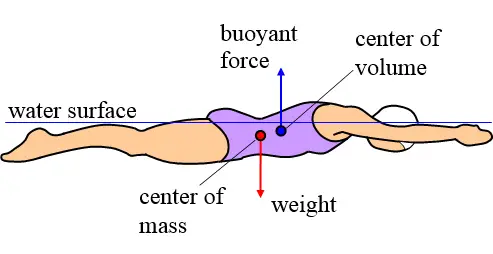
Kate Douglas (above), statistics graduate and USA Olympic swimmer, has used an accelerometer on her back, which measures her movement in 3 spatial directions 512 times per sec, to see where she could reduce drag and improve her swimming times. Could she improve her stroke technique, kick style or the depth she dipped her head under water?
By analysing the data she found she could reduce drag by changing the angle of how she pulled her head out of the water saving 0.15 sec per pullout.
In her research paper, Douglas wrote: “Force applied in any direction other than forward is not helping an athlete achieve their dream of Olympic gold.”
Douglas lifts her head out of the water 20 times per lap. The 200m breaststroke race (above) involves 4 laps so Douglas lifts her head 80 times.
Using math data Douglas could save
= 80 x 0.15 sec
=12 secs
Wow!
Of course, other swimmers could do likewise, but in the Olympic trials (above) Douglas won by 1.35 secs. Every 0.01 sec counts.
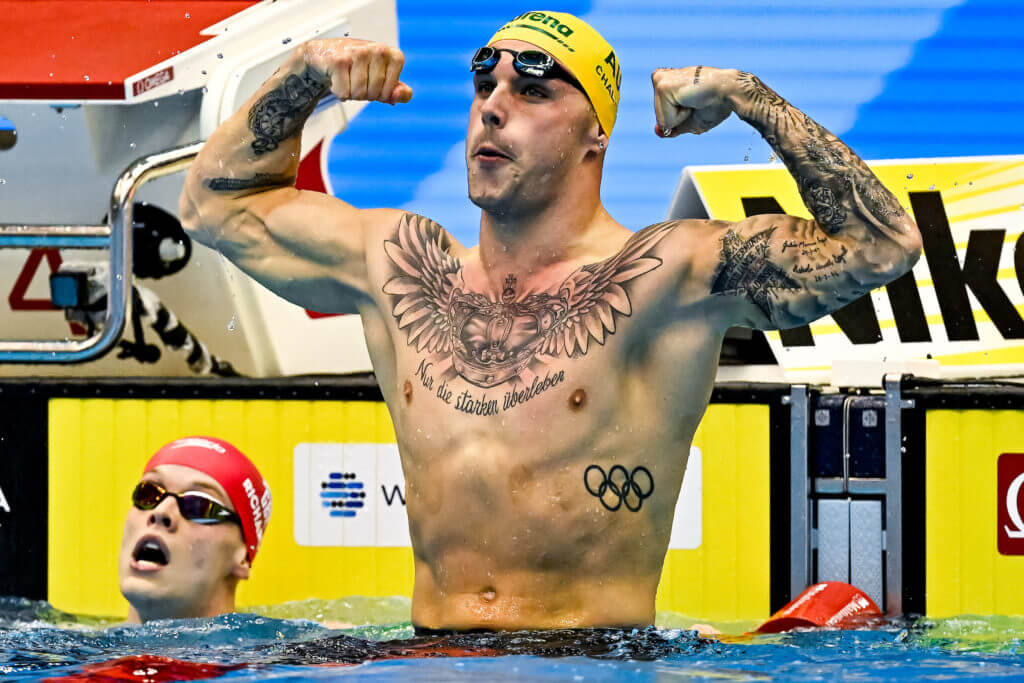
According to the NYT ‘Kyle Chalmers, the Australian sprinter who is a three-time Olympian has partnered with a Sydney-based sports technology labthat created a device to measure the force generated by a swimmer’s hands as they stroke through the water.’
So far this Olympics he has 1 silver medal in the 4 x 100m relay.
The DART(Double Asteroid Redirection Test) mission was launched on Nov. 23, 2021, atop a SpaceX Falcon 9 rocket from the Vandenberg Space Force Base in California.
It is the size of a small vending machine and it has been travelling through space for 10 months.
Mona Chalabi is aBritish-Iraqidata journalist and illustrator based in London. She specialises in all things data.
An outstanding communicator her work proves that MATH can be artistic and ART can be data-based. She is an honorary fellow of the British Science Association.
WARNING: Mona Chalabi INSTAGRAM account is politically graphic and contains sexually explicit graphs. Yeah! Dick graphs etc. The Instagram links in this post connect with individual illustrations.
There is NO CLEAR HEIGHT ADVANTAGE for serve speed.
2. Does the serve return rate increase with height?
Here is Diego Schwartzman (L) when he defeated Alexander Zverev (R ) in the 2019 US Open.
What is Schwartzman’s Super Power?
Schwartzman, the shortest player on the circuit (see graph above), tops the service returns stats. Highest 2nd serve return rate. Third highest 1st serve return rate. See data below. So agility, speed, and reaction times are also important factors in becoming a tennis star.
There is NO CLEAR HEIGHT ADVANTAGE for serve speed.
2. Does the serve return rate increase with height?
Here is Diego Schwartzman (L) when he defeated Alexander Zverev (R ) in the 2019 US Open.
What is Schwartzman’s Super Power?
Schwartzman, the shortest player on the circuit (see graph above), tops the service returns stats. Highest 2nd serve return rate. Third highest 1st serve return rate. See data below. So agility, speed, and reaction times are also important factors in becoming a tennis star.
And the Oscar for Best Mathematical Performance Goes to …..
Ben Zauzmer
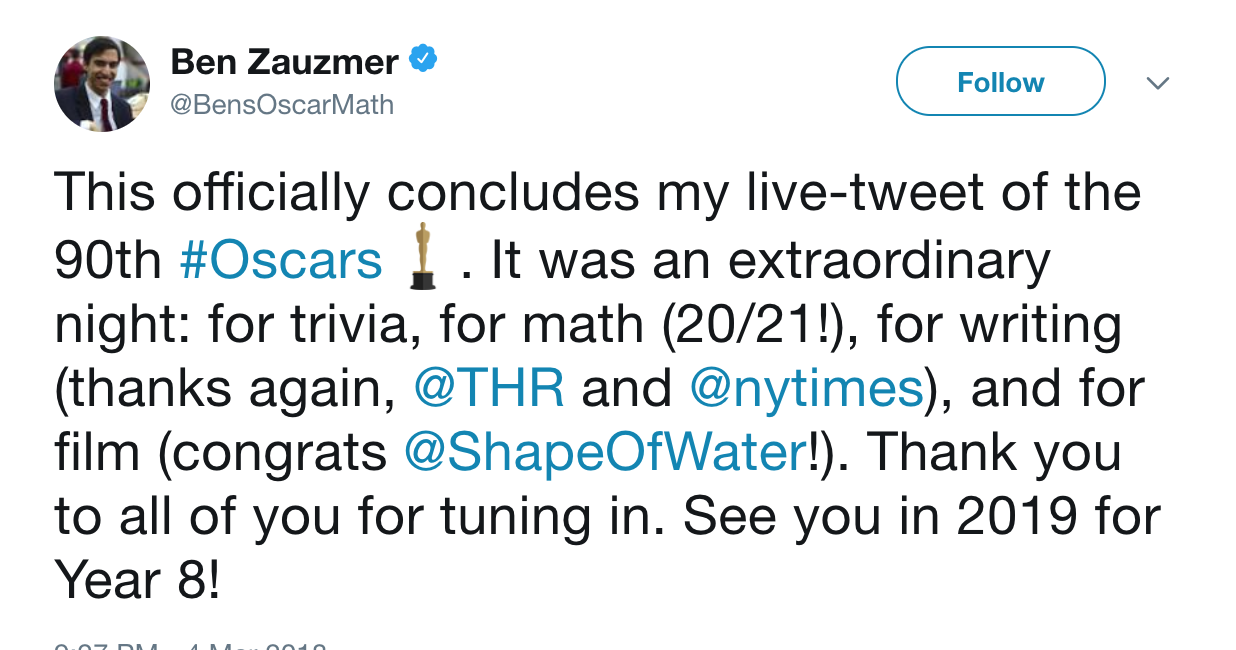
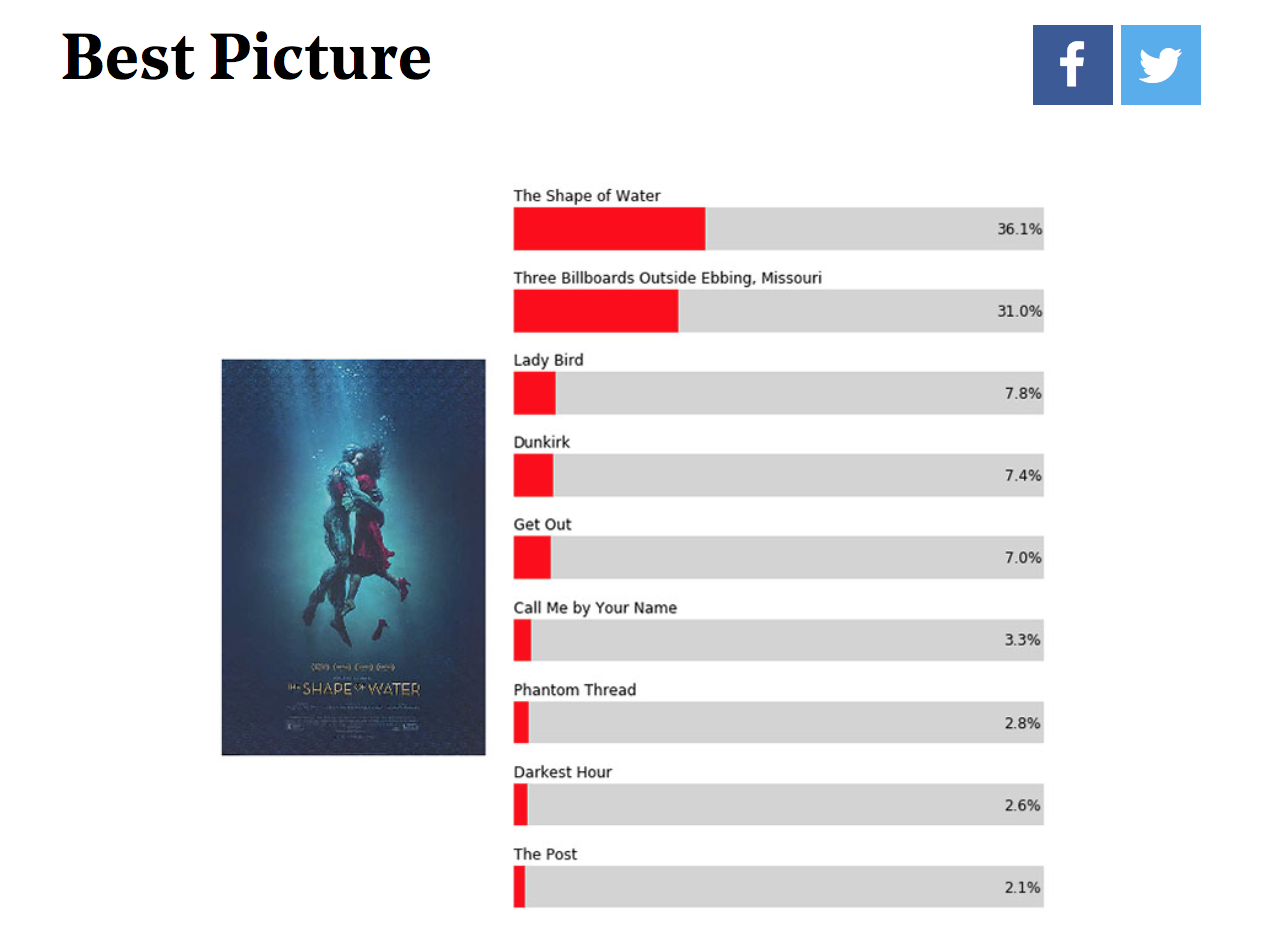
Ben Zauzmer, a Harvard Applied Math graduate who has a 75 per cent success rate in predicting the winners of Oscar Awards every year, has correctly predicted 20 of 21 winners in 2018 Oscars, which is a success rate of 95%.
How does he do it? He gathers thousands of data points on Oscar ceremonies over the past two decades – such as categories movies are nominated in, other award results, and aggregate critic scores – and he uses statistics to calculate how good a predictor each of those metrics is in each Oscar category. Then, he plugs in the numbers and that gives him the % chance that each film will win in each category according to theBoston Globe.
Ben, who writes for The Hollywood Reporter, uses his mathematical model to produceBar Graphs like this:
This year the Best Picture was a close call, but Ben’s Mathematical Prediciton was correct.











 Mathspig Blog