Posts Tagged ‘Making Math Fun’
 August 29, 2013
Here are some google glasses that actually look cool.

Here’s what Google Glasses can do.
Instead of using the Google Maps on your phone the Google Glasses put the map onto the glass lense so you can see where to go and where you are going. Theoretically.
…………………………………………………………………………………………………………..
The Maths
Google Maps uses GPS or Global Positioning System satellites and simple maths of TRIANGULATION or, in the case of the 3D model, 3D TRILATERATION to accurately locate your position on earth.
………………………………………………………………………………………………………….
You will find excellent explanations of how GPS works at the Nova Scotia Dept of Education website and by Diana Cooksey
MSU GPS Laboratory website.
………………………………………………………………………………………………………….
Simple Explanation:
GPS satellites broadcast two signals which allows the GPS program in your phone or device to calculate your distance from the satellite. GPS needs data from 3 satellites to locate your position on earth.
………………………………………………………………………………………………………….
2D Model:
Let’s assume your phone can calculate how far you are from a radio tower.
Tower 1:
Your phone can calculate how far your are from the tower but you could be anywhere on the first circle.
……………………………………………………..
Tower 1& 2:
Your phone can calculate your distance from two towers and locate you at one of two points where the circles intersect.
……………………………………………………….
Tower 1, 2 & 3:
Now you phone can accurately find your position at the intersection of 3 circles.

………………………………………………………………………………………………………….
3D Model:
Your phone can calculate how far you are from a satellite.
……………………………………………………………
Satellite 1:
You could be anywhere on the first sphere.
……………………………………………………………
Satellite 1 & 2:
You could be anywhere at the intersection of the two spheres. These spheres intersect along a circle.
……………………………………………………………
Satellite 1, 2 & 3:
The 3rd sphere will cross that circle at 2 points. As one position is not on earth it can be discarded.

………………………………………………………………………………………………………….
Error Alert:
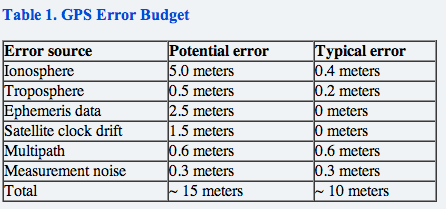
All measurements have an inbuilt uncertainty (scientists call it an error) because the accuracy of instruments is limited. Measuring across such long distances makes for significant errors. One problem for GPS is signal interference.
………………………………………………………………………………………………………….

………………………………………………………………………………………………………….
New Techno Frontiers in the Maths Classroom
………………………………………………………………………………………………………….
1. If you teach maths wearing Google glasses you can INSTANTLY record students bad behaviour in class on your computer. Wow! Evidence. THE FORCE BE WITH YOU, Mathspiggies.
OR
2. You can record a maths lesson using Google Glasses. It is already happening, my Sweeties. Have a look at this.
Posted in 10 Totally Awesome Reasons Why You Should Do Maths, Exponential Functions, geometry, Junior School, Middle School, Senior School, Year 12 mathspig, Year 7 mathspig, Year 9 Mathspig | Tagged 10 Amazing reasons why you should do maths, amazing, amazing maths, cool, Google Glasses, GPS, How GPS works, inspiring math, inspiring maths, Making Math Fun, Math %, math classroom, Math PR, Math promo, Maths, Maths Pr, Mr Google, Mr Google is Watching You, new technology, New technology in math, simple explanation, teaching maths with google glasses, Technology in math, technology in maths, The Force be with you, totally | 21 Comments »
January 15, 2013
Mathspig is excited. O wonder. O rapture. O Mathematical magic.
A museum of mathematics has just opened in New York, on Manhattan no less.

George Hart with his math art and students at MOMATH
Here is a quote from New Scientist: New Scientist 10 Dec 2012
The founders of the Museum of Mathematics (MoMath) know they have a fight on their hands, given the pervasive idea that the subject is boring, hard and scary. But they are determined to give mathematics a makeover, with exhibits that express an unselfconscious, giddy joy in exploring the world of numbers and forms.
“We want to show a different side of mathematics,” says museum co-founder Cindy Lawrence. “Our goal is to get kids excited, and show them the math they’re doing in school is just one tree in a whole huge forest.”
It looks like fun, fun, fun.
Mathspig will go all the way from Australia later in the year just to wallow mathspiggy-style in all this fun maths.
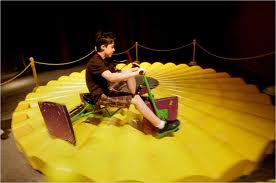
Menger Sponge Cycle

View Inside MOMATH math museum NY

Having fun at MOMATH
Weird Math ACTIVITY
Here is a link to a PDF file of some fantastic shapes that fold two ways like TRANSFORMERS.
You can make these fantastic shapes by Joseph O’Rouke, Olin Professor of Computer Science @ Smith College MA if you go here.


If you really are curious as to what research mathematicans do, go here. It’s really interesting stuff.
SNACK TIME
While you are in the cafe you better do something mathsy. Here is the way to cut a bagel for the maximum spread of cream cheese.

How to maximise cream cheese spread.
Posted in 10 Weird and Wacky Maths Projects, Happy Piglets, Junior School, Middle School, Silly Maths Jokes, The Teacher Goes Bananas, Year 7 mathspig, Year 9 Mathspig | Tagged cool math at MOMATH, Fun math activities at MOMATH, fun math museum, George Hart Math Art, hands on math museum, Joseph O'Rourke transformer shapes, Make transformer shapes, Making Math Fun, middle school math activity, Momath math museum, New York Math Museum | Leave a Comment »
November 30, 2012
Posted in 10 Mentalist Maths Tricks, Arithmetic, Junior School, Mentalist Maths, Middle School, The Teacher Goes Bananas, Year 7 mathspig, Year 9 Mathspig | Tagged 10 mentalist maths tricks, Fun calculations for middle school math, fun end of year maths, fun high school maths, fun mental maths, Fun Year 9 maths, Funny Middle School Maths, Making Math Fun, Marco frezza maths mentalist, Mental maths trick, mentalist math for middle school, mentalist maths, Middle School Math, Middle School Math Fun | Leave a Comment »
September 14, 2012

Patrick Vennebush
……………………………………………………………………..

…………………………………………………….
Patrick Vennebush is the Author
……………………………………………………………………..
Here are two jokes from the book:
……………………………………………………………………..

Without geometry life is pointless.
……………………………………………………………………..

……………………………………………………………………..
Economists have forecast ten of the last six recessions.
……………………………………………………………………..
……………………………………………………………………..
……………………………………………………………………..………..

……………………………………………………………………..
INTERVIEW WITH PATRICK
……………………………………………………………………..
Q1: What math topic was your favourite at school?

……………………………………………………………………..
Geometry is a mathematical jigsaw puzzle, except that you have to figure out which pieces you need as well as how to arrange them. But there was always something powerful about combining things I knew to prove things I didn’t.
……………………………………………………………………..
Q2: What math topic drove you insane?

……………………………………………………………………..
Combinatorics drove me mad. There are a million wrong ways to think about permutation and combination problems, but there’s only one right way to think about them. Even when the required calculations only take a few seconds to complete, the thinking to come to a solution might take hours.
……………………………………………………………………..
(Mathspig: Combinatorics? Wha? We just call them Permutations and Combinations in Aussie Land.)
……………………………………………………………………..
Q3: Did you ever do anything really exciting in math at school like go on an excursion to some weird math convention?

……………………………………………………………………..
No. I mean, this is crazy, but I can’t think of a single reason that I should like math… at least, not based on any great experiences.
……………………………………………………………………..
Q4: What math error in the media annoys you the most?
Misleading graphs, like this one from The New York Times.

Yep, Bush won, but this makes it look like it was a landslide.
……………………………………………………………………..
And I also hate arguments based on “man who” statistics. These are based on statements like “I know a man who…” and from that one example, great generalizations are made. More mathematically, results pulled from small samples are a huge problem, both in the media as well as in much of math education research. I can’t tell you the number of times that a researcher suggests that a particular teaching method is effective because there was a positive impact in just one or two classrooms. Oish.
(Mathspig. I think Oish is an underused word. We need a bring back the Oish Campaign.)
……………………………………………………………………..
Q5: Give me 3 reasons why you think students should do math.
……………………………………………………………………..
 1) To become proficient at problem solving, but more importantly, to understand that the greatest asset in problem solving is perseverance.
2) To think logically. All the computational skills in the world won’t help if you can’t put the pieces together. (Mathspig: Yey!!!! My fav too)
3) To be facile with numbers for daily life. So that when they’re confronted with various loan options or statistics in a newspaper, they can make an informed decision.
4) Most importantly, to understand the jokes in my book. (or ve hit them vith pi. Mathspig)
……………………………………………………………………..
Q6: What is wrong with the way math is taught in American schools?
……………………………………………………………………..
 Educators are too willing to sell kids a bill of goods. The curriculum contains a lot of topics that most students will never use. Honestly, when’s the last time you factored a trinomial? Part of the problem is the standards. Take the Common Core standards, for instance—they contain eight “practices” that artfully describe what a mathematically proficient student should be able to do, but then the practices are followed by a thousand standards that require nothing more than rote skills. Honestly, why are students asked to “derive the formula for the sum of a finite geometric series” to “calculate mortgage payments,” yet they’re never asked to consider the pros and cons of taking an adjustable rate mortgage?
But I’d also blame a lack of passion. The exceptional teachers I’ve met, the ones who are able to get their students excited about learning math, love numbers and shapes. They don’t have to convince their students that math is useful or interesting; their passion makes it obvious.
……………………………………………………………………..
Q7: What can teachers do right now to get kids more interested in math?
……………………………………………………………………..
I think there are two things they can do. First, be interested in math themselves. Second, keep their eyes open for examples of the usefulness of math in everyday life. (But, please, no more examples about measuring and cooking!)
……………………………………………………………………..
Q8: How does your blog/website/book help students with their math?
……………………………………………………………………..
Math Jokes 4 Mathy Folks contains 400 jokes, which I think helps to dispel the myth of humorless mathematicians. Teachers can use the jokes in class, and research has shown that humor has physical, psychological, and pedagogical value. Laughing decreases blood pressure, reduces anxiety, increases retention of information, provokes thought, hones prediction and decision-making skills, creates a more open atmosphere, and actually aids with classroom management.
On the MJ4MF blog, I post funny math stories, interesting math problems, and examples of math in the real world. I don’t know that a student would ever become proficient in math simply by reading my blog… but hopefully I can help them see that math can be both fun and useful.
…………………………………………………………………………..
Q9: Tell us one funny math story/joke.
Just one? Surely, you jest!
…………………………………………………………………………..
How do you know if a mathematician is an extrovert?
When he talks to you, he looks at your shoes.
…………………………………………………………………………..
A woman goes to the doctor. The doctor tells her that she only has six weeks left to live.
“Oh, my goodness! Doctor, what should I do?” she asks.
“Are you married?”
“No.”
“Then find an actuary, and marry him!”
“Will that help me live longer?” she asks.
“Well, no,” he says, “but it’ll feel longer.”
…………………………………………………………………………..
Q10: If you ruled the world what would change to help kids get excited about math?
…………………………………………………………………………..
Foremost, I’d make Math Jokes 4 Mathy Folks be a required text for all courses.
 Seriously, if I ruled the world, then I could do anything, right? I’d make teachers the highest paid professionals in the world, based entirely on merit. Teachers would get a base salary on which they could survive; and then, when their students were old enough to honestly and fairly assess their teachers, the students could provide ratings that would send huge bonuses to their previous teachers. I would never base a teacher’s pay on students’ standardized test scores. And while we’re at it, I’d throw away all standardized tests, period.
…………………………………………………………………………..
 Patrick Vennebush, for services above and beyond the call of math duty and for your outstanding contribution to the field of math humour, you are declared an Honourable Mathspig.
Posted in Middle School, Senior School, Uncategorized, Why Don't Kids Like Maths? | Tagged American National Council of Teachers of Mathematics, Annoying Math, Fun, Fun with Math, How can teachers make math interesting now?, Making Math Fun, Math Games, Math Humor, Math humour, Math in America, Math Jokes, Math Jokes for Mathsy Folks, Maths is fun, Maths Jokes, Patrick Vennebush Interview, Solving Math Problems, Sovling Math Problems, What's wrong with teaching math in America?, Why don't kids like math?, Worst Math Ever | 5 Comments »


 This is mental maths, but not hard maths. You can play this video by





 Mathspig Blog
