
In the article ‘Why Some Olympic Swimmers think about math in the pool’ in the NYT today

Kate Douglas (above), statistics graduate and USA Olympic swimmer, has used an accelerometer on her back, which measures her movement in 3 spatial directions 512 times per sec, to see where she could reduce drag and improve her swimming times. Could she improve her stroke technique, kick style or the depth she dipped her head under water?
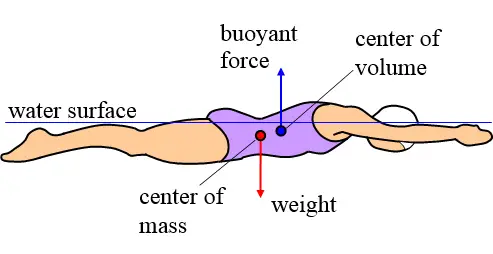
By analysing the data she found she could reduce drag by changing the angle of how she pulled her head out of the water saving 0.15 sec per pullout.
In her research paper, Douglas wrote: “Force applied in any direction other than forward is not helping an athlete achieve their dream of Olympic gold.”
Douglas lifts her head out of the water 20 times per lap. The 200m breaststroke race (above) involves 4 laps so Douglas lifts her head 80 times.
Using math data Douglas could save
= 80 x 0.15 sec
=12 secs
Wow!
Of course, other swimmers could do likewise, but in the Olympic trials (above) Douglas won by 1.35 secs. Every 0.01 sec counts.
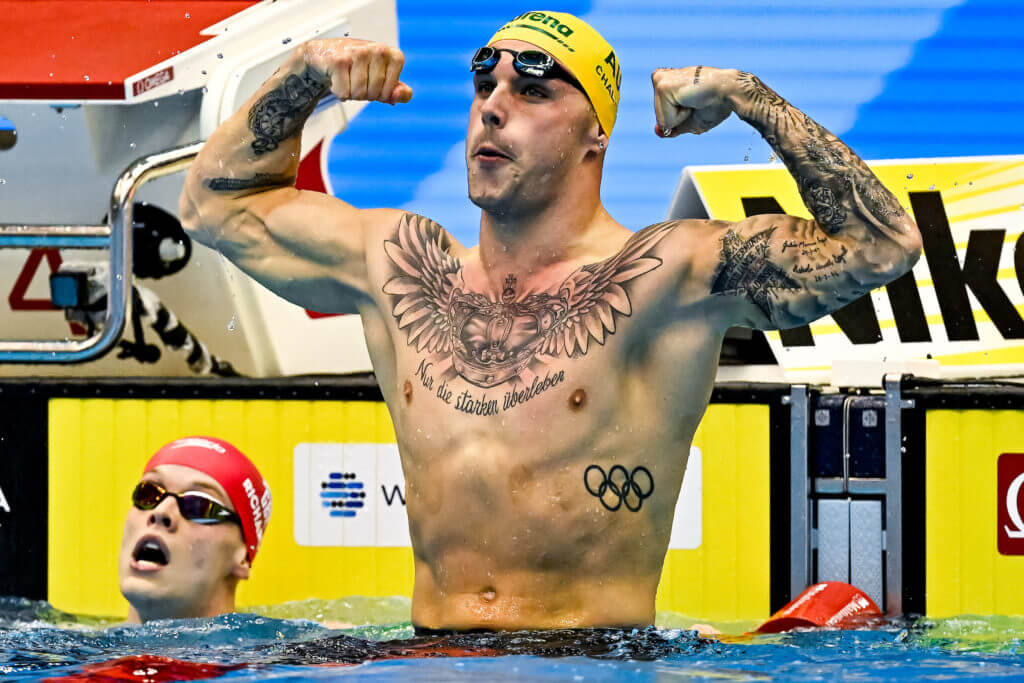
According to the NYT ‘Kyle Chalmers, the Australian sprinter who is a three-time Olympian has partnered with a Sydney-based sports technology lab that created a device to measure the force generated by a swimmer’s hands as they stroke through the water.’
So far this Olympics he has 1 silver medal in the 4 x 100m relay.
2024 Olympic Medal Update:
Kate Douglass
American swimmer: 2 Gold & 2 Silver Medals
Kyle Chalmers
Australian Swimmer: 2 Silver & 1 Bronze.












 Mathspig Blog