

The link above has a breakdown of American age groups that believe in Zombies. Americans that believe in an Apocalypse of some sort, including an alien invasion is fascinating. See Vox Poll here.

The link above has a breakdown of American age groups that believe in Zombies. Americans that believe in an Apocalypse of some sort, including an alien invasion is fascinating. See Vox Poll here.
Tragic Wildfires are still burning in LA on 11th JAN 2025 with

This, of course, depends on the wind speed.
Grass fire Speed in Australia on a flat land

Average Running Speed Boy 13–14 yo = 10 ft/sec = 6.8 mph
Average Running Speed Girl 13–14 yo = 8 ft/sec = 5.5 mph
Usain Bolt Speed on the Flat = 27.78 mph
Usain Bolt could out run a grass fire on a flat surface.
But 13 yos would be in trouble.
See more Firefighters Need Maths here.

We’ll assume, due to being motivated by having a fire licking your heels, that you can run at your top speed up hill for a short time, at least. But here is the problem.
Heat rises and so there is a Chimney Effect pushing the fire uphill. The rule of thumb used by fire fighters is:
The steeper the slope the harder it is to run fast and the faster the fire front moves.
Your survival will depend how far away you are from the fire front when you start running.
Again we can do very accurate calculations using simultaneous equations. See Firefighters Need Maths here.
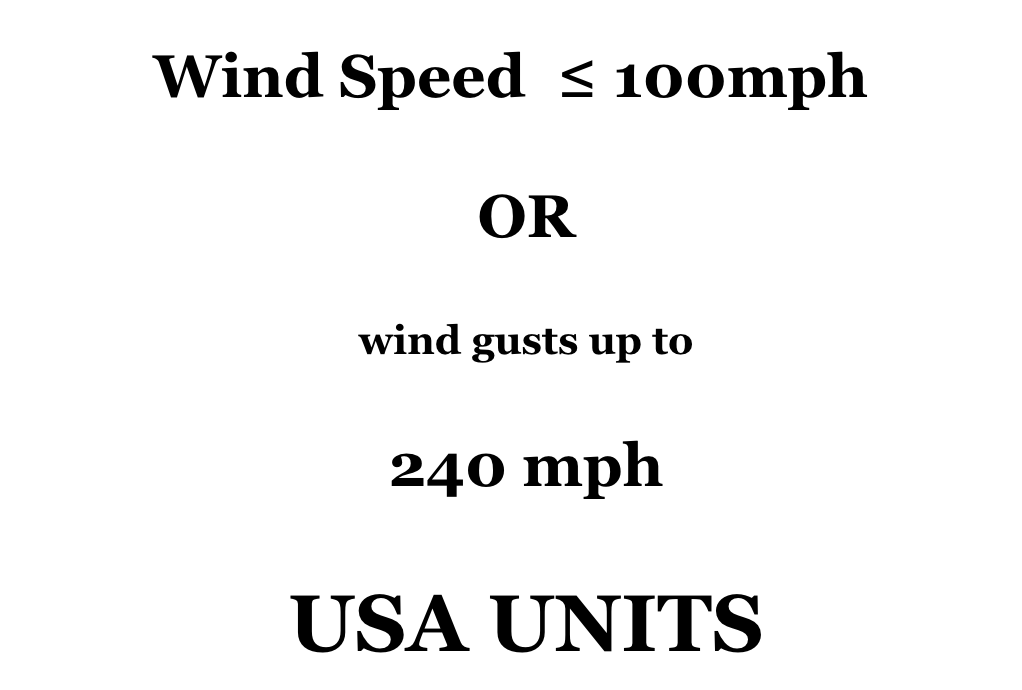
High winds can turn a bush or forrest fire into a WILD FIRE with wind gusts up to 240 mph and temperatures up to 2000 °C, which can and does melt glass and cars.
The fire front speed doubles with every 10º, so speeds for the fire front in a strong wind can reach 140 mph, 210 mph and up to 280 mph.

One Smoke Jumper survived an uphill wild fire. Read the amzing story
In the article ‘Why Some Olympic Swimmers think about math in the pool’ in the NYT today

Kate Douglas (above), statistics graduate and USA Olympic swimmer, has used an accelerometer on her back, which measures her movement in 3 spatial directions 512 times per sec, to see where she could reduce drag and improve her swimming times. Could she improve her stroke technique, kick style or the depth she dipped her head under water?
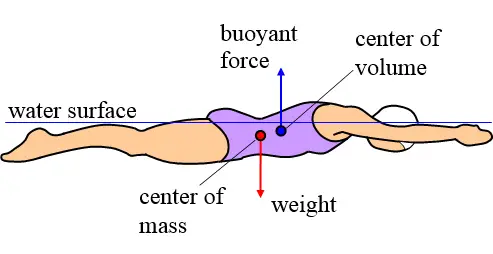
By analysing the data she found she could reduce drag by changing the angle of how she pulled her head out of the water saving 0.15 sec per pullout.
In her research paper, Douglas wrote: “Force applied in any direction other than forward is not helping an athlete achieve their dream of Olympic gold.”
Douglas lifts her head out of the water 20 times per lap. The 200m breaststroke race (above) involves 4 laps so Douglas lifts her head 80 times.
Of course, other swimmers could do likewise, but in the Olympic trials (above) Douglas won by 1.35 secs. Every 0.01 sec counts.

According to the NYT ‘Kyle Chalmers, the Australian sprinter who is a three-time Olympian has partnered with a Sydney-based sports technology lab that created a device to measure the force generated by a swimmer’s hands as they stroke through the water.’
So far this Olympics he has 1 silver medal in the 4 x 100m relay.
 With wildfires burning across the US and Europe , Mathspig had to update this firefighter math for middle school classrooms.
Radiant Heat Stats WA Fire Dept FACEBOOK.
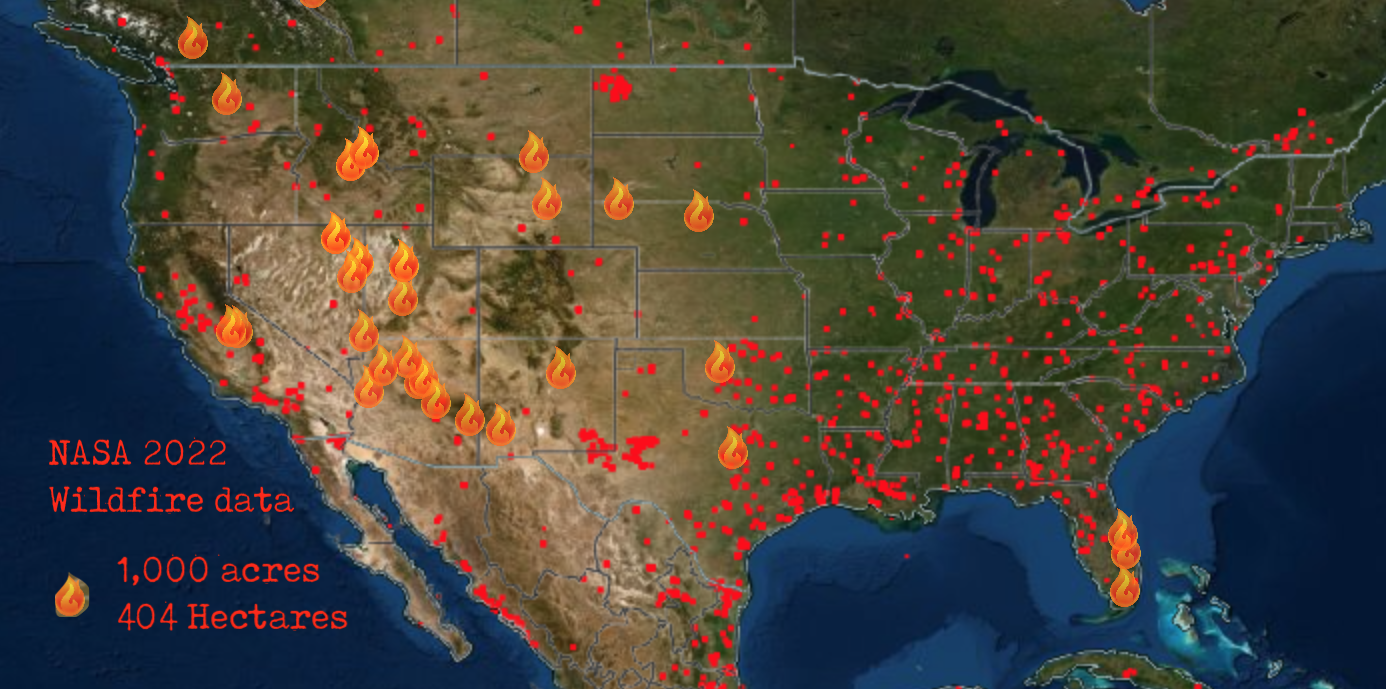 Wildfires USA 2022 Map:NASA
On 5th August 1949 Wag Dodge was dropped by parachute with 14 other fire fighters into Mann Gulch, a steep-sided gully in a Montana pine forest. Fire fighters who parachute in to put out small blazes started by lightening are called Smoke Jumpers. As they worked their way down the sides of the gully the breeze was blowing away from them. But the wind soon shifted. This produced an updraft, which increases the speed of the fire front. The 15 Smoke Jumpers turned and started running for their lives uphill.
Mark out a 30ft course. Make 3 time trials.
t1 =
t2 =
t3=
Average your time:
tav = (t1 + t2 + t3)/ 3 =
Your Speed S = 30/tav ft/sec
This will, of course, vary depending on the wind speed. A typical grass fire in Australia in a flat area can travel at 12mph (up to 20mph) in a gentle breeze.
Fire Front Speed Grass Fire
Fire Front Speed = 12 mph = 12 x 5280/(60 x 60)
= 17.6 ft/sec
= 18 ft/sec
Average Running Speed Boy 13–14 yo = 10 ft/sec
Average Running Speed Girl 13–14 yo = 8 ft/sec
We’ll assume, boy or girl, that you are really motivated and can run away from the fire at top speed of 10 ft/sec and -Wow! – this is easy math. Now calculate the distance you can run and the fire front moves in 10 secs intervals up to 1 minute.
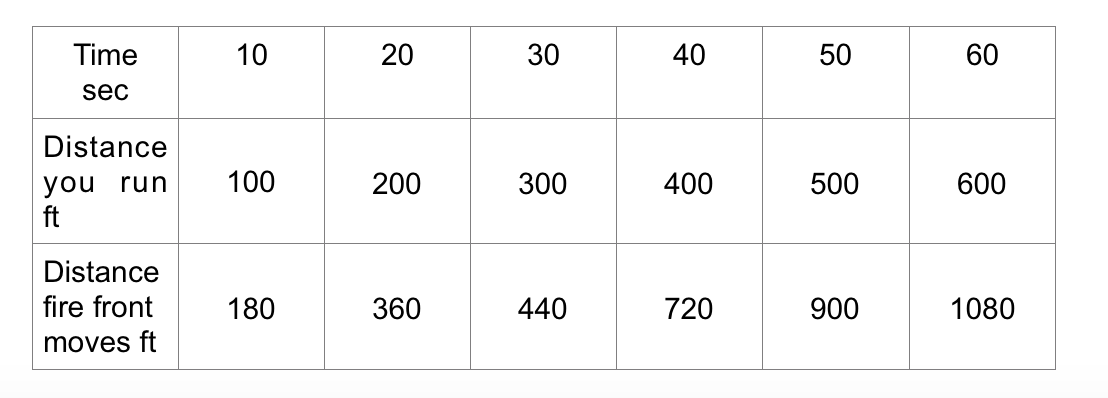
This is not looking good. See more Firefighters Need Maths here.
We can do very accurate calculations using simultaneous equations. Wildfire Algebra: Detailed Worksheet using simultaneous equations and solutions here.

We’ll assume, due to being motivated by having a fire licking your heels, that you can run at your top speed up hill for a short time, at least. But here is the problem.
Heat rises and so there is a Chimney Effect pushing the fire uphill. The rule of thumb used by fire fighters is:
Each 10º increase in slope, the fire front speed doubles.
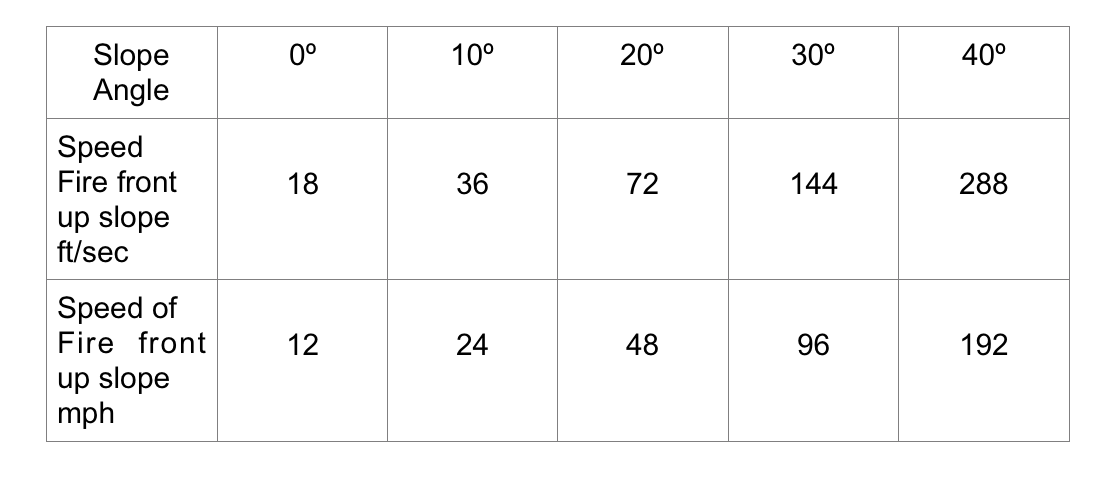
Now you can calculate the distance travelled up a slope at a 30º angle.
Don’t forget you can use the WEB 2.0 Calculator here
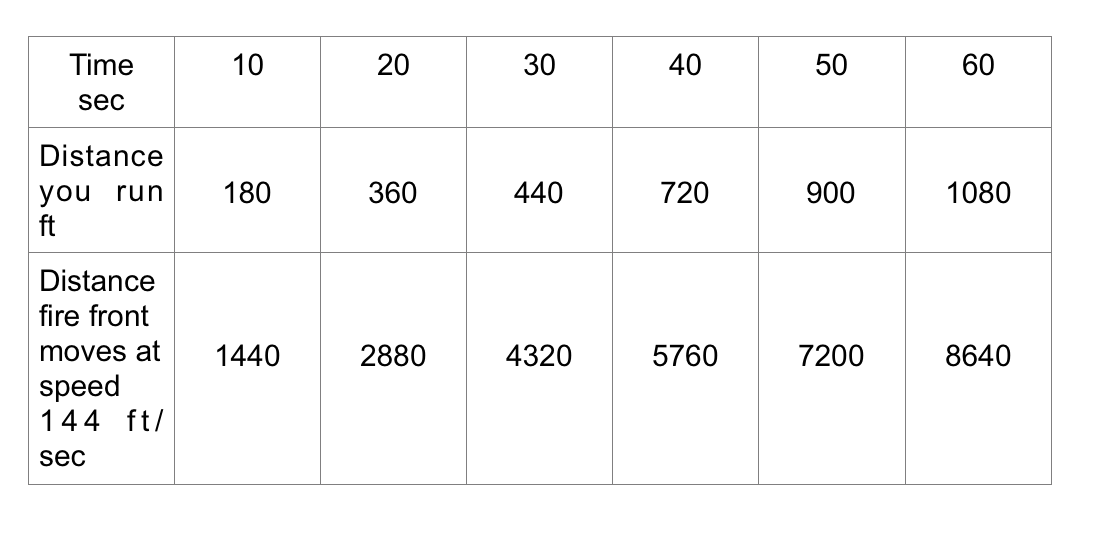
Even at your top running speed, which is unlikely up a slope, you can run 1080 ft in 1 minute. In that time the forefront has moved 8640 ft or 1.6 miles. It depends how far away you are from the fire front when you start running, but it seems likely that you cannot out run this fire front.
Again we can do very accurate calculations using simultaneous equations.
See Firefighters Need Maths here.
Wildfire Algebra Worksheet and solutions here.
High winds can turn a bush or forrest fire into a WILD FIRE with wind speeds up to 70 mph and temperatures up to 2000 °C, which can and does melt glass and cars.
The fire front speed doubles with every 10º, so speeds for the fire front in a strong wind can reach 140 mph, 210 mph and up to 280 mph.
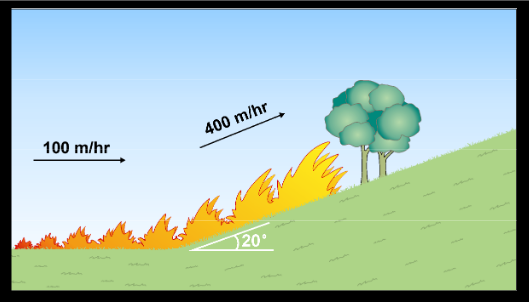
When the fire front changed direction Wag Dodge and 14 other Smoke Jumpers found themselves running for their lives up a steep slope. What did Wag do next?
ANS: Here’s the amazing thing. Wag realised he could not out run the fire at that point. So he stopped. Took off his back pack. Took out some MATCHES and lit a fire in the grassy patch in front of him. Just before the firewall hit he threw himself face down on the burnt patch. He survived. The other 14 firefighters did not.
With wildfires burning across the US and Europe , Mathspig had to update this firefighter maths post for middle school classrooms.


Radiant Heat Stats WA Fire Dept FACEBOOK, Australian Bushfires 14 NOV 2019 MyFireWatch WA
Wildfires USA 2022 Map: NASA

On 5th August 1949 Wag Dodge was dropped by parachute with 14 other fire fighters into Mann Gulch, a steep-sided gully in a Montana pine forest. Fire fighters who parachute in to put out small blazes started by lightening are called Smoke Jumpers. As they worked their way down the sides of the gully the breeze was blowing away from them. But the wind soon shifted. This produced an updraft, which increases the speed of the fire front. The 15 Smoke Jumpers turned and started running for their lives uphill.
Mark out a 10 m course. Make 3 time trials.
t1 =
t2 =
t3=
Average your time:
tav = (t1 + t2 + t3)/ 3 =
Your Speed S = 10/tav = ……… m/sec
This will, of course, vary depending on the wind speed. A typical grass fire in Australia in a flat area can travel at 20kph (up to 30 kph) in a gentle breeze.
Fire Front Speed Grass Fire
Fire Front Speed = 20 kph = 20 x1000/(60 x 60)
= 20 x 0.27777777 = 20 x 0.28 m/sec
= 5.6 m/sec
Average Running Speed Boy 13–14 yo = 3.0 m/sec
Average Running Speed Girl 13–14 yo = 2.4 m/sec
We’ll assume, boy or girl, that you are really motivated and can run away from the fire at top speed of 3.0 m/sec. Now calculate the distance you can run and the fire front moves in 10 secs intervals up to 1 minute.
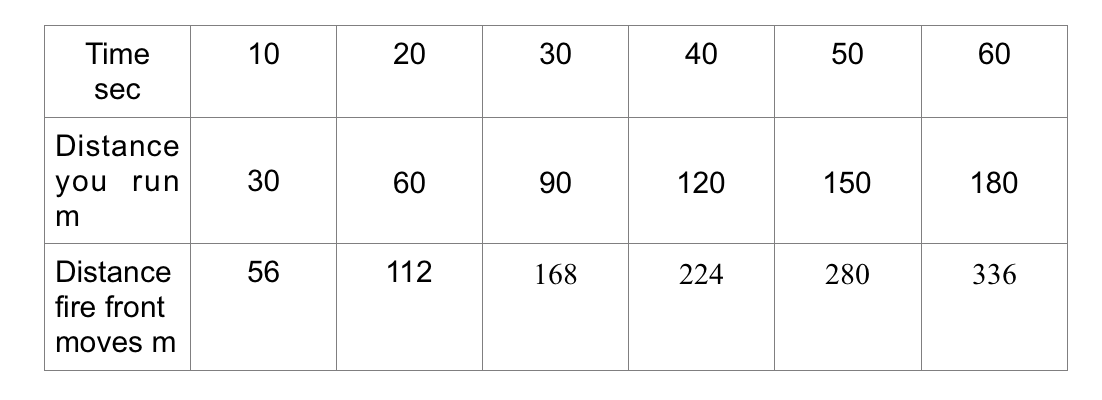
This is not looking good. See more Firefighters Need Maths here.
We can do very accurate calculations using simultaneous equations. Wildfire Algebra: Detailed Worksheet using simultaneous equations and solutions here.
We’ll assume, due to being motivated by having a fire licking your heels, that you can run at your top speed up hill for a short time, at least. But here is the problem.
Heat rises and so there is a Chimney Effect pushing the fire uphill. The rule of thumb used by fire fighters is:
Each 10º increase in slope, the fire front speed doubles.
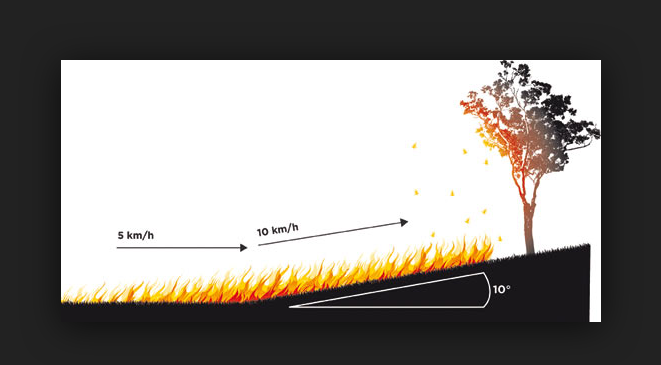

Now you can calculate the distance travelled by the fire front up a slope at a 30º angle.
Don’t forget you can use the WEB 2.0 Calculator here.
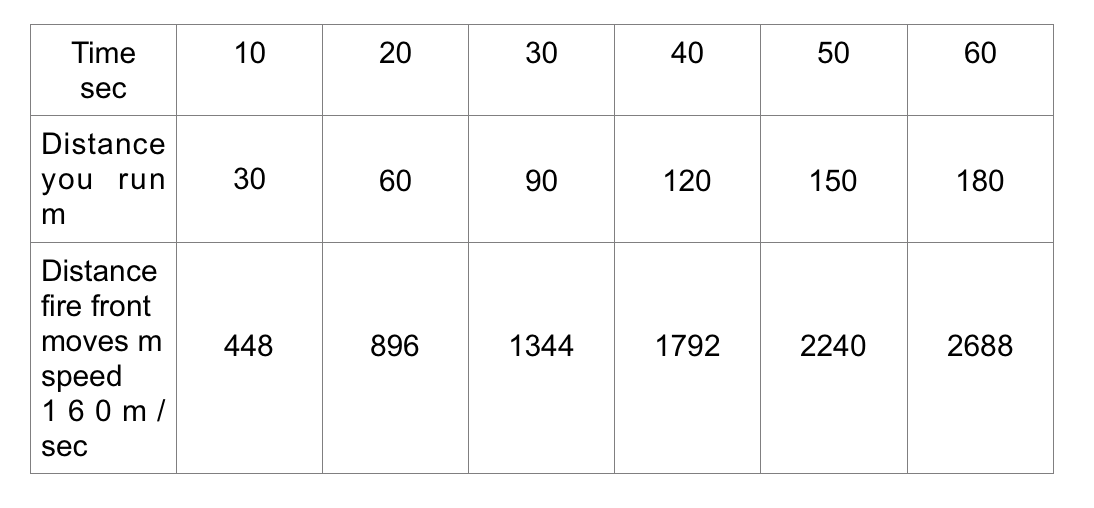
Even at your top running speed, which is unlikely up a slope, you can run 180 m in 1 minute. In that time the forefront has moved 2688 m or 2.7 km.
It depends how far away you are from the fire front, but it seems you cannot out run this fire front.
Again we can do very accurate calculations using simultaneous equations.
See Firefighters Need Maths here.
Wildfire Algebra: Worksheet and solutions here.
High winds can turn a bush or forrest fire into a WILD FIRE with wind speeds up to 110 kph and temperatures up to 2000 °C, which can and does melt glass and cars.
The fire front speed doubles with every 10º, so speeds for the fire front can reach 220 kph, 330kph and up to 550kph.
When the fire front changed direction Wag Dodge and 14 other Smoke Jumpers found themselves running for their lives up a steep slope. What did Wag do next?
ANS: Here’s the amazing thing. Wag realised he could not out run the fire at that point. So he stopped. Took off his back pack. Took out some MATCHES and lit a fire in the grassy patch in front of him. Just before the firewall hit he threw himself face down on the burnt patch. He survived. The other 14 firefighters did not.


………………………………………………
The following maths is suitable for Year 9+
but can be presented to lower grades just to show
maths is cool!


In 2020, according to the annual, independent Global Drug Survey, Australians were drunk more often than any other country in the survey. Melissa Cunningham reported in The Age (How to cure a hangover!, 11 DEC 2021) that Australians admitted being drunk 27 times a year, compared with the global average of 15.
Naturally, a lot of this drinking takes place during the Christmas holidays or the Silly Season. Unfortunately, it appears to be the SILLY SEASON all year round in Australia.
Data from 32,022 people from 22 countries were used in the preparation of this Global Drug Survey

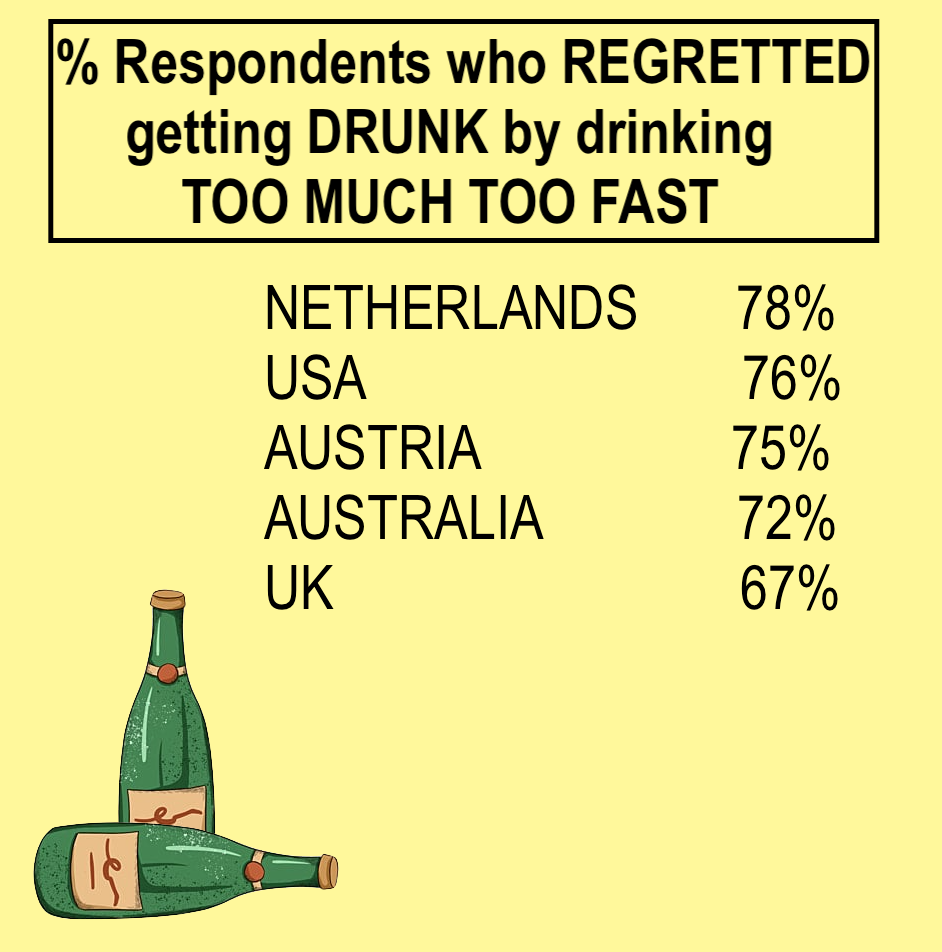

For binge drinking stats
See Dangerous Maths: Young, drunk, dead.

LINK: National Drug & Alcohol Research Centre data

The pandemic has launched a data storm. But some numbers cut through this white out. Despite following the numbers closely I was shocked by the following headline on the front on The Washington Post a few weeks ago.

Using data from the Worldometer Website, I thought it would be interesting see how other countries compare with the USA. America has already dropped below this grim marker. And low is not the way to go!!!!
Here are some more stats:

So often MATH makes clear what politicians fail to see. This is a cartoon in the Boston Globe by Dan Wasserman.
Follow Dan on Twitter @WassermanToons

The minimum wage in Australia is currently $19.84 per hour for 21yo+. This is USA $15.08.

A raucous romp through the absurdities of American Gun Culture


10 Reasons Students Hate Maths: BUSTED

10 Reasons Students Hate Maths: BUSTED

10 Reasons students hate maths: BUSTED

10 Reasons Why Students Hate Maths: BUSTED

10 Reasons students Hate Maths: BUSTED

10 reasons to hate maths: BUSTED

10 reasons to hate maths: BUSTED

10 reasons to hate maths: BUSTED

10 Reasons to Hate Maths: BUSTED

10 Reasons to Hate Maths: BUSTED

Comic & cutting comment plus random raves.







 Mathspig Blog