

When the meal arrived to our table, we were disappointed to discover that the meat fondue (which cost around 40 Swiss francs a head) or "fondue chinois," was simply a version of steamboat hot pot that is served in every-Chinatown, USA.
But thankfully, there were unique Swiss additions to the Chinese fondue. There were (1) creamy fingerling potatoes steaming in a towel-wrapped wicker basket; (2) sweetly brined cornichons (gherkins), pearl onions, and baby corns with a vinegary bite; (3) crisp Swiss potato chips, and (4) a beautiful variety of mayonnaise and aioli dipping sauces made with curry, dijon, and horseradish.

In addition to these interesting Swiss additions, I noticed several differences between Swiss "fondue chinois" and the "fondue chinois" that I eat in America. The Swiss restaurant did not provide a bowl or spoon to enjoy the meat broth in the fondue pot (I merely was given a two-pronged fork) and there were no vegetables, seafood, noodles, or meatballs to cook alongside the thin slices of meat.

My Swiss hot pot experience drew me closer to my own previous hot pot experiences, and reminded me of how I enjoyed hot pot at home the most. Furthermore, because of my rigid, cheapskate upbringing, my wallet has always been uneasy about restaurant hot pot. (If you're unfamiliar with hot pot, see my previous post on hot pot, here, where I explain this soup meal that you cook in and eat from a communal pot. You cook the quick-cooking raw meats and vegetables in a boiling soup, and quickly remove them to prevent overcooking.) A part of me cannot get over the concept of going to a restaurant to cook your own meal. Hey, I pay for someone to do that for me, and that makes me feel special for the evening!
I earnestly believe that hot pot is best done at home. Communal cooking encourages real social collaboration. I love seeing how ambitious guests take charge and step up to the plate--err, I mean pot! Hot pot can also be as mesmerizing as a Broadway production, replete with swirling steam emanating upward from the boiling pot and sizzling and spitting burner grates. But by far, the best part about entertaining with hot pot is that you allow your guests do the work, rather than laboriously toiling away with your back hunched over relentless, sweltering, and glowing spiral burners. Thus, by serving hot pot, you avoid any burn marks branded on your fingers and a lot of stress!
For hot pot, you need a table top butane bunsen burner or electrical hot plate. A table top heating source is a great investment for a working entertainer because it can be used for cheese and chocolate fondue and Korean barbecue (use a grill pan such as a cast iron pan that will retain heat for grilling, though). Such a table top heat source is critical for keeping the food piping hot, as any good caterer will tell you.
Although the "one pot" cooking method isn't conducive for catering to the whims of finicky eaters, check out your local Chinatown for "divided hot pots," which allow you to heat multiple types of broth in the same gurgling cauldron. Each divided pot section may hold alternative soup bases such as (1) a light, refreshing, and cleansing broth or (2) a spicy, nasal-piercing, and magma-hued stock, seasoned with fiery chilies.
Simplicity prevails in hot pot preparation. Hot pot entails only (1) the making of a soup base, (2) the gathering together of ingredients for each person's dipping sauce, and (3) the cleaning and chopping the vegetables. Here are some suggested hot pot ingredients:
Stock Base - Lace your stock or broth base with the one or more of following pungent ingredients for a highly memorable flavor:
- Fresh Ginger (Bruised)
- Miso Paste
- Cumin Powder
- Dried Red Chilies (Whole or Powdered)
- Szechuan Peppercorns
- Star Anise
- Five Spice Powder
- Bonito Fish Flakes
- Dried Taro Strips
- Bay Leaves

Dipping Sauce - Allow guests to dip their meat and other cooked hot pot ingredients in a variety of sauces made of three or more of the following ingredients:
- Soy Sauce
- Sesame Oil
- Rice Wine Vinegar
- Honey
- Chicken Eggs
- Sa-Cha Jiang (Taiwanese Barbecue Sauce made of Anchovies)
- Minced Garlic
- Sliced Scallions
- Chopped Cilantro
- Ground Sesame Paste (Japanese Goma)
- Ponzu Sauce
- Mayonnaise (Flavored with Curry Powder, Horseradish, or Dijon Mustard, in the Swiss Meat Fondue-Style)
 Ingredients List - Next, the following ingredients should be the primary substance in your hot pot meal. Feel free to add:
- Thinly Sliced Daikon Radish
- Thinly Sliced Carrots
- Shiitake Mushrooms
- Enoki Mushrooms
- Straw Mushrooms (Canned)
- Soft Tofu (Blocks or Skin)
- Cellophane Mung Bean Noodles (Individual Bundles)
- Yam Noodles (Individually Self-Tied Bundles)
- Udon Noodles
- Shell-On Shrimp (Fresh or Dried)
- Squid
- Springy Precooked Asian Meatballs (Shrimp, Squid, Fish, Beef, Pork)
- Thinly Sliced Meat (Beef, Lamb, Goat, Pork, Chicken)
- Leafy Vegetable Greens (Napa Cabbage, Chrysanthemum Greens, Spinach)
- Frozen Dumplings or Wontons
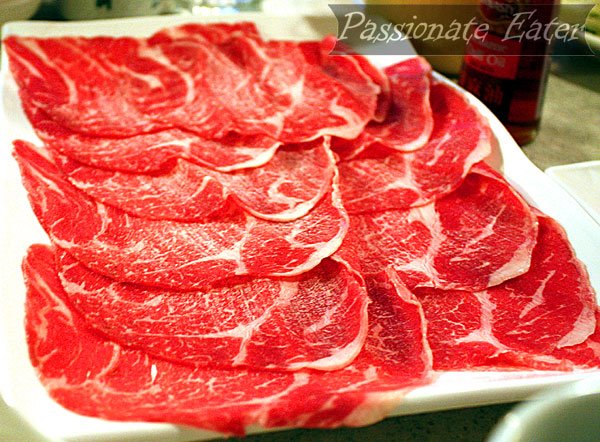
In the end, after assembling the ingredients and watching your guests cook their (and your meal) you should be greeted with a rich caramel brown-colored broth surrounded by tender sheets of thinly sliced meat (such as rib-eye) poached until small meat ridges have peaked and the edges have curled. With those visual meat cues, the meat is done and the guests are now free to steep their meat and vegetables in a sweetened soy marinade, and shower their hot pot meal with a generous helping of angular scallions sliced on a bias.

Depending on your other ingredients, you and your guests might also enjoy crisp patches of nori (seaweed paper) which become absorbent floating blankets, wispy tendrils of poached egg, smooth-skinned dumplings with soft and uniform pleats, or circular curls of pinkened shrimp.

So to review, here's the game plan for hot pot:
Step #1 Prepare ample amounts of broth ahead of time and keep it on a low simmer during food preparation. Keep a large stockpot simmering on the range and keep refilling the table top pot with the liquid contents of the large stockpot, as you run low on soup on the table top pot.
Step #2 Defrost the meat and seafood (if frozen). When purchasing meat for hot pot, look for meat with thick white segments of fat encompassing the edges or interspersed in the meat like gargantuan continents (in a meat map of the world). The more fat, the more luscious and rich the flavor of the soup and tender the meat.

Step #3 Prepare the vegetables and tofu by (1) washing and leafing the greens, (2) peeling and slicing the daikon and carrots, (3) chopping the garlic, cilantro, and scallions, and (4) dicing the tofu into bite-sized blocks.

Step #4 Lay out the ingredients for the sauces.
Step #5 Set up the bowls, chopsticks, soup spoons, and spider ladles or regular ladles. For a cute touch, you can even label the different plates of meat and place settings (to give the guests a sense of ownership during their hot pot cooking process). They choose what meats go in, and when, so hot pot is definitely "cooked" by your guests.

Step #6 During your hot pot dinner, give verbal instructions to the guests to move the cooked pieces of meat to a specified, cooler area of the pot, or another "serving" bowl entirely, to prevent cross-contamination. Also provide multiple sets of metal scalloped-edged tongs (or spider strainers, which can be purchased in a Chinatown near you), to be sure that no one person monopolizes the hot pot and to allow each of the guests to be equally involved in cooking.
Finally, some hot pot fanatics say that it is a "must" to have ready-made foods at the guests' immediate disposal because of the lag time of cooking hot pot. Therefore, following the Korean and Swiss traditions, you may offer multiple "pickled" side dishes (panchan) with your hot pot, none of which need to be prepared from scratch. Buy canned or jarred preserved vegetables, or think about frozen and microwavable versions of steamed buns. You can even order side dishes to go! But I think the pickled additions are the way to go, since they lend a palatable and acerbic crispness and pleasant vinegar tartness to accompany the warm and soothing hot pot soup. And the pickles are addictive and delicious little snacks easily pinched between the tapered ends of a pair of lengthened and slender chopsticks. Now, I am not one who generally extols the virtues of premade goods, but as an entertainer, you'll need as much assistance you can get, and if the assistance is from factory laborers or automated, mass-producing, pre-packaging food machinery, so be it!
The only drawback of hot pot is the multiple dishes that you'll need to wash after the night is through. The upside however, is that you will have amassed a plentiful collection of petite, shatterprone dishes, although disposal ware should do.
Hope these hot pot tips helped, or at least inspired you do have a hot pot party for your friends in the future!


