Posts tagged ‘Science’

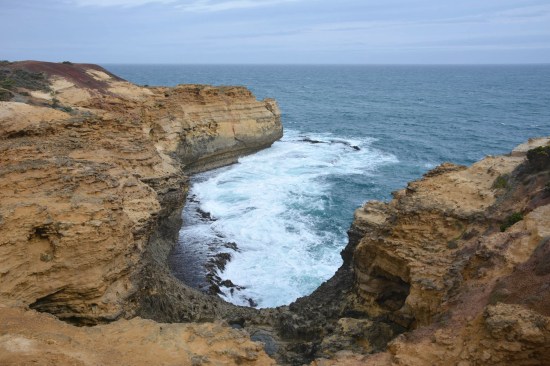
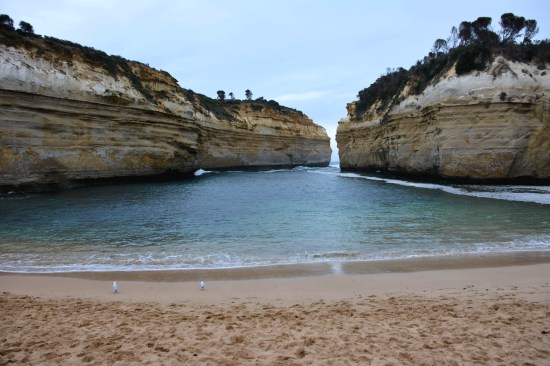
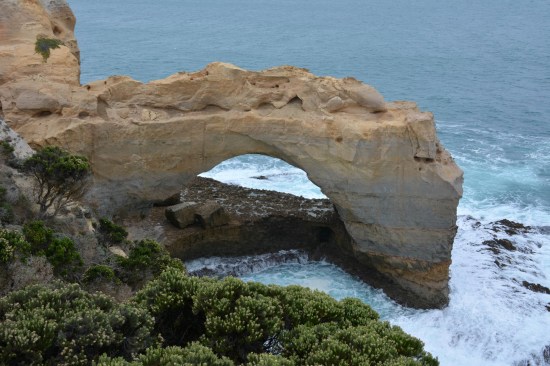
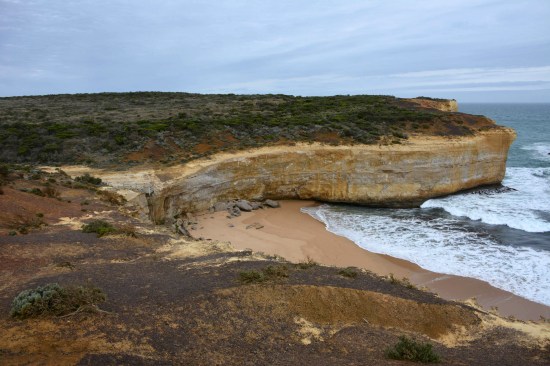
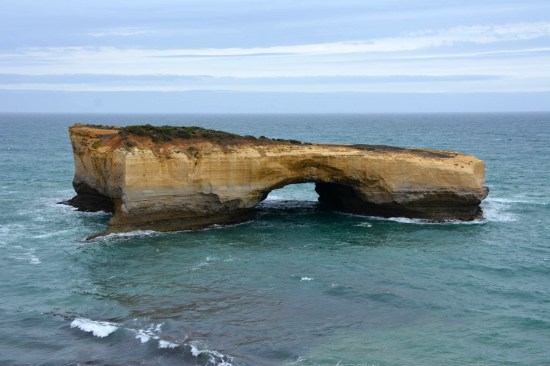
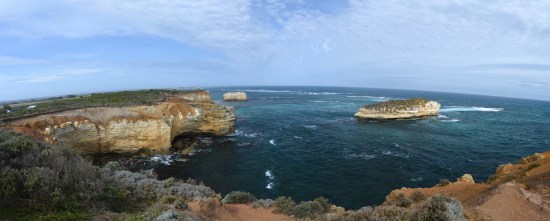
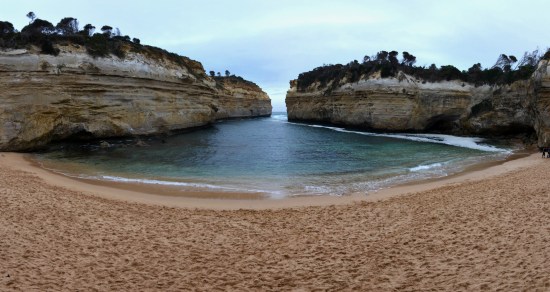
A few weeks ago we drove along the Great Ocean Road, where the limestone plateau of western Victoria falls into the sea, leaving behind remnant limestone stacks, arches and gorges. As we drove from the western end back towards Melbourne we didn’t quite make it as far as the famous 12 Apostles (or however many are left standing) but there were plenty of coastal features still to see.

OCG-215OCG-229OCG-268

Loch Ard Gorge, named after a ship which was wrecked within the bay many years ago.

OCG-259OCG-245OCG-241Panorama_14Panorama_13

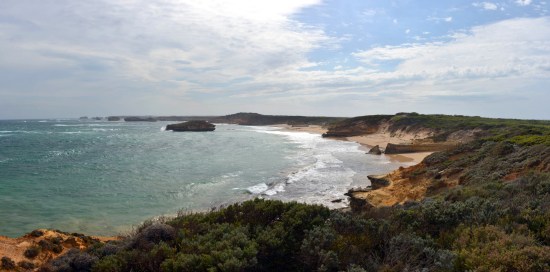
At the far western end of the Great Ocean Road the limestone cliffs eventually become beaches with steep dunes.

Panorama_12

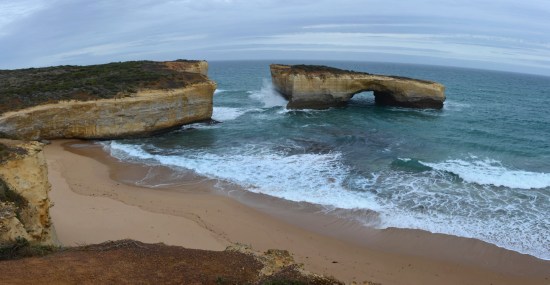
There used to be another limestone arch forming a natural bridge between the main cliff on the left and the island on the right but it fell into the sea and the sight is now known as London Bridge.

Panorama_11

Travelling the Great Ocean Road in the cooler months and on a grey overcast day meant there weren’t too many tourists to get in the way of your photos.

Leave a comment

This time last year I was sailing across the Great Australian Bight (the area of ocean below Australia) on the Southern Surveyor (check it out here, here and here). One cold and windy night, myself and several other scientists scrambled out onto the deck with an expensive, large, yellow, plastic float. We released it over the side of the boat and watched it as it disappeared into the night. As one of 5000 floats that scientists have released over board, it provides a way for us to continually monitor the oceans and send the data back to scientists on a regular basis via satellite. Here is a video which gives an overview of how Argo floats measure the ocean.

Exactly one year on, I’m happy to say the float is still floating! This float has spent 365 days of floating in the sea, drifting with the currents, being caught in eddies and taking observations of the ocean. Within that time it has travelled over 1845 kilometres around the Great Australian Bight.

argo_float_southern_indian_ocean_southern_surveyor_science_research_oceanography_australia

It has surfaced 37 times (represented by the white dots on the following map) to transmit salinity, temperature and density data back to scientists via satellite.

argo_float_southern_indian_ocean_southern_surveyor_science_research_oceanography copy

Both maps are screen shots of Google Earth (red line represents 100 km) with Argo Data from here and the yellow star represents the launch location.

Temperature Profile
argo_float_temperature_profile_time_southern_ocean_australia

The temperature profile is typical of the ocean thermocline, with a decrease in temperature as depth (sea water pressure) increases. It was warmer over the summer months at the surface but only reached a maximum temperature of 18ºC.

Salinity Profile

argo_float_salinity_profile_time_southern_ocean_australia

The white patch between 24/6/2013 and 10/9/2013 indicates a lack of data as the Argo float was in the shallower waters  over the continental slope.

Temperature and salinity data for float WMO 5904242 was retrieved from Coriolis Operational Oceanography.

I will continue to provide updates on the adventures of this Argo float and hope it stays a float for many more years!

Leave a comment

Within the National Rock Garden, the Federation Rock for Tasmania is the Tasmanian Dolerite.

tasmanian_dolerite_australian_national_rock_garden_canberra_geology

Mid Jurassic (175 million years) in age, the Tasmanian dolerite formed during the breakup of Gondwana. The doleritic magma was injected as dykes and sills into thick sedimentary rocks, covering most of Tasmania.

macro_tasmanian_dolerite_australian_national_rock_garden_federation_rock_hobart_canberra_geology_science_geoscience

As the magma cooled and crystallised, regular vertical cracks propagated through the sills forming polygonal columns across the Tasmanian landscape.

polished_tasmanian_dolerite_australian_national_rock_garden_federation_rock_hobart_canberra_geology_science_geoscience

Section of polished dolerite

The Tasmanian Dolerite is unusually widespread and is referred to as ‘the rock that made Tasmania’. The combination of sills across Tasmania makes up one of the world’s largest magmatic intrusions.

All information from the National Rock Garden.

Leave a comment