Archive for the ‘Books’ Category

How to live at the end of the world

October 11, 2024

DOOMER: How to Live at the End of the World by Jessica Wildfire (2024)

Jessica Wildfire writes an excellent blog called Sentinel Intelligence (formerly OK Doomer), which is about existential threats to society and how to survive them, both on an individual and societal level.

It provides good information, mainly but not exclusively about covid and climate change.  It includes a valuable online library of links to scientific articles, mainly but not exclusively about covid.

But Doomer is not about these topics.  It is about the reasons why people almost always ignore warnings of disaster, not matter how well-founded, and why those who gave warning are almost never acknowledged, even when their warnings prove correct.

A certain percentage of the population who possess what she calls “sentinel intelligence,” which is the ability to perceive when something is wrong and to act on it.  But a much higher percentage of the population is mentally hard-wired to associate bad things with people who warn about the bad things, and not with those who gave false reassuring statements.

The Cassandras who warned of the folly of invading Iraq, of the need to keep the New Orleans levees in repair prior to Hurricane Katrina or the danger of wild financial speculation prior to the 2008 financial crash – none of them got any credit for having been proved right.  Instead we are told “nobody could have foreseen … …”

The great example she gives is hostility to people who wear masks for protection against covid.  Covering one’s nose and mouth is simple common sense if you want to protect yourself against an incurable, highly infectious, incapacitating virus that is occasionally fatal, which is what covid is.  Wearing a mask harms no-one and may make others safer.

People also may wear masks because they are allergic to pollen in the air, or because they have jobs where they are exposed to particulate matter, or for other reasons. 

Yet mask wearers are stigmatized and even outlawed in some jurisdictions, including Nassau County on Long Island.  Here’s a letter to the editor of a local paper there.

Of course the supposed danger of masked criminals is just an excuse.  The basic reason for this hostility is that maskers remind the public that covid is still a threat and that little is being done about it. 

Another problem is the kind of learned helplessness that seems to pervade US American society nowadays.  Wildfire gave as an example a woman who was in the Twin Towers on Sept. 11, 2001, when the airplanes hit.

The force of the explosion knocked her out of her chair, but the woman said afterwards that her first reaction was disbelief and the hope someone would tell her she was imagining things

She was immobilized until she heard someone say, “Get out!”  If not for that, she probably would have died.  Even then, she took a few minutes to gather up her stuff before she fled.

(more…)

Horace Greeley, champion of American freedom

September 21, 2024

HORACE GREELEY: Champion of American Freedom by Robert C. Williams (2006)

Horace Greeley was arguably the most famous American social reformer of the mid-19th century.  He was the editor and publisher of the New York Tribune, the nation’s largest-circulating newspaper.  He was a founder of the Republican Party.

Thurlow Weed, William Seward, Abraham Lincoln and U.S. Grant were among politicians who sought his support.  Henry Thoreau and Margaret Fuller were among writers whose early works were published in his newspapers.

Horace Greeley, 1840s

He was loved by masses of the public, but sophisticates of his own day, including many who sought his patronage and support, smiled at him behind his back for his naive idealism, his eccentricities and his lack of polish.

With his hat and long white coat, Greeley did look more like a farmer who’d come into town for supplies than a mover and shaker.  In this book, biographer Robert C. Williams seeks to rehabilitate Greeley’s image.

The subtitle refers to a theme of the book, which is that Greeley represented America’s shift from an ideal of liberty, which is personal, to an ideal of freedom, which is universal.

We live in a time when the ideals of both individual liberty and universal freedom have been called in question, so Greeley’s life and ideals are relevant for our own time.

Patrick Henry said, “Give me liberty or give me death,” and meant it, but what he meant was that he would die rather than give up his own liberty.  He did not extend liberty to his human property in enslaved black people.

Greeley believed in freedom for everyone.  He wrote in support of every oppressed group he knew about—slaves, women, the poor, the landless, Irish under British rule and rebels against European despots.  He was an active supporter of experiments with utopian communities based on equality and free association, of which there were many in the USA in his era.

Born in 1811 in New Hampshire, he was the son of an unsuccessful farmer named Zaccheus Greeley, who moved west after repeated failures and wound up in the extreme western part of New York.

Young Greeley received no schooling and was taught to read by his mother.  He educated himself by reading every serious book he could obtain.  He was apprenticed to a printer at age 15 and was entirely self-supporting from that time on.  This was not unusual in this era.

In 1831, he made his way to New York City.  He spent a decade working virtually 24/7 at various jobs, first as a printer, then a journalist and then as an editor and publisher, including publisher of a short-lived magazine he called the New Yorker.  He launched the New York Tribune in 1841.

He had met his wife Molly in 1836 in a boarding house dedicated to the ideals of Sylvester Graham—no alcohol, tobacco, coffee or tea and a vegetarian diet.

Their marriage was loving but unhappy.  They had seven children, five of whom died young.  Greeley cared for his wife, but he cared more for his work, and she was often lonely, depressed and sick.

He supported the Whig Party, which was the party of respectability, in contrast to roughneck Jacksonian Democrats.  The Whigs were the predominant party of upper-class and middle-class property owners and also of  intellectuals and idealists.

Greeley converted to Universalism as a youth and was an active church member all his adult life.

Universalists taught that God is a loving father who would not condemn any of his children to eternal punishment in Hell, a doctrine thought by many people at the time to threaten the foundations of society.

They believed in religious liberty.  They were in the forefront of reform—against slavery, against capital punishment, for labor reform and for temperance.

They were much more popular among farmers, wage-earners and shopkeepers than were the more intellectual Unitarians, which was the demographic to which Greeley himself appealed as editor and writer.

Greeley once wrote, “I believe God’s truth is higher, wider, deeper and longer than all our creeds, and includes what is best in all of them.”  Another time he wrote, “I believe Jesus of Nazareth was sent by God to enlighten and save our race, but precisely what and who He was beyond this, I do not know.”

(more…)

Political discontent in capitalist democracies

August 14, 2024

ANTI-SYSTEM POLITICS: The Crisis of Market Liberalism in Rich Democracies by Jonathan Hopkin (2020)

A specter is haunting rich white capitalist democracies – the specter of populism.

Political elites in the United States, the United Kingdom and the European Union say democracy itself is threatened by popular political movements – radical nationalists on the right and radical progressives and socialists on the left.

These two kinds of movements are opposites in many ways, but they agree that their countries’ political and economic systems are rigged against the common people by powerful elites, who should be overthrown.

They also agree in rejecting globalism – an international order set up to give business free rein and protect corporations from nationalist or socialist governments.

Jonathan Hopkin’s Anti-System Politics is a big-picture look at this, with a focus on the USA, the UK, Greece, Spain and Italy.  These are the countries in which anti-system politics (a term he prefers to populism) were strongest in the late 2010s because, according to him, their governments did the least to shield them from the impact of the Great Recession of 2008.

Here is Hopkin’s account of how and why of anti-system politics arose.

The rich white democracies enjoyed unprecedented economic growth and prosperity in the three decades from 1945 to 1975.  Economies produced enough to enable corporations to be profitable and governments to provide good public services and a strong public safety net.

Then growth slowed down.  Ronald Reagan in the USA, Margaret Thatcher in the UK and conservatives in other countries said they could revive economic growth by what came to be called neoliberalism.

This was a combination of deregulation of business, cutbacks in public welfare and government services and lower taxes for corporations and the rich.

These policies were largely copied by Bill Clinton in the USA, Tony Blair in the UK, Gerhard Schroeder in Germany and other proponents of a supposed “third way” movement between left and right. 

This created what Hopkin called a political policy cartel.  There was no alternative – at least not within the existing party system.

For a time, neoliberalism seemed to stimulate stagnant economies, Hopkin wrote.  But it created a widening gap between economic winners and losers, and, over time, the losers came to outnumber the winners.

An illusion of prosperity was created by a poorly-regulated financial system.  Stock prices rose beyond any objective measure of their worth.  Government debt and consumer debt was allowed to pile up beyond any possibility it could be repaid. 

All this came crashing down in the Global Financial Crisis of 2008, the worst economic crash since the Great Depression of the 1930s.

“Inconceivable sums of money were mobilized to bail out banks and insolvent governments, while ordinary citizens were asked to pay increasing taxes on their stagnant or falling wages, all while government spending was being cut,” Hopkin wrote.

“It would have been surprising if there had not been a political backlash, but, even so, most politicians, opinion leaders and academics contrived to be surprised by it.”

People in northern European countries with strong social safety nets weathered the storm best, he wrote, although the backlash occurred to some extent in all the rich white capitalist democracies.  

The ones that fared worst were the USA and UK, with their weak social safety nets, and Greece, Spain and Italy, indebted southern European countries subject to the austerity measures of the European Union.

(more…)

How Eric Blair became George Orwell

July 24, 2024

BURMA SAHIB: A Novel by Paul Theroux

Christopher Hitchens once wrote of George Orwell that he was one of the few intellectuals who opposed all three great evils of the 20th century  – fascism, Communism and imperialism.

Orwell is best known for his opposition to the first two, but it was his five years experience in the imperial police in Burma that crystallized his decision to become a writer and to become the kind of writer he was. 

This aspect of his life has been little written about, probably because of lack of documentation.  The novelist and travel writer Paul Theroux wrote this novel to imaginatively fill in the blanks.

I read the novel because I am an admirer of George Orwell.  I have read all his published books and the four-volume collection of his essays, journalism and letters.  I also think highly of Paul Theroux.

We begin with the 19-year-old Eric Blair (the pen name George Orwell came later), recently graduated from Eton, en route to his new assignment.

Theroux depicts Eric Blair as intellectual, introverted, secretive, moody, a misfit ashamed that he could not fit into whatever system he was in and also ashamed that he could not live up to its requirements.  He had been that way since he was a boy in British public schools, and takes those traits with him to Burma.

He has gone from one environment to another based on hierarchy, bullying, conformity and hypocrisy.

He continues to feel himself a failure, although by my standards his accomplishments are remarkable.  After a few months of training in basic police tactics and in Indian and Burmese language, he goes out into the world in command of a squad of Burmese and Indians to track down bandits and solve village murders.

He makes mistakes due to inexperience, but soon is able to carry out his missions with success.

When I was 20 and 21, I was a clerk-typist in the U.S. Army Transportation Corps.  At that age, Blair was exercising command responsibility.  In one posting, according to Wikipedia, he was responsible for the security of some 200,000 people.

His failure, as depicted by Theroux, was that he could not. make himself behave as a pukka sahib – that is, as one convinced of his absolute superiority to non-white subject people, who absolutely refuses to treat them with basic human respect.  Instead, he has a suspicious tendency to fraternize with Burmese and Indians and to try to understand them.

You could argue that Blair’s fellow Burma sahibs had reason for their attitude, from their point of view.  You could argue that the least little concession to feelings of common humanity might have destroyed the mystique by which 12,000 sahibs were able, for a time, to subjugate 14 million Burmese.

For all his misgivings, Theroux’s Eric Blair takes full advantage of his white privilege, including the sexual availability of pretty young Burmese women.  He sometimes gives way to his rage at the passive and not-so-passive rebelliousness of Burmese and faces no consequences for his acting out.   Power corrupts.

(more…)

Robert Penn Warren’s World Enough and Time

July 23, 2024

WORLD ENOUGH AND TIME: A Romantic Novel by Robert Penn Warren (1950)

Robert Penn Warren’s novel, World Enough and Time, is about a man whose delusional sense of honor drives him to murder his benefactor, lie to those who loved him and lead the woman he had sworn to protect and avenge into degradation and death.

The central character, Jeremiah Beaumont, is a tormented soul, like Dostoyevsky’s Raskolnikov, but philosophically the opposite.  Raskolnikov committed a senseless murder to show himself he was above everyday standards of morality.  Beaumont committed a senseless murder to show himself he was a person above everyday moral compromises.  

The story is set in frontier Kentucky in the 1820s, a culture in which lawless frontier violence was overlaid by an aristocratic code of manners by the would-be elite.

Kentuckians both high and low believed you were a despicable coward if you were unwilling to avenge an insult or a blow with a duel to the death.

Warren said this was symbolized by a set of dueling pistols resting on a family Bible, or a dirk (double-edged stabbing knife) on a volume of Plato.

The story is based on a real event, the Kentucky tragedy, and generally conforms to the historical record until the last chapter, which is a sudden detour into gothic horror.

Jeremiah Beaumont is the son of a poor widow, who makes a bare living from their farm.  But he has mentors who see him as a a youth of great promise.  Cassius Fort, the leading statesman of the region, takes him under his wing.  

With their encouragement, he educates himself and prepares himself for a career.  However, he turns down opportunity after opportunity because he tells himself each one would compromise his high standards.

He refuses an offer by his mother’s father to become the heir of his plantation in Virginia, because he would have had to renounce his father’s family name.  He turns down a lucrative business partnership, because he thinks land speculation is ignoble.  And he breaks with his mentor and patron, Cassius Fort.

He has chivalrous instincts.  Time after time, he impulsively acts to protect an underdog, usually with bad consequences to himself.  In the final chapter, he declines to finish a defeated enemy, and this act of mercy leads to his death.

(more…)

How Democrats deserted white working people

July 1, 2024

WALL STREET’S WAR ON WORKERS: How Mass Layoffs and Greed Are Destroying the Working Class and What to Do About It by Les Leopold (2024)

Labor writer Les Leopold’s latest book has two themes.  The first, which I wrote about in a previous post, is how stock buybacks and other types of financial manipulation lead to mass layoffs.  This one is about how Democrats and self-described liberals and progressives have abandoned white working people, and the political price they’re paid for it.

I don’t like this framing, because the fact is that the Democratic leadership has abandoned all working people – black, white, Hispanic or what-have-you.  They are losing support across the board from working people.

True, the losses are less among African-American voters and more among white rural voters

Leopold’s chapter on Mingo County, West Virginia, once known for labor militancy and now a MAGA stronghold, tells the story.  

As recently as 1992, Mingo County, which is 97 percent white, gave nearly 70 percent of its vote to Bill Clinton.  Barack Obama got only 42 percent in 2008 and 37.5 percent in 2012.  Was that racism?  Hillary Clinton got 14.4 percent in 2016 and Joe Biden got 13.9 percent in 2020.

A century ago, Mingo County’s chief employer was the coal industry.  Coal mining is one of the dirtiest, unhealthiest and most dangerous ways to make a living there is.  Miners were held in virtual indentured servitude.  

 In 1912, miners in the little town of Matewan went on strike, and the Baldwin-Felts Detective Agency beat up or shot at every striking miner they could get their hands on.  After six months of battles, the strike was broken by the state militia.

Miners again rebelled in 1920 when Baldwin-Felts attempted to evict them from company housing,  leading to two dead private detectives and two dead townspeople.  Sheriff Sid Hatfield, who sided with the miners, was charged with murder, acquitted and murdered himself in 1921.  

This resulted in the equivalent of full-scale war.  A virtual army of 10,000 miners rose up, and it was opposed by an actual army, with military weapons. Private planes organized by the mining companies dropped bombs on the miners.  

The battle ended when federal troops occupied the county.  Hundreds of miners were indicted for murder and treason.  The federal occupation continued through the 1920s.

President Franklin Roosevelt lifted the siege.  The United Mine Workers union moved in.  Thanks to the New Deal and the UMW, miners achieved good wages and a measure of economic security.  Mingo County voted Democratic for generations.

The coal industry, for good reason, went into decline in the second half of the 20th century.  

Less destructive sources of energy replaced coal.  Many mines shut down as coal seams were almost completely dug out.  Legislation restricted strip mining and mountaintop removal, which was the only economically feasible way to extract the remaining coal.  

Coal miners still had pensions and healthcare, their New Deal legacy.  But hedge funds acquired failing coal companies with borrowed money, stripped them of their assets and loaded them up with debt.  When they failed, they went through bankruptcy and shed their pension and healthcare obligations.

The Reagan administration’s solution to economic stagnation was to reduce taxes and eliminate regulations that held back entrepreneurs.  

In West Virginia and much of the rest of Appalachia, the entrepreneurial industry that sprung up was the opioid industry.  There was a demand for painkillers, and drug entrepreneurs responded to that demand.  West Virginia is the leading state in drug overdoses.

(more…)

How stock buybacks cause mass layoffs

June 29, 2024

WALL STREET’S WAR ON WORKERS: How Mass Layoffs and Greed Are Destroying the Working Class and What to Do About It by Les Leopold (2024).

Les Leopold is executive director of the Labor Institute, a non-profit research and educational organization, and the author of many books on economic inequality and labor issues.

His latest is two books in one. The first, which I will review here, focuses on a specific issue: the connection between layoffs and corporate stock buybacks. The second, which I will discuss in a separate post, is a plea to progressives and the Democratic Party not to abandon the so-called “white working class.”

His book was inspired by indignation at layoffs of 102 custodial and food service workers at Oberlin College, his alma mater, in 2020.  This came as a shock, because, for generations, Oberlin has been known for its progressivism, going back to its founding in 1833.  He said protests by alumni were ignored, although about 50 of the laid-off workers were hired by a subcontractor.

I didn’t find enough information from the book or a quick Google search to make my own judgment of the facts of this particular case.  

I do know that many colleges and universities have large and profitable endowments fund that they are unwilling dip into, that they charge high tuition and pay substandard wages to support staff and that they have large, well-paid administrative staffs that are immune to layoffs.

The same pattern exists in the corporate world.  Corporations with high profits still lay off employees and hold down wages.

One way this is done is the stock buyback.  Buying back stock raises the value of the existing stock, but stockholders aren’t taxed on the gain until and if they decide to sell their stock.

Stock buybacks are a quick way of driving up stock prices – a much quicker way than in investing in research and development, improvements to machinery and equipment, market research and worker training.

One of Leopold’s examples is layoffs by Siemens Energy, a subsidiary of Siemens AG, a giant German industrial company.  Siemens Energy had bought the Dresser-Rand, a U.S. maker of fossil-fuel extraction equipment.  With the 2018 collapse of the market for “fracking” equipment, Siemens announced it was pulling out of the business and would eliminate 1,400 U.S. jobs in Iowa and in Olean, N.Y. in 2018 and 2019.

In Germany, Siemens Energy also closed six facilities.  But it agreed with the union, IG Metall, to refrain from forced layoffs and to give workers financial incentives to quit.  This is because large German companies have “co-determination” – union representatives on the board of directors.

In 2020 and 2021, Siemens Energy bought back 394 million euros of its own stock.  The stockholders, but not the workers, were shielded from the results of the company’s bad decision.

Leopold reported that 70 percent of corporate profits go to stock buybacks.  He noted that 85 percent of the compensation of chief executives on the Fortune 500 list on largest companies was in the form of stock incentives, and only 15 percent in the form of taxable salary and bonuses.

Prior to 1981, stock buybacks were considered a form of financial manipulation and were disallowed by the Securities and Exchange Commission.

(more…)

An early prophet of American decline

May 29, 2024

AFTER THE EMPIRE: The Breakdown of American Order by Emmanuel Todd (2002) translated by C. Jon DeLogu, with foreward by Michael Lind (2003)

At the dawn of the 21st century, many people regarded the United States of America as the world’s dominant superpower.  Many Americans, in and out of government, hoped to keep it that way.

Emmanuel Todd, a distinguished French historian and anthropologist, wrote this book to show that this was impossible.  He wrote that U.S. power was, in fact, in irreversible decline.

I think my country is in decline, and not just in power.  One of my reading interests is to try to understand the reasons why and whether it can be reversed. 

For much of the 20th century, as Todd notes, the USA was, in fact, the “indispensable nation,” and in his view this was a good thing.  

The USA was the world’s leading manufacturing nation, the leading producer of food and source of raw materials, the greatest exporter and the dominant financial power.

It was as self-sufficient as it was possible for a nation to be.  Although had little need for what the rest of the world produced, the rest of the world was dependent on American goods and American dollars.

By and large, Todd said, the USA was an “empire for good”—at least for the modern industrial capitalist democracies in Europe, the English-settled countries and later Japan and South Korea.

But by the dawn of the 21st century, all this had gone into reverse.  American manufacturing had been hollowed out.  The USA was in trade deficit with virtually every country in the world.  

The world no longer needed the United States, but the USA was completely dependent on the rest of the world for manufactured goods, for oil and natural gas, and for financing to keep our debt ridden economy afloat.

For a time this had been a good thing for the world at large.  U.S. borrowing financed consumption that provided economic stimulus for developing nations, although at the expense of American working people. 

By 2002, Europe, Japan and other trading nations no longer needed the U.S. consumer market in order to flourish.  In fact, the U.S. connection was proving to be a problem.

But American political leaders thought the USA could continue to be a financial and military superpower.

(more…)

A Chinese artist’s memoir of joys and sorrows

April 24, 2024

1000 YEARS OF JOYS AND SORROWS: A Memoir by Ai Weiwei.  Translated by Alan H. Barr (2021)

Ai Weiwei is a well-known Chinese artist.  His father, Ai Qing, was a well-known Chinese poet. Between them, their lives cover a century of Chinese cultural history.
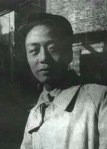
 Both wanted to explore the wider world outside China.  Both believed that art and poetry were for the masses and not just the elite.  Both believed in artistic freedom.  Both were imprisoned by the Chinese government for exercising that freedom.

The first half of the book is Ai Weiwei’s biography of his father.  Ai Qing was a loyal Chinese Communist who nevertheless believed writers could serve the Revolution best if they were true to their own vision.  The regime disagreed.

The second half is Ai Weiwei’s own story.  Unlike his dad, who was loyal to a cause, he was a rebel who confronted and rejected all forms of authority – governmental, cultural and traditional.  The video above, a trailer for a 2012 documentary, gives an idea of his defiant spirit.

“Art should be a nail in the eye, a spike in the flesh, gravel in the shoe,” Weiwei wrote. “The reason art cannot be ignored is that it destabilizes what seems settled and secure.”

My interest in the book was awakened by learning it is one of Edward Snowden’s favorites. 

The title of the book is based on verses from one of Ai Qing’s poems:

Of a thousand years of joys and sorrows,

Not a trace can be found.

You who are living, live the best life you can.

Don’t count on the earth to preserve memory.

Ai Qing was born in 1910, one year before the overthrow of the Manchu dynasty.  He loved poetry and art and persuaded his father to give him money to go to France for study in 1929.  

Ai Qing 1929

He lived in Paris among poor Chinese expatriates for three years, where he learned to speak French and love Russian literature.  He later said these were the happiest years of his life.  He returned three years later, having learned no marketable skills that would enable him to pay back his father.

When he got back, he moved to Shanghai, joined the Union of Left Wing Artists and was arrested just a few months later.  He wrote his first poems during his three years in prison.

For years after that, he lived hand-to-mouth, subsisting on low-paid teaching jobs or the charity of his father.  He managed to keep writing and was able to get some of his works published.

He was one of these poets who are inspired and driven to write, no matter what their circumstances.  The themes of his poetry were the suffering of the Chinese common people as a result of exploitation and war.

He was married, divorced and had relationships with various women.  He begat children who died in childbirth and infancy, probably as a result of poverty.  He somehow managed to get his poetry published.

In 1941, he made his way to Yunan and joined Mao Zedong.  Mao’s idea of the role of writers was that they were the propaganda arm of the revolutionary army and should be subject to military discipline.  

Ai Qing argued about this with Mao to his face.  He believed that writers could best serve the revolution by following their own inspiration.

(more…)

Book note: The Russian art of war

April 19, 2024

THE RUSSIAN ART OF WAR: How the West Led Ukraine to Defeat by Jacques Baud (2024)

I’ve long said that Ukraine and its NATO backers will lose the current war because Ukraine’s forces are outnumbered and outgunned.Jacques Baud, a former Swiss intelligence officer and UN consultant, said they also are being out-thought.

In this book, he outlined the history of the war, discussed the strategies of the contenders and compares their strengths in terms of troop strength, organization, strategy and tactics, economic strength and armaments.

He concluded that the Russians are more powerful than the anti-Russian alliance in terms of being able to win a war in this particular time in that particular place.
He also said that Russians are more realistic in terms of their strategy and goals.

The Ukrainian goal is to restore its 1991 boundaries. The U.S. goal is to weaken Russia so that it ceases to be a great power.

The Russian goal is to eliminate the possibility of surprise attack from forces close to its borders.

In order to achieve its goal, Russia is demilitarizing Ukraine by killing Ukrainian troops and destroying Ukrainian armaments on a war of attrition.

Russia is virtually killing off a generation of young Ukrainian men. It also is to an extent demilitarizing NATO nations by forcing them to deplete their arsenals to support Ukraine.

The U.S. seeks to weaken Russia by keeping Ukraine in the fight at whatever cost—to Ukraine. In order to do this, it is promoting a false narrative that says Ukraine has a fighting chance to win.

This narrative is the key to getting continued political support for continuing the flow of money and weapons to Ukraine. That is why there is such an effort to suppress information and argument that runs counter to the narrative.

Objective observers foresaw that Ukraine’s counter-offense last year was doomed from the beginning, but Ukraine launched it anyway in order to show its foreign arms suppliers that it was still in the fight.,

(more…)

How corporations are replacing democracy

April 10, 2024

SILENT COUP: How Corporations Overthrew Democracy by Claire Provost and Matt Kennard (2023)

Everybody knows that corporations influence and manipulate governments behind the scenes. In Silent Coup, two British journalists show ways in which corporations are actually replacing governments.

There are international corporate courts, whose decisions are binding on governments. The world is dotted with enclaves administered by corporations independent of any national laws. Even responsibility for public welfare and national defense is being handed over to corporations.

Few of these things are secret.  They are just ignored.  That is why the coup is a silent coup.

Corporate Courts

I first learned about international corporate courts when the Obama administration proposed the Trans Pacific Partnership Agreement, a free trade agreement binding all the important nations bordering the Pacific except China.

The problem with TTP agreement was in the fine print.  Any time a TPP country’s government adopted a policy that impacted the profits of a foreign company, that company could go to a special arbitration board and demand compensation for lost profits.  

Public outcry prevented U.S. ratification of that agreement, but then I learned that NAFTA also contained an investor-state dispute settlement (ISDS) provision.  In fact, the whole world is covered by a web of ISDS agreements.

They were the brainchild of a German banker called Hermann Abs who had headed Deutsche Bank.  He helped finance the Nazi regime, although he did not belong to the Nazi party itself.  He helped settle allied claims against Germany after the war.  He was highly respected by bankers and industrialists, including in the USA.

In 1957, he made a speech in San Francisco to a group of bankers and industrialists from all over the world, calling for a “capitalist Magna Carta,” a system of international law that would protect global corporations from revolutionaries and nationalists. 

He joined with a British Lord called Lord Shawcross to write a document called the Abs-Shawcross Draft Convention.  It was taken up in the 1960s by the World Bank, which created the International Center for Dispute Settlement (ICDS) and pressured its clients to adopt ISDS rules.

Provost and Kennard came across the ICDS when they went to El Salvador, which was fighting a lawsuit brought by a Canadian-Australian company called OceanaGold, which demanded compensation for environmental regulations that prevent them from digging a gold mine.

(more…)

Book note: Under a White Sky

March 28, 2024

UNDER A WHITE SKY: The Nature of the Future by Elizabeth Kolbert (2021)

Under a White Sky is an informative, readable book, which I recommend.

It is a book about people tampering with the environment to counteract damage done by previous tampering with the environment.

These people risk unintended consequences in order to undo previous unintended consequences.

This is unavoidable, Elizabeth Kolbert wrote.  There’s no state of unspoiled nature to get back to.  Doing nothing is an option, but it is not a good option.  The best that can be hoped for is to minimize previous damage.

Her first example is the ongoing struggle to keep Asian Carp, an invasive species, from jumping from the Mississippi Valley watershed to the Great Lakes Basin.

Introduction of Asian Carp (four different species) into the North American environment was actually a suggestion by the great environmentalist Rachel Carson.

She thought the carp would be a good alternative to pesticides to control the growth of aquatic weeds and algae.   Aquatic weeds were choking some rivers so badly that not only boats, but swimmers, were unable to get through them.

Asian Carp accomplished their intended purpose. The carp ate up the weeds, but they also ate up and crowded out native fish, mussels and other water life.

On the Illinois River, Asian Carp are nearly two-thirds of estimated fish biomass, Kolbert wrote; on other tributaries, the proportion is even higher.

She wrote that one species can grow to more than 80 pounds, eat half its weight in a day and lay hundreds of thousands of eggs.  Another species can grow to 100 pounds.

There is an ongoing struggle to keep the carp out of the Great Lakes Basin, which is connected with the Mississippi watershed by means of the Chicago Sanitary and Ship Canal, which was originally constructed to divert sewage and other pollution away from Chicago beaches.

The canal was originally so polluted that it was toxic to fish.  But thanks to the Clean Waters Act and the work of Friends of the Chicago River, it is now possible for the Asian Carp to survive.

The carp are held back by massive fishing, which can yield literally tons of carp in a few days, and by an electrified fence on the Chicago River.

The irony of all this is obvious, but Kolbert does not criticize Rachel Carson or the diggers of the Chicago and Ship Canal.  They did the best they could on the basis of what they knew.  This is life.  This is the human condition.

(more…)

US defeat in Ukraine and the coming world order

March 19, 2024

THE UKRAINE WAR AND THE EURASIAN WORLD ORDER by Glenn Diesen (2024)

I’ve long felt that I’m living at a turning point in history, comparable to the eve of the French Revolution or the First World War.  There are so many things that can’t go on as they are, although what will or should replace them is not clear.

Glenn Diesen is a Norwegian political scientist whom I watch frequently on podcasts on The Duran web site, such as the one above.  His new book is a history of relations among nations, the reasons for the imminent end of the U.S.-backed “rules-based international order,” and how the Ukraine conflict fits into this.

The first printing of the book seems to be sold out.  Rather than wait for a second printing, I ordered a PDF version of the book, which is something I rarely do.

Diesen says there are two basic frameworks for relations among states.  One is hegemony, when the most powerful state imposes order on all the rest.  The other is a balance of power, with no one state allowed to dominate all the rest.

After the fall of the Roman Empire in the West, the aspirational goal of Western European Christians was unity under the rule of the Pope and a reconstituted Holy Roman Empire.  The Pope crowned Charlemagne as successor to the Caesars in the year 800 CE.  His empire broke apart after his death, but was reconstituted in 962 CE by Otto I and continued as Europe’s dominant power for centuries.

In theory, all the other kings and nobles were vassals of the Emperor and subject to the rule of the Pope.  Conflicts between Pope and Emperor lessened the prestige and power of both, and the goal of European unity faded and was sometimes resisted in practice, but did not entirely disappear.

A turning point came with the Thirty Years War in 1618-1648.  It began as a religious war in which Catholic Austria sought to suppress rebel Protestant German princes.  Catholic France and Protestant Sweden joined the conflict, and it became the bloodiest conflict in European history prior to the 20th century.

The war ended with the Treaty of Westphalia, in which it was agreed that the rulers of each principality has the right to determine their subjects’ religion without outside interference.  This was the origin of what is called the Westphalian system.  In this system, each ruler agrees to respect the others’ sovereignty and right to exist.

(more…)

Is liberalism doomed? Should it be?

March 12, 2024

THE NEW LEVIATHANS: Thoughts After Liberalism by John Gray (2023)

There are two famous writers named John Gray. The first one is the author of books about men from Mars and women from Venus. The second one is a British philosopher with a cult following, who share his deep skepticism about almost everything.  The second John Gray is the author of The New Leviathans.

One thing Gray is skeptical about is the future of liberalism.  This is a topic much on my mind, so I decided to try his latest work.  He begins by defining liberalism as follows:

  • It is individualist, asserting the rights of the individual against any collective body.
  • It is egalitarian, claiming equal rights for all regardless of status.
  • It is universalist, claiming equal rights for all regardless of race, religion or nationality.
  • It is meliorist, affirming the possibility of continual, gradual improvement in the human condition.

This accurately represents liberalism, as I have believed in it ever since I was old enough to have political convictions.  I still believe in liberalism, but, of late, I have come to doubt its future.

I worry about liberal over-reach — the attempt to make every claim on society a matter of rights.  

I believe there are certain basic rights, including freedom of speech, freedom of religion and the right to a fair trial, that are fundamental, and not to be overridden by a majority vote.

But the more things claimed as a matter of fundamental rights, the weaker public respect for rights becomes, and the less possibility for resolving issues through negotiations, compromise and the democratic process.

This brings me to the other problem with liberalism.  The principle of  “I’ll respect your rights if you respect mine” is proving to be less inspiring than nationalism, religion, racial and cultural identity and utopian political creeds.

Himself a hard-core atheist, Gray points out that the values of liberalism derive from the values of Christianity, which affirms the value of the individual soul, the equality of all humanity in Christ and the value of human kindness and good works.

As belief in Christianity fades, liberalism’s days are numbered.

The New Leviathans is full of references to another arch-skeptic, Thomas Hobbes, author of the original Leviathan (1651).  Hobbes was skeptical about nearly everything – human goodness, human reason, the meaning of concepts such as “humanity.”  He never directly criticized the Christian religion, but he never affirmed his faith in it, either.

Human beings, according to Hobbes, are incapable of living together peacefully.  Left to themselves, they will be like children in a schoolyard without adult supervision to control bullies and gangs.  They need a strong government to control them.  This is a Leviathan, an artificial beast composed of many individuals.

The only fundamental right, according to Hobbes, is the right of self-defense.  If a government can relieve the citizen of that responsibility and enable him to live out his life in peace, he wrote, that is as much as can be expected.  The form of government doesn’t matter.

Present-day liberals are less and less able to exercise the authority needed to maintain a stable social order, Gray wrote.  They are being supplanted by the so-called neoliberals and by the “woke” tendency, and by Russia and China, the new Leviathans.

(more…)

Book note: A nice, readable detective novel

February 20, 2024

THE LAST DETECTIVE by Peter Lovesey (1991)

I used to do a lot of reading for pleasure. Now I hardly do any.  There are a number of reasons for this.

One is that I am preoccupied with trying to understand the current world crises, and, the more I read, the more aware I become of gaps in my knowledge.  It is like an addiction.  The more I learn, the more I realize I need to learn.

Another is that I have less time for reading because on average I sleep 10 hours a night and sometimes take naps during the day.  So I have less time for reading, as well as for necessary choices.

In the early years of my retirement, I read one or two books a week.  Now I’m doing well if I get through one or two a month.

However, a couple of weeks ago, I picked up a nice, readable detective novel, without any wider social significance, from a free book exchange.  Once I started reading, I found it hard to put down.

The Last Detective is what is called a “police procedural,” detailing the investigation of a crime from beginning to end.  Its hero, Peter Diamond is a detective of the old school who works for the police force of the English resort with of Bath.  He is under a cloud after having been wrongfully accused of abusing a suspect, and his eager-beaver assistant is after his job.

The story begins with a report that the body of a naked woman was seen floating in a nearby lake and proceeds through recovery of the body, identification of the body, determination that the death was due to foul play, identification of suspects, charging of one suspect, and prosecution and trial, which nearly results in a wrongful conviction.

All of this might be dull, but in fact is entertaining because of Lovesey’s knack for creating quirky characters and Peter Diamond’s jaundiced observations about life.

I enjoy detective stories set in foreign countries or different historical eras.  In order to hide the clues, the writers have to provide a lot of detail about life in the particular time and place.

The Last Detective is part of the Soho Press’s Soho Crime Series, which caters to readers of with this taste.  It publishes detective story series set in various locales and eras, including World War Two Germany, 1920s Bombay and Mormon Utah.  There are 20 Peter Diamond novels, of which The Last Detective is the first.

Good for Soho Press for doing that!  But as for myself, I am no longer up for long reading projects, whether it be detective story series or science fiction future history series.

G.K. Chesterton and distributive justice

February 13, 2024

THE OUTLINE OF SANITY by G.K. Chesterton (1926)

G.K. Chesterton (1874-1936) was a famous writer and colorful character.  He championed Christianity, tradition and the common sense of the common person and debunked the intellectual fashions of his age.  Even people who disagreed with him enjoyed his writing.

In The Outline of Sanity, he wrote about an economic philosophy called Distributism, which never caught on, but dealt with issues that are still current today—business monopoly, increasing economic inequality and standardized mass production. 

The basic principle of Distributism is that private property ownership is a human right, and therefor property should be widely distributed instead of concentrated in the hands of a few. 

That’s not the reality, at least not in today’s USA.  According to one measure, the top 5 percent of the U.S. population owns 72 percent of the wealth, and the bottom 80 percent owns 7 percent.

My friend John Belli thought Distributism would be a good topic for the discussion group I lead at my church.  Maybe it will.  Meanwhile here is a rough sketch of Chesterton’s book,

Chap. One – Some General Ideas

A great nation and civilization [i.e., the British] has fol­lowed for a hundred years or more a form of progress which held itself independent of certain old communications in the form of ancient traditions about the land, the hearth, or the altar. It has advanced under leaders who are confident, not to say cocksure. They are quite sure that their economic rules were rigid, that their political theory was right, that their commerce was beneficent, that their parliaments were popular, that their press was enlightened, that their science was humane.

In this confidence they committed their people to certain new and enormous experiments; to making their own independent nation an eternal debtor to a few rich men; to piling up private property in heaps on the faith of financiers; to covering their land with iron and stone and stripping it of grass and grain; to driving food out of their own country in the hope of buying it back again from the ends of the earth … till there was no independence without luxury and no labor without ugliness; to leaving the millions of mankind dependent on indirect and distant discipline and indirect and distant sustenance, working themselves to death for they know not whom and taking the means of life from they know not where.

Capitalism was a system that had just sprung up without anybody planning it.  Communism, in contrast, was an ideal system that was supposed to cure the evils of capitalism.  But Chesterton said Communism is just like capitalism, only worse—more concentration of power, more regimentation and standardization, fewer individual rights and not even a pretense of democracy.

Private things are already public in the worst sense of the word; that is, they are impersonal and dehumanized.  Public things are already private in the worse sense of the word; that is, they are mysterious and secretive and largely corrupt.  The new sort of Business Government will combine everything that is bad in all the plans for a better world.

Chesterton opposed both Communists and capitalists.  Both were enemies of widely-distributed private property.   Chesterton’s alternative to both was a wide distribution of property, so that everybody had some, but nobody and no group had so much that there wasn’t enough for all.

Communists and capitalists agreed this was unworkable.  They came together in saying that small business, small farms and self-employed craftsmen were doomed to be swallowed up, one way or the other, and nothing could be done about it.

We still hear this argument today.  Chesterton didn’t believe in historical inevitability.  The economic system of his day was constructed by human beings and he said that, if human beings can construct something, they can deconstruct it.

Chap. Two – Some Aspects of Big Business.

[Capitalism is] that economic condition in which there is a class of capital­ists, roughly recognizable and relatively small, in whose possession so much of the capital is concentrated as to necessitate a very large majority of the citizens serving those capitalists for a wage. 

In Chesterton’s day, and in our own, owners of monopoly businesses claim they exist because of their greater efficiency.  He denied this.  Business monopolies are often created by dumping — selling at a loss to run a small competitor out of business.  Or by simply buying the small competitor and shutting it down.

(more…)

A Palestinian history of Zionism and its wars

January 26, 2024

THE HUNDRED YEARS’ WAR ON PALESTINE: A History of Settler Colonialism and Resistance, 1917-2017 by Rashid Khalidi (2020)

Palestinian scholar Rashid Khalidi, a member of the faculty of Columbia University, has written a history of Zionism from the point of view of the Palestinians, a view that we in the USA rarely if ever hear.  

He is a member of an old Palestinian family, with roots going back into the Ottoman Empire, and his history is, in part, a history of his own family.  I emphasize the personal history in this post, although he himself mentions it only in passing. 

We in the USA are told that Israel’s history is a story of a heroic struggle by Zionists against Arab terrorists to establish a safe haven for Jews from Nazis and other antisemites. Alternatively, we are told it is a history of a tragic unavoidable conflict between two peoples, Jews and Palestinians, with equal claims to the same territory.

Rashid Khalidi said neither story is true.  He said the Palestinian-Israeli conflict is an ongoing colonial war waged by an indigenous people against conquerors from afar.  In his story, the Jewish settlers of Israel are equivalent to the Dutch and English settlers in South Africa and the French settlers in Algeria.

Zionists were never underdogs, he wrote.  They had the backing of the British Empire and then of the United States, as well as a powerful global network of supporters and donors.  

Palestinian Arabs never had anything equivalent, he wrote.  Even Arab governments that gave them lip service always had their own agendas.

His book is organized around six specific historical episodes, which he called “declarations of war” against the Palestinian people.     

(more…)

GE’s Jack Welch and U.S. deindustrialization

January 16, 2024

THE MAN WHO BROKE CAPITALISM: How Jack Welch Gutted the Heartland and Crushed the Soul of Corporate America—And How to Undo His Legacy by David Gelles (2022)

Jack Welch, the CEO of General Electric from 1981 to 2001.  He was admired by corporate America and hated by working America.  Fortune magazine named him “Manager of the Century.”  His nickname among employees was “Neutron Jack.”

Welch’s mission, according to David Gelles in his new book, was to dismantle what’s called “stakeholder capitalism,” which is the theory that corporations benefit when employees, suppliers and their communities and not just stockholders have a stake in their success, and they all work together as a team.

He succeeded all too well, not only through his management of GE, but through the influence of GE-trained executives who went on to manage other companies, and his own role as a celebrity management guru.

We’re now living in Jack Welch’s USA, a nation of industrial decline, increasing poverty, increasing inequality and dysfunctional institutions.

That’s not to say Welch single-handedly broke capitalism.  There are many fingerprints on the wreckage.  But he is both a prime example and one of the driving forces behind the deindustrialization of the USA.

Gelles’ book doesn’t tell much about Jack Welch as a person.  What it’s about is the story of the impact of his style of management – why it came to be accepted, how it affected General Electric, how Welch disciples affected other companies and where Welch-ism stands today.

When Welch took over General Electric in 1981, it was a prime example of successful stakeholder capitalism in action. It produced everything from television sets, refrigerators and toasters to jet engines and nuclear reactors.  Its output accounted for a full one percent of U.S. gross domestic product.

Thanks to its long history of unbroken profitability, the 400,000 employees of  “Generous Electric” could expect lifetime employment if they worked hard and were loyal to the company.

But Welch didn’t believe in loyalty.  He actually forbid the use of the word “loyalty” in corporate communications.  He didn’t want GE workers to think of their jobs as secure.  He didn’t want teamwork.  He wanted them to compete with each other based on rewards and punishments.

He introduced “stack ranking” of employees.  Managers were supposed to rank employees in terms of performance.  Each year the top 20 percent were marked for advancement and the bottom 10 percent were fired.  So GE workers no longer had a stake on GE’s overall success; they in fact had a stake in fellow employees’ failure.

Employees were no longer regarded as assets.  They were regarded as costs, and GE’s aim was to keep the cost as low as possible.  Productive workers of profitable business divisions were laid off to achieve financial goals.

(more…)

What if the Jewish state was in Europe?

December 5, 2023

JUDENSTAAT: The novel of the Jewish state in Germany by Simone Zelitch (2016)

Palestinians frequently say that they sympathize with victims of the Holocaust and their desire for a Jewish state, but they see no reason why it should be erected in their land, while the Germans, the perpetrators of the Holocaust, enjoyed 75 years of unbroken prosperity.

Judenstaat is an alternate-history novel in which there was no Balfour declaration and a Jewish state was founded not in the Holy Land, but on German soil.  It is a literary curiosity, not for everyone, but I found it interesting.

The novel is not a parallel or counterpoint to the history of the actual Israel.  Rather it is a meditation on Jewish destiny and European history. It also is a murder mystery.

The founder and first president of Judenstaat is one Leopold Stein, a representative of the Socialist Labor Bund, a real-life revolutionary Jewish organization founded in 1897 and primarily based in Poland, Lithuania and Russia.

Bundists fought persecution of Jews, but they also fought for the rights of all working people and not in a utopian future, but in the here and now.  Its motto was, “We are here.”

Stein somehow makes his way to Yalta in 1945 and gets permission from Churchill, Roosevelt and Stalin to agree to establish a Jewish state on German territory, as retaliation and reparations for the crimes of Nazism.

Stalin sees a nonaligned but friendly Jewish state as a potentially useful window to the West, like the Hong Kong Autonomous Zone in China.

The Judenstaat is not religious and does not claim continuity with ancient Israel. It claims to be the nation of the Ashkenazi, descendants of Jews invited by Charlemagne in the Rhineland.  

Judenstaat claims the heritage of the great German-speaking Jews’ contribution to European culture, starting with Moses Mendelssohn and including Karl Marx, Sigmund Freud and Albert Einstein, and interprets the Holocaust as a repudiation of that liberal culture.

The official language of Judenstaat is German, not Yiddish or Hebrew.  The flag of Judenstadt is a yellow star upon a field of blue-and-white stripes, like the uniform of an Auschwitz prisoner.

The protagonist of the novel is Judit Klemmer, a documentary film-maker assigned to make a film commemorating the 40th anniversary of the founding of Judenstaat in 1948.  

In the process of gathering information, she learns that the official version of Judenstaat’s history covers up inconvenient facts.  She also picks up clues to the unsolved murder of her husband, a member of  Judenstaat’s despised Saxon minority.

The Saxons are the previous inhabitants of the land on which Judenstaat is established.  Most of them have left, as part of the ethnic cleansing of German populations which, in actual history, took place in East Prussia, Silesia and the Sudetenland. 

There was no life-and-death struggle with the Saxons and no legacy of decades of conflict and threat.  So, unlike the real Israel, it is not militaristic.  Its people don’t feel under threat.

(more…)

A truly great American political novel

October 13, 2023

ALL THE KING’S MEN by Robert Penn Warren (1946)

All the King’s Men is a great novel loosely based on the life of Gov. Huey Long of Louisiana.  I read it as part of a reading group hosted by my friend, Linda White.

It is about the rise and tragedy of the charismatic politician, Willie Stark, and the education of his henchman, the cynical ex-newspaperman, Jack Burden.

One of its central themes is the question of ends and means in politics.  Another is the question of whether people are self-determining or are prisoners of fate.

It is great on many levels—for its rich prose style and descriptive writing, for its insights into human character, for its documentation of American life in a certain time and place, and for the author’s musings on the meaning of life.

Its central character, Willie Stark, like the actual Huey Long, was what we now call an illiberal democrat. 

He cared nothing for civil liberties, the rule of law or democratic procedures; he stopped at nothing to win.  

But he did care about the poor rural people of Louisiana and did things to improve their lives.  He elevated them, and they elevated him.

Stark’s opponents, like Long’s, were themselves ruthless and corrupt, but Stark did not complain of unfairness.  Instead he beat them at their own game.

As with Long, college-educated liberals fought him because they saw him as a dictator, which, to a great extent, he was. 

Unlike Long, Stark was a disillusioned idealist, who entered politics with a naive, high-school-civics view of life.  Political bosses got him to run for governor to split the vote of an opposing machine candidate.

When Stark realized how he was being used, he got drunk and gave a speech expressing his bitterness.  That speech inflamed the crowd, as his earlier speeches never had done.

He was politically reborn, but, as a kind of mirror opposite of a born-again Christian, into a sense of sin rather than escape from it.

Unlike philosophers who believe that people are born good and become corrupt, he believed people are born in corruption “from the stench of the didie to the stench of the shroud” and somehow create goodness out of evil, because their original state of corruption is the only thing to make good from.

Stark believes that everyone has a guilty secret, no matter how high-minded they think they are, and this secret can be discovered.

He is frustrated because none of his “king’s men” understand his motives – neither the high-minded reformers who can’t stomach his methods, nor the corrupt machine politicians he actually works with, nor Jack Burden, the narrator and co-protagonist of the novel.

Unlike the hyper-active and purpose-driven Stark, Jack has drifted through life.   He once suffered an episode of what we would call clinical depression (the “Great Sleep”).  He lacks ambition and thinks all human action consists of automatic reactions to circumstances (the “Great Twitch”)

He is taken into Stark’s inner circle because he befriended Stark before he began his ascent.  He is put to work using his investigative skills to dig up dirt on Stark’s opponents.  He justifies this to himself by trying to think of himself as a searcher for truth.

(more…)

The museum of banned books

September 22, 2023

Some of the exhibits:

Mein Kampf, the bible of Nazism.

The Anarchists’ Cookbook, a do-it-yourself book for terrorists.

Thirteen Reasons Why, a novel that allegedly encourages teen suicide.

The Satanic Verses, because it is offensive to Muslims.

Winnie the Pooh, because it is offensive to Xi Jinping.

Grammars and dictionaries of forbidden languages.

The coming of the super-intelligent computer

September 13, 2023

THE MASTER ALGORITHM: How the Quest for the Ultimate Learning Machine Will Remake Our World by Pedro Domingos (2015)

HUMAN COMPATIBLE: Artificial Intelligence and the Problem of Control by Stuart Russell (2019)

NEW LAWS OF ROBOTICS: Defending Human Expertise in the Age of AI by Frank Pasquale (2020)

∞∞∞

A robot may not injure a human being or, through inaction, allow a human being to come to harm

A robot must obey orders given it by human beings except where such orders would conflict with the First Law. 

A robot must protect its own existence as long as such protection does not conflict with the First or Second Law.

==Isaac Asimov’s Three Laws of Robotics.

The future is already here.  It’s just not evenly distributed.

==William Gibson

∞∞∞

Artificial intelligence presents us, the human race, with a problem:  How do we control an entity that is more intelligent than we are, that we don’t fully understand, that’s not fully under our control, and that can enhance its own powers?

Computers were once logic made manifest.  They could perform calculations with a speed, accuracy and complexity beyond the power of any unaided human operator, based on the ability of their circuitry – the AND, OR, NOR and NAND gates – to duplicate the work of logicians and mathematicians.  

The computer programs were purely mechanical, purely deterministic based on their circuitry, completely understandable in principle if you delved deeply enough.

Today’s most advanced artificial intelligence programs are far beyond that.  They can reason empirically and not just logically.  They can learn on their own without human input.  They can reprogram themselves and develop capabilities their human masters did not plan on.

Computer expert friends of mine say that the ever-evolving, ever-changing AIs are more like organisms or ecological systems than they are like machines.  

But they are not sentient.  They don’t think their own thoughts.  They don’t have desires and emotions as we do—at least not insofar as we humans can tell. 

AI is so embedded in our society that few of us would want to shut it down altogether, or even know how to do it if we wanted to.

If you’re an urban, middle-class American, AIs are involved in almost every aspect of your life. 

AIs determine the placement of products on supermarket shelves.  AIs correct your grammar when you use word processors.  AIs diagnose illnesses.  AIs help prospecting companies find oil, gas and mineral deposits.  AIs make social media and on-line games more engaging and addictive.

AIs help marketers plan advertising campaigns, politicians plan political campaigns, stockbrokers plan investment strategies and generals and admirals plan military strategy.  They can beat grand masters at chess and Go.  They confer so many competitive advantages that it is hard to imagine them being rolled back.

This may be just the beginning.

The goal of top AI researchers is artificial general intelligence (AGI), or super intelligence.  This would be an AI that can reason as humans do and perceive the world as humans do, in terms of sights and sounds, but a million times more powerfully, and to be able to do it not for specialized purposes, as current AIs do, but for any human purpose.

Such an AI would not necessarily be a conscious, living being, but it most likely would be a convincing imitation of one, and not all computer scientists rule out the possibility of actual sentience.  

If biological life and consciousness somehow emerged by themselves in a mysterious way from complex organic molecules, maybe another form of life and consciousness—not necessarily one we could recognize—could emerge from complex electronic processes.

Be that as it may, a powerful force would be unleashed into the human environment, a force with huge potential for both good and evil, which humans would not fully understand and could not fully control. 

What we would need to worry about is not a real-life version of Skynet. computers deciding to replace human beings.  AIs are altruists.  They don’t have goals or drives save those that are programmed into them.

 The danger would be unintended consequences, the story of the Sorcerer’s Apprentice writ large.  Whether that is an immediate danger, a long-range danger or an imaginary danger, I do not know.

(more…)

Book note: John Le Carré’s Silverview

August 2, 2023

SILVERVIEW by John Le Carré (2021)

John Le Carré (David Cornwell) was a fine writer and a fine storyteller.  He was briefly a member of Britain’s Secret Intelligence Service (MI-6) and his alternate-history version of the SIS, the Circus, makes readers feel as if they were given inside knowledge.

I was a great fan of Le Carré’s novels from the Cold War era—Call for the Dead (1961) through Smiley’s People (1979), but less so of his subsequent novels, although I did read a few.

With the earlier novels, even though Le Carré shows the British intelligence service as frequently ruthless, amoral and treacherous, there is something at stake in the covert war against the Soviet and East German spy services.  They are fighting a equally powerful and ruthless enemy.  True, the combatants’ espionage is mainly against each other, but their battle has meaning.

The Little Drummer Girl (1983), The Night Manager (1993) and The Tailor of Panama (2001) are about innocent people getting caught up in the machinery of international intrigue.  The title character in  A Perfect Spy (1986) is perfect because he has no loyalties.

Silverview was Le Carré’s final novel, published after his death.  It is in a lot of ways a perfectly typical Le Carré novel.  It is a good for what it is.

A political innocent, Julian Lawndsley, gets mixed up with a man of mystery named Edward Avon.  Meanwhile a semi-retired spymaster named Stewart Procter is assigned to deal with a “security breach.”

It’s not immediately clear what the security breach consists of, or what, if anything, is at stake.  Nobody says, “If [such-and-such vital information] falls into the hands of [such-and-such evildoers], the result will be [something terrible].”  Rather the aim is to close the security breach before questions are asked in the House of Commons.

Procter’s search leads him to Lawndsley, and together they learn Avon’s life history and true purpose.  He escapes their net.  It isn’t clear whether this is a good thing of a bad thing.

Le Carré was a fine sociological observer, especially of the British class system.  Henry James and Anthony Trollope might have liked this aspect of his work.  His spies are mostly members of what in the USA is called the professional managerial class.  

He shows his characters’ class markers — what they eat, what they drink, what they wear, what schools they and their children attend, what fashionable political and social views they hold.

In the USA and (I presume) other countries, the backbone of the armed forces are military families, families whose members serve in the military generation after generation.  Le Carré’s Silverview shows us espionage families, whose members serve in the secret intelligence services generation after generation.

This novel also can be read as part of the “condition of England” genre of novels.  The novel series as a whole, including this one, can be read as the decline of British power and growing British subservience to the United States.  

I understand the Le Carré was an opponent of Brexit and a believer in the European Union.  The current state of the EU must have been a great disappointment.

Julian Assange in depth and in context

July 30, 2023

THE MOST DANGEROUS MAN IN THE WORLD by Andrew Fowler (2011)

SECRET POWER: Wikileaks and Its Enemies by Stefania Maurizi, translated by Lesli Cavanaugh-Bardelli (2022)

I’ve read two more books about Julian Assange that I recommend.

Andrew Fowler, an Australian journalist, wrote about Assange at the height of his fame and success. He provides Assange’s back story and insights into his sometimes difficult character.

I never thought Assange’s personality traits mattered when it came to assessing the political impact and legal defense of his work.  Also, he has been the target of systematic character assassination.  

But he’s an interesting person, and Fowler’s warts-and-all portrait is a fair and balanced look at Assange, the man.

Stefania Maurizi, an Italian journalist who worked closely with Assange, took up the story where Fowler left off.

She puts him in the broader context of the struggle for transparency in government and privacy for the individual during the past decade.  Assange isn’t the only person who’s been imprisoned for truth-telling.

If I had to recommend just one book about Assange, it would be Maurizi’s.

Assange was an original thinker and a brilliant programmer.  In his 20s, he was a member of a hackers’ club called the International Subversives.  Assange managed to hack into top-secret U.S. military sites, including the National Aeronautics and Space Administration computers.  On the day of a space launch in 1989, the computers NASA lit up with the words, YOUR COMPUTER HAS BEEN WANKED.

This was quite an achievement, inasmuch as the public Internet did not exist.  Assange was arrested, tried and let off with a warning, inasmuch he hadn’t done any harm or made any money out of his prank.

During the late 1990s and early 2000s, there was a movement called the Cypherpunks, of which Assange was a part.  Their dual objectives were complete privacy for the individual and complete transparency for governments and other systems of authority.

Wikileaks was the realization of that ideal.  A whistle-blower could leave secret information with Wikileaks without anyone, including Wikileaks itself, knowing who they were.  Wikileaks could then, after verifying the information, throw light onto hidden power.

Among Wikileaks’ early exploits were exposes of African dictators, the Church of Scientology, crooked Icelandic bankers and Sarah Palin’s private emails.  

The organization’s most consequential disclosures – the the Collateral Murder video, the Afghan War Logs, the Iraq War Logs, the Cablegate disclosures and the Guantanamo Bay files – came from a single individual, a conscience-stricken Army private we now know as Chelsea Manning.

It’s interesting, for what it’s worth, that two of the world’s most important truth-tellers are a transgender woman, Chelsea Manning, and a gay man, Glenn Greenwald.  But Manning, unlike Greenwald and the others, did not start out as a social activist.  She was an ordinary person who was unwilling to be silent about atrocities.

(more…)

The sex life of H.G. Wells

July 17, 2023

H.G. Wells (Photo via The Guardian, Getty Images}

A MAN OF PARTS: a novel by David Lodge (2011)

A Man of Parts is a fictional biography of H.G. Wells.  The title is based on two possible meanings of the word “parts.” It can mean talents and achievements, as in “a man of parts,” and it can mean “private parts,” the sexual organs.

Wells was well-endowed in both senses of the word.  He wrote more than a hundred books and, according to Lodge, had sex with more than a hundred women. 

Like Bertrand Russell, Wells was an advocate of scientific rationality, technological progress and sexual liberation.  All three things are dominant forces in the world we live in today, although not necessarily what Wells and Russell wanted.

The novel begins in 1944 with Wells terminally ill with cancer.  He refuses to leave his flat in London during the Blitz because that would be a moral victory for Hitler.

Wells is working on a long essay, The Mind at the End of Its Tether, which is a cry of despair about the future of the human race.

His former mistresses, Rebecca West and Moura Budberg, and his grown children worry about his health and morale, while he and Rebecca fret about the personal problems of their grown son, Anthony.   

The focus of the novel then shifts to Wells’ reminiscences of his boyhood, and his quarter-century of success prior to World War One.

The central narrative takes two forms.  One consists of Wells’ replies to a voice in his head that interrogates him about how he  conducted his life.  The other is an unfolding of the events of his life as they seemed at the time, without foreknowledge of the future.  

The book ends with a return to World War Two London, Wells’ final days and what his friends thought of him after he he died in 1946

(more…)