Time for something a little more mundane.
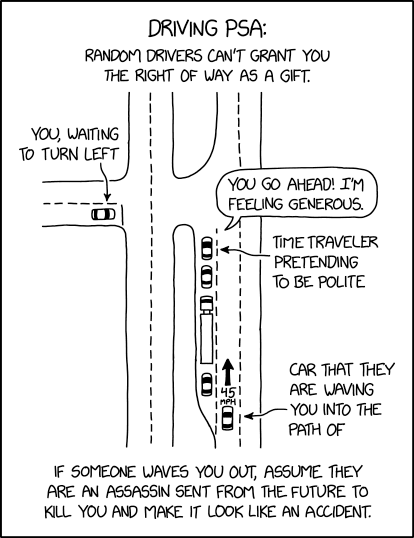
Via XKCD.

Some 10 or so years ago, I started reading a syndicated daily cartoon strip called Candorville by Darrin Bell, which is available free on-line. I liked it, but, for some reason, I got out of the habit of reading it. It is still being published and still entertaining.
It is about the foibles of Lemont Brown, a nerd-ish writer and single parent, and two childhood friends, Clyde, a gangsta rapper, and Susan, a Latina advertising exec, along with a bunch of other quirky continuing characters – most, but not all, of them black. It is still witty and entertaining, and occasionally has some level-headed commentary on the passing scene.


I first posted this more than 11 years ago. Sadly, it is still relevant.
Click on A Guide to Who’s Killing Who for an explanation.

 Source: Incidental Comics.
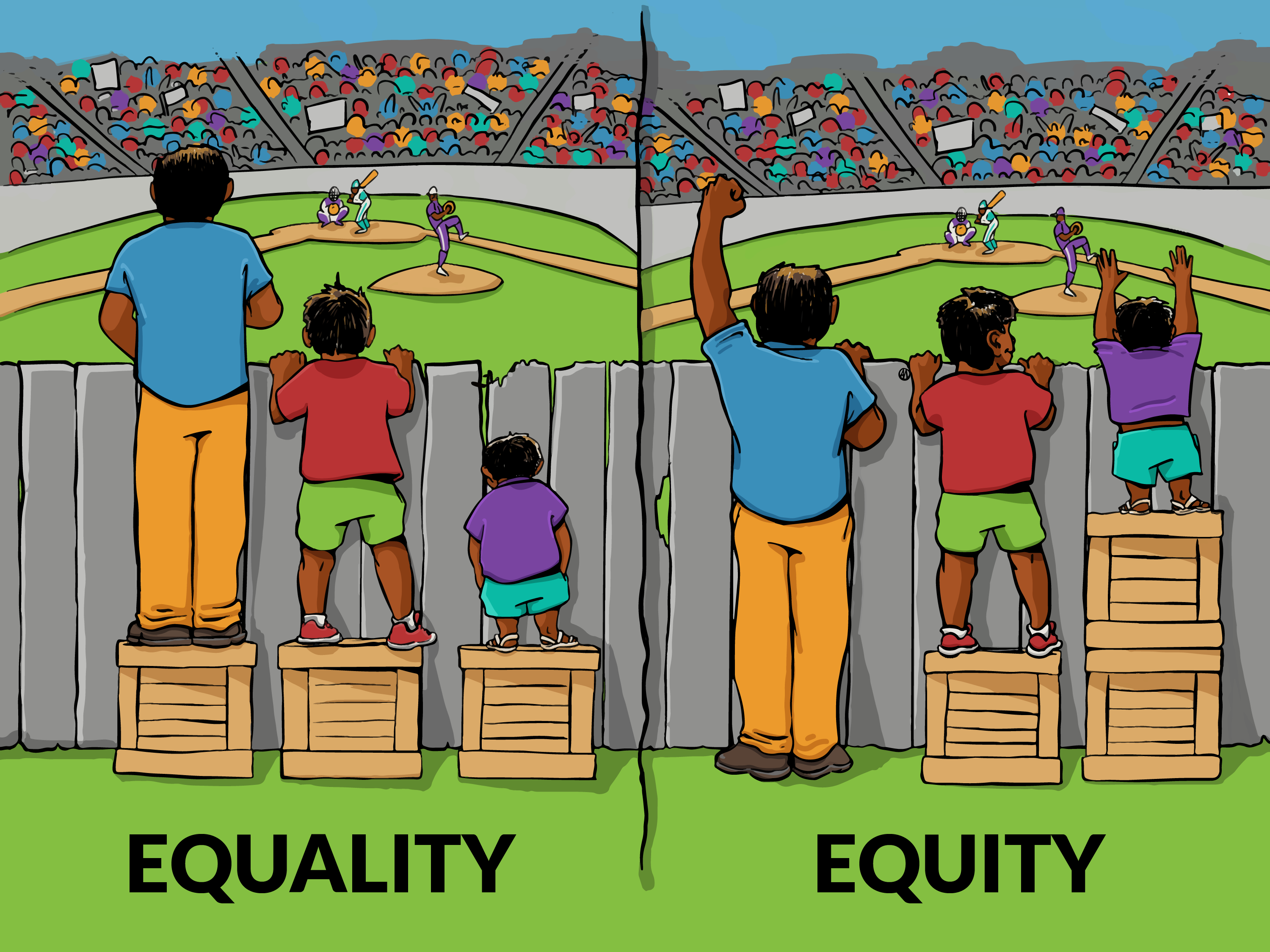
Equality is treating everybody alike. Equity is giving everybody what they need, or deserve.
Which is better? The box cartoon presents the argument for equity in a very clear way. My answer is that the answer depends on what the fence stands for and what the boxes stand for.
Suppose we use the cartoon to represent just one facet of society—public education. It could be medical care, or welfare benefits, or any governmental or societal allocation of benefits and resources. But let me just give this one example.
I take the top of the fence to represent lack of literacy, numeracy and other basic skills children need to learn. The tall person represents gifted children, the middle person represents average children and the small person represents underprivileged children or children with learning disabilities. The boxes represent educational resources, especially how much attention they get from individual teachers.
Equity says you don’t need to bother much about the gifted children, who are able to learn (that is, to see over the fence) on their own. You give a moderate amount of attention to the average children, because that’s all they need. Your main focus should be on the underprivileged and handicapped children, because they need the help the most.
I agree with this — up to a point. It is a fact that children who need help the most, very often get the least. This is wrong.
But the issue is complicated.
My sister-in-law was a public school teacher in California at a time when there was a mandate that all students should be able to pass tests that showed a certain basic minimum attainment for their grade level. She didn’t think the standard was unreasonably high.
However, my sister-in-law found herself concentrating on a few under-performers, and particularly to one kid who was resistant to schooling itself. She reached the point where she worried about neglecting the needs of the class as a whole.
I know that the claim that some children are virtually uneducable can be an excuse for giving up of them without really trying. I assure you my sister-in-law wasn’t a person to give up.
Nevertheless, it is a fact that some children are virtually uneducable, at least with the resources and in the framework of public education today.
Another issue: Do we really want to leave the gifted students to fend for themselves? Or do we want them to be able to develop their gifts to the maximum?
Education is not just an individual benefit, for the purpose of boosting someone’s future earning power. I want all my fellow citizens to have access to good education because that is necessary for the common good.
I want to live in a country with a functioning democracy, a civilized society and also a functioning work force, and this is not possible under the dominion of ignorance. For this reason I never complain about paying school taxes.
We want (or at least I want) our outstanding scientists, technicians, engineers and mathematicians, and also our artists, musicians, writers, social scientists, political leaders and military commanders, and even our athletes and entertainers, to achieve high levels of excellence, because this benefits us all.
(more…)
Hat tip to Gavin Aung Than.
Time for something a little lighter. Have you heard this before?
Here’s where you probably heard it.
Time for something a little lighter.
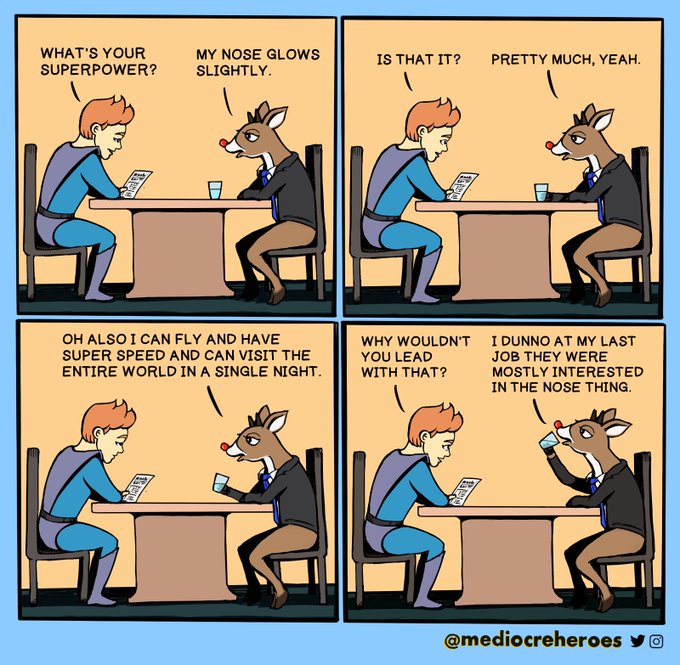
For background, click on Even Superheroes Have Moments of Mediocrity As This Comic Strip Shows by Sachin P for bettermanly.com.

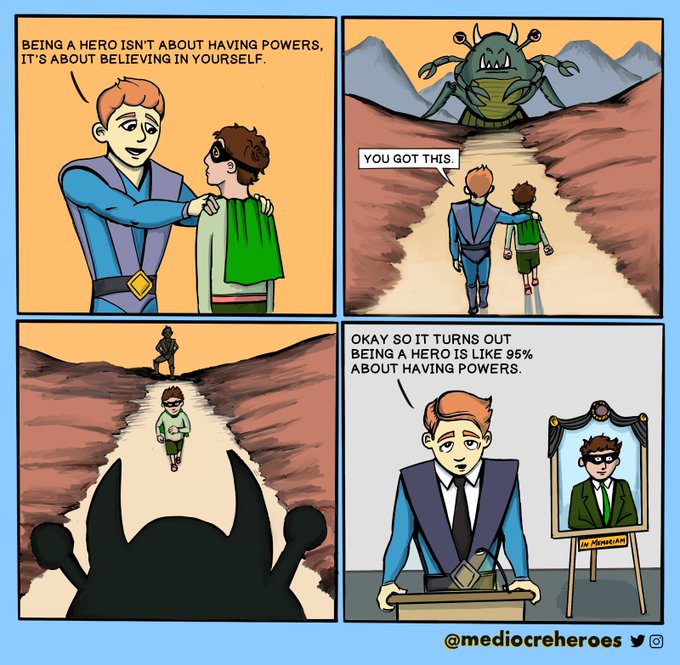

Hat tip to Freethinkers Anonymous.
Nothing is unchangeable. Nothing is what it seems to be. If you count on Nothing, you’ll never be disappointed.

Hat tip to Authentic Medicine

Hat tip to Authentic Medicine.
.

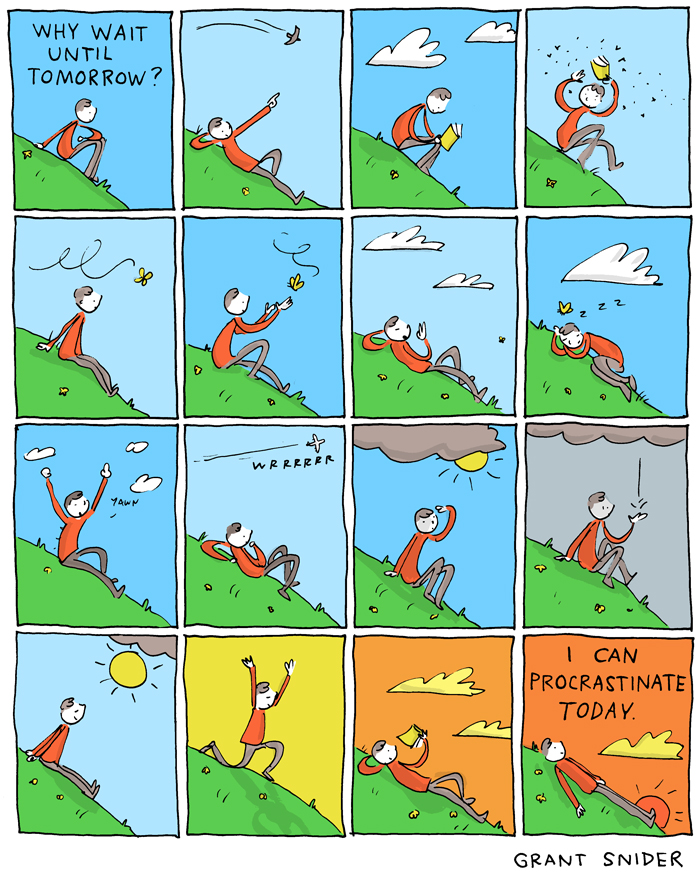
This is from Grant Snider’s Incidental Comics.
Gary Larson’s biography is on his web site.

 Via XKCD. Hat tip to kottke.org.


 Hat tip to Gene Zitver.


 Phil Ebersole's Blog