HORACE GREELEY: Champion of American Freedom by Robert C. Williams (2006)
Horace Greeley was arguably the most famous American social reformer of the mid-19th century. He was the editor and publisher of the New York Tribune, the nation’s largest-circulating newspaper. He was a founder of the Republican Party.
Thurlow Weed, William Seward, Abraham Lincoln and U.S. Grant were among politicians who sought his support. Henry Thoreau and Margaret Fuller were among writers whose early works were published in his newspapers.

Horace Greeley, 1840s
He was loved by masses of the public, but sophisticates of his own day, including many who sought his patronage and support, smiled at him behind his back for his naive idealism, his eccentricities and his lack of polish.
With his hat and long white coat, Greeley did look more like a farmer who’d come into town for supplies than a mover and shaker. In this book, biographer Robert C. Williams seeks to rehabilitate Greeley’s image.
The subtitle refers to a theme of the book, which is that Greeley represented America’s shift from an ideal of liberty, which is personal, to an ideal of freedom, which is universal.
We live in a time when the ideals of both individual liberty and universal freedom have been called in question, so Greeley’s life and ideals are relevant for our own time.
Patrick Henry said, “Give me liberty or give me death,” and meant it, but what he meant was that he would die rather than give up his own liberty. He did not extend liberty to his human property in enslaved black people.
Greeley believed in freedom for everyone. He wrote in support of every oppressed group he knew about—slaves, women, the poor, the landless, Irish under British rule and rebels against European despots. He was an active supporter of experiments with utopian communities based on equality and free association, of which there were many in the USA in his era.
Born in 1811 in New Hampshire, he was the son of an unsuccessful farmer named Zaccheus Greeley, who moved west after repeated failures and wound up in the extreme western part of New York.
Young Greeley received no schooling and was taught to read by his mother. He educated himself by reading every serious book he could obtain. He was apprenticed to a printer at age 15 and was entirely self-supporting from that time on. This was not unusual in this era.
In 1831, he made his way to New York City. He spent a decade working virtually 24/7 at various jobs, first as a printer, then a journalist and then as an editor and publisher, including publisher of a short-lived magazine he called the New Yorker. He launched the New York Tribune in 1841.
He had met his wife Molly in 1836 in a boarding house dedicated to the ideals of Sylvester Graham—no alcohol, tobacco, coffee or tea and a vegetarian diet.
Their marriage was loving but unhappy. They had seven children, five of whom died young. Greeley cared for his wife, but he cared more for his work, and she was often lonely, depressed and sick.
He supported the Whig Party, which was the party of respectability, in contrast to roughneck Jacksonian Democrats. The Whigs were the predominant party of upper-class and middle-class property owners and also of intellectuals and idealists.
Greeley converted to Universalism as a youth and was an active church member all his adult life.
Universalists taught that God is a loving father who would not condemn any of his children to eternal punishment in Hell, a doctrine thought by many people at the time to threaten the foundations of society.
They believed in religious liberty. They were in the forefront of reform—against slavery, against capital punishment, for labor reform and for temperance.
They were much more popular among farmers, wage-earners and shopkeepers than were the more intellectual Unitarians, which was the demographic to which Greeley himself appealed as editor and writer.
Greeley once wrote, “I believe God’s truth is higher, wider, deeper and longer than all our creeds, and includes what is best in all of them.” Another time he wrote, “I believe Jesus of Nazareth was sent by God to enlighten and save our race, but precisely what and who He was beyond this, I do not know.”


 The central character, Jeremiah Beaumont, is a tormented soul, like Dostoyevsky’s Raskolnikov, but philosophically the opposite. Raskolnikov committed a senseless murder to show himself he was above everyday standards of morality. Beaumont committed a senseless murder to show himself he was a person above everyday moral compromises.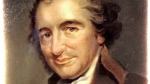
 For much of the 20th century, as Todd notes, the USA was, in fact, the “indispensable nation,” and in his view this was a good thing.


 He is a member of an old Palestinian family, with roots going back into the Ottoman Empire, and his history is, in part, a history of his own family. I emphasize the personal history in this post, although he himself mentions it only in passing.
  That was a concession on the part of the PLO. The PLO’s original demand was a “right of return” of all Palestinians to land from which they’s been driven off, followed by creation of a unified secular democratic state with equal rights for all.
  All this was taking place during what Palestinians call the
  The founder and first president of Judenstaat is one Leopold Stein, a representative of the Socialist Labor Bund, a real-life revolutionary Jewish organization founded in 1897 and primarily based in Poland, Lithuania and Russia.


 In this 2018 book, he argues that debt write-downs actually were economic policy in the ancient Near East, and are supported by the Hebrew Bible and the teachings of Jesus.
 Under Putin,
  In Sapphira’s world, an aristocrat such as herself is entitled to deference and obedience, which she in fact receives, not just from black slaves but lower-class whites. By the same standard, she is obligated to maintain a standard of conduct that manifests her superiority to common people.
  But just as important – maybe even more important – is the legacy of the 1940s. The New Deal programs mitigated the Great Depression, but they did not end it. That only happened with the coming of World War Two and an economic boom based on war production.
 But Mrs. Stowe depicted him as a hero, a Christ-like Christian martyr who was true to himself unto death.


 Phil Ebersole's Blog