Posts Tagged ‘Constitution’
September 20, 2024
Col. Lawrence Wilkerson, who was chief of staff to Secretary of State Colin Powell during the Bush administration, is a critic of U.S. war policy.
He said on Judge Andrew Napolitano’s Judging Freedom podcast that Secretary of Defense Lloyd Austin told President Biden that the Pentagon would not agree to firing long-range missiles into Russia nor to supporting Israel in an attack on Hezbollah or Iran.
President Biden was furious, but went along with it, according to Wilkerson’s sources.
This is momentous, if true.
It means that the U.S. military is no longer under control of the civil authority. We US Americans have a new branch of government, not provided for in the Constitution. [Added 09/22/2024] Actually this is not true. There was no actual defiance of the civil authority. It is still momentous, if true.
But, on the other hand, it also means the odds of nuclear war between now and election day are much less than I thought.
Here is a transcript of a key part of Wilkerson’s interview.
Wilkerson: I think what we’re seeing here is another attempt, because a 100-plane strike didn’t do it, by Netanyahu to provoke Hezbollah to some sort of action that he can then declare is warlike to the extent that he can do what he wants to do with them — even though I’m told with great confidence in the sources that the latest two visits by the Central Command Unified Commander were to tell him [Netanyahu] that we would not be with him in the event of his going to war with Hezbollah that he provoked. Nor will we be with him going to war with Iran that he provoked. And we made it quite clear that we would know if he provoked it.
Napolitano: You’re speaking of General Kurilla [CENTCOM commander since April 2022].
Wilkerson: Yes. Yes.
Napolitano: So Scott Ritter agrees with you, Doug Macgregor says he can’t imagine Austin and Blinken letting General Kurilla do that. It’s very very interesting. … Is this speculation on your part or is it based on sources?
Wilkerson: It’s based on some pretty reliable sources. And here’s the bigger picture and I hope the others told you this too. Biden’s fury — and you could see it — he was seething when he met with the British Prime Minister.
Napolitano: Yes, yes, we have that clip. He was out of control with anger.
Wilkerson: And what he [had] just been told, apparently, was by the Pentagon, “No dice, Mr President. No dice on Ukraine and no dice on Gaza. We’re in charge now.”
Napolitano: No dice. You’re talking about no dice on the long range missiles reaching deep into Russia, even though Tony Blinken had intimated all week in Kyiv with his British counterpart that this was happening. And Sir Keir Starmer, the British Prime Minister, had every reason to believe as he’s flying across the Atlantic that Joe Biden’s answer would be yes.
Wilkerson: He was embarrassed. He was embarrassed by the fact — he was pulling out his maps with target data and Biden told him, “Don’t even pull them out. We’re not going to talk about that.”
I’ve been told, again by fairly reliable sources, that Blinken and Sullivan — Blinken primarily, but Sullivan too — have been sidetracked, and what’s happened is the Pentagon has taken over, essentially, diplomacy as well as any action, militarily speaking, with regard to both theaters of war.
And so they’re now in charge.
I have to change my evaluation of Secretary Austin if that’s the case, because it means he listened finally to the people in the bowels of the Pentagon who know the truth, and he’s reacting to that, and he’s told the President Biden that, and to Biden’s credit, even though he was furious, he finally took that advice.
(more…)
Tags:Constitution, Israel, Lawrence Wilkerson, Pentagon, Ukraine
Posted in War and Peace | 7 Comments »
July 19, 2024
A lot of people are upset by a Supreme Court ruling that a President cannot be held responsible for crimes committed as part of their official duties.
What, they ask, would stop a President from declaring a political enemy a domestic terrorist and ordering a special ops team to take the enemy out?
That’s a valid concern, but late in coming. Presidents have already ordered the killing of American citizens on their own say-so and their actions have been accepted as legal.
President Obama ordered the drone killing of Anwar al-Alwaki, an American citizen in Saudi Arabia, who allegedly was making propaganda videos for Al Qaeda, in September, 2011.
In 2012, Attorney-General Eric Holder explained that the “U.S. can lawfully target American citizens” and “that a careful and thorough executive branch review of the facts in a case amounts to ‘due process’ and that the Constitution’s Fifth Amendment protection against depriving a citizen of his or her life without due process of law does not mandate a ‘judicial process.’”
Peter Van Buren, a writer and former State Department employee, explained that Holder was referring to referring to a secret white paper prepared by the Office of the Legal Counsel laying out the legal justification for the U.S. government to kill a citizen without a trial.
The essential element for the kill to be legal, the document says, is that “an informed, high level official of the U.S. government has determined that the targeted individual poses an imminent threat of violent attack against the United States.” Capture must be found to be unfeasible, and the kill must follow existing laws of war.
The paper says the U.S. interest in “forestalling the threat of violence and death to other Americans that arises” trumps constitutional rights of the individual.
This is described as part of a “balancing process,” in which rights depicted in the Bill of Rights are not absolute requirements, but simply factors to be taken into consideration and balanced against other factors. Van Buren says this goes back to a 1976 decision involving termination of someone’s Social Security benefits.
“Where national security operations are at stake, due process takes into account the realities of combat,” then-Attorney General Eric Holder said. “Some have argued that the president is required to get permission from a federal court before taking action against a United States citizen who is a senior operational leader of al-Qaeda or associated forces. This is simply not accurate… our government has the clear authority to defend the United States with lethal force [and] our legal authority is not limited to the battlefields of Afghanistan.”
(more…)
Tags:Assassinations, Constitution, Presidential Power
Posted in Law and Justice | 1 Comment »
December 27, 2023
[Update: Please read this next.]
Mark A. Graber, a University of Maryland law professor, says Donald Trump is disqualified from holding federal office, based on the 14th Amendment to the Constitution. In an article for The Conversation, he wrote :
Section 3 then says people can be disqualified from holding office if they “engaged in insurrection or rebellion.’”Legal authorities from the American Revolution to the post-Civil War Reconstruction understood an insurrection to have occurred when two or more people resisted a federal law by force or violence for a public, or civic, purpose. Shay’s Rebellion, the Whiskey Insurrection, Burr’s Rebellion, John Brown’s Raid and other events were insurrections, even when the goal was not overturning the government. What these events had in common was that people were trying to prevent the enforcement of laws that were consequences of persuasion, coalition building and voting. Or they were trying to create new laws by force, violence and intimidation.
To which, Tony Winkrent, writing on Ian Welsh’s excellent blog, added:
There are a number of “liberals” and anti-Trumpers who profess themselves appalled by the ruling of the Colorado Supreme Court. Their opinions are a study in the philosophical inability of liberalism to oppose conservatism, and the authoritarianism conservatism leads to. One prominent line of argument is that Trump has not been convicted of insurrection, so the Article 3 prohibition does not apply.
To which I respond: Jefferson Davis was never convicted of treason. Are you willing to argue that therefore Davis did not commit treason?
To which I respond: Yes, Jefferson Davis was plainly guilty of treason. But there is a fundamental distinction between being guilty of a crime and being convicted of a crime.
 No matter how guilty you may seem to be, the government only has a right to punish you if it proves your guilt after a fair trial. The only insurrectionists mentioned by Prof. Graber who were punished by law were John Brown and his followers, and this was done only after they were tried and convicted in a court of law.
The federal government would have been legally justified in putting Jefferson Davis on trial for treason, and it would have been legally justified in putting him to death if convicted, but for reasons of state it chose not to do so. There the matter rested.
If Donald Trump were to be tried with, and proven guilty of, violating the Insurrection Act of 1807, then he would disqualified from office under the Fourteenth Amendment. But Trump has not even been charged with insurrection.
This is a bedrock legal principle. The government only has a right to punish you if you are convicted of a crime by due process of law.
(more…)
Tags:Constitution, Donald Trump, Fourteenth Amendment
Posted in Law and Justice, Politics | 13 Comments »
August 25, 2023
 A couple of respected lawyers interpret the Fourteenth Amendment to the Constitution as automatically barring Donald Trump from holding any public office because he is guilty of insurrection, rebellion or both.
This doctrine, whether or not it is legally valid, threatens representative democracy. It overrides the right of voters to choose the President.
But is the interpretation legally valid? I’m no lawyer, but let me look at their argument.
William Baude and Michael Stokes Paulsen, in an article scheduled for publication in the University of Pennsylvania Law Review, quote the following words in the Fourteenth Amendment:
No person shall be a Senator or Representative in Congress, or elector of President and Vice President, or hold any office, civil or military, under the United States, or under any State, who, having previously taken an oath, as a member of Congress, or as a member of any State legislature, or as an executive or judicial officer of any State, shall have engaged in insurrection or rebellion against the same or given aid or comfort to the enemies thereof. But Congress may by vote of two-thirds of each House, remove such disability.
They make the following argument—
- This provision was intended to disqualify former Confederates from holding public office, but the wording does not set any such limit.
- It is intended to be self-enforcing, like the provision that the President be 35 years old or older. All public officials would be forbidden to do anything that enables an insurrectionist or rebel to take office.
- It supersedes all earlier provisions of the Constitution, including those forbidding ex post facto laws or guaranteeing the rights of free speech.
Granted these arguments, the only question then is whether Trump’s actions on Jan. 6, 2021, constitute insurrection or rebellion. What Trump did and said most certainly falls short of what the Confederate leaders did, and none of the current indictments accuse him of insurrection or rebellion. I don’t think Trump’s disqualification is at all self-evident.
If Trump were to be disqualified from running, that could be a spark that touches off actual insurrection and rebellion—not a second War Between the States, but a low-level Northern Ireland-style conflict that could last for decades.
(more…)
Tags:Constitution, Donald Trump, Election 2024
Posted in Law and Justice, Politics | 4 Comments »
March 16, 2021
 Donald Trump never was a potential dictator, as so many Democrats and progressives feared.
Rather he was part of a continuing a rear-guard action by conservatives and Republicans to thwart the will of the majority.
That’s the view of Corey Robin, a political scientist writing in the New Yorker.
Robin noted that Trump accomplished virtually none of his announced goals, not even when Republicans controlled both houses of Congress.
That’s because Republicans and conservatives are a minority, he said.
The GOP failed to get a popular vote majority in four of the last five elections. No conservative or right-wing group had the massive support that the Black Lives Matter protests did last year. Religious conservatives such as Rod Dreher rightly note that they are losing the culture wars.
The problem, according to Robin, is that the U.S. Constitution gives right-wingers the power to thwart the will of the majority because of the undemocratic nature of the Senate, the Electoral College and the Supreme Court. The result, he wrote, is paralysis.
There’s something to what he says, although our 18th-century Constitution did not prevent Franklin Roosevelt, and Lyndon Johnson, or, for that matter, Richard Nixon and Ronald Reagan, from enacting ambitious political programs.
The Constitution is not preventing change now. What’s holding back change is the reluctance of the Biden administration to keep its promises. Nothing prevents the Democratic majority in the Senate from abolishing the filibuster, as the Republican majority in the House of Representatives did way back in 1888.
Nor does anything prevent the calling of a convention to rewrite the Constitution and ask for ratification by the voters. But the ones calling for a new Constitutional convention are the Koch brothers and other conservatives. Liberals and progressives generally fear what a new convention would come up with, and cling to the Constitution as it is.
Then, too, paralysis only in one direction. Nothing holds back or limits appropriations for the military. Nothing hold back war-making by the President. Nothing holds back upper-bracket tax cuts or bailouts for big financial institutions.
Paralysis does not hold off dictatorship. Rather people come to accept dictatorship as the only possible solution to paralysis.
 Authoritarian governments in the 20th century have arisen in three ways. Revolutionaries take power from weak ineffective governments. The military takes power to prevent revolutions. Pseudo-revolutionary movements take power with the silent consent of the military, the landowners and big business.
Trump antagonized the military, and was regarded by Wall Street as a loose cannon, so he never had a chance of becoming an authoritarian ruler. He did do a lot of damage to the normal functioning of government, but that is a separate issue.
I think there is a strong possibility of some future crisis, in which some right-wing pseudo-populist could succeed where Trump failed. But for now, there is no reason for the military or big-money donors to be dissatisfied with the Biden administration.
There is also such a thing as creeping authoritarianism, which I think is what we’ve got now. I think the proposed “domestic war on terrorism” is a greater threat to what’s left of American freedom and democracy than anything proposed during the Trump administration.
Rulers of empires in decline all had broad powers to wage war and crush dissent, but they were paralyzed when it comes to reforming themselves.
LINKS
Trump and the Trapped Country by Corey Robin for The New Yorker. “For years we debated whether Donald Trump would topple democracy. But the threat continues to come from the system itself.” I say it all depends on what you mean by “the system.”
(more…)
Tags:Constitution, Despotism, Donald Trump
Posted in Abuse of Power, Government, Public Policy | 1 Comment »
September 25, 2020
How real is the danger that Republican state governments could set aside the results of the Presidential vote and simply appoint Trump electors?
The President is chosen by members of the Electoral College, and although the Electors are chosen by the voters in all states, this is not a Constitutional requirement. The Constitution states that “each state shall appoint, in such manner as the legislature shall direct, a number of electors, equal to the whole number of senators and representatives to which the state may be entitled in the Congress……”
Theoretically, any state could change its election law between now and Nov. 3 so as to allow the state legislature to name the electors. Such a law would have to be passed by both houses of a state legislature and signed by the governor.
Of the states in which the outcome is in doubt, Michigan, Minnesota, North Carolina, Pennsylvania and Wisconsin have Democratic governors and Republican legislatures. The governor would be sure to veto any bill changing the election law.
Arizona, Florida, Georgia, Iowa, New Hampshire, Ohio and Texas have Republican governors and legislatures both. But how likely is it that the governor and legislators, who all have to stand for re-election, would openly thwart the expressed will of a majority of the voters?
Anything is possible, I guess. You never know what people are capable of.
But I’d be more worried about the Postal Service not delivering all the mailed ballots on time, a declaration of a winner before all the ballots are counted, throwing ballots out for arbitrary and trivial reasons, etc., than this particular scenario.
LINKS
Could Republicans ignore the popular vote and choose their own pro-Trump electors? by Sam Levine for The Guardian.
Sanders issues stark warning on Trump and calls for election commission by David Smith for The Guatdian.
The Election That Could Break America by Jason Kottke for kottke.org. [Added Later]
Poorly Protected Postal Workers Are Catching COVID-19 by the Thousands. It’s One More Threat to Voting by Mail by Maryam Jameel and Ryan McCarthy for ProPublica. [Added Later]
Tags:Constitution, Donald Trump, Election 2020
Posted in Abuse of Power, Politics | 3 Comments »
July 3, 2019
Nowadays appointments to the Supreme Court are a continuation of partisan politics by other means.
The major political issues of our time are fought out in lawsuits as much as they are in legislative debates or elections. Maybe this was always true, but it seems to me that stacking the court is being done with much more awareness nowadays than in recent memory.
Self-described liberals do it. Self-described conservatives do it. Partisan judicial appointments have several bad effects.
It often happens that several Supreme Court justices reach retirement age during one Presidential term. It means that President has a greater power than others to stamp his political ideas on the judicial system.
It gives a President an incentive to appoint relatively younger and less experienced judges to the Supreme Court because they will serve longer. It gives aging and infirm justices an incentive to keep themselves on the bench until a President of their own political faction is appointed.
I propose the following Constitutional amendment to achieve a better political balance on the court.
Each President would have the power to make one, but no more than one, Supreme Court appointment during each two-year term of Congress, with the consent of the Senate.
The new Justice would be sworn in at the end of that term of Congress.
If there were no vacancies on the court, the sitting Justice who’d served the longest would retire.
If there were more than one vacancy, the additional vacancies would be filled during the next term or terms of Congress.
What this would mean that each President and each Congress would have equal power to make a Supreme Court appointment once every two years.
This would not mean an end of partisanship, but it would mean a better balance. It would mean that change in the makeup of the Supreme Court would take place over a long period of time and not all at once.
A Mitch McConnell might be able to stymie Supreme Court appointments during one term, but would not get power to make extra appointments during the next term.
The normal term of office of a Supreme Court justice would be 18 years. That’s a reasonable length of time, but most Justices would be able to retire while in good mental and physical condition.
The fact that vacancies on the court would not always be filled promptly would be inconvenient. but the court has sat with fewer than nine Justices inn the past.
I don’t think there is any chance of such a proposal being adopted at the present time. But if and when the two parties decide to call a truce, this would be a way to implement it.
Tags:Congress, Constitution, Constitutional Amendment, Judicial Nominations, Supreme Court
Posted in Law and Justice | 3 Comments »
June 20, 2019
The House of Representatives yesterday voted to deny President Trump the power to start an undeclared shooting war with Iran.
The House voted, 226-203, to repeal the Authorization for the Use of Military Force (AUMF) resolution of 2001, which was intended to authorize military action against Al Qaeda, but has since been used to justify military interventions that have nothing to do with Al Qaeda.

The House vote was on an amendment to the $1 trillion military appropriations bill a $1 trillion military appropriations bill that included an amendment repealing the AUMF. It was a strict party-line vote, with all but seven Democrats all in favor and Republicans all opposed.
It will now go to the Republican-controlled Senate. It’s likely the Senate will remove the amendment; if so, there would have to be some sort of reconciliation process before the appropriation bill became law.
I don’t think the anti-war cause is hopeless. A number of Republican Senators have misgivings about undeclared war. The Senate passed a resolution with bipartisan support to deny U.S. funding for Saudi Arabia’s war against Yemen, but this was vetoed by President Trump.
Repeal of the AUMF wouldn’t be a total solution to the problem. It wouldn’t prevent covert war and economic war. There were reports of a big explosion earlier this month at an Iranian oil storage facility, which may have been sabotage.
The Iranian government has said that if Iran is prevented from shipping oil through the Strait of Hormuz, nobody else will be able to ship either. That’s a credible threat, and would be disastrous to the world economy if carried out.
The House vote is an important first step in Congress reasserting its Constitutional war powers authority and heading off a war with Iran. It is, however, only a first step.
LINKS
House votes to repeal Authorization for Use of Military Force while Trump reportedly urges representatives to tone down rhetoric on Iran by Tim O’Donnell for The Week.
Iran Tensions: House votes to repeal 9/11 era law used to authorize perpetual war by Tara Golshan for Vox.
Explosions Rock Iran’s Largest Port As Oil Products Catch Fire by Julianne Geiger for OilPrice.com
Declassified: The Sino-Russian Masterplan to End U.S. Dominance in Middle East by Yossef Bodanksy for OilPrice.com.
Why Would Iran Attack Tankers? by Ian Welsh.
(more…)
Tags:Attack on Iran, AUMF, Authorization for the Use of Military Force, Congress, Constitution, War Powers Resolution
Posted in War and Peace | 4 Comments »
February 18, 2019
President Donald Trump, having failed to persuade Congress to appropriate a full $5.7 billion for his border wall, has said he’ll declare a national emergency and take the money from Department of Defense funds.
The thing is, he doesn’t even pretend there is any emergency involved.
I could do the wall over a longer period of time. I didn’t need to do this. But I’d rather do it much faster. And I don’t have to do it for the election. I ’ve already done a lot of wall for the election. 2020. And the only reason we’re up here talking about this is because of the election—because they want to try to win an election, which it looks like they’re not going to be able to do.
If a President can simply declare a national emergency and override the will of Congress, what power does he lack to make himself a dictator?
President Trump did not give himself these emergency powers, and he is not the first one to use them or abuse them, but none before him have been so blatant about the lack of justification for using these powers.
Our Constitution sets up a form of government with three branches of government with separate powers—the legislative, executive and judiciary—with the idea that each would check and balance the power of the others.
The problem with this is that separation of powers means separation of responsibility. The path of least resistance for Congress is to abdicate responsibility to the President.
It’s true that Congress is not entirely to blame in this case. The original law that President Trump invoked allowed Congress to veto an emergency declaration by a majority vote of the Senate and the House of Representations. The Supreme Court ruled that unconstitutional; it said the two-thirds votes are required not only to overturn vetoes of legislation, but to overturn any Presidential action.
Even so, it is Congress that over the years has given Presidents the powers of dictators, and it is the responsibility of Congress to take these powers back. No member of Congress who declares themselves a part of the “resistance” to President Trump can be taken seriously if they continue to allow him the powers of a dictator.
LINKS
Republic’s End: Trump’s Border Wall by Ian Welsh.
A Fishy Emergency Threatens the Republic by Doug Muder for The Weekly Sift.
Trump’s dictator move is the real emergency—and we handed him the keys by Will Bunch for the Philadelphia Inquirer.
What Is and Isn’t a Big Deal in Trump’s Executive Actions Related to the Border by Jack Goldsmith for Lawfare.
Tags:Congress, Constitution, constitutional government, Donald Trump, Emergency Powers, President and Congress, Southern Border Wall
Posted in Abuse of Power, Immigration | Leave a Comment »
May 4, 2018
Jack Perry wrote in the Ghion Journal about why he doesn’t care about the Mueller investigation in general or the Stormy Daniels affair in particular.
This Mueller shindig is not going to do any of the following:
- Reverse the executive order from Trump taking food stamps away from the poor and disabled who can’t find a job.
- Remove the ability to use military force from Trump before it’s too late.
- Reverse the Trump tax cuts that have just forced the U.S. government to take out a massive loan to pay for them.
The Democrats have beaten this “It’s Mueller Time!” meme into the mud and, excuse me, but Mueller and the FBI do not run the United States.
Where is this much-vaunted rule of law?! The FBI is not one of the three branches of government! No, they’re not the judicial branch, people! That’s what the Supreme Court is!
And the chuckle merchants in the Congress have abdicated their own Congressional responsibility to stop this man and handed it over to the police!
Source: Ghion Journal.
Tags:Constitution, Donald Trump
Posted in Abuse of Power, Politics | Leave a Comment »
October 11, 2017

A good friend of mine mailed me clippings about free speech controversies on college campuses, and asked me whether I think freedom of speech is an absolute right.
Nothing is absolute. Even fundamental freedoms are subject to reasonable and limited restrictions that are consistent with their purpose. These includes laws about (1) libel and slander, (2) incitement to riot, (3) threats and intimidation, (4) harassment, (5) public obscenity, (6) public nuisances and probably other things I didn’t think of.
But I can’t think of a situation in which I would forbid somebody to peaceably express their opinion based on the nature of that opinion.
And if you could make me admit to an exception, I would define that exception as narrowly as possible and not use it as a precedent.
What is the point of freedom of speech?
Freedom of speech is an important individual right. Being able to speak your mind without fear is necessary for human flourishing. Nobody can be happy if they have to conceal their opinions out of fear.
Freedom of speech is a social contract. It provides a way in which people of radically different opinions can live together without violence. I may think you not only wrong but wicked, and you may think the same of me. But it is better for both of us, and for those around us, if we agree to settle our differences with facts and ideas, not guns and clubs.
Freedom of speech is necessary for self-government. Citizens of a free country have a right to hear all sides of public questions. Your choice is not completely free if someone has the power to limit what facts and opinions you are allowed to hear.
Freedom of speech is most valuable to the least powerful. The rich and powerful in any framework will be able to make their views known. Reformers, dissidents and the poor and marginalized are the ones most in need of the right of free speech, and that is true even if they have less of it than the powerful.
And, under the First Amendment to the U.S. Constitution, free speech is more than just a good idea – it’s the law.
(more…)
Tags:Constitution, First Amendment, Freedom of Speech
Posted in Civil Liberties | 5 Comments »
September 26, 2017
The Constitution provides another way besides impeachment to get rid of a sitting President. This is a determination by the Cabinet and Congress under the 25th Amendment that he is “unable to discharge the powers and duties of his office”.
I wrote a number of times during the election campaign that I do not think Donald Trump is intellectually, temperamentally or morally fit to be President of the United States.
His behavior is growing more erratic by the day. Could this be this grounds for removing him, as the officers of the Caine removed Captain Queeg in the novel and movie The Caine Mutiny?
The process allows a President to declare himself unable to discharge his office and to delegate his power to his Vice President. It also allows the Vice President, with the support of the Cabinet, to declare the President unable to serve.
I think the kind of situation they had in mind was President Eisenhower’s heart attack in 1955 and his stroke in 1957.
 Normally the President would resume the duties of his office when he declared himself able to do so.
But the Vice President and Cabinet could ask Congress to overrule him.
Congress would have 21 days to bar the President from resuming his powers.
This would require a two-thirds vote in both the Senate and House of Representatives.
Matt Taibbi of Rolling Stone wrote a superb article on the subject—The Madness of Donald Trump.
It covered both how deranged President Trump seems to be now and the legal obstacles to applying the 25th Amendment to overthrow him.
In fact, the procedure specifically can’t be about politics. John Feerick, a Fordham law professor who helped work on the original bill with senators such as Indiana’s Birch Bayh and authored a book titled The 25th Amendment, goes out of his way to point out the many things that do not qualify as “inability” under this law. The list reads like Trump’s résumé.
The debates in Congress about the amendment, Feerick writes, make clear that “inability” does not cover “policy and political differences, unpopularity, poor judgment, incompetence, laziness or impeachable conduct.” When asked about the possibility of invoking the amendment today, Feerick is wary. “It’s a very high bar that has to be satisfied,” he says. “You’re dealing with a president elected for four years.”
Source: Matt Taibbi – Rolling Stone
Even if deemed unable to serve, Trump would still be President. No doubt he would have many choice words about how Vice-President Mike Pence administered the office.
(more…)
Tags:Constitution, Donald Trump, Presidential Incapacity, Twenty-Fifth Amendment
Posted in Government, Psychology | Leave a Comment »
September 25, 2017
Impeachable offenses, according to Article II, Section 4 of the Constitution, are “treason, bribery and other high crimes and misdemeanors”.
I happen to believe that President Trump is unpatriotic and dishonest, but I’m not convinced that he has committed an impeachable offense..
What Are Impeachable Offenses? by Noah Feldman and Jacob Weisberg in the current issue of the New York Review of Books, a good review of the law on the topic.
 Feldman and Weisberg point out that, back in 1789, a “high” crime did not necessarily mean an extra-serious crime. A “high” crime was a crime committed by a public official in the performance of their duties.
A crime committed by a President before taking office, even a very serious one, is not an impeachable offense unless it is, in some way, connected with actions while in office.
So even if it could be proved that Russian individuals or intelligence agencies tried to help Trump during the election, that would not necessarily be an impeachable offense.
An impeachable offense would be Trump, once in office, using the power of the Presidency to pay the Russians back for their help.
It also seems to me that a quid pro quo would be almost impossible to prove.
Take Hillary Clinton’s six-figure speaking fees for speaking to Goldman Sachs officers. Was this bribery? She challenged anyone to prove that she changed a single vote or made a single decision in return for these fees, and, of course, nobody could.
This was not bribery. It is simply that the financiers approved of Clinton and her record.
Vladimir Putin made no secret of the fact that he approved of candidate Donald Trump’s hope for better relations between the United States and Russia if Trump were elected.
Maybe he helped Trump by means of leaking hacked e-mails or propagandizing for Trump on social media. Maybe not.
But even if he did, that is a long way from bribery, treason or other high crimes and misdemeanors. It is just that he felt good about Trump and his promises.
By the way, treason under Article III of the Constitution is fighting for the enemy or giving aid and comfort to the enemy in time of war. An act of treason must be an overt act that is witnessed by two people, or is admitted in open court.
The United States has not declared war on Russia, so being friendly to Russia is no more treasonable that being friendly to Saudi Arabia, Israel, China or any other foreign country.
(more…)
Tags:Conflicts of Interest, Constitution, Donald Trump, Emoluments Clause, Impeachment
Posted in Law and Justice | 1 Comment »
January 12, 2017
The following is by Lambert Strether on the Naked Capitalism web log.
Since November 8 we’ve had four crises of legitimacy of escalating intensity, each one pointing to a change in the Constitutional order.
- First, we had Stein’s recount effort, justified in part by a(n unproven) theory that “Russian hacking” had affected the vote tallies. (Recall that 50% of Clinton voters believe this, although no evidence has ever been produced for it, it’s technically infeasible at scale, and statistically improbable.) Since the “Russian hacking” theory was derived from intelligence not shown to the public, the change to the Constitutional order would be that the Intelligence Community (IC) would gain a veto over the legitimacy of a President during a transfer of power; veto power that would be completely unaccountable, since IC sources and methods would not be disclosed.
- Second, we had the (hilariously backfired) campaign to have “faithless electors” appoint somebody other than Trump to be President. Here again, the change in the Constitutional order was exactly the same, as (Clintonite) electors clamored to be briefed by the IC on material that would not be shown to the public, giving the IC veto power over the appointment of a President after the vote tallies had been certified.
 Third, we had the IC’s JAR report, which in essence accused the President-elect of treason (a capital offense). Here again the publicly available evidence of that quite sloppy report has been shredded, so in essence we have an argument from IC authority that secret evidence they control disqualifies the President elect, so the change in the Constitutional order is the same.
 - Fourth, we have the “Golden Showers” report, which again is an argument from IC authority, and so again gives the IC veto power over a President appointed by the Electoral College.
Needless to say, once we give the IC veto power over a President before the vote is tallied, and before the electoral college votes, and after the electoral college votes but before the oath of office and the Inaugural, we’re never going to be able to take it back.
This is a crossing the Rubicon moment. Now, you can say this is unique, not normal, an exceptional case, but “sovereign is he who decides on the exception” (Nazi legal theorist Carl Schmidt). And who then is the sovereign? The IC. Is that what liberals want?
Source: naked capitalism
(more…)
Tags:American Democracy, Central Intelligence Agency, CIA, Constitution, Donald Trump, Election 2016, Intelligence Community
Posted in Deep State, Government, National Security, The New Normal | Leave a Comment »
December 15, 2016
The original idea of the Electoral College (Article II, Section 1 of the Constitution) was that Americans would not choose a President ourselves, but instead choose the leading citizens from our communities, and delegate the decision to them.
In that way, we supposedly would avoid self-seeking politicians and only choose individuals devoted to the public good.
This idea lasted through precisely one administration, that of George Washington. From then on we had political parties and electors pledged to particular candidates—precisely what the Founders hoped to avoid. This reality was reflected in the Twelfth Amendment.
Now certain opponents of Donald Trump, who claim to be followers of Alexander Hamilton, say that electors should ignore their pledges and exercise independent judgment. This is a terrible idea.
I would be perfectly happy to delegate decision-making to someone I considered to be wise and good, but that is not what I did when I voted in the recent presidential election. Most American voters don’t know the names of the electors they voted for. I don’t. If you do, you’re a rare exception.
I don’t think most Americans who voted for Donald Trump (or, for that matter, for Hillary Clinton) would be willing to see their decisions over-ridden by people they’d never heard of. This is very different from the original idea of the Electoral College. I think that Alexander Hamilton and the other Founders would think so, too.
(more…)
Tags:Constitution, Donald Trump, Election 2016, Electoral College
Posted in History, Law and Justice, Politics | 1 Comment »
November 23, 2016
I got an e-mail the other day asking me to sign a petition to members of the Electoral College pledged to Donald Trump to switch their votes to Hillary Clinton.
This is theoretically possible. “Faithless” electors have violated their pledges in previous elections.
 But trying to overturn Trump’s election in the Electoral College would set a terrible precedent. It is a bad and dangerous thing even to attempt.
If I were a Trump voter in a red state, I would be furious at the idea of my vote being set aside by somebody I probably hadn’t even heard of.
It would mean that, in the future, voting would not necessarily decide the Presidential election. The vote would be followed by an attempt to persuade, threaten or bribe the Electors into going against the wishes of the voters.
Democracy is possible only when the results of elections are regarded as legitimate, and a peaceful transfer for power is taken for granted.
When elections are not regarded as legitimate, the basis of power is armed force. And in general the Trump supporters are better armed and better trained in the use of weapons than the Clinton supporters.
(more…)
Tags:Constitution, Donald Trump, Election 2016, Electoral College, HIllary Clinton
Posted in Abuse of Power, Politics, The Passing Scene | 2 Comments »
June 7, 2016
If you’re thinking of protesting Donald Trump at or near one of his rallies, my advice is:
Don’t.
∞∞∞
If you insist on your Constitutional right to peacefully assemble, I’ll absolutely defend your right to do it. I’ll defend anybody’s right to peacefully protest.
 But if you want to exercise your right to protest Donald Trump in the vicinity of a Trump rally, I advise you to think again. It isn’t always wise to do something just to show you have a right to do it.
You may have every intention in the world of engaging in a peaceful protest. But you don’t have any control over whether the protest is peaceful. That decision rests with the most violent member of your group.
The most violent member may be somebody who lacks self-control. Or it may be somebody who, unlike you, believes in revolutionary violence, like the “black bloc” in the Occupy Wall Street protests or World Trade Organization protests.
Or they may well be infiltrators working for police or intelligence organizations or for the Trump campaign.
During the anti-Vietnam protests in the late 1960s and early 1970s, police infiltration was a real thing. A friend of mine told me of taking part in a peace march, and noticing that the two hippies in the line ahead of him were wearing the same kind of black shoes that state troopers wore. When they stopped to pick up rocks, my friend had the presence of mind to run into a coffee shop nearby.
Police immediately descended on the marchers, clubbed some of them and took them away. When my friend came out of the shop a hour later, nobody was left but police standing around smoking cigarettes and drinking coffee, including the two apparent hippies.
Part of the Watergate scandal involved Richard Nixon agents posing as Democrats and trying to manipulate the 1972 nominating process from within. A typical example is that Donald Segretti, a Nixon operative, send out letters purportedly approved by Edmund Muskie, the leading candidate, accusing Hubert Humphrey and conservative Senator Henry “Scoop” Jackson.
Roger Stone, a famous Republican dirty-tricks specialists, got his start in politics as a college student playing dirty tricks on behalf of Richard Nixon—for example, making a campaign contribution in the name of a Nixon rival in the name of the Young Socialist Alliance, then mailing the receipt to the Manchester Union-Leader.
All that aside, any violent incident that happens in connection with your protest, whether or not it’s your fault, is going to be blamed on you. Donald Trump thrives on violent confrontations, regardless of who starts them, because they validate what he tells his followers.
A good rule in politics is: Don’t do what your enemy wants you to do.
(more…)
Tags:Anti-Trump Protests, Constitution, Donald Trump, Election 2016, Mob Violence, Peaceful Protest
Posted in Civil Liberties, Politics | Leave a Comment »
May 19, 2016

Magna Carta is the inspiration for the Fifth Amendment to the U.S. Constitution, which states that “no person shall … be deprived of life, liberty or property without due process of law …”
How is this compatible, as Laurie Calhoun asked in the article linked below, with the President of the United States claiming the right to order the killing of anybody anywhere in the world based on his personal judgment that the killing his warranted?
LINK
Remembering the Magna Carta by Laurie Calhoun for We Kill Because We Can.
Tags:Constitution, Magna Carta, Rule of law
Posted in Human Rights | Leave a Comment »
April 15, 2016
Malik Jalal has traveled from Pakistan’s Waziristan border region to Britain so as to plead with President Obama to stop trying to kill him.

Malik Jalal
Malik is an honorary title that means “village leader”. He is a member of the North Waziristan Peace Committee, whose mission is to negotiate with the Pakistan Taliban to reduce violence in the region. The committee’s work is sanctioned by the government of Pakistan.
He has survived four attacks by Hellfire missiles and now sleeps out in the woods with his six-year-old son. He wrote in The Independent that he has information that the U.S. military wants to stop the work of the Peace Committee because they think peace would give the Taliban a secure sanctuary.
Jalal wrote that the first attack came in 2010, when his nephew took his vehicle to a service station to get an oil change and to have the tires checked. A Hellfire missile hit Jalal’s vehicle and another vehicle parked just beside it. The nephew was injured and four innocent bystanders were killed.
The next time he was driving to a peace conference, with another vehicle on the road behind, which happened to be the same shade of red as Jalal’s. A Hellfire missile destroyed the trailing vehicle and all four occupants, all innocent bystanders, were killed.
Jalal became sure that he was the target after the next attack. He accepted a dinner invitation by cell phone and, while he was on the way, a Hellfire missile struck, killing three innocent people, including a father of three and a mentally retarded man.
The fourth attack came early in 2011, when the Hellfire missile struck a meeting of community leaders, killing 40 people, none of whom, according to Jalal were engaged in acts of violence.
Since then he has taken to sleeping out of doors on a mountainside far from his house and always parking his vehicle a long distance from any destination. Recently, he said, his six-year-old son has joined him on the mountainside. The little boy said it was unrealistic to think that the U.S. military would refrain from killing Jalal’s family just because he wasn’t at home.
(more…)
Tags:Barack Obama, Constitution, Donald Rumsfeld, KIll List, Malik Jalal, North Waziristan Peace Committee, Obama Kill List, Pakistan Taliban
Posted in Abuse of Power, Flying Killer Robots, Human Rights, Terrorism, War and Peace | 3 Comments »
March 23, 2016
I admired Dr. Martin Luther King Jr. when he was alive. I admire the thinking of Gene Sharp. I think civil disobedience is justified when all else fails.
But I do not agree with the non-violent protests that shut down an Arizona highway near a Donald Trump campaign events, nor with other protests intended to prevent Trump from speaking.
Dr. King’s non-violent protests were strategic attacks on structures of power. His protests succeeded to the extent that people in power concluded it would cost them less, in terms of damage to profits and reputation, to give in to his demands than to fight them.
They also succeeded to the extent that Dr. King was able to convince the larger American public that his cause was just, and his protests were disciplined and organized as to give his followers the moral high ground.
Dr. King had specific lists of demands. His opponents always knew what they had to do in order to shut off the protests.
 Protestors who try to shut down Donald Trump rallies do not hurt either Trump’s reputation nor his profits. Instead they solidify Trump’s support, while inconveniencing and alienating the general public.
Those protestors are not defending their Constitutional rights. Instead they are denying Trump his right of free speech and his followers their right to peaceably assemble.
Yes, I know the Constitutional rights of Occupy Wall Street, Black Lives Matter and other groups have not been respected, and that Donald Trump himself is not a friend of civil liberties. That does not mean that he and his followers are not entitled to hold meetings or that there is anything to be gained in trying to deny them that right.
(more…)
Tags:Anti-Trump Protests, Constitution, Donald Trump, Election 2016, First Amendment, Gene Sharp, Martin Luther King Jr., Nonviolence, Nonviolent Protest, Nonviolent struggle, Protests
Posted in Civil Liberties, Politics | 2 Comments »
March 18, 2016

Reporters covering Hillary Clinton’s participation in a Fourth of July parade in Gotham, New Hampshire
For decades, reporters who travel with Presidential candidates have been denied the right of ordinary spectators to move about freely at campaign events.
The Secret Service and the candidates’ own security people deny them the right to mingle with crowds. Instead they restrict them to observing campaign events from special roped-off or fenced-off areas.
Such restrictions apply only to members of the national press corps traveling with the President. The local press is usually free to sit in the audience and take notes.
This has no logical relation to protecting the candidates from threats, except to the degree a candidate regards free reporting is a threat. Any restrictions that were necessary to the personal safety of a candidate would logically apply to everyone, not just members of the national press corps.
What is the legal basis for this? Why don’t newspapers and broadcasters protest on Constitutional grounds?
The basis for it is that broadcast and print journalists depend on the candidates to provide them with transportation and the communications facilities they need to do their jobs. Without that help, they or their employers would have to buy their own airline tickets, find places to recharge their computers and cameras and set up their own communications for writings and pictures.
More importantly, the candidates control access. Reporters need to be able to talk to the candidates and the candidates’ staffs, and they won’t get this access unless the candidates see some benefit in giving it. If you’re a reporter, you don’t just need access. You need as much access as your main competitor.
So candidates have many means of punishing reporters they consider hostile or even out of line. Some keep the press on a tight rein, some on a loose rein, but the reins are always there.
(more…)
Tags:Constitution, Donald Trump, Election 2016, Freedom of the Press, HIllary Clinton, Newspaper reporters, Presidential Campaigns, Presidential candidates, Press Restrictions
Posted in Journalism | Leave a Comment »
March 7, 2016
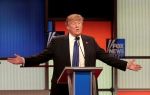
Donald Trump (Reuters)
Donald Trump’s assertions that he would require American military officers to practice torture and other war crimes stirred up a strong backlash, and he backed down.
Others point out that the U.S. government has long been doing things that Trump is only talking about.
That’s true, but I still think indignation is justified. Advocating crimes against humanity is just as bad, and in some ways worse, than practicing crimes against humanity.
It is better to be a hypocrite than a nihilist. The hypocrite, even if lying to others or to self, has a road back to human decency. The frankly sociopathic nihilist has burned his bridges.
(more…)
Tags:American Democracy, Authoritarianism, Constitution, Donald Trump, Election 2016, Hyprocrisy, Nihilism
Posted in Civil Liberties, Politics, Society | Leave a Comment »
March 3, 2016
The FBI demands Apple Computer to figure out a way to read encrypted files on an i-Phone owned by an alleged terrorist. Apple Computer’s management says there is no way to do this without opening up all i-Phone files to the FBI. The case is likely to go all the way to the Supreme Court.
Suppose the FBI wins its case. Suppose a year later the national police in Russia, China or Iran, arrest an elleged terrrorist and demand that Appple create a similar tool for them? Do the Russian, Chinese or Iranian security services automatically get access to all i-Phones?
(more…)
Tags:Apple Computer, Constitution, Encryption, FBI, FBI vs. Apple, Federal Bureau of Investigation, i-Phone, National Security Agency, NSA
Posted in Civil Liberties, Law and Justice, Terrorism, The Passing Scene | Leave a Comment »


 Source:


 Phil Ebersole's Blog