Jean Genius (with apologies to Bowie)

6 02 2023

So, previous readers may recall my latest obession – paper making. It’s also well covered in my recent reading history which has been cost-effectively aided by our wonderful local library and its extended reach through the inter-library loan system. Most of the books cover the same ground, with little new to add. Some lean heavily on the history and various methods traditionally used around the world. Others have examples of art using the handmade paper – a lot of which looks like nothing so much as kindergarten projects… but a lot more expensive because of who made them.

One or two books I found helpful though because they emphasised the fact that it’s an experimental “craft”. A bit like baking… follow the recipe to the letter and you’ll get something approximately like the picture. But not exactly. It’ll have a certain je ne sait quoi that you yourself added to the mix. And that’s refreshing. The fact that you’re not trying to exactly replicate the photo, but use it as a spring board to make your own unique paper. Once you accept that, you’re free to mix things up a little and try your own extensions from the basic suggestion.

One book I really enjoyed (to the point I ordered a used copy from Abe Books) is Handmade Paper from Naturals by Diane Flowers (with no hint of irony!) Ms Flowers makes the obvious connection between handmade paper and the traditional European source of paper pulp… old cotton rags. She credits one Patty Cox with the original recipe, but essentially she suggests the genius move of beefing up the usual pulp made from old recycled paper (receipts, envelopes (minus the gum and plastic window), letters from the landlord, etc.) with pieces of denim. The cotton fibres in the denim add huge amounts of strength and body to the feeblest of recycled paper (much of which may itself have already been recycled, weakening its fibres).

So here’s my own learnings and experimental results…

I began with an old pair of jeans. I’d been steadily cutting lengths off the legs for use in bookbinding projects. Given I was going to be pulping the fabric for this, I began with the least useful parts for anything else. It was pretty therapeutic to use a stitch-ripper to undo the waistband and undo all the fold-over hems. I aimed for about an A4/letter sheet of paper’s worth of area, though obviously it wasn’t in sheet form. Naturally, I removed rivets and any card or leather stiffeners (yes – I seam-ripped the belt loops to use the fabric from them too… waste not, want not!)

Next, I used some sharp tailor’s scissors to cut up the denim into roughly 1cm squares. I didn’t want to damage the blender, and didn’t want any long threads that might wrap around the blades and cause the motor to stall. I put the small pieces in a bowl and covered them with water to soak over night. I’m not sure how necessary this is, but I figured it might soften up the threads and make shredding easier.

1cm squares of denim plus recycled paper being soaked overnight to liberate any inks or dyes and to soften up the fabric

As per the book recipe, I then prepared about 5 sheets worth of recycled paper and added that to the water to soak with the denim. The general consensus is to tear recycled paper into ~2″ squares prior to blending so as not to unduly shorten the fibres in the paper prior to the blending operation. However, I’ve more recently taken to using a home office shredder to prepare the “stock” paper, and given the punishment the blades of a typical home blender mete out to the pulp, I don’t think this step is as key as one might think… at least for recycled paper. I can see it being much more important for prepared “virgin” pulp such as cotton linter or abaca.

I hadn’t done this pre-soaking previously, and I must say, it works well to release any dyes or other ink in the recycled paper. You can drain it off before adding the wet paper/denim to fresh water in the blender. I typically add 1 litre (a Mason jar’s worth) of water to the blender first, and then add about a fistfull of paper (and in this case – denim). I begin on slow speed then ramp up to full-on ludicrous speed for as long as it takes to make smooth pulp. Again – personal preference for smooth vs. chunky and a note that very smooth equals shorter fibres (and weaker paper generally +/- sizing).

What I got was a little unexpected. The resulting pulp was smooth enough… but a little clumpy. Odd. No un-blended paper or “unprocessed lumps” as such (the very occasional small piece of denim is actually quite attractive if one or two survive the blending operation, but there shouldn’t be many.) But there were definite clumps to the pulp. Almost stringy, like the unspeakable horrors that can clog up a shower drain if one or more members of your family have long hair and enjoy the over-use of hair products.

This is actually the result of the cotton fibres in the now thoroughly macerated and masticated fabric. The fibres are no longer even threads – none of which was more than 1cm long anyway. Now they are individual fibres which slip and slide together within the paper pulp to make longer gloopy threads… which of course is how cotton thread is made in the first place by spinning. This is why it is necessary to be careful to listen to the blender motor and stop it immediately if you hear it straining – the gloopy thread-like pulp can wind around the blades and choke the motor, causing it to over-heat and potentially become damaged. Then you’ll be in trouble with the head chef!

I continued this procedure – one litre at a time – until I’d processed all the paper/denim – I think it came to about 7 Mason jars of pulp in the end. Time had marched on though, so I put them in the fridge until I had time to make paper with them.

Several Mason jars of pulp prepared from denim/recycled paper

The pulp had gorgeous swirls of indigo blue with white, so I had no expectation of being able to write on the resulting paper. This was “experiment one” so I didn’t bother adding any sizing at all, though if I were to make it again (I did make a second batch, but more on that later) I’d add sizing and press it smooth so it’s less fabric like when complete.

The gorgeous swirls of individual fibres of cotton and paper in suspension

I got my 30 litre vat ready on a tressle table in the garage (I’ve been formally banned from the kitchen now… “things go missing”, I’ve been told), and added the Mason jars of pulp. The batch-to-batch variation in colour was quite remarkable due to the random ratio of indigo-laden denim to recycled off-white paper in each jar. If I were to add sizing, this would be when I’d do it, before I add the water. At this point, the water present is just that used to make the pulp with, and the sizing would be left to soak into the fibres before adding more water to the vat.

I finally tracked down some good old-fashioned wallpaper paste (essentially cellulose starch) which should keep me in sizing for years to come (a spoonful per vat should do it), once I eventually burn through my “proper” sizing bought from a papermaking supplier. I’m not sure if wallpaper is no longer de rigeur in Canada, but it was really hard to find, and I’m pretty sure it’s old stock as it is!

Anyway, a gentle swirling of the non-sized pulp mixed the colour more evenly, and the gloopiness was still very much apparent. Next, I added a 5 gallon bucket of hot tap water, and continue to swirl the contents to disperse the pulp evenly. The temperature is not important for the paper making, but since you’re dipping your hands in it for a while, I just find it more comfortable.

Then, I pulled the paper just like with any other pulp… but found it decidely harder to get it to lay evenly on the mould. The clumpiness tends to stop the pulp distributing as evenly as the pulp normally does. I’d say the pulp was too concentrated/thick in the vat, but the situation persisted even as the pulp content dwindled towards the end of the evening. (If this were more of a “production” run rather than experimentation, I’d hold back a couple of litres of pulp to top up the vat after every few sheets, to help keep the “strength” of pulp relatively stable.) Towards the end, I drain off a few litres of water by seiving the vat’s contents and discarding the water onto the garden. That lets me pull one or two more sheets with a shallower vat by increasing the pulp strength.

At the very end, I use the last dregs by pouring over a smaller deckle/mould rather than dipping. Alternatively I could seive it and let it dry as a puck – blending it with the next pulp batch on another day.

A pulled sheet of paper being added to the post prior to pressing and drying (note the small fabric patch on the left that escaped the blender’s efforts).

I pressed and dried the paper as usual and found it became a lot paler as it dried. It looks fantastic though, and almost looks like fabric rather than paper.

The paper is still noticably blue, but a lot paler as the indigo threads dry out and become subdued by the white paper and cotton fibres.

It is certainly more fibrous than paper made from standard recycled pulp, and a little harder to cut. It makes phenomenal looking envelopes though.

An envelope made with denim paper – deckle edges mostly left, just for effect.

I mentioned a second run. This time I doubled the amount of recycled paper added to the denim, hoping for a less soft/fabric-like result. It’s still drying, so no photos I’m afraid, but visually it looks the same with those amazing swirls of blue and white mixed into the base paper.

I hope you found this of some use or interest. Let me know if you’ve tried something similar and what you learnt.


Pulp Friction

8 12 2022

So my love of fountain pens is already well documented in these pages.

Oh wait – sorry: yes, yes, I’m still alive. Fine, yes, and you? Good, good…

Right, now we’ve got the “where have you been?” re-introductions out of the way, shall we carry on? Well, I am anyway. You are, as ever, free to select your own destiny.

So anyway… fountain pens. Well documented. Hereabouts. Blah, blah.

Fountain pens typically require paper upon which to use them. Admittedly there are those amongst us who collect pens for their esthetics as objets d’art rather than utilitarian items of everyday correspondence, but I’m not one (neither such a collector or, indeed, an objet d’art). I am however a lover of books, the whole amazing concept of public libraries, inter-library loans, and the ability to soak up knowledge in a much richer more visceral way than clicking on Google – though I don’t deny its use or social impact.

A recent foray into the library supplied me with books on letterpress printing and more recently papermaking. Much like the urban tale of kids being asked where milk comes from and replying “the supermarket”, I think many of us have little concept of where the written word comes from. The advent of computers and desktop printers have provided us with instant, selective documentation, and moved us ever further from needing or even wanting to know where such old fashioned items as books or magazines actually come from.

Despite the meteoric rise in Kindle/Kobo readers, streaming news services, and short run digital presses for print on demand books, there is still an incredible amount of good “old fashioned” printing done.

Like the renewed interest in fountain pens, vinyl records, real books and even unpasteurised milk, there is a renewed interest in handmade paper.

And I read some books about it.

And I decided it sounded perfect for a new obsession: it’s messy, straightforward so even a man can do it, you can start small with a few cheap/found items, and did I mention messy?

Not engine oil and spark plugs on the living room carpet messy – more just water everywhere and getting in the way at meal preparation time in the kitchen messy.

There are plenty of online and printed sources so I won’t bore you with too much repetition of “how to…”, just the bits I enjoyed. Considering it’s been around in various forms for a couple of thousand years or more, I think it’s pretty well documented now. As with many such products, it’s been invented countless times in different places in slightly different but essentially similar ways.

Pulp

Paper is made from cellulose fibres that can be derived from many different natural products… even the weeds in your garden. Depending on the source the fibres may be long, short or a mixture. Much of the professional paper making art goes into careful control of the fibres to ensure consistent, useful paper for its given use (anything from tracing paper, kitchen roll, writing paper, newsprint, cardboard, you name it…)

Back in the day, the fibres were made from scratch by cooking, treating with alkali and beating the living daylights out of several types of plant. These days the enthusiast can buy sheets of pre-prepared pulp to skip this time consuming, and frankly spouse-annoying step. Or you can go as far as I did and just use old discarded paper. It’s plainly got suitable paper-making fibres… it’s already paper!

My rule of thumb is to pour a large Mason jar of water into a normal kitchen blender (when Mrs E isn’t watching), and then select a piece of paper about 1.5 times the area of the paper I’m trying to make (or multiple pieces up to the same area). I’ve used old receipts, envelopes, post-it notes, kitchen towel (wet, but not greasy)… pretty much anything.

A few notes:

  • Sugar paper/construction paper is not recommended. The dye in it is cheap and easily released onto pretty much everything you use/touch/think about. Even if you make a half decent sheet of paper… it’ll quickly fade. I’m not saying don’t use it… just be aware of the downsides.
  • If you’re using old envelopes or Post-it notes… discard the gummed part before you begin. They’ll blend up apparently OK, but will leave snotty little balls on your equipment and the dissolved gum can make the paper hard to release from the mould later.
  • Be kind to your blender. Put the water in first. Tear up the paper into smallish pieces and don’t overload the blender. Remove any strings or stables, plastic windows, etc. Also: they’re not paper!
  • Though I haven’t tried it yet, it might be an idea to shred your paper before adding it to the blender.
  • Newspaper ink is often oil based… and will leave a slimy stain on everything you use. There’s a modern move towards soya based inks, but don’t risk it. If you’re using newsprint for your pulp – try and trim off the outer print-free borders. Newsprint uses cheap wood-based paper and will make poor paper… but it’s easy to find and fine for trying things out before you graduate to archive quality museum paper.
  • Laser printed papers – such as many bills (if you’ve not gone electronic) – will work fine, but the print can leave an interesting speckled effect on the finished result. Not good or bad, just be aware.
  • Many other hand-written inks will dissolve away into the water and leave only the paper’s own colour in your pulp.

So – water in first, suitable amount of relatively small pieces of paper. Leave it a while, or swirl it around to soak the paper a bit (you can do this offline before you add it if you’re not as lazy as me). Lid on. Hit go.

Now… remember how I said the fibres can be long or short? The relative amount of those fibres will impact the strength and other features of your paper. If you’re taking this seriously, record what type of papers you blended and for how long. The longer you blend the pulp, the more the blender will chop up the longer fibres. Also the fibres in the starting paper can only get shorter. Newsprint contains a lot of recycled paper fibre that has already been round the game a few times already. The fibres are already short and will tend to make brittle paper if used exclusively. They can be mixed with longer fibres to improve the final pulp though.

Start by pulsing or blending for a few seconds at a time, followed by longer sessions. The aim is to get a smooth, clump-free pulp. Unless you want it for esthetic reasons, you shouldn’t be able to see any identifiable chunks of the original papers. If you used different colours, they should all be blended into a smooth pulp now. If you like, you can now add a small amount of fresh paper and blend for a short period to deliberately add fragments of more identifiable paper – cartoons, crosswords, a different colour, etc.

Depending how impatient you are (or if you’ve been evicted from the kitchen) you can store the pulp in the fridge for about a week. This will slow any mould growth from the now liberated bacteria-friendly fibres. I’ve found the pulp stays in suspension for several days, but if it settles out, just agitate it gently before you use it for making paper.

Pulp from a half sheet of printed computer paper and a 20cm strip of coloured art paper.

Deckle/Mould

A mould is a frame with mesh or fine wires stretched over it – a screen. The gaps are small enough to trap the pulp but let the excess water seep through. A deckle is a simple frame that fits on top of the mould’s screen and provides a boundary beyond which the pulp can’t escape while the water is seeping through the screen. It essentially defines the size of the paper you’re making.

There are a few ways of bringing this about and these are variations on the theme as used in eastern, western and other styles of paper making. In essence though, you can either have a large container of pulp, into which you dip the deckle/mould and extract a deckle’s worth of pulp for the sheet; or you can sit the deckle/mould in a bath of water (so the screen is submerged but the top of the deckle is still clear of the water) and pour a sheet’s worth of pulp onto the screen, then lift the deckle/mould straight up to let the pulp settle on the screen.

Both work, and both have advantages. I’m limited for space and my “vat” is just a small plastic bowl so I use the latter “pour” method for now. I can control exactly how much pulp goes onto the screen, and experiment with paper thicknesses more readily.

A crude deckle/mould made from some offcut wood and a Dollar Store fry splash shield

Pressing

When water has stopped dripping by gravity from the mould, you can encourage further water loss by pressing the top of the new sheet with a sponge or other absorbent item. Gently remove the deckle, then place another screen over the top of the paper, similar to that on the mould (but not attached to anything). I use a Dollar Store frying pan splash guard. It’s a 12″ wire mesh with a convenient handle. Then gently press the paper with a sponge to extract further water. Squeeze and repeat until no more water is being removed.

Sponging some of the water from the top surface. Using a screen to help not disturb the newly formed paper

Then slowly flip the mould over so the newly formed (and still very wet) sheet of paper is on a smooth absorbent cloth, known as a felt… but typically actually wool or synthetic absorbent material. I used Dollar Store super-absorbent stringettes cloths intended for washing cars with. They’re artificial fibres and have a very smooth surface. The paper will take on any texture in the cloths you use for this step, so you can use this to your advantage and deliberately use ribbed cloths or even place thin items such as string between the cloth and the paper to leave an impression on the final product.

Cover with another absorbent cloth, or if you have high hopes of using the paper for writing, use a super smooth surface such as a new plastic sheet (sold in Dollar Stores as a cutting board, but a fraction of a mm in thickness). Then place a couple of other absorbent felts/cloths on top for padding and press the paper. I use a large book to spread the weight evenly, then a couple of 30lb free weights to do the actual pressing.

This step helps the fibres knit and the slow expulsion of water helps the paper form.

How long?! Well… it depends. The paper will not get anywhere near dry at this stage, but overnight will help the paper form strong bonds and be relatively flat.

Ready for pressing on the “felts”

Drying

You can speed things up by simply ironing the wet paper by placing a smooth cloth over it and ironing on a high heat (with no steam!) Quick, but will make weak paper as the bonds don’t have time to form and the resulting paper can tend to curl as the fibres were forced to shrink in the sudden heat.

A better way though, is to press as above, then remove the weight and replace the felts with new dry felts and place a much lighter weight – just the book in my case – and leave for several days to let the fibres naturally dry under mild pressure. This will keep the papers flat, and will retain that smooth surface if you used plastic during the pressing (no longer needed in drying phase).

Sizing

Sizing is the addition of chemicals such as corn starch or gelatin either during pulp making or after the paper is complete in order to make the surface less absorbent and easier to write on. I’ve not tried yet… let me know if you have!

As ever – I’d love to hear your own experiences in the comments below.

Once you get the hang of it – let your imagination fly…


The Papermaker on Vimeo

6 12 2022

OK – three guesses what my latest obsession is?

Fountain pens led to reading up on letterpress which led to papermaking. So far I’ve only made one piece of 5″x7″ paper from recycled paper, but I happened across this video and now Mrs E. is a little worried for my retirement plans…


Self-evident Truths…

8 12 2021

Christmas isn’t Christmas without Brussels Sprouts!

I’d like to thank Mrs E. for sharing this with me, but frankly… I’m still slightly stunned and a little unsteady, and I’m not entirely convinced “thank” is the appropriate action here!

YouTube – Without Brussels Sprouts; David Goody

I think I was even more stunned to discover Mr Goody had gone so far as to set one of philosophy’s greatest unanswered questions firmly to rest, and vaguely to music too…

YouTube – Die Hard is a Christmas film; David Goody

Now if only I knew who Mark Kermode is!


But is it art? (And does it matter anyway?)

26 06 2020

So in my usual obsessive manner I’ve “turned it up to 11” with my latest interest – fountain pens. Inks, paper, the pens themselves (ancient and modern), you get the idea.
I’m self-aware enough to know it’ll pass. It’ll innevitably morph into some adjacent interest and wither untouched for a while. I know it’ll come around again though. Like a slow-turning merry-go-round. Or maybe it stays stationary, and I’m the goldfish going round. Pick your metaphor. Or your nose. However the mood takes you. Who am I to dictate your behaviour?
Anyway, not being one to waste resources, I have a small stack of used – but not yet TOO used – paper towel sheets that have been used variously to wipe nibs or deal with ink-related mishaps… not always before Mrs E spotted something awry though.
Just gazing down at them now I realised that some of them actually look quite interesting. Now I’m no Jackson Pollock, but some of them do have a certain je ne sait quois…


Brigitte Baldrian

19 06 2020

So, the great gods of physics allowed me another birthday last month, and as ever my lovely offspring celebrated it in their own diverse ways. I got a new barbeque out of it, so I’m not complaining.

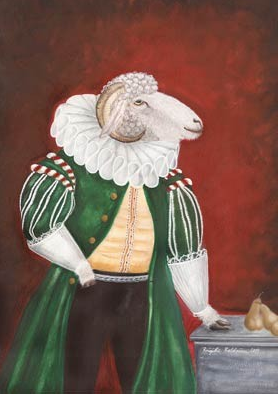
Second born currently resides in Vienna and the COVID-induced postal delays meant I only just received the card she’d sent today. Postmark was 19th May, so a month in transit exactly. It was actually a postcard she’d found with an anthropomorphic image of a ram in man’s clothing – King Emmerich. (She has a vaguely concerning thing about sheep, but that’s a post for another day.) A rather phallic pear is also present in the image, but that may just be my over-active imagination. The artist was new to me – Brigitte Baldrian.

BrigitteBaldrian

König Emmerich by Brigette Baldrian: Image Source BrigitteBaldrian.com

I headed straight over to her web site and found a press release which told me a little more…

She has a studio with Harald Hackel and they focus on illustration and graphic design. Their niche is in the field of nature conservation, environmental and eco-education and they work with national parks, environmental protection organizations as well as publishers and magazines. Their work is entirely analogue, with brushes and paint – a craft that is becoming rarer today. They also produce ecologically sustainable card games, picture books and fine paper goods… like my postcard!

Their products are plastic-free and are largely made from recycled paper and exclusively in Austria, mainly the Waldviertel region.

Brigitte Baldrian is originally a biologist and trained horticulturist. Her specialty is nature and picture book illustration. Her work ranges from detailed natural motifs to playful animal cartoons. Her painting is very detailed with vivid watercolor paints on paper, as well as weatherproof works on external facades. She’s stayed connected to the Waldviertel region since childhood.

Find a little more at www.BrigitteBaldrian.com, as well as the option of buying her whimsical products.

Produkte Brigitte Baldrian 2017

Brigitte Baldrian. Image Source: BrigitteBaldrian.com


Photograph me a rainbow…

13 05 2020

I’ve been spending some down time enjoying my hobby of photography recently. I often tend towards abstract, graphic images – frequently in monochrome. For a change then, I thought I’d peruse my photo archives using Google’s awesomely powerful search engine for specific dominant colours. Innevitably, many of the best examples are floral.

Richard – Red

Of – Orange

York – Yellow

Gave – Green

Battle – Blue

In – Indigo

Vain – Violet


If you love art film and Vienna…

13 05 2020

Some of you may know my third born lives in Vienna these days. I’ve visited a couple of times and find it a lovely city. Fernando Livschitz, a director from Argentina re-imagines the Austrian capital in his film “Vienna is like…”.

More of his work can be found here.


On Book Remainders, Origami and Connectivity

18 09 2016

Regular visitors to these pages will know that I often remark on the connectedness of things. Of course, if you live a relatively normal life, interacting with others, reading a little, observing the world as you pass through it – and to some degree, it passes through you – you will almost inevitably notice (or at least perceive) connections. Those moments of déjà vu  when you think you’ve seen something before, or see some connection with something you saw elsewhere.

A few months ago, I was partaking in one of my personal vices… perusing the shelves of Chapters’ Book Shop in Surrey. I have sufficiently eclectic tastes that I often find books that interest me in the discount/remainder section, and this time was particularly fruitful. I discovered a book called On Paper, by Nicholas A. Basbanes. It is a personal account of the author’s discovery of the history of all things “paper”. It’s invention, its development and of course its uses. One chapter that really caught my imagination was about the real gurus of origami and one man in particular – Robert Lang. He is renowned for making a full scale replica of a cuckoo clock out of a single 1’x10′ sheet of paper.

Robert Lang: Black Forest Cuckoo Clock, Opus 182

Robert Lang: Black Forest Cuckoo Clock, Opus 182

His origami skills are put to use figuring out how to fold up a space-borne telescope for putting on a probe that had to be squeezed into the top of a rocket then unfolded in the vacuum of space. Despite his stellar (sorry…) folding skills, he’s a scientist for a day job. In amongst all his achievements I read that he’d created a pteranodon with a 16′ wingspan that was installed at the Redpath Museum in McGill University… where my daughter is a student. Though she’d visited the museum she had not seen the installation. Seems hard to believe given the size, but then again… many people don’t take the opportunity to look up!

Anyway, she is an archaeology and anthropology student and recently took a volunteer position at Redpath, helping the great unwashed understand what they’re looking at. Being based on the balcony level, she really couldn’t miss the gigantic piece and took a couple of photos for me. I don’t know why, but this somehow brought closure to the open file in my mind, created when I first read of his amazing design skills.

Redpath: Robert J. Lang's Pteranodon

Redpath Museum: Robert J. Lang’s Pteranodon


XXX

Redpath Museum: Robert J. Lang’s Pteranodon


Ancient & Modern

13 03 2016

As I may have mentioned – though potentially not to you – Mrs E and I marked our 6th wedding anniversary the other week. After 24 years married. The smarter amongst you will figure out how those facts are not mutually exclusive. We went to stay on the west coast of Vancouver Island, at a place called Wickaninnish Inn – a lovely place to go Storm Watching.

Chesterman Beach, Vancouver Island

Anyway, to pass the time on the ferry, I bought a copy of “Canada’s History”. This used to go by the name of “The Beaver” and was originally the Hudson’s Bay Company’s internal magazine. It’s well known for being brimful of Asha Canadiana. This particular edition was celebrating 20 great Canadian women and that was what caught my eye and lured me to part with the $8 required for the privilege to read it.

The very back cover though was also of interest. As is the norm, it was a full page advert. In this case for the Toronto-Dominion Bank . It was advertising the TD Gallery of Inuit Art in Toronto. The image they’d chosen to use was of “Young man with MP3 player” by Pitseolak Qimirpik, a Cape Dorset artist.

There is no denying the skill of the guy, and you can see more of his work at Dorset Fine Arts. The thing that made me pause though was not only the display of traditional carving skill, but the contemporary subject matter. Here was a very contemporary subject (spliff, earbuds and all), but portrayed in a very ancient way. Not with a digital image or some fancy PhotoShop work, but with time, care and skill… in a 17 inch high piece of serpentine with antler and wire. It inspired me to want to learn more. Not just of the work of Qimirpik himself, but of his culture and motivation.

pitseolakqimirpikcopy

Source: Dorset Fine Arts PITSEOLAK QIMIRPIK – YOUING MAN WITH MP3 PLAYER, 2010


Design a site like this with WordPress.com
Get started