Feeds:
Posts
Comments

Archive for the ‘Wetlands’ Category

“Great fleas have little fleas upon their backs to bite ’em,
And little fleas have lesser fleas, and so ad infinitum.”
(Victorian mathematician Augustus DeMorgan)

And so it seems true of islands as well … larger islands have little islands about them, ad infinitum.

Coastal and landform topography of Puerto Rico and U.S. Virgin Islands.  From NCCOS http://ccma.nos.noaa.gov/ecosystems/coralreef/summit_sea/summit_sea2.aspx.  Culebra and Vieques are the small islands just to the east of Puerto Rico.

Coastal and landform topography of Puerto Rico and U.S. Virgin Islands. From NCCOS. Culebra and Vieques are idyllic small islands between Puerto Rico and the U.S. Virgin Islands (St. Thomas, St. John, and St. Croix).

We got a great view of the chain of islets that span the distance between Puerto Rico and its small island neighbors to the east as we flew at 1400 feet over the ocean expanse to our destination on Culebra.

Cape Air took us from Puerto Rico to Culebra and back.  I remembered to get my camera out of the luggage on the trip back!

An 8-seater Cape Air plane took us on a half-hour flight from Puerto Rico to Culebra for a mere $45. I remembered to get my camera out of the luggage on the trip back to PR!

A view of Culebra looking northeast toward St. Thomas, U.S. Virgin Islands

A view of Culebra looking east toward St. Thomas, U.S. Virgin Islands.  The coastal shores and keys surrounding Culebra are protected as part of the U.S. National Wildlife Refuge system, which results in some of the most diverse and healthy coral reefs in the Caribbean and prime habitat for nesting seabirds.

A tiny islet in the channel separating Puerto Rico and Culebra (seen in the distance).

A tiny islet in the channel separating Puerto Rico and Culebra (seen in the distance). When is a rocky outcrop in the ocean too small to be called an island?

The extreme northeastern tip of Puerto Rico, showing coral heads and sandy shoreline that surround the island.

The extreme northeastern tip of Puerto Rico, showing coral heads and sandy shoreline that surround the island.

Although birds are highly mobile and able to navigate the mileage between mainland and islands fairly easily, there is nevertheless an ever diminishing number of species on islands as the distance from the mainland increases and/or the size of the island decreases.

Birds could settle on Caribbean islands by migrating eastward from Central Mexico (1026 bird species) or southward from Florida (510 species).  To illustrate the “island effect” of distance and size:  Cuba has 368 bird species in its 43,000 square mile expanse, while nearby but much smaller Puerto Rico (3400 square miles) supports 349 bird species, and Culebra (12 square miles) has just 110 species, many of which are only passing through on migration to other sites (only 43 species actually nest on Culebra).

Over time island birds often develop unique characteristics that separate them from their mainland ancestors, becoming unique to that particular place (endemism), like the Puerto Rican Lizard Cuckoo and the diminuitive Puerto Rican Tody (from an earlier post).

Looks very much like the Cuban Lizard Cuckoo, I photographed

Looks very much like the Cuban Lizard Cuckoo, I photographed last April.

Read Full Post »

Mangroves line the shorelines of Puerto Rico and its many island keys, where ever the wave action is limited.  The most noticeable are the red mangroves that grow from the shore into the salt water, supported by a tangle of prop roots.

Red Mangroves

The roots not only support the plants but catch debris, leaves, and sediment floating by which supports a community of organisms that feed on it.  This  is further enriched by droppings of the birds that roost in the mangrove branches at night.

While the mangrove forest above the water supports a terrestrial community of life,  the maze of roots below the water line offer protection for small fish and invertebrates that make up the underwater community.

While the mangrove forest above the water supports a terrestrial community of life, the maze of roots below the water line offer protection for small fish and invertebrates that make up the underwater community.

Red Mangroves are so dense you could never walk through them, but they make intriguing waterways for kayaking.

Red Mangroves grow together in such density that you could never walk through them, but they make intriguing island waterways for kayaking.

kayaking in mangrovesIt was a quiet on this particular day in the mangroves, no birds or fish to be seen.  But there was a pretty terrific sunset.

sunset in the mangrove swamp

Read Full Post »

it rained off and on during our hike to the waterfalls in El Yunque forest today, which is what is supposed to happen in a rainforest.  But nothing illustrates the congested overgrowth of life on top of life in the tropics better than this.

Liana vines creep up the trunks of the trees, embedding lateral roots right into the tree bark so tightly, they look like a part of it.  Circular-shelled snails graze on the algae growing on the lianas.  A few lichen find a roost on the tree bark as well.  Life growing on life everywhere.
Liana vines creep up the trunks of the trees, embedding lateral roots right into the tree bark so tightly, they look like a part of it. Circular-shelled snails graze on the algae growing on the lianas. A few lichens find a roost on the tree bark as well. Higher up the trunk, large “air plants” roost on tree branches, catching moisture in the rain, and nutrients floating in the humid air.  Sometimes there is such an overgrowth of the vines, bromeliads, ferns, etc. that their weight breaks the branch.

The light can hardly make it to the forest floor because there is such a density and diversity of plant material above it.  And naturally, rainforests have a lot of running water everywhere.

There are a few bare rocks, but not much bare earth that isn't colonized by plants.

There are a few bare rocks, but not much bare earth that isn’t colonized by plants.

Cascades of water flowing into larger waterfalls, eventually merge into the highest waterfall in the park.

Cascades of water flowing into larger waterfalls, eventually merge into the highest waterfall in the park at La Mina falls.

La Mina falls in el Yunque forest, P.R.

Read Full Post »

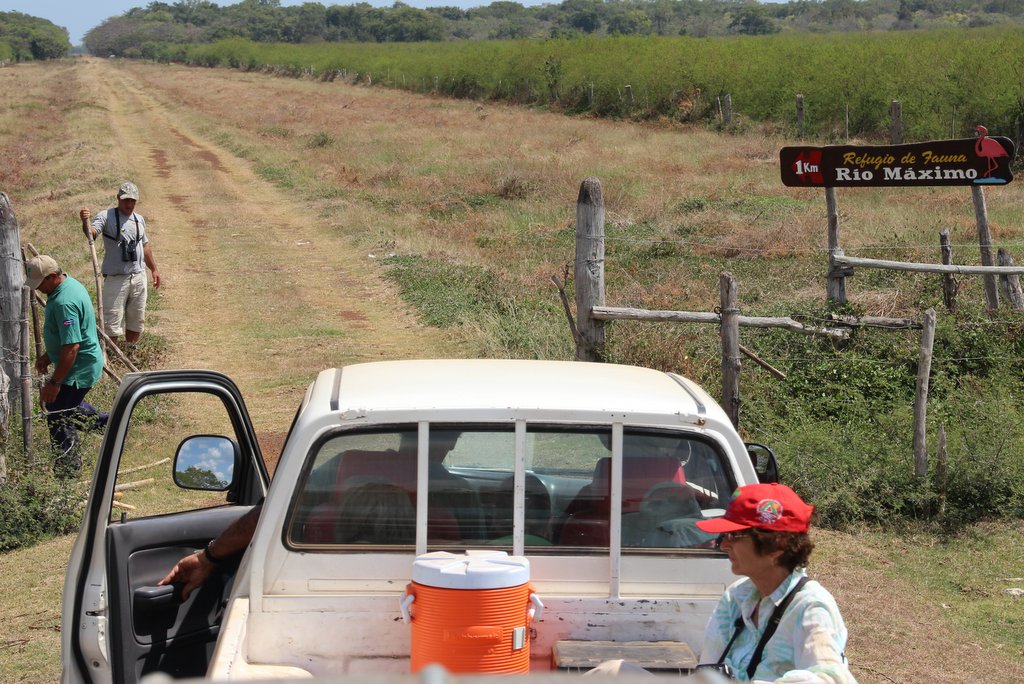
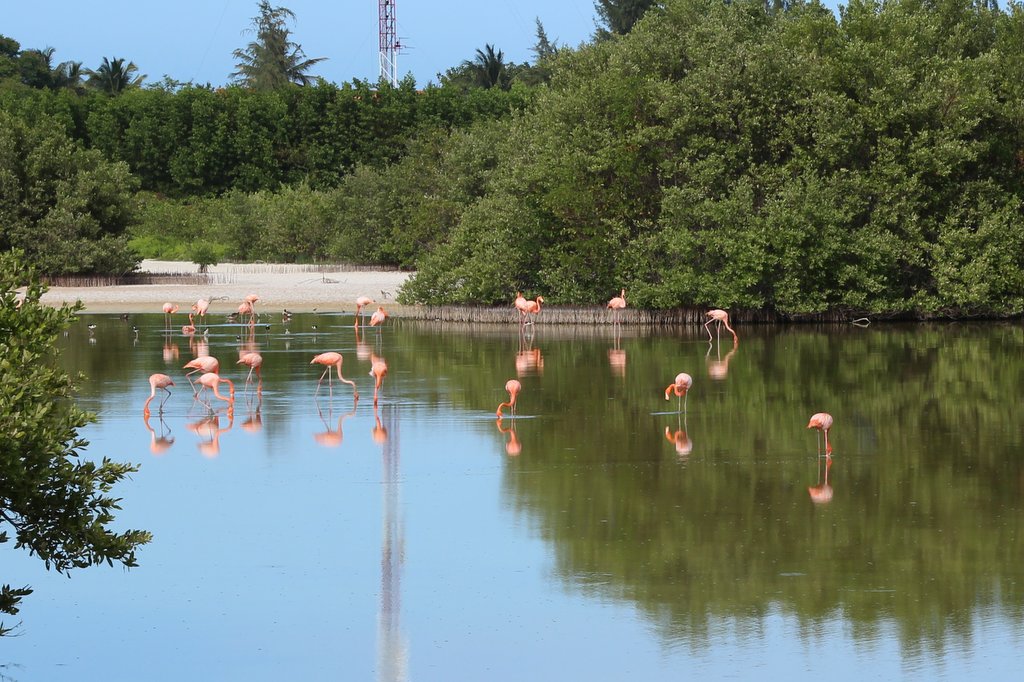
Our first stop on the long drive today from Cayo Coco to Camaguay was at the Flamingo conservation site at the mouth of the Rio Maximo. Two dedicated individuals (Jose Morales and Lloydi Vasques) have managed this 35,000 hectar World Heritage Site on a budget of practically nothing (relying mostly on donations) since its creation in 1987. They monitor nests, foster chicks, adopt orphans to release back to the wild, and maintain a database of breeding activity for the 16,000 pairs of Greater Flamingos that nest here each year. We were extremely fortunate to visit here, being only the second bird group to have done so.

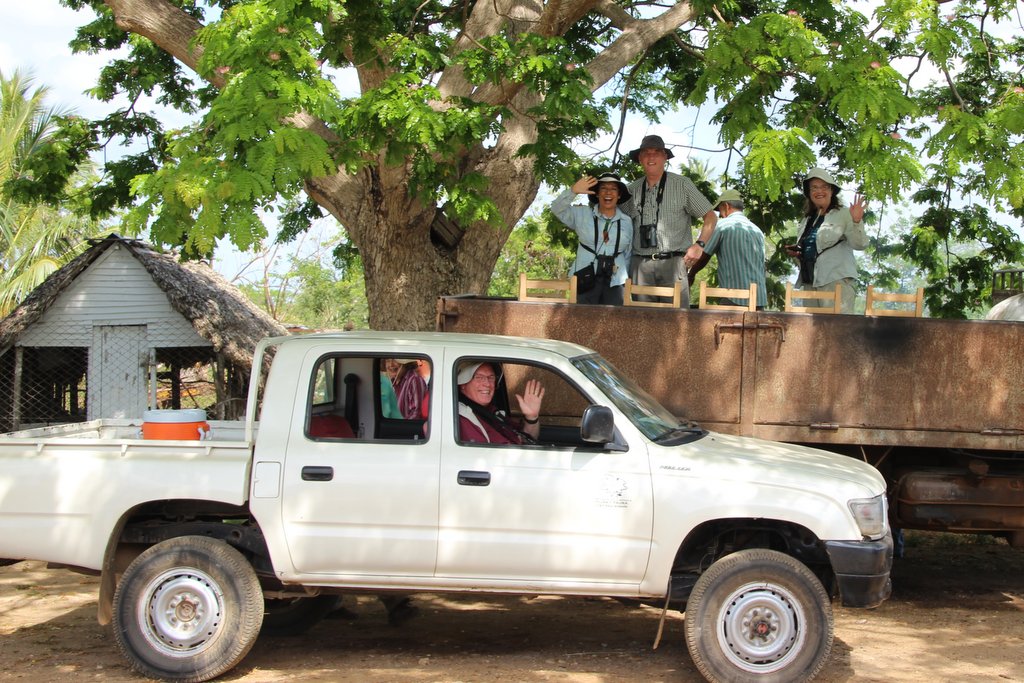
Jose (Fefo) is a biologist/researcher who wants to do a better job of documenting flamingo biology but with no funds for equipment, he says it takes him a week to do what a grad student in the U.S. could do in an hour with the right equipment. We brought him a computer, a camera, and coloring books they will use to educate the local children when they run camps (to raise money for their facility). But he needs basic equipment and an internet connection to achieve any sort of credibility with other flamingo researchers. Before lunch we took a long ride in an ancient truck, sitting on chairs in the open back, to the river delta where an observation tower overlooks the flamingo breeding area. The birds were a long way off for photographs.

at rio maximo flamingo conservation area

Getting ready to ride out to the flamingo breeding site

at rio maximo flamingo conservation area

observation tower at Rio Maximo flamingo conservation area

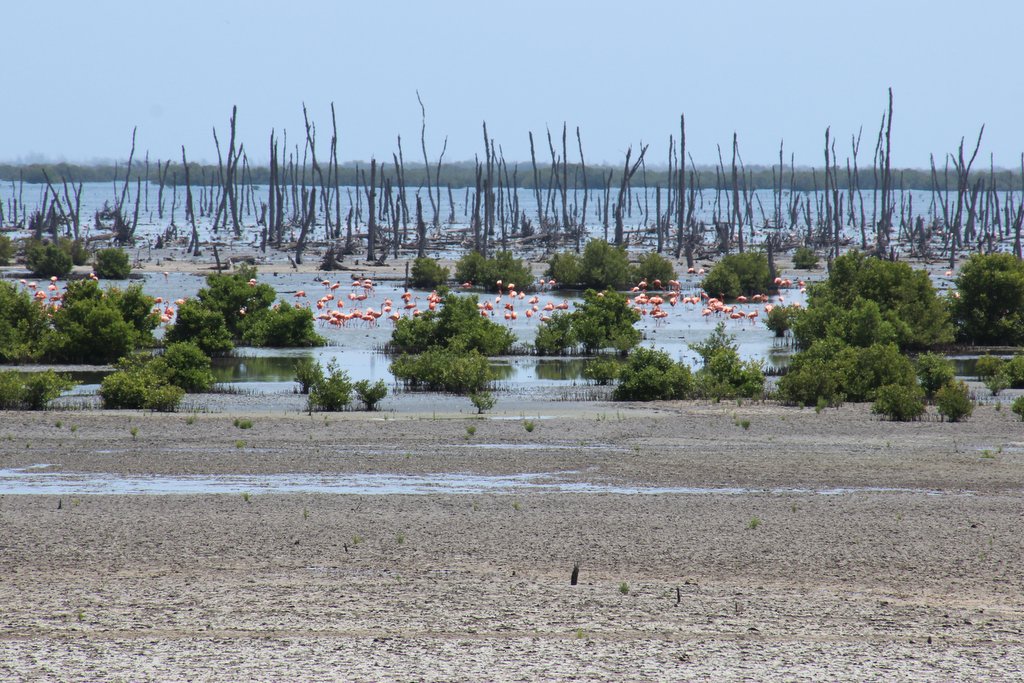
It’s long ride, then a long walk on the floodplain, and then a big climb up the observation tower, to see flamingos way off in the distance.

Greater Flamingos at the Rio Maximo conservation area, Cuba

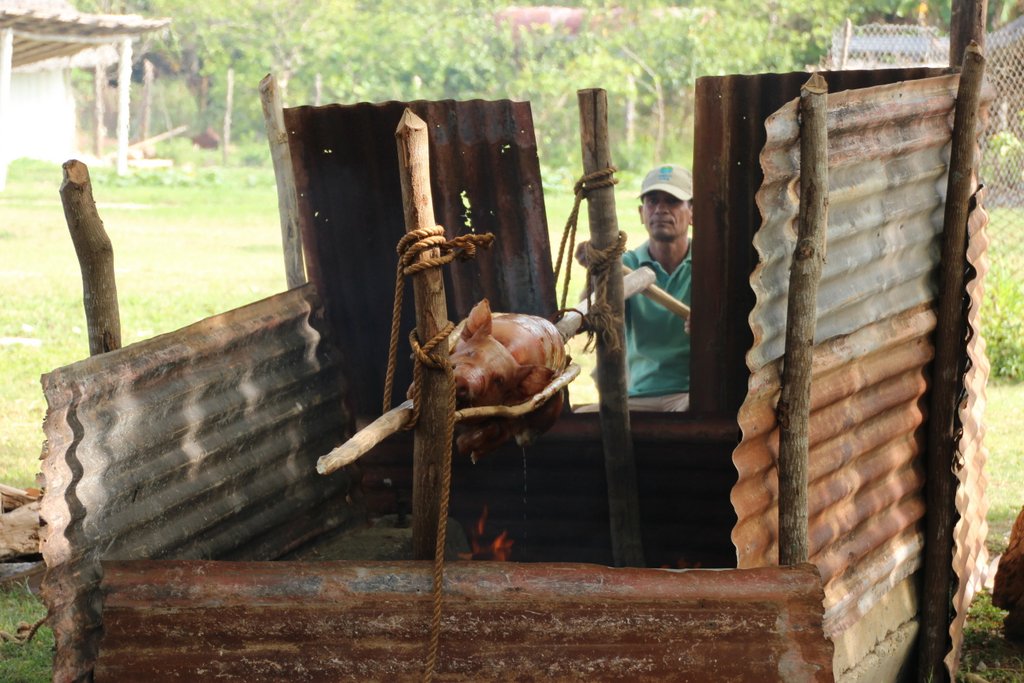
Lunch included an assortment of delicious vegetable dishes and pig, which had been roasting all morning in the parking lot. After lunch we heard a presentation on the flamingo breeding cycle, and visited the pens where they have kept orphaned flamingo chicks before they are released to zoos worldwide. Selling young birds to zoos is another means of raising funds for this operation.

roasting a pig in Cuba

lunch at rio maximo flamingo conservation area

Jose Morales talking about flamingos

flamingo conservation at Rio Maximo

Read Full Post »

We met with a local guide (Oday Martinez — who wore an International Crane Foundation patch on his shirt) for a walk around the hotel grounds and surrounding area to see West Indian Whistling Ducks, as well as a number of North American warblers on their wintering grounds.

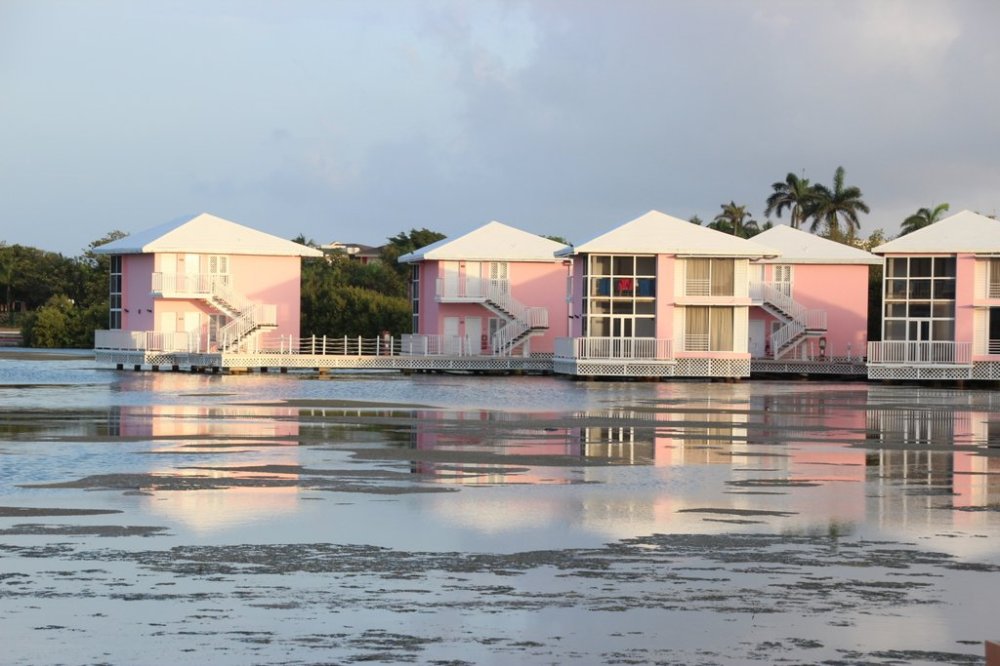
condos overlooking the water in Cayo Coco, Cuba

west-indian-whistling-ducks

West Indian Whistling Ducks floating along right in front of the hotel

West Indian Woodpecker

A pair of West Indian Woodpeckers were foraging on the hotel grounds, flitting between palms and buildings.

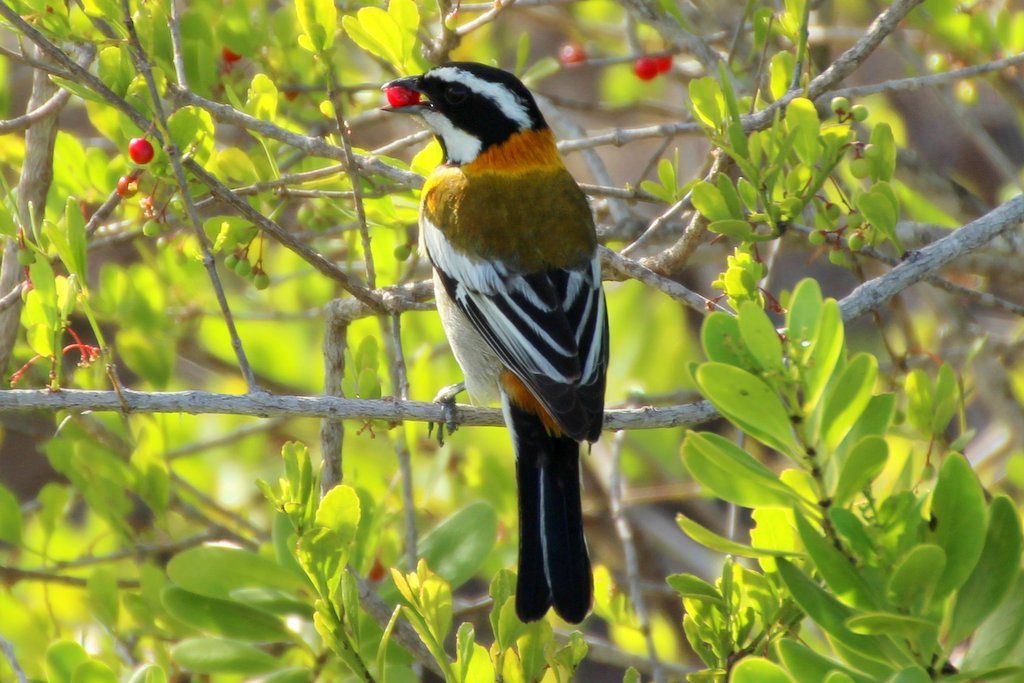
A morning drive to the northern end of the Cayo Coco islet took us to the Diego Valasquez lighthouse, whose bright illumination can be seen 19 miles out into the Bahama channel.   Along the way we stopped several times to see shorebirds, thick-billed vireos, and the Spindalis, striped tanager, and a flock of flamingos that overwinter in the shallow bays along this islet.

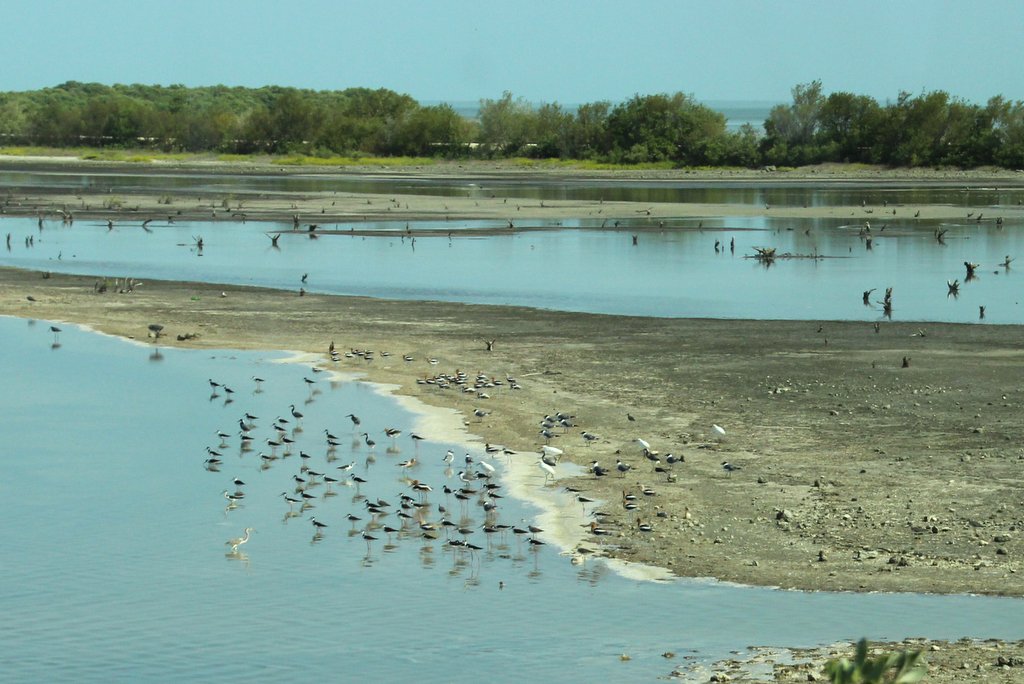
shorebirds along beaches of Cayo Coco, Cuba

Mixed flocks of stilts, avocets, Willets, and Dowitchers, forage along the shore of a shallow bay.

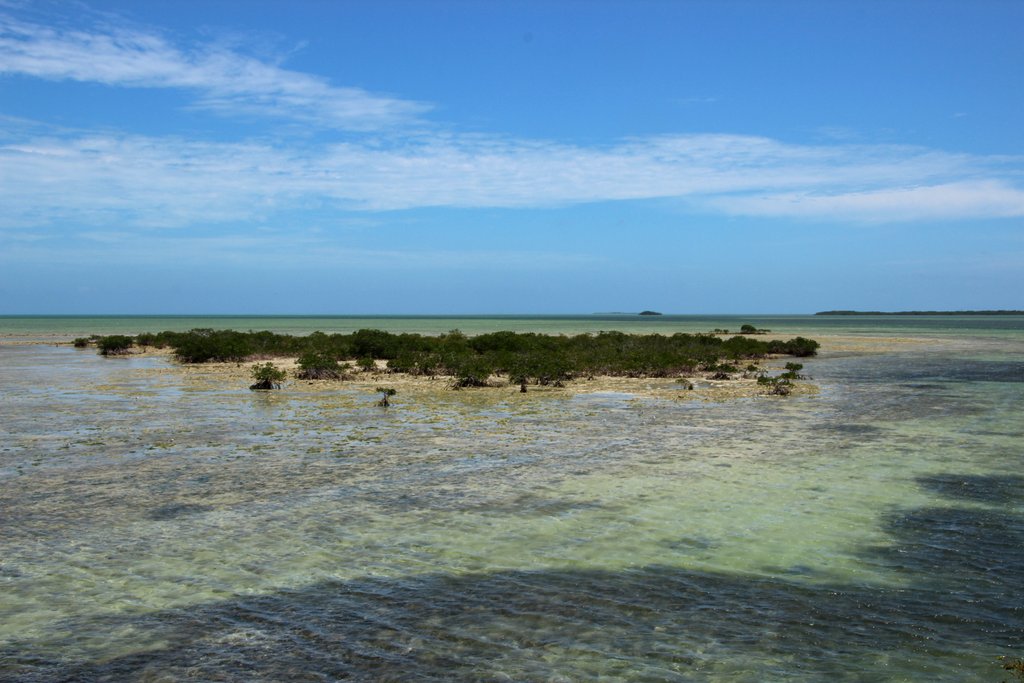
islets off Cayo Coco, Cuba

flamingos at Cayo Coco, Cuba

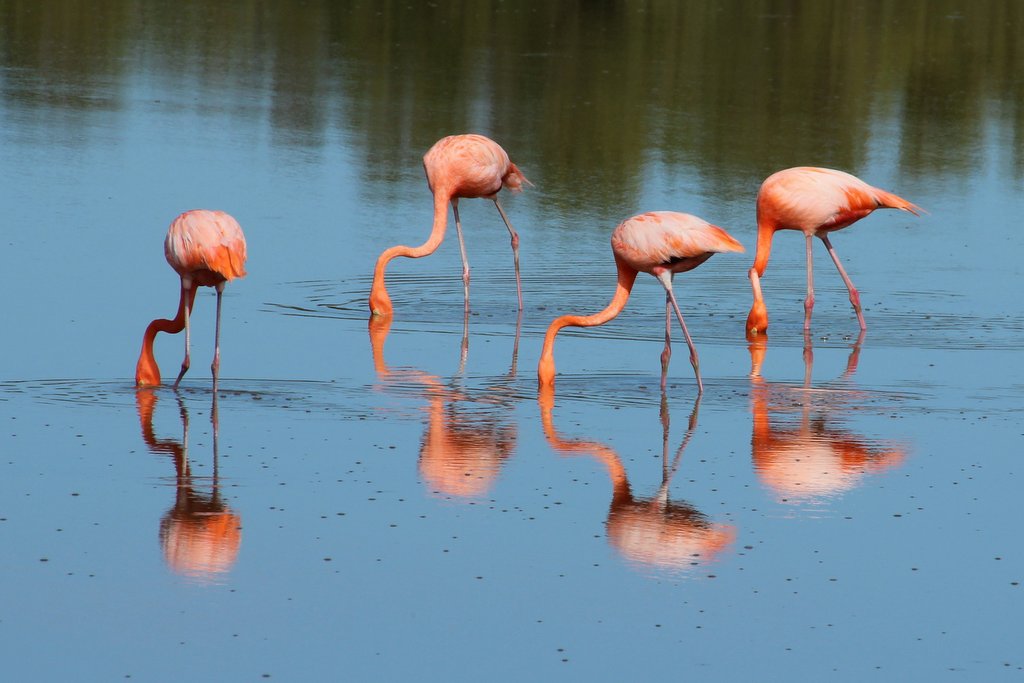
A small flock of flamingos foraged right alongside the road in a shallow bay.

flamingos at Cayo Coco, Cuba

Diego Velasquez lighthouse, Cayo Coco

The Diego Velasquez lighthouse

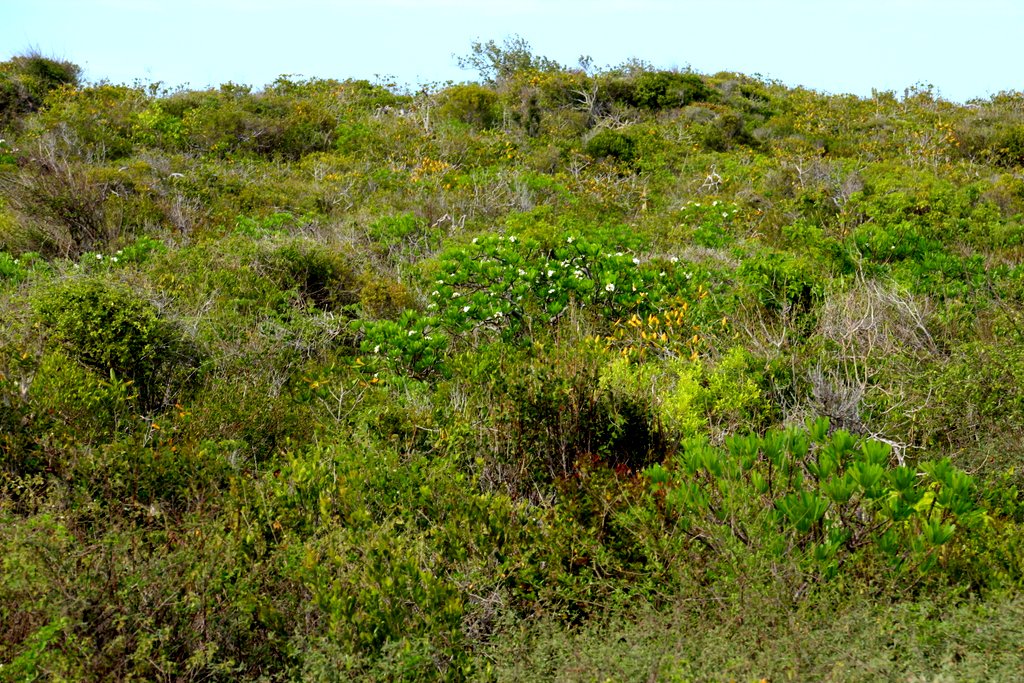
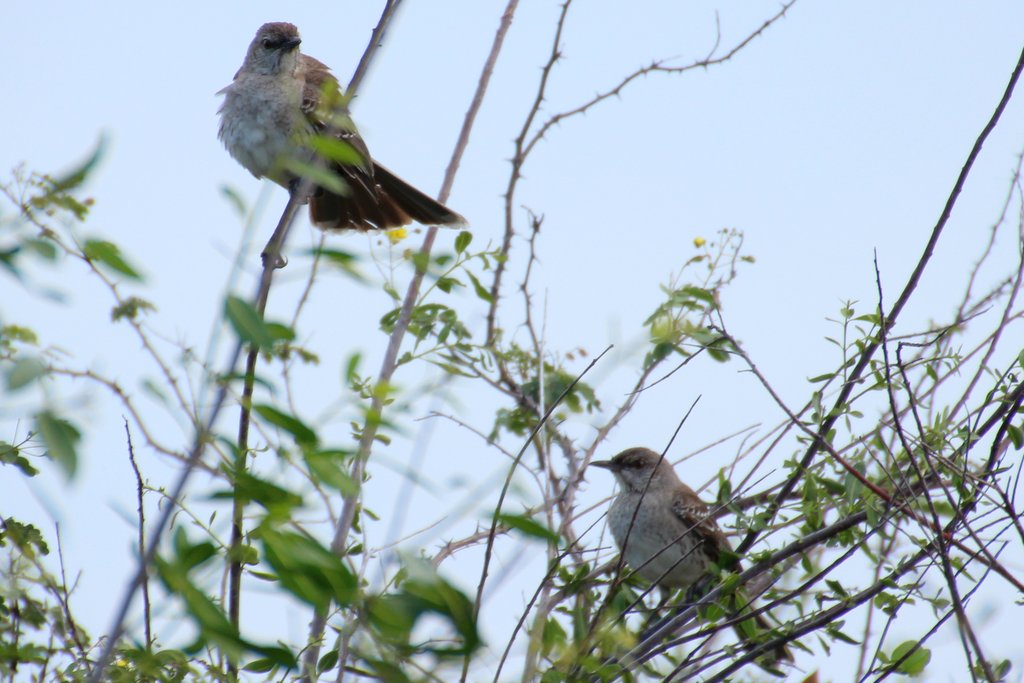
Back at the hotel for lunch (gorging on the all you can eat buffet) and then back out on the road in the afternoon toward Guillermo on the western tip of the islet to find the Bahama Mockingbird (very shy and larger than its northern counterpart).  The dry forest on the hillsides looked impenetrable from a distance with its dense, thorny vegetation punctuated with cactus and agave, and there were a few flowering plants that broke up the sea of green.

Cayo Coco, Cuba

flowering Agave

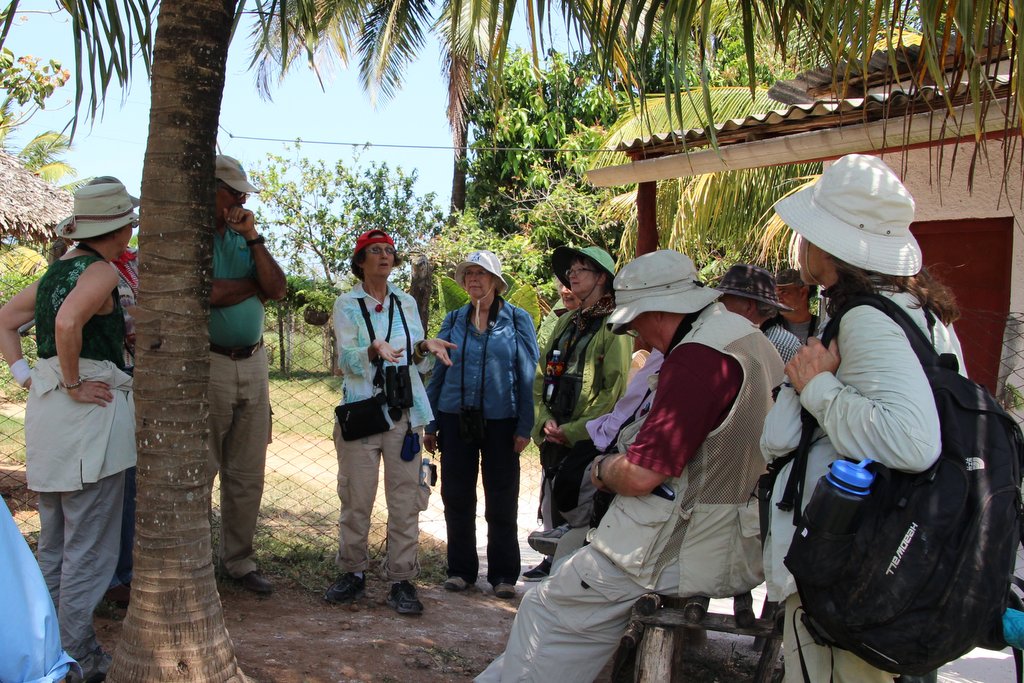
Birders in Cuba

Looking for Bahama Mockingbirds

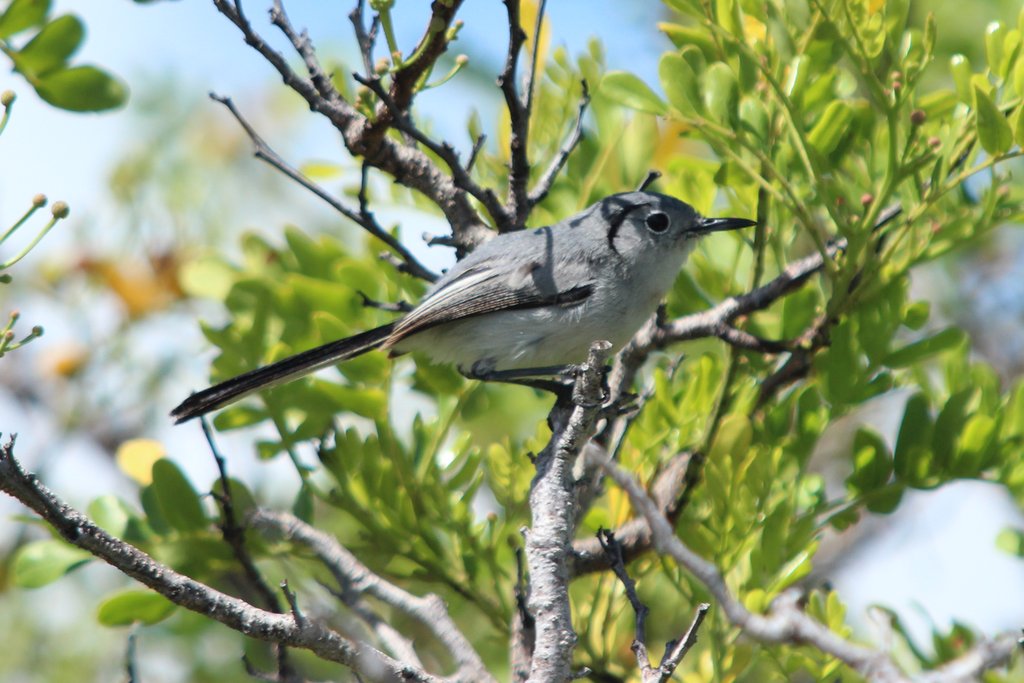
Cuban Gnatcatcher

This Cuban Gnatcatcher looks a lot like its American counterpart, the Blue-gray Gnatcatcher, but has a faint C behind its eye.

Bahama Mockingbird

A pair of reclusive Bahama Mockingbirds

Western Spindalis

Western Spindalis eating some kind of red fruit

Read Full Post »

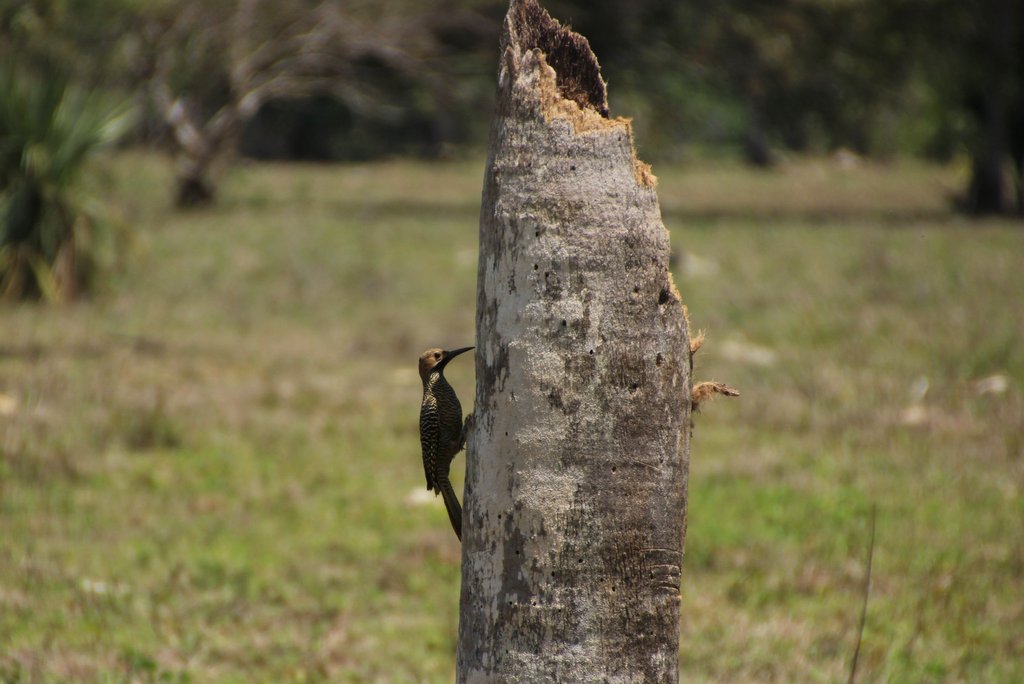
On our early morning drive to La Turba to walk along a canal for the Zapata Rail, Wren, and Sparrow, we finally found a couple of sparrows, as well as the usual wetland egrets, herons, etc.  On the way back to Playa Larga we drove inland to a palm savanna to see Fernandina’s Flicker in a gigantic Ceiba tree.  There were several active nests, about 6-10 feet up in dead palm snags, which they seem to prefer.

Ceiba tree

Incredibly tall Ceiba tree

Fernandina's Flicker

Excavating a nest in a dead palm?

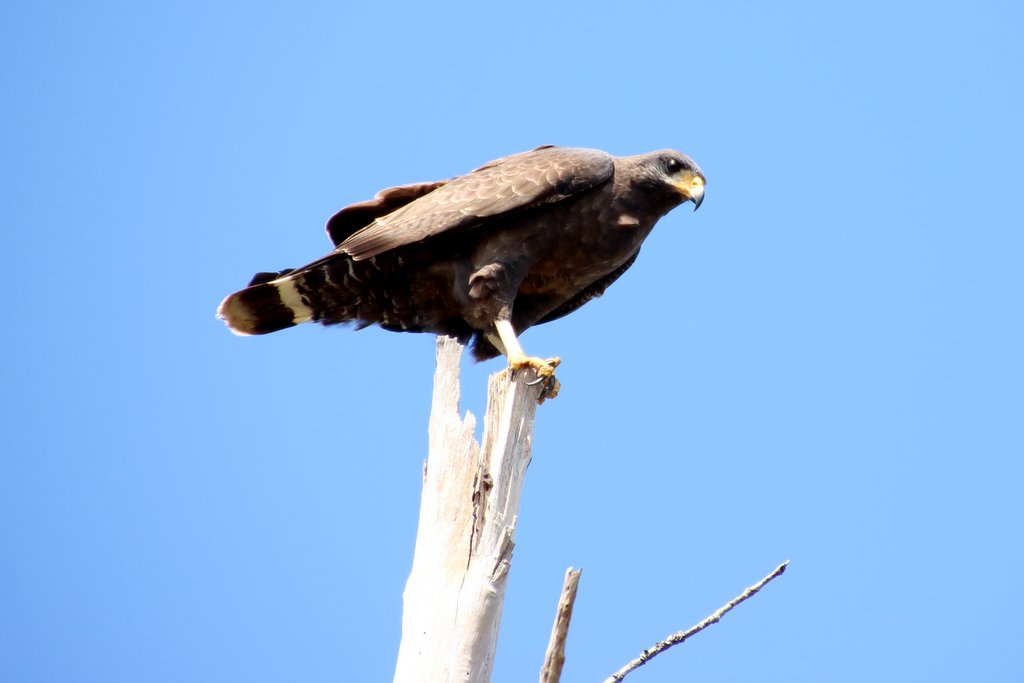
Lunch at Cuchi’s Pescador was quick and wonderfully tasty, especially considering the fact that it was produced from a 5′ X 5′ kitchen with very few appliances.  After lunch we drove to Las Salinas del Brito, a wide open expanse of extremely flat tidal land permeated by pools full of wading birds:  Blue-winged Teal, Stilts, Avocets, Sandpipers, Herons, one alligator, and a vagrant Black Hawk.  You could probably walk out for miles in the shallows.

Reddish Egret and Blue-winged Teal

The Reddish Egret does a fancy dance to scare up the fish and then surrounds his head and beak with his wings to hide in the shadow before making a grab for prey.  Blue-winged Teal foraged along the shore of this shallow tidal pool.

Cuban Black Hawk

The Black Hawk is really more brown in strong light.

Read Full Post »

The Bahia de Cochinos (Bay of Pigs) is infamous for the botched invasion, carried out by CIA-trained Cuban rebels, that led to a tense Russian-US standoff.  We happened to be on-site on the 52nd anniversary date of the invasion (Apr 17, 1961), but managed to avoid the local “celebrations”.

This section of the southern Cuban coast was either named for the native pigs that ran wild through the region, or is a mis-translation of the Spanish name for a species of orange-sided triggerfish commonly found in the bay.  The bay is lined by stunningly beautiful beaches of white sand and aquamarine water, and is a popular dive and snorkel site.

Bay of Pigs at Playa Larga

The actual Bay of Pigs — but not the prettiest part of the beach here.


The Zapata Swamp is the third largest wetland in the Americas, exceeded only by the Pantanal in Brazil and the Everglades in Florida.  21 endemic bird species reside here, and our goal was to see them all.  Not only endemics frequent this area, though, because neotropical migrants spend their winters here as well.  Over our three days at sites surrounding Playa Larga (at the head end of the bay), we found 101 of the total 143 bird species seen during our 9 day adventure, many of them North American migrants, as well as Cuban endemics. These numbers alone speak to the importance of the unique character of this region in the Peninsula de Zapata which is a vast complex of marsh, sawgrass wetland, shallow lagoons, palm savanna, and some forest.

The sawgrass wetland area of the Zapata peninsula looks (and functions) much like the Everglades in Florida.

The sawgrass wetland area of the Zapata peninsula looks (and functions) much like the Everglades in Florida.

Drying pools in the La Salina area of the Zapata peninsula are favorite foraging areas for North American migrant waterfowl.  A Reddish Egret performs his hunting dance in the foreground.  Blue-winged Teal are in the background.

Drying pools in the La Salina area of the Zapata peninsula are favorite foraging areas for North American migrant waterfowl. A Reddish Egret performs his hunting dance in the foreground. Blue-winged Teal are in the background.

Wild pig, mongoose, iguana, crocodile, and the native Cuban Jutia (similar in size and looks to a nutria but less aquatic) also are found throughout this Biosphere Reserve.

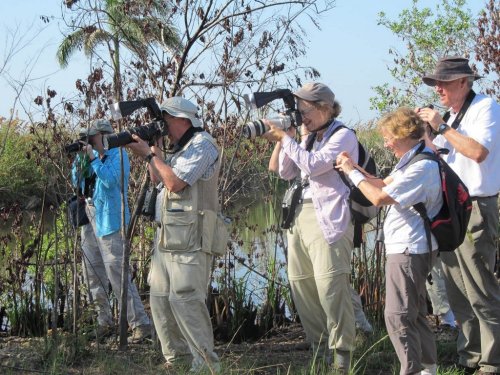
Cuba has 24 endemic bird species, and our guides did a great job ensuring that we saw a majority of them.  I was able to photograph quite a few of them, even with my meager 270 mm lens.   Ernesto would often use his bird song app on his phone with a portable speaker to call in some of the birds, and then we lined up like we were at the zoo admiring an exhibit to take photos.

photographing zapata sparrow in Cub

Here we are all focused on a lone Zapata Sparrow that is reluctant to come out of its hiding place in a bush.

Some of my favorites:

The Cuban Green Woodpecker is about the size of a Hairy Woodpecker.  The belly feathers are lemon yellow, which adds to its colorfulness.

The Cuban Green Woodpecker is about the size of a Hairy Woodpecker. The belly feathers are lemon yellow, which adds to its colorfulness.

Cuban tody

Everyone’s favorite, the Cuban Tody.

The Fernandina Flicker was seen only in one area in mature trees of a palm savanna.

The Fernandina Flicker was seen only in one area in mature trees of a palm savanna.

Cuban Pygmy Owls were not the least bit shy about being photographed.

Cuban Pygmy Owls were not the least bit shy about being photographed.

zapata sparrow

The endemic Zapata Sparrow has a chestnut cap and yellow-tinged belly.

Cuban Parrot (2)

Cuban Parrot — another endemic species

Read Full Post »