Hellenic Hekate Ritual: Purification

One early afternoon I went out for lunch to run some errands and a co-worker asked me how the weather was upon my return. I informed her it was sunny and humid but that it would most probably rain in an hour or so because of the natural signs I was seeing.  This co-worker asked me how I knew and I shared that my mother had taught me how to read the signs of nature.  This was done through various signs perceived through things such as smells, sunset/sunrise colours, clouds, sounds of insects/animals (just to name a few) in order to predict the weather.  Due to my mother coming from a farming family in a small rural village, this was second nature to her and her family, which helped them to be in tune with the seasons. This co-worker nodded in agreement with me and shared that she had experienced something similar through her family and within an hour and a half, it did indeed rain.

When my mother was teaching me magick as part of my normal everyday life, I didn’t realise how much impact it had on me as an individual and how much it would shape my practice.  I have vivid memories of the two of us sitting on a beach watching the sunset where she would explain how that particular sunset was signalling the next day’s weather – which always came out the way she predicted.  A lot of the magick she taught me was in this vein, like when I had my first headache as a child where she took me into the garden and showed me what herbs to pick and how to brew a tea to drink in order to get rid of it.  We’d be outside watching the full moon and she’d teach me how to sing to it which in hindsight turned out to be a spell/affirmation and although I was always an observant child who dutifully obeyed my mother because we were very close – I just went along with it as I just thought it was normal.  I never knew her connection to nature as well as the deep love and practice of spirituality and magick and sharing it with me wasn’t the standard for everyone else .  Therefore when I gregariously announced that I was going to be a witch when I grew up at the age of 5 after reading “Meg and Mog” I couldn’t comprehend the laughter from the other children around me.  Suffice to say I did learn the lesson of keeping silent and not speaking about what I learned publicly afterwards unless I was with like-minded people.

I feel when we are more connected to nature and the cycle of things we are more in tune with the magick around us. I’ve seen more magick performed by locals at a small rural Greek village seasonal festival than in some huge elaborate staged festivals and I ascribe that to the fact that the former was more in tune with nature and the cycle of the seasons. The one seasonal celebration still held in my maternal grandmother’s village in autumn is my favourite as it involves jumping over three fires in a row as a way to cleanse the body and soul and bring in health, prosperity and success. It’s also a way to mark the end of summer and rid oneself of any evil.  After the last harvest occurs in the village, everyone goes down to the fields and collects the stalks of wheat straw and place bundles of them upon the road before their homes, schools, town buildings and even churches.  They build three bundles of straw in succession of each other and as the sun sets they are lit and jumped, sung and danced over.   Everyone participates and if you take a walk through the streets you can see these fires set up every so often and the best and biggest is always in the town square – the central focal point of the village and where many celebrations occur throughout the year.  Some of the boys and men build huge roaring fires and have competitions to see who can jump the highest. The winner of this competition is deemed to have the best luck for the rest of the year.   This practice amongst a few others are still happening to this day even if the village population is dwindling – their devotion to the old traditions isn’t.

This practice held during autumn could possibly have connections to the Hellenic festival of Anastenaria or Nestinarstvo which originated in Northern Greece and Southern Bulgaria where participants walked barefoot through fire (over coals) as part of a celebration in honour of St Helen and Constantine.  This tradition is believed to be a mixture of orthodox Christianity mixed with the local pagan celebrations as was the custom for locals to adapt their celebrations to preserve them.

Here in Melbourne, Australia, I can always tell the changes of the season by observing my garden and the creatures who frequent it.  The smell of the season has changed and certain pollens are in abundance therefore certain tree/herbs/flowers are blossoming.  Observing the land around me, the earth is beginning to slowly withdraw its greenery in favour of the rich brown colours of the earth.  The sun is winding down its effect as we are brought close to the darkness of winter.  To celebrate this time of year whilst still honouring my Hellenic roots I have developed my own Hellenic purification ritual which can be performed before a fireplace, fire-pit, oil lamp or even a candle to symbolise cleansing and purification.

As Hekate’s priestess and devotee I have updated the ritual I first wrote in honour of Hestia and re-adapted it to Hekate who also is considered a deity of hearth and home.  Also with the continuing issue of Coronavirus sweeping the world currently, I have also added and emphasised the purification aspect of the ritual for heightened protection.


Purification Ritual to Hekate – (C) Setjataset 2020

Preparation:

Purify body by showering or washing head, hands and feet.

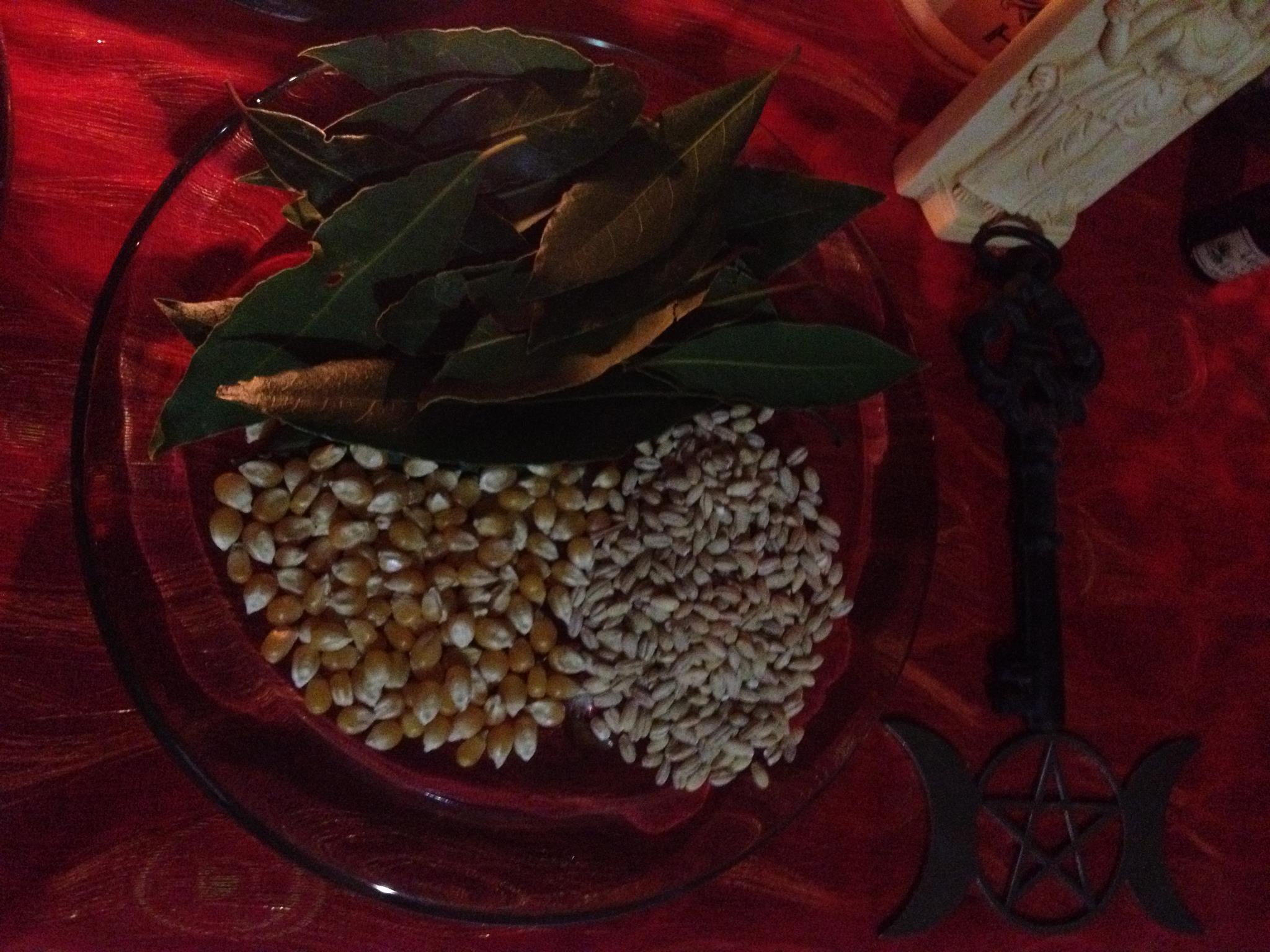
Set up shrine with water, wine/juice, salt, bread/crackers, olive oil, incense, barley and an oil lamp/candle before an image of Hekate.

Ritual:

Wash your hands in Khernips before assembling your ritual items, whilst saying:

“Αφήστε όλα αυτά που είναι βλαβερά να φύγουν!” (Let all that is profane be gone!)

Throw a few seeds of barley onto the shrine whilst saying:

“Xerniptosai!” (be purified!)

Light the oil lamp/candle and repeat the following hymn to Hekate:

“I make the offer of light to you

Great and Blessed Hekate

Goddess of hearth and home

I offer my shrine for purification

I offer my home for purification

I offer myself for purification

Be welcome with me

Bless me with your love”

Pour libation of wine/juice in Hekate’s name.

Make offering of bread/crackers and olive oil and light the incense in Hekate’s name pushing the smoke towards you three times.

Mix some salt with the water and sprinkle the mixture three times upon the shrine and on yourself and state:

“Come Come Come

Great Goddess Hekate  

Burn Burn Burn

Away all that is miasma  

Move Move Move

It far away from me, my loved ones and my home”

Spend some time in quiet contemplation and visualise yourself, your home and your loved  ones being purified.  You can also think of what you need to purify in your life – are there any obstacles which you need to remove or let go or habits you need to move past? Focus on these and make some changes in your life by actively working on them.

Thank Hekate and farewell her.

You may keep the shrine and refresh offerings as required, remembering to keep it clean.


*Miasma = aura of uncleanliness which lingers with respects to a person and their surroundings.

(C) T. Georgitsis 2018, Updated 2020

Hellenic Hekate Ritual: Dedication of a Kitchen Shrine to Hekate


Preparing and cooking food is an act of magick itself, so for me, I like to have an altar in my kitchen. Back in the days of old, the kitchen hearth was a place of magick especially when it came to folk magick and it continues to this day since many of us practice the craft in our own homes.

Crafting in the kitchen can often evoke warm, safe and happy memories. Considering this is a place well known to most, it can be used to work magick through creating food and drink in a familiar loving surrounding.  Food itself contains energy and the spark of life, therefore it is only understandable to honor this gift of the gods by creating an altar in your kitchen.  Having a kitchen altar can increase the vibration of your home, especially if you consider that an altar is sacred space and can further empower the process of food crafting.  This starts with the ingredients and tools used, to the methods employed to prepare and cook the food, all the way to the finished product.

Altars in the home have been around since ancient times as this was sometimes the only place an ordinary person could commune with the gods in sacred space.  Since the kitchen was the main room where meals were prepared, which were often seen as gifts from the gods, it was often an ideal place to put a household shrine.  Kitchen altars can be the power spot of the house where energies can be used to bring balance and harmony into the home and those who live there.

A simple kitchen altar can be placed in a niche, shelf mounted on a wall, in a cupboard, on the kitchen table or on a surface like a bench top.  It can be elaborate which can bring attention to it or it can blend in with the décor of the kitchen and be overlooked by inquisitive guests.

What you place upon your kitchen altar is completely up to you and your own tastes. These items can include a blade, used for cutting up herbs, can be placed on the kitchen altar along with a mortar and pestle for grinding up salts, spices and herbs.  Remember to keep the altar clean and free of clutter to further resonate this magickal energy into your home and your life.

When food crafting I find myself instantly drawn to the kitchen altar. Here I light a candle and offer up a little hymn to the goddess to imbue and bless my food with health, vitality and delicious flavour in her name as well as guarding and protecting my home and those who live within it.

Like the Ancient Greeks, Anatolians and Romans, Hekate has always had a place in my home.  In times gone by, shrines to Hekate were placed above doorways to people’s homes, at the entries to cities, villages and towns as well as the roads traveled in between (predominately at a three way crossroads).  This was done as a way to supplicate Hekate’s connection as Queen of the Dead and Sorcery and to ensure the dwellers and travelers were protected from the restless dead and evil magick.  Offerings were made in these liminal places during the new moon to show devotion and request protection.

In modern times many Hellenic practitioners, witches, magicians and the like continue this tradition and create a shrine in her name.  The most ideal place to create a shrine in Hekate’s name is within the home, in a place of high volume of traffic, like the lounge room, kitchen, dinning room or near the front or back door of the home.  To create a basic shrine to Hekate ensure it contains an image representing her, a flame of some kind (which can also be an electric light), purified water, incense/oils and offerings.

It’s prudent to dedicate your shrine when creating it in honour of Hekate as is ensuring the shrine is kept in a state of clean and good repair. Making fresh offerings on Noumenia and cleaning shrines during the Deipnon is traditional and ensures it’s done on a regular basis. Here are some simple steps of how to dedicate a shrine to Hekate:

Dedication of a Shrine to Hekate – (C) Setjataset 2020

Preparation:

Purify body by showering or washing head, hands and feet.

Set up shrine with purified water, bread/crackers/fruit/nuts – anything you have which signifies food to you, small bundle of bay leaves or other purifying herbs, any ritual items you want to place on your shrine like a knife you use to cut herbs or a mortar and pestle and an oil lamp/candle/electric light before an image of Hekate.

Ritual:

Wash your hands in Khernips or purified water before assembling your ritual items, whilst saying:

“Αφήστε όλα αυτά που είναι βλαβερά να φύγουν!” (Let all that is profane be gone!)

Take your bay leaves or other purifying herb and dip into Khernips and flick water onto the shrine whilst saying:

“Xerniptosai!” (be purified!)

Light the oil lamp/candle or turn on the electric light.

Offer bread/crackers/fruit/nuts etc, in Hekate’s name and state:

‘Hekate –

Great Goddess of the hearth and household

Watch over and protect those within our fold

To your honour we feast and drink

Bless us with your eternal link

Filled with health and vitality

So I speak the words – so shall it be”

Spend some time in quiet contemplation and visualise yourself, your home and your loved ones being purified and always having an abundance of food and drink.

Thank Hekate and farewell her.

You may keep the shrine and refresh offerings as required, remembering to keep it clean.


(C) T. Georgitsis 2010, Updated 2020

Hellenic Hekate Ritual: Purification

One early afternoon I went out for lunch to run some errands and a co-worker asked me how the weather was upon my return. I informed her it was sunny and humid but that it would most probably rain in an hour or so because of the natural signs I was seeing.  This co-worker asked me how I knew and I shared that my mother had taught me how to read the signs of nature.  This was done through various signs perceived through things such as smells, sunset/sunrise colours, clouds, sounds of insects/animals (just to name a few) in order to predict the weather.  Due to my mother coming from a farming family in a small rural village, this was second nature to her and her family, which helped them to be in tune with the seasons. This co-worker nodded in agreement with me and shared that she had experienced something similar through her family and within an hour and a half, it did indeed rain.

When my mother was teaching me magick as part of my normal everyday life, I didn’t realise how much impact it had on me as an individual and how much it would shape my practice.  I have vivid memories of the two of us sitting on a beach watching the sunset where she would explain how that particular sunset was signalling the next day’s weather – which always came out the way she predicted.  A lot of the magick she taught me was in this vein, like when I had my first headache as a child where she took me into the garden and showed me what herbs to pick and how to brew a tea to drink in order to get rid of it.  We’d be outside watching the full moon and she’d teach me how to sing to it which in hindsight turned out to be a spell/affirmation and although I was always an observant child who dutifully obeyed my mother because we were very close – I just went along with it as I just thought it was normal.  I never knew her connection to nature as well as the deep love and practice of spirituality and magick and sharing it with me wasn’t the standard for everyone else .  Therefore when I gregariously announced that I was going to be a witch when I grew up at the age of 5 after reading “Meg and Mog” I couldn’t comprehend the laughter from the other children around me.  Suffice to say I did learn the lesson of keeping silent and not speaking about what I learned publicly afterwards unless I was with like-minded people.

I feel when we are more connected to nature and the cycle of things we are more in tune with the magick around us. I’ve seen more magick performed by locals at a small rural Greek village seasonal festival than in some huge elaborate staged festivals and I ascribe that to the fact that the former was more in tune with nature and the cycle of the seasons. The one seasonal celebration still held in my maternal grandmother’s village in autumn is my favourite as it involves jumping over three fires in a row as a way to cleanse the body and soul and bring in health, prosperity and success. It’s also a way to mark the end of summer and rid oneself of any evil.  After the last harvest occurs in the village, everyone goes down to the fields and collects the stalks of wheat straw and place bundles of them upon the road before their homes, schools, town buildings and even churches.  They build three bundles of straw in succession of each other and as the sun sets they are lit and jumped, sung and danced over.   Everyone participates and if you take a walk through the streets you can see these fires set up every so often and the best and biggest is always in the town square – the central focal point of the village and where many celebrations occur throughout the year.  Some of the boys and men build huge roaring fires and have competitions to see who can jump the highest. The winner of this competition is deemed to have the best luck for the rest of the year.   This practice amongst a few others are still happening to this day even if the village population is dwindling – their devotion to the old traditions isn’t.

This practice held during autumn could possibly have connections to the Hellenic festival of Anastenaria or Nestinarstvo which originated in Northern Greece and Southern Bulgaria where participants walked barefoot through fire (over coals) as part of a celebration in honour of St Helen and Constantine.  This tradition is believed to be a mixture of orthodox Christianity mixed with the local pagan celebrations as was the custom for locals to adapt their celebrations to preserve them.

Here in Melbourne, Australia, I can always tell the changes of the season by observing my garden and the creatures who frequent it.  The smell of the season has changed and certain pollens are in abundance therefore certain tree/herbs/flowers are blossoming.  Observing the land around me, the earth is beginning to slowly withdraw its greenery in favour of the rich brown colours of the earth.  The sun is winding down its effect as we are brought close to the darkness of winter.  To celebrate this time of year whilst still honouring my Hellenic roots I have developed my own Hellenic purification ritual which can be performed before a fireplace, fire-pit, oil lamp or even a candle to symbolise cleansing and purification.

As Hekate’s priestess and devotee I have updated the ritual I first wrote in honour of Hestia and re-adapted it to Hekate who also is considered a deity of hearth and home.  Also with the continuing issue of Coronavirus sweeping the world currently, I have also added and emphasised the purification aspect of the ritual for heightened protection.


Purification Ritual to Hekate – (C) Setjataset 2020

Preparation:

Purify body by showering or washing head, hands and feet.

Set up shrine with water, wine/juice, salt, bread/crackers, olive oil, incense, barley and an oil lamp/candle before an image of Hekate.

Ritual:

Wash your hands in Khernips before assembling your ritual items, whilst saying:

“Αφήστε όλα αυτά που είναι βλαβερά να φύγουν!” (Let all that is profane be gone!)

Throw a few seeds of barley onto the shrine whilst saying:

“Xerniptosai!” (be purified!)

Light the oil lamp/candle and repeat the following hymn to Hekate:

“I make the offer of light to you

Great and Blessed Hekate

Goddess of hearth and home

I offer my shrine for purification

I offer my home for purification

I offer myself for purification

Be welcome with me

Bless me with your love”

Pour libation of wine/juice in Hekate’s name.

Make offering of bread/crackers and olive oil and light the incense in Hekate’s name pushing the smoke towards you three times.

Mix some salt with the water and sprinkle the mixture three times upon the shrine and on yourself and state:

“Come Come Come

Great Goddess Hekate  

Burn Burn Burn

Away all that is miasma  

Move Move Move

It far away from me, my loved ones and my home”

Spend some time in quiet contemplation and visualise yourself, your home and your loved  ones being purified.  You can also think of what you need to purify in your life – are there any obstacles which you need to remove or let go or habits you need to move past? Focus on these and make some changes in your life by actively working on them.

Thank Hekate and farewell her.

You may keep the shrine and refresh offerings as required, remembering to keep it clean.


*Miasma = aura of uncleanliness which lingers with respects to a person and their surroundings.

(C) T. Georgitsis 2018, Updated 2020