Mumbai, it seems, lives to eat

Food 2

A “tikka” joint on Mohammed Ali Road

Five days in Mumbai at the beginning of this month were not enough for me.
Over the last couple of years, I have fallen hook, line and sinker for life in one of India’s most well-known metropolis – not the least because of the hustle and bustle of life there – but for the myriad variety of food it offers.
Mumbai, in one sense, can be called the world’s street food capital and, as I found out yet again, it’s not an understatement.

Food

A generous helping of “missal pao”

The omnipresent vada-pao (mash potato fritters with a bun) can be found in several shapes and sizes and in several forms, as I discovered this time round. The “missal pao”, which is served with a spicy and tangy chutney, is an amazing concoction. So is the ‘vada’ served with the South Indian ‘sambhar’ (spicy lentil curry). And, of course, one has to have the traditional Mumbai offering, the ‘karak’ chai (strong tea), served in a small glass tumbler.

Food 4

A hot glass of “karak chai” is a must

The best part of the whole deal, besides the price, is while the hunger pangs are taken care of for a few hours, one never ends up feeling “full”. Perhaps, the ‘chai’ has something to do with it!

Food 3

This 80-year old shop outside the legendary VT Railway Station churns out several thousands of ‘vada pao’ every day

This time round, I also made it a point to go to what is supposedly the world’s most famous “street food” street, Mohammed Ali Road. This entire area is known for its non-vegetarian food cooked right on the road and straight into your hands. Just taking a walk along the place can take several hours and you will never be able to see everything.

Food 1

The ‘vada’ is served with traditional South Indian ‘sambhar’

A mistake I made was that I went at night. Daylight is the best time to come, was told later – because that is when one can take in the sights, and the food, much better!
That, of course, is a must for the next visit.

The cannonball tree

I found this very unusual tree while on a recent trip to Mumbai and took a picture, not knowing what it is. A couple of days ago, however, I got the answer through a blog I follow. The blogger, also from the city, identified it as the Cannonball Tree with lovely pink, orange and white flowers.
I have never seen this before; rather, have not even heard of it. At first glance, it looked like something I’ve only seen in National Geographic documentaries, straight out of the Amazon rain forest. I was taken aback at finding something that looks so weird right in the heart of the metropolis.
Well, nature has its ways and this was one such experience. On second thoughts, I wish I had taken a few close-up shots of the flowers as well.
Next time, perhaps!
Details on the cannonball tree can be found here:
https://en.wikipedia.org/wiki/Couroupita_guianensis


A day in Dadar

Visiting Mumbai earlier this month, I decided to take a trip to a part of the metropolis I had not been to earlier – Dadar!
The thing about Mumbai, India’s commercial capital, is that it its amazing ‘retro’ places, its traditional lifestyle and history are overbearing and, if one has the time, one can get lost in exploring its many facets.
That’s what I attempted to do in around half a day in this part of the city and came across several interesting ‘shots’ that are shown here.

Dadar8

It was a hot day and, though it were business as usual, some of the early risers took time off to take a quick nap.

Dadar10

This Irani restaurant, said to be about a 100 years old, still has actual old furniture, glass jars and utensils – amazing to see in these times.

Dadar 9

A regular at the Cafe Colony Restaurant.

Dadar6

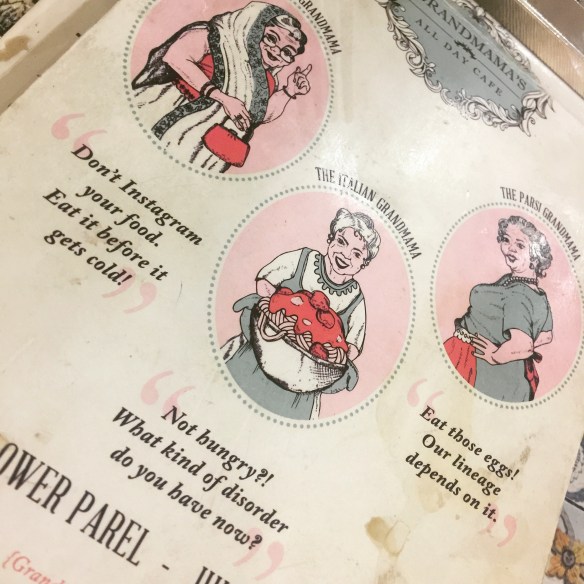
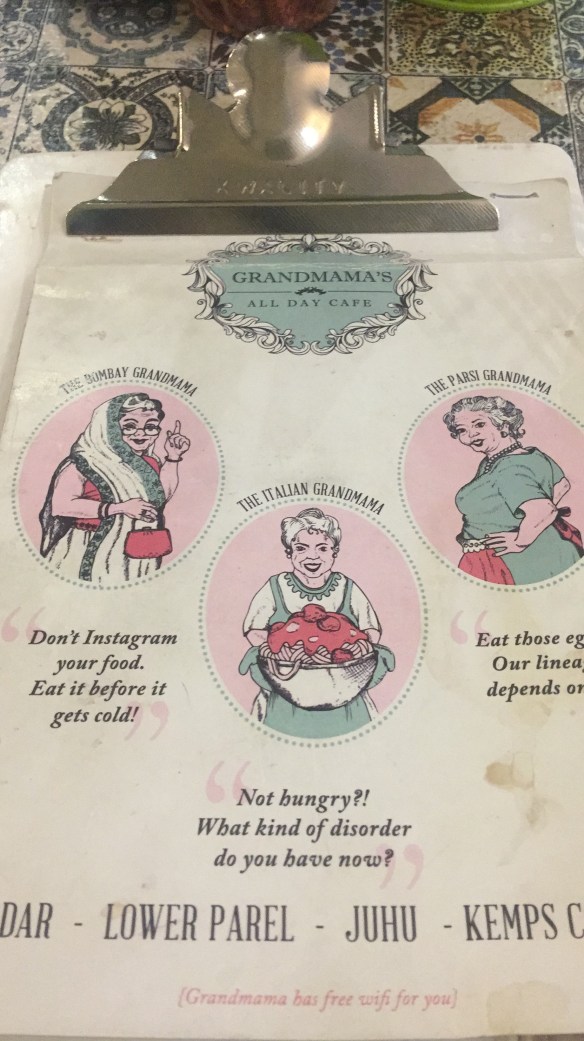
Italian, Mumbai and Parsi grandmamas offer their own unique fare. I loved the crisp messages on the menu card.

Dadar7

Grandmama’s Cafe offers an amazing array of food but what struck me was the very thoughtfully-designed menu card “clipped” on a old-style hard board.

Dadar1

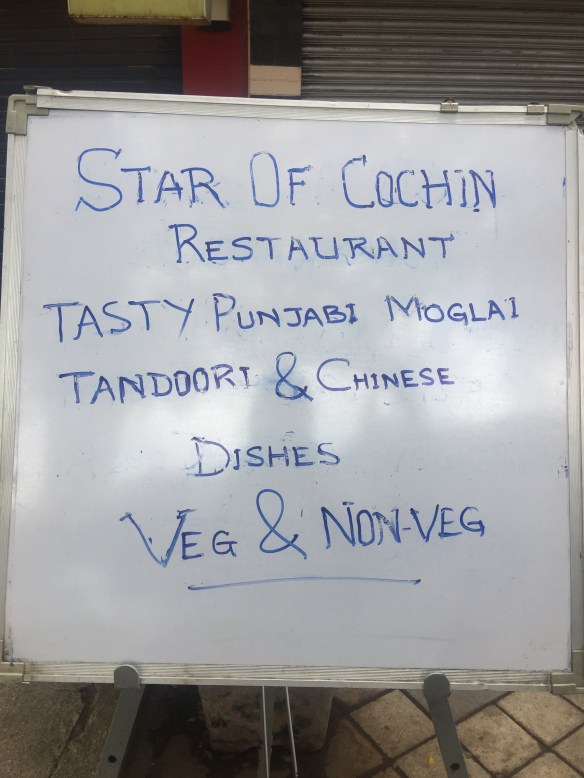
This restaurant is the Star of Cochin ( a city in Kerala, Southern India), but offers Punjabi, ‘Moglai’ and Chinese – vegetarian and non-vegetarian dishes – a virtual melting pot of cuisines.

Dadar5

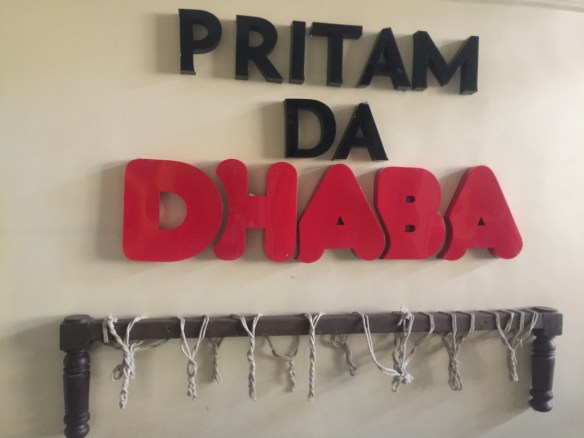
No place is “complete” without a Punjabi Dhaba (traditional Punjabi restaurant) and Dadar is no exception.

Dadar2

The “ancient” tap, and in working condition, brought back childhood memories.

Dadar 4

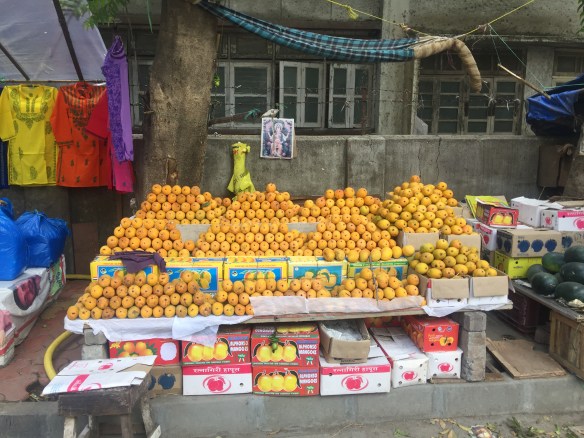
It’s the mango season and it’s obvious all over.

Dadar3

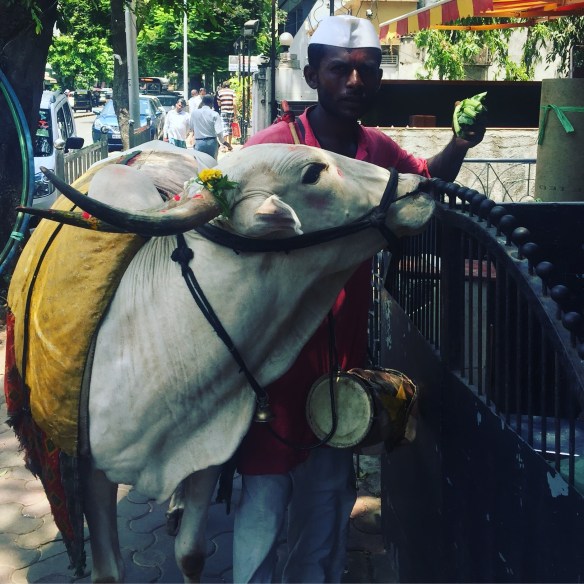
We find these “cowherds” everywhere in India, and the streets of Dadar were not an exception.

Dadar11

Mumbai Police Sub Inspector Muley was only too glad to pose but not before he had given one final twist to his mustache.


Maximum City – Maximum Rain

We were in Mumbai – the Maximum City – over four days this week and had planned to look around, take walks and generally experience life in a metropolis – a city that never sleeps.
We were hoping for some rain just to experience what it was like during the monsoons but were assured there would be little, if at all, this time of the year, especially after the Ganesh Chaturti festival.Though this wasn’t my first trip to India’s commercial capital, it was one during which I hoped to spend the maximum time on myself. But that was not to be.
A walk in the Fort area was planned; I wanted to go inside the historical Victoria Terminus Station and ho around the famous Horniman Circle to explore the old buildings. Of course, a walk around the Gateway of India, the Marine Drive, the iconic Taj Mahal Hotel and a drink at the well-known one 150-year old Leopold Cafe were planned as well.
But the rain started to come down a couple of hours after we landed and it was still pouring buckets when we left four days later, which meant we were drenched wherever we went in spite of investing in rather flowery, but flimsy, umbrellas at the Gateway of India.
I did not, however, miss my favourite haunt – the booksellers at the Fort – and invested quite a packet in procuring a few invaluable publications. A visit to the Gateway of India and the Marine Drive also happened and so did the drink (a cold coffee) and Fish and Chips at the Leopold Cafe.
We missed out on Mumbai’s legendary street food, the traditional markets as well as a fun ride in the Mumbai Local on a Sunday.
Perhaps, soon, a visit during the “winters” is on the cards when, of course, it won’t be as wet and the weather will also be somewhat “cool” without the rain.


Monsoon Magic – or ‘aswachh’ Bharat

Mumbai during the monsoons – July and August in particular – is magical everywhere but by the sea, it’s heavenly. The view is beautiful and one cannot but sit on wet sand or take a walk along the coast, to soak in the view. But, as these pictures show, how can one escape the stench, the filth and the garbage so very common in Indian metropolis? I wonder what happened to the ‘swachh Bharat’ (clean India) campaign so tom-tommed by the Prime Minister? Why haven’t we seen armies of ‘volunteers’ descend on this, the Juhu area of Mumbai, and other places, clean up? And what, if any, is the punishment for us as a nation of litterbugs? Maybe that’s why they say in India, ‘bhagwaan bharosey chalta hai'(the Almighty runs the country)! That rights true because if that were not the case, this vast nation would’ve chocked a long time ago.