The spice of life is not in tradition any more

Bahrain’s Spice Market may not hold charm for the local population any more but, tucked away in the lanes of the Old Suq in the capital, Manama, it is a must visit for tourists and visitors.
The conventional ways of shopping have, in any case, taken a beating in the last few years with the advent of supermarkets and suq’s (traditional markets) have been among the first to fall victim.
However, as I have often discovered, the real charm of shopping in the “good old days” was when one picked up a jute (or cane) basket and went to the neighbourhood bazaar to pick up the day’s groceries.
As expected, Bahrain’s Spice Market was deserted when I went there for a walk last weekend. Hardly any customers, but for a few very ‘touristy’ people, were seen actually shopping while most who were there preferred to busy themselves with devouring the food on offer at the several eating joints.
The pungent smell of spices and the very friendly, mostly Asian, traders were welcoming and eager to sell their wares but were equally at ease with me preferring to take pictures instead. Yes, one of them said, most visitors are more interested in taking pictures but they didn’t mind. He admitted many of them end up purchasing some as well.
The same is the story of the rest of the suq – be it clothes, electronics, toys, utensils and the like. People – most people – just don’t go there any more, thanks to the ease and the air conditioned comfort of shopping in the supermarket.
Clearly, the spice of life in tradition does not exist any more!
A pity, really!

A day in Dadar

Visiting Mumbai earlier this month, I decided to take a trip to a part of the metropolis I had not been to earlier – Dadar!
The thing about Mumbai, India’s commercial capital, is that it its amazing ‘retro’ places, its traditional lifestyle and history are overbearing and, if one has the time, one can get lost in exploring its many facets.
That’s what I attempted to do in around half a day in this part of the city and came across several interesting ‘shots’ that are shown here.

Dadar8

It was a hot day and, though it were business as usual, some of the early risers took time off to take a quick nap.

Dadar10

This Irani restaurant, said to be about a 100 years old, still has actual old furniture, glass jars and utensils – amazing to see in these times.

Dadar 9

A regular at the Cafe Colony Restaurant.

Dadar6

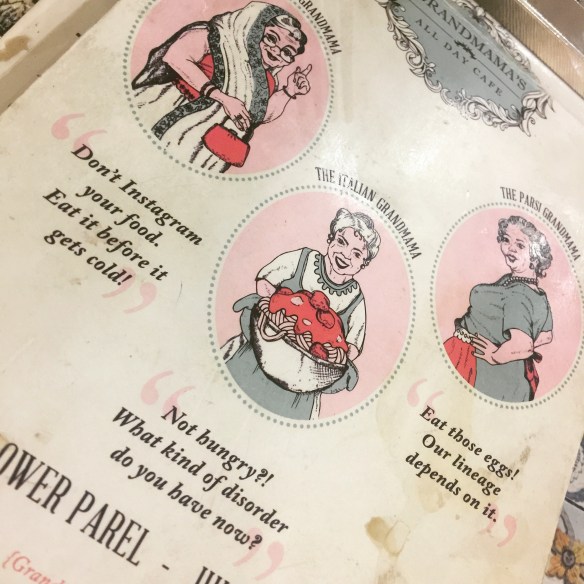
Italian, Mumbai and Parsi grandmamas offer their own unique fare. I loved the crisp messages on the menu card.

Dadar7

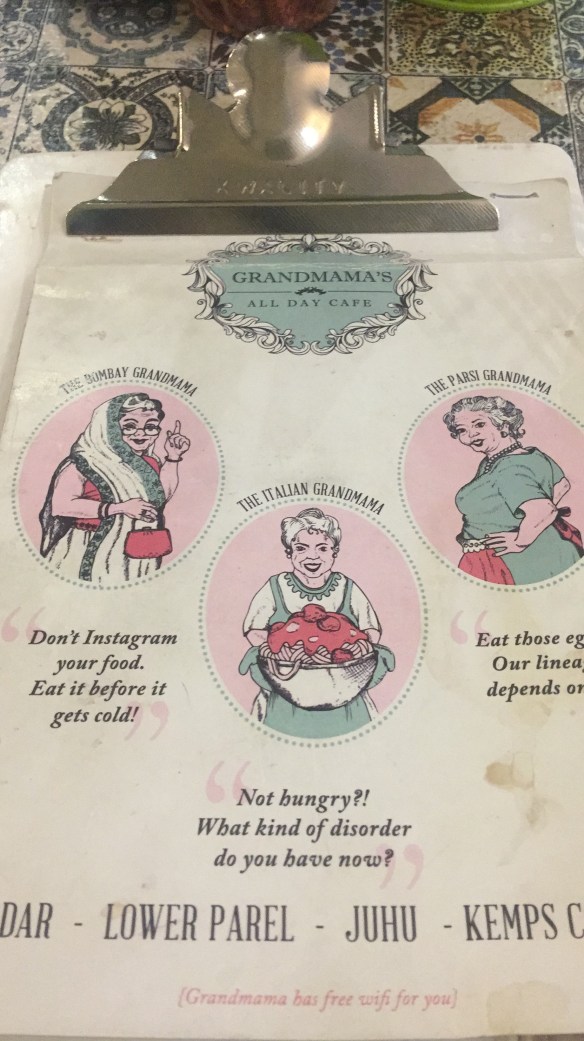
Grandmama’s Cafe offers an amazing array of food but what struck me was the very thoughtfully-designed menu card “clipped” on a old-style hard board.

Dadar1

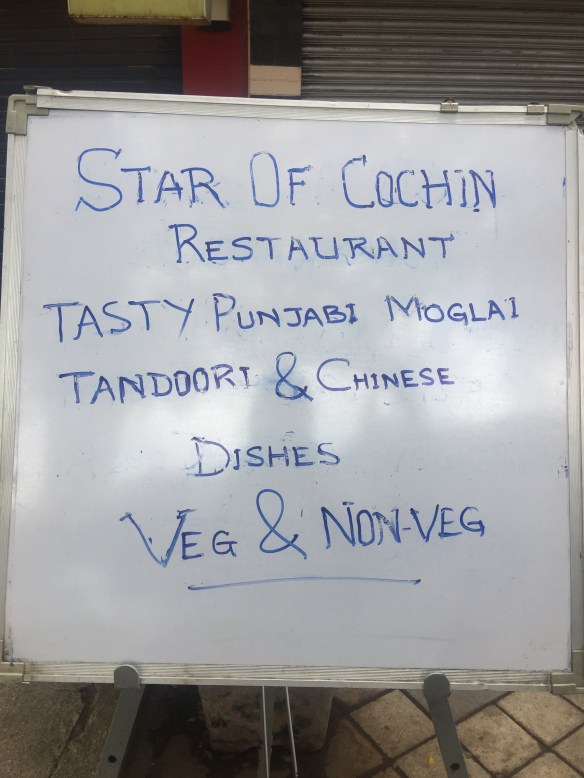
This restaurant is the Star of Cochin ( a city in Kerala, Southern India), but offers Punjabi, ‘Moglai’ and Chinese – vegetarian and non-vegetarian dishes – a virtual melting pot of cuisines.

Dadar5

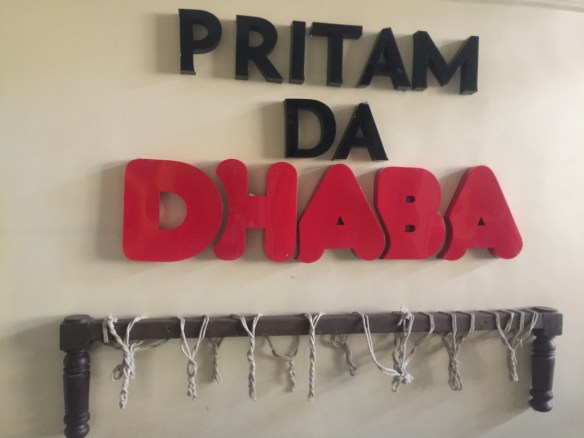
No place is “complete” without a Punjabi Dhaba (traditional Punjabi restaurant) and Dadar is no exception.

Dadar2

The “ancient” tap, and in working condition, brought back childhood memories.

Dadar 4

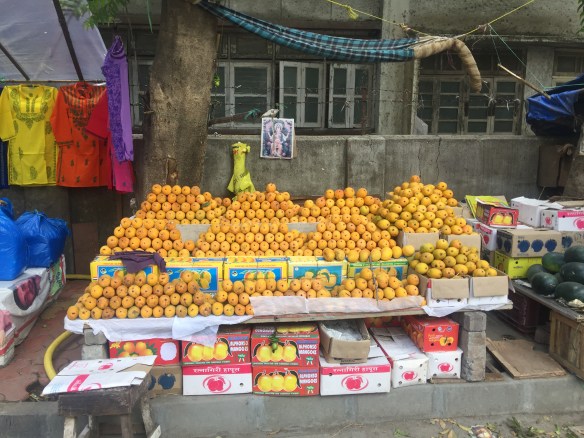
It’s the mango season and it’s obvious all over.

Dadar3

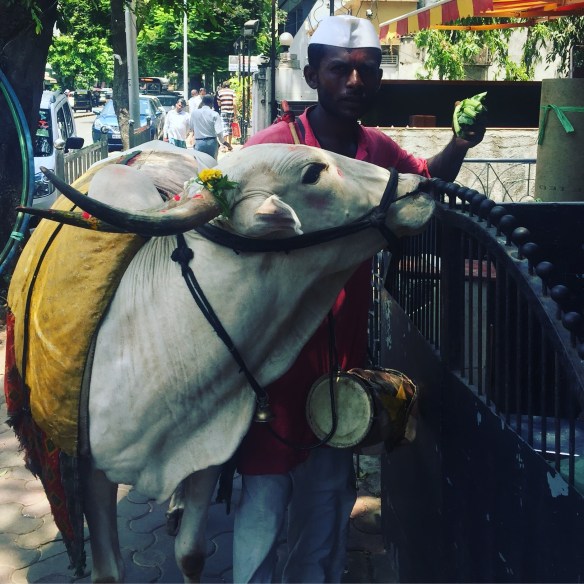
We find these “cowherds” everywhere in India, and the streets of Dadar were not an exception.

Dadar11

Mumbai Police Sub Inspector Muley was only too glad to pose but not before he had given one final twist to his mustache.


The Gateway

Bab Al Bahrain

This was once the gateway to Bahrain – the ‘main door’ – from where everyone entered the island kingdom, also called Bab Al Bahrain – entrance to Bahrain.
That was, however, until the early 1960’s, after which gradually, things began to change and reclamation became the order of the day.
I once met an elderly gentleman who said he came to Bahrain by steamer from India more than 50 years ago, which stopped a few nautical miles off the gateway pictured here. He then had to get on a rickety old row boat that brought him ashore but not before he and all his belongings, were drenched.40844125641107.5604caafd4c7e
That was then. Now, there is construction – roads, buildings, the Bahrain Financial Harbour, the Bahrain Bay and what have you, for a couple of kilometers where the sea once was – and it hasn’t stopped.
Where we see cars parked now and traffic moving was where the boat docked. The gateway was even then a majestic structure as seen in this picture.
Of course, over time, Bahrain has become very crowded, and very modern. The old buildings have given way to new development, and the Bab Al Bahrain has a spanking new look, in the process becoming one of the most modern ‘old’ buildings in the country.bab_al_bahrain_1950_m171111
It makes me wonder – whenever I take a walk in the area – whether all this development is worth it. What was life like back in the day? No, or very few cars, lots of bicycles, a few trucks, donkey, horse and hand carts, and no pollution!
Sometimes I wish to go back in time to take a look – and maybe never return. A few years down the line, even this will be history with perhaps a sky train and hovercraft all over the place.
That’s what time does – to an individual, a nation, to its very structure. And that very time waits for no one. So we take it in our stride!tumblr_nkljih9ztm1r720bbo1_500

Not kite the way!

DSC_0709

Plastic kites in Busaiteen, Bahrain

I took some pictures of kite-flying enthusiasts playing with what they now call kites.
Made of plastic and fibre, with fibre strings as well, these ‘birds’ just fly in the wind, with no skill involved and no sense of adventure.

A roadside string 'factory' in Ahmedabad  -Courtesy: Tales Along the Way

A roadside string ‘factory’ in Ahmedabad
courtesy: Tales Along the Way

6777663521_8dbbfbe0cd_b

Traditional kites being sold on a pavement

Compare this with the days when we indulged in this sport (yes, it was SPORT then) when kites were made of bamboo sticks and thin paper and the string used was a fine cotton thread laced with a fine mixture of colour, glass powder and glue!
During the kite season, the streets of almost every Indian city (except in Southern India), were ‘littered’ with kite sellers, men and women, as well as roadside kite string ‘factories’.
There were competitions, there were teams of kite flyers, and most of all, everyone indulged in the activity – young and old, men and women, boys and girls. The spirit was infectious.
The spirit still exists but the kites of yesteryear are rarely to be found. The die-hard enthusiasts are still there but one has to look for them because they are the ones who still stick to tradition in the real sense.
DSC_0741Most kites are now machine-manufactured though in some parts of India, traditionally the strongholds of kite-flying like Ahmedabad and Amritsar, there are still a lot of bamboo and paper kites.
But here in Bahrain, I have never seen those. There are festivals to mark occasions, in keeping with the Indian traditions, but only plastic “China-made” kites are used.
This is the modern sport anyway. Things change with time and like many others, kite-flying has also turned the corner.
Clearly, this is not the way.
But who would know? And who cares?DSC_0744
Also take a look at this brilliant blog:

Uttarayan , Kite Festival in Ahmedabad


Relic reborn?

DSC_8542This is perhaps Bahrain’s first hotel, how fallen on bad days like so many other heritage sites. The Bahrain Hotel came into existence in the 1940’s and was once a luxury address, situated right at the waterfront on the Manama Harbour. Those were the days when 90 per cent of the visitors to Bahrain came on ships and boats, with some of the larger vessels anchoring miles away from the shore to offload passengers into smaller boats that brought them ashore.
It was in those days the Bahrain Hotel flourished and guests enjoyed a luxurious view of the vast ocean.
The last few years have seen several abortive attempts to get this hotel going once again and it seems everyone’s given up finally.
Last word that I got was Bahrain’s Ministry of Culture had taken over the property to renovate and refurbish it as a heritage site. That is good news, if it’s true. Bahrain has a rich culture, tradition and history unmatched in this part of the world so it is important these relics from the past are preserved and promoted as places of tourist interest.
Hopefully, all is not lost – yet – and we might see the Bahrain Hotel rise from the proverbial dustbin of history – again!