Dragon Princess (Japan, 1976)
 One of the best Etsuko Shihomi films, also with one of the finest openings with Sonny Chiba fighting bad guys in an abandoned small church beaten by spaghetti western winds. Before the fight is over Chiba’s got a dagger in his eye. Cut to eye patched Chiba training his daughter, who grows up into Etsuko Shihomi during the OP credits, in snow in Los Angeles (!), to avenge her dad. A weaker film could crush under such a diamond opening, but this is Shihomi and co-star Yasuaki Kurata in top form.
The straight forward plot has a habit of abandoning every story thread it introduces (Chiba is killed off by the 20 minute mark, the story moves from USA to Japan at the same time, and a bad guy is organizing a martial arts tournament but every top contender, and himself, are killed off before the tournament even begins!) but that matters not as the film moves like a bullet train, packs truckloads of first grade karate action into 81 min and completes the package with Shunsuke Kikichi’s kick ass score. From gender political perspective it’s one of the finest films of its era/genre with Shihomi kicking major ass and no woman getting raped or stripped down (except in the American theatrical version which inserts a scene from Tokyo Emmanuelle in the middle of the film!). If you were to ask “what are fine women made of?”, this film’s answer would be “positive attitude and karate kicks”.
* Original title: Hissatsu onna kenshi (必殺女拳士)
* Director: Yutaka Kohira
* Chiba’s role: Major supporting role
* Film availability: Japanese Cut: Toei DVD (Japan) (No subs); US Cut: BCI DVD (Eng Dub)


The American version, which was distributed by Silverstein Films (who also brought Karate Warriors to US cinemas) features the following notable differences:
1) At 79 minutes it’s about 2 minutes shorter than the Japanese version. The first major difference is that it’s missing the New York opening, with crime montage and Chiba being recommended as the new karate instructor for the police force. Instead the US cut goes straight to the opening fight. The title screen has also been re-done.


2) Some of the opening crime montage later surfaces, inserted into a later scene when the assassins are assassinating the karate tournament contenders. Some of the assassination locations have changed as well (“Okinawa” is now “South America”), and there is a weird green color effect used in one shot in the US version.


3) A brief party/sex scene from Nikkatsu’s Roman Porno film Tokyo Emmanuelle (1975) has been inserted in the middle of the film. It comes during a night club scene where Kurata is drinking with Amatsu and suddenly the film cuts to a Nikkatsu actor dancing and shagging with Kumiko Taguchi! Silverstein Films must have disagreed about the film’s gender progressive approach and decided to make it a bit spicier!


There may also be other minor differences that I haven’t noticed. The score is the same as the Japanese version, and although the dubbed dialogue doesn’t always match the storyline is essentially the same (unlike The Street Fighter’s Last Revenge or The Bodyguard, where the dub altered major plot points).
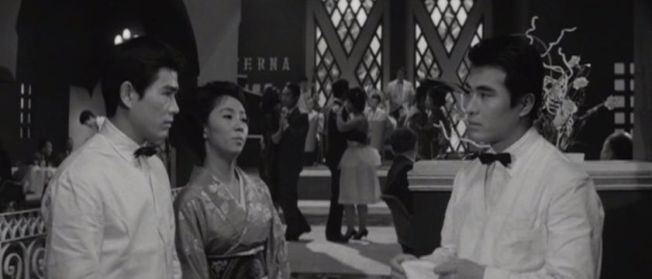
 Decent yakuza lieutenant Ken Takakura tries to maintain peace between gangs while rivals and reckless subordinates (Shinjiro Ebara in full Hiroki Matsukata mode trying to make money with boxing and dirty gambling) give him hard time. This was one of the relatively few modern day ninkyo films (most were set in pre-WWII era), which lends to some interesting bits such as the “final walk” in contemporary milieu. Not especially well written, lacking the kind of strong honour/duty dilemma that is the backbone of the best ninkyo films, but there are many good scenes like a detailed yakuza ceremony in the opening and action packed ending. It’s also surprisingly sexy, without explicit nudity, with one of Ebara’s businesses being turning a traditional stage theatre into a strip joint. Sonny Chiba has a decent supporting role as an impulsive young yakuza holding grudge against Takakura’s gang. There’s no character development for him but Chiba acts well and gets enough screen time to make it the film’s third or fourth biggest role. The film is unrelated to the Hideo Gosha movie (1974) of the same title.




 Sketches of Chiba