Archive for March, 2008

Where did the Resurrection go?

Posted in Uncategorized with tags , , , , , on March 30, 2008 by Ron Smith

“The sole ground of justification is the fulfillment of the condition of the covenant of works by Christ in his active and passive obedience.”
Dr. R. Scott Clark ~ THESES ON COVENANT THEOLOGY

Just a few questions. Does the Resurrection fit into either the category of Jesus’ active or passive obedience? Does the resurrection have anything to do with our justification? If not, then what did Paul mean here?

Romans 4:25
He was delivered over to death for our sins and was raised to life for our justification.

And can anyone tell me where the idea comes from that Jesus fulfilled the Covenant of Works? When I read the Reformed confessions, I see Jesus fulfilling His obligations under the Covenant of Grace, but I see nothing referencing His undertaking in the Covenant of Works.

Are Children Assumed to be Saved? « Green Baggins

Posted in Uncategorized with tags , , , on March 30, 2008 by Ron Smith

baptism.jpgThe TR answer to this question appears to be “No.”

Are Children Assumed to be Saved? « Green Baggins

I believe The Canons of Dordt answer this question in the affirmative, only it does not use the word “assume”, but rather it says that parents “ought not doubt.”

Article 17: The Salvation of the Infants of Believers
Since we must make judgments about God’s will from his Word, which testifies that the children of believers are holy, not by nature but by virtue of the gracious covenant in which they together with their parents are included, godly parents ought not to doubt the election and salvation of their children whom God calls out of this life in infancy.

Now, taking into account the “P” in TULIP (I argue as a TR), if we can have faith that had our infants died in their infancy, their election would be sure, why then can Christian parents not hold that same faith in regard to their children who live past infancy?

See Also On Faith and Presumption for an explanation of the difference between faith in God’s promises and “assumption”.

Can a man be profitable to God?

Posted in Uncategorized with tags , , , , , , , , on March 28, 2008 by Ron Smith

400px-michelangelo_buonarroti_022.jpg

Westminster Confession of Faith Shorter Catechism
Q. 12 What special act of providence did God exercise towards man, in the estate wherein he was created?
A. When God had created man, he entered into a covenant of life with him, upon condition of perfect obedience; forbidding him to eat of the tree of knowledge of good and evil, upon the pain of death.

The following notes to the Westminster Confession of Faith Shorter Catechism in the form of Q & A were written by Puritans Ebenezer and Ralph Erskine in 1765 in part 1 of the Fishers Catechism on the Shorter Catechism (I guess 107 questions were not enough for Puritan children). It is clear that they rejected the alleged meritorious nature of the pre-fall covenant. All emphases are mine.

Q. 30. Was there any proportion between Adam’s obedience, though sinless, and the life that was promised?
A. There can be no proportion between the obedience of a finite creature, however perfect, and the enjoyment of the infinite God, Job 22:2, 3 — “Can a man be profitable to God? Is it any pleasure to the Almighty, that thou art righteous? or, is it gain to him, that thou makest thy way perfect?”

Q. 31. Why could not Adam’s perfect obedience be meritorious of eternal life?
A. Because perfect obedience was no more than what he was bound to, by virtue of his natural dependence on God, as a reasonable creature made after his image.

Q. 32. Could he have claimed the reward as a debt, in case he had continued in his obedience?
A.He could have claimed it only as a pactional debt, in virtue of the covenant promise, by which God became debtor to his own faithfulness, but not in virtue of any intrinsic merit of his obedience, Luke 17:10.

Q. 33. What then was the grace and condescension of God that shined in the covenant of works?
A. In that he entered into a covenant, at all, with his own creature; and promised eternal life as a reward of his work, though he had nothing to work with, but what he received from God, 1 Cor. 4:7.

Q. 34. Did the covenant of works oblige man to seek life upon the account of his obedience?
A. It left man to expect it upon his obedience, but did not oblige him to seek it on that score; but only on account of the faithfulness of God in his promise, graciously annexing life to man’s sinless obedience, Matt. 19:16.

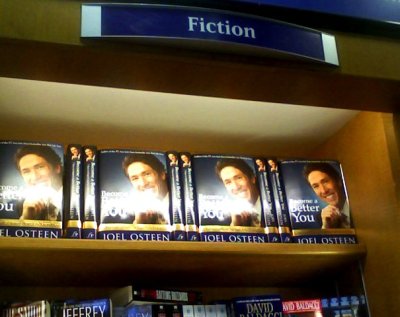
Stranger than Fiction

Posted in Uncategorized with tags , on March 28, 2008 by Ron Smith

A friend of a friend took this pic at an airport:

your-best-life-now-fiction.jpg

EDIT: I found the original photographer’s blog: Joel Osteen Fiction Writer?! « Faith and Inches

Props, bro. Great pic.

The Job Market

Posted in Uncategorized with tags , on March 28, 2008 by Ron Smith

I thank God for blessing me with gainful employment.

Is the CREC analogous to Islam?

Posted in Uncategorized with tags on March 26, 2008 by Ron Smith

sharia.jpgIt appears for R. Scott Clark, Westminster Seminary California Professor and United Reformed Church Minister, the answer is “Yes”.

Find the comment here: Compromising Positions « The Confessional Outhouse

Is this too far? Is The Confederation of Reformed Evangelical Churches so far gone in their various theological positions that cannot even seen as part of the Christian Church, but rather on par with Islam?

On Faith and Presumption

Posted in Uncategorized with tags , , , , , , on March 25, 2008 by Ron Smith

g__k__chesterton.jpg“Paganism declared that virtue was in a balance; Christianity declared it was in a conflict: the collision of two passions apparently opposite. Of course they were not really inconsistent; but they were such that it was hard to hold simultaneously. Let us follow for a moment the clue of the martyr and the suicide; and take the case of courage. No quality has ever so much addled the brains and tangled the definitions of merely rational sages. Courage is almost a contradiction in terms. It means a strong desire to live taking the form of a readiness to die. “He that will lose his life, the same shall save it,” is not a piece of mysticism for saints and heroes. It is a piece of everyday advice for sailors or mountaineers. It might be printed in an Alpine guide or a drill book. This paradox is the whole principle of courage; even of quite earthly or quite brutal courage. A man cut off by the sea may save his life if he will risk it on the precipice.

He can only get away from death by continually stepping within an inch of it. A soldier surrounded by enemies, if he is to cut his way out, needs to combine a strong desire for living with a strange carelessness about dying. He must not merely cling to life, for then he will be a coward, and will not escape. He must not merely wait for death, for then he will be a suicide, and will not escape. He must seek his life in a spirit of furious indifference to it; he must desire life like water and yet drink death like wine. No philosopher, I fancy, has ever expressed this romantic riddle with adequate lucidity, and I certainly have not done so. But Christianity has done more: it has marked the limits of it in the awful graves of the suicide and the hero, showing the distance between him who dies for the sake of living and him who dies for the sake of dying. And it has held up ever since above the European lances the banner of the mystery of chivalry: the Christian courage, which is a disdain of death; not the Chinese courage, which is a disdain of life.”GK Chesterton, Orthodoxy, Chapter VI. THE PARADOXES OF CHRISTIANITY

Upon reading this, my mind immediately went to the paradox of fear and faith.

We must always have faith in God’s promises and never doubt them, for this sin angers Him (Psalm 78:21-22). But we must also fear Him and not presume on our covenant standing that we do not have to work out our salvation (Philippians 2:12). There seems to be a need for balance here. There are those who have an unhealthy amount of fear and little faith. This is doubt. But there is also a sort of faith that has no fear. This is the presumptuous sort of faith Paul rebukes in Romans 11

17 If some of the branches have been broken off, and you, though a wild olive shoot, have been grafted in among the others and now share in the nourishing sap from the olive root, 18 do not boast over those branches. If you do, consider this: You do not support the root, but the root supports you. 19 You will say then, “Branches were broken off so that I could be grafted in.” 20 Granted. But they were broken off because of unbelief, and you stand by faith. Do not be arrogant, but be afraid. 21 For if God did not spare the natural branches, he will not spare you either. 22 Consider therefore the kindness and sternness of God: sternness to those who fell, but kindness to you, provided that you continue in his kindness. Otherwise, you also will be cut off.

I was recently warned on this thread over at Green Baggins that I was teaching my children to “presume” upon God’s grace. My answer to that is simply that there is no room for presumption where there is fear. Faith without fear is presumption or arrogance, as the apostle put it.

So the remedy for presumption in our children is a healthy dose of warning and fear. But if there is too much of that, they begin to doubt. The way we cure doubt is by declaring to them God’s promises and assuring them that those promises are theirs as God’s children in Christ. They need to be taught both to have faith and to fear. Saving faith both trembles at the threatenings, and embraces the promises of God for this life, and that which is to come. (WCF XIV.II)

Because you have obeyed Me…

Posted in Uncategorized with tags , on March 24, 2008 by Ron Smith

Genesis 22:15 The angel of the LORD called to Abraham from heaven a second time 16 and said, “I swear by myself, declares the LORD, that because you have done this and have not withheld your son, your only son, 17 I will surely bless you and make your descendants as numerous as the stars in the sky and as the sand on the seashore. Your descendants will take possession of the cities of their enemies, 18 and through your offspring all nations on earth will be blessed, because you have obeyed me.”

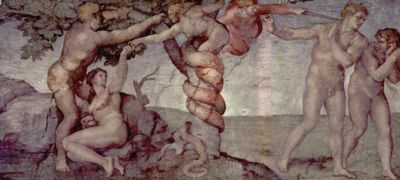
Had Adam stood, I wonder if God would have said something like, “because you have obeyed me…”. What difference would there have been?

The Resurrection of Christ and the Resurrection of Creation

Posted in Uncategorized with tags , , , , , on March 24, 2008 by Ron Smith

We affirm the bodily resurrection of Christ. The same body that was born, lived, was crucified and buried; this same body was made new and resurrected. Thus, the question, “But where is his old body?”, is nonsensical. His old body is not in some hidden grave. It is not in oblivion. It became His new body.

We affirm the bodily resurrection of the new man in Christ. Our same bodies that were born, lived and will die; these same bodies will be made new and resurrected like our Lord’s body. Thus, the question, “But where are our old bodies?”, is nonsensical. Our old bodies will not be left in their graves and they will not be sent to oblivion. They will become our new bodies.

We affirm the resurrection of heaven and earth. All things will be made new. The same creation that was born at God’s first word, that lived and was “very good” the day before God’s rest, that died with the sin of our first parents; this same creation will be made new and resurrected like our Lord’s body and our bodies. Thus, the question, “But where is the old creation?” is nonsensical. The old creation will not be left to wander about space and it will not be sent to oblivion. The old creation will become the new creation.

Matthew 28:6-7
1 Corinthians 15:20-28
Colossians 1:18-20
Romans 8:19-21

Death before Apostasy

Posted in Uncategorized with tags , , , on March 24, 2008 by Ron Smith

What language shall I borrow to thank Thee, dearest friend,
For this Thy dying sorrow, Thy pity without end?
O make me Thine forever, and should I fainting be,
Lord, let me never, never outlive my love to Thee
.

O Sacred Head, Now Wounded, Trinity Hymnal 247, vs 3
Bernard of Clairvaux 1091-1153

Design a site like this with WordPress.com
Get started