Richard St. Barbe Baker Afforestation Area. George Genereux Urban Regional Park. Humboldt Broncos Memorial Forest. Come to Nature. Come to Life. Friends of the Saskatoon Afforestationk Areas Inc. friendsareas.ca
American Crow Chappell Marsh. West Swale Wetlands. Richard St. Barbe Baker Afforestation Area. Saskatoon, SK, CA iNaturalist Observation with smart phone connecting with nature, supporting vital conservation research worldwide.SmartPhone nature Photo using the free iNaturalist app
Did you know that here in Saskatoon, on the very first day of the City Nature Challenge, in these early spring months with amazing temperatures, we already had 188 observations of organisms, spotted 94 different species, with the help of 30 identifiers and 21 keen observers? What an incredible start — and it’s all thanks to everyday heroes like you who are stepping outside and tuning into the world around them. What a great time to be outside connecting to nature!
Now it’s your turn to join the adventure! 🌎✨ Download the free iNaturalist app and be part of this exciting global event. Every photo and sound you record — whether it’s the cheerful call of a Robin, the sweet song of a Meadowlark, a busy ant on the move, a fluttering butterfly, a playful squirrel, or the delicate shimmer of a spider web — helps scientists, conservationists, and our whole community understand and protect the biodiversity we treasure.
Be the voice for nature today, Sunday, and Monday (April 28)! Together, we can celebrate Saskatoon’s wild side and show the world just how vibrant our corner of the Earth truly is. 🌿📸🎶
We would like to extend our heartfelt thanks to our incredible supporters: SaskPower, SaskTel, SaskEnergy, the Saskatoon Nature Society, and Wild About Saskatoon. Your generosity and commitment to environmental stewardship make events like the City Nature Challenge possible. Together, we are fostering a stronger connection between people and the natural world, inspiring a new generation of nature lovers and citizen scientists. Thank you for helping us celebrate and protect the beauty that surrounds us!
Richard St. Barbe Baker Afforestation Area is located in Saskatoon, Saskatchewan, Canada north of Cedar Villa Road, within city limits, in the furthest south west area of the city. 52° 06′ 106° 45′
Addresses:
Part SE 23-36-6 – Richard St. Barbe Baker Afforestation Area – 241 Township Road 362-A
Part SE 23-36-6 – SW Off-Leash Recreation Area (Richard St. Barbe Baker Afforestation Area ) – 355 Township Road 362-A
S ½ 22-36-6 Richard St. Barbe Baker Afforestation Area (West of SW OLRA) – 467 Township Road 362-A
NE 21-36-6 “George Genereux” Afforestation Area – 133 Range Road 3063
Wikimapia Map: type in Richard St. Barbe Baker Afforestation Area
Google Maps South West Off Leash area location pin at parking lot
Imagine stepping into the Richard St. Barbe Baker Afforestation Area or George Genereux Urban Regional Park, a lush tapestry of life where every element of the forest plays a crucial role in the grand ecosystem. This planted forest inside this naturalizing greenspace is not just a serene retreat but a dynamic community where plants, animals, and humans interweave their lives in a delicate balance.
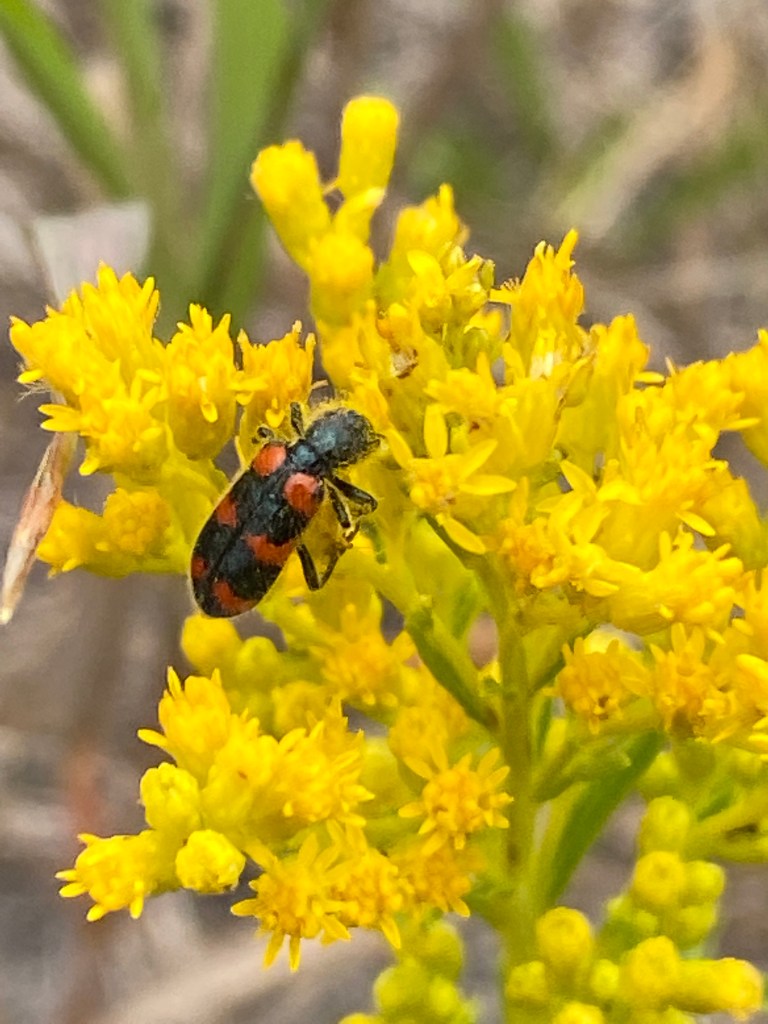
Red-blue Checkered Beetle Trichodes nuttalli on a Missouri Goldenrod
Solidago missouriensis at the afforestation areaGoldenrod Gall Fly Eurosta solidaginis Conservation Status: imperiled (S2S4) in Saskatchewan, CA (NatureServe)
As you walk through the forest, observe how the towering trees, such as the stately goldenrods and various spruces and pines, form the backbone of this habitat. Their broad canopies provide essential shelter and food sources for many forest inhabitants. The fallen leaves and decomposing wood create a rich layer of nutrients in the soil, supporting a hidden network of fungi, insects, and microorganisms that contribute to the forest’s food web.
Mule Deer Richard St. Barbe Baker Afforestation Area, Saskatoon, Saskatchewan, CanadaWhite-tailed deer (Odocoileus virginianus)
Look closely, and you might spot the graceful movement or presence of a white-tailed or mule deer that had been navigating through the underbrush. These deer are adept at utilizing the forest’s resources, feeding on tender shoots and leaves while avoiding predators. Their presence is a testament to the forest’s health, reflecting the balance of the habitat that supports a variety of species.
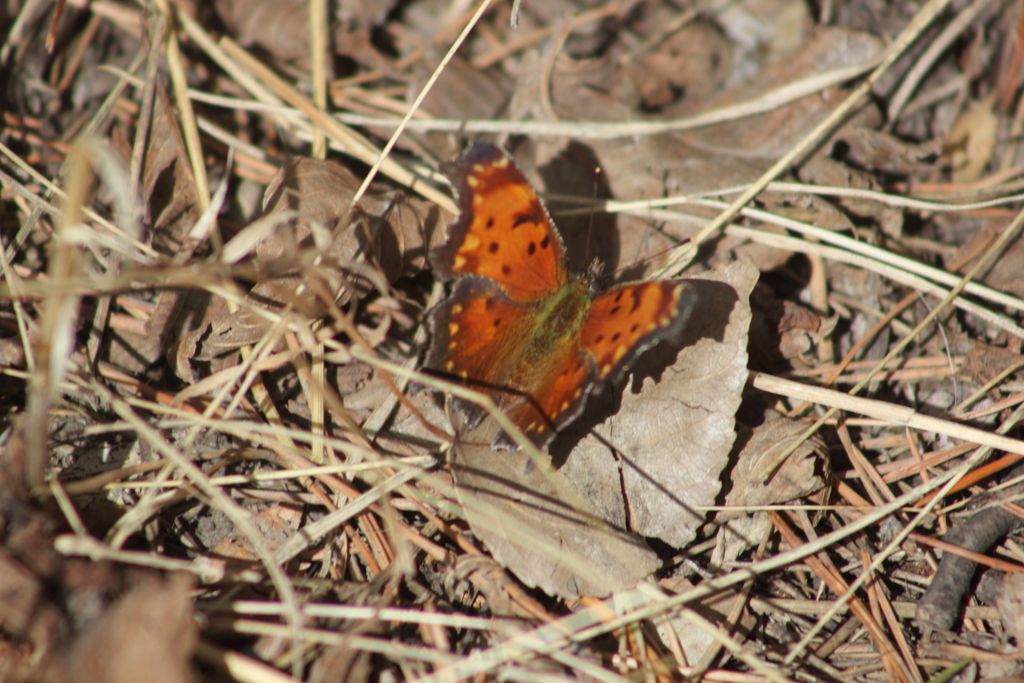
Gray Comma Butterfly Spring Polygonia progne
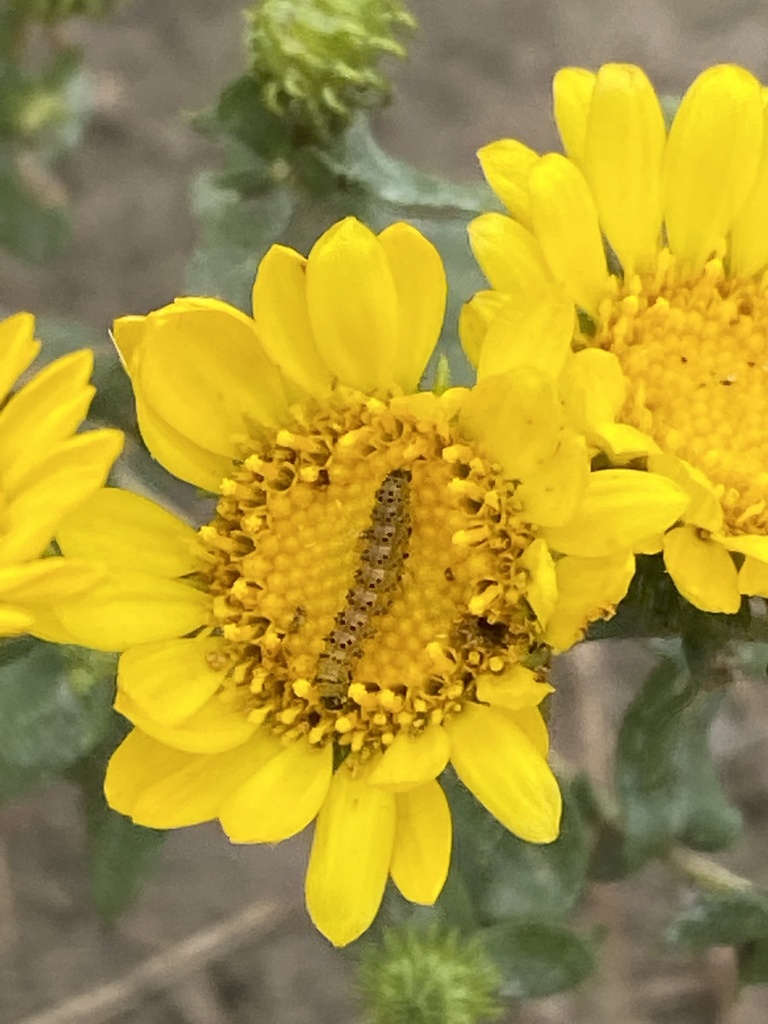
Yellow Sunflower Moth LARVA Stiria rugifrons on top of Curlycup Gumweed Grindelia squarrosa
In the air, watch for the delicate flutter of native bumblebees, butterflies and moths, which play a vital role in pollination. Their presence, alongside the busy activity of dragonflies and damselflies skimming across the wetlands of Chappell Marsh, highlights the forest’s role as a sanctuary for pollinators. These insects are crucial for the reproduction of many plant species, demonstrating the intricate interdependence within the forest community.
Did you know that you can tell time by the biennial flower Evening Primrose? Full opening of this beautiful yellow flower takes less than 20 minutes to receive its moth hosts overnight, and by noon, the flower has closed up again. It’s nick name is “beautiful of the night.” Dandelions will reverse this process to save energy, closing up at night, and opening fully in the early morning hours of the day. What are the habitats of flowers and flora of the afforestation areas- meadow or forest, wetlands or shoreline edges, sunny or shady areas?
Do you think all birds build their nests in the branches of trees? Some birds, like the Great Horned Owl, actually don’t make their own nests and instead use nests created by other birds. Additionally, some birds nest on the ground, in tree cavities made by woodpeckers, or along water and shoreline edges. Why would the different bird species choose a variety of habitats for the safety of their young, wouldn’t tree branches be safest?
What about snowshoe hares and jackrabbits? Do they live in underground burrows like Bugs Bunny, or do they create nests for their young? As lagomorphs (which include rabbits and hares) are at the bottom of the food chain, how do they ensure their safety and find shelter?
Consider the Lepidoptera family, which includes butterflies and moths. Where do they lay their eggs in the spring? Do their larvae have specific habitats, and where do the adults live? How many Lepidoptera migrate to escape the cold winter, how many and which lepidoptera have no mouth parts having short lifespans and only live to lay eggs, and which species in Saskatchewan overwinter here to start a family in the spring? Why are butterflies diurnal, flying in the daytime, and moths are nocturnal waking up when the butterflies go to sleep. Where do Lepidoptera sleep?
Finally, dragonflies and damselflies, which are both part of the Odonata order, rely heavily on wetlands and aquatic plants. What makes these habitats so important for Odonata, and what type of habitat do adult Odonata prefer?
Visiting the forestVisiting the forest
Human activities, however, can disrupt this delicate balance. One key practice to help preserve the integrity of this natural space is “staying on trails.” Walking only on designated paths protects the forest’s sensitive areas from unnecessary damage. When visitors stray off-trail, they can inadvertently trample delicate vegetation, compact soil, and disturb wildlife habitats. This can lead to erosion, reduced plant regeneration, and increased stress on animal communities that rely on a stable environment.
By staying on established trails, you minimize your impact on the ecosystem, allowing the forest to maintain its natural processes and beauty. Trails are carefully planned to avoid areas of high ecological sensitivity and to provide access while preserving the surrounding habitat. They also help concentrate foot traffic, reducing the spread of invasive plant species that could otherwise take hold in disturbed areas.
Clean up at both Richard St. Barbe Baker Afforestation Area and at George Genereux Urban Regional Park, Saskatoon The Clean Green Community SceneClean up at both Richard St. Barbe Baker Afforestation Area and at George Genereux Urban Regional Park, Saskatoon The Clean Green Community Scene
Human activities, such as littering, pose additional threats to wildlife. Plastic bags and containers can be mistaken for food by animals, leading to harmful consequences. To protect this valuable habitat for future visitors, it’s essential to follow the principle of “Pack it in, Pack it out, Leave no trace.” Be part of the Clean Green Community Scene! By disposing of waste responsibly and minimizing our impact, we help ensure that the forest remains a thriving sanctuary for all its inhabitants.
For those keen to delve deeper into the intricate web of life within the afforestation area, other resources are available. “Exploring the Wildwoods of Saskatoon: The Ecology of a Planted Forest” in English or French by Norman Lipinski offers insights into the food webs and food chains that sustain the forest’s ecosystem. Meanwhile, “Richard St. Barbe Baker Stories with Place-Based Nature Activities Through the Seasons” by Elizabeth Bekolay provides engaging activities and a comprehensive wildlife listing, enriching your understanding of the forest’s dynamic community.
For a closer look at the diverse organisms that make the afforestation area their home, including over 60 species at risk, visit the wildlife resource page. Here, you can explore the rich biodiversity and learn about the various tree species and wildlife that thrive in this unique environment.
As you journey through the Richard St. Barbe Baker Afforestation Area, take a moment to appreciate the intricate relationships between plants, animals, and humans. Each species, from the towering trees to the smallest insects, plays a role in maintaining the health of the habitat. By respecting the trails and protecting this natural treasure, we ensure that future generations can also experience the wonder of this vibrant forest community.
1. Habitat Exploration Project:
Activity: Investigate the populations of plants and animals in various habitats such as grassland meadows, forests, wetlands, and riparian edges of Chappell Marsh. Create a poster or presentation showcasing the different species found in each habitat and their roles.
Objective: Understand the variety of life in different habitats and how each species contributes to its ecosystem.
2. Indigenous Worldview Simulation:
Activity: Use the Medicine Wheel or Circle of Life concept to role-play how plants and animals interact and depend on each other within an ecosystem. Have students act out different roles (e.g., predator, prey, producer, consumer) and demonstrate their interdependence.
Objective: Explore Indigenous perspectives on the interconnectedness of life and understand how different species rely on each other.
3. Food Chain Classification Activity:
Activity: Classify various plants and animals, including humans, based on their roles in food chains (e.g., producer, herbivore, omnivore, predator). Create a food chain diagram using the classified organisms.
Objective: Learn about the different roles organisms play in food chains and understand how energy flows through ecosystems.
4. Food Web Construction:
Activity: Construct a visual representation of a specific food web within a chosen habitat (e.g., forest, wetland). Include multiple interconnected food chains and show how different organisms are linked.
Objective: Analyze how food webs represent complex interactions between different food chains and species.
5. Impact of Human Activities Role Play:
Activity: Role-play scenarios where students act as forest visitors who either follow or ignore guidelines like staying on trails and packing out trash. Discuss the potential impact of their actions on the forest ecosystem and its inhabitants.
Objective: Understand the effects of human activities on ecosystems and learn how to protect natural environments.
Related Questions
Objective: Understand the consequences of human actions on ecosystems and learn ways to reduce environmental harm.
What types of plants and animals live in grassland meadows, forests, wetlands, and riparian edges of Chappell Marsh, and how do they contribute to their habitats?
Objective: Identify and describe the species in different habitats and their roles.
How does the Medicine Wheel or Circle of Life concept illustrate the interdependence of plants and animals in an ecosystem?
Objective: Explore Indigenous views on the interconnectedness of life.
What are the different roles of organisms in a food chain, and how do they interact with one another?
Objective: Classify organisms based on their roles and understand their interactions in food chains.
How does a food web differ from a food chain, and what does it reveal about the relationships between different species in an ecosystem?
Objective: Analyze the complexity of food webs and their representation of multiple food chains.
What are the effects of human activities, such as trampling vegetation or littering, on forest ecosystems, and how can we minimize these impacts?
Richard St. Barbe Baker Afforestation Area is located in Saskatoon, Saskatchewan, Canada north of Cedar Villa Road, within city limits, in the furthest south west area of the city. 52° 06′ 106° 45′
Addresses:
Part SE 23-36-6 – Afforestation Area – 241 Township Road 362-A
Part SE 23-36-6 – SW Off-Leash Recreation Area (Richard St. Barbe Baker Afforestation Area ) – 355 Township Road 362-A
S ½ 22-36-6 Richard St. Barbe Baker Afforestation Area (West of SW OLRA) – 467 Township Road 362-A
NE 21-36-6 “George Genereux” Afforestation Area – 133 Range Road 3063
Wikimapia Map: type in Richard St. Barbe Baker Afforestation Area
Google Maps South West Off Leash area location pin at parking lot









 Forests of Memory. Forests of Learning. Forests for Life.