Richard St. Barbe Baker Afforestation Area. George Genereux Urban Regional Park. Humboldt Broncos Memorial Forest. Come to Nature. Come to Life. Friends of the Saskatoon Afforestationk Areas Inc. friendsareas.ca
At first glance, the images seem familiar—quiet greenspaces, open grassland edges, and familiar wildlife resting in plain sight. But look closer. Something has changed.
This “Spot the Differences” nature challenge, created with the Friends of the Saskatoon Afforestation Areas, a non-profit environmental charity, invites readers to slow down and observe the subtle details of local ecosystems while reconnecting with the natural world. It is both a visual puzzle and a reminder that nature is always shifting—often in ways we only notice when we truly pay attention.
Within these scenes, participants may encounter a cast of prairie wildlife: the gentle Mourning Dove resting in open areas, the industrious Yellow-bellied Sapsucker marking trees in search of sap, the migratory Lapland Longspur moving through seasonal landscapes, the winter-adapted Snowshoe Hare blending into changing ground cover, and the quick 13-lined Ground Squirrel darting through grassland habitats.
Each detail matters. Each change tells a story.
A Fragile Ecosystem Hidden in Plain Sight
The Saskatoon region sits within one of the most threatened ecosystems on Earth: the temperate grasslands. Globally, grasslands have experienced extensive loss due to agriculture, urban expansion, and habitat fragmentation. In fact, temperate grasslands are widely recognized as among the most endangered ecosystems worldwide, with only a small fraction remaining in a relatively intact state.
These landscapes are not empty—they are living systems that support pollinators, birds, mammals, soil health, and water regulation. Protecting them is essential not only for wildlife, but for human well-being as well.
Connecting to Global Environmental Goals
This local nature activity connects directly to several United Nations Sustainable Development Goals (SDGs):
SDG 15: Life on Land – Protecting, restoring, and promoting sustainable use of terrestrial ecosystems, including grasslands and biodiversity.
SDG 13: Climate Action – Conserving natural habitats that store carbon and help regulate climate systems.
SDG 11: Sustainable Cities and Communities – Supporting urban green spaces like afforestation areas that improve ecological resilience and quality of life.
SDG 4: Quality Education – Encouraging environmental learning through hands-on observation and engagement with nature.
It also aligns with broader international initiatives, including the:
United Nations Decade on Ecosystem Restoration (2021–2030), which calls for preventing, halting, and reversing ecosystem degradation worldwide.
United Nations Decade of Action for the Sustainable Development Goals, emphasizing urgent global efforts to meet sustainability targets by 2030.
Seeing Nature Differently
This is more than a puzzle. It is a reminder that ecosystems are dynamic, and that even small changes in the landscape can reflect larger environmental processes. By carefully observing what has shifted between images, participants are practicing a form of ecological awareness that mirrors real-world conservation work.
Can you see what changed in the trees? Tiny differences become big discoveries when you take the time to look.
Every detail tells a nature story. Hidden changes are waiting to be found. Sharpen your eyes, explore the outdoors, and test your vision with nature’s disguise.
Because in places like Saskatoon’s grasslands and urban forests, noticing is the first step toward protecting. Please come to the forests and discover and record real wildlife surprises with iNaturalist on your smart phone, and help to discover species at risk- you cannot protect what you do not know, and help to discover invasive species- early detection rapid response to protect the forests!
The Tree Doctors of SaskatchewanWoodpeckers in bark, light, and listening silence
In the pale gold wash of a prairie morning, the woods along the South Saskatchewan River begin to speak—not in words, but in percussion. A hollow tuk-tuk-tuk echoes through trembling aspen, answered by a sharper, faster roll from deeper in the stand. To walk into places like the Richard St. Barbe Baker Afforestation Area is to enter a living clinic, where every trunk is examined, every weakness tested, and every hidden infestation brought to light by a cadre of tireless specialists: Saskatchewan’s woodpeckers.
Woodpeckers are often first noticed by their rhythmic drumming echoing through the trees—but did you know they also have unique, distinctive calls? Beyond the hammering on bark, each species has its own voice: sharp pik notes, rattling bursts, or ringing cries that carry across the forest. Learning these calls adds another layer to identification, revealing that woodpeckers are not just percussionists of the woods, but vocalists as well.
Writers like Gerard Gorman and Paul Bannick often frame woodpeckers as ecological keystones, while Stephen Shunk lends them narrative precision—birds defined as much by sound and behavior as by plumage. Frances Backhouse, meanwhile, would likely remind us that here on the northern plains, their work unfolds in a landscape shaped by fire, frost, fungus, and time. Together, these perspectives reveal a truth foresters have long known: woodpeckers are not merely inhabitants of the forest—they are its physicians.
A silviculturist is a practitioner of forest medicine, managing ecosystems through science and care; in the spirit of Baba Wya Miti, Richard St. Barbe Baker, they parallel woodpeckers by targeting hidden threats beneath bark and ensuring trees remain resilient.
Drumming in the Clinic of Trees
Forests, even the modest shelterbelts and riverine groves of Saskatchewan, are battlegrounds. Beneath bark and within cambium flows an unseen war: beetles burrow, larvae tunnel, fungi spread. Dutch elm disease—caused by Ophiostoma fungi and carried by bark beetles—has already rewritten the story of prairie towns. In this relentless siege, woodpeckers serve as both diagnosticians and surgeons.
Their tools are deceptively simple: a chisel bill, a barbed tongue, and a skull evolved to absorb impact. Yet with these, they perform countless “operations” each day—extracting borers from living trees, peeling bark to expose colonies, and halting outbreaks before they cascade across entire stands. Unlike other birds that glean insects from leaves, woodpeckers specialize in the hidden. They go where the problem lives.
Stand quietly in the afforestation area and you may hear it: the soft scaling of bark, the deliberate tapping that signals inspection, the explosive drilling that follows discovery. Often, the wound they leave is so slight it vanishes within weeks. The patient tree survives; the parasite does not.
A silviculturist is an environmental practitioner who nurtures forests through careful intervention, working as a counterpart to woodpeckers by managing threats too large or complex for natural predators alone, in line with Richard St. Barbe Baker – (also called) -Baba Wya Miti’s vision of cooperative stewardship.
The Familiar and the Elusive
Seven species of woodpeckers may be encountered in Saskatchewan’s central parkland, though not all with equal ease. The most familiar trio—Northern Flicker, Downy Woodpecker, and Hairy Woodpecker—form the daily rhythm section of the woods.
The flicker is the ground forager, a woodpecker that has, in some ways, stepped outside its guild. You’ll find it probing lawns and ant hills, its spotted belly flashing as it bounds away, white rump catching the light. Its call carries far—a ringing kleer that seems too loud for the open sky.
The Downy and Hairy, however, demand closer attention. They cling to trunks and branches, black-and-white shadows flickering upward in short hops. At a glance, they are near twins. But birders, like surgeons, learn to notice the fine details.
A helpful field mark—shared quietly among observers and reinforced by field experience—is this: look to the tail. On a Downy, the white outer tail feathers are often marked with distinct black spots. Dotty equals Downy. If those feathers are clean and unmarked, you may be looking at a Hairy—though absence alone isn’t proof. Structure matters too: the Hairy’s bill is longer, more dagger-like; the Downy’s shorter, more delicate.
If the beak is short, just eye to beak, Downy’s the bird you’re trying to seek. But if the beak is long, sharp, and proud, Hairy Woodpecker calls out loud!
Taxonomy, too, has shifted beneath our feet. Once grouped together, these species now sit in separate genera—Dryobates for the Downy and Leuconotopicus for the Hairy—reflecting deeper evolutionary divergence. When uncertainty lingers, one can retreat, sensibly, to a broader label: pied woodpeckers of the tribe Melanerpini. Even in naming, the forest resists oversimplification.
Downy in Dryobates pubescens and the Hairy in Leuconotopicus villosus. In the field, a simple rule of thumb is often the most practical starting point. If the bird is smaller than a robin, it is almost certainly a Downy Woodpecker; Hairy Woodpeckers tend to be closer to robin-sized and noticeably more robust. Bill proportion is even more reliable: if the beak appears about the same length as the head, or equal to the distance from eye to tip of bill, it points to Hairy Woodpecker. Downies, by contrast, have a noticeably shorter bill—usually no longer than the space between the eye and the base of the beak. Behaviour can also help: Hairy Woodpeckers often forage lower on tree trunks and on larger, more mature stems, while Downies are more likely to work smaller branches, the tops of trees, or finer twigs where bark is thinner. Although both species may show subtle differences in tail feather markings, such as faint spotting on the white outer feathers in Downies, these plumage traits are less reliable than size and bill shape. In the end, most field observations in Saskatchewan come down to a careful combination of these clues, and even experienced observers will sometimes pause, reassess, and conclude—as many do—that the bill size and structure confirm a Hairy Woodpecker after all.
Downy likes twigs up high to play, Nibbling bugs in a lighter way. Hairy goes low on the big tree trunk, Drumming deep with a forest thump!
Beyond these common residents lie the rarer presences: the soot-backed Black-backed Woodpecker, drawn to burned forests; the enigmatic American Three-toed Woodpecker; the laddering Yellow-bellied Sapsucker, drilling neat rows of sap wells; and, if fortune and patience align, the imposing and endandangered Pileated Woodpecker, whose resonant blows recall the forest primeval.
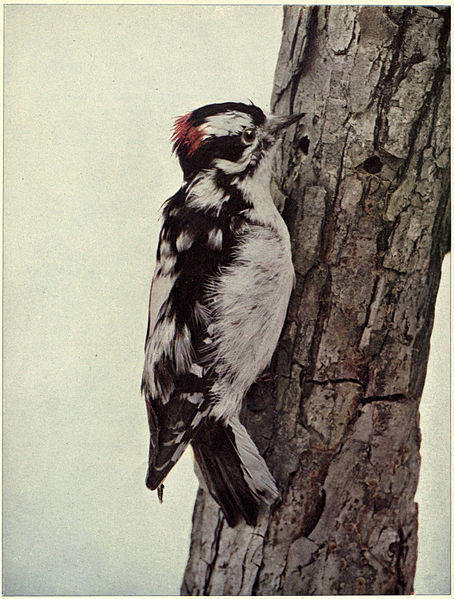
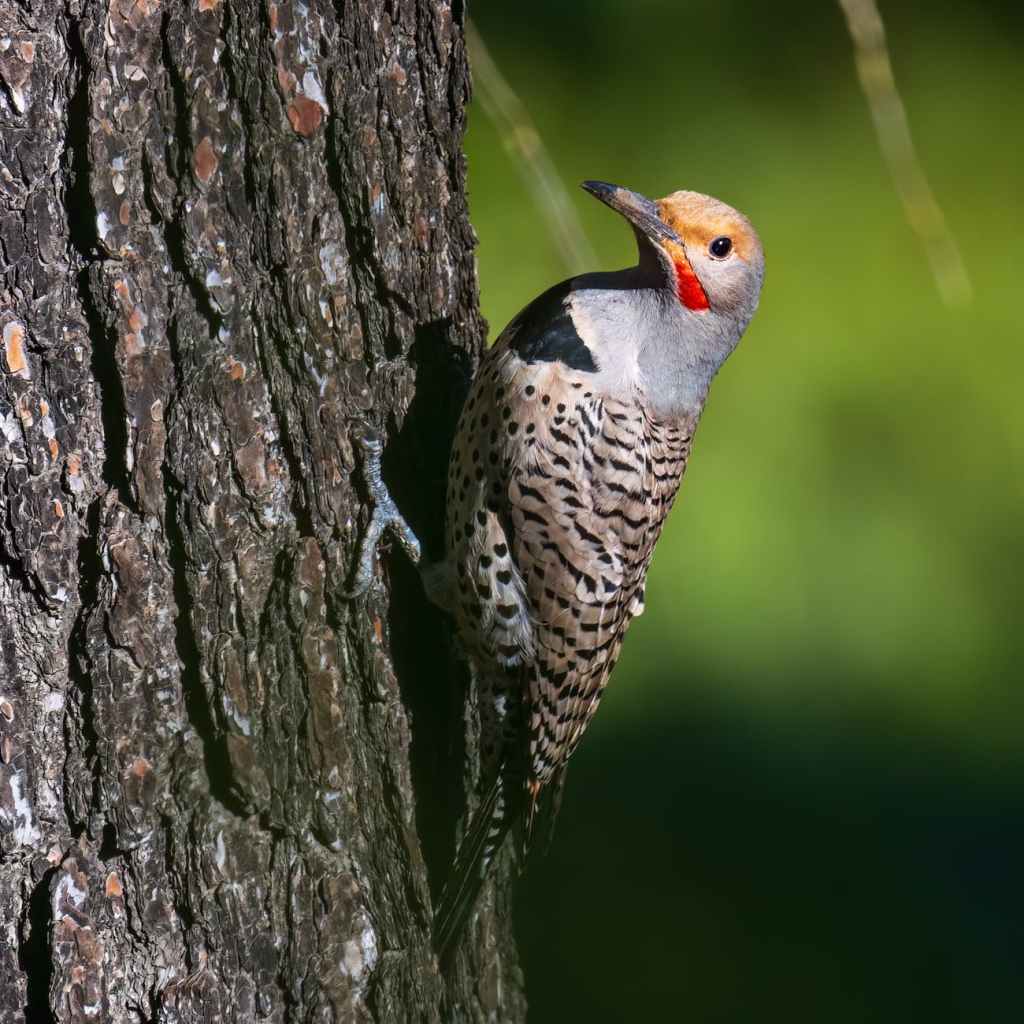
Hairy Woodpecker male (note the red) (Picoides villosus)Downy Woodpecker (Male) Dryobates pubescensNorthern Flicker Colaptes auratusDowny Woodpecker (Female) Dryobates pubescens
A Forest Under Siege—and Its Defenders
To understand woodpeckers is to understand the scale of their task. A single stand of birch or poplar can host hundreds of insect species—borers, weevils, aphids—each adapted to exploit a different weakness. Some attack leaves, others seeds, still others the very heartwood. Their numbers swell with astonishing speed; a single infested tree can become the epicenter of a spreading outbreak.
And yet, outbreaks are often halted before we notice them. A woodpecker locates the infestation early. If one bird cannot manage the feast, others join. They remain until the last larva is extracted, the last chamber opened. It is a quiet triumph, repeated thousands of times across the landscape.
Their work extends beyond pest control. The cavities they carve—meticulously hollowed chambers in dead or dying wood—become shelter for others. Chickadees, bluebirds, nuthatches, even small owls inherit these spaces. In winter, when prairie cold sharpens to the edge of survivability, such cavities can mean life.
A silviculturist is a forest steward trained to guide the growth, health, and regeneration of trees; like woodpeckers—the forest’s “tree doctors”—they diagnose problems early and act to sustain long-term forest vitality, a role exemplified by Richard St. Barbe Baker, also known as Baba Wya Miti (“Loving Father of Trees”).
Listening as Practice
To walk among woodpeckers is to relearn attention. Identification is not only visual; it is auditory, tactile, almost intuitive. Each species has its own cadence of drumming—flickers slower and more deliberate, Downies brisk and even, Hairies louder, more forceful. Calls carry through branches like signatures.
This is where writers like Shunk excel: urging us to build a vocabulary of sound. And where Bannick’s photography reminds us that behavior—posture, movement, foraging style—is often more telling than color. Gorman would add: watch the habitat. Burned forest? Think Black-backed. Sap wells in tidy rows? Sapsucker. Open parkland with scattered trees? Flicker territory.
Backhouse might step back further still, asking us to see not just the bird, but the relationship—the ancient contract between tree and woodpecker, decay and renewal, death and reuse.
A silviculturist is a “tree doctor” in human form, applying knowledge of soils, species, and pests to heal forests, echoing the natural work of woodpeckers and the conservation ethic championed by Baba Wya Miti, ‘the affectionate Father of the Trees’, the name bestowed upon Richard St. Barbe Baker.
A Final Note in the Woods
There is a tendency to think of forests as static, as scenery. But they are dynamic systems under constant pressure, requiring balance, intervention, resilience. Woodpeckers are part of that balance—not ornamental, but essential.
So on your next walk through the afforestation area, pause when you hear that steady tapping. Somewhere nearby, a tree doctor is at work—probing, diagnosing, healing in the only way the forest understands.
Watch the tail feathers. Listen for the rhythm. And remember: the health of the forest is written in these small, deliberate blows.
‘Trees and forests are the ideal environment for man, and he should study how to help his brother trees, By cooperating, man and forest both flourish.” Richard St. Barbe Baker, Silviculturist
A silviculturist is a dedicated student of forest life cycles, trained to protect and enhance woodland ecosystems; in partnership with woodpeckers as natural surgeons, they uphold the enduring philosophy of Richard St. Barbe Baker that forests are living communities requiring care, respect, and skilled stewardship
Bibliography
NOTE Two of the best places to learn woodpecker calls are:
Cornell Lab of Ornithology – especially their All About Birds website and the Merlin Bird ID app, which include high-quality audio recordings, descriptions, and comparisons of calls and drumming.
eBird – offers extensive libraries of bird sounds through its media section (linked with the Macaulay Library), where you can listen to real field recordings from across North America.
Both platforms let you hear differences between species—like the sharp pik of a Downy Woodpecker versus the louder, more forceful notes of a Hairy—helping you identify birds by sound as well as sight.
If it’s smaller than a robin in the tree, A Downy Woodpecker it’s likely to be! But if it’s robin-sized, strong and tall, That’s a Hairy Woodpecker—you’ve got it all!
When I went to the woods, it was not to escape, but to engage—to meet Nature on her own terms, to inquire, observe, and bear witness to the great pageantry of life that unfolds quietly, daily, under our very feet. And it is with this same spirit that I beckon you, dear reader, to take part in the Nature Conservancy of Canada’s Big Backyard BioBlitz from July 28 to August 4, 2025.
This is no idle stroll nor fleeting pastime. It is an invitation to return to the elemental—to become a student once more of the chickadee, the wild strawberry, the tiger beetle, and the trembling aspen. The BioBlitz, now in its fifth year, is a great gathering of curious minds and earnest hearts. It calls upon citizens of field and city alike to explore, observe, and record the living things that share their corner of the Earth.
The poet listens; the naturalist records. In this endeavor, you shall do both.
Equipped with nothing more than a keen eye and a modest tool—a camera or a smartphone—one may walk the familiar trails with new intention. Each beetle scuttling over a stone, each moss-covered log, becomes a chapter in the great, unwritten natural history of this land. iNaturalist, the platform upon which your sightings will be shared, becomes your ledger, your field book, your connection to a nation of fellow observers.
There is no wilderness too small. A backyard garden, a roadside ditch, a lakeside thicket—all are cradles of life deserving of our gaze and our gratitude. For who is to say where wonder resides? It may well be that the caterpillar inching along your front porch holds the secret to tomorrow’s ecological insight.
By lending your eyes and ears to the BioBlitz, you become part of something vaster than yourself. You contribute to a living library of knowledge that helps scientists track shifting species ranges, identify rare and endangered flora, and take the pulse of ecosystems under pressure.
But perhaps more than data, what you collect is reverence.
This weeklong celebration is not merely scientific but soulful. It reminds us that we are not separate from nature, but of it. That to know a place is to love it. And that true conservation begins not only in grand protected parks but in the wild patches of our own daily lives.
So, wander slowly. Look closely. Listen deeply. Let the chickadee instruct you in cheerfulness, and the milkweed in patience. And in these humble acts of noticing, become again part of the wild family of life.
As Henry David Thoreau once wrote, “Heaven is under our feet as well as over our heads.” During the Big Backyard BioBlitz, may you discover both.
Join the BioBlitz: Sign up today and become a steward of wonder from July 28 – August 4, 2025. Ready, set, snap!
The Trembling Aspen is also referred to as the Quaking Aspen (Populus tremuloides Michx) Autumn colour of foliage CC3.0 Stan ShebsThe Trembling Aspen is also referred to as the Quaking Aspen (Populus tremuloides Michx) Autumn colour of foliage CC 3 Walter Siegmund
Addresses:
Part SE 23-36-6 – Richard St. Barbe Baker Afforestation Area – 241 Township Road 362-A
Part SE 23-36-6 – SW Off-Leash Recreation Area (Richard St. Barbe Baker Afforestation Area ) – 355 Township Road 362-A
S ½ 22-36-6 Richard St. Barbe Baker Afforestation Area (West of SW OLRA) – 467 Township Road 362-A
NE 21-36-6 “George Genereux” Afforestation Area – 133 Range Road 3063
Wikimapia Map: type in Richard St. Barbe Baker Afforestation Area
Google Maps South West Off Leash area location pin at parking lot
“Let Wild Be Wild”: Saskatoon’s New Wildlife Feeding Bylaw and the Lessons Nature Teaches Us
It starts, as these things often do, with good intentions: a bag of apples tossed near a thicket, a few scraps left out “for the deer,” or a kitchen compost bin not quite secured against curious nocturnal noses. It may feel like kindness—after all, who doesn’t feel a twinge of empathy when a doe crosses your backyard on a frosty morning? But the problem is that in the world of wildlife, what we see as a generous offering can unravel the delicate balance of survival.
Here in Saskatoon, we’re lucky. Our city is stitched together with corridors of green—places like the Richard St. Barbe Baker Afforestation Area and the Meewasin Valley—sanctuaries not only for the people seeking peace in nature, but for the coyotes, skunks, beavers, foxes, and yes, the deer who’ve learned to live on the urban fringe. And live they do, quite capably—until we step in with the wrong kind of help.
The City of Saskatoon has recently approved amendments to The Animal Control Bylaw and The Property Nuisance & Abatement Bylaw, effectively banning the feeding of wildlife on both public and private property. This is a bold and necessary step, and speaking to those who have spent decades working with animals across continents, I can assure you: it’s long overdue.
The reasons are as numerous as they are vital:
Feeding wild animals encourages them to lose their natural wariness around humans. A coyote that finds an easy meal on someone’s deck may soon start expecting it—and that’s when conflicts begin. A raccoon that routinely rummages through accessible garbage bins can become a nuisance. Worse yet, animals that associate people with food are more likely to be struck by vehicles, suffer poor nutrition, or be euthanized after so-called “aggressive” behaviour that’s really just confused boldness.
In my time working with animals, experts have seen time and again how we, as humans, often forget one simple truth: wild animals aren’t lost or lacking—they are wild. And wildness is a thing of beauty, not something to be softened by handouts of processed bread or fruit peelings.
Saskatoon’s new bylaw is clear:
Don’t feed the wildlife.
Don’t leave food or waste that may attract them.
You may still feed birds—if the feeder is elevated and inaccessible to other species.
Violations come with fines that start at $250, escalating to $1,000 for repeat offences. It’s a necessary deterrent. Because managing wildlife isn’t about control—it’s about respect.
Let me share a small story. Not long ago, while walking the wooded edge of an afforestation area, I came across a fox—its russet coat brilliant in the morning light. It paused, regarding me from a cautious distance. That distance was the respect between our species, an invisible boundary that said: “I know who you are. You are not my feeder. I do not need you to survive.”
That fox, like the deer in your backyard or the coyote in your alley, doesn’t need a sandwich or a slice of melon. It needs cover, clean water, a place to roam, and most importantly, to be left to its own ancient rhythms.
So, let’s take this bylaw not as a restriction, but a reminder. A reminder that the best way we can care for wildlife is by letting them stay wild. Walk the trails, watch from a respectful distance, pick up your trash, and yes—scoop the poop. Because even dog waste can attract scavengers and predators looking for an easy snack.
In this new chapter of Saskatoon’s coexistence with its wild neighbours, we’re not building fences—we’re setting boundaries that ensure safety, dignity, and survival for all.
Come to nature, come to life. Just don’t bring the snacks, and if you picnic, “Pack it in, Pack it out”.
Richard St. Barbe Baker Afforestation Area is located in Saskatoon, Saskatchewan, Canada north of Cedar Villa Road, within city limits, in the furthest south west area of the city. 52° 06′ 106° 45′
Addresses:
Part SE 23-36-6 – Afforestation Area – 241 Township Road 362-A
Part SE 23-36-6 – SW Off-Leash Recreation Area (Richard St. Barbe Baker Afforestation Area ) – 355 Township Road 362-A
S ½ 22-36-6 Richard St. Barbe Baker Afforestation Area (West of SW OLRA) – 467 Township Road 362-A
NE 21-36-6 “George Genereux” Afforestation Area – 133 Range Road 3063
Wikimapia Map: type in Richard St. Barbe Baker Afforestation Area
Google Maps South West Off Leash area location pin at parking lot
Saskatoon’s Wild Stats: How Earth Month and Citizen Science Are Turning Clicks into Conservation
It starts with a snap.
A beetle on a bike path. A flowering weed near a schoolyard. A mystery bird flitting through a suburban backyard. These fleeting encounters, photographed by citizens armed with smartphones, are revolutionizing science from the soil up—and Saskatoon is leading the charge.
Let’s talk numbers. Because Earth Month in Saskatoon isn’t just a feel-good calendar square anymore. It’s become a data goldmine, a real-time pulse check on biodiversity thanks to one powerful tool: iNaturalist.
In 2021, only five Saskatonians took part in the “Where’s Waldo” Nature Connect challenge. Just five. But they submitted 464 observations, which sparked 109 identifications and confirmed 144 species. Not bad for a pandemic year. Fast forward to April 2023, and participation exploded. The City Nature Challenge saw 1,154 observations of 309 species by 148 observers—almost a 30-fold increase in human engagement.
It’s not just quantity. It’s the quality of the science.
These community sightings feed directly into global biodiversity databases. The AI-powered computer vision on iNaturalist suggests identifications, but it’s the humans—like the 142 identifiers in 2025’s Earth Month survey—who validate and enrich the data. This combo of artificial intelligence and community intelligence creates a living map of life on the prairies.
And let’s not forget the 2023 June BioDiverCity Challenge. A jaw-dropping 2,130 observations. Seven. Hundred. Twenty-eight. Species. From fungi to foxes, lichens to ladybugs. That’s not just a list—it’s an ecological manifesto.
Then there’s the detective work: in 2025, Saskatoon citizen scientists weren’t just celebrating biodiversity—they were reporting the bad guys. Observations of noxious invasive species were shared with iMap Invasives SK, while sightings of species at risk were flagged to the Saskatchewan Conservation Data Centre. It’s like CSI: Nature.
Even the species ranges are shifting. In 2025, local observers documented species scientists hadn’t seen in Saskatoon before—possible climate-related expansions that opened up conversations with researchers around the world. Talk about breaking news from a butterfly wing.
And here’s the kicker. While Saskatoon’s 2025 Earth Month stats clocked in at 881 observations and 301 species, it was powered by only 72 observers. That’s fewer people than a packed city bus—but look what they accomplished.
So next Earth Month, if someone tells you a single photo can’t make a difference, show them the numbers. Show them what happens when you empower regular people with a smartphone, a curious mind, and a few spare minutes.
Turns out, a snap really can change the world.
Biodiversity Blitz: Saskatoon’s Wild Side Gets a Standing Ovation
We came. We saw. We bio-blitzed.
The City Nature Challenge 2025 rolled through Saskatoon like a prairie storm—fast-moving, eye-opening, and, if you listened closely, filled with the sounds of citizen scientists shouting “I think that’s a tiger beetle!” while fumbling for their phones.
And now, as the data trickles in and the final identifications are confirmed, it’s time to put away the binoculars, un-mud the boots, and say two very important words:
Thank you.
Because this wasn’t just a weekend event. It was a symphony of collaboration—a grassroots crescendo of curiosity, care, and community. And if we’re applauding nature, we’d better be applauding the people who helped us find it.
Let’s start with the spark: Friends of the Saskatoon Afforestation Areas, the nonprofit environmental charity that took the wheel and drove CNC YXE 2025 straight into the hearts and minds of this city. These folks didn’t just sign up. They initiated the challenge. They were the ones in the trenches weeks—months—before the first warbler was spotted, crafting social media campaigns, issuing rallying cries, and putting pamphlets into the hands of teachers, trail-goers, and weekend wanderers.
Their mission? To turn every citizen into a scientist. And guess what? It worked.
They wrote educational articles. They distributed nature guides. They printed field sheets that turned families into field teams and schoolkids into species sleuths. Through workshops and social posts, press releases and posters, they did the thing that seems impossible in today’s digital chaos: they got people to look up from their screens and into the woods.
But they didn’t do it alone.
Enter the mighty partners of CNC YXE 2025. The Saskatoon Nature Society, with their deep field knowledge and uncanny ability to ID warblers from a single tweet. SaskPower, SaskTel, and SaskEnergy—thank you for plugging in to something bigger than the grid. Your support didn’t just keep the lights on; it lit up the entire nature-loving network.
Wild About Saskatoon brought the soul. You reminded us that “wild” is not something scary to be tamed—it’s something magical to be welcomed.
And the Saskatoon Public School Board—heroes of the future. You handed the next generation a magnifying glass and said, “Go explore.” That’s how naturalists are born. That’s how lifelong wonder begins.
And now let’s talk about the volunteers.
These are the people who kneel in the grass, who flip over leaves, who whisper to birds and squeal at spiders. The ones who stayed up late uploading observations, who battled bugs while logging beetles, who probably now dream in Latin species names. You are the reason this challenge was a success. You are the backbone of discovery.
And let’s not forget the identifiers—those generous, sharp-eyed naturalists around the world who turned our blurry caterpillar pics into solid science. Your keen insights and willingness to share your knowledge took this from “Hmm, what’s that?” to “Wow, it’s an Anopheles quadrimaculatus! And it’s a range expansion—we should flag it!”
That’s the magic. This wasn’t just about pretty flowers and charismatic critters. It was also about early detection. It was about spotting invasive species before they become ecological bullies. It was about mapping biodiversity—warts and all—and using that knowledge to protect what we love.
In total, hundreds of species were logged. Thousands of observations made. And perhaps most importantly, countless people fell in love with the natural world all over again.
Because when you stop to observe a beetle, you start to see the system. You start to see that even the smallest life has a role, a function, a place in the web. And that awareness? That’s the first step to stewardship.
So let’s raise a metaphorical glass (of native prairie tea, perhaps?) to everyone who showed up. To those who organized, to those who observed, and to those who identified. You made CNC YXE 2025 not just a scientific event—but a citywide celebration of curiosity.
And as for next year?
Let’s do it again. Bigger. Wilder. Even more connected. Because this isn’t just about logging species. It’s about remembering that we are part of something alive, something intricate, something beautiful—and that the story of Saskatoon’s wild side is still being written, one photo, one observation, one “Wow!” at a time.
Addresses:
Part SE 23-36-6 – Richard St. Barbe Baker Afforestation Area – 241 Township Road 362-A
Part SE 23-36-6 – SW Off-Leash Recreation Area (Richard St. Barbe Baker Afforestation Area ) – 355 Township Road 362-A
S ½ 22-36-6 Richard St. Barbe Baker Afforestation Area (West of SW OLRA) – 467 Township Road 362-A
NE 21-36-6 “George Genereux” Afforestation Area – 133 Range Road 3063
Wikimapia Map: type in Richard St. Barbe Baker Afforestation Area
Google Maps South West Off Leash area location pin at parking lot
We came. We saw. We bio-blitzed. The City Nature Challenge is our annual chance to get up close and personal with the astonishing biodiversity of Saskatoon — the birds, the bugs, the blooms. But amid the native wildflowers and elusive owls, something a little more… sinister… was lurking. This year’s observations didn’t just turn up charismatic critters and rare plants — they also uncovered some unwelcome guests. Think of them as the party crashers of the natural world: invasive species.
These invaders are not just botanical and entomological curiosities — they’re early warning signals. Each detection offers a vital chance for early detection and rapid response. And let’s just say, our keen-eyed citizen scientists didn’t miss a beat.
Take Coccinella septempunctata, the Seven-spotted Lady Beetle. Cute? Maybe. But it’s elbowing out native lady beetles with a voracious appetite and reproductive gusto that would make rabbits blush. This beetle didn’t just show up once — it popped up in multiple locations, proving it’s not a fluke. It’s a trend.
Then there’s Phyllotreta striolata, the Striped Flea Beetle. These pint-sized pests are the bane of brassica crops — punching way above their weight class by chewing through canola and mustard leaves like it’s an all-you-can-eat buffet.
And let’s not forget Artemisia absinthium — Absinthe Wormwood. Once prized for its use in the infamous “green fairy” liqueur, it’s now a noxious weed with allelopathic tendencies, meaning it literally poisons the soil around it to suppress native competitors. Think of it as the botanical equivalent of a playground bully.
Add to that list Sitona cylindricollis (the Sweetclover Weevil), Romualdius scaber (Crusted Root Weevil), Lilioceris lilii (Lily Leaf Beetle), and Taraxacum officinale (yes, the familiar and deceptively cheerful Common Dandelion that arrives when the soil becomes hard packed to help drill down with its tap roots to break it up), and you start to get the picture: Saskatoon’s natural spaces are in a quiet battle.
Some intruders hitched rides long ago and have become fixtures (Apis mellifera, the Western Honey Bee, is a European transplant we now depend on). Others, like the Siberian Elm and Caragana, were introduced on purpose for shelterbelts and windbreaks — good intentions that spiraled into ecological headaches.
The beauty of the City Nature Challenge is that it mobilizes everyday observers into frontline biosentinels. Your photos, your logs, your curiosity — they’re all helping scientists and city planners get the jump on these sneaky invaders before they spread.
Invasive species might not make headlines like polar bears or monarch butterflies, but trust me — they matter. And the fact that we’re spotting them? That means we’re paying attention. We’re waking up. And if nature’s taught us anything, it’s that being alert is the first step toward resilience.
So, next time you’re out snapping shots of Saskatoon’s wild side, remember: even the smallest weed can tell a big story. And that story — with your help — might just have a happier ending.
The Nature of Thanks: Saskatoon’s Citizen Scientists Take a Bow It’s not every day you get to witness a whole city lean in—eyes wide, hands busy, hearts open—to catalogue the wild. But over the course of a few breathtaking days, that’s exactly what happened in Saskatoon. With binoculars swinging from necks, phone cameras held aloft, and a collective curiosity humming like cicadas in the coulees, a wave of observation and identification swept through our river valley, our aspen groves, our backyard gardens.
And now, the results are in.
The city that bridges the prairie and the boreal has done it again—rallied its people, picked up its field guides, and thrown itself into the great mystery of the natural world. But before we tally species or sort our data, let’s pause to recognize something that matters just as much: the people behind the pixels.
This was no solo act. It was an orchestra.
Let’s begin by applauding the ones who struck up the first notes—the nonprofit environmental charity Friends of the Saskatoon Afforestation Areas. These folks didn’t just participate in the City Nature Challenge (CNC)—they ignited it. They initiated the 2025 edition of CNC YXE with a spark of passion, rallying the public with grassroots determination and a deep love for the land. From crafting social media campaigns to issuing the all-important call to action, they became the beating heart of the challenge. They posted, promoted, and prepared. They reminded everyone that our wild places—from Richard St. Barbe Baker Afforestation Area to the West Swale—deserve to be seen, celebrated, and stewarded.
It’s thanks to their vision and organization that CNC YXE 2025 became more than a weekend event. It became a movement. It became an invitation: Come to Nature, Come to Life.
And oh, did Saskatoon answer.
Let’s cue the spotlight for the Saskatoon Nature Society, whose members seem to have a sixth sense for warblers at fifty paces and rare mosses in ditch-side shadows. Their leadership, mentorship, and enthusiasm lit the trail for many first-time participants.
To SaskPower, SaskTel, SaskEnergy and the Saskatoon Nature Society, whose members seem to have a sixth sense for warblers at fifty paces and rare mosses in ditch-side shadows. —thank you for powering more than just the city grid. You helped energize a network of nature lovers, enabling them to plug in, upload, share, and connect their discoveries with the world. When infrastructure meets inspiration, amazing things happen.
To Wild About Saskatoon, your name says it all. You remind us that wildness is not something to fear, but something to cherish. You held the door open and invited the public to step outside—to smell the buffalo beans and listen for meadowlarks. That’s community science at its best.
And to the Saskatoon Public School Board—thank you for nurturing the next generation of biologists, botanists, and bug-chasers. When kids learn that a beetle on a sidewalk can be more than a bug—it can be data, it can be wonder—you’re sowing seeds that grow into lifelong curiosity.
Of course, none of this would have worked without the tireless volunteers. From retirees with notebooks to teenagers with TikTok accounts, from birders in ball caps to botanists in bucket hats—you were the real engine of this initiative. You got down in the dirt. You stayed up late checking IDs. You logged observations while the mosquitoes logged theirs.
And to the naturalists—local and global—who turned blurry photos into precise identifications, who gently corrected and generously shared your knowledge, who treated each amateur like a fellow explorer: thank you. You gave context, confidence, and community. You turned a scavenger hunt into a science lesson.
Let’s not forget what we’ve accomplished together. We’ve built more than a snapshot of species—we’ve built a tapestry of stories, stitched with the threads of wonder, woven from thousands of tiny, individual acts of looking closely. We’ve proven that in a world often distracted by screens and schedules, there’s still room for wonder. There’s still space for a moment where someone sees a bird, logs a plant, or bends down to inspect a caterpillar inching across the path—and says, simply, Wow.
So thank you, Saskatoon. From the banks of the South Saskatchewan to the trails of the Meewasin Valley, from the rooftops with nesting swifts to the wetlands that whisper with frogs—you showed up. You cared. And in doing so, you reminded us that science doesn’t just live in labs. It lives in us.
And what a beautiful life it is!
Addresses:
Part SE 23-36-6 – Richard St. Barbe Baker Afforestation Area – 241 Township Road 362-A
Part SE 23-36-6 – SW Off-Leash Recreation Area (Richard St. Barbe Baker Afforestation Area ) – 355 Township Road 362-A
S ½ 22-36-6 Richard St. Barbe Baker Afforestation Area (West of SW OLRA) – 467 Township Road 362-A
NE 21-36-6 “George Genereux” Afforestation Area – 133 Range Road 3063
Wikimapia Map: type in Richard St. Barbe Baker Afforestation Area
Google Maps South West Off Leash area location pin at parking lot
Today is Sunday, April 27 – the third day of the City Nature Challenge (CNC YXE) in Saskatoon! Don’t despair just yet, though; there’s still time to get involved in the fun. The great news? You don’t need to be an expert in nature or even know the difference between a squirrel and a chipmunk (we’ve all been there). All you need is your curiosity, your smartphone, and the iNaturalist app, which is your perfect companion for this fantastic outdoor adventure!
The City Nature Challenge is in full swing, and there’s no better way to spend the final day of Easter break (April 19–April 27) than with a nature hike in your own neighborhood. Whether you’re a beginner or a seasoned nature observer, the CNC is for everyone. And, if you’re looking for one last outdoor event to close out your weekend, the last scheduled event for today awaits you! But even if you can’t make it, it’s still the perfect day to get outside, take a walk, and discover the quirky, hilarious, and downright delightful surprises nature has to offer.
So, what should you keep an eye out for? Let me take you through a list of some of the wackiest, most amusing iNaturalist nature hike ideas that will add some serious fun to your outdoor adventure. These are just a few of the things you might come across as you stroll through the wonders of our local ecosystems:
1. The Most Unlikely Places to Find Wildlife: You’ll be amazed at where critters can show up – a frog in a tree stump, a bird hiding in a bush, or even a snail taking a nap under a park bench. Nature doesn’t play by the rules!
2. Bizarre Plant Behavior: Plants can be downright hilarious when you stop to watch them! Ever caught a sunflower turning its head to follow the sun like it’s checking in on an old friend? Or seen a plant that looks like it’s dancing in the breeze? That’s nature showing off its quirkiest side.
3. The Microbe Chronicles: Okay, so you might not see these tiny creatures with your naked eye, but don’t let that stop you! They are all around you, living in the dirt, on tree trunks, and in the water. With a little imagination, the world of microbes is nothing short of magical.
4. Wild Things Found in the Oddest Places: Maybe you’ll spot a bird perched on top of a fence post or a raccoon peeking out of an abandoned building. These are the creatures that make you think, “How did you even get there?” Nature knows no boundaries when it comes to location.
Are these not the most entertaining, unexpected, and inspiring observations you can make? The City Nature Challenge encourages you to look at the world through fresh eyes. Every rock, every leaf, and every inch of your environment holds potential for discovery and laughter.
Remember, the purpose of the CNC isn’t just to observe – it’s also to contribute to a global project that connects people to nature, to each other, and to science. By downloading the iNaturalist app, you become part of a worldwide community dedicated to documenting biodiversity. Plus, it’s a great way to keep track of all those funny moments that happen during your outdoor explorations.
While students are wrapping up their Easter Break (a glorious 9-day stretch of nature-filled fun from April 19 to April 27), the City Nature Challenge presents an incredible opportunity for all of us to connect with the great outdoors, discover wild organisms, and take part in citizen science. Whether you’re participating in one of today’s events or just taking a casual hike, your observations can contribute valuable data to the global effort to track biodiversity.
But wait, there’s more!
Let’s not forget that 2025 marks the 10th anniversary of the City Nature Challenge AND the 55th birthday of Earth Month. That’s two monumental reasons to get involved and show the planet some love while having a great time! The spirit of these celebrations is all about embracing the unexpected, celebrating the joy of discovery, and marveling at the oddities and wonders nature has to offer.
It’s a race against time, but there’s no need to rush – you can upload your observations to iNaturalist until May 4, 2025. So, if you’re out for one last nature walk or observing wildlife in your backyard, just snap your photos and start identifying those species. If you’re unsure about what you’ve spotted, no worries! iNaturalist’s AI-powered identification tool will give you suggestions, and the iNaturalist community will help refine your observations.
Not only will you be part of an amazing global movement, but you might also discover some hilarious and heartwarming stories about the organisms you encounter. Trust me, there’s nothing quite like the joy of seeing a chipmunk nibble on an acorn or a ladybug take a leisurely stroll across a leaf.
So, why not make the most of today and dive into one last adventure before the weekend ends? Whether you’re joining a City Nature Challenge event or simply venturing out on your own, there’s always something new to learn and laugh about in the great outdoors.
Download the iNaturalist app, open your eyes to the world around you, and let the fun begin!
Photo by Matthias Cooper on Pexels.comCity Nature Challenge CNCYXE The CNC ‘City Nature Challenge,’ CNCYXE2025 Natoona pimatshihk dans la vil in the Michif Language
Richard St. Barbe Baker Afforestation Area is located in Saskatoon, Saskatchewan, Canada north of Cedar Villa Road, within city limits, in the furthest south west area of the city. 52° 06′ 106° 45′
Addresses:
Part SE 23-36-6 – Richard St. Barbe Baker Afforestation Area – 241 Township Road 362-A
Part SE 23-36-6 – SW Off-Leash Recreation Area (Richard St. Barbe Baker Afforestation Area ) – 355 Township Road 362-A
S ½ 22-36-6 Richard St. Barbe Baker Afforestation Area (West of SW OLRA) – 467 Township Road 362-A
NE 21-36-6 “George Genereux” Afforestation Area – 133 Range Road 3063
Wikimapia Map: type in Richard St. Barbe Baker Afforestation Area
Google Maps South West Off Leash area location pin at parking lot
American Crow Chappell Marsh. West Swale Wetlands. Richard St. Barbe Baker Afforestation Area. Saskatoon, SK, CA iNaturalist Observation with smart phone connecting with nature, supporting vital conservation research worldwide.SmartPhone nature Photo using the free iNaturalist app
Did you know that here in Saskatoon, on the very first day of the City Nature Challenge, in these early spring months with amazing temperatures, we already had 188 observations of organisms, spotted 94 different species, with the help of 30 identifiers and 21 keen observers? What an incredible start — and it’s all thanks to everyday heroes like you who are stepping outside and tuning into the world around them. What a great time to be outside connecting to nature!
Now it’s your turn to join the adventure! 🌎✨ Download the free iNaturalist app and be part of this exciting global event. Every photo and sound you record — whether it’s the cheerful call of a Robin, the sweet song of a Meadowlark, a busy ant on the move, a fluttering butterfly, a playful squirrel, or the delicate shimmer of a spider web — helps scientists, conservationists, and our whole community understand and protect the biodiversity we treasure.
Be the voice for nature today, Sunday, and Monday (April 28)! Together, we can celebrate Saskatoon’s wild side and show the world just how vibrant our corner of the Earth truly is. 🌿📸🎶
We would like to extend our heartfelt thanks to our incredible supporters: SaskPower, SaskTel, SaskEnergy, the Saskatoon Nature Society, and Wild About Saskatoon. Your generosity and commitment to environmental stewardship make events like the City Nature Challenge possible. Together, we are fostering a stronger connection between people and the natural world, inspiring a new generation of nature lovers and citizen scientists. Thank you for helping us celebrate and protect the beauty that surrounds us!
Richard St. Barbe Baker Afforestation Area is located in Saskatoon, Saskatchewan, Canada north of Cedar Villa Road, within city limits, in the furthest south west area of the city. 52° 06′ 106° 45′
Addresses:
Part SE 23-36-6 – Richard St. Barbe Baker Afforestation Area – 241 Township Road 362-A
Part SE 23-36-6 – SW Off-Leash Recreation Area (Richard St. Barbe Baker Afforestation Area ) – 355 Township Road 362-A
S ½ 22-36-6 Richard St. Barbe Baker Afforestation Area (West of SW OLRA) – 467 Township Road 362-A
NE 21-36-6 “George Genereux” Afforestation Area – 133 Range Road 3063
Wikimapia Map: type in Richard St. Barbe Baker Afforestation Area
Google Maps South West Off Leash area location pin at parking lot
There’s no denying it—nature is full of wonders, but sometimes, it’s downright hilarious. From funny animal names to quirky behaviors, nature has a way of surprising us when we least expect it. And if you’re looking for a way to brighten your day (and maybe even get a good giggle), look no further than iNaturalist and its delightful collection of fun and quirky citizen science projects.
Whether you’re a seasoned iNat enthusiast or a newbie just beginning to explore, these whimsical projects will bring some unexpected joy and laughter into your nature walks. So, grab your phone, download the iNaturalist app, and dive into these projects that combine science with a good sense of humor! (you can also sign into iNaturalist on your computer)
1. Species with Funny English Common Names
Who says science has to be all serious and stuffy? This project is a treasure trove of hilarious and quirky animal names that will have you chuckling in no time. Have you ever met a Spotted Wobbegong? How about a Ghost Flower? These creatures’ names alone are enough to give you a good laugh, and when you dig deeper, you’ll find that they’re just as fascinating as they are funny. Want to join in? Check out the Species with Funny English Common Names project on iNaturalist, and prepare to be entertained.
2. Best. Names. Ever.
If you think the Spotted Wobbegong is a hoot, you’ll definitely want to check out the Best. Names. Ever. list on iNaturalist. This compilation is full of the most bizarre and amusing names in the animal kingdom, carefully curated by the iNaturalist community. With gems like Goosefoot, Punk Rock Spider, and Yeti Crab, you’ll be in stitches—and maybe even inspired to rename a few critters in your own backyard.
3. Poof! You Can Only Insult People Using Animal Names
This one is for the truly playful. Imagine a world where the only way you can insult someone is by calling them an animal—pretty fun, right? In this lighthearted project, users share their favorite (and most ridiculous) animal-inspired insults. Think “You big Mantis Shrimp!” or “Quit acting like a Sloth!” It’s a hilarious reminder that sometimes, nature’s quirks are the best punchlines.
There’s nothing like a good laugh to brighten your day, and what better way to get that than with some hilarious, nature-inspired comics? The Nature-Inspired Comics collection on iNaturalist is the perfect blend of humor and creativity, offering a collection of funny, quirky, and downright charming illustrations that celebrate the lighter side of the natural world. Who knew plants, animals, and fungi could be so funny?
Birds are already pretty funny with their funny faces and unique calls, but throw in a good bird pun, and you’ve got comedy gold. Whether it’s a Penguin doing a funny dance or a Hummingbird making you smile with its tiny flits, the Bird Puns and Fun project is the place to be if you enjoy a hearty laugh. With bird puns galore and observations from fellow nature lovers, you’ll be sure to find your funny bone in the feathers.
Okay, let’s get serious for a moment—sort of. The City Nature Challenge April 25 – 28, 2025 is an exciting event that invites communities worldwide to explore and document their local nature. But don’t worry, there’s still plenty of room for fun! Whether you’re tracking down wildlife in your city or taking pictures of strange plants in your neighborhood, you’re bound to encounter some amusing moments along the way. Plus, as part of a global competition, you can have a little friendly rivalry with other cities, which just adds to the excitement. Ready to participate in a bioblitz that also includes plenty of humor? Check out the CNC project on iNaturalist.
Let’s face it—sometimes nature just has a way of showing up in the strangest places. The Organisms on or Near Appropriate Signs project celebrates those hilarious moments when wildlife—be it a bird perched on a parking sign or a plant growing in the middle of a warning sign—decides to make itself known in a particularly funny way. Whether it’s a squirrel on a No Parking sign or a flower growing next to a Caution sign, this project reminds us that nature doesn’t always follow the rules, and that’s half the fun.
Sometimes the best nature photos aren’t the perfectly composed ones—they’re the unexpected, silly moments that make you laugh. The Screenshots, Snaps, and Other Silly Images project on iNaturalist celebrates those whimsical and funny snapshots that might not be scientifically important but certainly brighten your day. From funny animal expressions to bizarre plant shapes, this project is all about enjoying the lighter side of nature.
Nature is full of surprises, and while it’s easy to get caught up in the seriousness of conservation, biodiversity, and sustainability, sometimes it’s important to step back and enjoy the sheer joy and hilarity that our natural world provides. From funny animal names to quirky observations, these iNaturalist projects offer a delightful way to engage with nature in a fun and lighthearted way.
So, the next time you head outside, be on the lookout for a Spotted Wobbegong or a Ghost Flower. Snap a silly photo, get involved in a project, and remember: nature is not just beautiful and important—it’s also downright funny!
The holiday stretch from Friday, April 19 to Sunday, April 27, 2025, is about to be a whole lot more fun. Not only is it a chance to take a well-deserved break, but it also lines up with two very special celebrations: the 10th birthday of the City Nature Challenge (CNC) from April 25 – 28, 2025, and the 55th birthday of Earth Month! That’s double the reason to celebrate all things wild, wonderful, and green.
What better way to make the most of this rare overlap than by stepping outside and soaking up nature in all its glory? Whether you’re sharing a quiet moment with loved ones or venturing off on your own, this is the perfect time to embrace nature’s quirks, beauty, and occasional oddball charm. It’s the ideal holiday to connect with the outdoors and enjoy the simple, silly, and stunning things nature has to offer. So, grab your boots, smartphone with iNaturalist loaded and binoculars—let’s go explore!
Richard St. Barbe Baker Afforestation Area is located in Saskatoon, Saskatchewan, Canada north of Cedar Villa Road, within city limits, in the furthest south west area of the city. 52° 06′ 106° 45′
Addresses:
Part SE 23-36-6 – Richard St. Barbe Baker Afforestation Area – 241 Township Road 362-A
Part SE 23-36-6 – SW Off-Leash Recreation Area (Richard St. Barbe Baker Afforestation Area ) – 355 Township Road 362-A
S ½ 22-36-6 Richard St. Barbe Baker Afforestation Area (West of SW OLRA) – 467 Township Road 362-A
NE 21-36-6 “George Genereux” Afforestation Area – 133 Range Road 3063
Wikimapia Map: type in Richard St. Barbe Baker Afforestation Area
Google Maps South West Off Leash area location pin at parking lot
Springtime in Saskatchewan brings new life, and what better way to celebrate the season than by getting outside and exploring the fascinating world of spots in nature? As Easter break overlaps with the City Nature Challenge (CNC YXE 2025), taking place from April 25 to April 28, 2025, we’ve got the perfect way to reconnect with nature—by documenting the incredible wildlife and plants around us!
The Spotty Challenge The City Nature Challenge isn’t just about discovering all the amazing wildlife in our area—it’s about contributing to a global effort to protect biodiversity. Today, right now, we’re focusing on one quirky theme: Spots. From ladybugs to leopard frogs, birds to beetles, there are countless organisms in Saskatchewan that sport spots in some form. Even leaves with egg spots count! We invite you to think about which organisms in your neighborhood have those signature markings and share your findings with the world.
When you think of “spots” in Saskatchewan, what comes to mind? Perhaps you’ll find lady beetles, Northern Flickers, or even the distinctive markings of a Northern Leopard Frog. Look closely at the plants and fungi around you too—there’s a lot more to spots than meets the eye. We’re all eager to see what you discover and share with the CNC community.
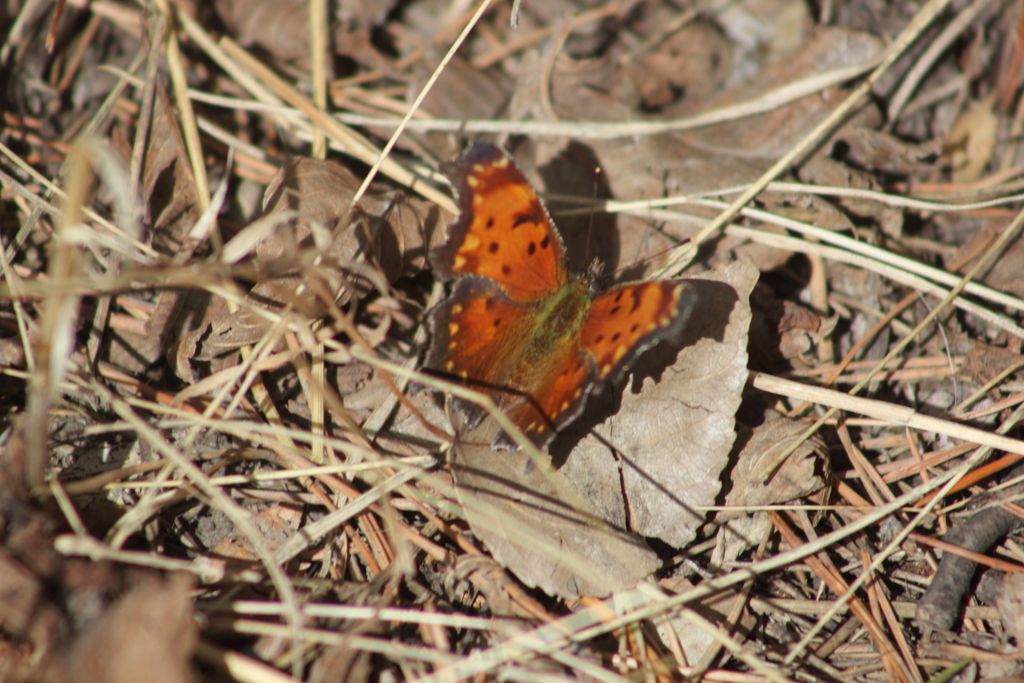
Species at risk: Mormon Metalmark (Apodemia mormo) butterfly depends on buckwheat host plant. Gray Comma Butterfly Spring Polygonia progne
The City Nature Challenge 2025: Celebrate Nature and Earth Month
The CNC YXE 2025 marks the 10th anniversary of the City Nature Challenge and the 55th birthday of Earth Month. What better way to celebrate than by being part of a global movement dedicated to documenting and understanding nature? During Easter Break, while you’re enjoying some time off from school or work, step outside with your smartphone and explore. Use the iNaturalist app to record and photograph wild organisms you find—whether in your yard, at the bus stop, along the sidewalk, or in local parks. Every contribution adds to our understanding of local biodiversity and supports conservation efforts worldwide.
How to Participate
Create an iNaturalist account: The iNaturalist app is your main tool for documenting wildlife. It’s easy to use and helps you track your observations while contributing to a global database.
Download the iNaturalist app on Apple or Android.
Need help getting started? Check out the iNaturalist tutorial to learn how to upload your observations and make the most of the app.
Join the CNC YXE 2025 Project: By joining the City Nature Challenge project, you’ll receive updates and be able to monitor how we’re doing compared to other communities. You can even check out observations from around the world and track our progress in real time.
Observe & Upload (April 25–28): The observation phase of the CNC will run from April 25–28. Go outside and find as many wild organisms as you can—be they plants, fungi, animals, or even critters with spots! You can upload your photos to iNaturalist and contribute to global biodiversity data.
Help with Identification (April 29–May 4): Once the observation phase ends, the identification phase begins! Help identify species by reviewing observations made by others. Whether you’re a beginner or a seasoned nature enthusiast, there’s always something new to learn and contribute. Not sure what something is? Don’t worry! iNaturalist’s computer vision can assist in making suggestions.
Why Should You Participate? The CNC is more than just a fun outdoor activity—it’s a chance to connect with your local environment, build a community around nature, and make meaningful contributions to global conservation. It’s a wonderful way to connect with nature as a family during the Easter break! Whether you’re just getting started or a seasoned naturalist, there’s always something new to discover.
Plus, the competition is friendly! The CNC fosters a sense of community and collaboration, encouraging people from all backgrounds to join in and contribute. Whether you’re at home or on a nature walk, your observations will help paint a picture of the incredible biodiversity in our area.
Let’s Make This Year’s CNC the Best Yet! As Saskatoon and surrounding areas enjoy their Easter break from April 19 to April 27, now is the perfect time to step into nature and start documenting. From backyard bugs to birds in the sky, spots are everywhere—and we want to see them all! Share your findings, join the global conversation, and help us celebrate both Earth Month 55th birthday and the City Nature Challenge’s 10th birthday.
Don’t forget to tag your observations with the #CNCYXE2025 and #spotty to share your spotty discoveries and help us show the world just how vibrant our local biodiversity really is!
Richard St. Barbe Baker Afforestation Area is located in Saskatoon, Saskatchewan, Canada north of Cedar Villa Road, within city limits, in the furthest south west area of the city. 52° 06′ 106° 45′
Addresses:
Part SE 23-36-6 – Richard St. Barbe Baker Afforestation Area – 241 Township Road 362-A
Part SE 23-36-6 – SW Off-Leash Recreation Area (Richard St. Barbe Baker Afforestation Area ) – 355 Township Road 362-A
S ½ 22-36-6 Richard St. Barbe Baker Afforestation Area (West of SW OLRA) – 467 Township Road 362-A
NE 21-36-6 “George Genereux” Afforestation Area – 133 Range Road 3063
Wikimapia Map: type in Richard St. Barbe Baker Afforestation Area
Google Maps South West Off Leash area location pin at parking lot













 Forests of Memory. Forests of Learning. Forests for Life.