Richard St. Barbe Baker Afforestation Area. George Genereux Urban Regional Park. Humboldt Broncos Memorial Forest. Come to Nature. Come to Life. Friends of the Saskatoon Afforestationk Areas Inc. friendsareas.ca
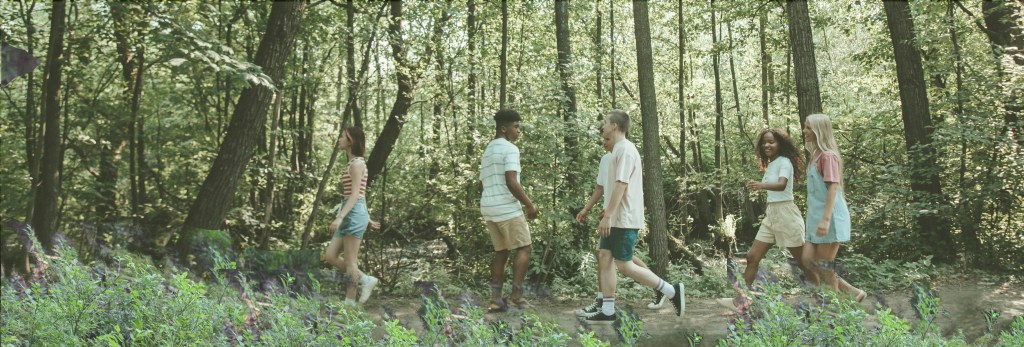
Celebrate Arbor Week in the heart of the Richard St. Barbe Baker Afforestation Area! This special event falls on National Smile Day (May 31), and we believe there is no better reason to smile than standing in the presence of our towering leafy friends. Whether you are a tree-hugger, a budding botanist, or a family looking for a Sunday adventure, join us as we uncover the stories of the forest. For more information or to sign up now!
The Grand Arboretum Tour
Every tree in our afforestation area has a narrative—some are ancient native residents, others are resilient immigrants, and some are “visitors” we need to watch closely.
An arboretum is a specialized botanical garden or “living museum” dedicated exclusively to the cultivation, study, and display of a wide variety of trees and woody plants. These sites, often termed “tree museums,” feature specimens used for education, scientific research, and conservation efforts.
We will be spotting and discussing a wide variety of species, including:
Heritage & Native Giants: Learn about the American Elm and Green Ash (both on the IUCN Red List), the Bur Oak, and the iconic Trembling Aspen.
The Rare & Elusive: Keep your eyes peeled for the Red-Berried Elder (a rare S2 species) and the Smooth Rose (S1 ranked)—help us make history if we find it!
The Travelers: We’ll discuss introduced species like the Amur Maple, Scots Pine, and the Siberian Peashrub (Caragana).
The Watchlist: Help us protect our forest by identifying the highly invasive European Buckthorn on iNaturalist.
💰 The $50 Linden Tree Challenge!
In 1984, a Linden Tree (Tiliaceae) was planted somewhere within the area. We are offering a $50 prize to the first participant to find it and record a verified observation on iNaturalist during the event!
Focus: Conservation, preservation, and the joy of nature.
What to Bring: Comfortable walking shoes, a smartphone with the iNaturalist app, and your best National Smile Day grin!
What We’ll See (The Short List):
From the Silver Buffaloberry and Wild Black Currant to the Colorado Blue Spruce and Balsam Poplar, we will explore the diverse layers of our urban canopy. We’ll talk about the medicinal history of the Kinnikinnick (Red Bearberry) and the resilience of our various Willow species. ( The long list 😉 )
Come for the trees, stay for the smiles! Let’s honor the legacy of Richard St. Barbe Baker—the Man of the Trees—by connecting with the giants he inspired us to protect.
The Golden Slipper of the Prairies: Conservation Imperatives for Cypripedium in the Richard St. Barbe Baker Afforestation Area
The genus Cypripedium represents, for many, the pinnacle of the orchidaceous flora of North America. These “Lady’s-slippers” are not merely plants; they are complex biological entities intertwined with the very fungal fabric of the soil. Within the Saskatoon Afforestation Areas, dwells a botanical treasure of increasing concern: the Small Yellow Lady’s-slipper, Cypripedium parviflorum var. makasin.
As we have often noted in our taxonomic treatments, the C. parviflorum complex is one of great morphological fluidity. However, var. makasin distinguishes itself by its smaller, often intensely fragrant labellum (pouch) and its preference for the moist, calcareous transitions between prairie and woodland. In the province, its status has recently fluctuated between S2 (Imperilled) and S3 (Vulnerable), a precarious position that demands immediate and sophisticated conservation strategies.
The Biological Vulnerability of the Slipper
The survival of Cypripedium is a precarious gamble of nature. Unlike many vascular plants, their seeds are “dust-like,” devoid of endosperm. They are entirely dependent on a mycorrhizal partner—specifically fungi from the Tulasnellaceae family—to provide the carbon necessary for germination.
Recent investigations, such as those by Malcore and Grubisha, highlight that these essential fungal symbionts are often localized within a mere one-meter radius of the parent plant. This creates a “micro-refugia” that, if disturbed by foot traffic, grazing, or soil compaction, can render the entire site sterile for future orchid recruitment.
Species Profile: Cypripedium parviflorum var. makasin
Strategies for Protection and Management
To ensure that the “Moccasin Flower” remains a fixture of the RSBBAA landscape for generations, a multi-faceted management approach is required.
1. Habitat Preservation and Successional Management
The RSBBAA is a dynamic ecosystem. C. parviflorum var. makasin thrives in the “ecotone”—the edge between meadow and wood. Successional management must be employed to prevent these open edges from becoming overly choked by invasive brush or dense canopy closure, which can shade out the orchids. However, this must be balanced: the soil must remain cool and moist.
2. The Prohibition of Transplantation
We must be clear: do not transplant these orchids.Cypripedium possesses a high degree of mycorrhizal specificity. When a plant is dug up, its connection to the Tulasnellaceae network is severed. Without the specific fungal colony of its home soil, the orchid almost invariably perishes within a few seasons.
3. Controlled Disturbance and Fire
While fire is a natural component of the prairie-forest mosaic, its effects on Cypripedium are a “threshold” phenomenon. A low-intensity prescribed burn can reduce competing thatch and release nutrients, but a high-intensity fire can destroy the shallow rhizomes and the delicate fungal mycelia in the upper soil layers.
4. Public Awareness and “Social Fencing”
Because the RSBBAA is a public space, the risk of “collection” or accidental trampling is high. Increasing public awareness through signage that emphasizes the plant’s legal protection under CITES Appendix II and provincial legislation is vital.
Next Steps: A Path Forward
To transition from passive observation to active stewardship, the following actions are recommended for the RSBBAA:
Establish a Monitoring Grid: Conduct annual census counts at the site to estimate population dynamics and recruitment rates.
Soil Mapping: Identify the presence of Tulasnellaceae fungi in adjacent areas to determine potential sites for population reinforcement or seed sowing.
Infrastructure Rerouting: Ensure that any future trail development or maintenance within the RSBBAA maintains a minimum 10-meter buffer from known orchid occurrences to protect the rhizosphere.
Ex Situ Security: In collaboration with botanical gardens, collect seeds for long-term cryogenic storage, ensuring the genetic legacy of the RSBBAA population is preserved against stochastic events.
The Small Yellow Lady’s-slipper is a sentinel of the health of our afforestation areas. Its presence tells us the soil is alive, the fungi are flourishing, and the ancient relationships of the prairie remain intact. We must act now to ensure this golden pouch continues to nod in the Saskatchewan breeze.
1. Biological Identification, Ecology, and Species Information
Shefferson, R. P., Weiss, M., Kull, T., & Taylor, D. L. (2007). High specificity generally characterizes mycorrhizal association in the rare lady’s-slipper orchid genus Cypripedium. Molecular Ecology.
Sheviak, C. J. (1994). Variation in Cypripedium parviflorum and its taxonomic treatment.
Sheviak, C. J. (2002). Cypripedium. In: Flora of North America Editorial Committee (Eds.), Flora of North America North of Mexico (Vol. 26). Oxford University Press.
On this third day of March, when the nations of the world pause to honour wild creatures and untamed forests, we are reminded that humanity does not stand apart from Nature, but within her sacred circle. United Nations World Wildlife Day is not merely a date upon the calendar; it is a summons to conscience.
The theme for 2026 — Medicinal and Aromatic Plants: Conserving Health, Heritage and Livelihoods — calls us back to an ancient truth: the forest is our first pharmacy, our oldest teacher, and our enduring provider. Long before laboratories and dispensaries, it was the leaf, the bark, the root, and the resin that soothed fever, calmed the spirit, and restored vitality. The fragrance of cedar, the healing balm of spruce and balsam poplar, the quiet strength of herbs gathered with reverence — these are gifts woven into the story of humankind.
Yet what we harvest must be guarded with gratitude. The reckless axe and the careless flame silence more than birdsong; they extinguish remedies not yet discovered and wisdom not yet recorded. Each medicinal plant lost to destruction is a library burned, a heritage erased, a livelihood diminished.
The preservation of wildlife — plant and animal alike — is therefore not sentimentalism. It is sound stewardship. Forests regulate the waters, shelter the soil, call the rains, and cradle biodiversity. In their shade dwell species known and unknown, each bearing a thread in the intricate tapestry of life. To protect them is to protect ourselves.
In the lifetime of Richard St. Barbe Baker, he saw barren lands restored by trees planted with faith and fellowship. Baker learned that when communities unite — young and old, rural and urban — the desert can bloom again. Reforestation is not only an act of ecology; it is an act of hope. It affirms that humanity may yet choose guardianship over greed.
So let this World Wildlife Day be more than ceremony. Let it be covenant. Plant trees whose leaves may heal future generations. Safeguard the aromatic herbs whose oils carry culture and craft across centuries. Support livelihoods that gather from the wild without despoiling it. Teach children that the forest is not a warehouse of commodities but a cathedral of living wonders and homes to our brethern in the wild.
When we conserve medicinal and aromatic plants, we conserve health. When we honour traditional knowledge, we conserve heritage. When we sustain ecosystems wisely, we conserve livelihoods. And in doing so, we rediscover a deeper truth — that the well-being of people and planet is indivisible.
May we walk gently upon the Earth, tending her green mantle with reverence, so that the wild may flourish and humanity may endure in harmony beneath the sheltering trees.
Baker was recognized as the first inaugural Honorary Life Member of the World Wildlife Fund (WWF) for his global efforts in reforestation. An amazing testimonial to wildlife worldwide.
Part SE 23-36-6 – Richard St. Barbe Baker Afforestation Area – 241 Township Road 362-A
Part SE 23-36-6 – SW Off-Leash Recreation Area (Richard St. Barbe Baker Afforestation Area ) – 355 Township Road 362-A
S ½ 22-36-6 Richard St. Barbe Baker Afforestation Area (West of SW OLRA) – 467 Township Road 362-A
NE 21-36-6 “George Genereux” Afforestation Area – 133 Range Road 3063
Wikimapia Map: type in Richard St. Barbe Baker Afforestation Area or
Google Maps South West Off Leash area location pin at parking lot





 Forests of Memory. Forests of Learning. Forests for Life.