Richard St. Barbe Baker Afforestation Area. George Genereux Urban Regional Park. Humboldt Broncos Memorial Forest. Come to Nature. Come to Life. Friends of the Saskatoon Afforestationk Areas Inc. friendsareas.ca
Voices from the Afforestation Frontlines (A global webinar series) Listen— the wind speaks through the pines, the river bends with patience, and here, in your quiet room, we gather from miles away. Voices rise like leaves in sunlight, turning toward each other, learning to care for the world that carries us all.
Voices from the Afforestation Frontlines
Advancing Sustainable Solutions for a Resilient Planet
Join us for the webinar series entitled Voices from the Afforestation Frontlines – Advancing Sustainable Solutions for a Resilient Planet. This four-part webinar series will bring together experts, communities and the public-at-large from Canada, United States and Globally
The United Nations Environment Assembly (UNEA-7), under the theme “Advancing sustainable solutions for a resilient planet,” presents a timely and vital platform to explore the interlinked challenges of climate change, biodiversity loss, and unsustainable human-nature relationships. In response to this global call, Friends of the Saskatoon Afforestation Areas Inc. proposes a dynamic webinar series that brings together diverse voices to highlight innovative and community-driven approaches to conservation and sustainable living.
This initiative, promotes cross-sector dialogue, amplify grassroots action, and explore practical solutions that foster environmental stewardship and animal welfare.
Sustainable Human-Animal Interactions The deer pauses at the stream, its eyes steady, unjudging. We watch, we reach, we falter— and learn that care is a language spoken with quiet hands, soft steps, gentle hearts. Every creature’s life touches ours if we listen long enough.
The Role of Biodiversity in Ecosystem Resilience A hundred small wings brush the air, a thousand roots tangle beneath soil, and we see: strength is in the multitude, in the hidden, in the overlooked. To protect one is to protect all, to watch, to wait, to honor the intricate chorus of life.
Community Engagement in Conservation In the field, hands work together, digging, planting, tending. Laughter rises with the morning sun, and wisdom walks beside it— we are not alone, our care multiplies. Every small act is a promise to the trees, the birds, the earth itself.
Sustainable Solutions for a Resilient Planet(global series) Across oceans, across borders, we sit and speak, and the earth listens. Every voice a thread, woven into a vast tapestry that holds rivers, forests, animals, and us. Together we learn to bend with the wind, to heal, to guard, to walk gently into tomorrow.
Celebrating Leadership, Inclusion, and Nature on International Day of Persons with Disabilities
Today, December 3, on International Day of Persons with Disabilities, we proudly celebrate the leadership, resilience, and contributions of persons with disabilities. The theme for 2024, “Amplifying the leadership of persons with disabilities for an inclusive and sustainable future,” calls us all to ensure that every individual, regardless of ability, is included and empowered to lead in their communities.
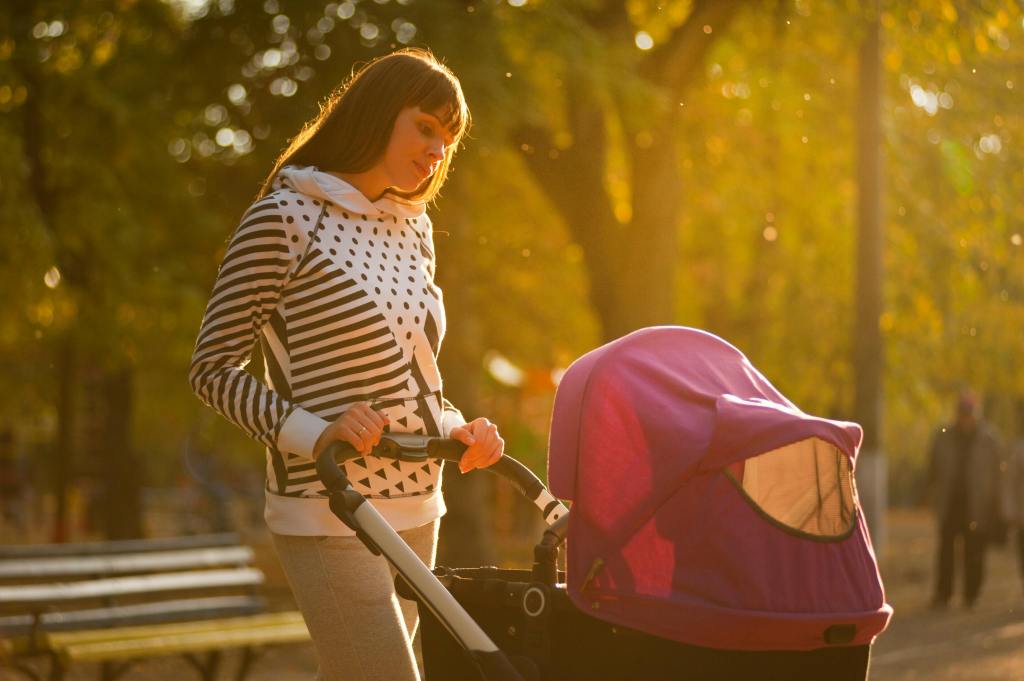
At Friends of the Saskatoon Afforestation Areas, we are committed to diversity, inclusion and accessibility our green space. With the new crusher dust trail at Richard St. Barbe Baker Afforestation Area, we commend the city for taking a significant step toward ensuring that everyone, including persons with disabilities, can experience the peace, healing, and beauty of nature. This smooth and sturdy trail makes it easier for individuals walking or using wheels wheelchairs, walkers, cycles or strollers to explore our forests and connect with the environment.
The benefits of spending time outdoors are numerous—improved mental health, reduced stress, and a sense of belonging to nature. We believe everyone deserves the opportunity to enjoy these benefits, which is why we are committed to making our green spaces more inclusive.
Today, we celebrate the leadership of persons with disabilities, raise awareness of their rights, and honor their achievements. Together, we can build an inclusive and sustainable future for all.
Wheeling through a forest in a wheelchair with a friendWalking with a white cane through a forestBaby Carriage Walk through the forestWalking with a white cane in the forest
Richard St. Barbe Baker Afforestation Area is located in Saskatoon, Saskatchewan, Canada north of Cedar Villa Road, within city limits, in the furthest south west area of the city. 52° 06′ 106° 45′
Addresses:
Part SE 23-36-6 – Afforestation Area – 241 Township Road 362-A
Part SE 23-36-6 – SW Off-Leash Recreation Area (Richard St. Barbe Baker Afforestation Area ) – 355 Township Road 362-A
S ½ 22-36-6 Richard St. Barbe Baker Afforestation Area (West of SW OLRA) – 467 Township Road 362-A
NE 21-36-6 “George Genereux” Afforestation Area – 133 Range Road 3063
Wikimapia Map: type in Richard St. Barbe Baker Afforestation Area
Google Maps South West Off Leash area location pin at parking lot
Each year, September 30 marks the National Day for Truth and Reconciliation, a solemn occasion dedicated to remembering the children who never returned home from residential schools and honoring the survivors, their families, and their communities. This federal statutory holiday, also known as Orange Shirt Day, emphasizes the painful legacy of residential schools and the ongoing journey towards healing and reconciliation. As Canadians come together to commemorate this day, you can make a meaningful impact independently by spending time in Saskatoon’s beautiful natural spaces—Richard St. Barbe Baker Afforestation Area and George Genereux Urban Regional Park.
Richard St. Barbe Baker Afforestation Area: A Space for Reflection
The Richard St. Barbe Baker Afforestation Area, with its serene landscapes and extensive woodlands, offers a tranquil setting to observe National Day for Truth and Reconciliation in a personal and reflective manner.
**1. Wear Your Orange Shirt: Start your day by donning an orange shirt and beaded orange necklace, symbols of respect and remembrance for the intergenerational impacts of residential schools. As you walk through the afforestation area, let the vibrant color of your attire serve as a visible tribute to “Every Child Matters.”
**2. Personal Reflection: Find a quiet spot among the trees to engage in personal reflection. Bring along a journal or sketchbook to record your thoughts and feelings about the history and legacy of residential schools. Use this time to contemplate the stories and experiences of Indigenous communities, fostering a deeper understanding of the reconciliation process.
**3. Educational Exploration: Bring along educational materials or download resources from the National Centre for Truth and Reconciliation. As you explore the trails, take time to read and reflect on these materials, enhancing your knowledge of the Truth and Reconciliation Commission’s calls to action and the history of residential schools.
**4. Mindful Nature Walk: Embark on a mindful nature walk through the afforestation area, appreciating the natural beauty and tranquility. As you walk, reflect on the resilience and strength of Indigenous communities, and consider how nature can play a role in healing and reconciliation.
George Genereux Urban Regional Park: Embracing the Outdoors
George Genereux Urban Regional Park, with its expansive green spaces and recreational areas, offers another excellent venue for personal commemoration on National Day for Truth and Reconciliation.
**1. Wear Your Orange Attire: Similar to the afforestation area, wear your orange shirt and beaded necklace as a visible sign of solidarity. The park’s open spaces are ideal for showing your support and honoring the day’s significance.
**2. Create a Commemorative Space: Set up a small, respectful area in the park for personal commemoration. You might lay out a blanket, place an orange shirt, and acknowledge nature’s meaningful symbols. Spend some time in this space to meditate and reflect on the day’s importance.
**3. Engage in Quiet Reflection: Find a peaceful spot by a pond or under a large tree to sit quietly and reflect. Use this time to think about the history of residential schools and the importance of reconciliation. You might choose to read a book or article related to the Truth and Reconciliation Commission’s work.
**4. Share Your Reflections: Take a moment to share your reflections on social media using the hashtag #NDTR. By doing so, you contribute to a broader conversation about reconciliation and honor the day’s significance. You might also share a photo of your commemorative setup or your favorite quote from an Indigenous leader.
**5. Connect with Nature: Use the park’s natural environment to connect with the spirit of reconciliation. Walk through the park’s trails, appreciate its beauty, and consider how nature can be a source of healing and renewal for both individuals and communities.
A Day of Personal and Collective Meaning
By spending National Day for Truth and Reconciliation in these natural spaces, you honor the significance of the day in a meaningful and personal way. Whether through reflection, education, or connection with nature, you participate in the larger journey of reconciliation. Remember, every individual action contributes to the collective effort of acknowledging history and supporting healing.
For those looking to learn more or engage further, the National Centre for Truth and Reconciliation offers valuable resources, and national events will illuminate Parliament Hill in orange, symbolizing unity and remembrance.
By embracing these practices, you not only commemorate the National Day for Truth and Reconciliation but also contribute to the ongoing dialogue and efforts towards a more inclusive and understanding Canada.
Richard St. Barbe Baker Afforestation Area is located in Saskatoon, Saskatchewan, Canada north of Cedar Villa Road, within city limits, in the furthest south west area of the city. 52° 06′ 106° 45′
Addresses:
Part SE 23-36-6 – Afforestation Area – 241 Township Road 362-A
Part SE 23-36-6 – SW Off-Leash Recreation Area (Richard St. Barbe Baker Afforestation Area ) – 355 Township Road 362-A
S ½ 22-36-6 Richard St. Barbe Baker Afforestation Area (West of SW OLRA) – 467 Township Road 362-A
NE 21-36-6 “George Genereux” Afforestation Area – 133 Range Road 3063
Wikimapia Map: type in Richard St. Barbe Baker Afforestation Area
Google Maps South West Off Leash area location pin at parking lot
Imagine stepping into the Richard St. Barbe Baker Afforestation Area or George Genereux Urban Regional Park, a lush tapestry of life where every element of the forest plays a crucial role in the grand ecosystem. This planted forest inside this naturalizing greenspace is not just a serene retreat but a dynamic community where plants, animals, and humans interweave their lives in a delicate balance.
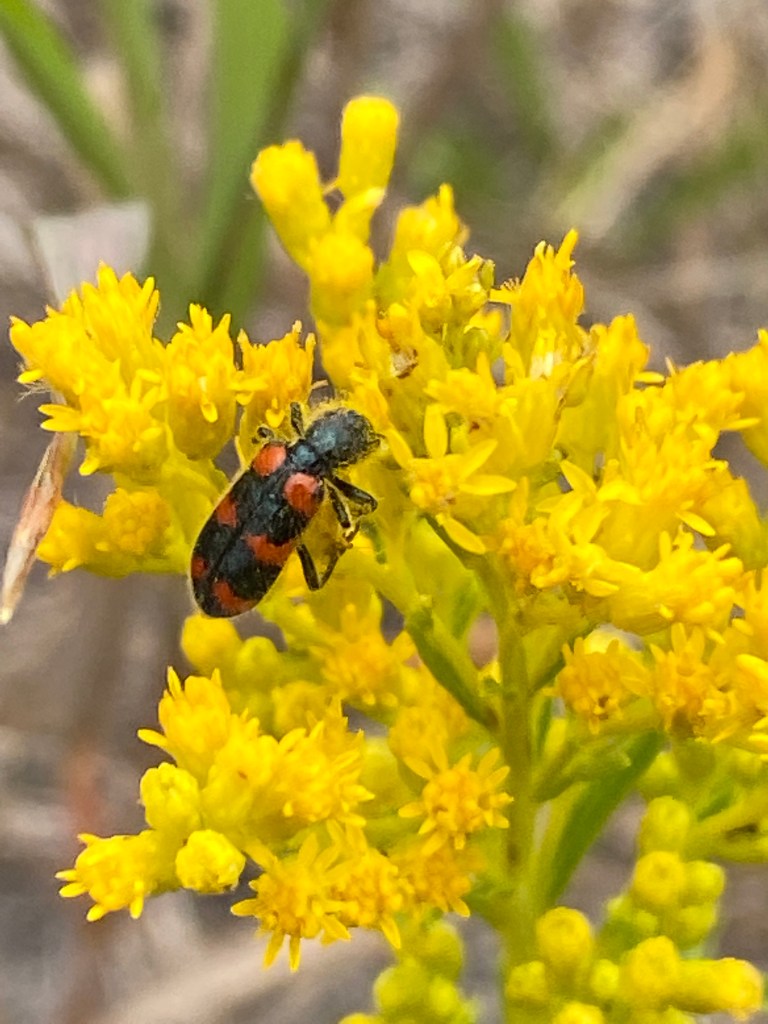
Red-blue Checkered Beetle Trichodes nuttalli on a Missouri Goldenrod
Solidago missouriensis at the afforestation areaGoldenrod Gall Fly Eurosta solidaginis Conservation Status: imperiled (S2S4) in Saskatchewan, CA (NatureServe)
As you walk through the forest, observe how the towering trees, such as the stately goldenrods and various spruces and pines, form the backbone of this habitat. Their broad canopies provide essential shelter and food sources for many forest inhabitants. The fallen leaves and decomposing wood create a rich layer of nutrients in the soil, supporting a hidden network of fungi, insects, and microorganisms that contribute to the forest’s food web.
Mule Deer Richard St. Barbe Baker Afforestation Area, Saskatoon, Saskatchewan, CanadaWhite-tailed deer (Odocoileus virginianus)
Look closely, and you might spot the graceful movement or presence of a white-tailed or mule deer that had been navigating through the underbrush. These deer are adept at utilizing the forest’s resources, feeding on tender shoots and leaves while avoiding predators. Their presence is a testament to the forest’s health, reflecting the balance of the habitat that supports a variety of species.
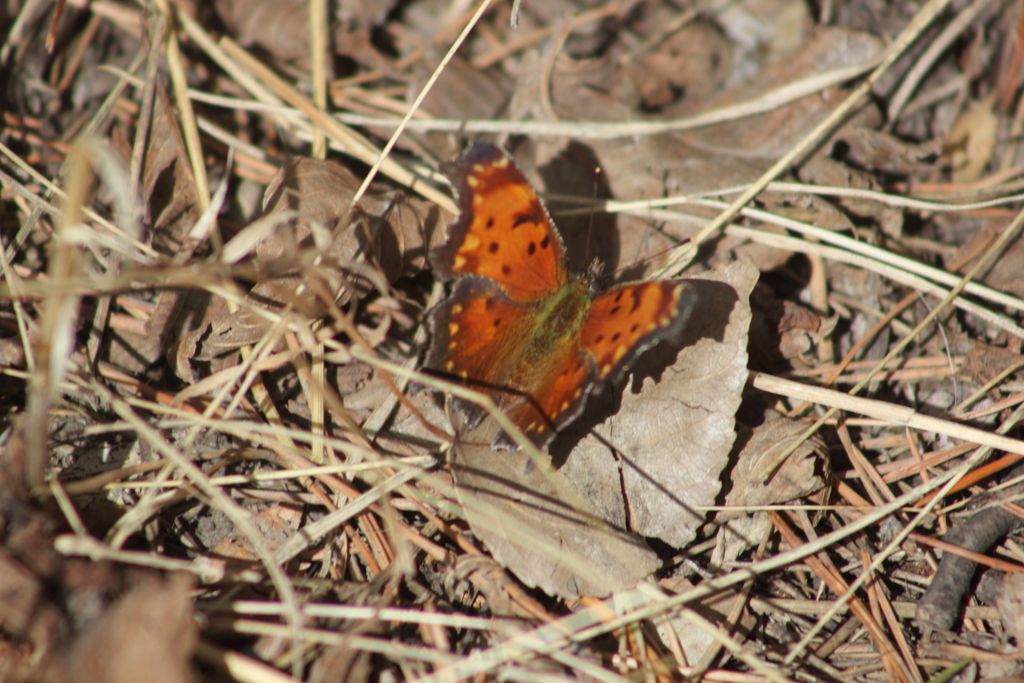
Gray Comma Butterfly Spring Polygonia progne
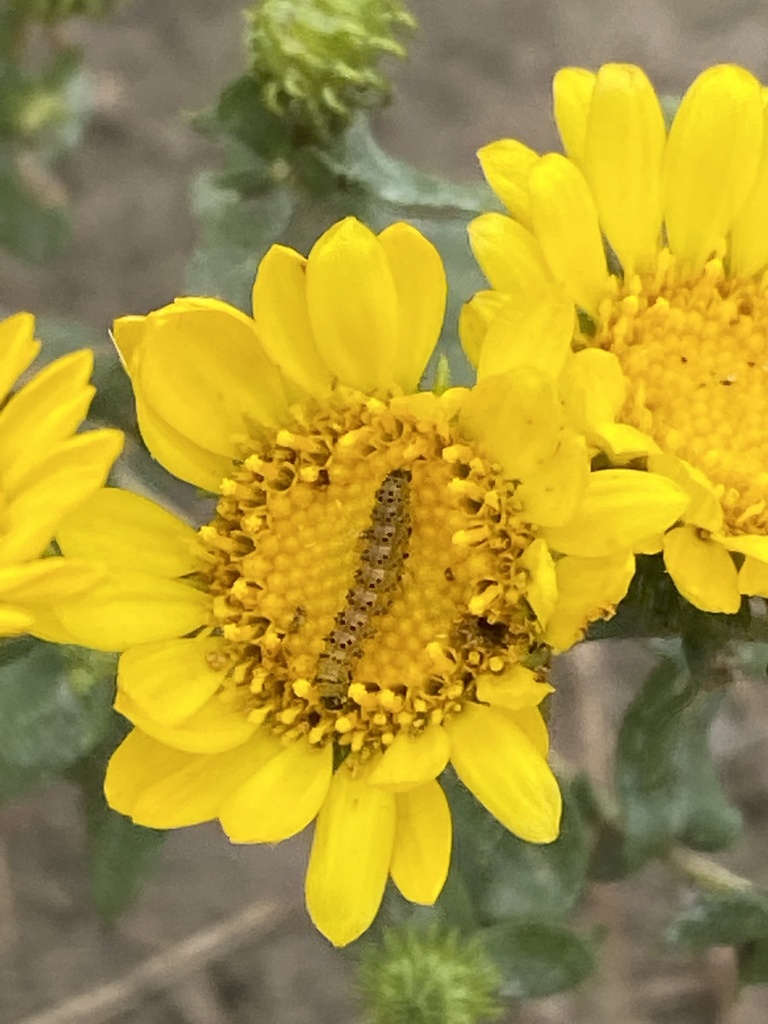
Yellow Sunflower Moth LARVA Stiria rugifrons on top of Curlycup Gumweed Grindelia squarrosa
In the air, watch for the delicate flutter of native bumblebees, butterflies and moths, which play a vital role in pollination. Their presence, alongside the busy activity of dragonflies and damselflies skimming across the wetlands of Chappell Marsh, highlights the forest’s role as a sanctuary for pollinators. These insects are crucial for the reproduction of many plant species, demonstrating the intricate interdependence within the forest community.
Did you know that you can tell time by the biennial flower Evening Primrose? Full opening of this beautiful yellow flower takes less than 20 minutes to receive its moth hosts overnight, and by noon, the flower has closed up again. It’s nick name is “beautiful of the night.” Dandelions will reverse this process to save energy, closing up at night, and opening fully in the early morning hours of the day. What are the habitats of flowers and flora of the afforestation areas- meadow or forest, wetlands or shoreline edges, sunny or shady areas?
Do you think all birds build their nests in the branches of trees? Some birds, like the Great Horned Owl, actually don’t make their own nests and instead use nests created by other birds. Additionally, some birds nest on the ground, in tree cavities made by woodpeckers, or along water and shoreline edges. Why would the different bird species choose a variety of habitats for the safety of their young, wouldn’t tree branches be safest?
What about snowshoe hares and jackrabbits? Do they live in underground burrows like Bugs Bunny, or do they create nests for their young? As lagomorphs (which include rabbits and hares) are at the bottom of the food chain, how do they ensure their safety and find shelter?
Consider the Lepidoptera family, which includes butterflies and moths. Where do they lay their eggs in the spring? Do their larvae have specific habitats, and where do the adults live? How many Lepidoptera migrate to escape the cold winter, how many and which lepidoptera have no mouth parts having short lifespans and only live to lay eggs, and which species in Saskatchewan overwinter here to start a family in the spring? Why are butterflies diurnal, flying in the daytime, and moths are nocturnal waking up when the butterflies go to sleep. Where do Lepidoptera sleep?
Finally, dragonflies and damselflies, which are both part of the Odonata order, rely heavily on wetlands and aquatic plants. What makes these habitats so important for Odonata, and what type of habitat do adult Odonata prefer?
Visiting the forestVisiting the forest
Human activities, however, can disrupt this delicate balance. One key practice to help preserve the integrity of this natural space is “staying on trails.” Walking only on designated paths protects the forest’s sensitive areas from unnecessary damage. When visitors stray off-trail, they can inadvertently trample delicate vegetation, compact soil, and disturb wildlife habitats. This can lead to erosion, reduced plant regeneration, and increased stress on animal communities that rely on a stable environment.
By staying on established trails, you minimize your impact on the ecosystem, allowing the forest to maintain its natural processes and beauty. Trails are carefully planned to avoid areas of high ecological sensitivity and to provide access while preserving the surrounding habitat. They also help concentrate foot traffic, reducing the spread of invasive plant species that could otherwise take hold in disturbed areas.
Clean up at both Richard St. Barbe Baker Afforestation Area and at George Genereux Urban Regional Park, Saskatoon The Clean Green Community SceneClean up at both Richard St. Barbe Baker Afforestation Area and at George Genereux Urban Regional Park, Saskatoon The Clean Green Community Scene
Human activities, such as littering, pose additional threats to wildlife. Plastic bags and containers can be mistaken for food by animals, leading to harmful consequences. To protect this valuable habitat for future visitors, it’s essential to follow the principle of “Pack it in, Pack it out, Leave no trace.” Be part of the Clean Green Community Scene! By disposing of waste responsibly and minimizing our impact, we help ensure that the forest remains a thriving sanctuary for all its inhabitants.
For those keen to delve deeper into the intricate web of life within the afforestation area, other resources are available. “Exploring the Wildwoods of Saskatoon: The Ecology of a Planted Forest” in English or French by Norman Lipinski offers insights into the food webs and food chains that sustain the forest’s ecosystem. Meanwhile, “Richard St. Barbe Baker Stories with Place-Based Nature Activities Through the Seasons” by Elizabeth Bekolay provides engaging activities and a comprehensive wildlife listing, enriching your understanding of the forest’s dynamic community.
For a closer look at the diverse organisms that make the afforestation area their home, including over 60 species at risk, visit the wildlife resource page. Here, you can explore the rich biodiversity and learn about the various tree species and wildlife that thrive in this unique environment.
As you journey through the Richard St. Barbe Baker Afforestation Area, take a moment to appreciate the intricate relationships between plants, animals, and humans. Each species, from the towering trees to the smallest insects, plays a role in maintaining the health of the habitat. By respecting the trails and protecting this natural treasure, we ensure that future generations can also experience the wonder of this vibrant forest community.
1. Habitat Exploration Project:
Activity: Investigate the populations of plants and animals in various habitats such as grassland meadows, forests, wetlands, and riparian edges of Chappell Marsh. Create a poster or presentation showcasing the different species found in each habitat and their roles.
Objective: Understand the variety of life in different habitats and how each species contributes to its ecosystem.
2. Indigenous Worldview Simulation:
Activity: Use the Medicine Wheel or Circle of Life concept to role-play how plants and animals interact and depend on each other within an ecosystem. Have students act out different roles (e.g., predator, prey, producer, consumer) and demonstrate their interdependence.
Objective: Explore Indigenous perspectives on the interconnectedness of life and understand how different species rely on each other.
3. Food Chain Classification Activity:
Activity: Classify various plants and animals, including humans, based on their roles in food chains (e.g., producer, herbivore, omnivore, predator). Create a food chain diagram using the classified organisms.
Objective: Learn about the different roles organisms play in food chains and understand how energy flows through ecosystems.
4. Food Web Construction:
Activity: Construct a visual representation of a specific food web within a chosen habitat (e.g., forest, wetland). Include multiple interconnected food chains and show how different organisms are linked.
Objective: Analyze how food webs represent complex interactions between different food chains and species.
5. Impact of Human Activities Role Play:
Activity: Role-play scenarios where students act as forest visitors who either follow or ignore guidelines like staying on trails and packing out trash. Discuss the potential impact of their actions on the forest ecosystem and its inhabitants.
Objective: Understand the effects of human activities on ecosystems and learn how to protect natural environments.
Related Questions
Objective: Understand the consequences of human actions on ecosystems and learn ways to reduce environmental harm.
What types of plants and animals live in grassland meadows, forests, wetlands, and riparian edges of Chappell Marsh, and how do they contribute to their habitats?
Objective: Identify and describe the species in different habitats and their roles.
How does the Medicine Wheel or Circle of Life concept illustrate the interdependence of plants and animals in an ecosystem?
Objective: Explore Indigenous views on the interconnectedness of life.
What are the different roles of organisms in a food chain, and how do they interact with one another?
Objective: Classify organisms based on their roles and understand their interactions in food chains.
How does a food web differ from a food chain, and what does it reveal about the relationships between different species in an ecosystem?
Objective: Analyze the complexity of food webs and their representation of multiple food chains.
What are the effects of human activities, such as trampling vegetation or littering, on forest ecosystems, and how can we minimize these impacts?
Richard St. Barbe Baker Afforestation Area is located in Saskatoon, Saskatchewan, Canada north of Cedar Villa Road, within city limits, in the furthest south west area of the city. 52° 06′ 106° 45′
Addresses:
Part SE 23-36-6 – Afforestation Area – 241 Township Road 362-A
Part SE 23-36-6 – SW Off-Leash Recreation Area (Richard St. Barbe Baker Afforestation Area ) – 355 Township Road 362-A
S ½ 22-36-6 Richard St. Barbe Baker Afforestation Area (West of SW OLRA) – 467 Township Road 362-A
NE 21-36-6 “George Genereux” Afforestation Area – 133 Range Road 3063
Wikimapia Map: type in Richard St. Barbe Baker Afforestation Area
Google Maps South West Off Leash area location pin at parking lot
Every Species Counts: A World Environment Day Celebration at Richard St. Barbe Baker Afforestation Area
Today may be a great day for ducks, and wildlife, and a time for the events to take place when the woodland trails are not flooded. So it is with heavy hearts that the World Environment Day celebration is cancelled for tonight, June 5. That being said, read on to find out how to celebrate World Environment Day!
World Environment Day celebration of nature, conservation, and the intrinsic value of every species! As we mark World Environment Day, let’s honor our planet and reaffirm our commitment to its protection.
Why Every Species Counts
In the vast tapestry of life, every species has a vital role to play. From the majestic trees that tower above us to the tiniest insects hidden beneath the forest floor, each organism contributes to the intricate balance of ecosystems worldwide. World Environment Day offers us the opportunity to recognize and celebrate this biodiversity, reminding us that the health of our planet depends on the wellbeing of every species. Check out the Wildlife and Biodiversity of the afforestation areas! These pamphlets and informational pdf’s can be viewed online or downloaded
A Day of Discovery
World Environment Day is one filled with exploration and enlightenment. We need our spring rains after 13 years of drought, and please come out as often as you can for the June walks through the Afforestation Area, where you can marvel at the wonders of nature and learn about local flora and fauna. For World Environment Day today, brochures and pamphlets insights into the importance of conservation efforts and the urgent need to protect endangered species. Engaging activities for all ages throughout the PartipACTION Community Challenge will inspire curiosity and foster a deeper connection to the natural world.
Climate Action in Focus
As we revel in the beauty of our surroundings, let’s also reflect on the pressing environmental challenges we face. Climate change threatens ecosystems and species around the globe, demanding urgent action and innovative solutions. Our event will spotlight nature-based solutions to climate change, showcasing the power of wetlands, forests, and trees to mitigate its impacts. Through informative materials (attached), we’ll explore how individuals, communities, businesses, and governments can contribute to a sustainable future for all.
The 17 United Nations Sustainable Development Goals
Join the Movement
Together, we can make a difference. Let’s stand in solidarity on World Environment Day, taking action for climate change, united in our commitment to safeguarding our planet and its precious biodiversity. Whether you’re a seasoned environmental advocate or just beginning your journey, there’s a place for you in this collective effort. Join us for the Richard St. Barbe Baker Afforestation Area and George Genereux Urban Regional Park and be part of a global movement to protect and preserve our Earth for generations to come.
As Chief Seattle wisely said, “The Earth does not belong to us: we belong to the Earth.” Let’s heed these words and come together to honor and protect our shared home. World Environment Day is a reminder that every species counts, and every action we take matters. Don’t miss this opportunity to celebrate, learn, and take meaningful steps toward a more sustainable future. See you at the Richard St. Barbe Baker Afforestation Area or George Genereux Urban Regional Park during the June ParticipACTION Community Challenge– where the beauty of nature awaits, and the promise of a better world beckons.
Help Saskatoon be crowned Canada’s Most Active Community and win $100,000 to support local sport andphysical activity initiatives! Even though today is raining, please sign up for the ParticipACTION Community Challenge! Doing stairs, walking at work, exercising at home with any of the resources offered by the ParticipACTION Community Challenge are amazing. Talk to the groups you belong to and encourage them to take part, and register their events! Gardening, walking to the store, cycling in any of the June events all help Saskatoon be crowned Canada’s Most Active Community and win $100,000 to support local sport andphysical activity initiatives!
Richard St. Barbe Baker Afforestation Area is located in Saskatoon, Saskatchewan, Canada north of Cedar Villa Road, within city limits, in the furthest south west area of the city. 52° 06′ 106° 45′
Addresses:
Part SE 23-36-6 – Afforestation Area – 241 Township Road 362-A
Part SE 23-36-6 – SW Off-Leash Recreation Area (Richard St. Barbe Baker Afforestation Area ) – 355 Township Road 362-A
S ½ 22-36-6 Richard St. Barbe Baker Afforestation Area (West of SW OLRA) – 467 Township Road 362-A
NE 21-36-6 “George Genereux” Afforestation Area – 133 Range Road 3063
Wikimapia Map: type in Richard St. Barbe Baker Afforestation Area
Google Maps South West Off Leash area location pin at parking lot
The Great Canadian Giving Challenge June 1-30 where every $1 donated helps our charity, the Friends of the Saskatoon Afforestation Areas, win one of two prizes of $10,000! Raising Awareness, Changing Lives We educate the public about the rich geological, natural, and cultural heritage of the areas and their ecological importance as places of rich biodiversity and semi-wildness within city limits.. Every $1 you give in June enters us for a chance to win $10,000 ! Donate now
Afforestation Great Canadian Giving Challenge this June 2024
Together We Can Make a Difference Join us in our mission to create positive change in the world. Every donation, volunteer hour, and act of kindness counts. Help us win $10,000 in the #GivingChallengeCA and make a difference in our community for over 60 species at risk! Your donation in June can make it happen. Donate now: Help us win $10,000 in the #GivingChallengeCA and make a difference in our community for over 60 species at risk!
Your donation in June can make it happen. Donate now: #GivingChallengeCA Together We can Make A difference Join us in our mission to create positive change in the world. Every donation, volunteer hour, and act of kindness counts. *Donations must be made via canadahelps.org. or through CanadaHelps fundraising tools such as Customizable Donation Forms, Ticketed Events, and Peer to Peer Fundraising. Minimum $3 donation required. Contest runs from June 1, 2024 at midnight Newfoundland Daylight Time (NDT) to June 30, 2024 at 11:59:59 p.m. Pacific Daylight Time (PDT). See full rules at: www.forcharities.canadahelps.org/gcgc-contest-rules.
With your generous support, we can achieve our goals and bring positive change to the safety of natural and heritage afforestation elements. Together, let’s create a brighter future and empower individuals, biodiversity, communities and habitats to thrive. Every donation counts, so make a difference today and be a part of our journey toward a better tomorrow! Be a part of our winning team and donate to our #GivingChallengeCA campaign today! Every dollar counts and could help us win $10,000. Donate now:
Join us in the #GivingChallengeCA and make a difference for 60 species at risk! Your donation in June could help us win $10,000. Learn more: Make a difference for our environmental community! Help us win $10,000 in the #GivingChallengeCA and make a difference in our community! Your donation in June can make it happen. Donate now: Friends of the Saskatoon Afforestation Areas friendsareas.ca
Join us in the Great Canadian Giving Challenge this June! Every $1 donated helps our charity win $10,000, supporting our mission to raise awareness and create positive change in our community. We educate about the rich heritage and ecological importance of our afforestation areas, home to over 60 species at risk. Your donation can make a difference! Together, let’s make a lasting impact on nature and heritage. Donate now and help us win in the #GivingChallengeCA. Every dollar counts! *Donations must be made via canadahelps.org. See full rules at http://www.forcharities.canadahelps.org/gcgc-contest-rules. #GivingChallengeCA
Richard St. Barbe Baker Afforestation Area is located in Saskatoon, Saskatchewan, Canada north of Cedar Villa Road, within city limits, in the furthest south west area of the city. 52° 06′ 106° 45′
Addresses:
Part SE 23-36-6 – Afforestation Area – 241 Township Road 362-A
Part SE 23-36-6 – SW Off-Leash Recreation Area (Richard St. Barbe Baker Afforestation Area ) – 355 Township Road 362-A
S ½ 22-36-6 Richard St. Barbe Baker Afforestation Area (West of SW OLRA) – 467 Township Road 362-A
NE 21-36-6 “George Genereux” Afforestation Area – 133 Range Road 3063
Wikimapia Map: type in Richard St. Barbe Baker Afforestation Area
Google Maps South West Off Leash area location pin at parking lot
As Saskatoon gears up for the City Nature Challenge from April 26 to April 29, one group stands out for their unwavering commitment to protecting the city’s green infrastructure: Save Our Saskatoon Trees Coalition (SOS Trees), formerly known as SOS Elms. SOS Trees supports the Friends of the Saskatoon Afforestation Areas by networking and getting the word out about the CNC YXE as a collaborator.
The City Nature Challenge invites citizens to explore nature in their urban environment, documenting plant and animal species using the iNaturalist app. But for SOS Trees, the challenge goes beyond just appreciation—it’s about safeguarding Saskatoon’s trees from threats like elm bark beetles, emerald ash borers, and other pests.
SOS Trees are dedicated to preserving the urban forest. Our city’s trees provide crucial ecosystem services, from carbon sequestration to pollution reduction, and it’s vital that we protect them.
The coalition, comprising individuals passionate about tree preservation, educates the public on the importance of urban forests. Through trade shows, school programs, and community projects, they raise awareness about threats like Dutch Elm Disease and advocate for responsible tree management.
SOS Trees’ goal is to foster an ethic of environmental stewardship, to work with elected officials, developers, and community groups to ensure that existing trees are cared for and new ones are planted.
The term “urban forest” encompasses all trees within a community, whether on streets, in parks, or on private property. SOS Trees conducts tree inventories to assess the health of Saskatoon’s tree population and advocates for policy changes to support urban forest preservation.
In collaboration with the City Nature Challenge, citizen scientists appreciate the beauty of our urban forest but also to actively protect it. Look at leaves. Find out if there is evidence of the range expansion for elm bark beetles, emerald ash borer, elm zigzag sawfly, cottony ash psyllid or any other tree pests making their way in and around Saskatoon and area. Just take a picture on iNaturalist and scientists do the rest! Together, we can ensure that Saskatoon’s trees continue to enrich our lives for generations to come.
As Saskatoon embraces the City Nature Challenge, SOS Trees stands ready to champion the cause of urban forest preservation, reminding us that the health of our city’s trees is vital to the well-being of our community.
Elm LeavesFraxinus_pennsylvanica Green Ash Red Osier Dogwood Cornus sericea leafCNCYXE CITY NATURE CHALLENGE SASKATOON HOSTED BY FRIENDS OF THE SASKATOON AFFORESTATION AREAS
Join us in the City Nature Challenge from April 26 to 29, where we can immerse ourselves in the wonders of nature and contribute to conservation efforts. Let us honor the UN SDG Life on Land and Sustainable Cities and Communities, as we work together to preserve our precious planet for generations to come.
With thanks to our sponsors and supporters SaskPower, SaskTel, Saskatoon Nature Society, Wild About Saskatoon, Caswell Hill Community Association, Varsity View Community Association, Rosewood Varsity View Community Association, Nutana Varsity View Community Association, SOS Trees, Montgomery Place Community Association and Varsity View Community Association. City Nature Challenge Saskatoon CNC YXE 2024 led by Friends of the Saskatoon Afforestation Areas.
Richard St. Barbe Baker Afforestation Area is located in Saskatoon, Saskatchewan, Canada north of Cedar Villa Road, within city limits, in the furthest south west area of the city. 52° 06′ 106° 45′
Addresses:
Part SE 23-36-6 – Afforestation Area – 241 Township Road 362-A
Part SE 23-36-6 – SW Off-Leash Recreation Area (Richard St. Barbe Baker Afforestation Area ) – 355 Township Road 362-A
S ½ 22-36-6 Richard St. Barbe Baker Afforestation Area (West of SW OLRA) – 467 Township Road 362-A
NE 21-36-6 “George Genereux” Afforestation Area – 133 Range Road 3063
Wikimapia Map: type in Richard St. Barbe Baker Afforestation Area
Google Maps South West Off Leash area location pin at parking lot
The advocacy efforts led by the non-profit environmental charity, Friends of the Saskatoon Afforestation Areas Inc, host for the Saskatoon City Nature Challenge, stand as a remarkable example of community-driven conservation and sustainable development. Their integration of citizen science, particularly through the iNaturalist app, supports professional ecological assessments, a testament to a recommended innovative approach to environmental stewardship.
An ecological assessment and management (EAM) process serves as the backbone of master planning initiatives. Municipal planners and sustainability managers, along with ecologists, collaborate to design assessments that characterize ecological conditions, diagnose potential problems, and select management options to protect valued ecological attributes. This comprehensive approach aims to minimize or avoid harmful environmental impacts, emphasizing the safety of communities and the environment.
The incorporation of citizen science data from iNaturalist enriches these assessments by creating a baseline inventory of flora and fauna. This data not only enhances the understanding of the ecosystem’s biodiversity but also helps identify invasive species, species of concern, and ecosystem services to society. By leveraging technology and community participation, long range planners and sustainability project managers are able to gather invaluable data for their master planning efforts.
The mission and values of the organization underscore their commitment to conservation and community engagement. Through initiatives such as community clean-ups, educational events, and advocacy for nature-based solutions, they foster a deep connection between people and nature. Their dedication to environmental education, ensures that individuals of all ages are equipped with the knowledge and skills necessary for environmental stewardship.
Furthermore, the organization’s alignment with international initiatives, including the United Nations (UN) Sustainable Development Goals (SDGs), demonstrates their commitment to addressing global challenges at the local level. By focusing on SDGs such as Life on Land, Life below Water, Climate Action, and Sustainable Cities and Communities, they contribute to a more sustainable and inclusive future for all.
In summary, Friends of the Saskatoon Afforestation Areas exemplify the intersection of community empowerment, technological innovation, and environmental advocacy. Through their collaborative efforts, they not only protect and conserve natural areas but also inspire a sense of responsibility and stewardship towards the environment among citizens.
In a harmonious blend of community engagement and environmental stewardship, the Friends of the Saskatoon Afforestation Areas continues to champion the preservation and celebration of Saskatoon’s natural heritage. Through dedicated efforts, from educational initiatives to restoration projects, City Nature Challenge events, the organization embodies a commitment to nurturing a sustainable relationship between humanity and nature.
Invitation to join in the City Nature Challenge 2024 CNC YXE 2024
As we stride forward, embracing the global call to action garnered by supporting the UN SDGs, we extend an invitation to all residents to join us in the City Nature Challenge 2024. From April 26 to April 29, let us unite as guardians of biodiversity, exploring, documenting, and cherishing the diverse life forms that grace our city. With each observation recorded -sound or photo- we contribute to a collective narrative of our ecosystem’s vitality, empowering scientists and enriching our understanding of the natural world. Together, let us be the voice for nature, igniting a passion for conservation that reverberates across generations and continents. Join us in this exhilarating journey of discovery, as Saskatoon embraces biodiversity on the global stage.
Lichen City Nature Challenge CNCYXECity Nature Challenge CNCYXE Saskatoon area versus YQRCNC Regina and area in a mini SK challenge
Richard St. Barbe Baker Afforestation Area is located in Saskatoon, Saskatchewan, Canada north of Cedar Villa Road, within city limits, in the furthest south west area of the city. 52° 06′ 106° 45′
Addresses:
Part SE 23-36-6 – Afforestation Area – 241 Township Road 362-A
Part SE 23-36-6 – SW Off-Leash Recreation Area (Richard St. Barbe Baker Afforestation Area ) – 355 Township Road 362-A
S ½ 22-36-6 Richard St. Barbe Baker Afforestation Area (West of SW OLRA) – 467 Township Road 362-A
NE 21-36-6 “George Genereux” Afforestation Area – 133 Range Road 3063
Wikimapia Map: type in Richard St. Barbe Baker Afforestation Area
Google Maps South West Off Leash area location pin at parking lot
Saskatoon is on the brink of a green revolution, and the heart of this transformation beats within the 326-acre expanse of the Richard St. Barbe Baker Afforestation Area. As proud stewards of this natural haven, the Friends of the Saskatoon Afforestation Areas have thrilling news to share—a beacon of hope for our beloved green spaces.
In a resounding affirmation of Saskatoon’s commitment to sustainability, the city has secured substantial funding for Green Infrastructure projects, ushering in a new era for our urban landscapes. The Natural Infrastructure Fund has earmarked over $20 million to amplify the Green Network Project, a visionary initiative poised to enrich the quantity and quality of our city’s natural infrastructure.
What makes this development even more exciting for us is the inclusion of the pilot master plan for the Richard St. Barbe Baker Afforestation Area. This 132-hectare haven, home to diverse ecosystems and a cherished retreat for Saskatoon residents, is set to undergo a transformation that aligns harmoniously with the Green Infrastructure Strategy Implementation Plan. This comprehensive strategy outlines a roadmap for enhancing urban environments and elevating our quality of life.
The significance of this funding, highlighted in recent publications by Global News, CKOM, Construct Connect, and Canada.ca, cannot be overstated. It’s a commitment from both the city and the federal government to create a sustainable and vibrant Saskatoon for generations to come.
As we eagerly anticipate the outcomes of the EUCS meeting, let us stand together as advocates for our green spaces. The pilot master plan for the Richard St. Barbe Baker Afforestation Area is not just a blueprint; it’s a promise to protect, manage, and restore our natural assets and ecosystems.
Stay tuned for updates as we navigate this exciting chapter in the story of Saskatoon’s green legacy. Join us in celebrating the city’s dedication to creating spaces that enrich our lives and nurture our connection with nature. The Richard St. Barbe Baker Afforestation Area is not just a haven; it’s a testament to what can be achieved when communities and nature coexist in harmony.
Image taken by Shweetha Gopinath, eco-photographerImage taken by Shweetha Gopinath, eco-photographer










 Forests of Memory. Forests of Learning. Forests for Life.