

The road east of Saskatoon opens into a sweep of prairie sky—vast, quiet, and deceptively fragile. Here, near Clavet, Saskatchewan, on land shaped by wind, memory, and time, a new kind of forest is being imagined. Not one born solely of ecology, nor solely of grief—but of both, intertwined. The Clavet Memorial Healing Forest is not simply a planting project. It is an idea about how landscapes can hold memory, and how restoration can begin not only in soil, but in people.

In April 2018, the Humboldt Broncos bus crash changed lives across Canada and beyond. The loss of sixteen lives and the injuries sustained by many others created a ripple of sorrow that has never fully receded. And yet, from that sorrow emerged something else—an enduring sense of unity, compassion, and the desire to remember in a way that gives forward. The proposed forest near Clavet takes that impulse and roots it in the land itself.
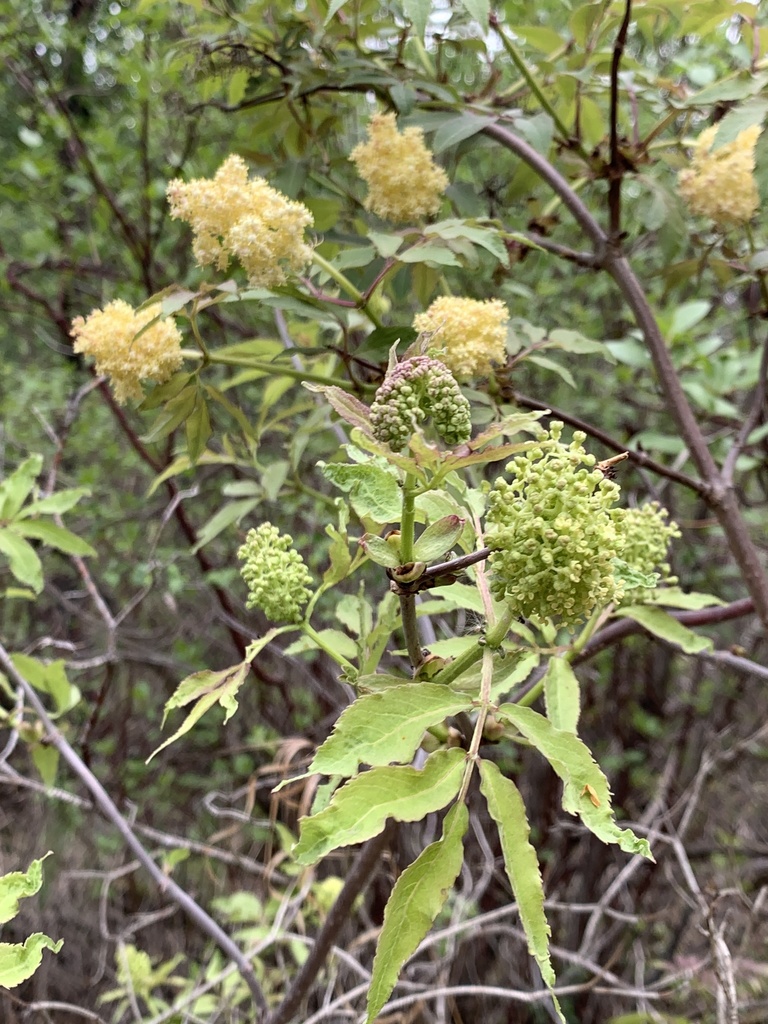
This is not incidental land. It lies within the temperate grasslands—an ecosystem so diminished it is often described as the most endangered on Earth. Unlike forests that once stood and were cleared, these grasslands evolved with their own delicate balance of grasses, forbs, insects, birds, and soil systems that run deep and ancient. To plant trees here is not to overwrite that story, but to work carefully within it—restoring diversity, stabilizing soils, creating shelterbelts, and reintroducing ecological complexity where fragmentation has taken hold.
The vision is precise and layered. A 5.431-hectare site, authorized within the Rural Municipality of Blucher and supported by the City of Humboldt, will be transformed into a living memorial. Trees will be planted not in rigid rows, but in patterns that echo natural systems—woven, varied, adaptive. Native grasses and flowering plants will return alongside them. Trails will invite quiet movement. Water systems will be considered. Wildlife will be welcomed, not excluded. The forest will not stand apart from the prairie—it will speak with it.
And yet, the forest’s meaning extends far beyond its boundaries.
To understand this project fully requires a wide-scope lens. It is, first, a place of remembrance—a landscape where grief is given form, where names are honoured not in stone alone, but in growth, in seasons, in continuity. Visitors will not only remember what was lost; they will witness what continues.
It is also a response to a global ecological moment. Scientists speak with increasing urgency about biodiversity loss—the so-called sixth mass extinction, unfolding quietly across species of birds, insects, and animals. In this context, even a modest restoration site becomes part of a much larger effort: to repair habitats, to reconnect fragmented ecosystems, to act while there is still time to act meaningfully.
The Clavet Memorial Healing Forest also positions itself as a place of learning. Not in the formal sense of classrooms and lectures, but as a living system where knowledge is encountered directly. Interpretive signage, citizen science initiatives, and public programming will connect everyday choices—what we consume, how we live—to their impacts on soil, water, and life. It is an invitation to see the continuum between personal behaviour and planetary health.
There is a social dimension as well. Forests gather people. They slow time. They create space for conversation, reflection, and shared experience. In this way, the project becomes a community commons—one that bridges generations, cultures, and perspectives. Youth will plant alongside elders. Volunteers will return season after season. The act of tending becomes part of the meaning.
And then there is the global context. Through its alignment with international environmental frameworks and partnerships, the project connects a local story to a global dialogue. It reflects the understanding that sustainability is not abstract—it is lived, place-based, and relational. What happens near Clavet matters beyond Clavet.
Perhaps the most compelling aspect of the Clavet Memorial Healing Forest is its refusal to be only one thing. It does not separate memory from ecology, nor grief from action. Instead, it asks whether landscapes can do both: hold what has been lost and nurture what is still possible.
On the prairie, where horizons stretch without interruption, this question feels especially resonant. A forest here is never just a forest. It is a commitment. A gesture. A beginning.
Rooted in memory, yes—but just as importantly, growing toward something still unfolding.
The Clavet Memorial Healing Forest project recognizes it as far more than a local tree-planting initiative—it is a multi-dimensional effort that develops experiences and integrates ecology, community healing, education, and global environmental action.
At its core, the project is a living memorial honouring those lost in the Humboldt Broncos tragedy, transforming grief into a place of reflection, resilience, and hope. Socially, it provides a shared space for families, survivors, and communities to gather, heal, and remember, reinforcing collective identity and long-term well-being.
Ecologically, the forest is situated within the temperate grasslands, one of the most endangered ecosystems in the world. Restoration efforts—such as native tree and grass planting, soil remediation, and habitat creation—contribute to biodiversity recovery, carbon sequestration, and climate adaptation. In this way, the project responds directly to the broader global crisis of biodiversity loss and the ongoing sixth mass extinction.
From an educational perspective, the site functions as a living classroom, making sense of our learning, deeper understanding, linking human actions to environmental outcomes. Creating new ideas, meaningful and reasonable ideas, using various data. Programs such as citizen science, interpretive signage, and national outreach initiatives help build environmental literacy and encourage sustainable behaviours, including awareness of how everyday consumer choices impact ecosystems.
At the community and policy level, the project aligns with the 17 United Nations Sustainable Development Goals, the United Nations Decade for Afforestation and Reforestation in line with Sustainable Forest Management 2027–2036, International Decade of Sciences for Sustainable Development 2024–2033, and the United Nations Decade on Ecosystem Restoration 2021–2030 connecting local action to global frameworks for sustainability, resilience, and equity. It also fosters collaboration across sectors—bringing together municipalities, non-profits, scientists, educators, and international partners.
Operationally, the project spans multiple years, incorporating planning, restoration, infrastructure development, and long-term stewardship, ensuring measurable environmental and social outcomes.
In essence, a wide-scope understanding sees the Clavet Memorial Healing Forest as:
- a memorial landscape
- a biodiversity restoration project
- a climate action initiative
- a community healing space
- an educational platform
- and a model for global-local environmental collaboration
It is where understanding, remembrance, connections, ecology, critically thinking and future-focused sustainability intersect.
At the heart of the Memorial Healing Forest is a unifying idea—one that functions like an umbrella, drawing together remembrance, ecological restoration, community healing, education, and climate action into a single, coherent vision. Each element of the project, from the placement of trees and the return of native grasses to the creation of trails and spaces for reflection, becomes a constituent part of something larger. Seen this way, the forest is not a collection of features, but a connected landscape of meaning, where every detail contributes to a shared purpose.
Through this conceptual framework, the factual dimensions of the project—its location near Clavet, its role in restoring biodiversity within endangered temperate grasslands, its educational programming, and its long-term stewardship—take on deeper significance. They are no longer isolated facts, but interrelated expressions of how memory, ecology, and human responsibility intersect. The Memorial Healing Forest becomes, in this sense, a living system of understanding, where knowledge is experienced as much as it is learned, and where the connections between people, place, and planet are made visible


Addresses:
Part SE 23-36-6 – Richard St. Barbe Baker Afforestation Area – 241 Township Road 362-A
Part SE 23-36-6 – SW Off-Leash Recreation Area (Richard St. Barbe Baker Afforestation Area ) – 355 Township Road 362-A
S ½ 22-36-6 Richard St. Barbe Baker Afforestation Area (West of SW OLRA) – 467 Township Road 362-A
NE 21-36-6 “George Genereux” Afforestation Area – 133 Range Road 3063
Wikimapia Map: type in Richard St. Barbe Baker Afforestation Area or
Google Maps South West Off Leash area location pin at parking lot
Web page: https://stbarbebaker.wordpress.com
Where is the Richard St. Barbe Baker Afforestation Area? with map
Where is the George Genereux Urban Regional Park (Afforestation Area)?with map
Blogger: FriendsAfforestation
Tumblr friendsafforestation.tumblr.comFacebook Group Page: Users of the George Genereux Urban Regional Park
Facebook: StBarbeBaker Afforestation Area
Facebook for the non profit Charity Friends of the Saskatoon Afforestation Areas Inc. FriendsAreas
Facebook group page : Users of the St Barbe Baker Afforestation Area
Support via Zeffy
Please help protect / enhance your afforestation areas, please contact the Friends of the Saskatoon Afforestation Areas Inc. (e-mail / e-transfers )
Donate your old vehicle, here’s how!
Support using Canada Helps
Support via a recycling bottle donation and Join the plastic-recycle challenge!
United Nations Decade on Ecosystem Restoration
- Use the UN Decade’s Visual Identity
- Make it your own
- Spread the word about the UN Decade
- Let’s Bring Back Forests
- Let’s Green Our Cities
“Be like a tree in pursuit of your cause. Stand firm, grip hard, thrust upward. Bend to the winds of heaven..” – Richard St. Barbe Baker


 Forests of Memory. Forests of Learning. Forests for Life.