World Vegetarian Day: A Call to Conscious Eating and Planetary Care

World Vegetarian Day: A Call to Conscious Eating and Planetary Care

October 1 marks World Vegetarian Day, a global occasion established by the North American Vegetarian Society in 1977 to celebrate the joys, compassion, and health benefits of a plant-based diet. More than a symbolic date, it is a call to rethink our relationship with food, the environment, and the other beings that share this planet. As the gateway to Vegetarian Awareness Month, it challenges us to confront the consequences of our dietary choices and consider the profound ethical, ecological, and health-related reasons to adopt vegetarianism.

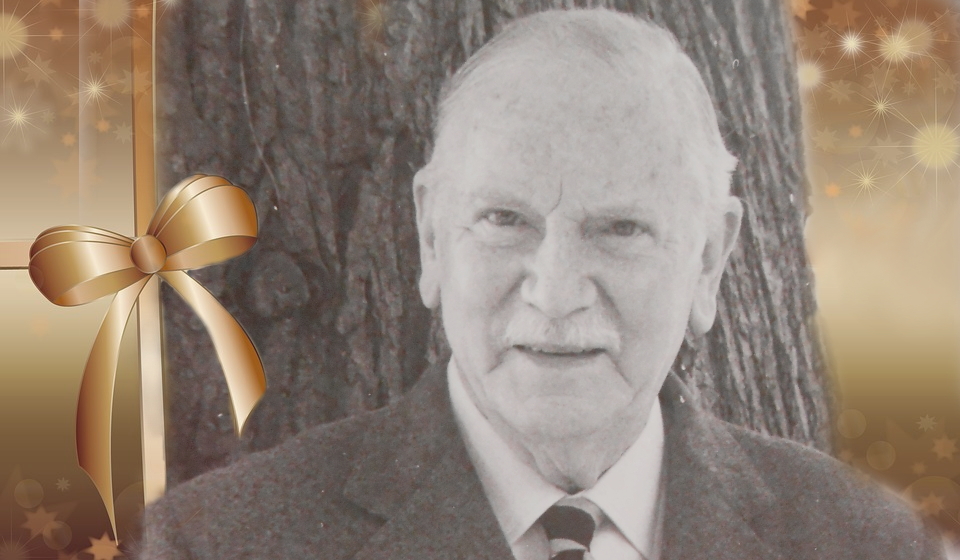
Few have embodied this ethic more clearly than Richard St. Barbe Baker, the first Global Conservationist according to his biographers Paul Hanley and Camilla Allen. Baker, whose name graces the Richard St. Barbe Baker Afforestation Area in Saskatoon, was a lifelong vegetarian who eventually embraced a vegan lifestyle. His early experiences on his homestead near Beaver’s Creek, while attending the University of Saskatchewan, revealed the benefits of a meatless diet: enhanced agility, increased vitality, and a heightened sensitivity to animal welfare. Later, his work across East Africa and Nigeria deepened his commitment, linking a plant-based lifestyle to environmental sustainability and ethical responsibility.

Baker’s vegetarianism was inseparable from his broader environmental vision. As Allen notes in her doctoral thesis The Making of the Man of the Trees, Baker was “a life-long vegetarian and was made the first Member of Honour of the World Wildlife Fund (WWF) in 1969.” His vegetarianism was not a private practice but a moral and ecological stance, part of an ethic that saw human health, animal welfare, and planetary resilience as intertwined. Angus McLaren, in his profile of Baker, observes that Baker’s combination of forester, conservationist, vegetarian, and supporter of the Bahá’í faith made him appear “some sort of secular saint.” Paul Hanley also chronicled Baker’s life in the biography Man of the Trees, emphasizing how Baker’s ethical and environmental convictions shaped his pioneering global conservation work. By the late 1950s, Baker concluded that veganism was “the only sane way of life.”

In a world projected to host eleven billion people by the century’s end, the stakes could not be higher. As Paul Hanley warns in Eleven, humanity faces a dual process of destruction and reconstruction: a full world in which ecological overshoot threatens civilization itself. Transformational change—ethical, cultural, and practical—is not optional; it is essential. Vegetarianism, and its extension into veganism, is one such transformative act. Choosing a plant-based diet reduces environmental pressure, mitigates greenhouse gas emissions, and nurtures biodiversity, all while fostering personal health and ethical integrity. Imagine the irony of chopping down sections of a rainforest—the very lungs of the Earth—just to plant soya beans destined not for people, but to feed cattle for meat production.

Origins and Ethical Foundations
Baker’s vegetarian path was shaped by family, experience, and observation:

  • Early influences: Several family members practiced vegetarianism, introducing him to its principles from a young age.
  • Canadian experience: Life on the homestead and university studies revealed the practical benefits of a meat-free diet.
  • African experience: Working in East Africa and Nigeria reinforced the ethical and environmental dimensions of dietary choice, highlighting the cruelty inherent in meat production and the strain it places on fragile ecosystems.

For Baker, vegetarianism was inseparable from conservation. It was a practical expression of his belief that individual choices ripple outward, influencing global systems and contributing to a more harmonious relationship with the natural world.

Celebrating World Vegetarian Day
Embracing World Vegetarian Day need not be radical; it is an opportunity to learn, cook, and act with awareness:

  • Eat Vegetarian: Try a meat-free meal or adapt a favorite recipe.
  • World Vegetarian Day: A Call to Conscious Eating and Planetary Care
    October 1 marks World Vegetarian Day, a global occasion established by the North American Vegetarian Society in 1977 to celebrate the joys, compassion, and health benefits of a plant-based diet. More than a symbolic date, it is a call to rethink our relationship with food, the environment, and the other beings that share this planet. As the gateway to Vegetarian Awareness Month, it challenges us to confront the consequences of our dietary choices and consider the profound ethical, ecological, and health-related reasons to adopt vegetarianism.
    Few have embodied this ethic more clearly than Richard St. Barbe Baker, the first Global Conservationist according to his biographers Dr. Camilla Allen and Pual Hanley. Baker, whose name graces the Richard St. Barbe Baker Afforestation Area in Saskatoon, was a lifelong vegetarian who eventually embraced a vegan lifestyle. His early experiences on his homestead near Beaver’s Creek, while attending the University of Saskatchewan, revealed the benefits of a meatless diet: enhanced agility, increased vitality, and a heightened sensitivity to animal welfare. Later, his work across East Africa and Nigeria deepened his commitment, linking a plant-based lifestyle to environmental sustainability and ethical responsibility.
    Baker’s vegetarianism was inseparable from his broader environmental vision. As Allen notes in her doctoral thesis The Making of the Man of the Trees, Baker was “a life-long vegetarian and was made the first Member of Honour of the World Wildlife Fund (WWF) in 1969.” His vegetarianism was not a private practice but a moral and ecological stance, part of an ethic that saw human health, animal welfare, and planetary resilience as intertwined. Angus McLaren, in his profile of Baker, observes that Baker’s combination of forester, conservationist, vegetarian, and supporter of the Bahá’í faith made him appear “some sort of secular saint.” Paul Hanley also chronicled Baker’s life in the biography Man of the Trees, emphasizing how Baker’s ethical and environmental convictions shaped his pioneering global conservation work. By the late 1950s, Baker concluded that veganism was “the only sane way of life.”
    Why I Am a Vegetarian
    Baker himself explained the personal journey that led him to a plant-based diet:
    “When that question is fired at me point blank, I find it a difficult one to answer, because it has become a way of life. To answer it fully would mean telling my life story and the long way by which I have come.
    I was not brought up as a vegetarian, although the amount of anything consumed at home other than home-made bread and cheese, vegetables and salads, was infinitesimal. In my case there was no sudden conversion: I cannot claim that I saw the light which transformed my way of life, but I first became conscious of the physical advantage of abstention from meat when, in preparation for settlement in Canada, I went into training on a fruit farm in Hampshire… When camping with him, meat did not enter into our diet: we had eggs, cheese, home-made wholemeal bread, fresh and dried fruit and goat’s milk. Up in the north-west of Canada… home-made wholemeal bread and dates became my staple diet.” Source
    For Baker, vegetarianism was not merely dietary—it was practical, ethical, and ecological. He saw the personal benefits in health and vigor, the ethical imperative in reducing harm to animals, and the environmental necessity of conserving resources and biodiversity.
    Origins and Ethical Foundations
    Baker’s vegetarian path was shaped by family, experience, and observation:
    Early influences: Several family members practiced vegetarianism, introducing him to its principles from a young age.
    Canadian experience: Life on the homestead and university studies revealed the practical benefits of a meat-free diet.
    African experience: Working in East Africa and Nigeria reinforced the ethical and environmental dimensions of dietary choice, highlighting the cruelty inherent in meat production and the strain it places on fragile ecosystems.
    For Baker, vegetarianism was inseparable from conservation. It was a practical expression of his belief that individual choices ripple outward, influencing global systems and contributing to a more harmonious relationship with the natural world.
    Celebrating World Vegetarian Day
    Embracing World Vegetarian Day need not be radical; it is an opportunity to learn, cook, and act with awareness:
    Eat Vegetarian: Try a meat-free meal or adapt a favorite recipe.
    Learn and Educate: Explore the nutritional benefits and environmental implications of plant-based diets.
    Cook and Share: Host a vegetarian potluck or cooking session.
    Plant: Grow vegetables at home to reconnect with the sources of sustenance.
    In the spirit of Richard St. Barbe Baker, October 1 is more than a dietary prompt—it is a call to consciousness. To eat with compassion, to live with respect for the web of life, and to recognize that the choices we make at our plates echo across ecosystems and generations.

    Bibliography
    Allen, Camilla. The Making of the Man of the Trees: A Biographical Interrogation of the Early Life of Richard St. Barbe Baker (1889–1982). White Rose Repository, University of Leeds.
    Hanley, Paul. Man of the Trees: The Life and Legacy of Richard St. Barbe Baker. (Year TBD).
    Hanley, Paul. Eleven: A Call to Consciousness. (2023).
    Bahai Chronicles. “Richard Edward St. Barbe Baker – Bahai Chronicles.” WordPress, 7 April 2018. https://bahaichronicles.wordpress.com
    WordPress.com. “Green Revolution: Reflecting on Baker’s Holistic Approach.” 10 September 2024. https://wordpress.com
    North American Vegetarian Society. “World Vegetarian Day.” 1977. https://navs-online.org
  • Cook and Share: Host a vegetarian potluck or cooking session.
  • Plant: Grow vegetables at home to reconnect with the sources of sustenance.

In the spirit of Richard St. Barbe Baker, October 1 is more than a dietary prompt—it is a call to consciousness. To eat with compassion, to live with respect for the web of life, and to recognize that the choices we make at our plates echo across ecosystems and generations.


Bibliography

Allen, Camilla. The Making of the Man of the Trees: A Biographical Interrogation of the Early Life of Richard St. Barbe Baker (1889–1982). White Rose Repository, University of Leeds.

Hanley, Paul. Man of the Trees: The Life and Legacy of Richard St. Barbe Baker. (Year TBD).

Hanley, Paul. Eleven: A Call to Consciousness. (2023).

Bahai Chronicles. “Richard Edward St. Barbe Baker – Bahai Chronicles.” WordPress, 7 April 2018. https://bahaichronicles.wordpress.com

WordPress.com. “Green Revolution: Reflecting on Baker’s Holistic Approach.” 10 September 2024. https://wordpress.com

North American Vegetarian Society. “World Vegetarian Day.” 1977. https://navs-online.org

Feeding the Future: World Vegan Day’s Vision

World Vegan Day on November 1 is the perfect time to celebrate the work of renowned Global Conservationist and environmentalist, Richard St. Barbe Baker. His tireless efforts towards reforestation and his advocacy for a plant-based diet are an inspiration to us all. In this article, we will explore the benefits of a vegan lifestyle, as well as how to celebrate World Vegan Day in meaningful ways. We will also be introducing Friends of the Saskatoon Afforestation Areas, a non-profit charity that is devoted to preserving and protecting forest habitats in two afforestation areas in Saskatoon: Richard St. Barbe Baker Afforestation Areas and George Genereux Urban Regional Park. Join us in celebrating World Vegan Day by becoming vegetarian and joining the Friends of the Saskatoon Afforestation Areas!

Background on Richard St. Barbe Baker and tree planting

Richard St. Barbe Baker was a pioneering British forester and environmentalist who devoted his life to the protection of the environment. Born in 1889, he was one of the first people to recognize the importance of tree planting for environmental protection and made it his mission to promote reforestation around the world. He wrote numerous books on tree planting and advocated for responsible land management practices wherever he went.

He is credited with planting millions of trees in many countries including Australia, India, Canada, Africa and the United States. In 1924, Richard St. Barbe Baker founded an organization called Men of the Trees which worked on promoting sustainable land management and protecting forests from destruction and degradation. This organisation has since grown into a global movement renamed to the International Tree Foundation that continues to promote responsible land management practices worldwide.

The Richard St. Barbe Baker Afforestation Area in Saskatoon was named in his honour and The George Genereux Urban Regional Park has a similar history in its formative years. These areas have become important landmarks for conservation efforts in Saskatchewan as well as inspiring countless people to take action on climate change by learning about reforestation initiatives both locally and abroad.

Richard St. Barbe Baker’s advocacy for reforestation has had a lasting impact on global forest conservation efforts, making him a true pioneer in this field whose legacy will live on long after his passing in 1982

The benefits of a plant-based diet

A plant-based diet can be a great way to improve overall health and well-being. Eating more fruits, vegetables, legumes, nuts, and seeds can help reduce the risk of certain chronic diseases such as heart disease and type 2 diabetes. Plant-based diets are naturally cholesterol-free and low in unhealthy saturated fats that are found in animal products. Additionally, they’re rich in fiber which helps keep the digestive system healthy, vitamins and minerals to support overall health, and protective plant compounds which have powerful anti-inflammatory properties.

For many people who follow vegan or vegetarian diets, environmental sustainability is also an important factor. Plant-based diets require fewer resources than those that include animal products; this means less water usage for irrigation as well as lower levels of carbon dioxide emissions associated with growing food crops. A vegan diet is also more cost efficient than meat or dairy based diets because it eliminates expensive animal proteins from your grocery list.

On World Vegan Day there are plenty of ways to celebrate this lifestyle choice while also giving back to the environment. Read Eleven by Paul Hanley to learn more about this imperative, critical in this era.

One simple idea is to join Friends of the Saskatoon Afforestation Areas (FSAA), a non-profit charity that works to preserve and protect forest habitats in two areas: Richard St. Barbe Baker Afforestation Area in Saskatoon Saskatchewan near the Civic Operations Centre and George Genereux Urban Regional Park in the south west edge of Saskatoon. By joining FSAA you can help promote sustainable land management practices that will continue Richard St Barbe Baker’s legacy of reforestation into the future!

“I am convinced that the vegan way of life is the only sane way of life, and realising that the basic cause of tension is growing populations and diminishing food sources, for the past ten years I have devoted much of my time to studying the question of food production and the problems of large scale land reclamation by tree planting.”

Richard St. Barbe Baker

How to celebrate World Vegan Day

World Vegan Day is the perfect opportunity to celebrate the benefits of a plant-based diet. Whether you’re a full-fledged vegan, or just trying out some vegan dishes for the first time, there are plenty of ways to enjoy this special day.

One way to get involved in World Vegan Day is by preparing a delicious vegan dish at home. Many vegan recipes are easy to make and can be prepared with ingredients found in your local grocery store. Try whipping up some tasty lentil tacos or veggie burritos for dinner, or making some tasty oatmeal cookies as a sweet treat. A very delicious vegan dish is whipping up some “Deep fried Tempura Maple Leaves” sustainably harvested by picking fallen autumn leaves off the ground!

If cooking isn’t your thing, why not attend a vegan potluck or dinner? Many cities around the world hold special events for World Vegan Day, so it should be easy to find one near you. In addition to enjoying delicious food from local vendors and businesses, these events also provide an excellent opportunity to meet like-minded individuals and learn more about living a cruelty-free lifestyle.

Finally, why not visit your favorite vegan restaurant? Celebrating World Vegan Day with friends and family is even more fun when shared over a tasty meal at your local vegan eatery! Plus, if you want to support Friends of the Saskatoon Afforestation Areas—a non-profit charity that works to preserve and protect forest habitats—you can donate directly on their website.

No matter how you choose to spend World Vegan Day, it’s important that you take advantage of this occasion and help spread awareness about reforestation and sustainable land management practices. So don’t forget: celebrate World Vegan Day with delicious food, great company and lots of love!

“meat did not enter into our diet: we had eggs, cheese, home-made wholemeal bread, fresh and dried fruit and goat’s milk. Up in the north-west of Canada, where I enjoyed 3 1/2 years in the wide open spaces, I was told that an ounce of dates was equivalent in food value to a pound of beef so, when I was alone, home-made wholemeal bread and dates became my staple diet. I bought dates by the crate at about 2 cents a pound…If Man is the most advanced creature in the animal kingdom and the tree is the highest development in the plant kingdom, surely the fruit of the tree, rather than the carcasses of inferior animals, is the natural diet for man. “

Richard St. Barbe Baker

Friends of the Saskatoon Afforestation Areas supporting biodiversity in forest habitats, and protecting trees.

Friends of the Saskatoon Afforestation Areas is a non-profit charity that works to preserve and protect forest habitats in two areas, the Richard St. Barbe Baker Afforestation Areas and the George Genereux Urban Regional Park. Through their efforts, they are actively involved in preserving existing biodiversity in these areas by organizing tree protection events and wildlife tours to educate people about the importance of forests. Additionally, this organization lobbies local authorities to ensure that any new developments do not destroy existing forest, wetlands and native habitats.

The members of Friends of the Saskatoon Afforestation Areas believe that protecting forests is essential for future generations. Forests provide us with clean air, water filtration systems, medicinal resources, pollinators for crops and habitat for endangered species. The preservation of these areas allows us to enjoy nature’s beauty as well as benefit from its many services now and into the future.

In addition to lobbying local authorities on developments near these afforestation areas, Friends of the Saskatoon Afforestation Areas also organizes events such as tree-planting days and wildlife tours that help create awareness about how important it is to protect our forests’ biodiversity. They also hold workshops where individuals can learn about sustainable land management practices promoted by Richard St. Barbe Baker. These efforts help ensure that these forests remain safe for future generations while allowing us to enjoy their beauty today.

Friends of the Saskatoon Afforestation Areas provides an amazing opportunity for individuals looking to get involved with conservation efforts in Canada’s prairie provinces. By joining this organization you can help preserve precious resources while also spreading awareness about forest protection through education and outreach initiatives – making a lasting impact on both our environment and society at large!

The two afforestation areas in Saskatoon as urban parks

Saskatoon is blessed to have two afforestation areas that serve as urban parks, Richard St. Barbe Baker Afforestation Area and George Genereux Urban Regional Park. These special spots provide a wonderful chance for city dwellers and visitors alike to experience the beauty of nature while also taking part in sustainable land management practices.

Taking a walk along the winding paths of either park, individuals can observe an abundance of trees, plants, birds and other wildlife in their natural environment. The Richard St. Barbe Baker area is particularly renowned for its excellent birding opportunities with over 100 species calling it home including waterfowl species at risk. Additionally, visitors can take part in activities such as collecting biodiversity data or attending workshops on sustainable land management run by Friends of the Saskatoon Afforestation Areas.

The George Genereux Urban Regional Park also offers recreational fun with cycling trails, jogging paths and plenty of benches providing bird watching / picnic spots where people can take in the stunning views from different perspectives. This park plays host to rare and endangered species that need special protection from human interference if they are to survive so it’s vital that we respect these habitats during our visit.

Not only do these parks offer great leisure activities but they also work towards preserving precious resources through reforestation initiatives driven by Friends of the Saskatoon Afforestation Areas – a non-profit charity dedicated to protecting local forests and native habitats from destruction caused by new developments plus running tree-protection events and wildlife tours so citizens may learn more about conservation efforts being made in their area.

By joining this organization or simply visiting one (or both) of these beautiful parks any day throughout the year individuals can contribute towards Richard St Barbe Baker’s original vision to conserve nature while enjoying some much needed restorative peace away from the hustle bustle of everyday life in the city!

or directions as to how to drive to “George Genereux” Urban Regional Park
For directions on how to drive to Richard St. Barbe Baker Afforestation Area
For more information:
Blairmore Sector Plan Report; planning for the Richard St. Barbe Baker Afforestation Area, George Genereux Urban Regional Park and West Swale and areas around them inside of Saskatoon city limits
NEW P4G District Official Community Plan
Richard St. Barbe Baker Afforestation Area is located in Saskatoon, Saskatchewan, Canada north of Cedar Villa Road, within city limits, in the furthest south west area of the city. 52° 06′ 106° 45′
Addresses:
Part SE 23-36-6 – Afforestation Area – 241 Township Road 362-A
Part SE 23-36-6 – SW Off-Leash Recreation Area (Richard St. Barbe Baker Afforestation Area ) – 355 Township Road 362-A
S ½ 22-36-6 Richard St. Barbe Baker Afforestation Area (West of SW OLRA) – 467 Township Road 362-A
NE 21-36-6 “George Genereux” Afforestation Area – 133 Range Road 3063
Wikimapia Map: type in Richard St. Barbe Baker Afforestation Area
Google Maps South West Off Leash area location pin at parking lot
Web page: https://stbarbebaker.wordpress.com
Where is the Richard St. Barbe Baker Afforestation Area? with map
Where is the George Genereux Urban Regional Park (Afforestation Area)?with map
Pinterest richardstbarbeb
Blogger: FriendsAfforestation
Tumblr friendsafforestation.tumblr.comFacebook Group Page: Users of the George Genereux Urban Regional Park
Facebook: StBarbeBaker Afforestation Area
Facebook for the non profit Charity Friends of the Saskatoon Afforestation Areas Inc. FriendsAreas
Facebook group page : Users of the St Barbe Baker Afforestation Area
Facebook: South West OLRA
Reddit: FriendsAfforestation
Twitter: St Barbe Baker Charity Twitter:FriendsAreas
Mix: friendsareas
YouTube
Please help protect / enhance your afforestation areas, please contact the Friends of the Saskatoon Afforestation Areas Inc. (e-mail / e-transfers )Support the afforestation areas with your donation or membership ($20.00/year). Please donate by paypal or by using e-transfers Please and thank you! Your donation and membership is greatly appreciated. Members e-mail your contact information to be kept up to date!
Donations can be made through Paypal, Canada Helps, Contact Donate A Car Canada, SARCAN Drop & Go 106100594 for the Friends of the Saskatoon Afforestation Areas Inc.
United Nations Decade on Ecosystem Restoration
Use the UN Decade’s Visual Identity
Make it your own
Spread the word about the UN Decade
Let’s Bring Back Forests
Let’s Green Our Cities
“Be like a tree in pursuit of your cause. Stand firm, grip hard, thrust upward. Bend to the winds of heaven..”
Richard St. Barbe Baker

Decide now

Animal explosion or People explosion?

July 11: World Population Day


In 1957, Richard St. Barbe Baker was “convinced that the vegan way of life is the only sane way of life, and realising that the basic cause of tension is growing populations and diminishing food sources, for the past ten years I have devoted much of my time to studying the question of food production and the problems of large scale land reclamation by tree planting.”

Thomas Malthus notes that with an increase in world population, a pre-requisite is needed, food for that mass of humanity. “Population, when unchecked, increases in a geometrical ratio. Subsistence increases only in an arithmetical ratio. A slight acquaintance with numbers will shew the immensity of the first power in comparison of the second.

By that law of our nature which makes food necessary to the life of man, the effects of these two unequal powers must be kept equal.

This implies a strong and constantly operating check on population from the difficulty of subsistence.”

“The world’s problem, is not a population explosion, but animal explosion. We’ve got to decide whether we are going to feed animals or humans. To feed animals is a roundabout way of getting food. It takes 18 times more land to feed people on beef than on vegetables, nuts fruits and grains.” Richard St. Barbe Baker.

In June of 2017, the world population is calculated at 7.5 billion. The “latest projections indicate that the world will have around 8.6 billion people in 2030 and 9.8 billion in 2050. Keeping in mind that projections farther into the future are increasingly uncertain, the medium variant projection foresees a world population of 11.2 billion people in 2100.Wilmoth” With every increase of about 5 billion souls there is “another billion hectares of human-claimed landscape, a billion hectares less forest ~ even without allowing for any further deforestation by the current human population.~ Quammen

Scientists have summarized the increase of population and the ensuing environmental degradation as IPAT, where “Environmental impacts (I) equals population (P) times affluence (A) (usually income per capita) times the impacts per unit of income as determined by technology (T) and the institutions that use it. Kates

“Not even very large losses from disease or war can affect the world’s population in the long run nearly as much as changes in human values do. What we have learned from the dramatic changes of the past few centuries is that regardless of the size of the world population at any time, people’s personal decisions about how many children they want can make the world population go anywhere – to zero or to 100 billion or more.~Singer

This July 11, World Population Day, do you agree with Richard St. Barbe Baker?
“They’re teaching about The Pyramid of Life in the schools today. There is the ground producing all the soil bacteria, which is in the top few inches. That grows the grass, and a a lamb comes along and eats ten pounds of grass, and that makes one lamb, and then a tiger comes along and eats ten pounds of lamb, and that makes one pound of tiger. We have too many tigers. The Pyramid of Life is upset, and one of the things we must do is to turn from an animal economy to a silvan economy. We’ve got to have tree crops, instead of wasting all this land for raising beef and bringing money to the beef barons, who are proud to call themselves beef barons. It takes eighteen times more land to feed people on beef than it does on nuts and fruit. Eighteen times more land. When half the human family today are dying from starvation. I don’t feel justified in making these demands on the earth. I, myself have been a lifelong vegetarian. ”

BIBLIOGRAPHY
11 by Paul Hanley Quote: “Eleven billion people will crowd this marvelous planet by century’s end. If the global economy were to grow five-fold during this period as predicted, humanity’s ecological footprint would exceed Earth’s biocapacity by 400%. We need to chart a new course to the future.”

Kates, Robert W. Population and Consumption. What we know, What we need to know. Annual Edition. Environment 02/03. Editor John L. Allen McGraw-Hill Dushkin. page 36-41

Quammen, David. Planet of Weeds. Annual Edition. Environment 02/03. Editor John L. Allen McGraw-Hill Dushkin.

Singer, Max. The Population Surprise. From the Atlantic Monthly. August 1999, pp.22-25. Annual Edition. Environment 02/03. Editor John L. Allen McGraw-Hill Dushkin. Page 30-31.

World Population Prospects 2017 United Nations Press briefing for the launch of the World Population Prospects: The 2017 Revision. Statement by Mr. John Wilmoth, Director, Population Division Department of Economic and Social Affairs United Nations 21 June 2017

If the armies of the world could be redeployed in planting in the Sahara desert, in eight years a hundred million people could be rehabilitated and supplied with protein-rich food grown from virgin sand. If we could only accept the challenge and make that a One World Purpose, this would unite East and West and be the scientific and physical answer to the world’s dilemna.~Richard St. Barbe Baker

For directions as to how to drive to “George Genereux” Urban Regional Park

For directions on how to drive to Richard St. Barbe Baker Afforestation Area

For more information:

Blairmore Sector Plan Report; planning for the Richard St. Barbe Baker Afforestation Area,  George Genereux Urban Regional Park and West Swale and areas around them inside of Saskatoon city limits

P4G Saskatoon North Partnership for Growth The P4G consists of the Cities of Saskatoon, Warman, and Martensville, the Town of Osler and the Rural Municipality of Corman Park; planning for areas around the afforestation area and West Swale outside of Saskatoon city limits

Richard St. Barbe Baker Afforestation Area is located in Saskatoon, Saskatchewan, Canada north of Cedar Villa Road, within city limits, in the furthest south west area of the city. 52° 06′ 106° 45′
Addresses:
Part SE 23-36-6 – Afforestation Area – 241 Township Road 362-A
Part SW 23-36-6 – SW Off-Leash Recreation Area (Richard St. Barbe Baker Afforestation Area ) – 355 Township Road 362-A
S ½ 22-36-6 Richard St. Barbe Baker Afforestation Area (West of SW OLRA) – 467 Township Road 362-A
NE 21-36-6 “George Genereux” Afforestation Area – 133 Range Road 3063
Wikimapia Map: type in Richard St. Barbe Baker Afforestation Area
Google Maps South West Off Leash area location pin at parking lot
Web page: https://stbarbebaker.wordpress.com
Where is the Richard St. Barbe Baker Afforestation Area? with map
Where is the George Genereux Urban Regional Park (Afforestation Area)? with map

Pinterest richardstbarbeb

Facebook Group Page: Users of the George Genereux Urban Regional Park

Facebook: StBarbeBaker

Facebook group page : Users of the St Barbe Baker Afforestation Area

Facebook: South West OLRA

Twitter: StBarbeBaker

Please help protect / enhance /commemorate your afforestation areas, please contact the Friends of the Saskatoon Afforestation Areas Inc. (e-mail)

Support the afforestation areas with your donation or membership ($20.00/year).  Please donate by paypal using the e-mail friendsafforestation AT gmail.com, or by using e-transfers  Please and thank you!  Your donation and membership is greatly appreciated.  Members e-mail your contact information to be kept up to date!

QR Code FOR PAYPAL DONATIONS to the Friends of the Saskatoon Afforestation Areas Inc.
Paypal

Payment Options
Membership : $20.00 CAD – yearly
Membership with donation : $50.00 CAD
Membership with donation : $100.00 CAD

1./ Learn.

2./ Experience

3./ Do Something: ***


“St. Barbe’s unique capacity to pass on his enthusiasm to others. . . Many foresters all over the world found their vocations as a result of hearing ‘The Man of the Trees’ speak. I certainly did, but his impact has been much wider than that. Through his global lecture tours, St. Barbe has made millions of people aware of the importance of trees and forests to our planet.” Allan Grainger

“To find the universal elements enough; to find the air and the water exhilarating; to be refreshed by a morning walk or an evening saunter… to be thrilled by the stars at night; to be elated over a bird’s nest or a wildflower in spring — these are some of the rewards of the simple life.”
― John Burroughs


See how nature – trees, flowers, grass – grows in silence; see the stars, the moon and the sun, how they move in silence . . . We need silence to be able to touch souls.
~Mother Teresa

“I believed that God has lent us the Earth. It belongs as much to those who come after us as to us, and it ill behooves us by anything we do or neglect, to deprive them of benefits which are in our power to bequeath.” Richard St. Barbe Baker


 to free ourselves … by widening our circle of compassion to embrace all living creatures and the whole of nature and its beauty.~Albert Einstein

. We have a motto in the Men of the Trees. TWAHAMWE. It is an African word meaning ‘pull together’ and I pass this on to all those concerned with conservation in this country. I would like to call you to silence for a moment with the words of Mathew Arnold:
“Calm soul of all things, make it mine,
To feel amidst the City ‘s jar
That there abides a peace of thine
Men did not make and cannot mar
~Richard St. Barbe Baker

Design a site like this with WordPress.com
Get started