

In the Richard St. Barbe Baker Afforestation Area and in George Genereux Urban Regional Park, the land is a stage where the drama of life unfolds in cycles of growth and transformation. This narrative begins with the quiet miracle of germination, a pivotal event in the life of a plant. Germination is not merely the sprouting of a seed, spore, or reproductive body; it is a complex process influenced by various environmental factors that herald the beginning of a new life.
The Process of Germination
As seeds lie dormant, waiting for the perfect conditions to awaken, they anticipate the arrival of water, temperature changes, and light. The absorption of water—imbibition—starts the process, causing the seed to swell and the cellular activities to resume. This rehydration leads to an increase in respiration rates and the revival of metabolic processes that were suspended during dormancy.
In the afforestation areas, diverse plant species each have their unique requirements for germination. For instance, the bearberry (Arctostaphylos uva-ursi) and American elm (Ulmus americana) each embark on their growth journey with different needs. The bearberry’s seeds require a period of cold stratification to break dormancy, while the elm seeds thrive when exposed to consistent moisture and moderate temperatures.
The Early Stages of Growth
Once germination begins, the newly sprouted seedling must navigate its environment. For instance, in hypogeal germination, like in Wood’s Rose (Rosa woodsii),and Cutleaf Anemone (Anemone multifida), , the cotyledons remain underground, while in epigeal germination, such as in Alaskan Bellflower (Campanula alaskana), and Silverberry (Elaeagnus commutata), the cotyledons emerge above ground. The young plant’s radicle, or embryonic root, anchors itself in the soil through geotropism, seeking out water and nutrients necessary for growth.

The soil’s composition plays a crucial role in this early stage. It must be aerated and moist but not waterlogged, as overwatering can suffocate the seedling by preventing adequate gas exchange. The right balance of moisture and aeration supports the seedling’s respiration, allowing it to access the oxygen needed for growth.
The Role of Light and Temperature
Sunlight and temperature are vital for the development of seedlings into mature plants. Sunlight warms the soil and stimulates photosynthesis once the plant has emerged, providing the energy necessary for growth. Some seeds even require direct sunlight to germinate such as Bog Wintergreen (Pyrola asarifolia) and Box Elder (Acer negundo), while others, like the Fireweed (Chamaenerion angustifolium) and Prickly Wild Rose (Rosa acicularis), develop within the ovule, pushing out roots before the flower detaches. (see more on wild roses here)
Temperature also affects growth rates. Cool-season grasses, such as bluegrasses and fine fescues, flourish in the cooler weather of spring and fall, while warm-season grasses, like buffalo grass, thrive in the summer heat. The optimum temperature range for these grasses ensures robust growth and establishment, whether in the cooler or warmer seasons.
Flowering and Reproduction
As plants mature, they enter the flowering stage, a critical phase for reproduction. Here, all the energy accumulated through growth is invested in producing flowers, fruit, and seeds. This stage is essential for the continuation of plant species and involves the intricate pollination processes that ensure genetic diversity and the health of the ecosystem.



The Interdependence of Life
The afforestation areas showcase the interdependence among plants, animals, and the environment. Trees like the Scotch pine and Colorado blue spruce, introduced as part of afforestation efforts, contribute to the ecosystem by providing habitat and supporting biodiversity. Native species, such as the prairie rose and silver buffaloberry, part of the naturalizing process of the moist mixed prairie grasslands ecosystem play roles in maintaining ecological balance and supporting local wildlife.
There are many environmental benefits provided by these plants. They stabilize soil, enhance water retention, and contribute to nutrient cycling. The rich tapestry of life in these areas, from the smallest microbes to the largest trees, illustrates the complex and beautiful web of relationships that sustain the natural world.


Conclusion
In the Richard St. Barbe Baker Afforestation Area and in George Genereux Urban Regional Park, the journey from seed germination to mature plant is a testament to nature’s resilience and the intricate dance of life. By understanding these processes and the factors that influence them, we gain insight into the delicate balance that supports our ecosystems and the importance of preserving and enhancing these natural habitats for future generations.
Activities
- Germination Investigation: Epigeal vs. Hypogeal
- Objective: Students will observe and compare two types of germination.
- Materials: Seeds of plants with epigeal and hypogeal germination (e.g., beans for epigeal, corn for hypogeal), soil, pots, water. Choose the relevant plant species from the following listing if starting your own pollinator garden.
- Activity: Plant the seeds in separate pots and observe their growth over time. Have students record the differences in how the seedlings emerge and how the cotyledons (seed leaves) behave. Discuss why different plants use different types of germination.
- Sunlight and Seedling Growth Experiment
- Objective: To understand how sunlight affects seedling growth.
- Materials: Two sets of identical seedlings, one set placed in a sunny area and the other in a dark area, pots, soil, water.
- Activity: Grow two sets of seedlings under different light conditions. Have students measure and record the height, leaf color, and overall health of the seedlings. Discuss how sunlight affects the growth and development of plants.
- Design a Seed Garden
- Objective: To create a mini-garden with plants that require different light conditions.
- Materials: Seeds of various plants (some needing sunlight, some not), small pots, soil, markers for labeling.
- Activity: Have students design and plant a small garden in pots, choosing plants with different sunlight needs. They should plan where to place each plant to meet its light requirements. Students will then monitor and record the growth of their garden over time.
- Germination Observation Journal
- Objective: To document and analyze the germination process of different seeds.
- Materials: Various seeds, magnifying glasses, journals or worksheets, water, soil, pots.
- Activity: Students plant different types of seeds and keep a daily or weekly journal of their observations. They should note when the seeds start to sprout, how they grow, and any differences between the types of seeds. Share findings and discuss patterns in germination.
- Sunlight and Shadow Exploration
- Objective: To explore how shadows affect plant growth.
- Materials: Small plants, a sunny area, objects to create shadows (e.g., boxes or paper).
- Activity: Place plants in different positions to create varying amounts of shadow and sunlight. Have students observe how the shadows affect plant growth and discuss why some plants might need more sunlight than others.
- Bonus activity Discovering Monocots and Dicots: Choose from the following listing of the dicots and monocots plant species of the afforestation areas. **Exploring Germination Patterns: How does the process of germination differ between monocots like corn and dicots like beans, and what are the implications of these differences for their growth and development? **Investigating Root Systems: How do the root systems formed during germination of monocots like corn differ from those of dicots like beans, and what impact does this have on the plant’s ability to absorb nutrients and water? **Comparing Leaf Development: What are the differences in leaf development between monocots and dicots during the germination phase, and how might these differences influence their adaptation to various environments? **Impact of Germination on Growth: How does the type of germination (epigeal or hypogeal) affect the initial growth and survival of monocots and dicots in different soil conditions? **Practical Applications: How can understanding the differences in germination between monocots and dicots help sustainability restoration processes in choosing the right plants for their greenspace?
Questions
- Why do some seeds need sunlight to germinate, while others do not?
- Encourage students to think about the different environments seeds might encounter and why light might be necessary for some seeds but not others.
- How might a plant’s germination type (epigeal vs. hypogeal) help it survive in different environments?
- This question invites students to consider how different types of germination might be an adaptation to the plant’s habitat.
- What do you think would happen if a plant that needs sunlight for germination was planted in complete darkness?
- Prompt students to think about the consequences of not meeting a plant’s basic needs and how that affects its growth and development.
- Why do you think plants that use hypogeal germination might have an advantage in certain climates or conditions?
- Encourage students to hypothesize about the benefits of hypogeal germination in specific environments, such as cold or dry areas.
- How can humans help plants that need sunlight to grow in places where there isn’t much light?
- This question encourages students to think about practical solutions and how human actions can support plant growth in less-than-ideal conditions.
These activities and questions aim to engage students in hands-on exploration and critical thinking about plant germination and the factors that influence plant growth.
Epigeal Germination
These plants of the afforestation areas typically undergo epigeal germination (where the cotyledons emerge above the soil surface and the hypocotyl elongates to push the cotyledons out of the soil) include:
- Bearberry (Arctostaphylos uva-ursi)
- Spreading Dogbane (Apocynum androsaemifolium)
- California Pigweed (Amaranthus californicus)
- Longroot Smartweed (Persicaria amphibia var. emersa)
- Prairie Woundwort Marsh Hedge Nettle (Stachys pilosa)
- Wavyleaf Thistle (Cirsium undulatum)
- Flodman’s Thistle (Cirsium flodmanii)
- Smooth Blue Aster (Symphyotrichum laeve)
- Canada Mint (Mentha canadensis)
- Flexible Milkvetch (Astragalus flexuosus)
- Prairie Milkvetch (Astragalus tasmannii ssp. robustior)
- Field Milkvetch (Astragalus agrestis)
- Hookedspur Violet (Viola adunca)
- Silvery Scurfpea (Pediomelum argophyllum)
- Alaskan Bellflower (Campanula alaskana)
- Purple Prairie Coneflower (Dalea purpurea)
- Silverberry (Elaeagnus commutata)
- Purple Giant Hyssop (Agastache scrophulariifolia)
- Great Blanketflower (Gaillardia aristata)
- Hairy Golden Aster (Heterotheca villosa)
- Common Evening Primrose (Oenothera biennis)
- Meadow Anemone (Anemonastrum canadense)
- Cylindrical Thimbleweed (Anemone cylindrica)
- Fireberry Hawthorn (Crataegus chrysocarpa)
- Chokecherry (Prunus virginiana)
- Red Raspberry (Rubus idaeus)
- Fragrant Bedstraw (Galium triflorium)
- Northern Bedstraw (Galium boreale)
- White Heath Aster (Symphyotrichum ericoides)
- Tufted White Prairie Aster (Symphyotrichum)
- Wild Licorice (Glycyrrhiza lepidota)
- Rayless Annual Aster (Symphyotrichum ciliatum)
- Panicle Aster (Symphyotrichum lanceolatum)
- Star-flowered Lily-of-the-Valley (Maianthemum stellatum)
- Three-flowered False Solomon’s Seal (Maianthemum trifolium)
- Littleleaf Pussytoes (Antennaria microphylla)
- Canada Aniseroot (Osmorhiza longistylis)
- Pale Vetchling (Lathyrus ochroleucus)
- Virginia Strawberry (Fragaria virginiana)
- Squashberry Low Bush Cranberry (Viburnum edule)
- Sweetberry Honeysuckle (Lonicera caerulea)
- Wild Honeysuckle (Lonicera dioica)
- Smooth Fleabane (Erigeron glabellus)
- Purple Meadow-rue (Thalictrum dasycarpum)
- Veiny Meadow-rue (Thalictrum venulosum)
- Common Sneezeweed (Helenium autumnale)
- Canada Hawkweed (Hieracium umbellatum)
- Ground / Velvety Goldenrod (Solidago mollis)
- Missouri Goldenrod (Solidago missouriensis)
- Tall Goldenrod (Solidago altissima)
- Stiff-leaved Goldenrod (Solidago rigida)
- Canada Goldenrod (Solidago canadensis)
- Nuttall’s Sunflower (Helianthus nuttallii)
- Common Sunflower (Helianthus annuus)
- Golden Bean (Thermopsis rhombifolia)
- Upright Prairie Coneflower (Ratibida columnifera)
- Rough Cinquefoil (Potentilla norvegica)
- Prairie Cinquefoil (Potentilla pennsylvanica)
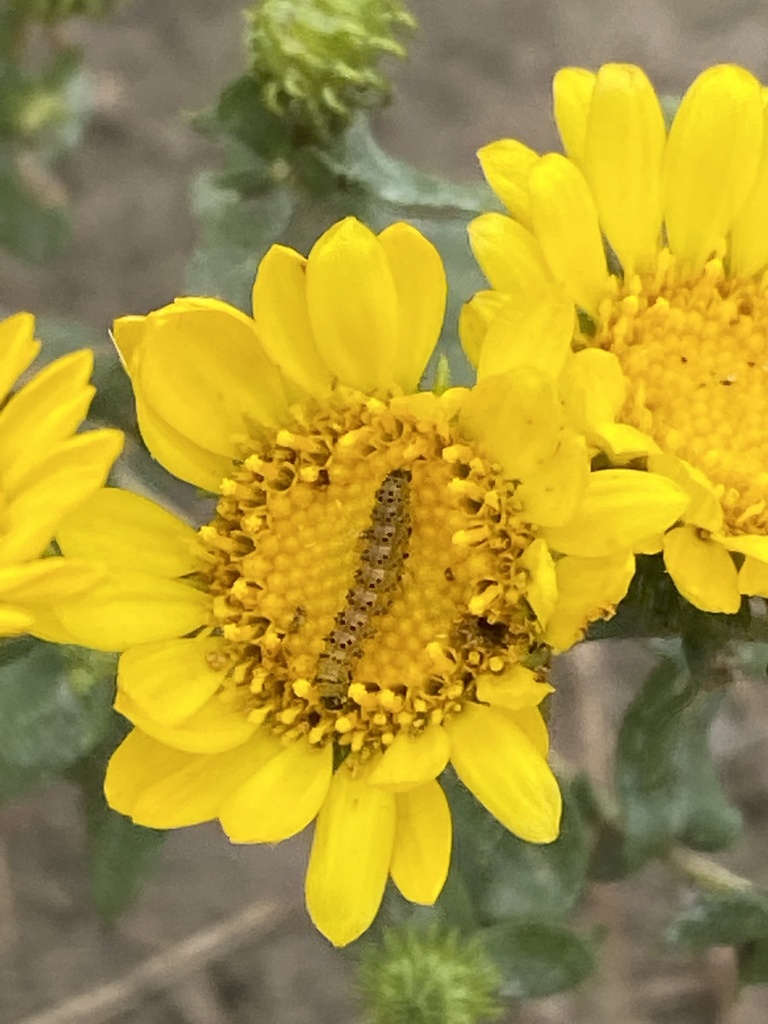
- Curlycup Gumweed (Grindelia squarrosa)
- Heart-leaf Golden Alexander (Zizia aptera)
- Common Silverweed (Argentina anserina)
- Cursed Crowfoot (Ranunculus sceleratus)
- Alkali Buttercup (Halerpestes cymbalaria)
- Yellow Lady’s Slipper (Cypripedium parviflorum)
- American Black Currant (Ribes americanum)
- Canadian Gooseberry (Ribes oxyacanthoides)
- Silver Wormwood (Artemisia ludoviciana)
- Fringed Sagebrush (Artemisia frigida)
- Field Sagewort (Artemisia campestris)
- Biennial Wormwood (Artemisia biennis)
- Silver Buffaloberry (Shepherdia argentea)
- Common Hops (Humulus lupulus)
- Fringed Loosestrife (Lysimachia ciliata)
- Sea Milkwort (Lysimachia maritima)
- Many-flowered Stickseed (Hackelia floribunda)
- Golden Dock (Rumex fugiens)
- Western Dock (Rumex occidentalis)
- Greater Plantain (Plantago major)
- Shinleaf White Wintergreen (Pyrola elliptica)
- Box Elder (Acer negundo)
- Western Snowberry (Symphoricarpos occidentalis)
- Common Snowberry (Symphoricarpos albus)
- Bastard Toadflax (Comandra umbellata)
Whereas, these plants of the Saskatoon Afforestation Areas have their cotyledons exposed to the air and light during germination. This type of germination allows the seedling to quickly establish above-ground growth and is common in many herbaceous and some woody plants.
Hypogeal Germination
Among the plants listed, those that typically undergo hypogeal germination (where the cotyledons remain underground and the embryonic stem, or hypocotyl, stays below the soil surface) include:
- American Elm (Ulmus americana)
- Red Baneberry (Actaea rubra)
- Prickly Wild Rose (Rosa acicularis)
- Prairie Rose (Rosa arkansas)
- Wood’s Rose (Rosa woodsii)
- Cutleaf Anemone (Anemone multifida)
- Fireweed (Chamaenerion angustifolium)
- Prairie Smoke (Geum triflorum)
- Slender Stinging Nettle (Urtica gracilis)
- Common Blue Lettuce (Lactuca pulchella)
- American vetch (Vicia americana)
- Canadian Milkvetch (Astragalus canadensis)
- Prairie Pasqueflower (Pulsatilla nuttalliana)
- Purple Prairie Coneflower (Dalea purpurea)
- Common Yarrow (Achillea millefolium)
- Saskatoon (Amelanchier alnifolia)
- Red-Osier Dogwood (Cornus sericea)
- Squashberry Low Bush Cranberry (Viburnum edule)
- Sweetberry Honeysuckle (Lonicera caerulea)
- Bog Wintergreen (Pyrola asarifolia)
- Box Elder (Acer negundo)
These plants have their cotyledons or seed leaves remaining underground while the hypocotyl emerges above the soil. This strategy can help protect the cotyledons from environmental stress and predators while still allowing the plant to establish its initial growth.
Direct Sunlight Required for Germination
For the plants of the afforestation areas, these are the plant species that require direct sunlight to germinate are:
- California Pigweed (Amaranthus californicus) – Amaranth seeds often require light for germination.
- Common Blue Lettuce (Lactuca pulchella) – Lettuce seeds generally need light to germinate.
- Common Yarrow (Achillea millefolium) – Yarrow seeds prefer light conditions for germination.
- Rayless Annual Aster (Symphyotrichum ciliatum) – Asters often need light for germination.
- Common Sunflower (Helianthus annuus) – Sunflower seeds usually benefit from light exposure during germination.
- Golden Bean (Thermopsis rhombifolia) – This species can require light for successful germination.
- Purple Prairie Coneflower (Dalea purpurea) – Coneflower seeds often need light for germination.
These plants have seeds that either need light to break dormancy or germinate more successfully when exposed to light. This trait helps ensure that they germinate in environments where they can grow and compete effectively.
Viviparous Germination.
Seeds that develop within the ovule and push out roots before the flower detaches are known for their “intraseed germination” or “viviparous germination.” Here are some plants from your list that exhibit this trait:
- American Elm (Ulmus americana) – Elm seeds can start germination while still attached to the parent tree.
- Fireweed (Chamaenerion angustifolium) – Fireweed seeds may start to develop before they are dispersed.
- Prickly Wild Rose (Rosa acicularis) – Rose seeds can exhibit viviparous germination, where they germinate inside the fruit.
This adaptation allows these plants to take advantage of immediate environmental conditions and can be particularly useful in stable or predictable environments.
Dicots or Monocots
Here’s a list of plants from the afforestation areas, categorized by their classification as dicotyledons (dicots). Dicots are characterized by having two cotyledons (seed leaves) in their seeds, and they typically have net-like leaf venation, flower parts in multiples of four or five, and vascular bundles in a ring.
Dicotyledons (Dicots)
- Bearberry (Arctostaphylos uva-ursi)
- American Elm (Ulmus americana)
- Red Baneberry (Actaea rubra)
- Spreading Dogbane (Apocynum androsaemifolium)
- White Meadowsweet (Spiraea alba)
- Prickly Wild Rose (Rosa acicularis)
- Prairie Rose (Rosa arkansas)
- Wood’s Rose (Rosa woodsii)
- Culeaf Anemone (Anemone multifida)
- Fireweed (Chamaenerion angustifolium)
- Prairie Smoke (Geum triflorum)
- Slender Stinging Nettle (Urtica gracilis)
- Prairie Woundwort Marsh Hedge Nettle (Stachys pilosa)
- Purple Prairie Coneflower (Dalea purpurea)
- Hookedspur Violet (Viola adunca)
- American Vetch (Vicia americana)
- Canadian Milkvetch (Astragalus canadensis)
- Silvery Scurfpea (Pediomelum argophyllum)
- Meadow Anemone (Anemonastrum canadense)
- Cylindrical Thimbleweed (Anemone cylindrica)
- Fireberry Hawthorn (Crataegus chrysocarpa)
- Chokecherry (Prunus virginiana)
- Red Raspberry (Rubus idaeus)
- Common Yarrow (Achillea millefolium)
- Fragrant Bedstraw (Galium triflorium)
- Northern Bedstraw (Galium boreale)
- Saskatoon (Amelanchier alnifolia)
- White Heath Aster (Symphyotrichum ericoides)
- Tufted White Prairie Aster (Symphyotrichum)
- Wild Licorice (Glycyrrhiza lepidota)
- Rayless Annual Aster (Symphyotrichum cliatum)
- Panicaled Aster (Symphyotrichum lanceolatum)
- Star-flowered Lily-of-the-Valley (Maianthemum stellatum)
- Three-flowered False Solomon’s Seal (Maianthemum trifolium)
- Littleleaf Pussytoes (Antennaria microphylla)
- Canada Aniseroot (Osmorhiza longistylis)
- Pale Vetchling (Lathyrus ochroleucus)
- Virginia Strawberry (Fragaria virginiana)
- Red-Osier Dogwood (Cornus sericea)
- Common Sneezeweed (Helenium autumnale)
- Canada Hawkweed (Hieracium umbellatum)
- Hairy False Golden Aster (Heterotheca villosa)
- Ground / Velvety Goldenrod (Solidago mollis)
- Missouri Goldenrod (Solidago missouriensis)
- Tall Goldenrod (Solidago altissima)
- Stiff-leaved Goldenrod (Solidago rigida)
- Canada Goldenrod (Solidago canadensis)
- Red-berried Elder (Sambucus racemosa)
- Nuttall’s Sunflower (Helianthus nuttallii)
- Common Sunflower (Helianthus annuus)
- Golden Bean (Thermopsis rhombifolia)
- Rough Cinquefoil (Potentilla norvegica)
- Prairie Cinquefoil (Potentilla pennsylvanica)
- Curlycup Gumweed (Grindelia squarrosa)
- Heart-leaf Golden Alexander (Zizia aptera)
- Common Silverweed (Argentina anserina)
- Cursed Crowfoot (Ranunculus sceleratus)
- Alkali Buttercup (Halerpestes cymbalaria)
- Yellow Lady’s Slipper (Cypripedium parviflorum)
- American Black Currant (Ribes americanum)
- Canadian Gooseberry (Ribes oxyacanthoides)
- Bristly Gooseberry (Ribes rotundifolium)
- Silver Buffaloberry (Shepherdia argentea)
- Fringed Loosestrife (Lysimachia ciliata)
- Sea Milkwort (Lysimachia maritima)
- Greater Plantain (Plantago major)
- Shinleaf White Wintergreen (Pyrola elliptica)
- Bog Wintergreen (Pyrola asarifolia)
- Western Snowberry (Symphoricarpos occidentalis)
- Common Snowberry (Symphoricarpos albus)
- Bastard Toadflax (Comandra umbellata)
Monocotyledons (Monocots)
- California Pigweed (Amaranthus californicus)
- Longroot Smartweed (Persicaria amphibia var. emersa)
- Wavyleaf Thistle (Cirsium undulatum)
- Flodman’s Thistle (Cirsium flodmanii)
- Common Blue Lettuce (Lactuca pulchella)
- Flexible Milkvetch (Astragalus flexuosus)
- Prairie Milkweed (Astragalus tasmannii ssp. robusior)
- Field Milkvetch (Astragalus agrestis)
- Canadian Milkvetch (Astragalus canadensis)
- Alsakan Bellflower (Campanula alaskana)
- Prairie Pasqueflower (Pulsatilla nuttalliana)
- Purple Giant Hyssop (Agastache scrophulariifolia)
- Great Blanketflower (Gaillardia aristata)
- Common Evening Primrose (Oenothera biennis)
- Meadow Anemone (Anemonastrum canadense)
- Cylindrical Thimbleweed (Anemone cylindrica)
- Squashberry Low Bush Cranberry (Viburnum edule)
- Sweetberry Honeysuckle (Lonicera caerulea)
- Wild Honeysuckle (Lonicera dioica)
- Smooth Fleabane (Erigeron glabellus)
- Purple Meadow-rue (Thalictrum dasycarpum)
- Veiny Meadow-rue (Thalictrum venulosum)
- Canada Hawkweed (Hieracium umbellatum)
- Silver Wormwood (Artemisia ludoviciana)
- Fringed Sagebrush (Artemisia frigida)
- Field Sagewort (Artemisia campestris)
- Biennial Wormwood (Artemisia biennis)
- Midwestern Carrionflower (Smilax lasioneuron)
- Common Hops (Humulus lupulus)
- Many-flowered Stickseed (Hackelia floribunda)
- Golden Dock (Rumex fueginus)
- Western Dock (Rumex occidentalis)
Monocotyledons, or monocots, are one of the two major groups of flowering plants (angiosperms), the other being dicotyledons (dicots). Here are the key characteristics that define monocots:
Characteristics of Monocots
- Cotyledons: Monocots have one cotyledon (seed leaf) in their seeds. This is where they get their name (“mono” meaning one, and “cotyledon” referring to the seed leaf).
- Leaf Venation: The leaves of monocots typically have parallel venation. This means that the veins run parallel to each other from the base to the tip of the leaf.
- Flower Parts: Monocots usually have flower parts (such as petals, sepals, and stamens) in multiples of three. For example, flowers might have three or six petals.
- Root System: Monocots generally have a fibrous root system, where the roots spread out in a network-like fashion rather than forming a main central root.
- Stem Vascular Arrangement: In monocots, vascular bundles (the arrangements of xylem and phloem) are scattered throughout the stem’s cross-section, rather than being arranged in a ring as in dicots.
- Pollen Structure: The pollen grains of monocots typically have one furrow or pore (monosulcate) as opposed to dicots, which usually have three furrows or pores.
- Secondary Growth: Monocots usually lack secondary growth, meaning they do not typically increase in girth (thickness) through the formation of secondary tissues like wood.
Please note that while most of these plants of the afforestation areas are categorized based on their typical classification as dicots or monocots, it’s always good to verify with a local botanist or a reliable plant classification resource if you need to confirm specific details.







 Forests of Memory. Forests of Learning. Forests for Life.