

To stand as guardians of the elm, we must first know how to recognize it. The elm (Ulmus genus) is among the most graceful of trees, with hallmarks that set it apart from all others. How to Spot Dutch Elm Disease Symptoms. Guardians of the Elm. Saskatoon’s Ecological Emergency!
1. The Shape
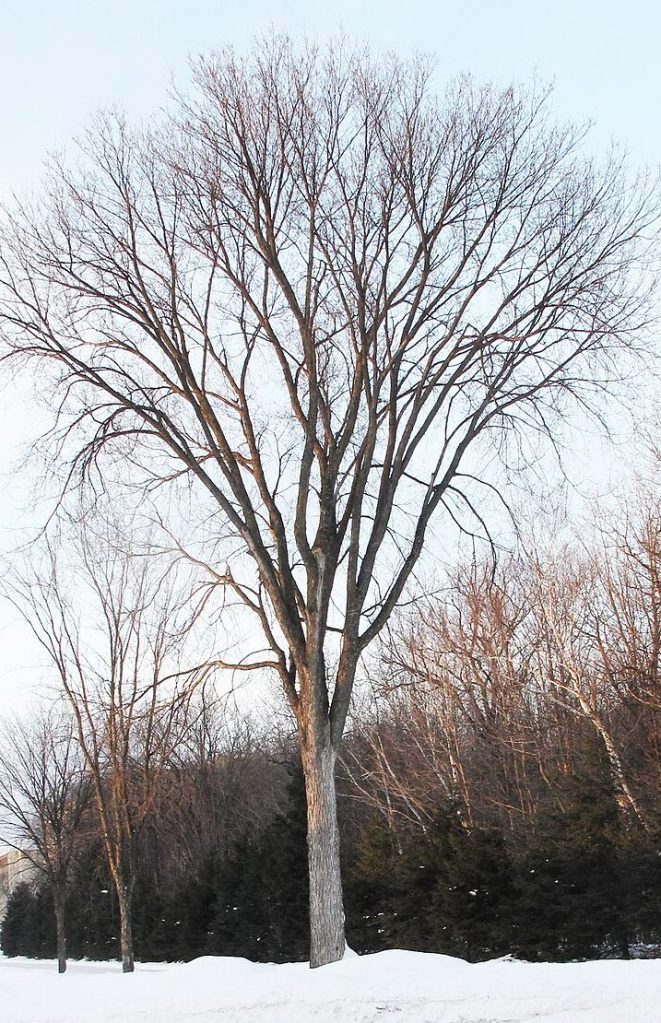
The American elm, our most familiar, forms a vase-like silhouette. The trunk rises tall and straight, then branches arch outward and upward, meeting high above the street like the roof of a Gothic cathedral. From a distance, this vaulting canopy is unmistakable.
2. The Leaves
Elm leaves are simple, oval, and finely toothed along the edge. They have a distinct asymmetrical base—one side of the leaf blade longer than the other where it meets the stem. This “uneven foot” is a true signature. The veins are bold and parallel, running straight from the midrib to each tooth of the margin.


3. The Bark
On young elms, bark is smooth and gray. As the tree matures, the bark becomes dark, deeply furrowed, and rough to the touch. These ridges may twist and interlace, giving the trunk an ancient, rugged strength.

4. The Seeds
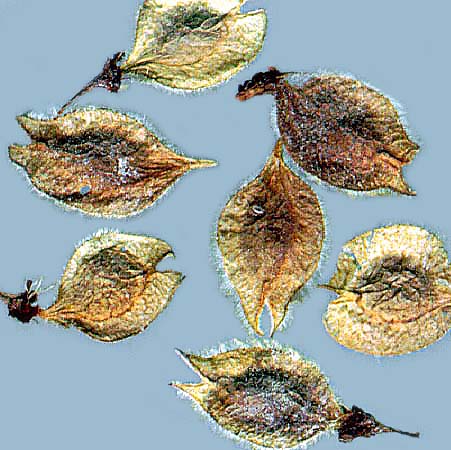
Elms produce seeds in spring, often in great abundance. Each seed is round and flat, encased in a papery wing (a samara) that spins through the air like a coin tossed by the wind.
5. Species in Saskatoon
In our city, you may encounter:
- American elm (Ulmus americana) – the classic vase-shaped elm, most common in boulevards.
- Siberian elm (Ulmus pumila) – smaller, faster-growing, but brittle; often used in shelterbelts.
- Japanese elm (Ulmus japonica) – less common, sometimes planted as a hardy ornamental.


Siberian Elm (Ulmus pumila)
- Buds: Tiny, dark, and rounded, resembling peppercorns with a flaky outer layer; 3 or more overlapping scales.
- Twig: Young twigs hairy to sparsely hairy, initially green, maturing to gray-brown.
- Bud Size: About 1/8 inch long; purplish-brown scales somewhat hairy, especially at the edges.
American Elm (Ulmus americana)
- Buds: Oval-shaped with a pointed tip, scale-like pattern; projected in the same direction as the subtending branch.
- Twig: Young twigs brown, hairy or smooth.
- Bud Color & Texture: Brown with reddish scales, somewhat hairy at edges; longer and less squat than Siberian elm buds.
Key Differences:
- Siberian elm buds are round and peppercorn-like; American elm buds are oval and pointed.
- Siberian elm twigs are initially green, American elm twigs are brown.
- Bud projection: American elm buds grow aligned with the branch, while Siberian elm buds are more rounded and sitting atop the twig.
Why It Matters
Elm bark beetles do not discriminate between species. All are vulnerable to Dutch elm disease. By learning to recognize these noble trees, you can help watch over them, notice early symptoms of DED, and take steps to protect Saskatoon’s canopy.
Did you Know?
“The City of Saskatoon started a unique project for the prairies called Afforestation, of “Man-made Forest”…aimed at improving the future environment of the City. The selection of plant material is based on the soil types, lay of the land, and type of planting scheme.
The following tree species were used:
American and Siberian Elm, Manitoba Maple, Green Ash, Poplar, Willow, Colorado Spruce, Scotch Pine and Caragana.” from a report written by A.L. Ligtermoet Assistant Parks Superintendent, City of Saskatoon. January 4, 1974 CoS archives.
These afforestation areas became known as Richard St. Barbe Baker Afforestation Area and George Genereux Urban Regional Park.
“To know a tree by name is the beginning of kinship. And when we know the elm, we see in it not just a tree, but a guardian of the land.”
“The minimum for safety is one third of the total land area. I think what is happening to the elms must be alerting the whole country to the necessity of trees, of the need for more trees. The elm has the largest leaf surface of any tree in Britain. If you …. put the leaves together edge to edge, they would cover ten acres. So naturally, the first tree to suffer from air pollution was the elm and, of course, when an elm is suffering from fatigue it is subject to attack by disease: the elm bark beetle, the carrier of the elm fungus, comes along and the tree succumbs.
I look at it this way. If a person is living a normal life and not abusing themselves – not smoking too much, not eating too much, not drinking too much – but living normally and eating the right food – they will be fit and well. It is only when they start abusing themselves that they are prone to attack by disease. It is the same with trees.
The next tree to go (the next tree with the largest leaf surface after the elm) is probably the beech: after that the sycamore: and so on. Finally it will be Man’s turn. We forget that we owe our existence to the presence of trees and as far as forest cover goes, we have never been in such a vulnerable position as we are today. The only answer is to plant more trees – to plant for our lives.
Richard St. Barbe Baker answers the first question above” Richard St. Barbe Baker.
Addresses:
Part SE 23-36-6 – Richard St. Barbe Baker Afforestation Area – 241 Township Road 362-A
Part SE 23-36-6 – SW Off-Leash Recreation Area (Richard St. Barbe Baker Afforestation Area ) – 355 Township Road 362-A
S ½ 22-36-6 Richard St. Barbe Baker Afforestation Area (West of SW OLRA) – 467 Township Road 362-A
NE 21-36-6 “George Genereux” Afforestation Area – 133 Range Road 3063
Wikimapia Map: type in Richard St. Barbe Baker Afforestation Area or
Google Maps South West Off Leash area location pin at parking lot
Web page: https://stbarbebaker.wordpress.com
Where is the Richard St. Barbe Baker Afforestation Area? with map
Where is the George Genereux Urban Regional Park (Afforestation Area)?with map
Blogger: FriendsAfforestation
Tumblr friendsafforestation.tumblr.comFacebook Group Page: Users of the George Genereux Urban Regional Park
Facebook: StBarbeBaker Afforestation Area
Facebook for the non profit Charity Friends of the Saskatoon Afforestation Areas Inc. FriendsAreas
Facebook group page : Users of the St Barbe Baker Afforestation Area
Support via Zeffy
Please help protect / enhance your afforestation areas, please contact the Friends of the Saskatoon Afforestation Areas Inc. (e-mail / e-transfers )
Donate your old vehicle, here’s how!
Support using Canada Helps
Support via a recycling bottle donation and Join the plastic-recycle challenge!
United Nations Decade on Ecosystem Restoration
- Use the UN Decade’s Visual Identity
- Make it your own
- Spread the word about the UN Decade
- Let’s Bring Back Forests
- Let’s Green Our Cities
““Be like a tree in pursuit of your cause. Stand firm, grip hard, thrust upward. Bend to the winds of heaven..”
Richard St. Barbe Baker
 Forests of Memory. Forests of Learning. Forests for Life.