Richard St. Barbe Baker Afforestation Area. George Genereux Urban Regional Park. Humboldt Broncos Memorial Forest. Come to Nature. Come to Life. Friends of the Saskatoon Afforestationk Areas Inc. friendsareas.ca
September 2026 | Toronto, Ontario | Hybrid Conference
Help Shape a More Resilient Future
ROOTED 2026 brings together environmental leaders, researchers, Indigenous knowledge holders, policymakers, community organizations, health professionals, educators, and sustainability advocates to advance practical solutions for a healthier planet and stronger communities.
As a sponsor, your organization becomes part of a growing international movement focused on collaboration, innovation, and action. Support now via Zeffy
Show your commitment to environmental stewardship, biodiversity conservation, climate resilience, and sustainable development.
2. Strengthen Your ESG Commitments
Align your organization with Environmental, Social, and Governance (ESG) priorities and measurable social impact.
3. Increase Brand Visibility
Gain exposure through conference promotions, social media campaigns, digital marketing, event materials, and ongoing outreach activities.
4. Reach Influential Decision-Makers
Connect with leaders from government, academia, industry, Indigenous communities, non-profits, environmental organizations, and the health sector.
5. Support Global Environmental Action
Help advance conversations leading toward the United Nations Environment Assembly (UNEA-8) and other international sustainability initiatives.
6. Invest in Innovation
Support the exchange of ideas, research, technologies, and nature-based solutions addressing today’s environmental challenges.
7. Champion One Health Solutions
Promote the interconnected health of people, animals, ecosystems, and communities through collaborative action.
8. Elevate Community Voices
Help create a platform for grassroots organizations, Indigenous leaders, environmental advocates, and overlooked voices working on the frontlines of change.
9. Build Strategic Partnerships
Develop meaningful relationships with organizations and professionals committed to sustainability, conservation, public health, and ecological restoration.
10. Leave a Lasting Legacy
Your sponsorship helps inspire action, support education, strengthen communities, and create lasting environmental and social impact.
Your Sponsorship Helps:
☑ Support impactful sustainability initiatives
☑ Host an inspiring international hybrid conference
☑ Promote biodiversity conservation and afforestation
☑ Advance climate resilience and ecosystem restoration
☑ Foster collaboration across sectors and disciplines
☑ Recognize environmental leaders and changemakers
☑ Amplify community-driven solutions
☑ Strengthen environmental education and awareness
☑ Build connections between health, ecology, and society
☑ Create positive change for future generations
ROOTED 2026 Theme
Voices from the Afforestation Frontlines:
Advancing Sustainable Solutions for a Resilient Planet
Bringing together diverse perspectives to strengthen ecosystems, communities, and environmental health through collaboration and shared action.
Partner With Purpose
Your organization will be recognized throughout conference promotions and communications while helping advance meaningful environmental and social change.
Investing in Resilience, Sustainability, and Global Collaboration
The world faces unprecedented environmental, social, and health challenges. Climate change, biodiversity loss, ecosystem degradation, and increasing pressures on communities demand innovative solutions and collaborative action. Addressing these challenges requires more than individual efforts—it requires partnerships.
ROOTED 2026—Resilience, Outreach and One-Health, Trees, Ecology & Diversity—is an international hybrid conference bringing together environmental leaders, researchers, policymakers, Indigenous knowledge holders, community organizations, health professionals, educators, and sustainability advocates to advance practical solutions for a more resilient planet.
Scheduled for September 2026 in Toronto, Ontario, ROOTED serves as a pre-consultation summit leading toward the eighth session of the United Nations Environment Assembly (UNEA-8) in 2027. The conference will build on the success of the award winning Voices from the Afforestation Areas webinar series, which has brought together voices from around the world to discuss afforestation, biodiversity conservation, environmental stewardship, ethical human-animal relationships, and ecosystem resilience. Support now via Zeffy
Corporate sponsors play a vital role in creating opportunities for knowledge sharing, innovation, and collective action. By supporting ROOTED 2026, organizations help ensure that important environmental and social conversations continue to grow and reach wider audiences.
Sponsorship demonstrates a commitment to environmental responsibility, community engagement, and sustainable development. It aligns organizations with meaningful initiatives that promote healthier ecosystems, stronger communities, and a more resilient future.
Position Your Organization as a Sustainability Leader
ROOTED provides sponsors with a unique opportunity to demonstrate leadership in environmental stewardship, biodiversity conservation, climate resilience, and community well-being. Supporting the conference sends a clear message that your organization values sustainability and is committed to creating positive change.
Connect with Influential Leaders and Changemakers
Sponsors gain visibility among a diverse audience of environmental experts, researchers, government representatives, Indigenous leaders, community organizations, educators, and industry professionals. ROOTED creates opportunities to establish valuable relationships and collaborate with those shaping environmental policy and practice.
Support the One Health Approach
The conference embraces the One Health philosophy, recognizing the interconnectedness of human health, animal welfare, and ecosystem health. Sponsors help advance discussions and initiatives that promote integrated solutions benefiting both people and the planet.
Strengthen ESG and Corporate Social Responsibility Goals
ROOTED aligns closely with Environmental, Social, and Governance (ESG) priorities. Sponsorship provides a tangible demonstration of your organization’s commitment to sustainability, diversity, inclusion, education, and community engagement.
Increase Brand Visibility
Sponsors receive recognition through conference marketing campaigns, social media promotion, event materials, speaker sessions, networking opportunities, and post-event communications. The hybrid format expands audience reach beyond geographic boundaries, increasing exposure and impact.
Creating a Legacy of Impact
ROOTED is more than a conference. It is a growing movement dedicated to fostering collaboration, amplifying overlooked voices, and advancing sustainable solutions through collective action.
Your sponsorship helps:
• Support global conversations on biodiversity, climate resilience, and ecosystem restoration.
• Elevate community-driven and Indigenous perspectives.
• Promote education, innovation, and knowledge exchange.
• Strengthen cross-sector collaboration between environment, health, and community sectors.
• Contribute to discussions that inform future environmental priorities and international dialogue.
• Inspire the next generation of environmental leaders and changemakers.
Join Us in Building a More Resilient Future
The challenges facing our world require bold partnerships and shared commitment. By sponsoring ROOTED 2026, your organization becomes part of an international effort to advance resilience, outreach, One Health principles, ecological stewardship, and sustainable development.
Together, we can strengthen ecosystems, empower communities, foster innovation, and create lasting positive impact for future generations.
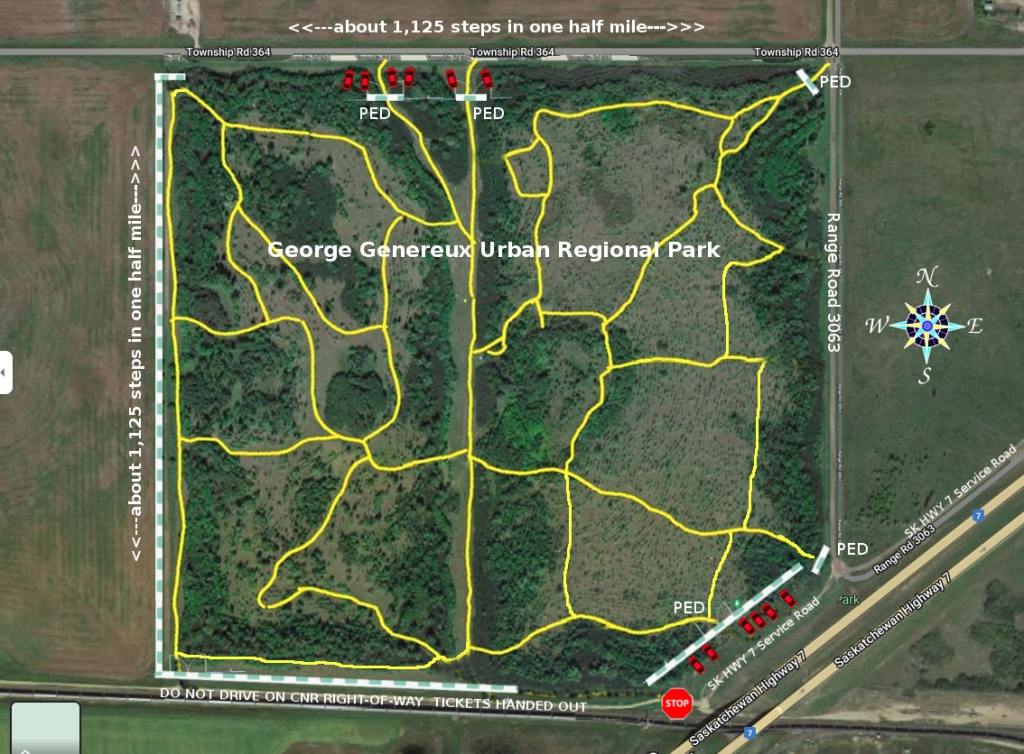
Update on the George Genereux Urban Regional Park Wildfire Area
We received a follow-up report regarding the wildfire that occurred in George Genereux Urban Regional Park.
The Saskatoon Fire Department requested assistance from Urban Forestry staff to assess vegetation damage and determine whether any ongoing safety concerns remained within the affected area. Following a site inspection, an Urban Forestry supervisor reported that 44 small dead trees along the pathway were identified and marked with spray paint. The overall risk was assessed as low due to the area’s relatively low level of use, the low likelihood of tree failure, and the minimal potential for injury should a tree fall. While these trees should eventually be removed to prevent them from falling onto the pathway, they do not currently present an immediate hazard to the public.
As a result of this assessment, all identified safety concerns have now been addressed, and the area may continue to be used by the public. While some visible impacts from the wildfire remain, they do not pose a risk that would warrant restricting access to the site.
Visitors should be aware that tick populations remain very high in the area. The fire did not eliminate ticks, so appropriate precautions are strongly recommended, including wearing long clothing, staying on designated trails where possible, and conducting tick checks after visiting.
To help protect public health, natural areas, and reduce the risk of future wildfires, smoking and vaping are prohibited in all outdoor public spaces owned or operated by the City of Saskatoon under Smoking Control Bylaw No. 8286. This restriction applies to all tobacco products, cannabis products, and electronic cigarettes. Open fires, campfires, and any unauthorized flame-producing activities are also prohibited. Visitors are encouraged to respect these regulations to help safeguard forests, wetlands, wildlife habitat, and fellow park users.
The burned area also presents a valuable opportunity for ecological learning. Post-fire landscapes serve as living laboratories where environmental organizations such as the Friends of the Saskatoon Afforestation Areas can observe ecological succession and natural recovery processes firsthand. Over time, pioneering plants, insects, fungi, birds, and mammals gradually recolonize the site, demonstrating the resilience of natural ecosystems. Monitoring these changes can provide important information about biodiversity recovery, soil health, habitat restoration, carbon storage, and climate adaptation. Such areas also offer meaningful educational opportunities, helping visitors understand the role that fire can play in ecosystem renewal and fostering a deeper appreciation for the natural processes that shape and sustain healthy landscapes.
When it comes to predicting how aggressively a wildfire will behave, Canadian firefighters and meteorologists look for a critical atmospheric tipping point known as the “crossover” effect. This danger zone is easily remembered by the 30-30-30 rule of thumb, which identifies the exact combination of weather conditions that cause small fires to rapidly explode out of control.
The rule states that wildfire danger reaches extreme levels when three specific conditions are met simultaneously:
Temperature:30°C or higher.
Relative Humidity:30% or lower.
Wind Speed:30 km/h or faster.
Why This Combination is So Dangerous
When the air becomes that hot and dry, it acts like a sponge, rapidly evaporating moisture from forest vegetation, grass, and soil. This creates a massive amount of highly flammable fuel. Once you add sustained wind speeds of 30 km/h into the mix, a spark can instantly turn into an intense, fast-moving blaze. The wind not only supplies oxygen to the flames but also carries burning embers far ahead of the main fire line, igniting new flare-ups and making containment incredibly difficult for emergency crews.
When a region hits this “crossover” threshold, fire safety officials go on high alert, as any new ignition has the potential to become an unmanageable wildfire.
.
Addresses:
Part SE 23-36-6 – Richard St. Barbe Baker Afforestation Area – 241 Township Road 362-A
Part SE 23-36-6 – SW Off-Leash Recreation Area (Richard St. Barbe Baker Afforestation Area ) – 355 Township Road 362-A
S ½ 22-36-6 Richard St. Barbe Baker Afforestation Area (West of SW OLRA) – 467 Township Road 362-A
NE 21-36-6 “George Genereux” Afforestation Area – 133 Range Road 3063
In the hush of an old woodland, where trembling aspens flicker like coins of light and spruce roots braid themselves through centuries of memory, there is another kingdom quietly at work beneath the bark. It is neither plant nor animal, but something older in spirit and stranger in form — the fungal realm. To kneel beside a weathered trunk and notice a shelf fungus protruding from its side is to glimpse the forest speaking in another language.
These woody shelves, called polypores, are the fruiting bodies of immense underground and internal fungal networks. The name “polypore” refers to the tiny pores beneath the cap, replacing the delicate gills of other mushrooms. When these fungi harden into woody, hoof-shaped structures, arborists and foragers alike call them conks. They are the visible punctuation marks of a hidden process: decomposition, renewal, and the recycling of life itself.
Phellinus tremulae Aspen BracketFomes fomentarius Hoof FungusSchizophyllum commune Splitgill Mushroom
The forest does not waste.
A conk may seem lifeless at first glance — gray as stone, ridged with age, fixed immovably to the trunk. Yet within it are millions of spores waiting for the right wind, the right wound, the right moment. Like rings in a tree, many shelf fungi add a fresh layer of spore-producing tissue each growing season. Some years produce two flushes of growth, making time itself difficult to measure precisely. One conk with eight visible layers may be four years old, or perhaps eight. Fungi, like forests, resist human impatience.
Among the most recognizable is Fomes fomentarius, the tinder conk, hard and gray, shaped uncannily like the hoof of a horse. Nearby may grow Ganoderma applanatum, known as artist’s conk because its creamy white underside bruises dark when touched, preserving every line like charcoal on parchment. A child can sketch a bird upon it with a fingertip, and the forest will keep the drawing for years.
These organisms are not invaders in the simple sense. They are recyclers, chemists, undertakers, and midwives of succession. Roughly 1,700 species of wood-rotting polypores have been documented in North America alone, each evolved to unlock the dense architecture of wood. Trees build themselves from sunlight, water, minerals, and carbon dioxide. Fungi dismantle those structures molecule by molecule, returning nutrients to soil and life to the ecosystem.
Without fungi, forests would choke upon their own dead.
Yet their appearance on a living tree often tells a more sobering story. Shelf fungi are usually dead-wood dependent organisms, thriving on weakened, wounded, scarred or dying tissue. Most wood decay begins when airborne spores enter exposed wood through injury. A broken limb. A careless pruning cut. A scar from construction equipment. Fire, lightning, drought, sunscald, insects boring into bark — all become doorways.
The fungus does not create the weakness alone. Often, it merely answers an invitation.
A stressed tree becomes vulnerable. Heat waves, compacted soils, severed roots, and prolonged drought leave trees physiologically exhausted, less able to compartmentalize decay. The fungal mycelium moves silently through sapwood and heartwood, digesting lignin — the very compound that gives wood its strength. What appears externally as a single shelf may conceal columns of internal decay extending metres above and below the fruiting body.
Knock on such a trunk with your knuckles or a sounding hammer and the tree may answer with a hollow resonance, a wooden echo hinting at unseen rot within.
And still, the forest persists.
Woodpeckers arrive next. Sapsuckers drill neat rows into stressed bark to drink rising sap. Beetles tunnel through softened wood. Mosses gather moisture in fissures. Cavities become homes for owls, chickadees, squirrels, and raccoons. What humans call decay, ecosystems call opportunity.
A wildlife tree is not a failed tree. It is a standing community.
This understanding lies at the heart of wise forestry and compassionate arboriculture. Too often, those appreciating our urban forests treat trees as isolated ornaments rather than members of a living network. We prune aggressively, wound roots, compact soil, and sterilize deadwood from greenspaces as though death itself were untidy. Yet forests thrive through cycles of growth, injury, decomposition, and renewal.
The great mycologist-naturalists remind us to look deeper. Paul Stamets writes of fungi as Earth’s neurological network, threading intelligence through ecosystems. Merlin Sheldrake invites us to see forests not as collections of individuals but as entangled conversations. David Arora teaches us to approach mushrooms with curiosity, humility, and delight — to kneel in the leaf litter and truly observe.
And observation changes stewardship.
If we wish to care for our trees and forests, we must first stop imagining ourselves outside of them.
The Kenyan initiative Watu Wa Miti — “People of the Trees” — understood this profoundly. Founded in 1922 by Richard St. Barbe Baker alongside Chief Josiah Njonjo, the movement began with a deceptively simple pledge: plant ten trees every year, protect trees everywhere, and perform one good deed daily. It was not merely a forestry campaign. It was a moral philosophy rooted in reciprocity.
To care for forests is to care for future shade we may never sit beneath.
Modern arborists know there is no true cure once aggressive wood-decay fungi establish themselves deeply within a tree. Species such as Phellinus tremulae (Aspen Bracket) and Schizophyllum commune (Common Split Gill) colonize stressed wood and produce characteristic fruiting bodies that reveal internal decline already underway. By the time conks appear, the hidden mycelial network may have occupied large portions of the trunk or roots.
The task, then, is prevention and respect.
Protect roots from compaction. Avoid unnecessary wounds. Prune properly and sparingly. Water young trees deeply during drought. Preserve diverse forests rather than monocultures. Leave some deadwood in naturalized areas so fungal and insect communities can continue nutrient cycling. Understand that fungi are not enemies to eradicate, but indicators of ecological imbalance and participants in renewal.
And perhaps most importantly: do not destroy the evidence.
Removing a conk from a tree does not remove the fungus within. The visible mushroom is merely the reproductive structure, while the true organism — the mycelium — permeates the wood invisibly. Tearing off fruiting bodies may reduce spore dispersal, but it does not halt decay. In damp weather, such disturbance may even aid spore spread.
The forest is subtler than our attempts to control it.
To walk among trees is to walk among beings engaged in constant transformation. A fallen birch nourishes fungi. Fungi nourish soil. Soil nourishes seedlings. Seedlings become forests. Forests shape climate, hold water, soften wind, cool cities, and shelter life.
Every conk on a trunk is both warning and wisdom.
It tells us that trees are mortal. That wounds matter. That ecosystems recycle grief into fertility. And that caring for forests means more than planting trees — it means protecting relationships: between roots and rain, fungi and woodpeckers, insects and bark, people and the living earth.
If we listen closely enough, even a silent shelf fungus can teach us how to belong to the forest again.
Thank you to Scott Kindrachuk, Supervisor with Urban Forestry in the City of Saskatoon Parks Department. From June 9–11, arborists will be working in the Richard St. Barbe Baker Afforestation Area to professionally remove selected standing dead trees identified as potential falling hazards, fire risks, or disease concerns. These trees will be marked with a spray-painted dot prior to the commencement of work.
Part SE 23-36-6 – Richard St. Barbe Baker Afforestation Area – 241 Township Road 362-A
Part SE 23-36-6 – SW Off-Leash Recreation Area (Richard St. Barbe Baker Afforestation Area ) – 355 Township Road 362-A
S ½ 22-36-6 Richard St. Barbe Baker Afforestation Area (West of SW OLRA) – 467 Township Road 362-A
NE 21-36-6 “George Genereux” Afforestation Area – 133 Range Road 3063
Wikimapia Map: type in Richard St. Barbe Baker Afforestation Area or
Google Maps South West Off Leash area location pin at parking lot
A Cautionary Story: Terri’s Quick Thinking in the Richard St. Barbe Baker Afforestation Area
On May 11, 2026, around the noon hour, Terri was walking on the west side of the Richard St. Barbe Baker Afforestation Area when she noticed thin smoke rising through the trees.
The Guardians of the Afforestation Area: A Story of Thanks
As she moved closer, she discovered adebris shelter, also known as a brush tipi, built from stacked dead logs and branches arranged in a cone shape, partly supported by a living tree. Inside the structure, a fire had been started and was still active under dry spring conditions.
The situation was immediately concerning. The spring season had left dry grasses, twigs, and fallen leaves highly flammable, and steady winds moving through the forest could easily carry embers into surrounding areas.
Terri attempted to manage and cool the fire, but quickly realized it was spreading into the dry materials of the structure. The combination of wind, dry fuel, and heat made it unsafe to control alone. She made the critical decision to call the Fire Department right away.
Fire crews were able to respond quickly, helping prevent what could have become a fast-moving wildfire. Terri’s actions may have protected people having a healthy lifestyle in the forest, nearby infrastructure including the Canadian National Railway corridor and station area, and surrounding residential communities such as Cedar Villa Estates and Montgomery Place Neighbourhood, as well as all the biodiversity and over 63 species at risk!
Thank you to Terri and the Saskatoon Fire Department!
A Disaster Averted
Terri’s quick thinking prevented a potential catastrophe. Because of her:
The Forest Users remained safe from a fast-moving blaze.
The Canadian National Railway (CN) station and the trains nearby were protected.
The Hamlet of Cedar Villa Estates and Montgomery Place Neighbourhood were spared from a wildfire that could have been driven straight toward their homes by the strong spring winds.
How These Debris Shelters Form
Debris shelters are built by stacking dead branches and logs into a tipi-like shape, often leaning against a living tree for support.
Starting a fire in a debris shelter and abandoning it is more than just a mistake; it is a threat to the community. 85% of wildfires are caused by humans, and many start exactly like this one. The Richard St. Barbe Baker Afforestation Area is loved by so many in our community; it would be devastating to lose this forest to fire! Once a mature urban forest is damaged or destroyed, recovery can take decades—or longer—and in some cases, it can raise difficult questions about future land use and whether pressure for development might follow. Losing our “urban lungs” would change the face of Saskatoon forever.
Please protect our greenspace; it is up to you!
Fire and Structural Hazards
These shelters can be dangerous for several reasons:
The Chimney Effect: The cone shape acts like achimney, drawing air upward and intensifying fire. One small flame can turn the entire dry shelter into a giant torch in seconds.
The Living Tree: Using a living tree as a support and then lighting a fire against it cooks the cambium (the living tissue under the bark), effectively killing the tree.
Dry branches and logs become highly flammable fuel
Fire can quickly spread through the entire structure
Heat can damage or kill the living tree used for support
The actual structure may be damaging the living tree, causing scars, which invites decay into the living tree which may cause it to fall during the next wind storm
However, in most public natural areas today, intentionally leaving a burning or smouldering structure would be considered unsafe and not permitted, is against city bylaws to have a fire in this greenspace, especially in dry spring conditions with surrounding grasses and trees. Uncontrolled fire in that situation can quickly spread and become a wildfire risk.
In protected or managed ecosystems, any burning of brush piles or greenspace area is normally done only as a planned prescribed burn i.e. by the Meewasin with strict permits, supervision, and firebreaks, not left unattended.
Just as importantly, the structure itself is often unstable.
The Risk of Structural Collapse
These shelters are rarely engineered for safety. They are held up by gravity and friction. Large, heavy logs can randomly collapse without warning. If someone—especially a child—is inside when the structure shifts, they can be pinned or seriously injured by the falling weight.
There have even beendocumented safety incidents where logs from unstable brush piles or tipi structures have fallen and struck people, causing injury and significant pain. This is one reason land managers often discourage climbing on, entering, or modifying these structures. Because they are not built for stability, they can shift or collapse over time as wood decays, wind moves them, or animals disturb them. Because the logs are not engineered or securely fastened:
Logs can shift or collapse unexpectedly
Gravity, wind, decay, or animal movement can loosen the pile
A sudden collapse can occur without warning
This means that anyone inside or near the structure is at risk of being struck by falling logs or trapped during a collapse. Even without fire, these structures should be treated as physically hazardous and unpredictable.
A Gentle Correction: While “play huts” built by kids, scouts, or hikers are fun to build, many park rangers ask people to dismantle them before they leave. Piling too much heavy wood against a living tree can sometimes damage its bark or compress the soil around its roots, which makes it harder for the tree to “breathe” and take in water.
Tires may be in the forest an environmental and fire hazard in a greenspace
Why the Fire Was So Dangerous
The “Spring Powderkeg” May in Saskatoon is the most dangerous time for forest fires. Even if the ground feels damp in spots, the forest is filled with “fine fuels”—dead grass and brittle branches that haven’t “greened up” yet. Spring conditions in Saskatoon increase fire risk significantly:
Dry fuels: Last year’s grasses and leaves ignite easily
Strong winds: Can carry embers long distances. High spring winds can blow an ember out of a shelter and into dry grass, starting a fire that moves faster than a person can run.
Root Fires: Heat from a campfire can ignite the “duff” (organic soil) and travel underground through the root system. A fire can smolder invisibly for days and erupt long after the site has been abandoned.
Rapid ignition: Dry debris shelters burn quickly
Hidden fire spread: Fire can smoulder in organic material and re-emerge
Even a small fire in these conditions can escalate rapidly.
A Cautionary Lesson
This incident highlights an important safety reality: unattended fire in natural areas is a serious hazard, especially when combined with unstable structures and dry seasonal conditions.
Thank you, Terri. Because you were in the right place at the right time and had the courage to act, our forest, our infrastructure, and our neighbors are safe tonight.
Debris shelters may appear simple or natural, but they can become dangerous both as fire risks and as unstable physical structures. They can also have unintended ecological consequences if built using susceptible tree species like elm.
Thanks to Terri’s awareness and quick decision to call emergency services, a potentially serious situation was brought under control before it could spread. Thank you to the City of Saskatoon Fire Department for your quick action to make sure the fire was out and that there were no smouldering root fires!
Her actions helped protect people, infrastructure, and the surrounding forest ecosystem—and serve as a powerful reminder that careful observation and responsible choices matter in natural spaces.
The Bottom Line: Debris shelters are more than just messy; they are structural hazards, disease spreaders, and fire traps. If you see smoke, follow Terri’s lead: Don’t wait. Call 911. One phone call can prevent a tragedy.
Part SE 23-36-6 – Richard St. Barbe Baker Afforestation Area – 241 Township Road 362-A
Part SE 23-36-6 – SW Off-Leash Recreation Area (Richard St. Barbe Baker Afforestation Area ) – 355 Township Road 362-A
S ½ 22-36-6 Richard St. Barbe Baker Afforestation Area (West of SW OLRA) – 467 Township Road 362-A
NE 21-36-6 “George Genereux” Afforestation Area – 133 Range Road 3063
Wikimapia Map: type in Richard St. Barbe Baker Afforestation Area or
Google Maps South West Off Leash area location pin at parking lot
Advancing Sustainable Solutions for a Resilient Planet
In a world increasingly defined by ecological uncertainty, the forests, meadows, and urban greenspaces around us are more than backdrops—they are living, breathing systems of resilience. YOUTUBE Voices from the Afforestation Frontlines – Advancing Sustainable Solutions for a Resilient Planet, a four-part environmental sustainability education series organized by Friends of the Saskatoon Afforestation Areas Inc., in collaboration with joint co-organizers the United Nations Environment Programme (UNEP), Animal People Inc., Juventud Unida en Acción (JUENA), and other global partners, has illuminated this truth with remarkable clarity. Through dialogue, reflection, and community engagement, the series offered a rare opportunity to witness the intersection of conservation, ethical human-animal relationships, and sustainable urban development.
Introduction: Setting the Stage
The inaugural session welcomed three visionary leaders whose work exemplifies the deep interconnection between humans, ecosystems, and animals. Julia Adamson, co-founder of Friends of the Saskatoon Afforestation Areas Inc., shared her decades-long dedication to conserving urban and peri-urban forests, promoting biodiversity, and fostering community stewardship in Saskatoon, Saskatchewan. Wolf Gordon Clifton, of Animal People Inc., explored the ethical, ecological, and scholarly dimensions of human-animal interactions, bridging conservation science with compassionate advocacy. Dalia F. Márquez A., CEO and founder of Juventud Unida en Acción, highlighted the power of youth leadership, sustainable community engagement, and equitable environmental action on a global scale. Their contributions framed the series in the context of the United Nations Sustainable Development Goals (SDGs), particularly SDG 13 (Climate Action), SDG 14 (Life Below Water), SDG 15 (Life on Land), SDG 16 (Peace, Justice, and Strong Institutions), and SDG 17 (Partnerships for the Goals).
Community Engagement in Conservation
Moderated by Frezer Yeheyis Tsegaye, Co-Facilitator of the Women Major Group at UNEP, Public Advocacy and Volunteerism Director at Friends of Saskatoon Afforestation Areas Inc., and Women 7 Advisor for the G7 Summit, this session explored the transformative power of citizen science, local stewardship, and grassroots engagement. Speakers included:
Paul Hanley, award-winning author and co-founder of FSAAI, whose writings and advocacy span over 1,500 articles and seven books on sustainability, agriculture, and urban forestry.
Dalia F. Márquez A., co-chair of Women’s Major Group at UNEP, and founder of Juventud Unida en Acción, championing youth-led environmental awareness.
Julia Adamson, co-founder of FSAAI, highlighting urban forest conservation and citizen engagement.
Wolf Gordon Clifton, executive director of Animal People Inc., emphasizing ethical conservation and human-animal coexistence.
Madison Cooke, Prairies Regional Action Coordinator for Climate Reality, promoting local climate action and community-based ecological awareness.
This session underscored the importance of inclusive, participatory approaches to environmental stewardship, where communities are empowered to become agents of change and ecosystems benefit from collective care.
Sustainable Human-Animal Interactions
Moderated by Wolf Gordon Clifton, this session brought together an extraordinary international panel to explore the ethics, policy, and practice of sustainable coexistence with animals—wild and domestic. Speakers included:
Adeline Lerambert, International Policy Manager at the Born Free Foundation, advocating for freedom, compassion, and ethical policy for animals worldwide.
Femke den Haas, Jakarta Animal Aid Network and Ellis Park Wildlife Sanctuary, sharing field experiences of rescue, rehabilitation, and coexistence.
Isaac Maina, Program Manager for Human-Animal Coexistence at the Africa Network for Animal Welfare, emphasizing community-driven solutions that sustain ecosystems.
Julia Adamson, FSAAI, connecting urban nature stewardship with broader ecological resilience.
Dr. Kimmy Cushman, Plant Based Treaty, framing sustainable food systems as ethical and ecological choices for planetary health.
Pei F. Su, CEO and Founder of ACT Asia, advocating education and cultural transformation to instill kindness toward animals in future generations.
Tozie Zokufa, Executive Director of the Coalition of African Animal Welfare Organizations, advancing compassion-driven policy across the continent.
Wolf Gordon Clifton, guiding the discussion on the interdependence of science, ethics, and public advocacy.
Varda Mehrotra, Co-Founder of Samayu and A Just World, connecting animal welfare with equity, ethics, and global sustainability.
The session illuminated a profound principle: sustainability is relational. How we live with animals mirrors how we live with each other, and with the Earth itself. Every choice, from the forests we restore to the food we consume, ripples through the web of life.
The Role of Biodiversity in Ecological Resilience
Moderated by Dalia F. Márquez A., this environmental sustainability session highlighted the scientific, policy, and practical strategies that underpin ecosystem resilience. Speakers included:
Carmen Capriles, agronomist and sustainable development specialist with decades of experience in international environmental policy, climate governance, and civil society advocacy.
Mirna Inés Fernández, environmental engineer from Bolivia, researcher at Third World Network, and founding member of the Global Youth Biodiversity Network, bringing expertise in biodiversity policy and education.
Daniel Sawadogo, political scientist from Burkina Faso, offering insights on governance and social dimensions of biodiversity conservation.
Rosalyn Kilcollins, former instructor with the Florida Master Naturalist Program, long-time environmental specialist in coastal management, and citizen science advocate.
Frezer Yeheyis Tsegaye, providing leadership and facilitation connecting global expertise to local action.
Wolf Gordon Clifton, guiding ethical reflection and interdisciplinary dialogue.
The discussions emphasized that biodiversity is the backbone of ecological resilience—urban afforestation, habitat protection, and species conservation are essential threads in a planet-wide tapestry of life. Participants explored how local and global strategies intertwine, from urban green corridors to cross-continental biodiversity networks.
Gratitude and Acknowledgment
This series could not have succeeded without the vision, scholarship, and dedication of all the moderators: Wolf Gordon Clifton, Dalia F. Márquez A., and Frezer Yeheyis Tsegaye. Their collective expertise, compassion, and commitment have created a platform for actionable learning, citizen empowerment, and global collaboration.
Through their efforts, the webinars advance the United Nations Sustainable Development Goals, including SDG 13 (Climate Action), SDG 14 (Life Below Water), SDG 15 (Life on Land), SDG 16 (Peace, Justice, and Strong Institutions), and SDG 17 (Partnerships for the Goals). Each session demonstrates that the path to a resilient planet is paved not only with science and policy but with empathy, dialogue, and hands-on stewardship.
UNEA-7
In the sun-drenched halls of Nairobi, Kenya, during UNEA-7, Prince Sobere George and Dalia F. Márquez A. stood at the heart of a global convocation on our shared environment—a place where ideas, cultures, and solutions converged like rivers into a single ocean of purpose. They listened, learned, and shared, bringing home not only the stories of communities and conservationists across the world but the spark of connection that fuels change. From these encounters emerged tangible spin-offs: innovations in capacity-building, cross-continental partnerships, and educational initiatives ready to take root. One such innovation is the Capacity Building Training Program concept, envisioned as a collaborative effort with Canadian academic institutions, where curriculum development, facilitation, and participant engagement converge to empower a new generation of environmental leaders. Prince George, as program lead, in partnership with Legacy-Culture Solutions Limited (Nigeria), seeks to oversee coordination and leadership while ensuring rigorous financial, curriculum and legal compliance.
A Call to Action
As we leave the digital halls of these webinars and step into forests, meadows, and communities, we carry a renewed responsibility. Every act of stewardship—every tree planted, every species protected, every young person inspired—ripples through ecosystems, communities, and future generations. The future of our planet will belong to those who listen: to the rustle of leaves, the whisper of wings, and the subtle wisdom of all living beings. YOUTUBE Voices from the Afforestation Frontlines – Advancing Sustainable Solutions for a Resilient Planet reminds us that the stewardship of Earth is not optional—it is essential, urgent, and profoundly interconnected.
From Insight to Action: Expanding Environmental Sustainability Through Interactive Quizzes and Global Engagement
Building on the rich insights of Voices from the Afforestation Frontlines – Advancing Sustainable Solutions for a Resilient Planet, environmental sustainability can continue to evolve through dynamic, interactive approaches that extend learning beyond the webinar screens. One particularly effective method has been the development of online quizzes for reflection, thoughtfully designed to engage learners across different education levels and difficulty tiers. Shared widely on social media, these quizzes highlight the expertise of the series’ distinguished speakers while prompting participants to critically reflect on ethical human-animal interactions, local stewardship practices, and broader sustainability challenges.
Unexpectedly, participants reported that combining interactive tools with global perspectives significantly enhanced understanding and personal connection to environmental issues. Knowledge dissemination now flows through multiple channels: ongoing digital campaigns and quizzes, recorded webinars shared widely as YouTube videos, citizen science activities and hands-on field engagement in local environmental projects, and pre-UNEA-8 workshops and hybrid events. These efforts have already generated tangible spin-offs, including the creation of educational materials such as policy briefings, youth-led engagement programs, and interactive quizzes that collectively extend the impact of the original video series. Through these layered, reflective, and participatory approaches, sustainability learning becomes not only accessible but actionable, fostering a new generation of environmental advocates ready to implement change locally and globally.
Moving Forward
The project has generated an exciting array of spin-offs, demonstrating how local initiatives can ripple outward into global impact. Inspired by the connections and insights gained through UNEA-7, Frezer has spearheaded plans to support international environmental and sustainability initiatives throughout 2026. Central to this vision is the Rooted Coalition, a series of webinar, hybrid, and in-person events under the working title Resilience, Outreach, and One-Health: Trees, Ecology & Diversity (Rooted). This initiative aligns with the 2026 High-Level Political Forum (HLPF) under The United Nations Economic and Social Council ECOSOC, embracing the theme of transformative and equitable action for the 2030 Agenda, and seeks to strengthen multi-sector collaboration, innovation, and advocacy in support of the United Nations Sustainable Development Goals. Key milestones include a global convening in New York on July 13, 2026, where Rooted partners will engage with international stakeholders to advance integrated solutions, and a pre-consultation summit toward UNEA-8 on September 24–25, 2026, to be hosted in either Toronto or Saskatoon. These gatherings will unite leaders in environment, health, and sustainability, promoting cross-sector dialogue and concrete strategies to accelerate ecological resilience, community engagement, and the protection of life on Earth.
On this third day of March, when the nations of the world pause to honour wild creatures and untamed forests, we are reminded that humanity does not stand apart from Nature, but within her sacred circle. United Nations World Wildlife Day is not merely a date upon the calendar; it is a summons to conscience.
The theme for 2026 — Medicinal and Aromatic Plants: Conserving Health, Heritage and Livelihoods — calls us back to an ancient truth: the forest is our first pharmacy, our oldest teacher, and our enduring provider. Long before laboratories and dispensaries, it was the leaf, the bark, the root, and the resin that soothed fever, calmed the spirit, and restored vitality. The fragrance of cedar, the healing balm of spruce and balsam poplar, the quiet strength of herbs gathered with reverence — these are gifts woven into the story of humankind.
Yet what we harvest must be guarded with gratitude. The reckless axe and the careless flame silence more than birdsong; they extinguish remedies not yet discovered and wisdom not yet recorded. Each medicinal plant lost to destruction is a library burned, a heritage erased, a livelihood diminished.
The preservation of wildlife — plant and animal alike — is therefore not sentimentalism. It is sound stewardship. Forests regulate the waters, shelter the soil, call the rains, and cradle biodiversity. In their shade dwell species known and unknown, each bearing a thread in the intricate tapestry of life. To protect them is to protect ourselves.
In the lifetime of Richard St. Barbe Baker, he saw barren lands restored by trees planted with faith and fellowship. Baker learned that when communities unite — young and old, rural and urban — the desert can bloom again. Reforestation is not only an act of ecology; it is an act of hope. It affirms that humanity may yet choose guardianship over greed.
So let this World Wildlife Day be more than ceremony. Let it be covenant. Plant trees whose leaves may heal future generations. Safeguard the aromatic herbs whose oils carry culture and craft across centuries. Support livelihoods that gather from the wild without despoiling it. Teach children that the forest is not a warehouse of commodities but a cathedral of living wonders and homes to our brethern in the wild.
When we conserve medicinal and aromatic plants, we conserve health. When we honour traditional knowledge, we conserve heritage. When we sustain ecosystems wisely, we conserve livelihoods. And in doing so, we rediscover a deeper truth — that the well-being of people and planet is indivisible.
May we walk gently upon the Earth, tending her green mantle with reverence, so that the wild may flourish and humanity may endure in harmony beneath the sheltering trees.
Baker was recognized as the first inaugural Honorary Life Member of the World Wildlife Fund (WWF) for his global efforts in reforestation. An amazing testimonial to wildlife worldwide.
Part SE 23-36-6 – Richard St. Barbe Baker Afforestation Area – 241 Township Road 362-A
Part SE 23-36-6 – SW Off-Leash Recreation Area (Richard St. Barbe Baker Afforestation Area ) – 355 Township Road 362-A
S ½ 22-36-6 Richard St. Barbe Baker Afforestation Area (West of SW OLRA) – 467 Township Road 362-A
NE 21-36-6 “George Genereux” Afforestation Area – 133 Range Road 3063
Wikimapia Map: type in Richard St. Barbe Baker Afforestation Area or
Google Maps South West Off Leash area location pin at parking lot
In a world that grows louder with human industry and quieter with the fading calls of the wild, there are still voices—clear, compassionate, and resolute—rising to speak for those who cannot speak for themselves. Voices from the Afforestation Frontlines – Advancing Sustainable Solutions for a Resilient Planet gathers such voices from across the globe, reminding us that coexistence with the natural world is not merely a dream of idealists, but a necessity for our shared survival.
On Monday, November 3, at 10 AM EST, an extraordinary panel of international leaders will come together to discuss Sustainable Human–Animal Interactions—an urgent conversation about how we, as stewards of the Earth, might reimagine our relationship with both wild and domestic life in an age of ecological uncertainty.
Each speaker brings a story shaped by empathy and action:
🌍 Adeline Lerambert, Born Free Foundation, offers a vision of freedom rooted in compassion, where policy and advocacy serve the living beings behind the statistics.
🐘 Femke den Haas, Jakarta Animal Aid Network & Ellis Park Wildlife Sanctuary, brings courage from the field—rescuing, rehabilitating, and restoring dignity to those caught between human expansion and wilderness retreat.
🦒 Isaac Maina, Africa Network for Animal Welfare, bridges the worlds of people and wildlife, working to nurture coexistence that sustains communities and ecosystems alike.
🌳 Julia Adamson, Friends of the Saskatoon Afforestation Areas Inc., grounds the discussion in the living landscapes of urban nature—reminding us that even within city limits, forests breathe and teach us of resilience.
🥦 Dr. Kimmy Cushman, Plant Based Treaty, invites us to consider food systems as moral and ecological choices, pathways to planetary health that begin on our plates.
🐯 Pei F. Su, ACT Asia, advocates for education and cultural transformation, planting seeds of kindness in the next generation.
🕊 Tozie Zokufa, Coalition of African Animal Welfare Organizations, speaks for a continental movement toward justice—where compassion becomes policy and stewardship becomes identity.
🐾 Wolf Gordon Clifton, Animal People Inc., helps us see how science, journalism, and public discourse together shape the moral architecture of conservation.
🌱 Varda Mehrotra, Samayu and A Just World, challenges us to connect animal welfare with broader movements for equity, ethics, and planetary well-being.
Together, these thought-leaders remind us that sustainability is not only a matter of carbon or conservation—it is a question of relationship. The way we live with animals, wild or domestic, mirrors how we live with one another. Whether in the forests we replant, the cities we inhabit, or the choices we make at the table, every act of empathy echoes outward through the web of life.
This dialogue is not about opposition—between development and preservation, between human need and animal welfare—but about transformation. The transformation of systems, yes, but more profoundly, the transformation of the human heart.
As we stand at the edge of ecological tipping points, the path toward a resilient planet will not be forged through domination, but through understanding. The future will belong to those who listen—to the rustle of leaves, the whisper of wings, the wisdom of those who remember that we are all kin in this intricate, fragile web of being.
Voices from the Afforestation Frontlines (A global webinar series) Listen— the wind speaks through the pines, the river bends with patience, and here, in your quiet room, we gather from miles away. Voices rise like leaves in sunlight, turning toward each other, learning to care for the world that carries us all.
Voices from the Afforestation Frontlines
Advancing Sustainable Solutions for a Resilient Planet
Join us for the webinar series entitled Voices from the Afforestation Frontlines – Advancing Sustainable Solutions for a Resilient Planet. This four-part webinar series will bring together experts, communities and the public-at-large from Canada, United States and Globally
The United Nations Environment Assembly (UNEA-7), under the theme “Advancing sustainable solutions for a resilient planet,” presents a timely and vital platform to explore the interlinked challenges of climate change, biodiversity loss, and unsustainable human-nature relationships. In response to this global call, Friends of the Saskatoon Afforestation Areas Inc. proposes a dynamic webinar series that brings together diverse voices to highlight innovative and community-driven approaches to conservation and sustainable living.
This initiative, promotes cross-sector dialogue, amplify grassroots action, and explore practical solutions that foster environmental stewardship and animal welfare.
Sustainable Human-Animal Interactions The deer pauses at the stream, its eyes steady, unjudging. We watch, we reach, we falter— and learn that care is a language spoken with quiet hands, soft steps, gentle hearts. Every creature’s life touches ours if we listen long enough.
The Role of Biodiversity in Ecosystem Resilience A hundred small wings brush the air, a thousand roots tangle beneath soil, and we see: strength is in the multitude, in the hidden, in the overlooked. To protect one is to protect all, to watch, to wait, to honor the intricate chorus of life.
Community Engagement in Conservation In the field, hands work together, digging, planting, tending. Laughter rises with the morning sun, and wisdom walks beside it— we are not alone, our care multiplies. Every small act is a promise to the trees, the birds, the earth itself.
Sustainable Solutions for a Resilient Planet(global series) Across oceans, across borders, we sit and speak, and the earth listens. Every voice a thread, woven into a vast tapestry that holds rivers, forests, animals, and us. Together we learn to bend with the wind, to heal, to guard, to walk gently into tomorrow.
Voices from the Afforestation Frontlines(the global webinar series) O gentle earth, your whispers rise, Across the seas, beneath the skies. From forest depths and city streets, A chorus of small, steadfast beats. We come to listen, we come to care, To sow the future in open air. Voices unite where green hearts stand, A resilient world grows from our hands.
Sustainable Human-Animal Interactions The fox and sparrow, deer and dove, All share this earth we cherish and love. Our hands can harm, our hearts can heal, If we learn to see, to pause, to feel. In gentle ways, our worlds entwine, Through careful thought, their fates are mine. Let kindness shape the lands we tread, So both the living and we are fed.
The Role of Biodiversity in Ecosystem Resilience A thousand voices, a thousand wings, The meadow hums, the river sings. Each leaf and stone, each creeping vine, Holds secret strength, a grand design. When storms arise or seasons change, Their myriad forms will rearrange. Protect the web, the life unseen, Where vibrant growth meets every green.
Community Engagement in Conservation Together, neighbors till and sow, Where gentle waters ripple slow. Hands in soil, hearts in sun, Each deed a song, each task begun. Shared care for forest, field, and glen, Returns the gift to all of men. In common labor, love takes flight, And turns our work to lasting light.
Sustainable Solutions for a Resilient Planet Across the world, from shore to shore, The earth calls softly, “Learn, restore.” From every city, every glen, Rise thoughtful voices, women, men. We share the burden, share the dream, To mend the rivers, tend the stream. With care, with hope, with hands allied, A thriving world stands at our side.
Voices from the Afforestation Frontlines
Advancing Sustainable Solutions for a Resilient Planet
Join us for the webinar series entitled Voices from the Afforestation Frontlines – Advancing Sustainable Solutions for a Resilient Planet. This four-part webinar series will bring together experts, communities and the public-at-large from Canada, United States and Globally
The United Nations Environment Assembly (UNEA-7), under the theme “Advancing sustainable solutions for a resilient planet,” presents a timely and vital platform to explore the interlinked challenges of climate change, biodiversity loss, and unsustainable human-nature relationships. In response to this global call, Friends of the Saskatoon Afforestation Areas Inc. proposes a dynamic webinar series that brings together diverse voices to highlight innovative and community-driven approaches to conservation and sustainable living.
This initiative, promotes cross-sector dialogue, amplify grassroots action, and explore practical solutions that foster environmental stewardship and animal welfare.











 Forests of Memory. Forests of Learning. Forests for Life.