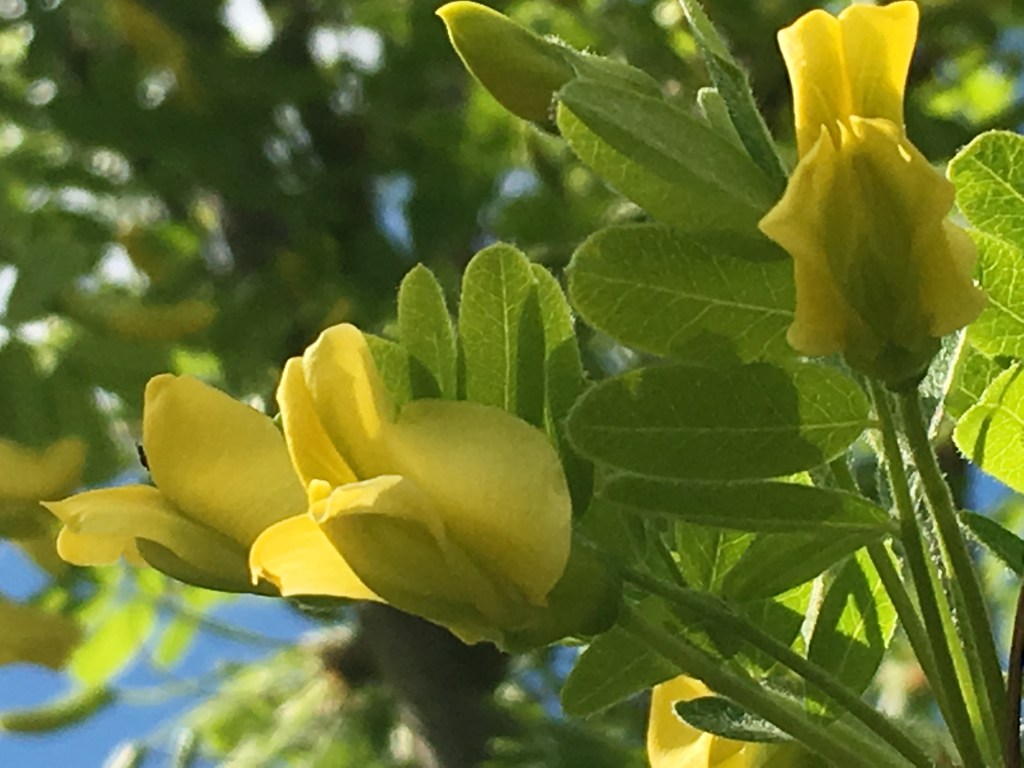
Trees with a Story

Trees with a Story: Celebrating Arbor Week and National Smile Day in Saskatoon’s Living Forests

By Friends of the Saskatoon Afforestation Areas Inc.

What makes you smile?

For some, it is a favourite song, a visit with friends, or a sunny spring day. For others, happiness can be found in the quiet rustle of leaves overhead, the flash of a bird’s wing, or the discovery of a wildflower along a forest trail.

This year, Arbor Week and National Smile Day come together on May 31, creating the perfect opportunity to celebrate one of Saskatoon’s greatest natural treasures: the Richard St. Barbe Baker Afforestation Area.

The event, Trees with a Story: An Arbor Week Celebration & Smile Day Walk, invites nature lovers, families, photographers, hikers, citizen scientists, and curious explorers to discover the fascinating stories hidden within Saskatoon’s urban forest.

Every Tree Has a Story

At first glance, a forest may appear to be simply a collection of trees.

Look closer.

Each tree represents a chapter in a much larger story—one of resilience, survival, biodiversity, and community stewardship.

Some species have called Saskatchewan home for thousands of years. Others arrived through human settlement and agricultural development. Some were deliberately planted during the Green Survival Program of 1972-73, while a few have become unwelcome invaders that threaten native ecosystems.

Together, they form a living library waiting to be explored.

Visitors on the walk will encounter towering American Elms and Green Ash trees, both species now listed on the International Union for Conservation of Nature (IUCN) Red List due to increasing threats across their native ranges.

Participants will also meet the ever-popular Trembling Aspen, whose shimmering leaves seem to dance in even the gentlest breeze, and the mighty Bur Oak, one of the prairie’s most enduring symbols of strength and longevity.

A Forest Born from Vision

The Richard St. Barbe Baker Afforestation Area and nearby George Genereux Urban Regional Park owe their existence to a remarkable vision that began more than fifty years ago.

In 1972 and 1973, thousands of trees were planted as part of Saskatchewan’s Green Survival Program, with species selection guided by the Prairie Farm Rehabilitation Administration.

The goal was practical: protect the landscape from erosion, improve environmental conditions, and establish shelterbelts capable of thriving in the prairie climate.

What emerged over the decades was something far greater.

Today, these former nursery lands have matured into thriving urban forests that support wildlife, improve air quality, sequester carbon, provide recreational opportunities, and serve as outdoor classrooms for environmental education.

No one planting those young saplings could have predicted the extraordinary biodiversity they would one day support.

Seeking Rare Treasures

One of the most exciting aspects of the Arbor Week walk is the possibility of discovering rare and unusual species.

Participants will learn about the Red-Berried Elder, an S2-ranked species considered rare in Saskatchewan. This beautiful shrub provides habitat and food for birds and pollinators while adding another layer of ecological richness to the forest.

Even more intriguing is the possibility of finding the elusive Smooth Rose, an S1-ranked species that has not yet been documented in the area but remains a tantalizing possibility for observant naturalists.

Every walk becomes a treasure hunt.

Every observation could become an important scientific record.

The $50 Linden Tree Mystery

Adding to the excitement is one of the forest’s most enduring mysteries.

In 1984, a Linden Tree was reportedly planted somewhere within the afforestation area.

Its exact location remains unknown.

To celebrate Arbor Week, organizers are offering a $50 prize to the first participant who locates the tree and records a verified observation using the iNaturalist platform during the event.

Will this be the year the mystery is finally solved?

Only the forest knows.

Citizen Science in Action

One of the most remarkable developments in conservation today is the rise of citizen science.

Participants are encouraged to bring smartphones equipped with the iNaturalist app and help document the biodiversity of the forest.

A photograph uploaded during the walk can contribute to global scientific databases, assist researchers, document rare species, or help track the spread of invasive plants.

Citizen science transforms visitors into researchers and casual observations into valuable scientific contributions.

It reminds us that environmental stewardship is not limited to scientists and academics.

Everyone can participate.

Everyone can contribute.

Watching the Watchlist

Not every species encountered on the walk belongs in the forest.

Participants will also learn how to identify highly invasive species such as European Buckthorn, a plant capable of outcompeting native vegetation and altering habitat conditions.

By documenting invasive species through platforms such as iNaturalist, community members become active partners in conservation and ecological restoration.

Protecting biodiversity begins with knowing what belongs—and what doesn’t.

A Smile for the Future

National Smile Day encourages us to celebrate the simple joys in life.

Few experiences are more uplifting than spending time among trees.

Research consistently shows that forests improve mental health, reduce stress, increase physical activity, and strengthen our connection to nature.

The Richard St. Barbe Baker Afforestation Area offers all of these benefits while providing critical habitat for birds, pollinators, mammals, and countless other species.

It is a place where children can discover nature, families can explore together, and adults can reconnect with the natural world.

Most importantly, it is a place that reminds us of our responsibility to future generations.

The people who planted these forests more than fifty years ago may never have imagined the impact their work would have today.

The question now becomes: What legacy will we leave?

Every tree planted matters.

Every species protected matters.

Every observation recorded matters.

Every smile shared in nature matters.

This Arbor Week and National Smile Day, join us for a walk through a forest filled with stories, discoveries, and inspiration.

Come for the trees.

Stay for the smiles.

And perhaps leave with a deeper appreciation for the living legacy growing right here in Saskatoon.

Event Details

📅 Sunday, May 31, 2026

🕑 2:00 PM

📍 Richard St. Barbe Baker Afforestation Area – Parking Area P2

🥾 Bring comfortable walking shoes, a smartphone with iNaturalist, water, and your best Smile Day grin.

🌐 Learn more at friendsareas.ca

Because every tree has a story—and every visitor becomes part of it.

Addresses:

Part SE 23-36-6 – Richard St. Barbe Baker Afforestation Area – 241 Township Road 362-A

Part SE 23-36-6 – SW Off-Leash Recreation Area (Richard St. Barbe Baker Afforestation Area ) – 355 Township Road 362-A

S ½ 22-36-6 Richard St. Barbe Baker Afforestation Area (West of SW OLRA) – 467 Township Road 362-A

NE 21-36-6 “George Genereux” Afforestation Area – 133 Range Road 3063

Wikimapia Map: type in Richard St. Barbe Baker Afforestation Area or

Google Maps South West Off Leash area location pin at parking lot

Web page: https://stbarbebaker.wordpress.com

Where is the Richard St. Barbe Baker Afforestation Area? with map

Where is the George Genereux Urban Regional Park (Afforestation Area)?with map

Pinterest richardstbarbeb

Blogger: FriendsAfforestation

Tumblr friendsafforestation.tumblr.comFacebook Group Page: Users of the George Genereux Urban Regional Park

Facebook: StBarbeBaker Afforestation Area

Facebook for the non profit Charity Friends of the Saskatoon Afforestation Areas Inc. FriendsAreas

Facebook group page : Users of the St Barbe Baker Afforestation Area

Facebook: South West OLRA

Reddit: FriendsAfforestation

BlueSky Social

Mix: friendsareas

YouTube

Support via Zeffy

Please help protect / enhance your afforestation areas, please contact the Friends of the Saskatoon Afforestation Areas Inc. (e-mail / e-transfers )

Donate your old vehicle, here’s how!  

Support using Canada Helps

Support via a recycling bottle donation and Join the plastic-recycle challenge!

United Nations Decade on Ecosystem Restoration

““Be like a tree in pursuit of your cause. Stand firm, grip hard, thrust upward. Bend to the winds of heaven..”

The Language of Conks: What Shelf Fungi Teach Us About Caring for Trees and Forests

In the hush of an old woodland, where trembling aspens flicker like coins of light and spruce roots braid themselves through centuries of memory, there is another kingdom quietly at work beneath the bark. It is neither plant nor animal, but something older in spirit and stranger in form — the fungal realm. To kneel beside a weathered trunk and notice a shelf fungus protruding from its side is to glimpse the forest speaking in another language.

These woody shelves, called polypores, are the fruiting bodies of immense underground and internal fungal networks. The name “polypore” refers to the tiny pores beneath the cap, replacing the delicate gills of other mushrooms. When these fungi harden into woody, hoof-shaped structures, arborists and foragers alike call them conks. They are the visible punctuation marks of a hidden process: decomposition, renewal, and the recycling of life itself.

The forest does not waste.

A conk may seem lifeless at first glance — gray as stone, ridged with age, fixed immovably to the trunk. Yet within it are millions of spores waiting for the right wind, the right wound, the right moment. Like rings in a tree, many shelf fungi add a fresh layer of spore-producing tissue each growing season. Some years produce two flushes of growth, making time itself difficult to measure precisely. One conk with eight visible layers may be four years old, or perhaps eight. Fungi, like forests, resist human impatience.

Among the most recognizable is Fomes fomentarius, the tinder conk, hard and gray, shaped uncannily like the hoof of a horse. Nearby may grow Ganoderma applanatum, known as artist’s conk because its creamy white underside bruises dark when touched, preserving every line like charcoal on parchment. A child can sketch a bird upon it with a fingertip, and the forest will keep the drawing for years.

These organisms are not invaders in the simple sense. They are recyclers, chemists, undertakers, and midwives of succession. Roughly 1,700 species of wood-rotting polypores have been documented in North America alone, each evolved to unlock the dense architecture of wood. Trees build themselves from sunlight, water, minerals, and carbon dioxide. Fungi dismantle those structures molecule by molecule, returning nutrients to soil and life to the ecosystem.

Without fungi, forests would choke upon their own dead.

Yet their appearance on a living tree often tells a more sobering story. Shelf fungi are usually dead-wood dependent organisms, thriving on weakened, wounded, scarred or dying tissue. Most wood decay begins when airborne spores enter exposed wood through injury. A broken limb. A careless pruning cut. A scar from construction equipment. Fire, lightning, drought, sunscald, insects boring into bark — all become doorways.

The fungus does not create the weakness alone. Often, it merely answers an invitation.

A stressed tree becomes vulnerable. Heat waves, compacted soils, severed roots, and prolonged drought leave trees physiologically exhausted, less able to compartmentalize decay. The fungal mycelium moves silently through sapwood and heartwood, digesting lignin — the very compound that gives wood its strength. What appears externally as a single shelf may conceal columns of internal decay extending metres above and below the fruiting body.

Knock on such a trunk with your knuckles or a sounding hammer and the tree may answer with a hollow resonance, a wooden echo hinting at unseen rot within.

And still, the forest persists.

Woodpeckers arrive next. Sapsuckers drill neat rows into stressed bark to drink rising sap. Beetles tunnel through softened wood. Mosses gather moisture in fissures. Cavities become homes for owls, chickadees, squirrels, and raccoons. What humans call decay, ecosystems call opportunity.

A wildlife tree is not a failed tree. It is a standing community.

This understanding lies at the heart of wise forestry and compassionate arboriculture. Too often, those appreciating our urban forests treat trees as isolated ornaments rather than members of a living network. We prune aggressively, wound roots, compact soil, and sterilize deadwood from greenspaces as though death itself were untidy. Yet forests thrive through cycles of growth, injury, decomposition, and renewal.

The great mycologist-naturalists remind us to look deeper. Paul Stamets writes of fungi as Earth’s neurological network, threading intelligence through ecosystems. Merlin Sheldrake invites us to see forests not as collections of individuals but as entangled conversations. David Arora teaches us to approach mushrooms with curiosity, humility, and delight — to kneel in the leaf litter and truly observe.

And observation changes stewardship.

If we wish to care for our trees and forests, we must first stop imagining ourselves outside of them.

The Kenyan initiative Watu Wa Miti — “People of the Trees” — understood this profoundly. Founded in 1922 by Richard St. Barbe Baker alongside Chief Josiah Njonjo, the movement began with a deceptively simple pledge: plant ten trees every year, protect trees everywhere, and perform one good deed daily. It was not merely a forestry campaign. It was a moral philosophy rooted in reciprocity.

To care for forests is to care for future shade we may never sit beneath.

Modern arborists know there is no true cure once aggressive wood-decay fungi establish themselves deeply within a tree. Species such as Phellinus tremulae (Aspen Bracket) and Schizophyllum commune (Common Split Gill) colonize stressed wood and produce characteristic fruiting bodies that reveal internal decline already underway. By the time conks appear, the hidden mycelial network may have occupied large portions of the trunk or roots.

The task, then, is prevention and respect.

Protect roots from compaction. Avoid unnecessary wounds. Prune properly and sparingly. Water young trees deeply during drought. Preserve diverse forests rather than monocultures. Leave some deadwood in naturalized areas so fungal and insect communities can continue nutrient cycling. Understand that fungi are not enemies to eradicate, but indicators of ecological imbalance and participants in renewal.

And perhaps most importantly: do not destroy the evidence.

Removing a conk from a tree does not remove the fungus within. The visible mushroom is merely the reproductive structure, while the true organism — the mycelium — permeates the wood invisibly. Tearing off fruiting bodies may reduce spore dispersal, but it does not halt decay. In damp weather, such disturbance may even aid spore spread.

The forest is subtler than our attempts to control it.

To walk among trees is to walk among beings engaged in constant transformation. A fallen birch nourishes fungi. Fungi nourish soil. Soil nourishes seedlings. Seedlings become forests. Forests shape climate, hold water, soften wind, cool cities, and shelter life.

Every conk on a trunk is both warning and wisdom.

It tells us that trees are mortal. That wounds matter. That ecosystems recycle grief into fertility. And that caring for forests means more than planting trees — it means protecting relationships: between roots and rain, fungi and woodpeckers, insects and bark, people and the living earth.

If we listen closely enough, even a silent shelf fungus can teach us how to belong to the forest again.

Thank you to Scott Kindrachuk, Supervisor with Urban Forestry in the City of Saskatoon Parks Department. From June 9–11, arborists will be working in the Richard St. Barbe Baker Afforestation Area to professionally remove selected standing dead trees identified as potential falling hazards, fire risks, or disease concerns. These trees will be marked with a spray-painted dot prior to the commencement of work.

Part SE 23-36-6 – Richard St. Barbe Baker Afforestation Area – 241 Township Road 362-A

Part SE 23-36-6 – SW Off-Leash Recreation Area (Richard St. Barbe Baker Afforestation Area ) – 355 Township Road 362-A

S ½ 22-36-6 Richard St. Barbe Baker Afforestation Area (West of SW OLRA) – 467 Township Road 362-A

NE 21-36-6 “George Genereux” Afforestation Area – 133 Range Road 3063

Wikimapia Map: type in Richard St. Barbe Baker Afforestation Area or

Google Maps South West Off Leash area location pin at parking lot

Web page: https://stbarbebaker.wordpress.com

Where is the Richard St. Barbe Baker Afforestation Area? with map

Where is the George Genereux Urban Regional Park (Afforestation Area)?with map

Pinterest richardstbarbeb

Blogger: FriendsAfforestation

Tumblr friendsafforestation.tumblr.comFacebook Group Page: Users of the George Genereux Urban Regional Park

Facebook: StBarbeBaker Afforestation Area

Facebook for the non profit Charity Friends of the Saskatoon Afforestation Areas Inc. FriendsAreas

Facebook group page : Users of the St Barbe Baker Afforestation Area

Facebook: South West OLRA

Reddit: FriendsAfforestation

BlueSky Social

Mix: friendsareas

YouTube

Support via Zeffy

Please help protect / enhance your afforestation areas, please contact the Friends of the Saskatoon Afforestation Areas Inc. (e-mail / e-transfers )

Donate your old vehicle, here’s how!  

Support using Canada Helps

Support via a recycling bottle donation and Join the plastic-recycle challenge!

United Nations Decade on Ecosystem Restoration

““Be like a tree in pursuit of your cause. Stand firm, grip hard, thrust upward. Bend to the winds of heaven..” Richard St. Barbe Baker

Design a site like this with WordPress.com
Get started