Richard St. Barbe Baker Afforestation Area. George Genereux Urban Regional Park. Humboldt Broncos Memorial Forest. Come to Nature. Come to Life. Friends of the Saskatoon Afforestationk Areas Inc. friendsareas.ca
In a world that grows louder with human industry and quieter with the fading calls of the wild, there are still voices—clear, compassionate, and resolute—rising to speak for those who cannot speak for themselves. Voices from the Afforestation Frontlines – Advancing Sustainable Solutions for a Resilient Planet gathers such voices from across the globe, reminding us that coexistence with the natural world is not merely a dream of idealists, but a necessity for our shared survival.
On Monday, November 3, at 10 AM EST, an extraordinary panel of international leaders will come together to discuss Sustainable Human–Animal Interactions—an urgent conversation about how we, as stewards of the Earth, might reimagine our relationship with both wild and domestic life in an age of ecological uncertainty.
Each speaker brings a story shaped by empathy and action:
🌍 Adeline Lerambert, Born Free Foundation, offers a vision of freedom rooted in compassion, where policy and advocacy serve the living beings behind the statistics.
🐘 Femke den Haas, Jakarta Animal Aid Network & Ellis Park Wildlife Sanctuary, brings courage from the field—rescuing, rehabilitating, and restoring dignity to those caught between human expansion and wilderness retreat.
🦒 Isaac Maina, Africa Network for Animal Welfare, bridges the worlds of people and wildlife, working to nurture coexistence that sustains communities and ecosystems alike.
🌳 Julia Adamson, Friends of the Saskatoon Afforestation Areas Inc., grounds the discussion in the living landscapes of urban nature—reminding us that even within city limits, forests breathe and teach us of resilience.
🥦 Dr. Kimmy Cushman, Plant Based Treaty, invites us to consider food systems as moral and ecological choices, pathways to planetary health that begin on our plates.
🐯 Pei F. Su, ACT Asia, advocates for education and cultural transformation, planting seeds of kindness in the next generation.
🕊 Tozie Zokufa, Coalition of African Animal Welfare Organizations, speaks for a continental movement toward justice—where compassion becomes policy and stewardship becomes identity.
🐾 Wolf Gordon Clifton, Animal People Inc., helps us see how science, journalism, and public discourse together shape the moral architecture of conservation.
🌱 Varda Mehrotra, Samayu and A Just World, challenges us to connect animal welfare with broader movements for equity, ethics, and planetary well-being.
Together, these thought-leaders remind us that sustainability is not only a matter of carbon or conservation—it is a question of relationship. The way we live with animals, wild or domestic, mirrors how we live with one another. Whether in the forests we replant, the cities we inhabit, or the choices we make at the table, every act of empathy echoes outward through the web of life.
This dialogue is not about opposition—between development and preservation, between human need and animal welfare—but about transformation. The transformation of systems, yes, but more profoundly, the transformation of the human heart.
As we stand at the edge of ecological tipping points, the path toward a resilient planet will not be forged through domination, but through understanding. The future will belong to those who listen—to the rustle of leaves, the whisper of wings, the wisdom of those who remember that we are all kin in this intricate, fragile web of being.
Imagine stepping into the Richard St. Barbe Baker Afforestation Area or George Genereux Urban Regional Park, a lush tapestry of life where every element of the forest plays a crucial role in the grand ecosystem. This planted forest inside this naturalizing greenspace is not just a serene retreat but a dynamic community where plants, animals, and humans interweave their lives in a delicate balance.
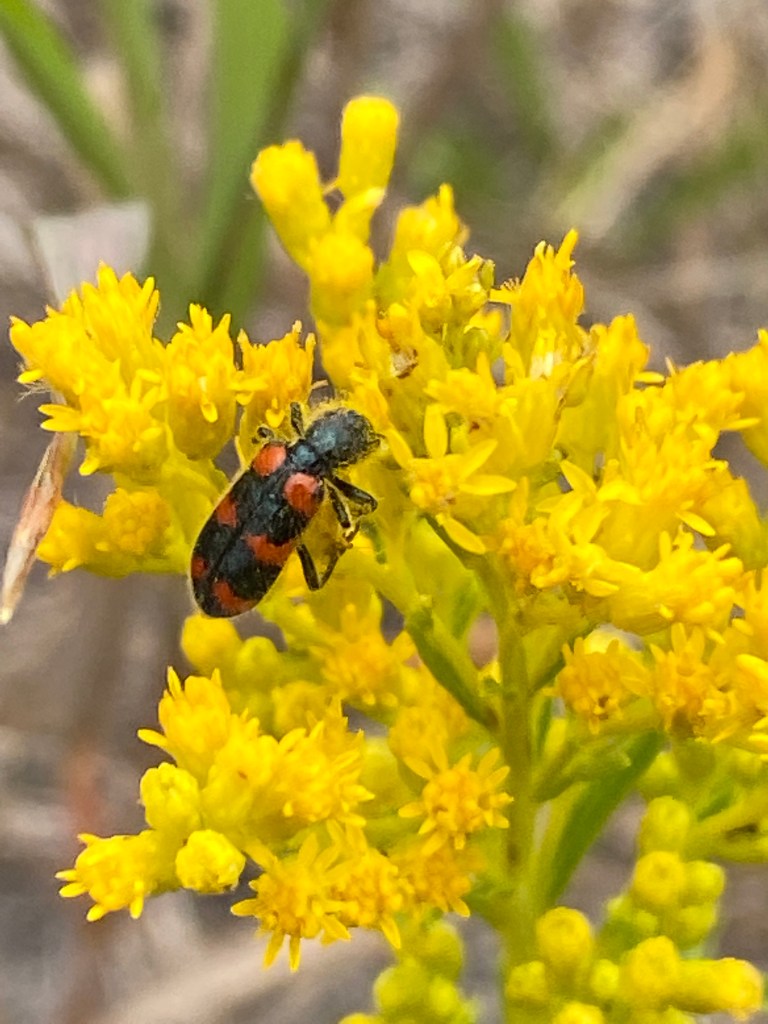
Red-blue Checkered Beetle Trichodes nuttalli on a Missouri Goldenrod
Solidago missouriensis at the afforestation areaGoldenrod Gall Fly Eurosta solidaginis Conservation Status: imperiled (S2S4) in Saskatchewan, CA (NatureServe)
As you walk through the forest, observe how the towering trees, such as the stately goldenrods and various spruces and pines, form the backbone of this habitat. Their broad canopies provide essential shelter and food sources for many forest inhabitants. The fallen leaves and decomposing wood create a rich layer of nutrients in the soil, supporting a hidden network of fungi, insects, and microorganisms that contribute to the forest’s food web.
Mule Deer Richard St. Barbe Baker Afforestation Area, Saskatoon, Saskatchewan, CanadaWhite-tailed deer (Odocoileus virginianus)
Look closely, and you might spot the graceful movement or presence of a white-tailed or mule deer that had been navigating through the underbrush. These deer are adept at utilizing the forest’s resources, feeding on tender shoots and leaves while avoiding predators. Their presence is a testament to the forest’s health, reflecting the balance of the habitat that supports a variety of species.
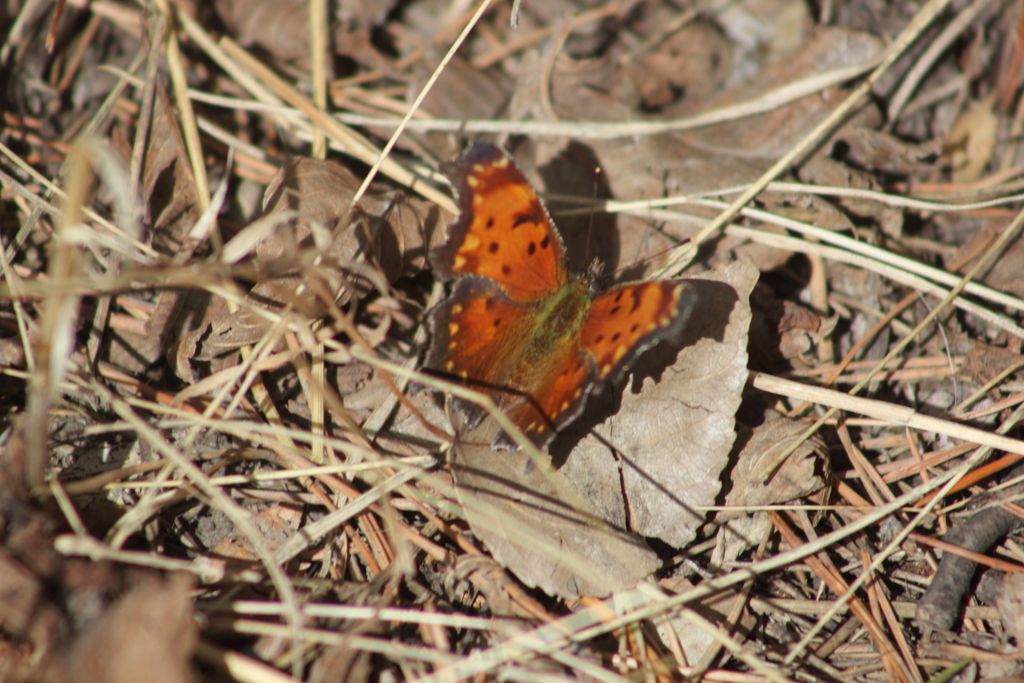
Gray Comma Butterfly Spring Polygonia progne
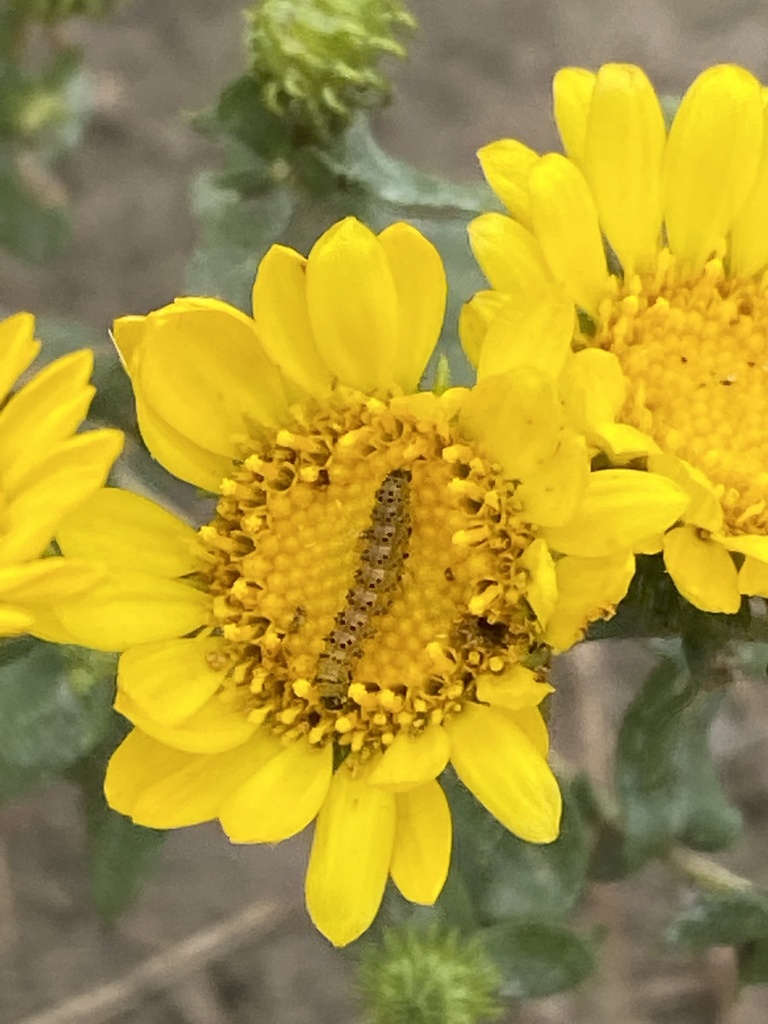
Yellow Sunflower Moth LARVA Stiria rugifrons on top of Curlycup Gumweed Grindelia squarrosa
In the air, watch for the delicate flutter of native bumblebees, butterflies and moths, which play a vital role in pollination. Their presence, alongside the busy activity of dragonflies and damselflies skimming across the wetlands of Chappell Marsh, highlights the forest’s role as a sanctuary for pollinators. These insects are crucial for the reproduction of many plant species, demonstrating the intricate interdependence within the forest community.
Did you know that you can tell time by the biennial flower Evening Primrose? Full opening of this beautiful yellow flower takes less than 20 minutes to receive its moth hosts overnight, and by noon, the flower has closed up again. It’s nick name is “beautiful of the night.” Dandelions will reverse this process to save energy, closing up at night, and opening fully in the early morning hours of the day. What are the habitats of flowers and flora of the afforestation areas- meadow or forest, wetlands or shoreline edges, sunny or shady areas?
Do you think all birds build their nests in the branches of trees? Some birds, like the Great Horned Owl, actually don’t make their own nests and instead use nests created by other birds. Additionally, some birds nest on the ground, in tree cavities made by woodpeckers, or along water and shoreline edges. Why would the different bird species choose a variety of habitats for the safety of their young, wouldn’t tree branches be safest?
What about snowshoe hares and jackrabbits? Do they live in underground burrows like Bugs Bunny, or do they create nests for their young? As lagomorphs (which include rabbits and hares) are at the bottom of the food chain, how do they ensure their safety and find shelter?
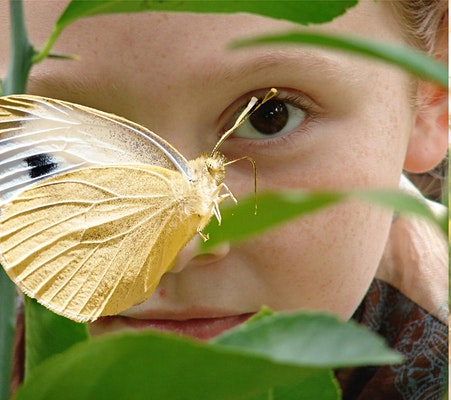
Consider the Lepidoptera family, which includes butterflies and moths. Where do they lay their eggs in the spring? Do their larvae have specific habitats, and where do the adults live? How many Lepidoptera migrate to escape the cold winter, how many and which lepidoptera have no mouth parts having short lifespans and only live to lay eggs, and which species in Saskatchewan overwinter here to start a family in the spring? Why are butterflies diurnal, flying in the daytime, and moths are nocturnal waking up when the butterflies go to sleep. Where do Lepidoptera sleep?
Finally, dragonflies and damselflies, which are both part of the Odonata order, rely heavily on wetlands and aquatic plants. What makes these habitats so important for Odonata, and what type of habitat do adult Odonata prefer?
Visiting the forestVisiting the forest
Human activities, however, can disrupt this delicate balance. One key practice to help preserve the integrity of this natural space is “staying on trails.” Walking only on designated paths protects the forest’s sensitive areas from unnecessary damage. When visitors stray off-trail, they can inadvertently trample delicate vegetation, compact soil, and disturb wildlife habitats. This can lead to erosion, reduced plant regeneration, and increased stress on animal communities that rely on a stable environment.
By staying on established trails, you minimize your impact on the ecosystem, allowing the forest to maintain its natural processes and beauty. Trails are carefully planned to avoid areas of high ecological sensitivity and to provide access while preserving the surrounding habitat. They also help concentrate foot traffic, reducing the spread of invasive plant species that could otherwise take hold in disturbed areas.
Clean up at both Richard St. Barbe Baker Afforestation Area and at George Genereux Urban Regional Park, Saskatoon The Clean Green Community SceneClean up at both Richard St. Barbe Baker Afforestation Area and at George Genereux Urban Regional Park, Saskatoon The Clean Green Community Scene
Human activities, such as littering, pose additional threats to wildlife. Plastic bags and containers can be mistaken for food by animals, leading to harmful consequences. To protect this valuable habitat for future visitors, it’s essential to follow the principle of “Pack it in, Pack it out, Leave no trace.” Be part of the Clean Green Community Scene! By disposing of waste responsibly and minimizing our impact, we help ensure that the forest remains a thriving sanctuary for all its inhabitants.
For those keen to delve deeper into the intricate web of life within the afforestation area, other resources are available. “Exploring the Wildwoods of Saskatoon: The Ecology of a Planted Forest” in English or French by Norman Lipinski offers insights into the food webs and food chains that sustain the forest’s ecosystem. Meanwhile, “Richard St. Barbe Baker Stories with Place-Based Nature Activities Through the Seasons” by Elizabeth Bekolay provides engaging activities and a comprehensive wildlife listing, enriching your understanding of the forest’s dynamic community.
For a closer look at the diverse organisms that make the afforestation area their home, including over 60 species at risk, visit the wildlife resource page. Here, you can explore the rich biodiversity and learn about the various tree species and wildlife that thrive in this unique environment.
As you journey through the Richard St. Barbe Baker Afforestation Area, take a moment to appreciate the intricate relationships between plants, animals, and humans. Each species, from the towering trees to the smallest insects, plays a role in maintaining the health of the habitat. By respecting the trails and protecting this natural treasure, we ensure that future generations can also experience the wonder of this vibrant forest community.
1. Habitat Exploration Project:
Activity: Investigate the populations of plants and animals in various habitats such as grassland meadows, forests, wetlands, and riparian edges of Chappell Marsh. Create a poster or presentation showcasing the different species found in each habitat and their roles.
Objective: Understand the variety of life in different habitats and how each species contributes to its ecosystem.
2. Indigenous Worldview Simulation:
Activity: Use the Medicine Wheel or Circle of Life concept to role-play how plants and animals interact and depend on each other within an ecosystem. Have students act out different roles (e.g., predator, prey, producer, consumer) and demonstrate their interdependence.
Objective: Explore Indigenous perspectives on the interconnectedness of life and understand how different species rely on each other.
3. Food Chain Classification Activity:
Activity: Classify various plants and animals, including humans, based on their roles in food chains (e.g., producer, herbivore, omnivore, predator). Create a food chain diagram using the classified organisms.
Objective: Learn about the different roles organisms play in food chains and understand how energy flows through ecosystems.
4. Food Web Construction:
Activity: Construct a visual representation of a specific food web within a chosen habitat (e.g., forest, wetland). Include multiple interconnected food chains and show how different organisms are linked.
Objective: Analyze how food webs represent complex interactions between different food chains and species.
5. Impact of Human Activities Role Play:
Activity: Role-play scenarios where students act as forest visitors who either follow or ignore guidelines like staying on trails and packing out trash. Discuss the potential impact of their actions on the forest ecosystem and its inhabitants.
Objective: Understand the effects of human activities on ecosystems and learn how to protect natural environments.
Related Questions
Objective: Understand the consequences of human actions on ecosystems and learn ways to reduce environmental harm.
What types of plants and animals live in grassland meadows, forests, wetlands, and riparian edges of Chappell Marsh, and how do they contribute to their habitats?
Objective: Identify and describe the species in different habitats and their roles.
How does the Medicine Wheel or Circle of Life concept illustrate the interdependence of plants and animals in an ecosystem?
Objective: Explore Indigenous views on the interconnectedness of life.
What are the different roles of organisms in a food chain, and how do they interact with one another?
Objective: Classify organisms based on their roles and understand their interactions in food chains.
How does a food web differ from a food chain, and what does it reveal about the relationships between different species in an ecosystem?
Objective: Analyze the complexity of food webs and their representation of multiple food chains.
What are the effects of human activities, such as trampling vegetation or littering, on forest ecosystems, and how can we minimize these impacts?
Richard St. Barbe Baker Afforestation Area is located in Saskatoon, Saskatchewan, Canada north of Cedar Villa Road, within city limits, in the furthest south west area of the city. 52° 06′ 106° 45′
Addresses:
Part SE 23-36-6 – Afforestation Area – 241 Township Road 362-A
Part SE 23-36-6 – SW Off-Leash Recreation Area (Richard St. Barbe Baker Afforestation Area ) – 355 Township Road 362-A
S ½ 22-36-6 Richard St. Barbe Baker Afforestation Area (West of SW OLRA) – 467 Township Road 362-A
NE 21-36-6 “George Genereux” Afforestation Area – 133 Range Road 3063
Wikimapia Map: type in Richard St. Barbe Baker Afforestation Area
Google Maps South West Off Leash area location pin at parking lot
Renewal Day: A Celebration of Fresh Beginnings and Deep Connections
May 4th marks Renewal Day, a holiday that aligns with the vibrant spirit of spring, ushering in new possibilities and reviving the various facets of our lives. As nature undergoes a rejuvenation, so does Renewal Day become a time for rebirth, regeneration, and the restoration of connections with nature, the environment, family, and friends.
At the heart of Renewal Day in Saskatoon is a focus on deep ecology, an environmental philosophy championing the intrinsic value of all living beings, irrespective of their utility to human needs. It advocates for the restructuring of human societies in harmony with these principles. Deep ecology asserts that the natural world thrives on intricate relationships, emphasizing the interdependence of organisms within ecosystems. Any human interference or destruction of this delicate balance poses a threat not only to humans but to all elements of the natural order.
Arne Næss, a Norwegian philosopher and a key figure in the late twentieth-century environmental movement, coined the term “deep ecology.” Influenced by Rachel Carson’s Silent Spring, Næss merged his ecological vision with Gandhian nonviolence. He believed in fostering objective public debate and outlined principles for fruitful discussions, including avoiding tendentious references, ambiguous arguments, and untruthful reports.
While Renewal Day often invokes thoughts of renewing relationships, it extends beyond personal connections between humans. It encourages a commitment to nature and climate action through nature-based solutions. One impactful way to engage is by participating in the 2024 Saskatoon City Nature Challenge on iNaturalist. The challenge unfolds in two stages:
April 26 – April 29, 2024: Capture images of wild plants, insects, birds, mushrooms, and more.
Results will be revealed on May 6, 2024, creating a shared experience of discovery and renewal.
Renewal Day beckons everyone to recharge and rejuvenate relationships, both with loved ones and the natural world. It’s a day to embrace fresh beginnings, celebrate deep connections, and participate in activities that foster renewal. So, on this May 4th, let the spirit of Renewal Day inspire you to embark on a journey of rediscovery and reconnection with the world around you.
How to Celebrate Renewal Day:
Reconnect with loved ones and nature.
Embrace deep ecology principles in your daily life.
Participate in the City Nature Challenge on iNaturalist.
Reflect on personal and environmental renewal.
Explore nature-based solutions for climate action.
Share your experiences and insights with others.
Foster objective and meaningful discussions.
Consider the interconnectedness of all living beings.
Embrace new beginnings and fresh perspectives.
Spread the spirit of renewal in your community.
Renewal Day is an invitation to celebrate the beauty of beginnings and the enduring connections that bind us to each other and the natural world. May this day inspire a collective commitment to renewal, fostering a harmonious coexistence with the planet we call home.
Richard St. Barbe Baker Afforestation Area is located in Saskatoon, Saskatchewan, Canada north of Cedar Villa Road, within city limits, in the furthest south west area of the city. 52° 06′ 106° 45′
Addresses:
Part SE 23-36-6 – Afforestation Area – 241 Township Road 362-A
Part SE 23-36-6 – SW Off-Leash Recreation Area (Richard St. Barbe Baker Afforestation Area ) – 355 Township Road 362-A
S ½ 22-36-6 Richard St. Barbe Baker Afforestation Area (West of SW OLRA) – 467 Township Road 362-A
NE 21-36-6 “George Genereux” Afforestation Area – 133 Range Road 3063
Wikimapia Map: type in Richard St. Barbe Baker Afforestation Area
Google Maps South West Off Leash area location pin at parking lot
In the age of modernity, where concrete jungles dominate and technology reigns supreme, it’s easy to forget our innate connection to the natural world. Yet, as we mark World Health Day on April 7, with a theme resonating “My health, my right,” it’s crucial to heed the wisdom of our ancestors and embrace the profound interconnections that bind us to all living beings.
Diseases and disasters loom large as causes of death and changes in abilities, and conflicts ravage lives, inflicting death, pain, and psychological distress. Moreover, the burning of fossil fuels not only fuels the climate crisis but also deprives us of our right to breathe clean air, with air pollution claiming a life every 5 seconds. In the face of such challenges, it’s imperative to recognize the intrinsic link between human health and the health of our planet.
As Sylvia McAdam beautifully articulates in her exploration of Cree law, wahkohtowin—the concept of kinship and interconnectedness—lies at the heart of our relationship with nature. It reminds us that we are not separate entities but rather part of a vast web of life, where every creature, plant, and element is interconnected. Maria Campbell‘s elucidation of wahkohtowin further emphasizes the importance of honoring and respecting these relationships, not just among humans but with all of creation.
In the spirit of World Health Day, let us reclaim our connection to nature and acknowledge our reciprocal obligations to the Earth and all its inhabitants. As we ponder the significance of this day and reflect on its vital role in promoting holistic well-being, let us immerse ourselves in the healing embrace of the natural world.
I invite you to join us at the City Nature Challenge, taking place between April 26 and 29 in Saskatoon and its surrounding areas. Whether through recording photos and sound recordings of organisms or participating in scheduled events, let us embark on a journey of discovery, exploring the intricate tapestry of life that thrives within our city.
In embracing nature’s abundance, we rediscover the essence of true health—harmony, balance, and interconnectedness. So, let us come together to celebrate the health of nature and the health of all organisms, for in doing so, we honor the sacred bond of wahkohtowin that binds us all.
With thanks to our sponsors and supporters SaskPower, SaskTel, Saskatoon Nature Society, Wild About Saskatoon, Varsity View Community Association, Rosewood Varsity View Community Association, Nutana Varsity View Community Association, Montgomery Place Varsity View Community Association. City Nature Challenge Saskatoon CNC YXE 2024 led by Friends of the Saskatoon Afforestation Areas.
Medicine Wheel, all is interconnected. Wanuskewin balance and harmony four elements, fire, earth, air and water, are taught through the 6 directions of the medicine wheel. South Great Grand Spirit Thunderbird, Okimaw Piyisiw rain, water East, the sun, Kisikaw Pisim, warmth and light, West Grandfather wind, Kisinipaw Otin, providing the four seasons, North is Kisinipaw Pawkaw Mostos, the Spirit of the Buffalo. The Sacred, the Great Spirit, Kici-Manitou is White above and Mother Earth, Mamawow Nakwaimo Aski, is Green below. City Nature Challenge free iNaturalist App
Richard St. Barbe Baker Afforestation Area is located in Saskatoon, Saskatchewan, Canada north of Cedar Villa Road, within city limits, in the furthest south west area of the city. 52° 06′ 106° 45′
Addresses:
Part SE 23-36-6 – Afforestation Area – 241 Township Road 362-A
Part SE 23-36-6 – SW Off-Leash Recreation Area (Richard St. Barbe Baker Afforestation Area ) – 355 Township Road 362-A
S ½ 22-36-6 Richard St. Barbe Baker Afforestation Area (West of SW OLRA) – 467 Township Road 362-A
NE 21-36-6 “George Genereux” Afforestation Area – 133 Range Road 3063
Wikimapia Map: type in Richard St. Barbe Baker Afforestation Area
Google Maps South West Off Leash area location pin at parking lot
Our task must be to free ourselves … by widening our circle of compassion to embrace all living creatures and the whole of nature and its beauty.~Albert Einstein
Species at risk: Mormon Metalmark (Apodemia mormo) butterfly depends on buckwheat host plant.
Pelican Preenning
Great Blue Heron Ardea herodias 42-52″ (105-130 cm) four feet standing.
The United Nations General Assembly (UNGA) decided to proclaim 3 March, the day of the adoption of the Convention on International Trade in Endangered Species of Wild Fauna and Flora (CITES), as World Wildlife Day.
“The preservation of animal and plant life, and of the general beauty of Nature, is one of the foremost duties of the men and women of to-day. No man has a right, either moral or legal, to destroy or squander an inheritance of his children that he holds for them in trust.
Wild life can be saved! The means by which it can be saved are: Money, labor and publicity.
Every possible means of preservation,—sentimental, educational and legislative,—must be employed. It is an imperative duty, because it must be performed at once, for otherwise it will be too late, speaks William T. Hornaday Sc.D., Director of the New York Zoologial Park, Author of “The American Natural History” and ex-president of the American Bison Society.
Do you know what Saskatchewan endangered wildlife species look like? Do you know what their habitat looks like? Do the flora and fauna listed here require wetlands, tall grasslands, arid plains, riparian woodlands, or mixed zones? Do you know the range in Saskatchewan where you may see these endangered species of Saskatchewan ~ north, south central, east, west? Today is the day for you, personally, to find out before it is too late! Can you identify the flora and fauna in the semi-wilderness wildlife habitat of the Richard St. Barbe Baker Afforestation Area of the city of Saskatoon, Saskatchewan?
Wild plants and animals protected. Saskatchewan Environment and Resource Management Minister Lorne Scott. Government of Saskatchewan. March 3, 1999
I believe in oneness of mankind and of all living things and in the interdependence of each and all. I believe that unless we play fair to the Earth, we cannot exist physically on this planet. Unless we play fair to our neighbour, we cannot exist socially or internationally. Unless we play fair to better self, there is no individuality and no leadership. ~Richard St. Barbe Baker.
Please help protect / enhance /commemorate your afforestation areas, please contact the Friends of the Saskatoon Afforestation Areas Inc. (e-mail)
Support the afforestation areas with your donation or membership ($20.00/year). Please donate by paypal using the e-mail friendsafforestation AT gmail.com, or by using e-transfers Please and thank you! Your donation and membership is greatly appreciated. Members e-mail your contact information to be kept up to date!
Our task must be to free ourselves … by widening our circle of compassion to embrace all living creatures and the whole of nature and its beauty.~Albert Einstein
“This generation may either be the last to exist in any semblance of a civilised world or that it will be the first to have the vision, the bearing and the greatness to say, ‘I will have nothing to do with this destruction of life, I will play no part in this devastation of the land, I am determined to live and work for peaceful construction for I am morally responsible for the world of today and the generations of tomorrow.’” ~ Richard St Barbe Baker









 Forests of Memory. Forests of Learning. Forests for Life.