The Language of Conks: What Shelf Fungi Teach Us About Caring for Trees and Forests

In the hush of an old woodland, where trembling aspens flicker like coins of light and spruce roots braid themselves through centuries of memory, there is another kingdom quietly at work beneath the bark. It is neither plant nor animal, but something older in spirit and stranger in form — the fungal realm. To kneel beside a weathered trunk and notice a shelf fungus protruding from its side is to glimpse the forest speaking in another language.

These woody shelves, called polypores, are the fruiting bodies of immense underground and internal fungal networks. The name “polypore” refers to the tiny pores beneath the cap, replacing the delicate gills of other mushrooms. When these fungi harden into woody, hoof-shaped structures, arborists and foragers alike call them conks. They are the visible punctuation marks of a hidden process: decomposition, renewal, and the recycling of life itself.

The forest does not waste.

A conk may seem lifeless at first glance — gray as stone, ridged with age, fixed immovably to the trunk. Yet within it are millions of spores waiting for the right wind, the right wound, the right moment. Like rings in a tree, many shelf fungi add a fresh layer of spore-producing tissue each growing season. Some years produce two flushes of growth, making time itself difficult to measure precisely. One conk with eight visible layers may be four years old, or perhaps eight. Fungi, like forests, resist human impatience.

Among the most recognizable is Fomes fomentarius, the tinder conk, hard and gray, shaped uncannily like the hoof of a horse. Nearby may grow Ganoderma applanatum, known as artist’s conk because its creamy white underside bruises dark when touched, preserving every line like charcoal on parchment. A child can sketch a bird upon it with a fingertip, and the forest will keep the drawing for years.

These organisms are not invaders in the simple sense. They are recyclers, chemists, undertakers, and midwives of succession. Roughly 1,700 species of wood-rotting polypores have been documented in North America alone, each evolved to unlock the dense architecture of wood. Trees build themselves from sunlight, water, minerals, and carbon dioxide. Fungi dismantle those structures molecule by molecule, returning nutrients to soil and life to the ecosystem.

Without fungi, forests would choke upon their own dead.

Yet their appearance on a living tree often tells a more sobering story. Shelf fungi are usually dead-wood dependent organisms, thriving on weakened, wounded, scarred or dying tissue. Most wood decay begins when airborne spores enter exposed wood through injury. A broken limb. A careless pruning cut. A scar from construction equipment. Fire, lightning, drought, sunscald, insects boring into bark — all become doorways.

The fungus does not create the weakness alone. Often, it merely answers an invitation.

A stressed tree becomes vulnerable. Heat waves, compacted soils, severed roots, and prolonged drought leave trees physiologically exhausted, less able to compartmentalize decay. The fungal mycelium moves silently through sapwood and heartwood, digesting lignin — the very compound that gives wood its strength. What appears externally as a single shelf may conceal columns of internal decay extending metres above and below the fruiting body.

Knock on such a trunk with your knuckles or a sounding hammer and the tree may answer with a hollow resonance, a wooden echo hinting at unseen rot within.

And still, the forest persists.

Woodpeckers arrive next. Sapsuckers drill neat rows into stressed bark to drink rising sap. Beetles tunnel through softened wood. Mosses gather moisture in fissures. Cavities become homes for owls, chickadees, squirrels, and raccoons. What humans call decay, ecosystems call opportunity.

A wildlife tree is not a failed tree. It is a standing community.

This understanding lies at the heart of wise forestry and compassionate arboriculture. Too often, those appreciating our urban forests treat trees as isolated ornaments rather than members of a living network. We prune aggressively, wound roots, compact soil, and sterilize deadwood from greenspaces as though death itself were untidy. Yet forests thrive through cycles of growth, injury, decomposition, and renewal.

The great mycologist-naturalists remind us to look deeper. Paul Stamets writes of fungi as Earth’s neurological network, threading intelligence through ecosystems. Merlin Sheldrake invites us to see forests not as collections of individuals but as entangled conversations. David Arora teaches us to approach mushrooms with curiosity, humility, and delight — to kneel in the leaf litter and truly observe.

And observation changes stewardship.

If we wish to care for our trees and forests, we must first stop imagining ourselves outside of them.

The Kenyan initiative Watu Wa Miti — “People of the Trees” — understood this profoundly. Founded in 1922 by Richard St. Barbe Baker alongside Chief Josiah Njonjo, the movement began with a deceptively simple pledge: plant ten trees every year, protect trees everywhere, and perform one good deed daily. It was not merely a forestry campaign. It was a moral philosophy rooted in reciprocity.

To care for forests is to care for future shade we may never sit beneath.

Modern arborists know there is no true cure once aggressive wood-decay fungi establish themselves deeply within a tree. Species such as Phellinus tremulae (Aspen Bracket) and Schizophyllum commune (Common Split Gill) colonize stressed wood and produce characteristic fruiting bodies that reveal internal decline already underway. By the time conks appear, the hidden mycelial network may have occupied large portions of the trunk or roots.

The task, then, is prevention and respect.

Protect roots from compaction. Avoid unnecessary wounds. Prune properly and sparingly. Water young trees deeply during drought. Preserve diverse forests rather than monocultures. Leave some deadwood in naturalized areas so fungal and insect communities can continue nutrient cycling. Understand that fungi are not enemies to eradicate, but indicators of ecological imbalance and participants in renewal.

And perhaps most importantly: do not destroy the evidence.

Removing a conk from a tree does not remove the fungus within. The visible mushroom is merely the reproductive structure, while the true organism — the mycelium — permeates the wood invisibly. Tearing off fruiting bodies may reduce spore dispersal, but it does not halt decay. In damp weather, such disturbance may even aid spore spread.

The forest is subtler than our attempts to control it.

To walk among trees is to walk among beings engaged in constant transformation. A fallen birch nourishes fungi. Fungi nourish soil. Soil nourishes seedlings. Seedlings become forests. Forests shape climate, hold water, soften wind, cool cities, and shelter life.

Every conk on a trunk is both warning and wisdom.

It tells us that trees are mortal. That wounds matter. That ecosystems recycle grief into fertility. And that caring for forests means more than planting trees — it means protecting relationships: between roots and rain, fungi and woodpeckers, insects and bark, people and the living earth.

If we listen closely enough, even a silent shelf fungus can teach us how to belong to the forest again.

Thank you to Scott Kindrachuk, Supervisor with Urban Forestry in the City of Saskatoon Parks Department. From June 9–11, arborists will be working in the Richard St. Barbe Baker Afforestation Area to professionally remove selected standing dead trees identified as potential falling hazards, fire risks, or disease concerns. These trees will be marked with a spray-painted dot prior to the commencement of work.

Part SE 23-36-6 – Richard St. Barbe Baker Afforestation Area – 241 Township Road 362-A

Part SE 23-36-6 – SW Off-Leash Recreation Area (Richard St. Barbe Baker Afforestation Area ) – 355 Township Road 362-A

S ½ 22-36-6 Richard St. Barbe Baker Afforestation Area (West of SW OLRA) – 467 Township Road 362-A

NE 21-36-6 “George Genereux” Afforestation Area – 133 Range Road 3063

Wikimapia Map: type in Richard St. Barbe Baker Afforestation Area or

Google Maps South West Off Leash area location pin at parking lot

Web page: https://stbarbebaker.wordpress.com

Where is the Richard St. Barbe Baker Afforestation Area? with map

Where is the George Genereux Urban Regional Park (Afforestation Area)?with map

Pinterest richardstbarbeb

Blogger: FriendsAfforestation

Tumblr friendsafforestation.tumblr.comFacebook Group Page: Users of the George Genereux Urban Regional Park

Facebook: StBarbeBaker Afforestation Area

Facebook for the non profit Charity Friends of the Saskatoon Afforestation Areas Inc. FriendsAreas

Facebook group page : Users of the St Barbe Baker Afforestation Area

Facebook: South West OLRA

Reddit: FriendsAfforestation

BlueSky Social

Mix: friendsareas

YouTube

Support via Zeffy

Please help protect / enhance your afforestation areas, please contact the Friends of the Saskatoon Afforestation Areas Inc. (e-mail / e-transfers )

Donate your old vehicle, here’s how!  

Support using Canada Helps

Support via a recycling bottle donation and Join the plastic-recycle challenge!

United Nations Decade on Ecosystem Restoration

““Be like a tree in pursuit of your cause. Stand firm, grip hard, thrust upward. Bend to the winds of heaven..” Richard St. Barbe Baker

World Biodiversity Day 2026

Acting Locally for Global Impact in Saskatoon’s Afforestation Areas

Today, May 22, marks World Biodiversity Day, a global celebration recognizing the extraordinary variety of life sustaining our planet. This year’s theme, “Acting Locally for Global Impact,” reminds us that meaningful environmental stewardship begins within our own communities, parks, wetlands, and forests.

In Saskatoon, the afforestation areas cared for and advocated by the Friends of the Saskatoon Afforestation Areas demonstrate how local conservation contributes directly toward global biodiversity goals. These urban forests are more than collections of trees; they are living ecosystems supporting birds, mammals, insects, pollinators, fungi, microorganisms, and native prairie biodiversity within Saskatchewan’s moist mixed grassland region.

West Swale and Richard St. Barbe Baker AFforestation Area wildlife Urban Forest Semi-Wilderness Area. Mountain Bluebird, White Tailed Deer Fawn. Barred Tiger Salamander or western tiger salamander. American Pelican, Mallard Duckling

The afforestation areas provide important ecological layers essential for healthy biodiversity. Towering canopy species such as native American Elm, Balsam Poplar, Manitoba Maple, Trembling Aspen, Bur Oak, Colorado Blue Spruce and White Spruce shelter birds and wildlife while stabilizing soils and moderating temperatures. Beneath them grow shrubs and understory plants including Saskatoon berry, chokecherry, red-osier dogwood, snowberry, buffaloberry, silverberry, gooseberries, currants, roses, and willow species which provide food, nesting habitat, pollen, nectar, and protection for pollinators, songbirds, mammals, and beneficial insects.

These forests also provide habitat corridors for wildlife including white-tailed deer, moose, rabbits, squirrels, owls, hawks, woodpeckers, migratory songbirds, and countless invertebrate species. Native flowering shrubs such as prairie rose, woods rose, silver buffaloberry, wolf willow, and western snowberry sustain pollinator populations critical to ecosystem resilience and agricultural health.

Biodiversity conservation also means understanding ecological challenges. Within the afforestation areas, introduced and invasive species such as European buckthorn require careful monitoring and community science participation. The Friends of the Saskatoon Afforestation Areas encourage the public to assist with observations through iNaturalist to help identify invasive species locations, monitor biodiversity, and contribute valuable ecological data supporting conservation efforts.

American Beaver, Porcupine, Red-winged Blackbird, Fawn, Mallard Ducks, Waxwing, Rabbit, Deer Chappell Marsh. West Swale Wetlands. Richard St. Barbe Baker Afforestation Area. Saskatoon, SK, CA

Several species found within the afforestation areas also carry conservation significance. American Elm and Green Ash are listed on the IUCN Red List because of threats from disease and environmental pressures. The Red-Berried Elder is ranked as a rare species within Saskatchewan. Every healthy urban forest supporting these species contributes to broader ecological resilience and conservation awareness.

Urban forests are increasingly recognized as essential climate adaptation infrastructure. Trees absorb carbon, reduce urban heat, improve air quality, retain stormwater, provide wildlife habitat, and contribute to mental and physical wellbeing for surrounding communities. In rapidly changing environments, afforestation areas become critical refuges not only for biodiversity, but also for people seeking connection with nature.

The Friends of the Saskatoon Afforestation Areas believe biodiversity protection begins with education, stewardship, and community participation. Every bird observation, invasive species report, pollinator garden, tree planting initiative, and conservation conversation helps strengthen environmental resilience locally while contributing to international biodiversity goals.

World Biodiversity Day reminds us that protecting ecosystems does not happen only within distant wilderness parks. It happens where communities choose to care for the landscapes around them. Saskatoon’s afforestation areas stand as living examples of how local environmental stewardship can create lasting global impact for biodiversity, climate resilience, and future generations.

Afforestation Area Addresses:

Part SE 23-36-6 – Richard St. Barbe Baker Afforestation Area – 241 Township Road 362-A

Part SE 23-36-6 – SW Off-Leash Recreation Area (Richard St. Barbe Baker Afforestation Area ) – 355 Township Road 362-A

S ½ 22-36-6 Richard St. Barbe Baker Afforestation Area (West of SW OLRA) – 467 Township Road 362-A

NE 21-36-6 “George Genereux” Afforestation Area – 133 Range Road 3063

Clavet Memorial Healing Forest honouring the Humboldt Broncos.

Wikimapia Map: type in Richard St. Barbe Baker Afforestation Area or

Google Maps South West Off Leash area location pin at parking lot

Web page: https://stbarbebaker.wordpress.com

Where is the Richard St. Barbe Baker Afforestation Area? with map

Where is the George Genereux Urban Regional Park (Afforestation Area)?with map

Pinterest richardstbarbeb

Blogger: FriendsAfforestation

Tumblr friendsafforestation.tumblr.comFacebook Group Page: Users of the George Genereux Urban Regional Park

Facebook: StBarbeBaker Afforestation Area

Facebook for the non profit Charity Friends of the Saskatoon Afforestation Areas Inc. FriendsAreas

Facebook group page : Users of the St Barbe Baker Afforestation Area

Facebook: South West OLRA

Reddit: FriendsAfforestation

BlueSky Social

Mix: friendsareas

YouTube

Support via Zeffy

Please help protect / enhance your afforestation areas, please contact the Friends of the Saskatoon Afforestation Areas Inc. (e-mail / e-transfers )

Donate your old vehicle, here’s how!  

Support using Canada Helps

Support via a recycling bottle donation and Join the plastic-recycle challenge!

United Nations Decade on Ecosystem Restoration

“Be like a tree in pursuit of your cause. Stand firm, grip hard, thrust upward. Bend to the winds of heaven..” – Richard St. Barbe Baker

Guardians of the Elms: Saskatoon’s Ecological Emergency

The elm, with its sweeping arch of green, has long been the cathedral tree of our northern cities. Its vaulted canopy shades our streets, cools our homes, and whispers to us of continuity with nature. In Saskatoon, nearly a quarter of the urban forest is elm—a treasure beyond measure. In the afforestation areas, too, Siberian Elms, and American Elms are a great portion of the canopy. Yet today, we face a dire crisis. The City has declared an ecological emergency as Dutch elm disease spreads with alarming speed. How to Identify an Elm. How to Spot Dutch Elm Disease Symptoms.

This is no ordinary ailment. Dutch elm disease (DED) is a ruthless invader, a fungus—Ophiostoma ulmi and its more virulent cousin Ophiostoma novo-ulmi—that enters the tree’s veins and clogs them, cutting off life itself. The carriers are small, inconspicuous elm bark beetles. On their wings, they bear spores like unwelcome cargo. Seeking places to lay their eggs, they search for damaged elm—pruned in the wrong season, broken by storm, or cut for careless firewood. From there, death marches through the canopy.

Richard St. Barbe Baker, silviculturist (forest doctor) has seen many forests suffer, but few plagues advance as swiftly as this. A tree that stood proudly in May may be yellowed and withered by August, its crown shriveling, its roots starving. So entire boulevards may fall silent, their green vaults gone, sunlight harsh and unbroken upon the pavement.

The Call to Action

The City has confirmed a record twelve cases this summer—more than ever before. Seven more trees show unmistakable signs and will be removed. Already, over 8,700 kilograms of elm wood have been gathered and destroyed, yet more remains.

Thai Hoang, Director of Parks, sounded the alarm plainly: “Do not store elm wood on your property. Do not burn it in your fire pit. About a quarter of our forest canopy is elm. This is not a minor issue—it is an ecological emergency.”

Indeed, the beetle thrives in neglected woodpiles. Every log, every stored branch, is a breeding ground. To keep elm wood is to endanger the very heart of our city.

Best Practices for Guardianship

We who love trees must become their guardians. There are simple yet essential practices:

  • Never transport or store elm wood. Dispose of it only at the City landfill, where handling is safe and free.
  • Obey the provincial pruning ban between April 1 and August 31. Fresh cuts draw the beetles like moths to a flame.
  • Water wisely. From April until mid-August, water deeply. Then let the trees harden for winter, with one or two final soakings before freeze-up.
  • Prune in very early spring. At that time, wounds heal quickly, and beetles are less active.
  • Maintain soil and roots. Fertilize thoughtfully, protect roots from damage during construction, and mulch well to prevent mower injury.

The elm is resilient if cared for. But neglect is its undoing.

The Mystery of the Survivor Elms

Yet even in this dark time, there is hope. Researchers tell us of survivor elms—trees that, though surrounded by the dying, endure. These are not unlike people who endured the scourge of COVID-19. Those with co-morbidities fared worse, while the strong sometimes resisted. So it is with elms. Healthy, vigorous trees may overcome where weakened ones fail.

In Minnesota and elsewhere, researchers funded by the MITPPC are studying these survivor trees, seeking to propagate their resilience. Early-flushing clones, resistant hybrids, and cultivars like Valley Forge, Prairie Expedition, and Jefferson may offer us a new generation of elms. Some of these hybrids draw strength from Asian species, which co-evolved with the fungus and are far less susceptible.

This is the field of hope: not only to protect the present, but to plant a future forest of resistance.

A Plea for Stewardship

Let us remember: the elm is more than wood and leaves. It is a shelter for birds, a fortress against wind, a cooling balm in summer, a companion in our daily walk. To lose it is to lose part of ourselves.

As Richard St. Barbe Baker often said, “if a man loses one-third of his skin he dies; if a tree loses one third of its bark, it too dies. If the Earth is a ‘sentient being’, would it not be reasonable to expect that if it loses one third of its trees and vegetable covering, it will also die?” The elm has stood beside us for generations; now we must stand for it.

The emergency in Saskatoon is real, but it need not be the end. With vigilance, with science, with love, and with law, we can yet preserve these cathedral trees. And in time, with resistant cultivars and survivor elms, we may restore what is lost.

But only if we act—together, now.

“The minimum for safety is one third of the total land area. I think what is happening to the elms must be alerting the whole country to the necessity of trees, of the need for more trees. The elm has the largest leaf surface of any tree in Britain. If you …. put the leaves together edge to edge, they would cover ten acres. So naturally, the first tree to suffer from air pollution was the elm and, of course, when an elm is suffering from fatigue it is subject to attack by disease: the elm bark beetle, the carrier of the elm fungus, comes along and the tree succumbs.

I look at it this way. If a person is living a normal life and not abusing themselves – not smoking too much, not eating too much, not drinking too much – but living normally and eating the right food – they will be fit and well. It is only when they start abusing themselves that they are prone to attack by disease. It is the same with trees.

The next tree to go (the next tree with the largest leaf surface after the elm) is probably the beech: after that the sycamore: and so on. Finally it will be Man’s turn. We forget that we owe our existence to the presence of trees and as far as forest cover goes, we have never been in such a vulnerable position as we are today. The only answer is to plant more trees – to plant for our lives.
Richard St. Barbe Baker answers the first question above” Richard St. Barbe Baker.


Bibliography


Addresses:

Part SE 23-36-6 – Richard St. Barbe Baker Afforestation Area – 241 Township Road 362-A

Part SE 23-36-6 – SW Off-Leash Recreation Area (Richard St. Barbe Baker Afforestation Area ) – 355 Township Road 362-A

S ½ 22-36-6 Richard St. Barbe Baker Afforestation Area (West of SW OLRA) – 467 Township Road 362-A

NE 21-36-6 “George Genereux” Afforestation Area – 133 Range Road 3063

Wikimapia Map: type in Richard St. Barbe Baker Afforestation Area or

Google Maps South West Off Leash area location pin at parking lot

Web page: https://stbarbebaker.wordpress.com

Where is the Richard St. Barbe Baker Afforestation Area? with map

Where is the George Genereux Urban Regional Park (Afforestation Area)?with map

Pinterest richardstbarbeb

Blogger: FriendsAfforestation

Tumblr friendsafforestation.tumblr.comFacebook Group Page: Users of the George Genereux Urban Regional Park

Facebook: StBarbeBaker Afforestation Area

Facebook for the non profit Charity Friends of the Saskatoon Afforestation Areas Inc. FriendsAreas

Facebook group page : Users of the St Barbe Baker Afforestation Area

Facebook: South West OLRA

Reddit: FriendsAfforestation

BlueSky Social

Mix: friendsareas

YouTube

Support via Zeffy

Please help protect / enhance your afforestation areas, please contact the Friends of the Saskatoon Afforestation Areas Inc. (e-mail / e-transfers )

Donate your old vehicle, here’s how!  

Support using Canada Helps

Support via a recycling bottle donation and Join the plastic-recycle challenge!

United Nations Decade on Ecosystem Restoration

““Be like a tree in pursuit of your cause. Stand firm, grip hard, thrust upward. Bend to the winds of heaven..”

Richard St. Barbe Baker

How to Identify an Elm

To stand as guardians of the elm, we must first know how to recognize it. The elm (Ulmus genus) is among the most graceful of trees, with hallmarks that set it apart from all others. How to Spot Dutch Elm Disease Symptoms. Guardians of the Elm. Saskatoon’s Ecological Emergency!

1. The Shape

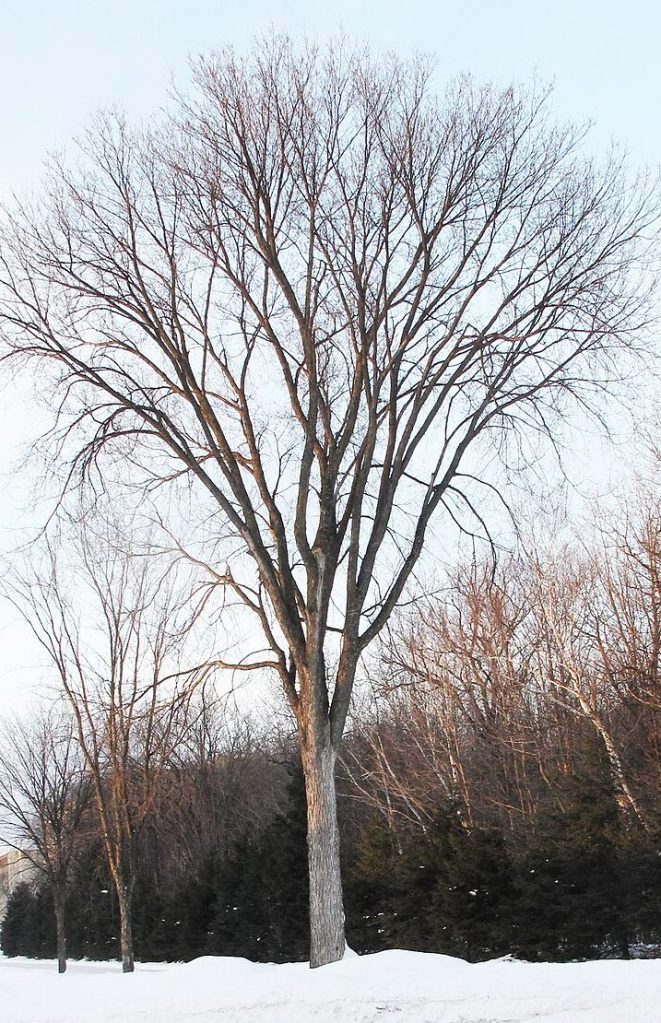
The American elm, our most familiar, forms a vase-like silhouette. The trunk rises tall and straight, then branches arch outward and upward, meeting high above the street like the roof of a Gothic cathedral. From a distance, this vaulting canopy is unmistakable.

Elm Silhouette:
Silhouette of an American elm (Ulmus americana), its tall trunk rising into a graceful, vase-like form. The arching branches sweep upward and outward, creating a broad, fan-shaped crown that spreads wide like an open canopy, a classic hallmark of the species.
Elm Silhouette: Silhouette of an American elm (Ulmus americana), its tall trunk rising into a graceful, vase-like form. The arching branches sweep upward and outward, creating a broad, fan-shaped crown that spreads wide like an open canopy, a classic hallmark of the species.

2. The Leaves

Elm leaves are simple, oval, and finely toothed along the edge. They have a distinct asymmetrical base—one side of the leaf blade longer than the other where it meets the stem. This “uneven foot” is a true signature. The veins are bold and parallel, running straight from the midrib to each tooth of the margin.

3. The Bark

On young elms, bark is smooth and gray. As the tree matures, the bark becomes dark, deeply furrowed, and rough to the touch. These ridges may twist and interlace, giving the trunk an ancient, rugged strength.

Close-up of an American elm (Ulmus americana) trunk, showing the characteristic gray-brown bark with a distinctive lattice-like pattern of intersecting ridges and furrows. Other identifiable features include irregular, rough-textured plates and shallow fissures that run both vertically and horizontally along the trunk, giving the elm its iconic textured appearance.

4. The Seeds

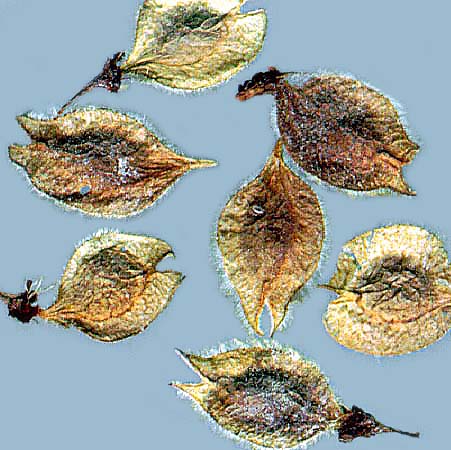
Elms produce seeds in spring, often in great abundance. Each seed is round and flat, encased in a papery wing (a samara) that spins through the air like a coin tossed by the wind.

Close-up of American elm (Ulmus americana) seeds showing the small, oval to slightly round seed bodies. The surface is smooth to lightly textured, with a central embryo visible within each seed.
Courtesy Gmihail, CC BY 3.0
Close-up of American elm (Ulmus americana) seeds showing the small, oval to slightly round seed bodies. The surface is smooth to lightly textured, with a central embryo visible within each seed. Courtesy Gmihail, CC BY 3.0

5. Species in Saskatoon

In our city, you may encounter:

  • American elm (Ulmus americana) – the classic vase-shaped elm, most common in boulevards.
  • Siberian elm (Ulmus pumila) – smaller, faster-growing, but brittle; often used in shelterbelts.
  • Japanese elm (Ulmus japonica) – less common, sometimes planted as a hardy ornamental.

Siberian Elm (Ulmus pumila)

  • Buds: Tiny, dark, and rounded, resembling peppercorns with a flaky outer layer; 3 or more overlapping scales.
  • Twig: Young twigs hairy to sparsely hairy, initially green, maturing to gray-brown.
  • Bud Size: About 1/8 inch long; purplish-brown scales somewhat hairy, especially at the edges.

American Elm (Ulmus americana)

  • Buds: Oval-shaped with a pointed tip, scale-like pattern; projected in the same direction as the subtending branch.
  • Twig: Young twigs brown, hairy or smooth.
  • Bud Color & Texture: Brown with reddish scales, somewhat hairy at edges; longer and less squat than Siberian elm buds.

Key Differences:

  • Siberian elm buds are round and peppercorn-like; American elm buds are oval and pointed.
  • Siberian elm twigs are initially green, American elm twigs are brown.
  • Bud projection: American elm buds grow aligned with the branch, while Siberian elm buds are more rounded and sitting atop the twig.

Why It Matters

Elm bark beetles do not discriminate between species. All are vulnerable to Dutch elm disease. By learning to recognize these noble trees, you can help watch over them, notice early symptoms of DED, and take steps to protect Saskatoon’s canopy.

Did you Know?

“The City of Saskatoon started a unique project for the prairies called Afforestation, of “Man-made Forest”…aimed at improving the future environment of the City. The selection of plant material is based on the soil types, lay of the land, and type of planting scheme.

The following tree species were used:

American and Siberian Elm, Manitoba Maple, Green Ash, Poplar, Willow, Colorado Spruce, Scotch Pine and Caragana.” from a report written by A.L. Ligtermoet Assistant Parks Superintendent, City of Saskatoon. January 4, 1974 CoS archives.

These afforestation areas became known as Richard St. Barbe Baker Afforestation Area and George Genereux Urban Regional Park.


“To know a tree by name is the beginning of kinship. And when we know the elm, we see in it not just a tree, but a guardian of the land.”


“The minimum for safety is one third of the total land area. I think what is happening to the elms must be alerting the whole country to the necessity of trees, of the need for more trees. The elm has the largest leaf surface of any tree in Britain. If you …. put the leaves together edge to edge, they would cover ten acres. So naturally, the first tree to suffer from air pollution was the elm and, of course, when an elm is suffering from fatigue it is subject to attack by disease: the elm bark beetle, the carrier of the elm fungus, comes along and the tree succumbs.

I look at it this way. If a person is living a normal life and not abusing themselves – not smoking too much, not eating too much, not drinking too much – but living normally and eating the right food – they will be fit and well. It is only when they start abusing themselves that they are prone to attack by disease. It is the same with trees.

The next tree to go (the next tree with the largest leaf surface after the elm) is probably the beech: after that the sycamore: and so on. Finally it will be Man’s turn. We forget that we owe our existence to the presence of trees and as far as forest cover goes, we have never been in such a vulnerable position as we are today. The only answer is to plant more trees – to plant for our lives.
Richard St. Barbe Baker answers the first question above” Richard St. Barbe Baker.


Addresses:

Part SE 23-36-6 – Richard St. Barbe Baker Afforestation Area – 241 Township Road 362-A

Part SE 23-36-6 – SW Off-Leash Recreation Area (Richard St. Barbe Baker Afforestation Area ) – 355 Township Road 362-A

S ½ 22-36-6 Richard St. Barbe Baker Afforestation Area (West of SW OLRA) – 467 Township Road 362-A

NE 21-36-6 “George Genereux” Afforestation Area – 133 Range Road 3063

Wikimapia Map: type in Richard St. Barbe Baker Afforestation Area or

Google Maps South West Off Leash area location pin at parking lot

Web page: https://stbarbebaker.wordpress.com

Where is the Richard St. Barbe Baker Afforestation Area? with map

Where is the George Genereux Urban Regional Park (Afforestation Area)?with map

Pinterest richardstbarbeb

Blogger: FriendsAfforestation

Tumblr friendsafforestation.tumblr.comFacebook Group Page: Users of the George Genereux Urban Regional Park

Facebook: StBarbeBaker Afforestation Area

Facebook for the non profit Charity Friends of the Saskatoon Afforestation Areas Inc. FriendsAreas

Facebook group page : Users of the St Barbe Baker Afforestation Area

Facebook: South West OLRA

Reddit: FriendsAfforestation

BlueSky Social

Mix: friendsareas

YouTube

Support via Zeffy

Please help protect / enhance your afforestation areas, please contact the Friends of the Saskatoon Afforestation Areas Inc. (e-mail / e-transfers )

Donate your old vehicle, here’s how!  

Support using Canada Helps

Support via a recycling bottle donation and Join the plastic-recycle challenge!

United Nations Decade on Ecosystem Restoration

““Be like a tree in pursuit of your cause. Stand firm, grip hard, thrust upward. Bend to the winds of heaven..”

Richard St. Barbe Baker

Embracing Truth and Reconciliation: A Call to Action on September 30

As we approach September 30, a significant day in our calendar, we reflect on the National Day for Truth and Reconciliation, which coincides with Orange Shirt Day. This day serves as a poignant reminder of the enduring impact of residential schools and the ongoing journey towards healing and understanding within Indigenous communities. It also offers us a unique opportunity to explore deeper ecological connections and recognize the inherent value of our natural world.

The philosophy of deep ecology, articulated by Arne Næss, urges us to rethink our relationship with nature—not merely as a resource for human use but as a community of living beings with their own rights. This perspective aligns closely with Indigenous worldviews, particularly the Cree concept of nîhiyaw tâpisinowin, which emphasizes holistic balance and interconnectedness. The word “nehiyaw” can be deconstructed to reveal its roots: “nîwo,” meaning “four,” and “–iyaw” or “miyaw,” meaning “body.” This translates to “People of the four body,” reflecting the sacred significance of the number four and its metaphorical representation of the physical, spiritual, mental, and emotional dimensions of life.

In the Cree worldview, these four dimensions underscore the importance of holistic balance, reminding us that ecological knowledge is inseparable from spiritual and cosmological beliefs. This holistic understanding fosters reciprocal relationships among humans, land, animals, and spirits, highlighting our place within a “community of beings.” Such beliefs encourage us to engage with the natural world in a respectful and sustainable manner. Deep ecology also offers a perspective that prioritizes the well-being of the Earth and all its inhabitants, focusing on ecological systems as a whole, and eco-centric view, rather than placing humans at the center of importance the anthropocentric viewpoint.

Organizations like Perth City Farm, founded by Rosanne and Thomas Scott, exemplify this interconnectedness of spirituality and environmental activism. Their work emphasizes planting native trees and promoting biodiversity, creating spaces that honor both ecological integrity and cultural heritage. Rosanne’s insights, one of many environmentalists, influenced by Richard St. Barbe Baker, reflect the vital link between spirituality and ecological stewardship. She articulates how her own multicultural background informs her connection to nature, urging us to recognize how diverse spiritualities can enrich our environmental efforts.

On this National Day for Truth and Reconciliation, let us not only wear orange to honor the stories of those affected by residential schools but also to commit ourselves to a deeper understanding of our shared responsibilities. By advocating for the protection of our ecosystems and planting native species, we can help restore the balance that has been disrupted by invasive plants like Smooth Brome.

We must engage in conversations that encompass the physical, relational, and spiritual dimensions of our lives. By acknowledging the sacredness of the land and the interconnectedness of all life, we can foster a more inclusive dialogue about environmental sustainability. This involves creating spaces for Indigenous voices to be heard and respected, allowing their traditional ecological knowledge to guide our collective actions.

As we gather in reflection and action on September 30, let us embrace the principles of deep ecology and the nîhiyaw philosophy. Let us envision a future where our relationship with nature is not only about conservation but also about reverence. Together, we can work towards a sustainable future that honors both the land and the legacy of those who have come before us.

Join us in wearing orange and taking tangible steps toward reconciliation and ecological restoration. Let this day be a reminder that healing and sustainability go hand in hand, and together, we can cultivate a more just and harmonious world.

Reflect upon:

How do the terms and concepts within the Cree language reflect the interconnectedness of humans, nature, and spirituality in traditional Cree culture?

In what ways can understanding the concept of “nîhiyaw tâpisinowin” deepen our appreciation for the holistic approaches in Cree ecological knowledge and environmental stewardship?

How do cultural practices and ceremonies within Cree communities demonstrate the significance of language in preserving traditional ecological knowledge?

What role does the number four play in Cree spirituality and philosophy, and how can this understanding influence modern environmental practices?

How can we integrate Cree language and concepts into contemporary discussions on sustainability to honor and support traditional knowledge systems?

For directions as to how to drive to “George Genereux” Urban Regional Park

For directions on how to drive to Richard St. Barbe Baker Afforestation Area

For more information:

Blairmore Sector Plan Report; planning for the Richard St. Barbe Baker Afforestation Area, George Genereux Urban Regional Park and West Swale and areas around them inside of Saskatoon city limits

NEW P4G District Official Community Plan

Richard St. Barbe Baker Afforestation Area is located in Saskatoon, Saskatchewan, Canada north of Cedar Villa Road, within city limits, in the furthest south west area of the city. 52° 06′ 106° 45′

Addresses:

Part SE 23-36-6 – Afforestation Area – 241 Township Road 362-A

Part SE 23-36-6 – SW Off-Leash Recreation Area (Richard St. Barbe Baker Afforestation Area ) – 355 Township Road 362-A

S ½ 22-36-6 Richard St. Barbe Baker Afforestation Area (West of SW OLRA) – 467 Township Road 362-A

NE 21-36-6 “George Genereux” Afforestation Area – 133 Range Road 3063

Wikimapia Map: type in Richard St. Barbe Baker Afforestation Area

Google Maps South West Off Leash area location pin at parking lot

Web page: https://stbarbebaker.wordpress.com

Where is the Richard St. Barbe Baker Afforestation Area? with map

Where is the George Genereux Urban Regional Park (Afforestation Area)?with map

Pinterest richardstbarbeb

Blogger: FriendsAfforestation

Tumblr friendsafforestation.tumblr.comFacebook Group Page: Users of the George Genereux Urban Regional Park

Facebook: StBarbeBaker Afforestation Area

Facebook for the non profit Charity Friends of the Saskatoon Afforestation Areas Inc. FriendsAreas

Facebook group page : Users of the St Barbe Baker Afforestation Area

Facebook: South West OLRA

Reddit: FriendsAfforestation

Twitter: St Barbe Baker Charity Twitter:FriendsAreas

Mix: friendsareas

YouTube

Please help protect / enhance your afforestation areas, please contact the Friends of the Saskatoon Afforestation Areas Inc. (e-mail / e-transfers )

Donate your old vehicle, here’s how!  

Support using Canada Helps

Support via a recycling bottle donation

United Nations Decade on Ecosystem Restoration

““Be like a tree in pursuit of your cause. Stand firm, grip hard, thrust upward. Bend to the winds of heaven..”

Richard St. Barbe Baker

Restoring Balance in a Changing World: Nurturing the Earth for Earth Week

In the dance of seasons, amidst the whispers of the wind and the songs of birds, lies the heartbeat of the Earth—a rhythm that sustains all life. Earth Week reminds us of our interconnectedness with the natural world and our responsibility to protect it.

As we confront the triple planetary crisis of climate change, nature, and biodiversity loss, let us mobilize as agents of change. The sixth mass extinction, driven by human activity, calls for urgent action to restore balance to our fragile ecosystems.

Through the planting of native trees and the eradication of invasive species, we can promote biodiversity and safeguard the Earth’s natural heritage. Let us reduce pollution and engage in sustainable transportation, walking softly upon the Earth and treading lightly upon its fragile ecosystems.

Join us in the City Nature Challenge from April 26 to 29, where we can monitor wildlife and restore soil health, contributing to the Earth’s rejuvenation. There are four different intriguing events to choose from, or use iNaturalist to observe and record organisms across Saskatoon and area. Together, let us honor the UN SDG Life on Land and the Decade on Ecosystem Restoration, as we nurture the Earth and sow the seeds of a sustainable future.

With thanks to our sponsors and supporters SaskPower, SaskTel, Saskatoon Nature Society, Wild About Saskatoon, Varsity View Community Association, Rosewood Varsity View Community Association, Nutana Varsity View Community Association, Montgomery Place Varsity View Community Association. City Nature Challenge Saskatoon CNC YXE 2024 led by Friends of the Saskatoon Afforestation Areas.

For directions as to how to drive to “George Genereux” Urban Regional Park

For directions on how to drive to Richard St. Barbe Baker Afforestation Area

For more information:

Blairmore Sector Plan Report; planning for the Richard St. Barbe Baker Afforestation Area, George Genereux Urban Regional Park and West Swale and areas around them inside of Saskatoon city limits

NEW P4G District Official Community Plan

Richard St. Barbe Baker Afforestation Area is located in Saskatoon, Saskatchewan, Canada north of Cedar Villa Road, within city limits, in the furthest south west area of the city. 52° 06′ 106° 45′

Addresses:

Part SE 23-36-6 – Afforestation Area – 241 Township Road 362-A

Part SE 23-36-6 – SW Off-Leash Recreation Area (Richard St. Barbe Baker Afforestation Area ) – 355 Township Road 362-A

S ½ 22-36-6 Richard St. Barbe Baker Afforestation Area (West of SW OLRA) – 467 Township Road 362-A

NE 21-36-6 “George Genereux” Afforestation Area – 133 Range Road 3063

Wikimapia Map: type in Richard St. Barbe Baker Afforestation Area

Google Maps South West Off Leash area location pin at parking lot

Web page: https://stbarbebaker.wordpress.com

Where is the Richard St. Barbe Baker Afforestation Area? with map

Where is the George Genereux Urban Regional Park (Afforestation Area)?with map

Pinterest richardstbarbeb

Blogger: FriendsAfforestation

Tumblr friendsafforestation.tumblr.comFacebook Group Page: Users of the George Genereux Urban Regional Park

Facebook: StBarbeBaker Afforestation Area

Facebook for the non profit Charity Friends of the Saskatoon Afforestation Areas Inc. FriendsAreas

Facebook group page : Users of the St Barbe Baker Afforestation Area

Facebook: South West OLRA

Reddit: FriendsAfforestation

Twitter: St Barbe Baker Charity Twitter:FriendsAreas

Mix: friendsareas

YouTube

Please help protect / enhance your afforestation areas, please contact the Friends of the Saskatoon Afforestation Areas Inc. (e-mail / e-transfers )

Donate your old vehicle, here’s how!  

Support using Canada Helps

Support via a recycling bottle donation

United Nations Decade on Ecosystem Restoration

““Be like a tree in pursuit of your cause. Stand firm, grip hard, thrust upward. Bend to the winds of heaven..”

Richard St. Barbe Baker

Preserving Our Precious Planet: A Call to Action for Earth Week

In the grand tapestry of life, each species plays a vital role in maintaining the delicate balance of our planet’s ecosystems. Earth Week serves as a poignant reminder of the interconnectedness of all living beings and the urgent need to protect our precious planet.

Reflecting on the triple planetary crisis of climate change, nature, and biodiversity loss, we are confronted with the stark reality of our impact on the Earth. The sixth mass extinction, driven by human activity, demands immediate action to safeguard the diversity of life on our planet.

As we contemplate the significance of Earth Week, let us embrace the ethos of reduce, reuse, recycle, leaving no trace but footprints of compassion for future generations. From protecting wildlife corridors to promoting biodiversity, each action we take resonates through the web of life.

Join us in the City Nature Challenge from April 26 to 29, where we can immerse ourselves in the wonders of nature and contribute to conservation efforts. Let us honor the UN SDG Life on Land and Sustainable Cities and Communities, as we work together to preserve our precious planet for generations to come.

With thanks to our sponsors and supporters SaskPower, SaskTel, Saskatoon Nature Society, Wild About Saskatoon, Varsity View Community Association, Rosewood Varsity View Community Association, Nutana Varsity View Community Association, Montgomery Place Varsity View Community Association. City Nature Challenge Saskatoon CNC YXE 2024 led by Friends of the Saskatoon Afforestation Areas.

For directions as to how to drive to “George Genereux” Urban Regional Park

For directions on how to drive to Richard St. Barbe Baker Afforestation Area

For more information:

Blairmore Sector Plan Report; planning for the Richard St. Barbe Baker Afforestation Area, George Genereux Urban Regional Park and West Swale and areas around them inside of Saskatoon city limits

NEW P4G District Official Community Plan

Richard St. Barbe Baker Afforestation Area is located in Saskatoon, Saskatchewan, Canada north of Cedar Villa Road, within city limits, in the furthest south west area of the city. 52° 06′ 106° 45′

Addresses:

Part SE 23-36-6 – Afforestation Area – 241 Township Road 362-A

Part SE 23-36-6 – SW Off-Leash Recreation Area (Richard St. Barbe Baker Afforestation Area ) – 355 Township Road 362-A

S ½ 22-36-6 Richard St. Barbe Baker Afforestation Area (West of SW OLRA) – 467 Township Road 362-A

NE 21-36-6 “George Genereux” Afforestation Area – 133 Range Road 3063

Wikimapia Map: type in Richard St. Barbe Baker Afforestation Area

Google Maps South West Off Leash area location pin at parking lot

Web page: https://stbarbebaker.wordpress.com

Where is the Richard St. Barbe Baker Afforestation Area? with map

Where is the George Genereux Urban Regional Park (Afforestation Area)?with map

Pinterest richardstbarbeb

Blogger: FriendsAfforestation

Tumblr friendsafforestation.tumblr.comFacebook Group Page: Users of the George Genereux Urban Regional Park

Facebook: StBarbeBaker Afforestation Area

Facebook for the non profit Charity Friends of the Saskatoon Afforestation Areas Inc. FriendsAreas

Facebook group page : Users of the St Barbe Baker Afforestation Area

Facebook: South West OLRA

Reddit: FriendsAfforestation

Twitter: St Barbe Baker Charity Twitter:FriendsAreas

Mix: friendsareas

YouTube

Please help protect / enhance your afforestation areas, please contact the Friends of the Saskatoon Afforestation Areas Inc. (e-mail / e-transfers )

Donate your old vehicle, here’s how!  

Support using Canada Helps

Support via a recycling bottle donation

United Nations Decade on Ecosystem Restoration

““Be like a tree in pursuit of your cause. Stand firm, grip hard, thrust upward. Bend to the winds of heaven..”

Richard St. Barbe Baker

Embracing the Earth’s Resilience: A Journey of Renewal for Earth Week

In the quietude of dawn, as the first light kisses the Earth’s surface, lies a symphony of life waiting to be heard. Earth Week beckons us to listen—to the rustle of leaves, the chirping of birds, and the gentle rhythm of nature’s heartbeat.

The sixth mass extinction, a solemn reminder of humanity’s impact on the planet, calls us to action. As we reflect on the interconnectedness of all living beings, let us embrace the Earth’s resilience and embark on a journey of renewal.

From protecting wildlife corridors to incorporating native species, every action we take reverberates through the tapestry of life. Let us reduce, reuse, and recycle, leaving no trace but footprints of reverence for the Earth.

As we celebrate Earth Week, let us honor the UN SDG Life on Land and Sustainable Cities and Communities. Join us in the City Nature Challenge CNC YXE 2024 from April 26 to 29, where we can bear witness to the Earth’s beauty and contribute to its preservation. Together, let us sow the seeds of hope and nurture a future where all life thrives in harmony with nature. Check out the four events scheduled.

With thanks to our sponsors and supporters SaskPower, SaskTel, Saskatoon Nature Society, Wild About Saskatoon, Varsity View Community Association, Rosewood Varsity View Community Association, Nutana Varsity View Community Association, Montgomery Place Varsity View Community Association. City Nature Challenge Saskatoon CNC YXE 2024 led by Friends of the Saskatoon Afforestation Areas.

For directions as to how to drive to “George Genereux” Urban Regional Park

For directions on how to drive to Richard St. Barbe Baker Afforestation Area

For more information:

Blairmore Sector Plan Report; planning for the Richard St. Barbe Baker Afforestation Area, George Genereux Urban Regional Park and West Swale and areas around them inside of Saskatoon city limits

NEW P4G District Official Community Plan

Richard St. Barbe Baker Afforestation Area is located in Saskatoon, Saskatchewan, Canada north of Cedar Villa Road, within city limits, in the furthest south west area of the city. 52° 06′ 106° 45′

Addresses:

Part SE 23-36-6 – Afforestation Area – 241 Township Road 362-A

Part SE 23-36-6 – SW Off-Leash Recreation Area (Richard St. Barbe Baker Afforestation Area ) – 355 Township Road 362-A

S ½ 22-36-6 Richard St. Barbe Baker Afforestation Area (West of SW OLRA) – 467 Township Road 362-A

NE 21-36-6 “George Genereux” Afforestation Area – 133 Range Road 3063

Wikimapia Map: type in Richard St. Barbe Baker Afforestation Area

Google Maps South West Off Leash area location pin at parking lot

Web page: https://stbarbebaker.wordpress.com

Where is the Richard St. Barbe Baker Afforestation Area? with map

Where is the George Genereux Urban Regional Park (Afforestation Area)?with map

Pinterest richardstbarbeb

Blogger: FriendsAfforestation

Tumblr friendsafforestation.tumblr.comFacebook Group Page: Users of the George Genereux Urban Regional Park

Facebook: StBarbeBaker Afforestation Area

Facebook for the non profit Charity Friends of the Saskatoon Afforestation Areas Inc. FriendsAreas

Facebook group page : Users of the St Barbe Baker Afforestation Area

Facebook: South West OLRA

Reddit: FriendsAfforestation

Twitter: St Barbe Baker Charity Twitter:FriendsAreas

Mix: friendsareas

YouTube

Please help protect / enhance your afforestation areas, please contact the Friends of the Saskatoon Afforestation Areas Inc. (e-mail / e-transfers )

Donate your old vehicle, here’s how!  

Support using Canada Helps

Support via a recycling bottle donation

United Nations Decade on Ecosystem Restoration

““Be like a tree in pursuit of your cause. Stand firm, grip hard, thrust upward. Bend to the winds of heaven..”

Richard St. Barbe Baker

Design a site like this with WordPress.com
Get started