

Update on the George Genereux Urban Regional Park Wildfire Area
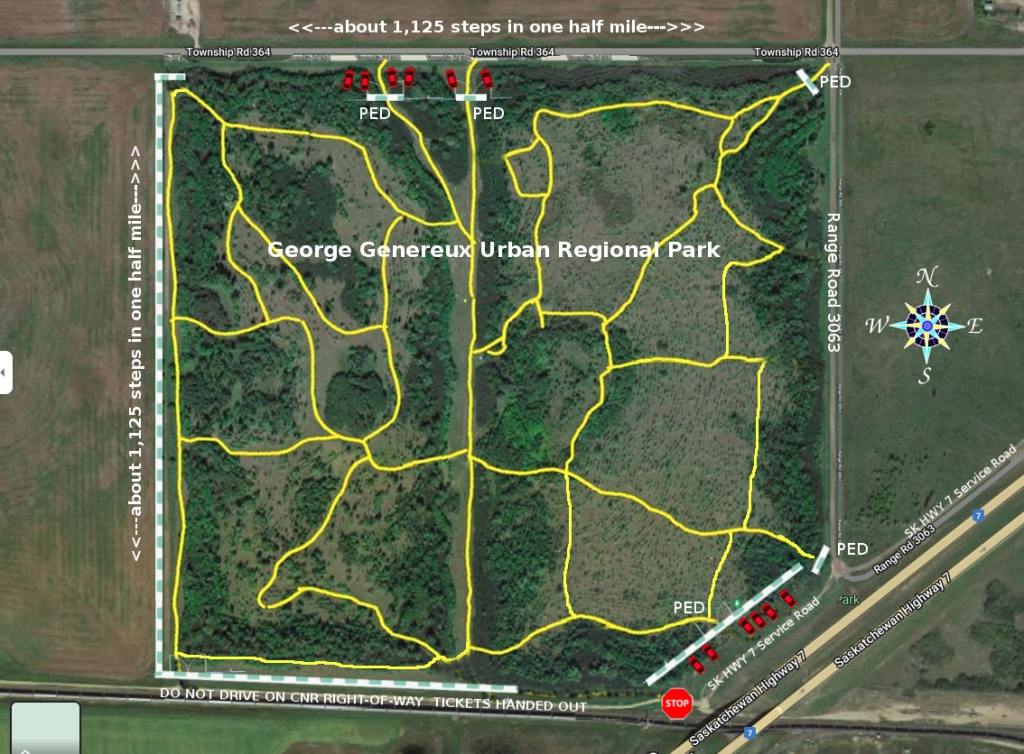
We received a follow-up report regarding the wildfire that occurred in George Genereux Urban Regional Park.
The Saskatoon Fire Department requested assistance from Urban Forestry staff to assess vegetation damage and determine whether any ongoing safety concerns remained within the affected area. Following a site inspection, an Urban Forestry supervisor reported that 44 small dead trees along the pathway were identified and marked with spray paint. The overall risk was assessed as low due to the area’s relatively low level of use, the low likelihood of tree failure, and the minimal potential for injury should a tree fall. While these trees should eventually be removed to prevent them from falling onto the pathway, they do not currently present an immediate hazard to the public.
As a result of this assessment, all identified safety concerns have now been addressed, and the area may continue to be used by the public. While some visible impacts from the wildfire remain, they do not pose a risk that would warrant restricting access to the site.
Visitors should be aware that tick populations remain very high in the area. The fire did not eliminate ticks, so appropriate precautions are strongly recommended, including wearing long clothing, staying on designated trails where possible, and conducting tick checks after visiting.
To help protect public health, natural areas, and reduce the risk of future wildfires, smoking and vaping are prohibited in all outdoor public spaces owned or operated by the City of Saskatoon under Smoking Control Bylaw No. 8286. This restriction applies to all tobacco products, cannabis products, and electronic cigarettes. Open fires, campfires, and any unauthorized flame-producing activities are also prohibited. Visitors are encouraged to respect these regulations to help safeguard forests, wetlands, wildlife habitat, and fellow park users.
The burned area also presents a valuable opportunity for ecological learning. Post-fire landscapes serve as living laboratories where environmental organizations such as the Friends of the Saskatoon Afforestation Areas can observe ecological succession and natural recovery processes firsthand. Over time, pioneering plants, insects, fungi, birds, and mammals gradually recolonize the site, demonstrating the resilience of natural ecosystems. Monitoring these changes can provide important information about biodiversity recovery, soil health, habitat restoration, carbon storage, and climate adaptation. Such areas also offer meaningful educational opportunities, helping visitors understand the role that fire can play in ecosystem renewal and fostering a deeper appreciation for the natural processes that shape and sustain healthy landscapes.
Previous posts about the grass fire.
Grass Fire Monitoring Continues Amid Extreme Dry Conditions
Grass and Brush Fire Response Underway
Understanding Wildfire Risk: The 30-30-30 Rule
When it comes to predicting how aggressively a wildfire will behave, Canadian firefighters and meteorologists look for a critical atmospheric tipping point known as the “crossover” effect. This danger zone is easily remembered by the 30-30-30 rule of thumb, which identifies the exact combination of weather conditions that cause small fires to rapidly explode out of control.
The rule states that wildfire danger reaches extreme levels when three specific conditions are met simultaneously:
- Temperature: 30°C or higher.
- Relative Humidity: 30% or lower.
- Wind Speed: 30 km/h or faster.
Why This Combination is So Dangerous
When the air becomes that hot and dry, it acts like a sponge, rapidly evaporating moisture from forest vegetation, grass, and soil. This creates a massive amount of highly flammable fuel. Once you add sustained wind speeds of 30 km/h into the mix, a spark can instantly turn into an intense, fast-moving blaze. The wind not only supplies oxygen to the flames but also carries burning embers far ahead of the main fire line, igniting new flare-ups and making containment incredibly difficult for emergency crews.
When a region hits this “crossover” threshold, fire safety officials go on high alert, as any new ignition has the potential to become an unmanageable wildfire.



Addresses:
Part SE 23-36-6 – Richard St. Barbe Baker Afforestation Area – 241 Township Road 362-A
Part SE 23-36-6 – SW Off-Leash Recreation Area (Richard St. Barbe Baker Afforestation Area ) – 355 Township Road 362-A
S ½ 22-36-6 Richard St. Barbe Baker Afforestation Area (West of SW OLRA) – 467 Township Road 362-A
NE 21-36-6 “George Genereux” Afforestation Area – 133 Range Road 3063
Coming soon the Clavet Memorial Healing Forest honouring the Humboldt Broncos
Wikimapia Map: type in Richard St. Barbe Baker Afforestation Area or
Google Maps South West Off Leash area location pin at parking lot
Web page: https://stbarbebaker.wordpress.com
Where is the Richard St. Barbe Baker Afforestation Area? with map
Where is the George Genereux Urban Regional Park (Afforestation Area)?with map
Blogger: FriendsAfforestation
Tumblr friendsafforestation.tumblr.comFacebook Group Page: Users of the George Genereux Urban Regional Park
Facebook: StBarbeBaker Afforestation Area
Facebook for the non profit Charity Friends of the Saskatoon Afforestation Areas Inc. FriendsAreas
Facebook group page : Users of the St Barbe Baker Afforestation Area
Support via Zeffy
Please help protect / enhance your afforestation areas, please contact the Friends of the Saskatoon Afforestation Areas Inc. (e-mail / e-transfers )
Donate your old vehicle, here’s how!
Support using Canada Helps
Support via a recycling bottle donation and Join the plastic-recycle challenge!
United Nations Decade on Ecosystem Restoration
- Use the UN Decade’s Visual Identity
- Make it your own
- Spread the word about the UN Decade
- Let’s Bring Back Forests
- Let’s Green Our Cities
““Be like a tree in pursuit of your cause. Stand firm, grip hard, thrust upward. Bend to the winds of heaven..”Richard St. Barbe Baker
 Forests of Memory. Forests of Learning. Forests for Life.