Richard St. Barbe Baker Afforestation Area. George Genereux Urban Regional Park. Humboldt Broncos Memorial Forest. Come to Nature. Come to Life. Friends of the Saskatoon Afforestationk Areas Inc. friendsareas.ca
As the sun dips below the horizon on Monday, April 13, a quiet transformation begins. For most of the modern world, this is the hour when the “second sun”—the relentless, amber hum of high-pressure sodium and LED glare—flickers to life, erasing the universe from view. But as we usher in International Dark Sky Week, there remains a sanctuary on the peri-urban fringes of Saskatoon where the ancient contract between humanity and the stars is still honored.
To find it, one must travel southwest, away from the city’s light-choked core, to the sprawling shadows of the Richard St. Barbe Baker Afforestation Area and George Genereux Urban Regional Park. Here, the urban grid dissolves into a silhouette of trees, and the sky ceases to be a gray ceiling; it becomes an abyss of wonder.
The Wild Architecture of the West Swale
In the stillness of these afforestation areas, the night is far from empty. It is a bustling, hidden metropolis. As the light fades over the West Swale wetlands, the “wild Saskatchewan nightlife” takes center stage. This is not the clatter of commerce, but the rhythmic pulse of an ecosystem that evolved over eons to function in the dark.
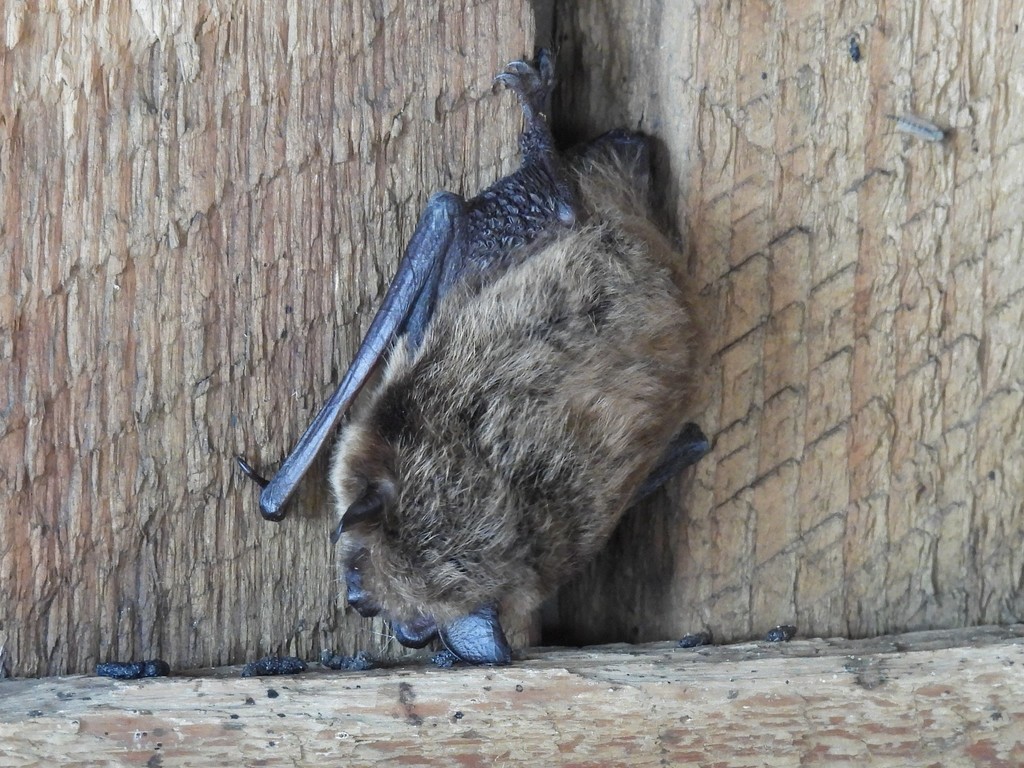
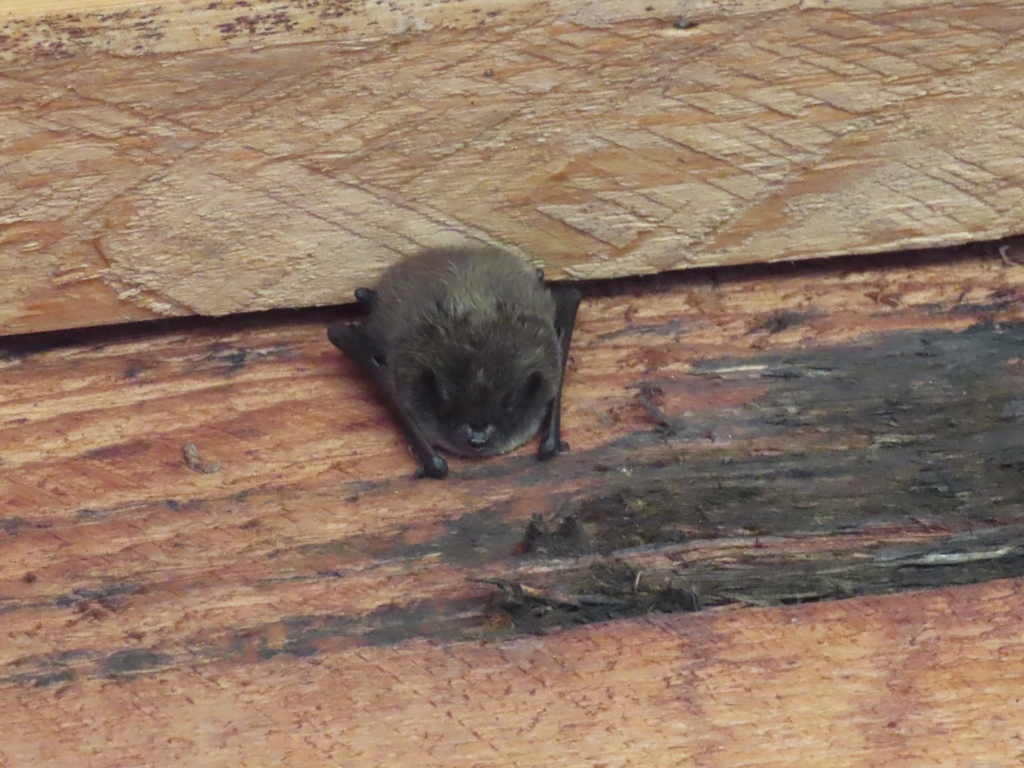
Out of the gallery of trees, the silhouettes of the night-fliers emerge. Among them are the Little Brown Myotis and the Northern Long-eared Bat, species now treading the precarious edge of the endangered list. These masters of echolocation are the sentinels of our night. To them, light pollution is not merely a nuisance; it is a barrier, a disruption of the predatory dance they have performed since the dawn of time. When we flood the night with artificial glare, we blind the nocturnal, turning their sanctuary into a gauntlet.
A Symphony in Shadow
The wetlands of the Swale act as a dark-mirror to the heavens. In the absence of city glow, the choir of the marsh reaches a crescendo, undisturbed by the biological confusion that artificial light brings to mating cycles and migration. This is the importance of International Dark Sky Week—it is a reminder that darkness is not the absence of life, but a requirement for it.
The Richard St. Barbe Baker and George Genereux lands are more than just parks; they are “star-grain” elevators, holding the precious resource of the cosmos for the next generation. Standing in the center of these woods, the Milky Way reveals itself not as a faint smudge, but as a frosted river of fire, casting soft shadows on the forest floor. It is a humbling reminder that we are citizens of a galaxy, not just residents of a municipality.
The Case for the Permanent Night
While April 13 marks the beginning of our celebration, the philosophy of the dark must be a year-round commitment. We have lived so long in the “electric cocoon” that we have forgotten the profound psychological and ecological necessity of a truly dark night. A dark sky preserves our health, guides the bird on its path, and grants the poet his muse.
As the wind whispers through the poplars of the southwest, let us recognize that darkness is an endangered species of its own. By shielding our lights and preserving the shadows of the West Swale, we aren’t just saving energy—we are reclaiming our place among the stars. This week, turn your eyes upward. The universe is waiting for you in the quiet, dark corners of Saskatoon.
“Darkness is as essential to our biological welfare, to our evolutionary heritage, as light itself.” — Inspired by the philosophy of the International Dark-Sky Association.
Part SE 23-36-6 – Richard St. Barbe Baker Afforestation Area – 241 Township Road 362-A
Part SE 23-36-6 – SW Off-Leash Recreation Area (Richard St. Barbe Baker Afforestation Area ) – 355 Township Road 362-A
S ½ 22-36-6 Richard St. Barbe Baker Afforestation Area (West of SW OLRA) – 467 Township Road 362-A
NE 21-36-6 “George Genereux” Afforestation Area – 133 Range Road 3063
Wikimapia Map: type in Richard St. Barbe Baker Afforestation Area or
Google Maps South West Off Leash area location pin at parking lot
As the final days of Easter Break wrapped up, so did the City Nature Challenge 2025 (CNC YXE), a four-day whirlwind of discovery, observation, and community engagement. This year, Saskatoon not only embraced the spirit of Earth Month but also marked the 10th anniversary of the global initiative to celebrate biodiversity in urban spaces. Through iNaturalist, over 800 observations from Saskatoon’s citizens were logged, showing our collective eagerness to connect with and protect the natural world around us.
Our city’s journey into nature was nothing short of inspiring, sparking curiosity in everyone who ventured outdoors—from the most seasoned naturalists to first-time observers. Through the eyes of the community, Saskatoon’s wild side came alive, with photos of everything from quirky insects to beautiful blooms, all documenting the biodiversity that surrounds us. Whether it was spotting the rare Twice-stabbed Lady Beetle or the iconic Horned Grebe, every observation counted.
But let’s be real—this wasn’t just a competition. It was about something much more profound: the joy of observing nature and the power of local collaboration. Volunteers, schools, community organizations, and even the weather itself came together to make the challenge a huge success.
What the Numbers Say: Saskatoon may not have been at the top of the leaderboard, but we more than held our own. In fact, with 874 observations from our passionate volunteers, we outpaced Niagara Falls, Kincardine, and Regina, showcasing that even in the face of our unpredictable spring weather, nature thrives in our city. These observations weren’t just numbers—they were a testament to the dedication of our community. From local families to budding citizen scientists, we saw people from all walks of life getting involved and getting their hands dirty, learning and exploring side by side.
Biodiversity Blitz and Invasive Species: The event wasn’t just a celebration of the natural world; it also sparked important conversations about invasive species and early detection. Volunteers were keen to spot potential threats like the Anopheles quadrimaculatus, a species whose range is expanding, and this helped local scientists monitor and address environmental changes before they become bigger problems.
While some species were charmingly quirky, like the vibrant red organisms observed in the Seeing Red initiative, others—like invasive plants—reminded us of the importance of vigilance in preserving our ecosystems.
A Community Effort: None of this would have been possible without the tireless support of our local partners:
Saskatoon Public School Division: Your outreach encouraged the next generation to be nature detectives, fostering curiosity and environmental stewardship.
Wild About Saskatoon: You helped guide us through the wonders of our own backyard, reminding us that wildness is something to be celebrated and nurtured.
Friends of the Saskatoon Afforestation Areas: Your passion and leadership drove the challenge from start to finish, ensuring the event was as impactful as it was educational.
Saskatoon Nature Society, Sask Power, Sask Tel, Sask Energy: Your unwavering support gave the challenge the energy it needed to succeed.
And to the volunteers—you are the heart of this endeavor. Each observation, each photo, each recorded sound was a small but mighty contribution to a much larger movement. Whether it was sharing a moment with a prairie dog or capturing the call of a warbler, your curiosity and commitment sparked joy, creativity, and a renewed appreciation for the world around us.
Finally, a huge thank you to the scientists and naturalists—both locally and globally—who helped identify our observations and provided expertise. Your knowledge turned our enthusiasm into meaningful data that will help us protect and preserve our environment for generations to come.
Looking Ahead: As we look ahead to next year, we can’t help but imagine an even bigger, wilder, and more connected CNC YXE. With more community involvement, more schools participating, and an ever-growing network of supporters, the future is bright for Saskatoon’s urban biodiversity. This isn’t just about logging species—it’s about building a culture of curiosity and stewardship, where we all have a role to play in the conservation of the places we love.
So, as the City Nature Challenge ends for 2025, we’ll continue to keep our eyes open, our boots on the ground, and our phones ready to capture the next big discovery. After all, we’re not just counting species—we’re making every species count.
Last night, just as the sun dipped behind the horizon, the west side of Richard St. Barbe Baker Afforestation Area lit up — not from the golden hues of a prairie sunset, but from the angry, orange glow of a raging fire. In the heart of our springtime renewal, police and fire crews raced to the scene. Thanks to their quick action — and a police helicopter overhead guiding fire trucks through the quickest routes to the fire location just to the north of Cedar Villa Estates, and west of the wetlands — a disaster was narrowly averted.
Fires which start during the day — a careless spark, a smouldering cigarette butt, a moment of negligence and carelessness in these dry, windy spring conditions — but by nightfall, they can grow into roaring infernos. This was the case last evening just before midnight. The proximity of the fire to the SaskPower Right of Way posed an additional grave threat: high-voltage transmission lines carrying critical electricity from the Queen Elizabeth Power Station run through this area. If these lines had been compromised, the resulting power outages could have devastated nearby communities, affecting homes, hospitals, emergency services, and businesses across Saskatoon and beyond. Imagine an entire evening, even days, without power — no lights, no heating, no communications — all from a fire that might have started with a single careless action.
At this time, thankfully, no personal injuries were reported, no first responders were injured or lost their lives, no property was damaged. We owe an enormous debt of gratitude to our first responders for their swift, brave work. Yet this close call is a stark reminder: stewardship of our natural areas is not just about protecting plants and animals. It is about protecting the people, the communities, and the very lifelines that sustain us.
Spring, for all its beauty, carries hidden dangers. Dry grasses, leftover debris, and brisk seasonal winds turn greenspaces into tinderboxes. Cedar Villa Estates lies just a stone’s throw from the afforestation area, and nearby CNR rail tracks haul cargo essential to daily life as well as flammable materials. A single spark in these conditions can endanger homes, ecosystems, and livelihoods in a flash. It’s a stark reminder that fires can escalate beyond our control faster than we ever imagine – and there are no fire departments across the street from the forest- so we all must remain careful and vigilant.
In this dry spring with brisk prairie winds, we ask everyone who visits the afforestation areas to be vigilant stewards of the land. Protect the rich biodiversity, human users, the songbirds, the fox kits, the wildflowers, and the wetlands teeming with unseen life. Did you know, over 62 species at risk call this place home — from tiny pollinators to majestic hawks. If you see suspicious activity, report it. If you spot a fire, call 911 immediately.
And while you’re outside helping to protect nature, why not celebrate it, too? Take part in the City Nature Challenge — download the free iNaturalist app and snap photos of any living organism you spot. Together, we can nurture and safeguard the wild heart of Saskatoon.
Stay safe, stay watchful, and thank you for being part of the solution.
Fire. File Photo. City of Saskatoon Bylaw No 7990 The Fire and Protective Services Bylaw,Fire. File Photo. Fire Prevention Day October 9 and everydayFire. File Photo.
Addresses:
Part SE 23-36-6 – Richard St. Barbe Baker Afforestation Area – 241 Township Road 362-A
Part SE 23-36-6 – SW Off-Leash Recreation Area (Richard St. Barbe Baker Afforestation Area ) – 355 Township Road 362-A
S ½ 22-36-6 Richard St. Barbe Baker Afforestation Area (West of SW OLRA) – 467 Township Road 362-A
NE 21-36-6 “George Genereux” Afforestation Area – 133 Range Road 3063
Wikimapia Map: type in Richard St. Barbe Baker Afforestation Area
Google Maps South West Off Leash area location pin at parking lot
American Crow Chappell Marsh. West Swale Wetlands. Richard St. Barbe Baker Afforestation Area. Saskatoon, SK, CA iNaturalist Observation with smart phone connecting with nature, supporting vital conservation research worldwide.SmartPhone nature Photo using the free iNaturalist app
Did you know that here in Saskatoon, on the very first day of the City Nature Challenge, in these early spring months with amazing temperatures, we already had 188 observations of organisms, spotted 94 different species, with the help of 30 identifiers and 21 keen observers? What an incredible start — and it’s all thanks to everyday heroes like you who are stepping outside and tuning into the world around them. What a great time to be outside connecting to nature!
Now it’s your turn to join the adventure! 🌎✨ Download the free iNaturalist app and be part of this exciting global event. Every photo and sound you record — whether it’s the cheerful call of a Robin, the sweet song of a Meadowlark, a busy ant on the move, a fluttering butterfly, a playful squirrel, or the delicate shimmer of a spider web — helps scientists, conservationists, and our whole community understand and protect the biodiversity we treasure.
Be the voice for nature today, Sunday, and Monday (April 28)! Together, we can celebrate Saskatoon’s wild side and show the world just how vibrant our corner of the Earth truly is. 🌿📸🎶
We would like to extend our heartfelt thanks to our incredible supporters: SaskPower, SaskTel, SaskEnergy, the Saskatoon Nature Society, and Wild About Saskatoon. Your generosity and commitment to environmental stewardship make events like the City Nature Challenge possible. Together, we are fostering a stronger connection between people and the natural world, inspiring a new generation of nature lovers and citizen scientists. Thank you for helping us celebrate and protect the beauty that surrounds us!
Richard St. Barbe Baker Afforestation Area is located in Saskatoon, Saskatchewan, Canada north of Cedar Villa Road, within city limits, in the furthest south west area of the city. 52° 06′ 106° 45′
Addresses:
Part SE 23-36-6 – Richard St. Barbe Baker Afforestation Area – 241 Township Road 362-A
Part SE 23-36-6 – SW Off-Leash Recreation Area (Richard St. Barbe Baker Afforestation Area ) – 355 Township Road 362-A
S ½ 22-36-6 Richard St. Barbe Baker Afforestation Area (West of SW OLRA) – 467 Township Road 362-A
NE 21-36-6 “George Genereux” Afforestation Area – 133 Range Road 3063
Wikimapia Map: type in Richard St. Barbe Baker Afforestation Area
Google Maps South West Off Leash area location pin at parking lot
In a triumphant display of nature’s resilience, the Richard St. Barbe Baker Afforestation Area has welcomed a stunning newcomer to its diverse ecosystem – the Prairie Pasqueflower (Pulsatilla nuttalliana). This remarkable discovery marks a significant milestone for the area, igniting a wave of excitement and wonder among nature enthusiasts. Perhaps a first in its sighting at this location in decades.
The Prairie Pasqueflower, known for its delicate beauty and rarity, is a botanical gem rarely seen in gardens due to its challenging cultivation requirements. Often mistaken for its European cousin, Pulsatilla vulgaris, this native North American species holds its own unique charm and significance.
Seedlings of the Prairie Pasqueflower are notoriously difficult to transplant, requiring optimal conditions for growth. With an affinity for well-drained soils along with a unique mycorrhizal symbiotic association between a fungus and a plant which is produced with 30 years of uncultivated land and winter snow cover, these resilient blooms thrive in moist to dry environments with a neutral to slightly alkaline pH. Their presence serves as a poignant reminder of the importance of preserving native prairies and their delicate ecosystems.
Historically, the Prairie Pasqueflower has been revered by settlers for its resemblance to the real crocuses found in their homelands, earning it the moniker “prairie crocus.” Additionally known as prairie smoke, cutleaf anemone, windflower, and gosling plant, this versatile flower holds a special place in the hearts of those who cherish the natural heritage of the American prairies. Did you know that, the Blackfoot referred to this flower as Napi, meaning “old man,” drawn by the resemblance of the grey, silky achene seeds of the Prairie Pasqueflower to the grey hair of an elder.
However, the journey of the Prairie Pasqueflower hasn’t been without challenges. Exotic species and invasive plants pose a threat to its survival, highlighting the importance of conservation efforts in protecting its native habitat. The decline of native prairies due to urban development, agriculture, and resource extraction further underscores the urgency of preserving these invaluable green spaces.
Urban areas, despite their limited land cover, hold potential in the conservation of the Prairie Pasqueflower. As human populations continue to grow, the significance of protecting and restoring urban green spaces becomes increasingly evident. Studies have shown a positive correlation between the distance from city centers and the frequency of occurrences of Pulsatilla patens, emphasizing the importance of preserving natural habitats on the outskirts of urban areas.
As we celebrate the arrival of the Prairie Pasqueflower at the Richard St. Barbe Baker Afforestation Area, let us reaffirm our commitment to safeguarding the rich biodiversity of our natural landscapes. Together, through education, conservation, and community engagement, we can ensure that future generations have the privilege of experiencing the beauty and wonder of native flora like the Prairie Pasqueflower. Let this remarkable bloom inspire us to protect and cherish the precious ecosystems that sustain life on our planet.
(Another Layer of Protection for Richard St. Barbe Baker Afforestation Area!)
This study explores the spatial distribution and habitat preferences of the Prairie Pasqueflower in urban landscapes, shedding light on its ecological significance and conservation needs.
Wildeman, R.L. and Steeves, T.A. “Genetic considerations in the management of Pulsatilla patens (Ranunculaceae).” Canadian Journal of Botany, vol. 60, no. 4, 1982, pp. 485-491.
This article discusses genetic factors influencing the management and conservation of Pulsatilla patens, providing valuable insights into its reproductive biology and population dynamics.
This resource offers comprehensive information on the Prairie Pasqueflower, including its habitat requirements, cultural significance, and conservation status, sourced from reputable botanical databases.
This publication provides an overview of the Prairie Pasqueflower’s morphology, distribution, and ecological role, offering valuable insights into its natural history and conservation implications.
NatureServe Explorer provides detailed species information, including distribution maps, conservation status assessments, and ecological characteristics, contributing to our understanding of the Prairie Pasqueflower’s conservation needs.
Join the #CityNatureChallenge from April 26 to April 29! Document Saskatoon and area’s nature in the free @iNaturalist app by taking photos of wild plants and animals—and help contribute to the world’s largest citizen science event. More at FriendsAreas.ca/events
With thanks to our sponsors and supporters SaskPower, SaskTel, Saskatoon Nature Society, Wild About Saskatoon, Caswell Hill Community Association, SOS Trees Inc., Rosewood Varsity View Community Association, Nutana Varsity View Community Association, Montgomery Place Varsity View Community Association. City Nature Challenge Saskatoon CNC YXE 2024 led by Friends of the Saskatoon Afforestation Areas. Reach if you would like to sponsor the City Nature Challenge, or share the City Nature Challenge information as a collaborator!
Richard St. Barbe Baker Afforestation Area is located in Saskatoon, Saskatchewan, Canada north of Cedar Villa Road, within city limits, in the furthest south west area of the city. 52° 06′ 106° 45′
Addresses:
Part SE 23-36-6 – Afforestation Area – 241 Township Road 362-A
Part SE 23-36-6 – SW Off-Leash Recreation Area (Richard St. Barbe Baker Afforestation Area ) – 355 Township Road 362-A
S ½ 22-36-6 Richard St. Barbe Baker Afforestation Area (West of SW OLRA) – 467 Township Road 362-A
NE 21-36-6 “George Genereux” Afforestation Area – 133 Range Road 3063
Wikimapia Map: type in Richard St. Barbe Baker Afforestation Area
Google Maps South West Off Leash area location pin at parking lot
The warmth of spring unfurls across the prairie lands, our avian friends embark on one of nature’s most awe-inspiring journeys – migration. However, amidst their majestic flights, many birds face an unexpected peril: collisions with windows. It’s a silent threat, but one that takes a heavy toll on our feathered companions.
Thankfully, communities across Canada are stepping up to mitigate this issue, and two initiatives stand out: the Calgary Urban Species Response Team and the Saskatoon City Nature Challenge.
The Calgary Urban Species Response Team, affectionately known as “CURST,” has launched a noble campaign to count bird window strikes during the crucial spring migration period, from April 1 to the end of May. They invite citizens to dim their lights and join their efforts. It’s a simple yet effective way to contribute to bird conservation.
But why stop there? In Saskatoon, another opportunity awaits. The Saskatoon City Nature Challenge (CNC YXE) beckons citizens to record bird strikes hitting windows through the iNaturalist app. This grassroots effort aims to turn the spotlight on an often-overlooked issue and empower individuals to become stewards of nature.
In the words of EcoFriendly West, the driving force behind these endeavors, it’s about being the voice for nature. It’s about taking action, joining hands, and making a difference.
So, why should we care about bird-window collisions? Beyond the immediate loss of precious avian life, these incidents have ripple effects across ecosystems. Birds play pivotal roles as pollinators, seed dispersers, and pest controllers. Their decline could disrupt delicate ecological balances, with far-reaching consequences for both flora and fauna.
Moreover, this issue hits close to home in Saskatchewan. Our province boasts a rich tapestry of bird species. Each window strike represents not just a statistic but a potential loss to our natural heritage.
However, there’s hope in collective action. By participating in initiatives like CURST and CNC YXE, we can turn the tide against bird-window collisions. Simple measures like applying decals to windows, installing bird-friendly glass, or dimming lights during migration periods can make a world of difference.
Ultimately, it’s about fostering a culture of coexistence between humans and wildlife. As stewards of this land, it’s our responsibility to ensure that future generations inherit a world where birds continue to grace our skies.
So, let’s heed the call of EcoFriendly West. Let’s turn out our lights, record bird strikes, and become the voice for nature. Together, we can make this a Saskatoon happening and pave the way for a brighter, bird-friendly future in Saskatchewan.
In the words of Rachel Carson, the pioneer of modern environmentalism, “In nature, nothing exists alone.” Let’s ensure that our feathered friends continue to thrive alongside us, enriching our lives with their beauty and grace.
City Nature Challenge – A Call to Action: April 26 – April 29, 2024, marks the City Nature Challenge—an opportunity to immerse oneself in nature and document its wonders. From wild plants to insects, birds, mushrooms, and more, participants capture the essence of living organisms and life remnants. With thanks to our sponsors and supporters SaskPower, SaskTel, Saskatoon Nature Society, Wild About Saskatoon, Varsity View Community Association, Rosewood Varsity View Community Association, Nutana Varsity View Community Association, SOS Trees, Montgomery Place Varsity View Community Association. City Nature Challenge Saskatoon CNC YXE 2024 led by Friends of the Saskatoon Afforestation Areas.
Nature’s Path to Wellness: Walk, Observe, Thrive on World Health Day.
Richard St. Barbe Baker Afforestation Area is located in Saskatoon, Saskatchewan, Canada north of Cedar Villa Road, within city limits, in the furthest south west area of the city. 52° 06′ 106° 45′
Addresses:
Part SE 23-36-6 – Afforestation Area – 241 Township Road 362-A
Part SE 23-36-6 – SW Off-Leash Recreation Area (Richard St. Barbe Baker Afforestation Area ) – 355 Township Road 362-A
S ½ 22-36-6 Richard St. Barbe Baker Afforestation Area (West of SW OLRA) – 467 Township Road 362-A
NE 21-36-6 “George Genereux” Afforestation Area – 133 Range Road 3063
Wikimapia Map: type in Richard St. Barbe Baker Afforestation Area
Google Maps South West Off Leash area location pin at parking lot
Environmental education has a long lasting legacy. Enjoy the experience of Richard St. Barbe Baker Afforestation Area, or George Genreux Urban Regional Park. The experience may be enriched if you immerse yourself in some of the following resources. These enlightening resources delve into how the afforestation areas are outdoor classrooms – and as City of Saskatoon urban regional parks, there is a wealth of ideas and creativity.
Carbon Capture: to “analyze the interdependence among plants, individuals, society, and the environment.”
Canadian Families: is a means to explore past, present and future analysis of families, what creates family well-being, what kinds of parenting skills are needed to support growth as an emerging adult, and societal roles and responsibilities
Carbon Cycle and the Environment: “Global climate change is one of the most challenging environmental issues facing today’s society”
Electricity in the Environment: With a growing population “keeping up with the electrical demand is both challenging and providing some unique opportunities.”
Focused Study: Connecting Societies, Science, Technology and the Natural Prairie Environment in Saskatchewan: A power point to “interactions between societies, technology and the natural environment, focusing on changes to the prairie ecosystem and native plant communities. Conditions necessary for plant growth are also investigated, using selected native plants. Basic plant structure, function and mechanisms of adaptation are reviewed, as well as the fundamental importance of soils for sustaining life.”
Focused Study: Plant reproduction and Native plants of Saskatchewan. “To form an understanding of the continuance of life in nature through a lesson on native plant reproduction, pollination, the reproduction of symbiotic species and the effects of differing types of reproduction methods on populations”
Metis Traditional Foods Learn about traditional foods, the change of seasons and how to make la gaalet (bannock).
Plant Growth and Changes: To understand the pre-requisites for plant growth how plants develop, and the necessary requirements for germination.
Walking with the Earth Pimohtiwin: A power point to “explore cultural perspectives on sustainability and biodiversity within local ecosystems.” Created to explore” the learning place is somewhere that still has natural plants and animals living in the area.”
For family day, a few resources for those who partake in home-schooling, or those who want a refreshing look into nature from another lens. Enjoy!
Write a story about your visit to Richard St. Barbe Baker Afforestation Area, and email it to be entered into a prize draw (more details)
“The future of the planet concerns all of us, and all of us should do what we can to protect it. ” Wangari Maathai.
“The science of forestry arose from the recognition of a universal need. It embodies the spirit of service to mankind in attempting to provide a means of supplying forever a necessity of life and, in addition, ministering to man’s aesthetic tastes and recreational interests. Besides, the spiritual side of human nature needs the refreshing inspiration which comes from trees and woodlands. If a nations saves its trees, the trees will save the nation. And nations as well as tribes may be brought together in this great movement, based on the ideal of beautifying the world by the cultivation of one of God’s loveliest creatures – the tree.” ~ Richard St. Barbe Baker.
“Calm soul of all things, make it mine, To feel amidst the City ‘s jar That there abides a peace of thine Men did not make and cannot mar. “ ~Richard St. Barbe Baker
We owe it to ourselves and to the next generation to conserve the environment so that we can bequeath our children a sustainable world that benefits all.~ Wangari Maathai
“ If a nation saves its trees, the trees will save the nation. ” ~ Richard St. Barbe Baker.
Your vision will become clear only when you can look into your own heart. Who looks outside, dreams; who looks inside, awakes. Carl Jung
As of this morning, there is a great way to view climate data online to take action on climate change. Check out Climate Data for a Resilient Canada
ClimateData.ca can be explored by location, climate variable, or human geography sector. As Dave Sauchyn, Director, Prairie Adaptation Research Collaborative and Professor of Geography and Environmental Studies, University of Regina mentioned, choose minimum temperature in February and the highest emission scenario 1950s where the chinook plume can be seen in southwest Alberta, and how the warming has progressed from the north west to the east by toggling the time line to present time. The Climate Data maps also at a glance show the number and severity of extreme climate events, and the exponential changes in the last decade.
It was very exciting that the Prairie Provinces chapter was to be released of the Regional Perspectives Report, followed by other regions, and the National Issues Report in 2021.
If you wish to see the webinar mentioned above it will be posted on the Prairies Regional Adaptation Collaborative web site (prairiesrac.com) where prairie residents, and world wide visitors can learn about the potential of the prairie basin as a worldwide climate change “hot spot.”
As we adapt to climate change, and the associated climate risks, we individually in communities need to follow the lead of IISD and “anticipate, cope and adapt.”
Richard St. Barbe Baker Afforestation Area is located in Saskatoon, Saskatchewan, Canada north of Cedar Villa Road, within city limits, in the furthest south west area of the city. 52° 06′ 106° 45′ Addresses: Part SE 23-36-6 – Afforestation Area – 241 Township Road 362-A Part SE 23-36-6 – SW Off-Leash Recreation Area (Richard St. Barbe Baker Afforestation Area ) – 355 Township Road 362-A S ½ 22-36-6 Richard St. Barbe Baker Afforestation Area (West of SW OLRA) – 467 Township Road 362-A NE 21-36-6 “George Genereux” Afforestation Area – 133 Range Road 3063 Wikimapia Map: type in Richard St. Barbe Baker Afforestation Area Google Maps South West Off Leash area location pin at parking lot Web page: https://stbarbebaker.wordpress.com Where is the Richard St. Barbe Baker Afforestation Area? with map Where is the George Genereux Urban Regional Park (Afforestation Area)? with map
Please help protect / enhance your afforestation areas, please contact the Friends of the Saskatoon Afforestation Areas Inc. (e-mail / e-transfers )Support the afforestation areas with your donation or membership ($20.00/year). Please donate by paypal using the e-mail friendsafforestation AT gmail.com, or by using e-transfers Please and thank you! Your donation and membership is greatly appreciated. Members e-mail your contact information to be kept up to date! Canada Helps
“The future of the planet concerns all of us, and all of us should do what we can to protect it. ” Wangari Maathai.
“The science of forestry arose from the recognition of a universal need. It embodies the spirit of service to mankind in attempting to provide a means of supplying forever a necessity of life and, in addition, ministering to man’s aesthetic tastes and recreational interests. Besides, the spiritual side of human nature needs the refreshing inspiration which comes from trees and woodlands. If a nations saves its trees, the trees will save the nation. And nations as well as tribes may be brought together in this great movement, based on the ideal of beautifying the world by the cultivation of one of God’s loveliest creatures – the tree.” ~ Richard St. Barbe Baker.
Would you like the opportunity to play this game along with learning about plants and animals that compose the prairie ecosystem with the Field Guide to the Prairie?
How about taking a QuickTime VR movie to test drive your newly acquired skills, before you wander out on the prairie searching for plants and animals?
Or perhaps you are interested to know what exactly is a Master Naturalist?
“Anticipate Success. Let us heal the naked scars in the earth and restore her green mantle. Let us set our Earth family in order.”~Richard St. Barbe Baker
Please help protect / enhance your afforestation areas, please contact the Friends of the Saskatoon Afforestation Areas Inc. (e-mail)
Support the afforestation areas with your donation or membership ($20.00/year). Please donate by paypal using the e-mail friendsafforestation AT gmail.com, or by using e-transfers Please and thank you! Your donation and membership is greatly appreciated. Members e-mail your contact information to be kept up to date!
“The future of the planet concerns all of us, and all of us should do what we can to protect it. ” Wangari Maathai.
“It is with a spirit of reverence that I approach God’s Creation, this beautiful Earth. The ancients believe that the Earth was a sentient being and felt the behavior of mankind upon it. As we have no proof to the contrary, it might be as well for responsible perople to accept this point of view and behave accordingly.”~Richard St. Barbe Baker
“I found it is the small everyday deeds of ordinary folk that keep the darkness at bay, small acts of kindness and love.”~ Gandalf
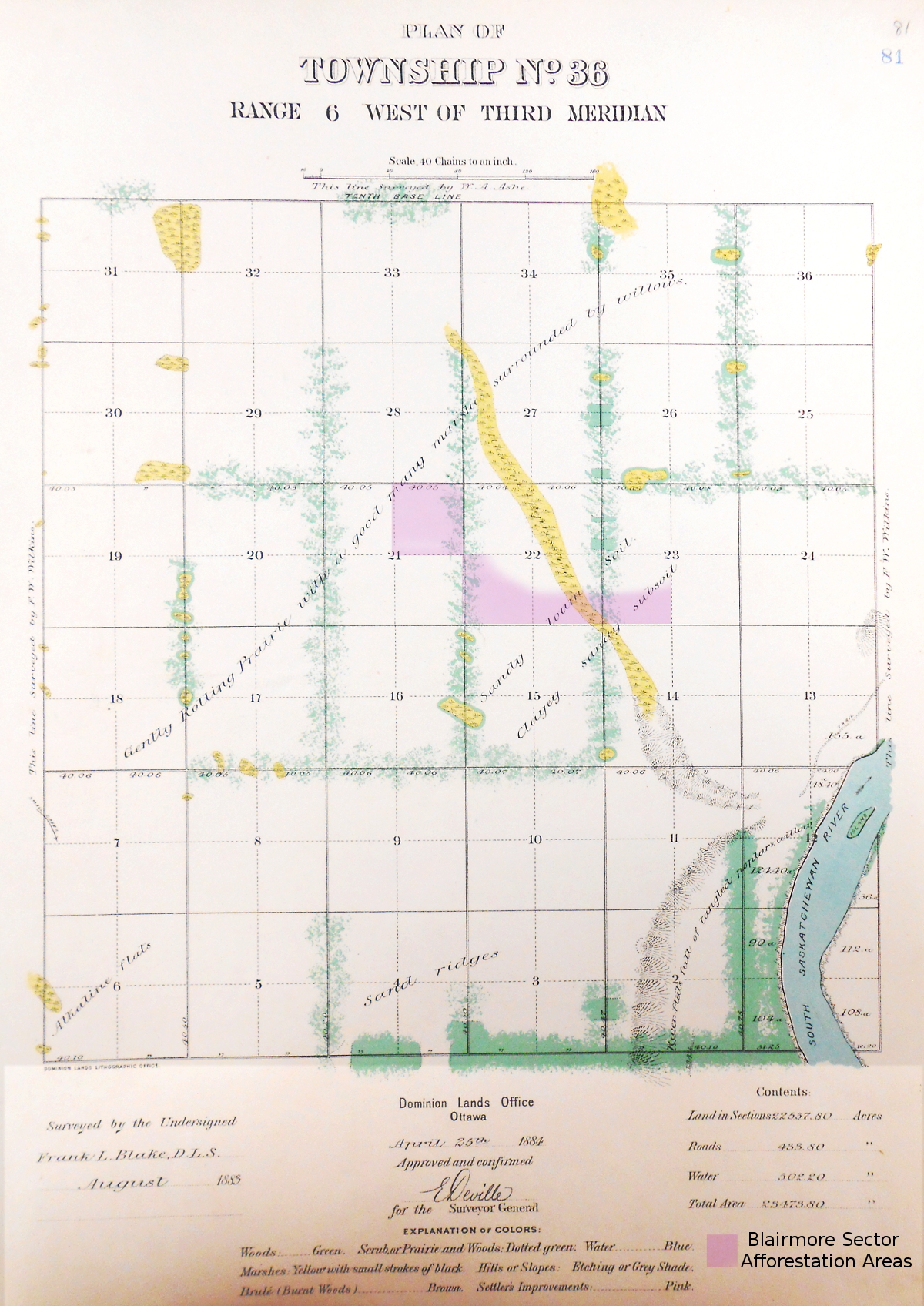
Plan of Township No 36 Range 6 West of the Third Meridian. Dominion Land Office April 25, 1884.
Map Surveyed by the undersigned Frank L. Blake D.L.S. August 1883
Approved and confirmed E Deville for the Surveyor General
A map expresses a perspective {that of the cartographer}. But the map itself has not a perspective. As George Graham says, “the perspective is not in the map. It must be read into the map. The mind’s Intentionality or aboutness in underived. It inheres in it or is intrinsic to it.” He looked deeply forlorn needing to settle this decision once and for all.
The wetlands which formed in the Pleistocene Yorath Island Spillway are very evident on the above map, and are part of what is now called the “West Swale” The West Swale extends from Yorath Island in the South Saskatchewan River through to Grandora, Rice Lake and the North Saskatchewan River [To get an overview of the West Swale check out the next Map 1915 Saskatoon Sheet which includes Grandora, etc…
“Humankind’s greatest sin is anthropocentrism – where human life is valued above all other sentient life. Msirtnecoporhtna – backwards or forwards it makes no sense. If Moses could spell it, he would have put in his top 10.” Philip Wollen founder of Winsome Kindness Trust
Blairmore Sector Afforestation Areas
Legend Additions in the colour Mauve:
How would the Blairmore Sector Afforestation Areas have featured on a map of 1883?
On the west side of Saskatoon a portion of the 660 acres preserved in perpetuity in 1972 are located at:
Richard St. Barbe Baker Afforestation Area (City of Saskatoon Urban Regional Park) Parts Section 22 and SW 23 township 36 range 6 west of the third meridian. (East of the CN overpass on SK Highway 7) SE 22 & SW 23-36-6 W3
S ½ 22-36-6 Richard St. Barbe Baker Afforestation Area (West of South West Off Leash Recreation Area) civic address 467 Township Road 362-A. Only lands of SE 22 36 6 W3 under MVA conservation management
Part SE 23-36-6 – SW Off-Leash Recreation Area (Richard St. Barbe Baker Afforestation Area ) civic address 355 Township Road 362-A under MVA conservation
Un-named City of Saskatoon Afforestation Area. Part south of CN Chappell yards SE section 23-36-6-W3 preserved as afforestation area in perpetuity, under MVA conservation management- west of SW OLRA and east of COC.
Part SE 23-36-6 – Afforestation Area civic address 241 Township Road 362-A
In 1960, part of NE 21-36-6 W3 (West of the CN overpass on SK Highway 7) was purchased by the City, planted in 1972, preserved as an afforestation area. Named in 1978-1979 George Genereux Park (Urban Regional Park), this namesake was removed at this afforestation area for use at a different city pocket park.
NE 21-36-6 “George Genereux” Afforestation Area civic address 133 Range Road 3063
“Each person walks a journey unique to himself or herself. Live your own journey and run your own race.” Winsome Campbell-Green
Please help protect / enhance your afforestation areas, please contact the Friends of the Saskatoon Afforestation Areas Inc. (e-mail)
Support the afforestation areas with your donation or membership ($20.00/year). Please donate by paypal using the e-mail friendsafforestation AT gmail.com, or by using e-transfers Please and thank you! Your donation and membership is greatly appreciated. Members e-mail your contact information to be kept up to date!
“St. Barbe’s unique capacity to pass on his enthusiasm to others. . . Many foresters all over the world found their vocations as a result of hearing ‘The Man of the Trees’ speak. I certainly did, but his impact has been much wider than that. Through his global lecture tours, St. Barbe has made millions of people aware of the importance of trees and forests to our planet.” Allan Grainger
“We forget that we owe our existence to the presence of Trees. As far as forest cover goes, we have never been in such a vulnerable position as we are today. The only answer is to plant more Trees – to Plant Trees for Our Lives.” ~ Richard St. Barbe Baker
“Act. Don’t react. See a need, fix it first. Worry about the details later. If you wait until you are asked you have just missed a golden opportunity. They are fleeting and rare.” Philip Wollen founder of Winsome Kindness Trust










 Forests of Memory. Forests of Learning. Forests for Life.