Richard St. Barbe Baker Afforestation Area. George Genereux Urban Regional Park. Humboldt Broncos Memorial Forest. Come to Nature. Come to Life. Friends of the Saskatoon Afforestationk Areas Inc. friendsareas.ca
This is a story about Time. Not the minutes and hours we use to schedule our lives, but Deep Time—the kind of time that moves mountains and carves provinces.
As we celebrate Geologists Day this April 5th, we aren’t just honoring a profession; we are honoring the detectives of the Earth. We are looking at the ground beneath our feet here in Saskatchewan and asking, “How did you get here?” To answer that, we have to look past the wheat fields and the living prairie and envision a world dominated by ice and cataclysm.
The Big Chill: Saskatchewan in the Pleistocene
To understand the Saskatchewan plains, you have to appreciate the Laurentide Ice Sheet. Imagine a slab of ice two miles thick sitting right where you are. It’s heavy, it’s grinding, and it’s moving. During the Pleistocene, this ice wasn’t just a static blanket; it was a sculptor’s chisel.
But the real magic happens not when the ice arrives, but when it leaves. When you melt a continental-sized ice cube, you don’t just get a puddle—you get a deluge. You get the kind of hydraulic power that can move house-sized boulders and rearrange the geography of a continent in a matter of weeks.
The Yorath Island Spillway: A Post-Glacial Firehose
Let’s talk about the Yorath Island Glacial Spillway.
There was a moment in our deep history when a massive proglacial lake—what geologists call Lake Saskatoon—was held back by a crumbling wall of ice. When that dam breached, the release of energy was staggering. This wasn’t a gentle stream; it was a high-pressure firehose of meltwater seeking the lowest path.
As this water tore south and east, it ripped through the glacial till, carving out more than one glacial spillway. This wasn’t a slow erosion over millions of years—this was a singular event. The water surged with such velocity -that of the Niagra Falls- that it scoured the landscape down to the bedrock in places, leaving behind the West Swale we see today – very visible on Satellite Maps. Yorath Island itself is a remnant, a “land-island” created by the sediment carried along by the sheer ferocity of these diverted currents.
The Legacy of the West Swale
When the water finally subsided and the great spillway went quiet, it left behind a masterpiece: the West Swale.
Today, the Swale looks like a peaceful string of wetlands and meadows, but to a geologist, it’s a “fossil” of that ancient flood. It is a long, linear depression—a scar on the face of the plains that marks where the Yorath Island Spillway once roared.
Because the spillway cut so deep, it exposed different layers of Earth’s history, creating a unique “micro-topography.” The West Swale isn’t just a ditch; it’s a catch-basin for biodiversity. The reason we have such rich wetlands and unique vegetation there today is directly tied to the catastrophic hydrology of 12,000 years ago. The Yorath Island soils aren’t from here—they are hitchhikers from the Canadian Shield brought south by the ice and dropped by the flood.
Why Earth Science Matters
Geologists Day reminds us that the “flat” Saskatchewan plains are anything but boring. Beneath the topsoil lies a high-stakes drama of tectonic shifts, glacial sieges, and massive floods.
When you stand on the edge of the West Swale this April, don’t just see the grass. See the Yorath Island Spillway in full roar. See the ice wall to the north. Feel the vibration of a billion tons of water reshaping the world.
The Earth is a book, and geology is the language we use to read it. There is so much more to reveal—so keep looking down, keep asking questions, and never take the ground beneath you for granted.
The elm, with its sweeping arch of green, has long been the cathedral tree of our northern cities. Its vaulted canopy shades our streets, cools our homes, and whispers to us of continuity with nature. In Saskatoon, nearly a quarter of the urban forest is elm—a treasure beyond measure. In the afforestation areas, too, Siberian Elms, and American Elms are a great portion of the canopy. Yet today, we face a dire crisis. The City has declared an ecological emergency as Dutch elm disease spreads with alarming speed. How to Identify an Elm.How to Spot Dutch Elm Disease Symptoms.
This is no ordinary ailment. Dutch elm disease (DED) is a ruthless invader, a fungus—Ophiostoma ulmi and its more virulent cousin Ophiostoma novo-ulmi—that enters the tree’s veins and clogs them, cutting off life itself. The carriers are small, inconspicuous elm bark beetles. On their wings, they bear spores like unwelcome cargo. Seeking places to lay their eggs, they search for damaged elm—pruned in the wrong season, broken by storm, or cut for careless firewood. From there, death marches through the canopy.
Richard St. Barbe Baker, silviculturist (forest doctor) has seen many forests suffer, but few plagues advance as swiftly as this. A tree that stood proudly in May may be yellowed and withered by August, its crown shriveling, its roots starving. So entire boulevards may fall silent, their green vaults gone, sunlight harsh and unbroken upon the pavement.
American Elm Ulmus Americana autumn leafElm LeavesWinter Elm Tree
The Call to Action
The City has confirmed a record twelve cases this summer—more than ever before. Seven more trees show unmistakable signs and will be removed. Already, over 8,700 kilograms of elm wood have been gathered and destroyed, yet more remains.
Thai Hoang, Director of Parks, sounded the alarm plainly: “Do not store elm wood on your property. Do not burn it in your fire pit. About a quarter of our forest canopy is elm. This is not a minor issue—it is an ecological emergency.”
Indeed, the beetle thrives in neglected woodpiles. Every log, every stored branch, is a breeding ground. To keep elm wood is to endanger the very heart of our city.
Best Practices for Guardianship
We who love trees must become their guardians. There are simple yet essential practices:
Never transport or store elm wood. Dispose of it only at the City landfill, where handling is safe and free.
Obey the provincial pruning ban between April 1 and August 31. Fresh cuts draw the beetles like moths to a flame.
Water wisely. From April until mid-August, water deeply. Then let the trees harden for winter, with one or two final soakings before freeze-up.
Prune in very early spring. At that time, wounds heal quickly, and beetles are less active.
Maintain soil and roots. Fertilize thoughtfully, protect roots from damage during construction, and mulch well to prevent mower injury.
The elm is resilient if cared for. But neglect is its undoing.
The Mystery of the Survivor Elms
Yet even in this dark time, there is hope. Researchers tell us of survivor elms—trees that, though surrounded by the dying, endure. These are not unlike people who endured the scourge of COVID-19. Those with co-morbidities fared worse, while the strong sometimes resisted. So it is with elms. Healthy, vigorous trees may overcome where weakened ones fail.
In Minnesota and elsewhere, researchers funded by the MITPPC are studying these survivor trees, seeking to propagate their resilience. Early-flushing clones, resistant hybrids, and cultivars like Valley Forge, Prairie Expedition, and Jefferson may offer us a new generation of elms. Some of these hybrids draw strength from Asian species, which co-evolved with the fungus and are far less susceptible.
This is the field of hope: not only to protect the present, but to plant a future forest of resistance.
A Plea for Stewardship
Let us remember: the elm is more than wood and leaves. It is a shelter for birds, a fortress against wind, a cooling balm in summer, a companion in our daily walk. To lose it is to lose part of ourselves.
As Richard St. Barbe Baker often said, “if a man loses one-third of his skin he dies; if a tree loses one third of its bark, it too dies. If the Earth is a ‘sentient being’, would it not be reasonable to expect that if it loses one third of its trees and vegetable covering, it will also die?” The elm has stood beside us for generations; now we must stand for it.
The emergency in Saskatoon is real, but it need not be the end. With vigilance, with science, with love, and with law, we can yet preserve these cathedral trees. And in time, with resistant cultivars and survivor elms, we may restore what is lost.
But only if we act—together, now.
“The minimum for safety is one third of the total land area. I think what is happening to the elms must be alerting the whole country to the necessity of trees, of the need for more trees. The elm has the largest leaf surface of any tree in Britain. If you …. put the leaves together edge to edge, they would cover ten acres. So naturally, the first tree to suffer from air pollution was the elm and, of course, when an elm is suffering from fatigue it is subject to attack by disease: the elm bark beetle, the carrier of the elm fungus, comes along and the tree succumbs.
I look at it this way. If a person is living a normal life and not abusing themselves – not smoking too much, not eating too much, not drinking too much – but living normally and eating the right food – they will be fit and well. It is only when they start abusing themselves that they are prone to attack by disease. It is the same with trees.
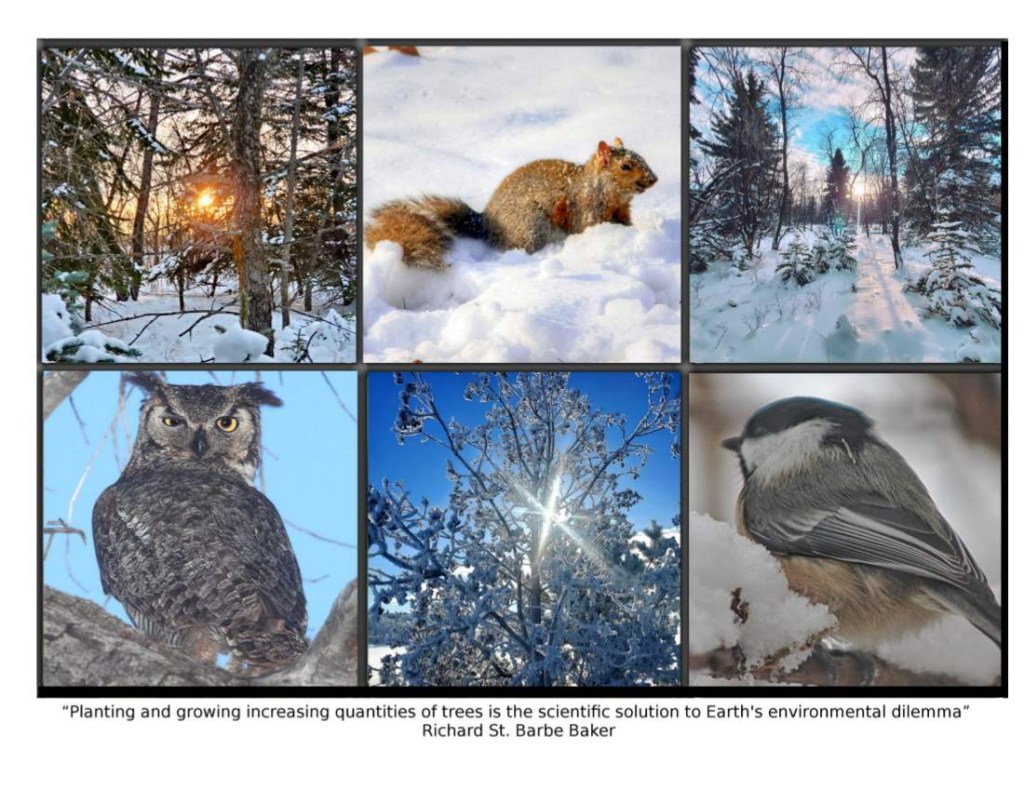
The next tree to go (the next tree with the largest leaf surface after the elm) is probably the beech: after that the sycamore: and so on. Finally it will be Man’s turn. We forget that we owe our existence to the presence of trees and as far as forest cover goes, we have never been in such a vulnerable position as we are today. The only answer is to plant more trees – to plant for our lives. Richard St. Barbe Baker answers the first question above” Richard St. Barbe Baker.
(Canada) August 20, 2025 – In response to the serious ecological and agricultural challenges posed by invasive wild pigs, Canada has launched Wild Pigs Canada, a new national online hub. This platform—created by Invasives Canada and Animal Health Canada, alongside the Invasive Wild Pig Leadership Group—provides one central place for Canadians to access tools, science-based information, and resources to help combat this growing threat.
Wild Pigs Canada equips the public, producers, and communities with practical knowledge: how to recognize wild pigs, where to report sightings, and how to stay informed about the latest research and coordinated actions across the country. Visit WildPigs.ca to learn more.
According to Dr. Leigh Rosengren, industry co-chair on the Animal Health Board of Directors, the new website is a valuable step forward: “This platform provides Canadians with clear, accessible information to help reduce the spread of invasive wild pigs and support their removal from the landscape.”
Invasive wild pigs—escaped or released domestic pigs now living in the wild—are highly adaptable, elusive, and expanding in range. They root up crops, damage pastures, and tear through natural areas. Their destructive feeding and wallowing cause severe damage to wetlands, greenspaces, and even urban parks, stripping away vegetation, eroding soil, and contaminating water with pathogens. Such impacts devastate native biodiversity, destroy habitat for waterfowl and pollinators, and degrade recreational spaces enjoyed by communities.
These animals also pose risks to people, pets, and livestock. They can be aggressive if threatened and may carry dangerous livestock diseases, including African swine fever (ASF).
ASF, though not present in Canada, is a major global concern. If wild pigs were to spread it here, the impacts on domestic pig farms, pork producers, and international trade would be catastrophic.
Currently, invasive wild pig populations are established in parts of Alberta, Saskatchewan, and Manitoba, though isolated occurrences have been reported in other provinces and territories. Their rapid spread and wide-ranging impacts make it clear that no single sector can solve this issue alone. Coordinated national action is critical.
Canada’s Invasive Wild Pig Strategy (2022–2032) calls for a unified approach to prevent and eradicate these destructive animals. Wild Pigs Canada delivers on one of the strategy’s top priorities: raising awareness and mobilizing the public to act. The Invasive Wild Pig Leadership Group continues to support this work, helping align efforts across provinces and regions.
Rebecca Lord, Executive Director of Invasives Canada, emphasizes the importance of partnerships: “Wild Pigs Canada is the result of collaboration across agriculture, conservation, and government. It connects Canadian expertise with international efforts in the U.S. and Mexico, building a stronger, coordinated response.”
Matt DeMille, Executive Director of the Ontario Federation of Anglers and Hunters, highlights the role of everyday Canadians: “Whether you’re a landowner, a hunter, or just someone who enjoys spending time outdoors, you now have one trusted place to learn what invasive wild pigs mean for Canada and how to report them. Everyone who uses the land has a part to play in being the first line of defense.”
What the Public Needs to Know:
Wild pigs are not native to Canada and are one of the most damaging invasive species on the planet.
Coexistence is not possible. Their destructive feeding and rapid reproduction mean they quickly overwhelm ecosystems, farms, and communities if left unchecked.
Sightings should be reported immediately through Wild Pigs Canada so that wildlife experts and authorities can respond quickly.
Avoid approaching or feeding wild pigs, as they can be aggressive and unpredictable.
Wild Pigs Canada is for anyone who wants to protect Canada’s farms, wetlands, greenspaces, parks, wildlife, and natural landscapes from this urgent and growing threat.
The most widely recognized expert on wild boars in Saskatchewan is Dr. Ryan Brook, an associate professor in the University of Saskatchewan’s College of Agriculture and Bioresources. He is best known as the leader of the Canadian Wild Pig Research Project, a long-running initiative that tracks the spread of invasive wild pigs across the country. His team uses a wide range of methods to monitor populations, from aerial surveys in planes and helicopters to ground crews, trail cameras, and reports from local residents.
Dr. Brook’s work has made him a leading voice in the national conversation about invasive wild pigs. For over a decade, he has documented their expansion across millions of square kilometers of Canada, providing the first comprehensive baseline maps of their distribution. His warnings have often made headlines, including his stark prediction that, if left unchecked, Saskatchewan could one day have more wild pigs than people.
The risks he highlights are serious and multifaceted. Wild pigs are highly adaptable, reproduce quickly, and are exceptionally difficult to control once established. Their rooting behavior tears up soil, accelerates erosion, spreads weeds, and destroys native vegetation, causing long-term ecological damage. On farmland, they trample and consume crops, leaving behind significant losses for producers. Just as concerning, they carry the potential to spread dangerous diseases to domestic livestock, wildlife, and even humans—posing both economic and public health risks.
Through his teaching and research in the Department of Animal and Poultry Science, Dr. Brook has become a central figure in raising awareness about the growing crisis. His work emphasizes that invasive wild pigs are not simply a rural problem; they threaten wetlands, grasslands, and even public parks, making them a challenge for all Canadians.
🐗 What You Can Do to Help Stop Invasive Wild Pigs
Report Sightings Immediately – Go to WildPigs.ca to share any confirmed sightings. Quick reports help experts respond before pigs spread further.
Do Not Approach or Feed – Wild pigs can be aggressive and unpredictable. Keep people and pets at a safe distance.
Protect Nature – Remember that wetlands, greenspaces, and parks are at risk. Sharing information helps communities defend these landscapes.
Be a First Line of Defense – Farmers, hunters, hikers, and everyday citizens all play a role in stopping invasive wild pigs.
Out in the long grass of August, where the sun presses its heat into the soil like a branding iron and the wind moves with the low groan of age, Saskatchewan’s wetlands are still doing their quiet work.
They’ve done it for centuries — long before we gave names to their function, long before we cut fences through the marsh, or tried to drain their bellies for crops and cattle. And still, they stay. Not for us, exactly, but with us.
This year, from August 9 to 17, Saskatchewan marks the third annual Wetlands Appreciation Week, carrying the theme: Thriving Together: Wetlands and Communities — a phrase that rings both as a hope and a reminder.
A Landscape of Memory
Consider the West Swale, where the bones of ancient ice carved their story into the land. What we now call a wetland — rich with cattail, bulrush, muskrat, and frog-song — was once a glacial spillway. A restless, roaring channel creating Yorath Island, born from meltwater in the last ice age. That ghost river’s path now hosts Chappell Marsh, a jewel in the crown of the Swale. It is a place where time seems suspended in reed and reflection, and the land’s memory lies just beneath the surface.
Wetlands like this one are more than soggy ground. They’re lungs. They’re sponges. They’re cradle and coffin for countless species. And in a time when climate’s heartbeat grows erratic, these places are also something else — carbon vaults.
The Burden They Carry
Scientists will tell you that wetlands sequester carbon — that they hold it close in deep, anaerobic soils, preventing its release into the warming sky. But the way a farmer in the Qu’Appelle Valley might say it is this: “They soak up more than water.” They soak up heat, drought, and hunger. They shelter birds on thousand-mile migrations and buffer towns from spring floods that no one expected.
But what they give, they do not give without limit.
For every wetland that disappears under gravel or concrete or corrugated pipe, a thread unravels in the cloth of community. Not just for the waterfowl or salamanders or insects that lose a home, but for us — the people who live by water without noticing how it holds us upright.
A Quiet Celebration
So what does it mean to celebrate something that asks nothing for itself?
During Wetlands Appreciation Week, across Saskatchewan, please walk around a wetlands, download iNaturalist and Merlin and take part in citizen science efforts, and moments of shared learning. Communities will come together to listen — not to speeches, necessarily, but to the low thrum of the dragonfly, the dry rustle of sedge, the plop of a frog startled by a passing footstep. Children may build bug hotels. Elders may share stories of when beaver dams meant trouble, or salvation. All of it, a small way of saying: we’re still here. We still see you.
Thriving, Together
The wetlands of Saskatchewan don’t scream. They don’t split open the ground like wildfire or send towering clouds to warn us of their power. Instead, they keep holding on — thick with duckweed, water lilies, and the cool breath of patience.
And if we are to thrive together, as this year’s theme reminds us, then we must not look away from the places that ask so little and give so much. We must remember that resilience is quiet, and that the land remembers everything — the spillways, the droughts, the glacial whisper, and whether we chose to notice.
So go. Walk into the marsh. Watch the heron lift its slow wings into the heat. Breathe. And say thank you — softly, so the cattails can carry it.
Addresses:
Part SE 23-36-6 – Richard St. Barbe Baker Afforestation Area – 241 Township Road 362-A
Part SE 23-36-6 – SW Off-Leash Recreation Area (Richard St. Barbe Baker Afforestation Area ) – 355 Township Road 362-A
S ½ 22-36-6 Richard St. Barbe Baker Afforestation Area (West of SW OLRA) – 467 Township Road 362-A
NE 21-36-6 “George Genereux” Afforestation Area – 133 Range Road 3063
Wikimapia Map: type in Richard St. Barbe Baker Afforestation Area
Google Maps South West Off Leash area location pin at parking lot
A Planet in Dialogue: Climate Week 2025 from Panama to the Prairies
In the warm equatorial winds of Panama City, where the Pacific Ocean meets the tropical rainforests of Central America, the world will gather under the leadership of the UNFCCC Secretariat for May Climate Week 2025 May 19 to May 23, 2025, Under the canopy of ceibas and palms, diplomats, scientists, and citizens sit side by side—engaged in a theme as vital as the air we breathe: “Dialogues for Ambition and Implementation.” The UNFCCC Secretariat refers to the United Nations Framework Convention on Climate Change Secretariat, which is the administrative and coordinating body that supports the implementation of the UNFCCC, the Kyoto Protocol, and the Paris Agreement.
Sign up for the virtual webinar “Accelerating Climate Solutions” with Jonathan Foley, Ph.D., Executive Director of Project Drawdown.
Sign up for the virtual webinar Extreme Heat Events: Media Communication with Impact May 29, 2025 2:00 – 3:00 PM CST with Rebecca Goulding, Ph.D. of the National Collaborating Centre for Environmental Health for a vital webinar on how to effectively communicate during extreme heat events.
This is not merely a conference. It is a chorus of voices—a planetary conversation. And though the stage is global, the echoes of this dialogue reach as far as the boreal edge of the Canadian prairies, to the city of Saskatoon in Saskatchewan. Here, half a world away from the Panama Canal, the reality of climate change is no longer a distant scientific projection. It is now part of the lived experience.
As glaciers retreat and weather patterns shift, the Canadian plains—once home to endless grasslands and rich carbon-storing soils—face hotter summers with forest firest, earlier springs, deeper droughts alternating with major flooding events. Yet in the face of these mounting challenges, there is hope. Not from the top down, but from the ground up.
Grassroots as Guiding Roots
In Saskatoon, a quiet revolution is unfolding.
Local organizations like Friends of the Saskatoon Afforestation Areas are receiving advice. Advice to turn forgotten lands into carbon sinks, restore and protect native grasslands, wetlands, and afforested spaces once dismissed as marginal. Citizen scientists document phenological shifts in blooming times and bird migrations. Volunteers advocate for trees not just for shade or beauty, but to combat atmospheric carbon.
It is here, among these hardy community hands, that the essence of “dialogue” truly flourishes. Climate action is not solely the domain of policymakers in suits. It belongs to those who monitor spring runoff, who attend neighbourhood workshops, who teach school children and community groups to love the land. This is implementation in its purest form.
Global Ambition, Local Reality
Panama’s Climate Week aims to push forward the intergovernmental process with urgency and coordination. But such processes, though critical, risk detachment from the people most affected.
Enter local actors—those in Saskatoon who transform ambition into measurable change. Their work speaks not of pledges, but of praxis: citizen science pond dipping, advocating for native pollinators, habitats and corridors, upgrading through civic engagement and public policy campaigns supporting city plans to reflect climate resilience. These are actions that scale.
Indeed, what the international community needs is not only more agreements—but more Saskatoons. More communities where a conversation becomes a campaign. Where ambition is rooted in action, not rhetoric.
Bridging the Equator and the Arctic
So what connects Panama to the prairie? A shared vulnerability, yes—but more importantly, a shared opportunity. Climate Week 2025 encourages the showcasing of innovative solutions, and Saskatoon has many: stormwater wetlands, community carbon budgeting, green infrastructure overlays, pollinator habitats and urban afforestation.
These are not experiments. They are templates for transformation.
From Panama’s tide-fed mangroves to the Saskatchewan River Basin, the global conversation must now evolve from talk to task, from promise to plan. The lessons of the tropics must meet the lived truths of the north. And the grassroots must be welcomed to the policy table.
In the end, the Earth does not distinguish between north or south, between conference or community. It knows only the sum of our actions.
So as the world dialogues in Panama, let us all—wherever we are—listen. And more importantly, let us act.
For the planet. For the future. For the delicate, interconnected web of life we share.
SDG 13 Climate Action
Addresses:
Part SE 23-36-6 – Richard St. Barbe Baker Afforestation Area – 241 Township Road 362-A
Part SE 23-36-6 – SW Off-Leash Recreation Area (Richard St. Barbe Baker Afforestation Area ) – 355 Township Road 362-A
S ½ 22-36-6 Richard St. Barbe Baker Afforestation Area (West of SW OLRA) – 467 Township Road 362-A
NE 21-36-6 “George Genereux” Afforestation Area – 133 Range Road 3063
Wikimapia Map: type in Richard St. Barbe Baker Afforestation Area
Google Maps South West Off Leash area location pin at parking lot
We came. We saw. We bio-blitzed. The City Nature Challenge is our annual chance to get up close and personal with the astonishing biodiversity of Saskatoon — the birds, the bugs, the blooms. But amid the native wildflowers and elusive owls, something a little more… sinister… was lurking. This year’s observations didn’t just turn up charismatic critters and rare plants — they also uncovered some unwelcome guests. Think of them as the party crashers of the natural world: invasive species.
These invaders are not just botanical and entomological curiosities — they’re early warning signals. Each detection offers a vital chance for early detection and rapid response. And let’s just say, our keen-eyed citizen scientists didn’t miss a beat.
Take Coccinella septempunctata, the Seven-spotted Lady Beetle. Cute? Maybe. But it’s elbowing out native lady beetles with a voracious appetite and reproductive gusto that would make rabbits blush. This beetle didn’t just show up once — it popped up in multiple locations, proving it’s not a fluke. It’s a trend.
Then there’s Phyllotreta striolata, the Striped Flea Beetle. These pint-sized pests are the bane of brassica crops — punching way above their weight class by chewing through canola and mustard leaves like it’s an all-you-can-eat buffet.
And let’s not forget Artemisia absinthium — Absinthe Wormwood. Once prized for its use in the infamous “green fairy” liqueur, it’s now a noxious weed with allelopathic tendencies, meaning it literally poisons the soil around it to suppress native competitors. Think of it as the botanical equivalent of a playground bully.
Add to that list Sitona cylindricollis (the Sweetclover Weevil), Romualdius scaber (Crusted Root Weevil), Lilioceris lilii (Lily Leaf Beetle), and Taraxacum officinale (yes, the familiar and deceptively cheerful Common Dandelion that arrives when the soil becomes hard packed to help drill down with its tap roots to break it up), and you start to get the picture: Saskatoon’s natural spaces are in a quiet battle.
Some intruders hitched rides long ago and have become fixtures (Apis mellifera, the Western Honey Bee, is a European transplant we now depend on). Others, like the Siberian Elm and Caragana, were introduced on purpose for shelterbelts and windbreaks — good intentions that spiraled into ecological headaches.
The beauty of the City Nature Challenge is that it mobilizes everyday observers into frontline biosentinels. Your photos, your logs, your curiosity — they’re all helping scientists and city planners get the jump on these sneaky invaders before they spread.
Invasive species might not make headlines like polar bears or monarch butterflies, but trust me — they matter. And the fact that we’re spotting them? That means we’re paying attention. We’re waking up. And if nature’s taught us anything, it’s that being alert is the first step toward resilience.
So, next time you’re out snapping shots of Saskatoon’s wild side, remember: even the smallest weed can tell a big story. And that story — with your help — might just have a happier ending.
The Nature of Thanks: Saskatoon’s Citizen Scientists Take a Bow It’s not every day you get to witness a whole city lean in—eyes wide, hands busy, hearts open—to catalogue the wild. But over the course of a few breathtaking days, that’s exactly what happened in Saskatoon. With binoculars swinging from necks, phone cameras held aloft, and a collective curiosity humming like cicadas in the coulees, a wave of observation and identification swept through our river valley, our aspen groves, our backyard gardens.
And now, the results are in.
The city that bridges the prairie and the boreal has done it again—rallied its people, picked up its field guides, and thrown itself into the great mystery of the natural world. But before we tally species or sort our data, let’s pause to recognize something that matters just as much: the people behind the pixels.
This was no solo act. It was an orchestra.
Let’s begin by applauding the ones who struck up the first notes—the nonprofit environmental charity Friends of the Saskatoon Afforestation Areas. These folks didn’t just participate in the City Nature Challenge (CNC)—they ignited it. They initiated the 2025 edition of CNC YXE with a spark of passion, rallying the public with grassroots determination and a deep love for the land. From crafting social media campaigns to issuing the all-important call to action, they became the beating heart of the challenge. They posted, promoted, and prepared. They reminded everyone that our wild places—from Richard St. Barbe Baker Afforestation Area to the West Swale—deserve to be seen, celebrated, and stewarded.
It’s thanks to their vision and organization that CNC YXE 2025 became more than a weekend event. It became a movement. It became an invitation: Come to Nature, Come to Life.
And oh, did Saskatoon answer.
Let’s cue the spotlight for the Saskatoon Nature Society, whose members seem to have a sixth sense for warblers at fifty paces and rare mosses in ditch-side shadows. Their leadership, mentorship, and enthusiasm lit the trail for many first-time participants.
To SaskPower, SaskTel, SaskEnergy and the Saskatoon Nature Society, whose members seem to have a sixth sense for warblers at fifty paces and rare mosses in ditch-side shadows. —thank you for powering more than just the city grid. You helped energize a network of nature lovers, enabling them to plug in, upload, share, and connect their discoveries with the world. When infrastructure meets inspiration, amazing things happen.
To Wild About Saskatoon, your name says it all. You remind us that wildness is not something to fear, but something to cherish. You held the door open and invited the public to step outside—to smell the buffalo beans and listen for meadowlarks. That’s community science at its best.
And to the Saskatoon Public School Board—thank you for nurturing the next generation of biologists, botanists, and bug-chasers. When kids learn that a beetle on a sidewalk can be more than a bug—it can be data, it can be wonder—you’re sowing seeds that grow into lifelong curiosity.
Of course, none of this would have worked without the tireless volunteers. From retirees with notebooks to teenagers with TikTok accounts, from birders in ball caps to botanists in bucket hats—you were the real engine of this initiative. You got down in the dirt. You stayed up late checking IDs. You logged observations while the mosquitoes logged theirs.
And to the naturalists—local and global—who turned blurry photos into precise identifications, who gently corrected and generously shared your knowledge, who treated each amateur like a fellow explorer: thank you. You gave context, confidence, and community. You turned a scavenger hunt into a science lesson.
Let’s not forget what we’ve accomplished together. We’ve built more than a snapshot of species—we’ve built a tapestry of stories, stitched with the threads of wonder, woven from thousands of tiny, individual acts of looking closely. We’ve proven that in a world often distracted by screens and schedules, there’s still room for wonder. There’s still space for a moment where someone sees a bird, logs a plant, or bends down to inspect a caterpillar inching across the path—and says, simply, Wow.
So thank you, Saskatoon. From the banks of the South Saskatchewan to the trails of the Meewasin Valley, from the rooftops with nesting swifts to the wetlands that whisper with frogs—you showed up. You cared. And in doing so, you reminded us that science doesn’t just live in labs. It lives in us.
And what a beautiful life it is!
Addresses:
Part SE 23-36-6 – Richard St. Barbe Baker Afforestation Area – 241 Township Road 362-A
Part SE 23-36-6 – SW Off-Leash Recreation Area (Richard St. Barbe Baker Afforestation Area ) – 355 Township Road 362-A
S ½ 22-36-6 Richard St. Barbe Baker Afforestation Area (West of SW OLRA) – 467 Township Road 362-A
NE 21-36-6 “George Genereux” Afforestation Area – 133 Range Road 3063
Wikimapia Map: type in Richard St. Barbe Baker Afforestation Area
Google Maps South West Off Leash area location pin at parking lot
Living in Harmony with Moose: Safe Encounters and the Name the Moose Contest
The majestic moose (Alces alces) has long been an iconic symbol of the wild forests and wetlands of Saskatchewan. As these giant herbivores make their way through the woods of Richard St. Barbe Baker Afforestation Area (RSBBAA) and George Genereux Urban Regional Park, it’s important for residents and visitors to understand how to live harmoniously with these magnificent creatures. This year, we are excited to announce that a female moose has recently been spotted in the west side of RSBBAA, and a moose sighting recently on the east side of the park. Previously, a moose family even overwintered in George Genereux Park. With sightings becoming more common, it’s the perfect time to remind ourselves of the best ways to coexist with these wild animals while also participating in a fun and educational event: our Name the Moose contest!
Understanding Moose and Safe Interactions
Moose are typically solitary animals, known for their peaceful nature. However, they can become agitated or aggressive if they feel threatened, particularly during the spring when they are protective of their calves. The gestation period for moose is around 230 days, meaning that moose calves are usually born in late May or early June. This makes it especially important to give mother moose and their newborns plenty of space during this time. When you spot a moose in the wild, keep a respectful distance and observe from afar.
Moose can become aggressive if approached too closely, especially by dogs. Dog and moose interactions can be dangerous, as a moose will often perceive a dog as a threat to its young. Always keep dogs on a leash, especially in areas known to have moose activity, and avoid walking near them during the spring when they are most protective.
If you encounter a moose, remember to stay calm and slowly back away. Avoid sudden movements or loud noises that could startle the moose. Moose typically don’t chase humans but will defend themselves or their young if they feel cornered.
The Name the Moose Contest
To make things even more exciting, we’re asking for your help to name our local moose! This is a fun and engaging way for the community to connect with the wildlife in our parks and learn more about these incredible animals. Currently, the names that have been suggested for the female moose include:
Meadow
Shadow (She moved quietly through the bush in George Genereux like a shadow)
Melvin (Melvin the Moose!)
Nahale (meaning “forest” in Native American, for a beautiful baby boy)
You can participate by submitting your name suggestion or voting on the names you like best. To cast your vote, visit our Facebook page, where we’ll be asking for your input on which name should be chosen for our local moose.
For the Name the Moose contest, we will be asking these five questions:
What would be your advice for a moose encounter?
Have you ever encountered a moose anywhere?
Why was the person Richard St. Barbe Baker notable?
Why was the person George Genereux significant?
What wild animals have you seen in either Richard St. Barbe Baker Afforestation Area, or in George Genereux Urban Regional Park?
Join us for the grand finale of the Name the Moose Event at the upcoming Jane’s Walk:
Where: To support the likes on FB, During this event at the Richard St. Barbe Baker Afforestation Area (RSBBAA), we’ll be discussing moose behavior, habitat, and safety tips for living with these majestic creatures, and of course, we’ll add to the existing FB vote results and at the event or shortly thereafter announcing the results of the Name the Moose contest.
Tips for Safe Encounters
Keep Your Distance: Always stay at least 30 meters (roughly the length of three school buses) away from any moose you encounter. If you need to pass, retreat slowly and keep an obstacle, such as a tree or vehicle, between you and the moose.
Stay Calm: If you spot a moose while walking or biking, don’t approach it. Stay calm, and slowly back away. Moose are generally not aggressive but may defend themselves or their young if they feel threatened.
Leash Your Dog: Dogs can provoke moose, so always keep your dog on a leash. In some cases, moose have been known to charge when they perceive a dog as a threat to their calves.
Drive Cautiously: Moose can be hard to see, especially at dawn or dusk. If you’re driving in areas known for moose sightings, slow down and remain vigilant.
Avoid Feeding Moose: Feeding moose is illegal and can cause them to become reliant on humans for food. Never feed wildlife, and encourage others to do the same.
Protecting Moose Habitats
Moose rely on a variety of plants for food. In the warmer months, they feed on aquatic vegetation and shrubs, while in winter, they turn to woody browse, such as twigs and young trees. Understanding their food sources helps us appreciate their role in the ecosystem and the need for conservation.
Human expansion and climate change pose risks to moose populations. Warmer temperatures can alter the types of vegetation that thrive in moose habitats, which can impact their survival. Preserving forests and wetlands is essential to ensuring moose populations remain healthy and thrive.
How You Can Help
Report Sightings: If you see a moose in urban areas, especially near public spaces like playgrounds, contact local wildlife authorities.
Respect Their Space: Understand that moose are wild animals and need their space. Always observe from a distance to prevent any distress to the animal.
Support Conservation Efforts: Support organizations and initiatives dedicated to preserving moose habitats and educating the public on safe interactions.
Conclusion
Living in harmony with moose is about understanding their behavior, respecting their space, and taking steps to ensure safe encounters. As we celebrate the moose that have made their way to our urban parks, let’s remember that we are part of a shared environment, and together, we can help protect these magnificent animals. Don’t forget to join us at the Jane’s Walk on May 3, 2025, to continue the vote on the winning name for our local moose and learn more about these amazing creatures. Your participation matters, and together, we can make a difference!
For more information, please visit our Facebook page or contact us at friendsafforestation@gmail.com
Bull Moose brayingMooseMoose laying down during daytime
In the stillness of a bustling city, where the hum of human activity drowns out the more delicate sounds of nature, it’s easy to forget that the world around us is teeming with life. But even here, in what seems like an urban wilderness, nature’s invisible threads are quietly holding everything together. Yet, as the shadow of human progress continues to spread across the land, we are witnessing what some have called the silent extinction of species—an ongoing loss of life that echoes through every corner of our ecosystems. Insects, often overlooked and dismissed as insignificant, are among the most affected in this vast tapestry of decline.
City Nature Challenge CNCYXE City Nature Challenge CNCYXE Saskatoon area versus YQRCNC Regina and area in a mini SK challenge The CNC ‘City Nature Challenge,’ CNCYXE2023 Natoona pimatshihk dans la vil in the Michif LanguageCity Nature Challenge #CNCYXE
Naturalists know that every living thing on this planet is intricately connected, and the loss of one will ripple through the entire web of life.” This is the essence of biodiversity: the understanding that species do not exist in isolation. When one vanishes, it triggers a chain reaction that reverberates across the ecosystem. And it is this interconnectedness that we are losing, often without even noticing.
The decline of insects is perhaps one of the most concerning aspects of this global extinction event. Insects are “bird food on wings.” Insects, with their humble and often unnoticed roles, are vital to the survival of countless species—especially birds. Consider this: 96 percent of bird species would not survive without insects. A single clutch of four to six chickadee chicks requires between 6,000 to 9,000 insects to feed and sustain them. Without insects, the delicate balance of our ecosystems would unravel.
Yet, as we bulldoze through habitats, turning parking lots, housing developments, and shopping centers into concrete jungles, we fail to recognize that these once-thriving natural spaces were home to a multitude of creatures. “At some point,” as entomologist Droege says, “if you go back far enough, that was great natural habitat.” Our cities, towns, and suburbs are, in many ways, built on the remnants of what once was—habitats teeming with life. And now, as the pace of development accelerates, we’re losing what little remains.
The numbers are staggering. During this insect apocalypse, with over 40% of insect species are in decline, with a third already endangered. The rate of their extinction is now eight times faster than that of mammals, birds, and reptiles. And if we don’t change the way we approach food production, insects—those small but mighty creatures—could vanish entirely within a few decades.
This, of course, is part of a larger pattern. The Holocene extinction—or Anthropocene extinction, as it is increasingly known—spans not only insects but also mammals, birds, amphibians, and even fungi. Human activities, from deforestation to industrial farming to the burning of fossil fuels, have set in motion an extinction event that is unlike anything the Earth has seen before. In just the past 100 to 200 years, biodiversity loss has reached such alarming levels that we now stand on the precipice of what some scientists call the sixth mass extinction.
And yet, there is still so much we don’t know. In Saskatchewan, for example, there is a critical lack of data on the fungi species that call this province home. Organizations like SARA, COSEWIC, and the SCDC have not been able to categorize many of these species, leaving them vulnerable and unprotected. This gap in knowledge means that the very species that could help mitigate the impacts of this extinction event—by supporting ecosystems, maintaining soil health, and cycling nutrients—are at risk of disappearing unnoticed. This is where you come in. Citizen scientists, like you, can help fill this knowledge gap by documenting fungi, insects, and other species that are crucial to our understanding of the natural world.
As Richard St. Barbe Baker, a visionary in the fight to conserve the world’s forests, once said, “ This generation may either be the last to exist in any semblance of a civilised world or that it will be the first to have the vision, the bearing and the greatness to say, ‘I will have nothing to do with this destruction of life, I will play no part in this devastation of the land, I am determined to live and work for peaceful construction for I am morally responsible for the world of today and the generations of tomorrow.’ “ The extinction of species is not inevitable—it is a consequence of human action. But through awareness, collaboration, and a deeper connection to nature, we can begin to reverse the damage we have caused.
Together, we can become stewards of the land, safeguarding the intricate web of life that sustains us all. Every small action—whether it’s planting a tree, documenting an insect, or protecting a patch of wild grass—contributes to a larger movement of conservation and recovery. Did you know that the temperate grasslands here in the Saskatoon ecoregion are “the most endangered ecosystem” worldwide? The fate of the species, and of the ecosystems that support them, lies in our hands. Will we continue down the path of destruction, or will we choose to protect and restore the natural world for future generations? The choice is ours, and the time to act is now. What can I do?
The Extinction of Experience: How Citizen Science is Reviving Our Connection to Nature
In today’s bustling cities, the nature that surrounds us often goes unnoticed, hidden in plain sight. As urban life continues to evolve, the green spaces that once provided a close connection to nature are now overlooked or ignored. Parks, gardens, vacant lots, and even the cracks in the pavement host ecosystems rich with life—yet many residents are “blind” to the biodiversity thriving right under their noses. This disconnection from the natural world is not just an oversight; it’s a trend that experts call “the extinction of experience,” where our fading relationship with nature reduces both our appreciation and our desire to protect it.
To reverse this trend and engage urban dwellers in conservation efforts, there are opportunities to participate in activities like the City Nature Challenge and bioblitzes. A bioblitz is a community-driven event where people come together to observe and document as many species as possible within a specific area and time frame. It’s an invaluable tool for collecting data on biodiversity, as it brings people into direct contact with nature and encourages them to share their observations, often through free apps like iNaturalist.
Engaging with iNaturalist allows anyone to document and share sightings of local flora, fauna, fungi, and even signs of life such as tracks, scat, or nests. This not only enhances our awareness of the biodiversity around us but also helps scientists track the presence and health of different species. Early detection of invasive species, which threaten local ecosystems, is another crucial reason why participating in these citizen science activities matters. Invasive species can spread rapidly, disrupting native habitats, but by identifying them early, we can respond before they become a significant problem.
The power of citizen science is simple yet profound: you cannot protect what you don’t know. Every observation, whether of an insect or an urban “weed,” contributes valuable data to conservation efforts, allowing scientists and local authorities to monitor ecosystems, identify species at risk, and formulate strategies to protect them. Participating in bioblitzes and the City Nature Challenge provides a hands-on opportunity to reconnect with the natural world while contributing to efforts to conserve it.
As we rediscover and engage with the biodiversity around us, we can begin to restore our connection to nature and work together to protect the species that share our urban spaces. By fostering this sense of community and stewardship, we help ensure that our cities remain vibrant, sustainable, and full of life for generations to come.
With heartfelt gratitude and appreciation, we are pleased to share that the City Nature Challenge in Saskatoon is hosted by the Friends of the Saskatoon Afforestation Areas Inc., with generous sponsorship from SaskPower and SaskTel. Thank you for your invaluable support in making this event possible!
Richard St. Barbe Baker Afforestation Area is located in Saskatoon, Saskatchewan, Canada north of Cedar Villa Road, within city limits, in the furthest south west area of the city. 52° 06′ 106° 45′
Addresses:
Part SE 23-36-6 – Richard St. Barbe Baker Afforestation Area – 241 Township Road 362-A
Part SE 23-36-6 – SW Off-Leash Recreation Area (Richard St. Barbe Baker Afforestation Area ) – 355 Township Road 362-A
S ½ 22-36-6 Richard St. Barbe Baker Afforestation Area (West of SW OLRA) – 467 Township Road 362-A
NE 21-36-6 “George Genereux” Afforestation Area – 133 Range Road 3063
Wikimapia Map: type in Richard St. Barbe Baker Afforestation Area
Google Maps South West Off Leash area location pin at parking lot
In an act of rare urgency, the Government of Canada has extended the deadline for 2024 charitable donations to February 28, 2025, in response to a disruption caused by the four-week Canada Post service stoppage. The change, announced by Finance Minister Dominic LeBlanc and National Revenue Minister Élisabeth Brière, provides a critical lifeline to charities—many of which depend on year-end donations to fuel their missions and deliver essential services.
For charities like the Friends of the Saskatoon Afforestation Areas, this extension means more time to ensure that generous contributions are properly processed, helping fund the restoration of urban forests and critical ecological work that contributes to both local and global sustainability goals. The holiday season is a pivotal time for these organizations, and this extension guarantees that donors’ contributions will continue to support efforts in biodiversity conservation, sustainable land use, and community well-being.
Come to Nature Come to Life
But the issues go far beyond logistical delays. Canada’s charities, are integral to the fabric of society—helping to address health increasingly, environmental protection. With an accelerating biodiversity crisis and ecosystems on the brink of collapse, the need for sustainable practices is now urgent. Temperate grasslands—home to irreplaceable species—are among the world’s most endangered ecosystems, and the afforestation areas in Canada are no exception. These crucial habitats are shrinking as cities sprawl outward, threatening biodiversity and climate stability.
Saskatoon, a city on the cusp of major population growth, faces the impending challenge of preserving natural habitats amidst the expansion of urban areas. By 2060, the metro population is expected to reach 1 million, increasing pressure on the city’s green spaces, including its cherished afforestation areas.
This extension of the donation deadline is not just an administrative decision; it’s a recognition that protecting nature isn’t merely about conservation—it’s about survival. Canada’s commitment to supporting these charities aligns with global momentum toward “Nature-based Solutions” (NbS)—approaches that restore degraded ecosystems, protect vital habitats, and mitigate the effects of climate change. From wetland preservation to urban tree restoration, these NbS are gaining traction in global policy conversations, and Canada’s charities are at the forefront of this movement.
As urban areas expand, wetlands are disappearing at a rate three times faster than forests. The coming decade will see the world’s cities swell, further encroaching on biodiversity-rich regions. But with the right support, the Friends of the Saskatoon Afforestation Areas can turn the tide. Through education, collaboration, and advocacy, these initiatives offer hope for the future of both the planet and the communities that depend on it.
The need to support these efforts is clearer than ever. As the world faces unprecedented ecological decline, Canadian charities remain crucial agents of change. This extension is a reminder that, together, we have the power to protect the ecosystems that sustain life on Earth. Join us in supporting nature-based solutions and safeguarding the future. Time is running out.
Thank you for your ongoing commitment to our shared vision of a greener tomorrow. 🌱🌟 —
Richard St. Barbe Baker Afforestation Area is located in Saskatoon, Saskatchewan, Canada north of Cedar Villa Road, within city limits, in the furthest south west area of the city. 52° 06′ 106° 45′
Addresses:
Part SE 23-36-6 – Richard St. Barbe Baker Afforestation Area – 241 Township Road 362-A
Part SE 23-36-6 – SW Off-Leash Recreation Area (Richard St. Barbe Baker Afforestation Area ) – 355 Township Road 362-A
S ½ 22-36-6 Richard St. Barbe Baker Afforestation Area (West of SW OLRA) – 467 Township Road 362-A
NE 21-36-6 “George Genereux” Afforestation Area – 133 Range Road 3063
Wikimapia Map: type in Richard St. Barbe Baker Afforestation Area
Google Maps South West Off Leash area location pin at parking lot
Nurturing Nature: The Vision and Achievements of Friends of the Saskatoon Afforestation Areas
As a dedicated non-profit Canadian registered charity, the Friends of the Saskatoon Afforestation Areas (FSAAI) passionately work to promote and preserve the natural beauty of the Richard St. Barbe Baker Afforestation Area and George Genereux Urban Regional Park. Our mission centers around advancing educational and interpretive programs that nurture both current and future stewards of these vital natural spaces.
Our Mission
At (FSAAI), we believe that fostering a deep appreciation for our diverse ecosystems is essential for their preservation. Through research, program development, workshops, and events, we aim to enhance the experience of park visitors, creating lasting connections between people and nature.
Progress and Achievements
Over the past year, our initiatives have flourished, leading to significant advancements in community engagement and environmental stewardship:
City Nature Challenge: This event successfully engaged the community in documenting local biodiversity, highlighting the richness of our urban ecosystems across Saskatoon. Supporting the environmental stewardship. Rapid detection early response to invasive species. You can’t protect what you don’t know regarding species at risk.
Jane’s Walk: We encouraged exploration of our urban landscapes, fostering a deeper appreciation for the unique blend of nature and city life. Learning, and appreciating the complex work undertaken by the City of Saskatoon in urban planning and environmental sustainability and supporting efforts being undertaken
Arbor Week & National Forest Week: These celebrations advocated for the importance of trees and forests, emphasizing their role in enhancing urban life and continuing the Richard St. Barbe Baker pledge with Forest Guides and Forest Scouts everywhere.
ParticipACTION Challenge: By promoting active lifestyles echoing Olympic Champion George Genereux, we encouraged outdoor engagement, connecting citizens with their natural surroundings. Come to Nature, Come to Life!
Our commitment to these programs is made possible through the generous contributions of donors, grants, and volunteers. Every effort counts, and we are grateful for the ongoing support from our community and corporate partners.
Advocacy for Sustainability
Advocacy is at the heart of our mission. It facilitates collaboration between community organizations, government agencies, and businesses, allowing us to implement effective conservation strategies. Our advocacy efforts focus on promoting sustainable practices that minimize negative impacts on our environment, ensuring that the afforestation areas remain vibrant and accessible for all.
We highlight the cultural and recreational value of these green spaces, fostering a sense of pride and connection among citizens. Through educational outreach, we raise awareness about the significance of biodiversity conservation, influencing policy decisions at local, regional, and national levels.
Focus Areas for Future Initiatives
As we look ahead, our focus will be on several key areas:
Native Ecosystem Education: Enhancing awareness of the ecological significance of native flora and fauna, particularly species at risk, by targeting various stakeholders including naturalists, walkers, and municipal policymakers.
Preserving and Restoring Nature’s Diversity: Advocating strategic conservation approaches that ensure healthy populations of native species and ecosystems.
Sustainable Land Utilization: Supporting practices that positively affect biodiversity and combat climate change.
Diversity and Inclusion: Engaging equity-deserving groups in our initiatives, recognizing and addressing barriers faced by various communities, and fostering an inclusive environment for all.
Get Involved
We invite everyone to explore the afforestation areas and join us in our mission. Whether through membership, volunteering, or simply visiting, your involvement makes a tangible difference. We also encourage support for our sponsors who play a vital role in our success.
A Community Effort
With heartfelt gratitude, we thank our local companies and community partners for their unwavering support. Your contributions enable us to achieve our goals each year and help make the Richard St. Barbe Baker and George Genereux Urban Regional Park Saskatoon’s premier urban forest destination.
For more information or to get involved, please visit our website or follow us on social media. We welcome your comments and suggestions as we continue to work towards preserving and enhancing our beloved parks.
Together, we can nurture nature and ensure that these cherished spaces thrive for generations to come.
With your dedication and support, we can create a lasting impact on the environment and our community. Thank you for being a part of the Friends of the Saskatoon Afforestation Areas!
Richard St. Barbe Baker Afforestation Area is located in Saskatoon, Saskatchewan, Canada north of Cedar Villa Road, within city limits, in the furthest south west area of the city. 52° 06′ 106° 45′
Addresses:
Part SE 23-36-6 – Afforestation Area – 241 Township Road 362-A
Part SE 23-36-6 – SW Off-Leash Recreation Area (Richard St. Barbe Baker Afforestation Area ) – 355 Township Road 362-A
S ½ 22-36-6 Richard St. Barbe Baker Afforestation Area (West of SW OLRA) – 467 Township Road 362-A
NE 21-36-6 “George Genereux” Afforestation Area – 133 Range Road 3063
Wikimapia Map: type in Richard St. Barbe Baker Afforestation Area
Google Maps South West Off Leash area location pin at parking lot







 Forests of Memory. Forests of Learning. Forests for Life.