

In the verdant heart of Saskatchewan, where the city of Saskatoon stretches its limbs toward the sky, there exists a sanctuary that, for many, represents the beating pulse of life itself — the afforestation areas. These sacred lands, teeming with wildlife and undisturbed by the constant hum of urban life, are more than just nature reserves. They are a symbol of resilience, a testament to the balance we seek between urban growth and environmental stewardship. And now, they have achieved something even greater: the Friends of the Saskatoon Afforestation Areas have been granted accreditation by the United Nations Environment Programme (UNEP).


This recognition is not just a milestone for our organization; it is a reflection of the strength of our community, the determination of volunteers, and the tireless efforts of countless partners and supporters who have championed the cause of biodiversity conservation. It is also an acknowledgment of the critical role that local environmental organizations play in global efforts to safeguard our planet’s future.
The UNEP accreditation is an honor that speaks to the depth of our work, but it is also a call to action — a reminder that the health of the planet is an urgent concern for us all. This achievement places us on the world stage, alongside leaders and innovators in environmental policy, where the importance of grassroots movements and local stewardship cannot be overstated. And the timing couldn’t be more significant.
A Global Invitation to Address Plastic Pollution
In August 2025, the Friends of the Saskatoon Afforestation Areas will be invited to attend the second part of the fifth session of the Intergovernmental Negotiating Committee (INC-5.2) on plastic pollution, taking place in Geneva, Switzerland. This is not just an invitation to represent our local community; it is an opportunity to be part of a global conversation about one of the most pressing environmental issues of our time: plastic pollution.
For years, plastic has choked ecosystems, polluted waterways, and disrupted the delicate balance of life on Earth. The world’s oceans are filled with microplastics, the air is tainted with their remnants, and wildlife — both terrestrial and aquatic — continues to suffer as a result. The INC-5.2 meetings are a critical forum where nations and environmental organizations alike come together to shape the future of plastic regulation and innovation.
Being invited to this session is not only an opportunity for our organization to share the lessons we have learned in preserving urban greenspaces and promoting biodiversity, but also a chance to contribute to the larger conversation on environmental stewardship. Our voice, though rooted in the soil of Saskatoon, will now echo through the halls of international diplomacy, where the decisions made will resonate for generations to come.
This invitation is a momentous acknowledgment of the work we have done in the field of environmental conservation. It serves as a reminder that even the smallest of voices — those that rise from the heart of communities — can be heard on a global scale. It underscores the importance of local action in solving global crises, and the undeniable connection between the health of our local environments and the well-being of our planet as a whole.
Contributing to the Great Canadian Shoreline Cleanup
For years, the Friends of the Saskatoon Afforestation Areas have contributed to the Great Canadian Shoreline Cleanup, now known as The Ocean Wise Shoreline Cleanup. This conservation initiative, spearheaded by the Ocean Wise Conservation Association, invites people across Canada to take action in preserving our natural landscapes by participating in cleanups wherever water meets land. Through this initiative, individuals and groups can help reduce the amount of litter that ends up in our oceans, ultimately safeguarding marine life and ecosystems.
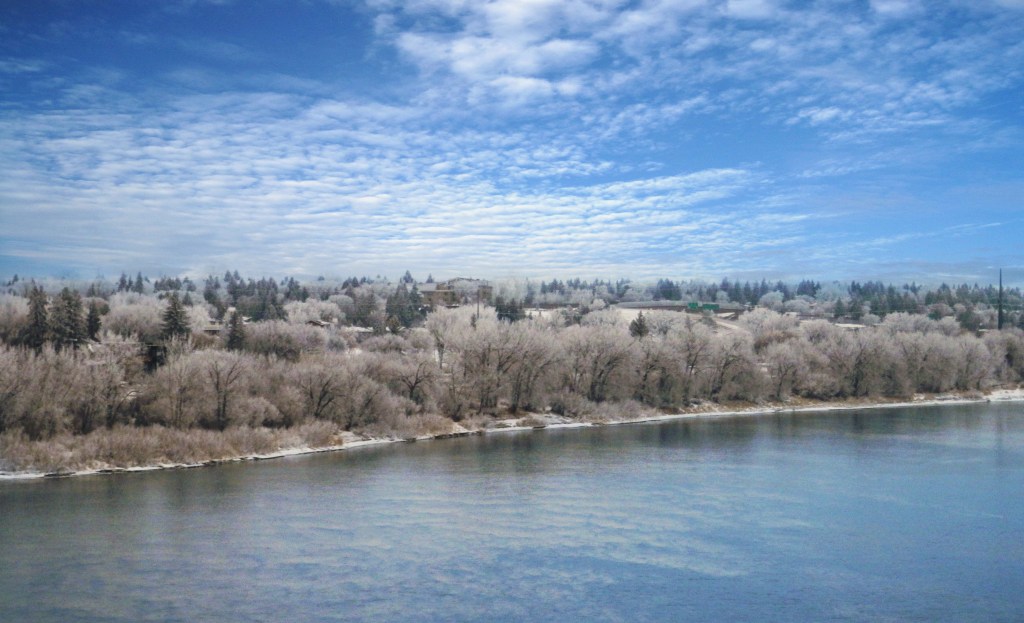
In our own afforestation areas, the West Swale wetlands complex inspires this effort. The wetlands drain into the South Saskatchewan River watershed, which is also known as the South Saskatchewan River Sub-Basin. This watershed is an integral part of the larger Saskatchewan River Basin, formed when the North and South Saskatchewan Rivers converge. Together, these watersheds flow toward the Lake Winnipeg Basin, eventually draining into Lake Winnipeg, located in Manitoba. From there, the Nelson River carries the water northward into the Hudson Bay.
By engaging in the Shoreline Cleanup and actively participating in local environmental conservation, we help prevent harmful pollutants from making their way into these vital waterways. Whether it’s plastic waste or other debris, the cleanup efforts in our community reverberate beyond our local area, contributing to the preservation of ecosystems across the entire Saskatchewan River Basin and the Lake Winnipeg Basin.
The connection between local conservation efforts and global environmental health is clearer than ever. By reducing pollution in the South Saskatchewan River watershed, we help protect not only the immediate health of the wetlands and surrounding habitats but also the water quality and biodiversity that extend to the broader Lake Winnipeg and Hudson Bay ecosystems. Our involvement in this critical cleanup initiative is part of a much larger mission — one that acknowledges the interconnectedness of our local environments with the oceans and ecosystems beyond our borders.
From Saskatoon to Geneva: A Journey of Stewardship
The path that has brought us here began with a shared belief: that the preservation of the Saskatoon afforestation areas is not just about protecting a small patch of land, but about nurturing a deeper understanding of the world around us. The United Nations recognition and the invitation to attend the INC-5.2 are part of a much larger movement — one that seeks to preserve biodiversity, address climate change, and protect the natural heritage we leave behind.
As we prepare to travel to Geneva, we are mindful of the responsibility that lies ahead. This is not just an opportunity to advocate for the preservation of local greenspaces; it is a chance to be part of a global community committed to reducing the proliferation of plastic, restoring ecosystems, and charting a course toward a sustainable future. Our work will not end with this journey. On the contrary, it will continue with renewed vigor, empowered by the knowledge that our contributions have global significance.
We are inspired by the opportunity to collaborate with like-minded organizations and governmental bodies, whose dedication to tackling plastic pollution and other environmental challenges is as unwavering as our own. And as we stand in Geneva — in the very heart of international diplomacy — we will do so with the understanding that every small step counts. The work we do today will reverberate far beyond our borders, impacting lives across the globe.
A Call to Action
This recognition by UNEP, coupled with the invitation to participate in the INC-5.2 meetings, is a powerful reminder of the importance of local action in the context of global environmental challenges. As we prepare for this international event, we invite all those who care about our planet to join us in this journey. From our dedicated volunteers to the citizens of Saskatoon, every action matters. Whether it is through attending the City Nature Challenge, participating in our educational programs, the Clean Green Community Scene Volunteer CleanUps, tackling zero waste or advocating for the protection of greenspaces, each step brings us closer to a healthier, more sustainable world.
The future of our afforestation areas — and indeed the future of our planet — depends on the collective will of communities, governments, and organizations. It depends on each one of us committing to the cause of environmental stewardship, whether through protecting local green spaces, reducing our plastic footprint, or advocating for stronger global policies.
As we stand on the precipice of this exciting new chapter, we look forward to continuing this important work, fueled by the strength of our community, the wisdom of our partners, and the spirit of collaboration that knows no boundaries. Together, we can make a difference — not just for the trees and wildlife of Saskatoon, but for the planet we all call home.
Let us move forward with purpose, with passion, and with the knowledge that the smallest acts of preservation can indeed make a global impact.
This recognition is not just a milestone for our organization; it is a reflection of the strength of our community, the determination of volunteers, and the tireless efforts of countless partners and supporters who have championed the cause of biodiversity conservation. It is also an acknowledgment of the critical role that local environmental grassroots organizations play in global efforts to safeguard our planet’s future.
The UNEP accreditation is an honor that speaks to the depth of our work, but it is also a call to action — a reminder that the health of the planet is an urgent concern for us all. This achievement places us on the world stage, alongside leaders and innovators in environmental policy, where the importance of grassroots movements and local stewardship cannot be overstated. And the timing couldn’t be more significant.
A Global Invitation to Address Plastic Pollution
In August 2025, the Friends of the Saskatoon Afforestation Areas will be invited to attend the second part of the fifth session of the Intergovernmental Negotiating Committee (INC-5.2) on plastic pollution, taking place in Geneva, Switzerland. This is not just an invitation to represent our local community; it is an opportunity to be part of a global conversation about one of the most pressing environmental issues of our time: plastic pollution.
For years, plastic has choked ecosystems, polluted waterways, and disrupted the delicate balance of life on Earth. The world’s oceans are filled with microplastics, the air is tainted with their remnants, and wildlife — both terrestrial and aquatic — continues to suffer as a result. The INC-5.2 meetings are a critical forum where nations and environmental organizations alike come together to shape the future of plastic regulation and innovation.
Being invited to this session is not only an opportunity for our organization to share the lessons we have learned in preserving urban greenspaces and promoting biodiversity, but also a chance to contribute to the larger conversation on environmental stewardship. Our voice, though rooted in the soil of Saskatoon, will now echo through the halls of international diplomacy, where the decisions made will resonate for generations to come.
This invitation is a momentous acknowledgment of the work we have done in the field of environmental conservation. It serves as a reminder that even the smallest of voices — those that rise from the heart of communities — can be heard on a global scale. It underscores the importance of local action in solving global crises, and the undeniable connection between the health of our local environments and the well-being of our planet as a whole.
From Saskatoon to Geneva: A Journey of Stewardship
The path that has brought us here began with a shared belief: that the preservation of the Saskatoon afforestation areas is not just about protecting a small patch of land, but about nurturing a deeper understanding of the world around us. The United Nations recognition and the invitation to attend the INC-5.2 are part of a much larger movement — one that seeks to preserve biodiversity, address climate change, and protect the natural heritage we leave behind.
As we prepare to travel to Geneva, we are mindful of the responsibility that lies ahead. This is not just an opportunity to advocate for the preservation of local greenspaces; it is a chance to be part of a global community committed to reducing the proliferation of plastic, restoring ecosystems, and charting a course toward a sustainable future. Our work will not end with this journey. On the contrary, it will continue with renewed vigor, empowered by the knowledge that our contributions have global significance.
We are inspired by the opportunity to collaborate with like-minded organizations and governmental bodies, whose dedication to tackling plastic pollution and other environmental challenges is as unwavering as our own. And as we stand in Geneva — in the very heart of international diplomacy — we will do so with the understanding that every small step counts. The work we do today will reverberate far beyond our borders, impacting lives across the globe.
A Call to Action
This recognition by UNEP, coupled with the invitation to participate in the INC-5.2 meetings, is a powerful reminder of the importance of local action in the context of global environmental challenges. As we prepare for this international event, we invite all those who care about our planet to join us in this journey. From our dedicated volunteers to the citizens of Saskatoon, every action matters. Whether it is through attending the City Nature Challenge, participating in our educational programs, or advocating for the protection of greenspaces, each step brings us closer to a healthier, more sustainable world.
The future of our afforestation areas — and indeed the future of our planet — depends on the collective will of communities, governments, and organizations. It depends on each one of us committing to the cause of environmental stewardship, whether through protecting local green spaces, reducing our plastic footprint, or advocating for stronger global policies.
As we stand on the precipice of this exciting new chapter, we look forward to continuing this important work, fueled by the strength of our community, the wisdom of our partners, and the spirit of collaboration that knows no boundaries. Together, we can make a difference — not just for the trees and wildlife of Saskatoon, but for the planet we all call home.
Let us move forward with purpose, with passion, and with the knowledge that the smallest acts of preservation can indeed make a global impact.
For directions as to how to drive to “George Genereux” Urban Regional Park
For directions on how to drive to Richard St. Barbe Baker Afforestation Area
For more information:
NEW P4G District Official Community Plan
Richard St. Barbe Baker Afforestation Area is located in Saskatoon, Saskatchewan, Canada north of Cedar Villa Road, within city limits, in the furthest south west area of the city. 52° 06′ 106° 45′
Addresses:
Part SE 23-36-6 – Richard St. Barbe Baker Afforestation Area – 241 Township Road 362-A
Part SE 23-36-6 – SW Off-Leash Recreation Area (Richard St. Barbe Baker Afforestation Area ) – 355 Township Road 362-A
S ½ 22-36-6 Richard St. Barbe Baker Afforestation Area (West of SW OLRA) – 467 Township Road 362-A
NE 21-36-6 “George Genereux” Afforestation Area – 133 Range Road 3063
Wikimapia Map: type in Richard St. Barbe Baker Afforestation Area
Google Maps South West Off Leash area location pin at parking lot
Web page: https://stbarbebaker.wordpress.com
Where is the Richard St. Barbe Baker Afforestation Area? with map
Where is the George Genereux Urban Regional Park (Afforestation Area)?with map
Blogger: FriendsAfforestation
Tumblr friendsafforestation.tumblr.comFacebook Group Page: Users of the George Genereux Urban Regional Park
Facebook: StBarbeBaker Afforestation Area
Facebook for the non profit Charity Friends of the Saskatoon Afforestation Areas Inc. FriendsAreas
Facebook group page : Users of the St Barbe Baker Afforestation Area
Support via Zeffy
Please help protect / enhance your afforestation areas, please contact the Friends of the Saskatoon Afforestation Areas Inc. (e-mail / e-transfers )
Donate your old vehicle, here’s how!
Support using Canada Helps
Support via a recycling bottle donation and Join the plastic-recycle challenge!
United Nations Decade on Ecosystem Restoration
- Use the UN Decade’s Visual Identity
- Make it your own
- Spread the word about the UN Decade
- Let’s Bring Back Forests
- Let’s Green Our Cities
““Be like a tree in pursuit of your cause. Stand firm, grip hard, thrust upward. Bend to the winds of heaven..”
Richard St. Barbe Baker



 Forests of Memory. Forests of Learning. Forests for Life.