Richard St. Barbe Baker Afforestation Area. George Genereux Urban Regional Park. Humboldt Broncos Memorial Forest. Come to Nature. Come to Life. Friends of the Saskatoon Afforestationk Areas Inc. friendsareas.ca
Gratitude Amidst the Wild For the City Nature Challenge Volunteers
There are moments, fleeting, when the earth hums its quiet tune— a bird’s wing cutting through morning light, a leaf trembling on the edge of the breeze. In these moments, we gather— gathering not just images, but pieces of something much larger.
We, the quiet stewards of this land, owe so much to those who walked with us— the volunteers, the naturalists, who wandered through spring’s awakening, gathering the breath of the river, the flutter of wings, the dance of leaves.
You, whose eyes caught the hidden wonders, whose hands took notes on the sky’s shifts, whose hearts beat in time with the wind. From every corner of Saskatoon, you came forward, silent but strong, to witness what others often miss. And in your quiet work, you have taught us again how deeply we belong to this place.
We offer our thanks, soft as the wind that stirs the trees, to SaskTel, SaskPower, and SaskEnergy— your steady support has turned this vision into a living, breathing thing. To the Saskatoon Nature Society, with your deep roots in this land, and “Wild About Saskatoon”— with your love for the wild places that keep this city’s heart beating.
In the quiet corners, the hidden spaces where the world’s wonders bloom— your names echo through the grass, in the rustling trees, the songs of birds, the pulse of life that we, too often, forget to hear.
The City Nature Challenge is not just an event, but a gathering of those who choose to walk with nature, to listen to her whispers, to care for what we can never truly own. From April 25 to 28, 2025, we will walk together once again, side by side with you, as we continue this shared journey.
We thank you, with every step, with every leaf that falls, with every new bud that blooms— for this partnership, this communion, this love for the land.
Richard St. Barbe Baker Afforestation Area is located in Saskatoon, Saskatchewan, Canada north of Cedar Villa Road, within city limits, in the furthest south west area of the city. 52° 06′ 106° 45′
Addresses:
Part SE 23-36-6 – Richard St. Barbe Baker Afforestation Area – 241 Township Road 362-A
Part SE 23-36-6 – SW Off-Leash Recreation Area (Richard St. Barbe Baker Afforestation Area ) – 355 Township Road 362-A
S ½ 22-36-6 Richard St. Barbe Baker Afforestation Area (West of SW OLRA) – 467 Township Road 362-A
NE 21-36-6 “George Genereux” Afforestation Area – 133 Range Road 3063
Wikimapia Map: type in Richard St. Barbe Baker Afforestation Area
Google Maps South West Off Leash area location pin at parking lot
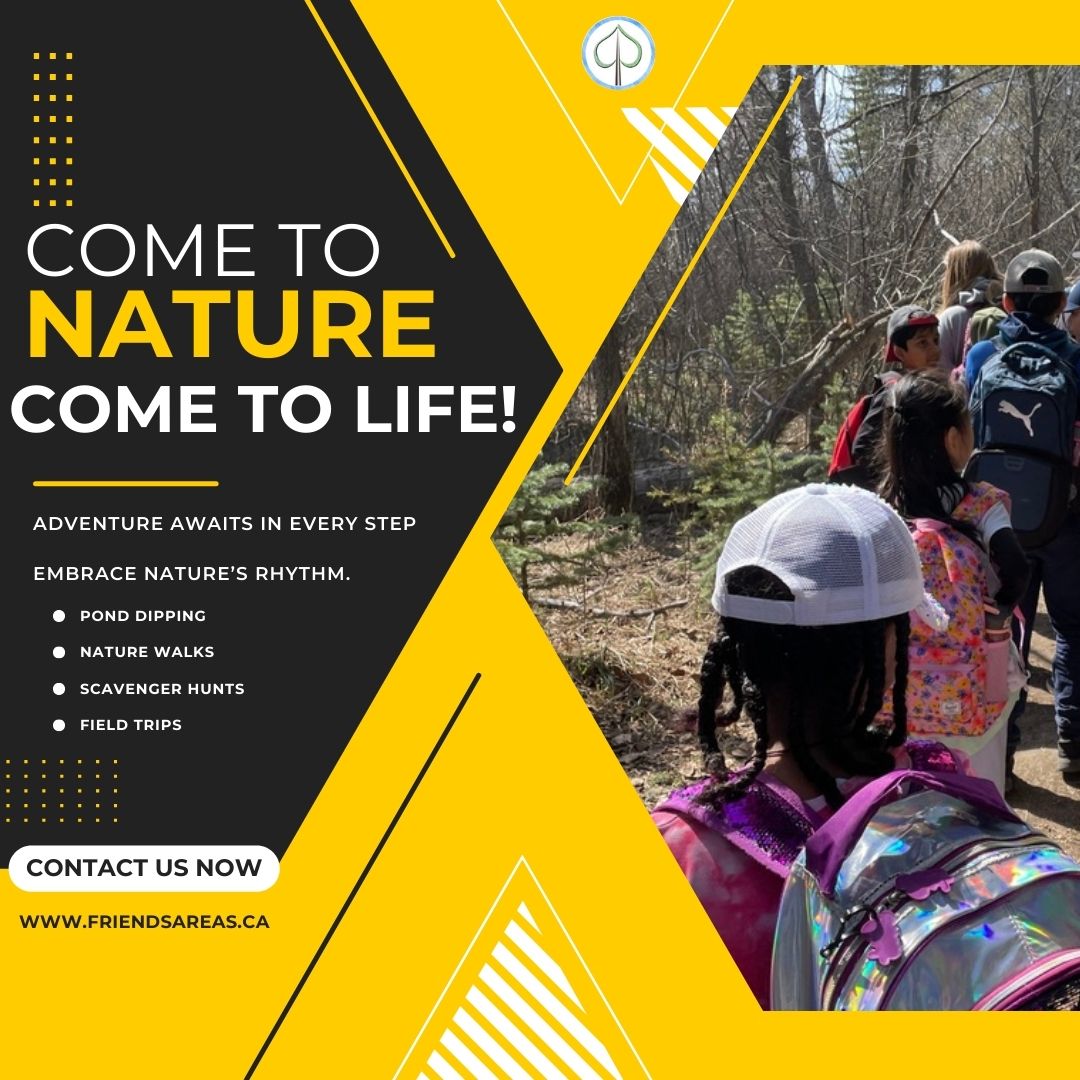
Join us at Friends of the Saskatoon Afforestation Areas as we embark on our “Come to Nature, Come to Life” capacity-building initiative!
🌳🌍 Our goal is to enhance community engagement through immersive nature experiences like hiking, wildlife observation, and environmental education. With your support, we’ll expand our reach and impact, nurturing a deeper connection with our natural world.
🦋🌲 Together, we can inspire a love for nature and cultivate environmental stewardship. Stay tuned for updates on how you can get involved and make a difference! 🌟💚 #NatureLovers #EnvironmentalEducation #CommunityEngagement #OutdoorAdventure
At Friends of the Saskatoon Afforestation Areas we enhance community engagement through our “Come to Nature, Come to Life” events. Events to connect schools, classrooms, families and youth groups with nature through activities such as nature hikes, pond-dipping, bird watching, and exploration with binoculars.
However, to expand and sustain these initiatives, we need to strengthen our capacity in educational resources and outdoor equipment.
There is no doubt about it, the Community Challenge capacity-building prize of $750 would significantly support us in acquiring essential supplies like Little John rentals, bus rentals, binoculars, field guides, and educational materials.
This investment would enrich our programs, fostering deeper connections with nature and inspiring environmental stewardship among active participants.
Join us in supporting active lifestyle learning experiences in nature! Friendsareas.ca
Richard St. Barbe Baker Afforestation Area is located in Saskatoon, Saskatchewan, Canada north of Cedar Villa Road, within city limits, in the furthest south west area of the city. 52° 06′ 106° 45′
Addresses:
Part SE 23-36-6 – Afforestation Area – 241 Township Road 362-A
Part SE 23-36-6 – SW Off-Leash Recreation Area (Richard St. Barbe Baker Afforestation Area ) – 355 Township Road 362-A
S ½ 22-36-6 Richard St. Barbe Baker Afforestation Area (West of SW OLRA) – 467 Township Road 362-A
NE 21-36-6 “George Genereux” Afforestation Area – 133 Range Road 3063
Wikimapia Map: type in Richard St. Barbe Baker Afforestation Area
Google Maps South West Off Leash area location pin at parking lot
As we turn on our taps without a second thought, the life force flowing through the South Saskatchewan River remains an unsung hero, sustaining the existence of 2.2 million people, including us here in Saskatoon. But the river, a symbol of vitality, is facing an uncertain future. Join Wild About Saskatoon for a captivating online event, “We All Drink From the Same River,” on Thursday, January 25, from 7-8 pm, featuring Elder and Water Walker Marjorie Beaucage and river expert Dr. Tim Jardine.
The South Saskatchewan River begins its journey in the mountainous realms, carving through the drylands of two prairie provinces to bestow life-giving water upon everyone and everything in its path. It’s not just a physical presence; it’s a pulsating connection, coursing through our veins with each drop of water we consume. The river’s health is intrinsically linked to our own, and it’s time to recognize its significance.
In the face of challenging times, where last year’s mountain sources were parched and this year’s snowpack in Banff is only 40% of average, the urgency to safeguard our river has never been more pressing. The event aims to shed light on the intricate web of demands tugging at the South Saskatchewan River and what steps we need to take to preserve this vital lifeline.
Meet the Voices Behind the Cause:
Marjorie Beaucage: A Two-Spirit Métis Auntie, filmmaker, art-ivist, and educator, Marjorie’s roots in Vassar, Manitoba, have grown into a life dedicated to creating social change. As a land protector and Water Walker, she stands as a beacon for right relations and possibilities. Marjorie’s extensive experience as the Elder for OUT Saskatoon and the Elder-In-Residence for the University of Saskatchewan Student Union has uniquely positioned her to guide us through the cultural and spiritual dimensions of our connection to the river.
Dr. Tim Jardine: Associate Professor in the Toxicology Centre and the School of Environment and Sustainability at the University of Saskatchewan, Dr. Tim Jardine is a dedicated river ecologist. His expertise extends across the globe, studying the ecology of rivers in Australia and Brazil, while leading collaborative projects in Western Canada’s inland river deltas. Dr. Jardine’s insights will provide a scientific perspective on the challenges facing the South Saskatchewan River.
How Can You Contribute?
Tune in to the live event on YouTube on Thursday, January 25, from 7-8 pm, to hear Marjorie Beaucage and Dr. Tim Jardine discuss the state of the South Saskatchewan River and the actions we can collectively take to ensure its well-being. This free, online gathering is not just an informational session; it’s a call to action for every individual who understands that the fate of the river is intricately tied to our own.
The South Saskatchewan River is not just a resource; it’s a lifeline. Let’s come together to ensure that we all continue to drink from the same river for generations to come.
Of the earth’s thirty billion acres, already nine billion acres are desert. And if a man loses a third of his skin, he dies; plastic surgeons say “He’s had it.” And if a tree loses one-third of its bark, it dies. And if the earth loses one-third of its green mantle of trees, it will die. The water table will sink beyond recall and life on this planet will become impossible. It’s being skinned alive today. . .
For our challenge today, we would like you to email to us at friendsafforestation@gmail.com what you think would belong in a list for the Rights of Rivers! March 14 is International Day of Action for Rivers, think of how you, personally can take action for the International Day of Action for Rivers! The theme for 2021 is celebrating the Rights of Rivers. We have a spectacular challenge for our Winter Staycation for you!
March 14 is a marvellous Sunday! And it is a day to think about the South Saskatchewan watershed! What is the South Saskatchewan watershed you say?
South Saskatchewan River Basin Shannon_1 CC4.0
This above picture shows the river basin, the catchment area, or the drainage basin for the South Saskatchewan River. This is a contemporary image of the south Saskatchewan River Basin. The image which follows shows the formation of the West Swale from the Yorath Island Glacial Spillway. The hydrological surface drainage patterns shown in the topological map above are a stark difference to the glacial spillway below which shows that the waters in the Glacial North Saskatchewan combined with Glacial Rice Lake. When the waters from the retreating glacier reached a great volume, the shoreline of Glacial Rice Lake could not contain the water anymore. and there was a sudden surge of spillwaters through the Yorath Island Channel and the Moon Lake Channel cascading in an eruption across the Cory Plains until the waters were stopped in the Glacial South Saskatchewan Lake. Yorath Island was formed from the deposited till and rubble of this Pleistocene Glacial event. Today we create river drainage maps for the North and South Saskatchewan Rivers. The glacial spillway with its huge surge of water created a momentous and catastrophic joining between the two basin areas. Because of the land topography, there are remains of the Yorath Island Channel and the Moon Lake Channel seen today on Google Satellite maps, and they show evidence of the rich and lush riparian waterway which once existed, and which is still connected through underground springs and wetlands.
Yorath Island Channel, Moon Lake Channel, Sutherland Channel and Cory Plain Channel Pleistocene Era South Sk River Valley 2588000 to 117000 years ago Adapted from Larry Edwin Hodges
This was a contributing factor to the formation of the South Saskatchewan River as we know it today. As you walk in Richard St. Barbe Baker Afforestation area imagine the Pleistocene ice age mammals startled by the glacial spillway. Imagine this same ice age mammals creating new trails along the two new rivers in the Moon Lake Channel and the Yorath Island Spillway. Wonder as they wandered to the water’s edge for a drink of water. Where would the Palaeo-Indian fit into this scenario? Would they similarly follow the animal trails? Would they hunt the ancient ice age mammoths. Would the Palaeo-Indian find the two new rivers in the Moon Lake Channel and the Yorath Island Spillway handy to help them forage, and find food to eat? There were major encampments found where these channels met the Glacial South Saskatchewan Lake. As you walk in the Richard St. Barbe Baker Afforestation Area, imagine living during the time of ice age mammoths.
Then, appreciate the semi-wilderness habitat we have in Saskatoon today. Along with the waterfowl, do we have other animals using the West Swale Wetlands named after B.T. Chappell as Chappell Marsh? Have you spotted a muskrat or any ducks, geese, herons, or terns? The West Swale is a geological treasure in the City of Saskatoon.
During this day, International Day of Action for Rivers, think of how you, personally can take action for the International Day of Action for Rivers! The theme for 2021 is celebrating the Rights of Rivers.
Today think of geology, and geography, and the history of ancient rivers which formed today’s rivers which we appreciated so much.
Richard St. Barbe Baker Afforestation Area is located in Saskatoon, Saskatchewan, Canada north of Cedar Villa Road, within city limits, in the furthest south west area of the city. 52° 06′ 106° 45′
Addresses:
Part SE 23-36-6 – Afforestation Area – 241 Township Road 362-A
Part SE 23-36-6 – SW Off-Leash Recreation Area (Richard St. Barbe Baker Afforestation Area ) – 355 Township Road 362-A
S ½ 22-36-6 Richard St. Barbe Baker Afforestation Area (West of SW OLRA) – 467 Township Road 362-A
NE 21-36-6 “George Genereux” Afforestation Area – 133 Range Road 3063
Wikimapia Map: type in Richard St. Barbe Baker Afforestation Area
Google Maps South West Off Leash area location pin at parking lot
“I thought how lovely and how strange a river is. A river is a river, always there, and yet the water flowing through it is never the same water and is never still. It’s always changing and is always on the move. And over time the river itself changes too.
Aiden Chambers
Life is like the river, sometimes it sweeps you gently along and sometimes the rapids come out of nowhere.
The Aug. 15, 1933 newspaper covered the story; Three city children drown in river. “Young girls die trying to save 6-year old boy. Janet Derkson, 14, Rita Hope, 10 and brother Jimmy, lose lives at Sutherland Beach; Raymond Gracewood attempts rescue.” The three children three children from two families were residents who lived in the old University Heights area (south of the CPR, in what is now Innovation Place) according to Jeff O’Brien at City archives.
The children were very used to the route, having walked on the shore trails with the father of Reta and Jimmy Hope quite often. At this time, the youth went out on their own, and went into the river water at a different location. The youngest, Jimmy was caught up in a pothole from which he could not get out. His sister, Reta went to his rescue, and was also trapped. Hearing their calls, Raymond Gracewood swam out and grabbed hold of both children. Jimmy and Reta spied Janet Derkson, also coming to help them out, and pulled away from Raymond’s grasp to reach out to Janet. Though Janet tried her best to swim out to them, she sank. This happened during the summer months, Janet Derkson was to start grade 6 that fall, Reta Hope to begin grade 5, her little brother was to start school in September.
Though all the children were originally buried at Woodlawn Cemetery in an unmarked pauper’s grave. There was a huge public outcry, upon which the city donated a regular plot and the Rotary Club purchased a headstone. The family held a vigil a few years ago, and re-dedicated the memorial.
In June of 2001, another tragedy took the life of a six year old boy who fell into the cold spring waters off the Victoria Park river dock. June 2016, saw two eight year old boys narrowly escape tragedy. The mother of one of the lads, jumped in to his rescue, and downstream, a fisherman, swam out to the rescue of the other carried away by the river.
Traveling to this year, the Saskatoon Services Fire Department were called out 13 times for rescues at the South Saskatchewan River, impressing the need to be careful around the river in both winter and summer seasons.
Though the fatalities mentioned here were children, the majority of drownings in Saskatchewan were aged 20-24 and those between 70-74. 13% of our young adult population aged 20-24 have fallen to tragic ends drowning, which works out to about 3.5 young adults out of 100,000. Water bodies such as lakes, rivers and streams take the largest numbers of victims. Young children loose their lives most commonly in pools, and bathtubs. Though lives are lost all year around, most drownings occur June July and August partaking in swimming, fishing, water activities, boating or snowmobiling.
Bylaw No. 4433 is a “bylaw of The City of Saskatoon to prohibit swimming in the South Saskatchewan River and to require water skiers to wear life jackets.” The South Saskatchewan River is subject to a strong current, fluctuating water levels, and shifting sand bars. Though there is no bylaw against wading the shallow waters of the shoreline, it is very important to be aware the river is cut by deep, fast flowing channels. These channels can readily be seen only from the high river banks with a clear sight to the river waters. Therefore, wading in the river and getting into deep waters, the same dangers will be present as for swimmers. Sandbars, provide a false sense of security, as the swiftly flowing waters can create unstable shoreline edges of the sandbar creating risk.
An ambulance paramedic stated that, “The banks become very unstable when we have lots of water moving through. All you need is for that undercurrent to grab hold of the bank, and …down your’e going to go, into the river…and that may not be a very pleasant situation for anybody.”
Lifeline states that “it is a misconception that you’re safe if you’re larger than a body of water. You can drown in just a couple of inches of water.” “Most drownings are preventable.”
Whenever you, your family, your pet are taking in the water, take care, and be cautious of the South Saskatchewan River. Saskatchewan, the provincial title honours the Cree word kisiskâciwan, describing the “fast-flowing” Saskatchewan River or the “Swift Current” of the river. Around wetlands, or any depth of water, be cautious.
“When the trees go, the rain goes, the climate deteriorates, the water table sinks, the land erodes and desert conditions soon appear”.~Richard St. Barbe Baker
They recognize that while knowledge about nature is vital; passion is the long-distance fuel for the struggle to save what is left of our natural heritage and ~ through an emerging green urbanism ~ to reconstitute lost land and water. Passion does not arrive on videotape or on a CD; passion is personal. Passion is lifted from the earth itself by the muddy hands of the young; it travels along grass-stained sleeves to the heart. If we are going to save environmentalism and the environment, we must also save an endangered indicator species: the child in nature. Louv. 2005. p. 158
Please help protect / enhance /commemorate your afforestation areas, please contact the Friends of the Saskatoon Afforestation Areas Inc. (e-mail)
Support the afforestation areas with your donation or membership ($20.00/year). Please donate by paypal using the e-mail friendsafforestation AT gmail.com, or by using e-transfers Please and thank you! Your donation and membership is greatly appreciated. Members e-mail your contact information to be kept up to date!
The trees and vegetation, which cover the land surface of the Earth and delight the eye, are performing vital tasks incumbent upon the vegetable world in nature. Its presence is essential to earth as an organism. It is the first condition of all life; it it the ‘skin’ of the earth, for without it there can be no water, and therefore, no life.~Richard St. Barbe Baker
It is not a farce.…”To be whole. To be complete. Wildness reminds us what it means to be human, what we are connected to rather than what we are separate from.” ~Terry Tempest Williams
Saskatoon has a a Strategic plan which embraces the decade 2013-2023. Within the plan are seven strategic goals to accomplish the Saskatoon Community Vision. The vision identified these seven goals from community engagement, Saskatoon Speaks.
“There are no limits to the majestic future which lies before the mighty expanse of Canada with its virile, aspiring, cultured, and generous-hearted people.
– Sir Winston Churchill”
The Strategic goal of continuous improvement is proactive, innovative, and forward thinking.
The Strategic goal of asset and financial sustainability brings forward best practices, balances debt, investment, funding plans and capital improvements when managing City goals and guidelines.
The Strategic goal, quality of life, focuses on the theme of social well being, recreation, parks and community culture. Saskatoon’s neighbourhoods and communities thrive with access to natural beauty, parks, trails, options, and an active, vibrant future. Improving quality of life examines active opportunities and services for a winter city. Saskatoon’s community spirit embraces creative ways to include all citizens, and everyone is enriched with the feeling of belonging to this rich and dynamic city. Together, with open conversation, and innovative collaboration bridges are built, focusing on services important to the community and its citizens. With pro-active quality of life, the community forges ahead together enhancing future opportunities. This strategy, quality of life, reduces and prevents crime across the city while increasing community building and meeting community needs.
Environmental leadership marks another Strategic goal. The urban forest, green open space, connect with the South Saskatchewan River resulting in a healthy and strong ecosystem supporting a lush and vigorous bio-diversity of flora and fauna in the aspen parkland biome. The City of Saskatoon respect for the environment resonates and reverberates in harmony with nature – the woodlands, wetlands and grasslands.
The Strategic goal of sustainable growth, embraces both the city centre, and shaping the city growth. This plan examines the process of updating, and establishing infill corridors, and redefining existing and new neighbourhood development.
The Strategic goal of moving around examines the efficient, accessible and comprehensive flow of people and goods around Saskatoon.
Economic Diversity and Prosperity, focusing on the City’s economy is also one of the seven Strategic goals focusing on building diverse communities with positive and successful options and thriving outcomes for entrepreneurs, unique industries, and business areas.
How will the population of Saskatoon spike over the next years? The city of Saskatoon is founded on a solid base of prosperity with a rich quality of life, and an amazing environment. The citizens are thus doubly enriched that today is sustainable with wholesome opportunities, and that the city of Saskatoon has a dynamic vision and plan for the future.
“The present is full of opportunity. Never before in the history of the planet has mankind been given the privileges and opportunities that are at his disposal today. A great light has been raised and is penetrating the darkness of the world, but alas,
too many with dust blinded eyes have yet to catch the vision. Some of us have. That is our privilege and our responsibility. ” ~Richard St. Barbe Baker
Please help protect / enhance /commemorate your afforestation areas, please contact the Friends of the Saskatoon Afforestation Areas Inc. (e-mail)
Support the afforestation areas with your donation or membership ($20.00/year). Please donate by paypal using the e-mail friendsafforestation AT gmail.com, or by using e-transfers Please and thank you! Your donation and membership is greatly appreciated. Members e-mail your contact information to be kept up to date!
The trees and vegetation, which cover the land surface of the Earth and delight the eye, are performing vital tasks incumbent upon the vegetable world in nature. Its presence is essential to earth as an organism. It is the first condition of all life; it it the ‘skin’ of the earth, for without it there can be no water, and therefore, no life.~Richard St. Barbe Baker
It is not a farce.…”To be whole. To be complete. Wildness reminds us what it means to be human, what we are connected to rather than what we are separate from.” ~Terry Tempest Williams
‘I will have nothing to do with this destruction of life, I will play no part in this devastation of the land, I am determined to live and work for peaceful construction for I am morally responsible for the world of today and the generations of tomorrow.’~Richard St. Barbe Baker
What is the price tag which the Saskatchewan Party places on the last
Monarch Butterfly (Danaus plexippus) Photo credit Paul Stein
“We believe in the innate intelligence of… the country men and the workers, that they should be allowed to manage their own affairs. We believe they will put into their work not merely their hands and their feet, but their brains and their hearts. Each can experience the transcendental joy of creation, and can earn immortality and bestow immortality.~Richard St. Barbe Baker”
At a time when there are mandates to protect threatened species, it is definitely a time that our ecosystems and habitats deserve more funding and not less funding.
In the March 30, 2017 edition of the Saskatoon StarPhoenix newspaper, Phil Tank, writes that, “The Saskatchewan Party government introduced changes to the legislation this week that eliminate the requirement for set annual funding for the MVA [Meewasin Valley Authority] from the provincial government and the University of Saskatchewan.” Faced with less funding in 2016, MVA had no choice but to close its Interpretive Centre on July 1, 2016. This year, the provincial budget revealed that the MVA funding would sit at 500,000 or about half the annual amount. This $409,000 funding cut is an irony as among the land which are expected to be preserved, conserved, and maintained by the MVA are Crown lands. The question arises will the Saskatchewan Provincial parks ministry then step in to maintain their own lands within the MVA conservation zone? The Provincial Parks ministry owns about 2,610 acres of the 6,400 acres which MVA manages.
More funds, NOT LESS should be dedicated to saving the COSEWIC species of special concern: Monarch Butterfly, Common Nighthawk, Loggerhead Shrike, Barn Swallow, Mountain Bluebird, Horned Grebe, Northern Leopard Frog, Short-eared Owl, Baird’s Sparrow, Yellow Rail, Olive-sided Flycatcher, and Rusty Blackbird are all species within the MVA conservation zone along the South Saskatchewan River. These are just a very few of the protected species in danger of elimination in the South Saskatchewan River valley as determined by the Committee on the Status of Endangered Wildlife in Canada .
Our parks, South Saskatchewan rivershores, trails, historic sites all provide a critical and much needed wildlife habitat, ensure clean drinking water for residents of Saskatoon and all communities down stream, and offer countless and innumerable recreational activities. Visitors to Saskatoon have enjoyed visiting this river city with opportunities to hike, bicycle, or just take in the awe-inspiring beauty of numerous landmarks and breathtaking landscapes enhanced by the MVA conservation efforts since 1978. Reducing funding as the MVA comes up on their 40th anniversary would have a profound and tragic impact on the health and well-being of wildlife, landscapes and people. Any perceived short term savings would ultimately end up as gigantic economic costs in the long run. Without funding, the amazing riverbank scenes, and the wildlife habitat corridor would disintegrate. Without funding endangered species are pushed towards extinction. Without funding there would be detrimental effects on the river, waterways, drinking water, and population health. Without funding there would be a devastating effect on the civic economy. Multi-use pathways would disappear. Without adequate funding, marshlands dry up, the world’s most endangered eco-system the temperate grasslands would vanish, and rivers, streams, and swales would get destroyed.
It may be thought of as an easy win for the Saskatchewan Party to implement cuts in conservation, however, such cuts could result in profound and maybe even irreversible consequences for Saskatchewan’s wildlife, landscapes and population. Do not let our future generations mitigate nature deficit disorder and be reduced to exploring and searching out nature in parking lots and fracking wells. Wouldn’t it be much better for our grandchildren, and great grandchildren to get a healthy dose of Vitamin N from our river valleys, swales, forests and native grasslands?
Our healthy river valley and parks create many millions in tourist and economic revenue every year, and support a vibrant river city economy of thousands of jobs.
To maintain wildlife populations, recover endangered species, and restore damaged eco-systems all require financial resources. With climate change, these needs and costs are rising exponentially.
As Saskatoon’s projected growth is set to hit 250,000 by 2025 and 380,000 by 2035, the provincial important wildlife habitat will rest within the MVA conservation zone as urban sprawl takes up valuable land which sensitive species rely upon. The plight of wildlife depends on funding for wildlife conservation and natural resource protection.
It is fantastic that ranchers and industry are monitored under The Wildlife Habitat Protection Act (WHPA) and that conservation practices are being adopted in rural areas, however the MVA educates the public on conservation practices in urban areas.
Please write a letter to your elected officials urging them to provide the resources and funding needed for engagement and education services, footpaths, biodiversity conservation and sustainable development. What is the cost to balance a $1.2 billion deficit? Actions have consequences, will it be the last of the Monarch Butterfly, or the extinction of the Horned Grebe? Let us hope not for goodness sakes, the Monarch Butterfly and Horned Grebe are invaluable, and should not be set at any price! In this modern technological era of progress and advancement don’t abandon the earth around us. Get out from behind your computer, set down your phone, go outside and pay attention to nature. If you wouldn’t mind, to everyone interested in paying attention to nature, write a letter to these following elected officials, speak out for the water, the land, the forests, and the myriad of creatures you see before its too late, please, and thank you. Also, please do check out the Meewasin Green Circle.
“Man has lost his way in the jungle of chemistry and engineering and will have to retrace his steps, however painful this may be. In doing so, perhaps he may be able to recapture the rhythm of life and the love of the simple things of life, which will be an ever-unfolding joy to him.” ~Richard St. Barbe Baker
BIBLIOGRAPHY Adopt a rancher. Saskatchewan Prairie Conservation Action Plan
Crown Land Ecological Assessment Tool CLEAT is a computer program which puts a price tag on nature which weighs the cost of the Northern Leopard Frog against potential oil and gas development, and agricultural capability, and economic growth. What is the price tag which the Saskatchewan Party places on the last Monarch Butterfly or Baird’s Sparrow? That is what I would like to know. Has the Saskatchewan Party hereby in essence revoked the Monarch Butterfly’s passport entitling them to travel under government protection to and from foreign countries during their migration time?
“Almost everywhere in the world man has been disregarding the Divine Law and the Laws of Nature, to his own undoing. In his pride, he has rampaged over the stage of the earth, forgetting that he is only one of the players put there to play his part in harmony and oneness with all living things.~Richard St. Barbe Baker”
“This generation may either be the last to exist in any semblance of a civilised world or that it will be the first to have the vision, the bearing and the greatness to say, ‘I will have nothing to do with this destruction of life, I will play no part in this devastation of the land, I am determined to live and work for peaceful construction for I am morally responsible for the world of today and the generations of tomorrow.’”~Richard St. Barbe Baker
Is this the fate of the Saskatchewan River Valley, the marshlands, the temperate grasslands, the river bank? Without the MVA and their annual spring clean up, what will the water supply look like if this tragedy is allowed to take place? Is this what a river city should become? Please help prevent this devastation.
At the Richard St. Barbe Baker Afforestation Area, Saskatoon, SK One of the many piles of Construction Discards and Roofing Shignles Before the 2016 Community Clean Up
At the Richard St. Barbe Baker Afforestation Area, Saskatoon, SK One of the many piles of Construction Discards and Appliances Before the 2016 Community Clean Up
At the Richard St. Barbe Baker Afforestation Area, Saskatoon, SK Construction Discards and Hazardous Waste. Before the 2016 Community Clean Up
At the Richard St. Barbe Baker Afforestation Area, Saskatoon, SK One of the many piles of roofing shingles Before the 2016 Community Clean Up
Please help protect / enhance /commemorate your afforestation areas, please contact the Friends of the Saskatoon Afforestation Areas Inc. (e-mail)
Support the afforestation areas with your donation or membership ($20.00/year). Please donate by paypal using the e-mail friendsafforestation AT gmail.com, or by using e-transfers Please and thank you! Your donation and membership is greatly appreciated. Members e-mail your contact information to be kept up to date!
The trees and vegetation, which cover the land surface of the Earth and delight the eye, are performing vital tasks incumbent upon the vegetable world in nature. Its presence is essential to earth as an organism. It is the first condition of all life; it it the ‘skin’ of the earth, for without it there can be no water, and therefore, no life.~Richard St. Barbe Baker
It is not a farce.…”To be whole. To be complete. Wildness reminds us what it means to be human, what we are connected to rather than what we are separate from.” ~Terry Tempest Williams







 Forests of Memory. Forests of Learning. Forests for Life.