A Seed of Change

🏆 RCE Saskatchewan’s 18th Annual Awards for Achievement in Education for Sustainable Development
https://saskrce.ca/recognition-event/

🌾 Ecological Grassland Restoration at RSBBAA – Chelsea Nyarko
From Master’s Thesis to Digital Movement: Reshaping the RSBBAA Through Global Education

The Friends of the Saskatoon Afforestation Areas Inc. is proud to celebrate the recognition of Ecological Grassland Restoration at RSBBAA, a transformative sustainability initiative led by Chelsea Nyarko and honoured through RCE Saskatchewan’s 18th Annual Awards for Achievement in Education for Sustainable Development.

This award recognizes a remarkable journey that began as a Master’s research project at the University of Saskatchewan’s School of Environment and Sustainability and evolved into a global educational movement connecting ecological restoration, citizen science, and the United Nations Sustainable Development Goals.

At the heart of the project lies the Richard St. Barbe Baker Afforestation Area (RSBBAA), a 133-hectare urban forest where approximately 33.5 hectares of grasslands were experiencing ecological decline. Invasive Smooth Brome, soil compaction, and habitat fragmentation had reduced biodiversity across utility corridors beneath SaskPower transmission lines.

Using satellite imagery, ecological assessment tools, and evidence-based restoration planning, Chelsea Nyarko developed a vision to transform these degraded grasslands into vibrant native prairie habitat—a “Pollinator Paradise” inspired by successful urban restoration projects such as Toronto’s Meadoway.

🌱 Turning Research into Action

What makes this project extraordinary is its ability to bridge academic research and public engagement.

Through collaboration with the Friends of the Saskatoon Afforestation Areas Inc., scientific findings were transformed into educational resources that make restoration science accessible to everyone—from students and educators to hikers, dog walkers, community volunteers, and nature enthusiasts around the world.

The project embraced three forms of learning:

🎓 Formal Education – University-based research and sustainability studies

🌿 Non-Formal Education – Community stewardship, guided tours, BioBlitzes, and public outreach

📱 Informal Education – Interactive YouTube videos, social media campaigns, quizzes, and digital learning experiences

This innovative “Bio-Coder” approach transformed ecological restoration into a global conversation.

🌾 Building a Digital Living Laboratory

By 2026, the project had generated a growing library of educational resources, including:

🎥 Grasslands Restoration Quiz: Protect, Restore, Thrive!
🎥 The Urban Grassland Restoration Quiz: Prairie Wisdom
🎥 Where Urban Life Meets Living Grasslands
🎥 Prairie Power: How Grasslands Help Our World
🎥 Prairie Birds Brain Challenge

As well as educational articles exploring:

🌼 Native prairie restoration
🌼 Pollinator conservation
🌼 Invasive species management
🌼 Rare species protection
🌼 Citizen science initiatives
🌼 Ecological stewardship

Participants learned how native species such as Blue Grama Grass, June Grass, and prairie wildflowers support pollinators, improve soil health, and build climate resilience.

🌎 Advancing the United Nations Sustainable Development Goals

The project demonstrates how local conservation action can create global impact by supporting:

✅ SDG 4 – Quality Education
✅ SDG 11 – Sustainable Cities and Communities
✅ SDG 13 – Climate Action
✅ SDG 15 – Life on Land
✅ SDG 17 – Partnerships for the Goals

Through education, restoration, collaboration, and community engagement, the project connects prairie grassland conservation with international sustainability objectives.

🌾 A Living Legacy

The restoration framework developed through Chelsea Nyarko’s research now serves as a foundation for ongoing ecological monitoring, guided tours, BioBlitzes, citizen science projects, and future restoration activities within the Richard St. Barbe Baker Afforestation Area.

Together, we are transforming prairie wisdom into lasting action.

🌾 Friends of the Saskatoon Afforestation Areas Inc.
🌾 Richard St. Barbe Baker Afforestation Area
🌾 Ecological Grassland Restoration Project

From Master’s Thesis to Digital Movement

Award Ceremony Grasslands and Slide Show

#RCESaskatchewan #EducationForSustainableDevelopment #ChelseaNyarko #GrasslandRestoration #PrairieRestoration #PollinatorParadise #BiodiversityConservation #CitizenScience #ClimateAction #SustainableCities #LifeOnLand #EnvironmentalEducation #UniversityOfSaskatchewan #PrairieGrasslands #NativePlants #PollinatorConservation #EcologicalRestoration #UrbanNature #Saskatoon #RichardStBarbeBaker.

Addresses:

Part SE 23-36-6 – Richard St. Barbe Baker Afforestation Area – 241 Township Road 362-A

Part SE 23-36-6 – SW Off-Leash Recreation Area (Richard St. Barbe Baker Afforestation Area ) – 355 Township Road 362-A

S ½ 22-36-6 Richard St. Barbe Baker Afforestation Area (West of SW OLRA) – 467 Township Road 362-A

NE 21-36-6 “George Genereux” Afforestation Area – 133 Range Road 3063

Wikimapia Map: type in Richard St. Barbe Baker Afforestation Area or

Google Maps South West Off Leash area location pin at parking lot

Web page: https://stbarbebaker.wordpress.com

Where is the Richard St. Barbe Baker Afforestation Area? with map

Where is the George Genereux Urban Regional Park (Afforestation Area)?with map

Pinterest richardstbarbeb

Blogger: FriendsAfforestation

Tumblr friendsafforestation.tumblr.comFacebook Group Page: Users of the George Genereux Urban Regional Park

Facebook: StBarbeBaker Afforestation Area

Facebook for the non profit Charity Friends of the Saskatoon Afforestation Areas Inc. FriendsAreas

Facebook group page : Users of the St Barbe Baker Afforestation Area

Facebook: South West OLRA

Reddit: FriendsAfforestation

BlueSky Social

Mix: friendsareas

YouTube

Support via Zeffy

Please help protect / enhance your afforestation areas, please contact the Friends of the Saskatoon Afforestation Areas Inc. (e-mail / e-transfers )

Donate your old vehicle, here’s how!  

Support using Canada Helps

Support via a recycling bottle donation and Join the plastic-recycle challenge!

United Nations Decade on Ecosystem Restoration

““Be like a tree in pursuit of your cause. Stand firm, grip hard, thrust upward. Bend to the winds of heaven..”

Seeking an Arborist for Stewardship

A Call for Care on the Urban Forest Edge: Seeking an Arborist for Stewardship and Safety at RSBBAA

On May 11, 2026, smoke was observed in the Richard St. Barbe Baker Afforestation Area (RSBBAA) on the west side of Saskatoon. The source was a constructed bush shelter—sometimes referred to as a debris shelter or survival-style tipi—built from stacked logs and branches within the forest understory.

Thanks to quick observation and response, the situation was brought under control before it escalated into a larger fire event. However, the incident has prompted an important conversation about forest safety, risk reduction, and long-term stewardship in one of Saskatoon’s most valued urban green spaces.

A Saskatoon Fire Department member who attended the broader context of the incident has suggested that dismantling these bush shelters would be a proactive measure to reduce future fire risk and prevent potential hazards associated with unstable log structures in public forested greenspace areas.

Understanding the Concern

While these structures are not associated with homelessness or encampment activity, they do present several concerns in a managed urban forest setting:

  • Fire risk: Dry woody material arranged in dense structures can ignite easily during spring and summer dry conditions, especially under wind exposure.
  • Structural instability: Logs may shift or collapse unpredictably, posing a safety risk to anyone inside or nearby.
  • Forest health concerns: Some structures, particularly those constructed using dead elm wood, may contribute to the spread of Dutch Elm Disease if improperly handled or relocated.
  • Public safety: Unmarked or informal structures can create hidden hazards in heavily used recreational areas.

It is also important to note that Meewasin Valley Authority posted today on social media that conditions are extremely dry and that the public should use extra caution in natural areas. This reinforces the urgency of fire awareness and careful stewardship across Saskatoon’s river valley and urban forest systems.

The RSBBAA contains two larger, more robust shelters on the west side, and a smaller one, and two smaller shelters on the east side. An additional structure is located in George Genereux Urban Regional Park. The smaller shelters may be suitable for removal by organized volunteer groups, while the larger western structures require more careful assessment and handling.

A Need for Skilled Stewardship

In light of these considerations, there is now a call our from the Saskatoon Fire Department and the Encampment team at the City for removal of these “bush shelter tipis.” The two larger ones may indeed need a certified arborist—or a qualified forest professional with experience in urban forestry, tree safety, and ecological restoration—who may be willing to assist at a reduced rate or contribute in kind professional expertise. In the forest, volunteers cannot operate chain saws, it must be a trained certified arborist.

Ideally, this individual would:

  • Assess tree and log stability within and around shelter sites
  • Advise on safe dismantling procedures / chop the larger logs into smaller more manageable pieces to disperse in larger area in the forest
  • Identify risks to surrounding vegetation and wildlife habitat
  • Help ensure materials are repurposed responsibly where possible
  • Identify logs which are elm, and if they should be removed to the landfill
  • Support best practices for minimizing disturbance to the forest ecosystem

Equally valuable would be someone who simply loves forests and community stewardship and is willing to lend time, care, and professional knowledge in support of urban forest health.

Community-Based Action

Alongside professional support, there is also interest in organizing volunteer-assisted dismantling of the smaller shelters, particularly on the east side of RSBBAA and in George Genereux Urban Regional Park. With proper guidance, these efforts could safely remove hazards while strengthening community engagement in forest care.

The larger shelters on the west side will require more careful planning due to the size, weight, and arrangement of the logs involved.

A large one west side is at or near Lat/Lon: 52.10308, -106.78526

A smaller one with smaller logs which volunteers could manage as a group is at or near Lat/Lon: 52.10315, -106.78492

A large one is at or near Lat/Lon: 52.10333, -106.78103

Will have to update with the east side locations, and the George Genereux Urban Regional Park location of the bush shelter.

Why This Matters

Urban forests like RSBBAA are more than recreational spaces—they are living ecological systems that support biodiversity, climate resilience, mental well-being, and environmental education. However, they also require active stewardship to remain safe and healthy.

Incidents like the May 11 fire, combined with ongoing extremely dry conditions across the region, highlight how quickly unmanaged structures in forested environments can become serious risks, even when no harm was intended.

A Request to the Community

If you are a certified arborist, forestry professional, or someone with relevant experience—or if you know someone who may be interested in contributing expertise—we invite you to connect.

Likewise, if you are a volunteer willing to assist under supervision in responsible dismantling efforts, to disperse the logs, your support would be deeply appreciated.

Together, we can ensure that RSBBAA and surrounding green spaces remain safe, resilient, and thriving for all who visit them.

To get involved or offer assistance, please reach out to the project coordinators or local stewardship groups. friendsafforestation@gmail.com

Because caring for a forest sometimes means protecting it not only from what grows within it—but also from what is built inside it.

Addresses:

Part SE 23-36-6 – Richard St. Barbe Baker Afforestation Area – 241 Township Road 362-A

Part SE 23-36-6 – SW Off-Leash Recreation Area (Richard St. Barbe Baker Afforestation Area ) – 355 Township Road 362-A

S ½ 22-36-6 Richard St. Barbe Baker Afforestation Area (West of SW OLRA) – 467 Township Road 362-A

NE 21-36-6 “George Genereux” Afforestation Area – 133 Range Road 3063

Wikimapia Map: type in Richard St. Barbe Baker Afforestation Area or

Google Maps South West Off Leash area location pin at parking lot

Web page: https://stbarbebaker.wordpress.com

Where is the Richard St. Barbe Baker Afforestation Area? with map

Where is the George Genereux Urban Regional Park (Afforestation Area)?with map

Pinterest richardstbarbeb

Blogger: FriendsAfforestation

Tumblr friendsafforestation.tumblr.comFacebook Group Page: Users of the George Genereux Urban Regional Park

Facebook: StBarbeBaker Afforestation Area

Facebook for the non profit Charity Friends of the Saskatoon Afforestation Areas Inc. FriendsAreas

Facebook group page : Users of the St Barbe Baker Afforestation Area

Facebook: South West OLRA

Reddit: FriendsAfforestation

BlueSky Social

Mix: friendsareas

YouTube

Support via Zeffy

Please help protect / enhance your afforestation areas, please contact the Friends of the Saskatoon Afforestation Areas Inc. (e-mail / e-transfers )

Donate your old vehicle, here’s how!  

Support using Canada Helps

Support via a recycling bottle donation and Join the plastic-recycle challenge!

United Nations Decade on Ecosystem Restoration

“Be like a tree in pursuit of your cause. Stand firm, grip hard, thrust upward. Bend to the winds of heaven..” – Richard St. Barbe Baker

The Long Haul: Where Water Flows, Equality Grows


The sky over the high plains is a bruised purple, the kind of color that promises rain but delivers only wind. In the dry reaches of the world, where the soil has the texture of powdered bone and the aquifers are retreating like a beaten army, the burden of thirst has a female face.

March 22 is United Nations World Water Day. The theme for 2026—“Water and Gender: Where Water Flows, Equality Grows”—is more than a slogan. It is a stark recognition of a geographic and social truth: the global water crisis is not a neutral predator. It picks its victims with a calculated eye for the vulnerable.

The Geography of Thirst

In fifty-three countries, the sun rises on a collective trek that defies modern logic. Women and girls spend 250 million hours every single day hauling water. They are the human pipelines, moving 40-pound plastic jerrycans across scrubland and broken basalt, their spines compressing under the weight of a resource that should be a right, not a penance.

When a girl is tethered to a well three miles from her hut, she is not in a classroom. When a woman is occupied with the logistics of basic survival, she is not in the workforce or the halls of local government. This is the “water-industrial complex” at its most cruel—not a high-tech failure of pipes and pumps, but a primitive failure of equity. We have mistaken “efficiency” for “conservation,” and in doing so, we have ignored the most efficient tool we have: the inclusion of women in water leadership.

The Dying Wetlands and the Human Toll

The tragedy is etched into the landscape. We see it in the shrinking fens and the suffocated bogs—those “wastelands” that were actually the Earth’s kidneys. As these ecosystems vanish, the water table drops, and the walk for the women grows longer. In the American West, in the sub-Saharan scrub, and in the parched villages of India, the story is the same: the land is being drained of its lifeblood, and the cost is being paid in the stifled potential of half the human race.

Sustainable Development Goal 6 (SDG 6)—the promise of safe water and sanitation for all by 2030—is currently a flickering lamp in a gale. We are not on track. We are moving with the lethargy of a silted river.

A New Map for 2030

To reach the 2030 goal, the “how” must change. We need a fundamental shift in our civic responsibility:

  • Stop the Binge: Our biggest drinking problem isn’t alcohol; it’s the senseless irrigation of non-native landscapes and industrial waste. Every gallon saved in a suburb is a gallon that stays in the global cycle.
  • Empower the Collectors: Women manage the water at the household level, yet they occupy fewer than one-fifth of the roles in the formal water sector. They must be the engineers, the policy-makers, and the voices at the head of the table.
  • Data over Guesswork: We must close the “data gap.” Without tracking how water scarcity specifically impacts women’s health and safety, our solutions will remain as shallow as a drought-stricken pond.

The lesson of 2026 is simple and bitingly real: we cannot fix the water if we do not fix the inequality. Where the water is allowed to flow freely, reliably, and near to home, the secondary crop is opportunity. Schools fill up. Health improves. The “long haul” finally ends.

On this World Water Day, let us recognize that the tap and the toilet are the most powerful tools for liberation ever invented. It is time to turn them on for everyone.


Supporting the West Swale wetlands within the Richard St. Barbe Baker Afforestation Area (RSBBAA) is a powerful way to put the “Water and Gender” theme into local action. These wetlands—specifically the northern end of Chappell Marsh—are critical “green infrastructure” that provide over $32,000 in annual ecosystem services to Saskatoon.

Here is how you can practically support this local treasure:

1. Become a “Bio-Coder” (Citizen Science)

Stewardship thrives on data. You can help protect the species that live in the West Swale by documenting what you see.

  • Use iNaturalist: Download the app and join the Saskatoon City Nature Challenge (happening April 24–27, 2026). Even a photo of a common frog or a “Lesser Yellowlegs” helps the Friends of the Saskatoon Afforestation Areas track the health of the ecosystem.
  • Report Species at Risk: The West Swale is home to over 60 species at risk. Reporting sightings of the Horned Grebe or Loggerhead Shrike ensures these areas receive the highest level of conservation priority.

2. Practice “Stealth Birding” and Respectful Visitation

The wetlands are “floating nurseries” for sensitive birds.

  • Stay on the Path: Walking through tall grass from May to August can crush the nests of ground-nesters like the Sprague’s Pipit.
  • Leash Your Dogs: Even a friendly swim can swamp a floating Grebe nest or disrupt the breeding cycle of the Western Tiger Salamander.

3. Join the “Friends” as a Volunteer or Leader

The Friends of the Saskatoon Afforestation Areas Inc. is the primary non-profit advocacy group for this land.

  • Board Opportunities: They are currently seeking board members and a Director of Municipal Affairs to monitor City Hall debates regarding the 480 acres of urban forest and swale.
  • Guided Tours: If you have a passion for nature, volunteer as an environmental tour guide for their “Woodlands and Wetlands” programs in May.
  • Plastic-Recycle Challenge: Support their conservation work by participating in their recycling bottle donation programs.

4. Advocate at City Hall

The West Swale is at the heart of the current National Urban Park debate (March 2026).

  • Monitor Boundaries: There is ongoing concern that new park boundaries might exclude portions of Richard St. Barbe Baker, George Genereux Urban Regional Forest the NorthEast swale to allow for neighborhood development.
  • Write to Council: Express your support for maintaining the 2023 consultative boundaries that include the full ecological reach of the Northeast, Small, and West Swales.

5. Education & Events

  • Jane’s Walk: Participate in the annual Jane’s Walk (May 3 at 3:00) to learn about the Yorath Island Glacial Spillway that formed the West Swale.
  • Junior Steward’s Quest: Encourage local schools to participate in field trips where students learn “pond dipping” and how to read the land.

Quick Contact for Support:

  • Website: friendsareas.ca
  • Email: friendsafforestation@gmail.com
  • Location: 241 Township Road 362-A (South West of Saskatoon).

“Species at Risk” to look out for during your next walk?

Resources for Action

  • Explore: World Water Day 2026 Activation Kit
  • Act: Support local water budgeting and gender-inclusive sanitation projects.
  • Learn: Read the 2026 UN World Water Development Report on water and gender equality.

Part SE 23-36-6 – Richard St. Barbe Baker Afforestation Area – 241 Township Road 362-A

Part SE 23-36-6 – SW Off-Leash Recreation Area (Richard St. Barbe Baker Afforestation Area ) – 355 Township Road 362-A

S ½ 22-36-6 Richard St. Barbe Baker Afforestation Area (West of SW OLRA) – 467 Township Road 362-A

NE 21-36-6 “George Genereux” Afforestation Area – 133 Range Road 3063

Wikimapia Map: type in Richard St. Barbe Baker Afforestation Area or

Google Maps South West Off Leash area location pin at parking lot

Web page: https://stbarbebaker.wordpress.com

Where is the Richard St. Barbe Baker Afforestation Area? with map

Where is the George Genereux Urban Regional Park (Afforestation Area)?with map

Pinterest richardstbarbeb

Blogger: FriendsAfforestation

Tumblr friendsafforestation.tumblr.comFacebook Group Page: Users of the George Genereux Urban Regional Park

Facebook: StBarbeBaker Afforestation Area

Facebook for the non profit Charity Friends of the Saskatoon Afforestation Areas Inc. FriendsAreas

Facebook group page : Users of the St Barbe Baker Afforestation Area

Facebook: South West OLRA

Reddit: FriendsAfforestation

BlueSky Social

Mix: friendsareas

YouTube

Support via Zeffy

Please help protect / enhance your afforestation areas, please contact the Friends of the Saskatoon Afforestation Areas Inc. (e-mail / e-transfers )

Donate your old vehicle, here’s how!  

Support using Canada Helps

Support via a recycling bottle donation and Join the plastic-recycle challenge!

United Nations Decade on Ecosystem Restoration

““Be like a tree in pursuit of your cause. Stand firm, grip hard, thrust upward. Bend to the winds of heaven..”

Nature’s Best Hope in the Saskatoon Afforestation Areas: The Case for Sambucus racemosa

For decades, we have looked at our gardens and public lands as mere backdrops for our lives—decorative spaces designed for our aesthetic pleasure. But if we are to survive the current “sixth extinction,” we must shift our perspective. We must see our land, specifically places like the Richard St. Barbe Baker Afforestation Area (RSBBAA) and George Genereux Urban Regional Park (GGURP), as the critical specialized machinery of a functional ecosystem.

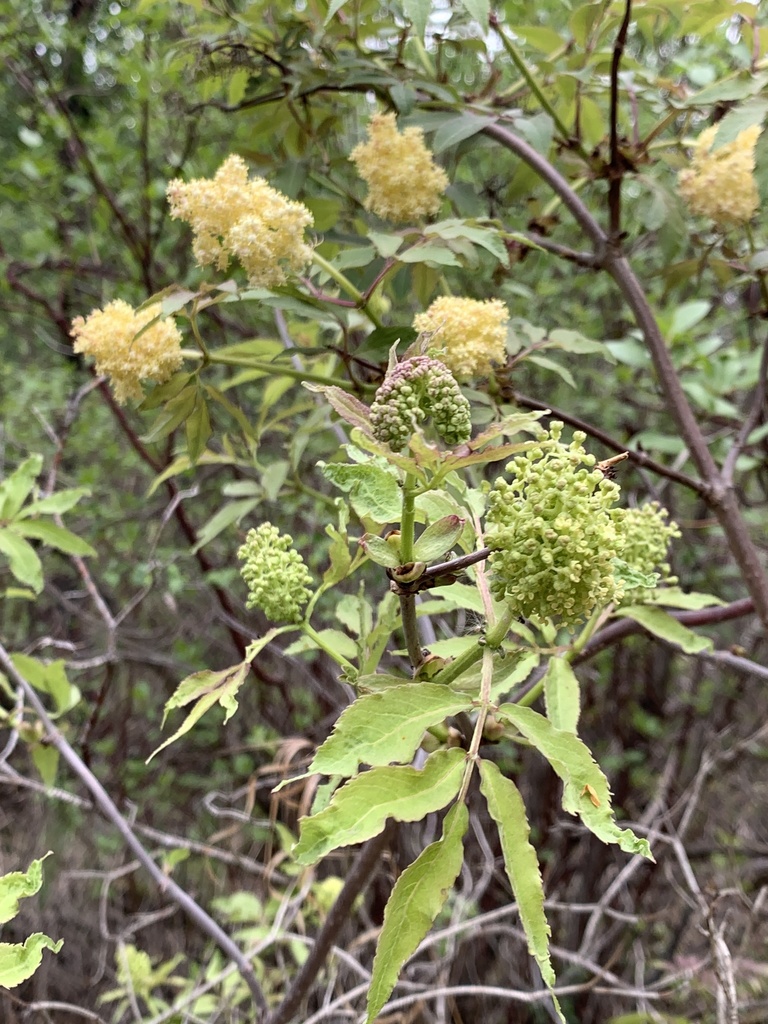
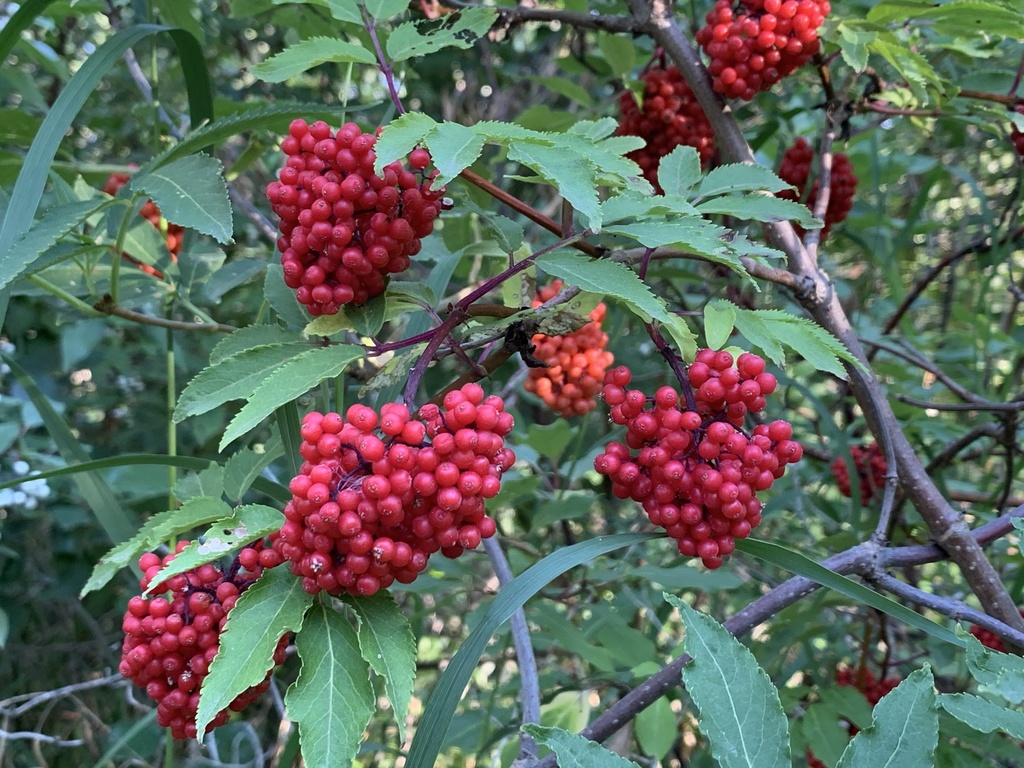
In the Saskatoon Afforestation Areas, one piece of biological machinery stands out for its sheer output of ecosystem services: the Red Elderberry (Sambucus racemosa). While some might see a “scraggly” shrub, an entomologist sees a 24-hour diner for pollinators and a high-energy nursery for our dwindling songbird populations.

Ranked S2 An S2 ranking refers to “Imperiled” status in conservation science, indicating a species is very rare—usually 5 to 20 occurrences—within a specific province or state, making it a high priority for tracking. It signifies a high risk of extirpation due to restricted range or few populations.

The Specialized Engine of Biodiversity

The Red Elderberry is not just “another bush.” It is a keystone species. To understand why, we must look at the “insect-plant” connection. Most of the insects that eat plants—about 90%—are specialists. They can only develop on the plants with which they share an evolutionary history. Sambucus racemosa has spent millennia co-evolving with the flies, beetles, and bees of the Saskatchewan prairies and woodlands.

A Year in the Life of a Living Cafeteria

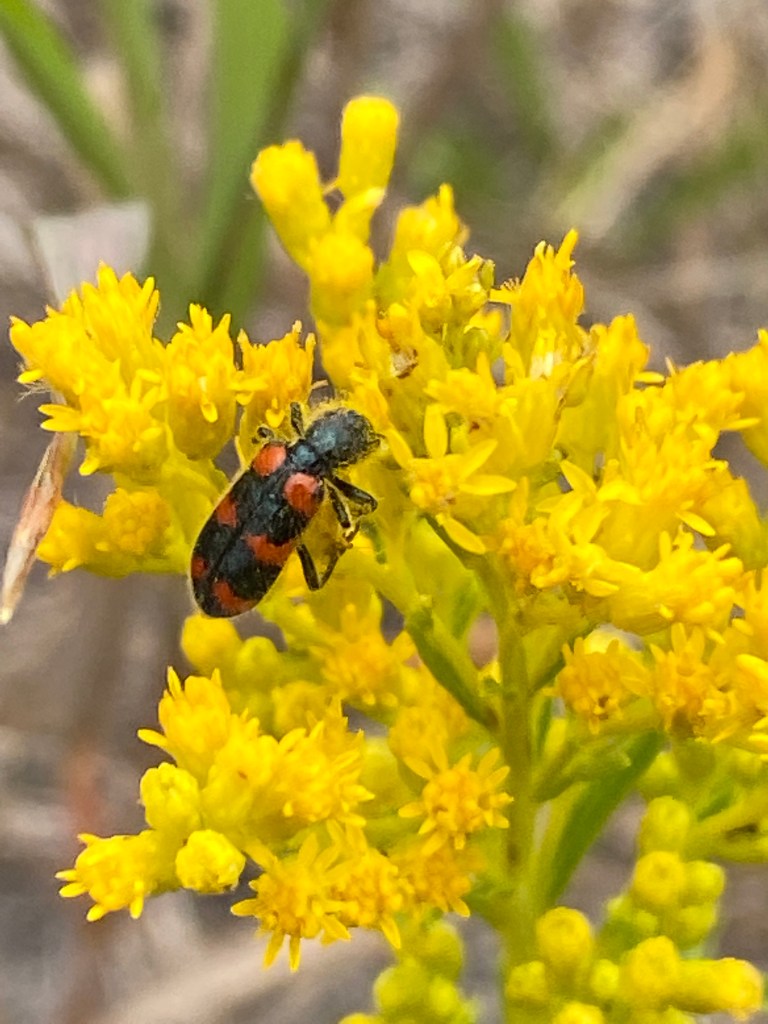
  • Spring (April–May): Before many other nectar sources are online, the Red Elderberry’s cone-shaped racemes burst into creamy-white bloom. These are primary fuel stations for long-horned beetles and syrphid flies.
  • Summer (July–August): The flowers transition into brilliant coral-red drupes. These aren’t just pretty; they are “bird food shrubs.” While toxic to us (don’t eat them raw!), they are the primary summer diet for American Robins, thrushes, and even the occasional grouse.
  • The “Pith” Factor: The soft, brown pithy center of elderberry branches is nature’s apartment complex. Many of our native solitary bees utilize these hollowed-out stems for nesting. When you “clean up” a dead elderberry branch, you are effectively evicting the next generation of pollinators.

Species of Concern: The California Carpetweed

While we champion the Elderberry, we must also look at the feet of these giants. In the moist, shaded woodland margins and grassland ecotones (SE 23-36-06 W3M), we find the California Carpetweed (Amaranthus californicus). Ranked as S2 (Imperilled) in Saskatchewan, this humble plant is a specialist of the “edge” habitat. Its survival depends on the same nitrogen-rich, easily decomposable leaf litter provided by the Red Elderberry.


Strategies for Preservation: A Call to Action

If we want the RSBBAA to be more than a graveyard for dying trees, we must manage it with biological integrity in mind.

1. Stop the “Chop and Drop”

We must resist the urge to “tidy” the afforestation area. Dead Elderberry wood is vital. The nitrogen-loving nature of the Red Elderberry means its leaf litter acts as a natural fertilizer for the surrounding forest floor. By leaving the pithy stems intact, we support the life cycles of wood-boring beetles and nesting bees.

2. Protect the Ecotone

The transition zones—the “edges” where the grassland meets the forest—are where Amaranthus californicus clings to existence. We must prevent these areas from being overrun by invasive brome grass or crushed by unauthorized vehicle traffic.

3. Native Planting as Restoration

Where the RSBBAA has suffered from heavy metal contamination or soil depletion, Sambucus racemosa should be our first choice for restoration. It is a pioneer species that reduces erosion and mineral leaching, preparing the ground for the next generation of oaks and pines.


Next Steps for the RSBBAA

  1. Inventory the Keystone Hosts: We need a formal count of Sambucus clusters to map the “high-value” zones for birds.
  2. Fencing Vulnerable Sites: The S2 populations of Amaranthus californicus need immediate protection from trampling.
  3. Educational Signage: We must teach visitors that a “messy” elderberry patch is actually a productive nursery.

We have a choice: we can have a sterile, manicured park, or we can have a living, breathing ecosystem. By protecting the Red Elderberry and its cohorts, we are choosing life. We are choosing to be Nature’s Best Hope.


Bibliography

EasyScape. (n.d.). California amaranth (Amaranthus californicus) plant profile. https://easyscape.com/species/Amaranthus-californicus

Environmental Data Inventory (EDI). (2021). Environmental Data Inventory: Saskatchewan flora.

Flora of North America Editorial Committee. (n.d.). Amaranthus californicus. https://floranorthamerica.org/Amaranthus_californicus

Fryer, J. L. (2008). Sambucus racemosa (red elderberry). U.S. Department of Agriculture, Forest Service, Fire Effects Information System. https://www.fs.usda.gov/database/feis/plants/shrub/samrac/all.html

iNaturalist. (n.d.). Red elderberry (Sambucus racemosa): Species guide. https://www.inaturalist.org/taxa/54812-Sambucus-racemosa

Native Plant Trust. (n.d.). Sambucus racemosa (red elderberry). Go Botany. https://gobotany.nativeplanttrust.org/species/sambucus/racemosa

Tallamy, D. (2007). Bringing nature home: How you can sustain wildlife with native plants. Timber Press.

The Natural Edge. (2025). Planting guide for Saskatchewan waterways.

Trewatha, P. B. (2019). California amaranth (Amaranthus californicus). Missouri State University Darr College of Agriculture. https://ag.missouristate.edu/PBTrewatha/California-Amaranth.htm

University of Washington Bothell Wetland Ecology. (n.d.). Red elderberry (Sambucus racemosa). https://www.uwb.edu/wetland/plants/sambucus-racemosa

Part SE 23-36-6 – Richard St. Barbe Baker Afforestation Area – 241 Township Road 362-A

Part SE 23-36-6 – SW Off-Leash Recreation Area (Richard St. Barbe Baker Afforestation Area ) – 355 Township Road 362-A

S ½ 22-36-6 Richard St. Barbe Baker Afforestation Area (West of SW OLRA) – 467 Township Road 362-A

NE 21-36-6 “George Genereux” Afforestation Area – 133 Range Road 3063

Wikimapia Map: type in Richard St. Barbe Baker Afforestation Area or

Google Maps South West Off Leash area location pin at parking lot

Web page: https://stbarbebaker.wordpress.com

Where is the Richard St. Barbe Baker Afforestation Area? with map

Where is the George Genereux Urban Regional Park (Afforestation Area)?with map

Pinterest richardstbarbeb

Blogger: FriendsAfforestation

Tumblr friendsafforestation.tumblr.comFacebook Group Page: Users of the George Genereux Urban Regional Park

Facebook: StBarbeBaker Afforestation Area

Facebook for the non profit Charity Friends of the Saskatoon Afforestation Areas Inc. FriendsAreas

Facebook group page : Users of the St Barbe Baker Afforestation Area

Facebook: South West OLRA

Reddit: FriendsAfforestation

BlueSky Social

Mix: friendsareas

YouTube

Support via Zeffy

Please help protect / enhance your afforestation areas, please contact the Friends of the Saskatoon Afforestation Areas Inc. (e-mail / e-transfers )

Donate your old vehicle, here’s how!  

Support using Canada Helps

Support via a recycling bottle donation and Join the plastic-recycle challenge!

United Nations Decade on Ecosystem Restoration

““Be like a tree in pursuit of your cause. Stand firm, grip hard, thrust upward. Bend to the winds of heaven..”

The Golden Slipper of the Prairies:

The Golden Slipper of the Prairies: Conservation Imperatives for Cypripedium in the Richard St. Barbe Baker Afforestation Area

The genus Cypripedium represents, for many, the pinnacle of the orchidaceous flora of North America. These “Lady’s-slippers” are not merely plants; they are complex biological entities intertwined with the very fungal fabric of the soil. Within the Saskatoon Afforestation Areas, dwells a botanical treasure of increasing concern: the Small Yellow Lady’s-slipper, Cypripedium parviflorum var. makasin.

As we have often noted in our taxonomic treatments, the C. parviflorum complex is one of great morphological fluidity. However, var. makasin distinguishes itself by its smaller, often intensely fragrant labellum (pouch) and its preference for the moist, calcareous transitions between prairie and woodland. In the province, its status has recently fluctuated between S2 (Imperilled) and S3 (Vulnerable), a precarious position that demands immediate and sophisticated conservation strategies.


The Biological Vulnerability of the Slipper

The survival of Cypripedium is a precarious gamble of nature. Unlike many vascular plants, their seeds are “dust-like,” devoid of endosperm. They are entirely dependent on a mycorrhizal partner—specifically fungi from the Tulasnellaceae family—to provide the carbon necessary for germination.

Recent investigations, such as those by Malcore and Grubisha, highlight that these essential fungal symbionts are often localized within a mere one-meter radius of the parent plant. This creates a “micro-refugia” that, if disturbed by foot traffic, grazing, or soil compaction, can render the entire site sterile for future orchid recruitment.

Species Profile: Cypripedium parviflorum var. makasin


Strategies for Protection and Management

To ensure that the “Moccasin Flower” remains a fixture of the RSBBAA landscape for generations, a multi-faceted management approach is required.

1. Habitat Preservation and Successional Management

The RSBBAA is a dynamic ecosystem. C. parviflorum var. makasin thrives in the “ecotone”—the edge between meadow and wood. Successional management must be employed to prevent these open edges from becoming overly choked by invasive brush or dense canopy closure, which can shade out the orchids. However, this must be balanced: the soil must remain cool and moist.

2. The Prohibition of Transplantation

We must be clear: do not transplant these orchids. Cypripedium possesses a high degree of mycorrhizal specificity. When a plant is dug up, its connection to the Tulasnellaceae network is severed. Without the specific fungal colony of its home soil, the orchid almost invariably perishes within a few seasons.

3. Controlled Disturbance and Fire

While fire is a natural component of the prairie-forest mosaic, its effects on Cypripedium are a “threshold” phenomenon. A low-intensity prescribed burn can reduce competing thatch and release nutrients, but a high-intensity fire can destroy the shallow rhizomes and the delicate fungal mycelia in the upper soil layers.

4. Public Awareness and “Social Fencing”

Because the RSBBAA is a public space, the risk of “collection” or accidental trampling is high. Increasing public awareness through signage that emphasizes the plant’s legal protection under CITES Appendix II and provincial legislation is vital.


Next Steps: A Path Forward

To transition from passive observation to active stewardship, the following actions are recommended for the RSBBAA:

  • Establish a Monitoring Grid: Conduct annual census counts at the site to estimate population dynamics and recruitment rates.
  • Soil Mapping: Identify the presence of Tulasnellaceae fungi in adjacent areas to determine potential sites for population reinforcement or seed sowing.
  • Infrastructure Rerouting: Ensure that any future trail development or maintenance within the RSBBAA maintains a minimum 10-meter buffer from known orchid occurrences to protect the rhizosphere.
  • Ex Situ Security: In collaboration with botanical gardens, collect seeds for long-term cryogenic storage, ensuring the genetic legacy of the RSBBAA population is preserved against stochastic events.

The Small Yellow Lady’s-slipper is a sentinel of the health of our afforestation areas. Its presence tells us the soil is alive, the fungi are flourishing, and the ancient relationships of the prairie remain intact. We must act now to ensure this golden pouch continues to nod in the Saskatchewan breeze.

1. Biological Identification, Ecology, and Species Information

Bebeau, E. (2014). Small Yellow Lady’s-slipper (Cypripedium parviflorum var. makasin). Minnesota Wildflowers.
https://www.minnesotawildflowers.info/flower/small-yellow-ladys-slipper

Cribb, P. (1997). The Genus Cypripedium. Royal Botanic Gardens, Kew.

Environmental Data Inventory (EDI). (2021). Saskatchewan Flora Database. Saskatchewan Government Environmental Data Inventory.

iNaturalist. (n.d.). Small Yellow Lady’s-slipper (Cypripedium parviflorum var. makasin) Species Guide.
https://www.inaturalist.org/guide_taxa/849473

Malcore, R. M., & Grubisha, L. C. (2019). A Preliminary Investigation of Cypripedium parviflorum Mycorrhizae at Peninsula State Park. Final Report.
https://peninsulastatepark.org/wp-content/uploads/2019/08/Malcore_FinalReport.pdf

Shefferson, R. P., Weiss, M., Kull, T., & Taylor, D. L. (2007). High specificity generally characterizes mycorrhizal association in the rare lady’s-slipper orchid genus Cypripedium. Molecular Ecology.

Sheviak, C. J. (1994). Variation in Cypripedium parviflorum and its taxonomic treatment.

Sheviak, C. J. (2002). Cypripedium. In: Flora of North America Editorial Committee (Eds.), Flora of North America North of Mexico (Vol. 26). Oxford University Press.

USDA Forest Service. (n.d.). Cypripedium parviflorum – Yellow Lady’s-slipper.
https://www.fs.usda.gov/wildflowers/beauty/cypripedium/cypripedium_parviflorum.shtml

Saskatchewan Wildflowers. (2021). Cypripedium parviflorum var. makasin.
https://www.saskwildflower.ca/native-plant-database/cypripedium-parviflorum

North American Orchid Conservation Center. (2024). Species Profile: Cypripedium parviflorum.
https://goorchids.northamericanorchidcenter.org


2. Conservation Status, Habitat Protection, and Environmental Context

Canada.ca. (2014). COSEWIC Assessment and Status Report on the Small White Lady’s-slipper (Cypripedium candidum) in Canada.
https://www.canada.ca/en/environment-climate-change/services/species-risk-public-registry/cosewic-assessments-status-reports/small-white-lady-slipper-2014.html

Convention on International Trade in Endangered Species (CITES). (n.d.). Appendix II: Orchidaceae.
https://cites.org

Saskatchewan Native Plant Society (2020). Making Connections: The Amazing Relationships Between Fungi and Plants. NPSS Winter Newsletter.
https://www.npss.sk.ca/rsu_docs/documents/2020-winter-newsletter.pdf

NatureServe Explorer. (2025). Cypripedium parviflorum var. makasin – Small Yellow Lady’s-slipper.
https://explorer.natureserve.org

Native Plant Trust – Go Botany. (2024). Cypripedium parviflorum (Yellow Lady’s-slipper).
https://gobotany.nativeplanttrust.org

Pollinator Partnership. (2007). Medicinal Plant Fact Sheet: Cypripedium (Lady’s-slipper orchids).
https://www.pollinator.org/pollinator.org/assets/generalFiles/Cypripedium.draft.pdf

Wild Species Canada. (2020). Yellow Lady’s-slipper (Cypripedium parviflorum) General Status Report.
https://search.wildspecies.ca/en/GS000139

Brandywine Conservancy. (2020). Native Orchids and Conservation Efforts.
https://www.brandywine.org/conservancy/blog/native-orchids

Part SE 23-36-6 – Richard St. Barbe Baker Afforestation Area – 241 Township Road 362-A

Part SE 23-36-6 – SW Off-Leash Recreation Area (Richard St. Barbe Baker Afforestation Area ) – 355 Township Road 362-A

S ½ 22-36-6 Richard St. Barbe Baker Afforestation Area (West of SW OLRA) – 467 Township Road 362-A

NE 21-36-6 “George Genereux” Afforestation Area – 133 Range Road 3063

Wikimapia Map: type in Richard St. Barbe Baker Afforestation Area or

Google Maps South West Off Leash area location pin at parking lot

Web page: https://stbarbebaker.wordpress.com

Where is the Richard St. Barbe Baker Afforestation Area? with map

Where is the George Genereux Urban Regional Park (Afforestation Area)?with map

Pinterest richardstbarbeb

Blogger: FriendsAfforestation

Tumblr friendsafforestation.tumblr.comFacebook Group Page: Users of the George Genereux Urban Regional Park

Facebook: StBarbeBaker Afforestation Area

Facebook for the non profit Charity Friends of the Saskatoon Afforestation Areas Inc. FriendsAreas

Facebook group page : Users of the St Barbe Baker Afforestation Area

Facebook: South West OLRA

Reddit: FriendsAfforestation

BlueSky Social

Mix: friendsareas

YouTube

Support via Zeffy

Please help protect / enhance your afforestation areas, please contact the Friends of the Saskatoon Afforestation Areas Inc. (e-mail / e-transfers )

Donate your old vehicle, here’s how!  

Support using Canada Helps

Support via a recycling bottle donation and Join the plastic-recycle challenge!

United Nations Decade on Ecosystem Restoration

““Be like a tree in pursuit of your cause. Stand firm, grip hard, thrust upward. Bend to the winds of heaven..”

Municipal Reserve

Notice of Meeting –

RE: Inquiry Richard St. Barbe Baker Afforestation Area


There are two kinds of light – the glow that illumines, and the glare that obscures.  ~James Thurber

Standing Policy Committee on Planning, Development and Community Services meeting:

Re: Inquiry – Richard St. Barbe Baker Afforestation Area (File No. CK. 4000-1)

Monday, August 14, 2017

TIME: 9:00 a.m.

PLACE: City of Saskatoon Council Chamber

Main Floor, City Hall

There is a muscular energy in sunlight corresponding to the spiritual energy of wind.  ~Annie Dillard

If you wish to speak to the Committee or provide comments regarding this matter, you are required to submit a letter to the City Clerks Office. Letters must be received online at Write letter to committees by 8:00 a.m. on the day of the meeting, or delivered in writing to the City Clerk’s Office no later than 5:00 p.m. of the business day preceding the meeting. You are asked to limit your comments to five minutes. Please include your mailing address in your submission.

In the first flush of youth our imaginative faculties are very active. In childhood we rove through Fairyland and play with the little elves; in youth the tiny elves have grown up to be nymphs of our own size and age, and from the summer moonlight we step into the rosy dawn, all fragrant and lightsome, with a glamour over everything which is delicious to our senses. By-and-by, as youth falls from us, we step out from the glades and meadows into the dry and dusty highway of life.” ~ Hume Nisbet

For directions as to how to drive to “George Genereux” Urban Regional Park

For directions on how to drive to Richard St. Barbe Baker Afforestation Area

For more information:

Blairmore Sector Plan Report; planning for the Richard St. Barbe Baker Afforestation Area,  George Genereux Urban Regional Park and West Swale and areas around them inside of Saskatoon city limits

P4G Saskatoon North Partnership for Growth The P4G consists of the Cities of Saskatoon, Warman, and Martensville, the Town of Osler and the Rural Municipality of Corman Park; planning for areas around the afforestation area and West Swale outside of Saskatoon city limits

Richard St. Barbe Baker Afforestation Area is located in Saskatoon, Saskatchewan, Canada north of Cedar Villa Road, within city limits, in the furthest south west area of the city. 52° 06′ 106° 45′
Addresses:
Part SE 23-36-6 – Afforestation Area – 241 Township Road 362-A
Part SE 23-36-6 – SW Off-Leash Recreation Area (Richard St. Barbe Baker Afforestation Area ) – 355 Township Road 362-A
S ½ 22-36-6 Richard St. Barbe Baker Afforestation Area (West of SW OLRA) – 467 Township Road 362-A
NE 21-36-6 “George Genereux” Afforestation Area – 133 Range Road 3063
Wikimapia Map: type in Richard St. Barbe Baker Afforestation Area
Google Maps South West Off Leash area location pin at parking lot
Web page: https://stbarbebaker.wordpress.com
Where is the Richard St. Barbe Baker Afforestation Area? with map
Where is the George Genereux Urban Regional Park (Afforestation Area)? with map

Pinterest richardstbarbeb

Facebook Group Page: Users of the George Genereux Urban Regional Park

Facebook: StBarbeBaker

Facebook group page : Users of the St Barbe Baker Afforestation Area

Facebook: South West OLRA

Twitter: StBarbeBaker

Please help protect / enhance /commemorate your afforestation areas, please contact the Friends of the Saskatoon Afforestation Areas Inc. (e-mail)

Support the afforestation areas with your donation or membership ($20.00/year).  Please donate by paypal using the e-mail friendsafforestation AT gmail.com, or by using e-transfers  Please and thank you!  Your donation and membership is greatly appreciated.  Members e-mail your contact information to be kept up to date!

QR Code FOR PAYPAL DONATIONS to the Friends of the Saskatoon Afforestation Areas Inc.
Paypal

Payment Options
Membership : $20.00 CAD – yearly
Membership with donation : $50.00 CAD
Membership with donation : $100.00 CAD

1./ Learn.

2./ Experience

3./ Do Something: ***


“St. Barbe’s unique capacity to pass on his enthusiasm to others. . . Many foresters all over the world found their vocations as a result of hearing ‘The Man of the Trees’ speak. I certainly did, but his impact has been much wider than that. Through his global lecture tours, St. Barbe has made millions of people aware of the importance of trees and forests to our planet.” Allan Grainger

“We forget that we owe our existence to the presence of Trees. As far as forest cover goes, we have never been in such a vulnerable position as we are today. The only answer is to plant more Trees – to Plant Trees for Our Lives.” ~ Richard St. Barbe Baker

“Act. Don’t react. See a need, fix it first. Worry about the details later. If you wait until you are asked you have just missed a golden opportunity. They are fleeting and rare.” Philip Wollen founder of Winsome Kindness Trust


“Man must resuscitate his planet with trees, his heart with faith.”~Richard St. Barbe Baker


New Signs at St. Barbe Park

The trees and vegetation, which cover the land surface of the Earth and delight the eye..

DSCN7375.JPGSW OLRA waymarking sign

New wayfinding signs installed at the South West Off Leash Recreation Area [SW OLRA]. The off leash dog park has received hew way marking signage that provide hundreds of visitors with clear directions and information about the SW OLRA.  From results obtained from the counter installed at the entrance to the dog park, city officials realized that the SW OLRA was fast becoming one very well used off leash recreation area. Installation of the signs began Wednesday, June 15, 2016.

IMG_5210[2].jpgCurrently, there is one title sign and there are two interpretive or way marking signs at the Richard St. Barbe Baker Afforestation Area, both within the area of the SW OLRA. The signs include information about the SW OLRA, and also map of the off leash dog park segment . The reverse side of the sign has a panel where community events may be posted that may only be current for the short term.   Notices and warnings appear here which may affect travel within the SW OLRA.  Hooks are available for a lost and found area to hang a lost mitten, or dog bootie &c as the case may be.  A bin of bags is also supplied to encourage dog owners to pick up after their pets.

DSCN7376.JPG

Kevin Ariss, Open Space Consultant Animal Services has been in contact with the Stewards of the Richard St. Barbe Baker Afforestation Area as well as the SW OLRA users. Earlier, on June 8, 2016, the chain link fencing was installed, and the entrance way improved in its appearance greatly from this initiative.

Goals for the Stewards of the Richard St. Barbe Baker Afforestation Area center on the concept of community, networking and identity of the RSBBAA. The SW OLRA is a fenced in 14.5 acre area within the Richard St. Barbe Baker Afforestation Area.. Do you think the new signage will increase the profile of the South West Off Leash Recreation Area and the Richard St. Barbe Baker Afforestation Area?  Express your appreciation to the City of Saskatoon for the new signs in the comment section below.

“The trees and vegetation, which cover the land surface of the Earth and delight the eye, are performing vital tasks incumbent upon the vegetable world in nature.  Its presence is essential to earth as an organism.  It is the first condition of all life; it is the “Skin” of the earth, for without it there can be no water and, therefore, no life.” ~Richard St. Barbe Baker


For directions as to how to drive to “George Genereux” Urban Regional Park

For directions on how to drive to Richard St. Barbe Baker Afforestation Area

For more information:

Blairmore Sector Plan Report; planning for the Richard St. Barbe Baker Afforestation Area,  George Genereux Urban Regional Park and West Swale and areas around them inside of Saskatoon city limits

P4G Saskatoon North Partnership for Growth The P4G consists of the Cities of Saskatoon, Warman, and Martensville, the Town of Osler and the Rural Municipality of Corman Park; planning for areas around the afforestation area and West Swale outside of Saskatoon city limits

Richard St. Barbe Baker Afforestation Area is located in Saskatoon, Saskatchewan, Canada north of Cedar Villa Road, within city limits, in the furthest south west area of the city. 52° 06′ 106° 45′
Addresses:
Part SE 23-36-6 – Afforestation Area – 241 Township Road 362-A
Part SE 23-36-6 – SW Off-Leash Recreation Area (Richard St. Barbe Baker Afforestation Area ) – 355 Township Road 362-A
S ½ 22-36-6 Richard St. Barbe Baker Afforestation Area (West of SW OLRA) – 467 Township Road 362-A
NE 21-36-6 “George Genereux” Afforestation Area – 133 Range Road 3063
Wikimapia Map: type in Richard St. Barbe Baker Afforestation Area
Google Maps South West Off Leash area location pin at parking lot
Web page: https://stbarbebaker.wordpress.com
Where is the Richard St. Barbe Baker Afforestation Area? with map
Where is the George Genereux Urban Regional Park (Afforestation Area)? with map

Pinterest richardstbarbeb

Facebook Group Page: Users of the George Genereux Urban Regional Park

Facebook: StBarbeBaker

Facebook group page : Users of the St Barbe Baker Afforestation Area

Facebook: South West OLRA

Twitter: StBarbeBaker

Please help protect / enhance your afforestation areas, please contact the Friends of the Saskatoon Afforestation Areas Inc. (e-mail)

Support the afforestation areas with your donation or membership ($20.00/year).  Please donate by paypal using the e-mail friendsafforestation AT gmail.com, or by using e-transfers  Please and thank you!  Your donation and membership is greatly appreciated.  Members e-mail your contact information to be kept up to date!

QR Code FOR PAYPAL DONATIONS to the Friends of the Saskatoon Afforestation Areas Inc.
Paypal

Payment Options
Membership : $20.00 CAD – yearly
Membership with donation : $20.00 CAD -monthly
Membership with donation : $50.00 CAD
Membership with donation : $100.00 CAD

1./ Learn.

2./ Experience

3./ Do Something: ***

What was Richard St. Barbe Baker’s mission, that he imparted to the Watu Wa Miti, the very first forest scouts or forest guides?  To protect the native forest, plant ten native trees each year, and take care of trees everywhere.

“We stand in awe and wonder at the beauty of a single tree. Tall and graceful it stands, yet robust and sinewy with spreading arms decked with foliage that changes through the seasons, hour by hour, moment by moment as shadows pass or sunshine dapples the leaves. How much more deeply are we moved as we begin to appreciate the combined operations of the assembly of trees we call a forest.”~Richard St. Barbe Baker


“St. Barbe’s unique capacity to pass on his enthusiasm to others. . . Many foresters all over the world found their vocations as a result of hearing ‘The Man of the Trees’ speak. I certainly did, but his impact has been much wider than that. Through his global lecture tours, St. Barbe has made millions of people aware of the importance of trees and forests to our planet.” Allan Grainger

“The science of forestry arose from the recognition of a universal need. It embodies the spirit of service to mankind in attempting to provide a means of supplying forever a necessity of life and, in addition, ministering to man’s aesthetic tastes and recreational interests. Besides, the spiritual side of human nature needs the refreshing inspiration which comes from trees and woodlands. If a nation saves its trees, the trees will save the nation. And nations as well as tribes may be brought together in this great movement, based on the ideal of beautifying the world by the cultivation of one of God’s loveliest creatures – the tree.” ~ Richard St. Barbe Baker.

Design a site like this with WordPress.com
Get started