Guardians of the Elms: Saskatoon’s Ecological Emergency

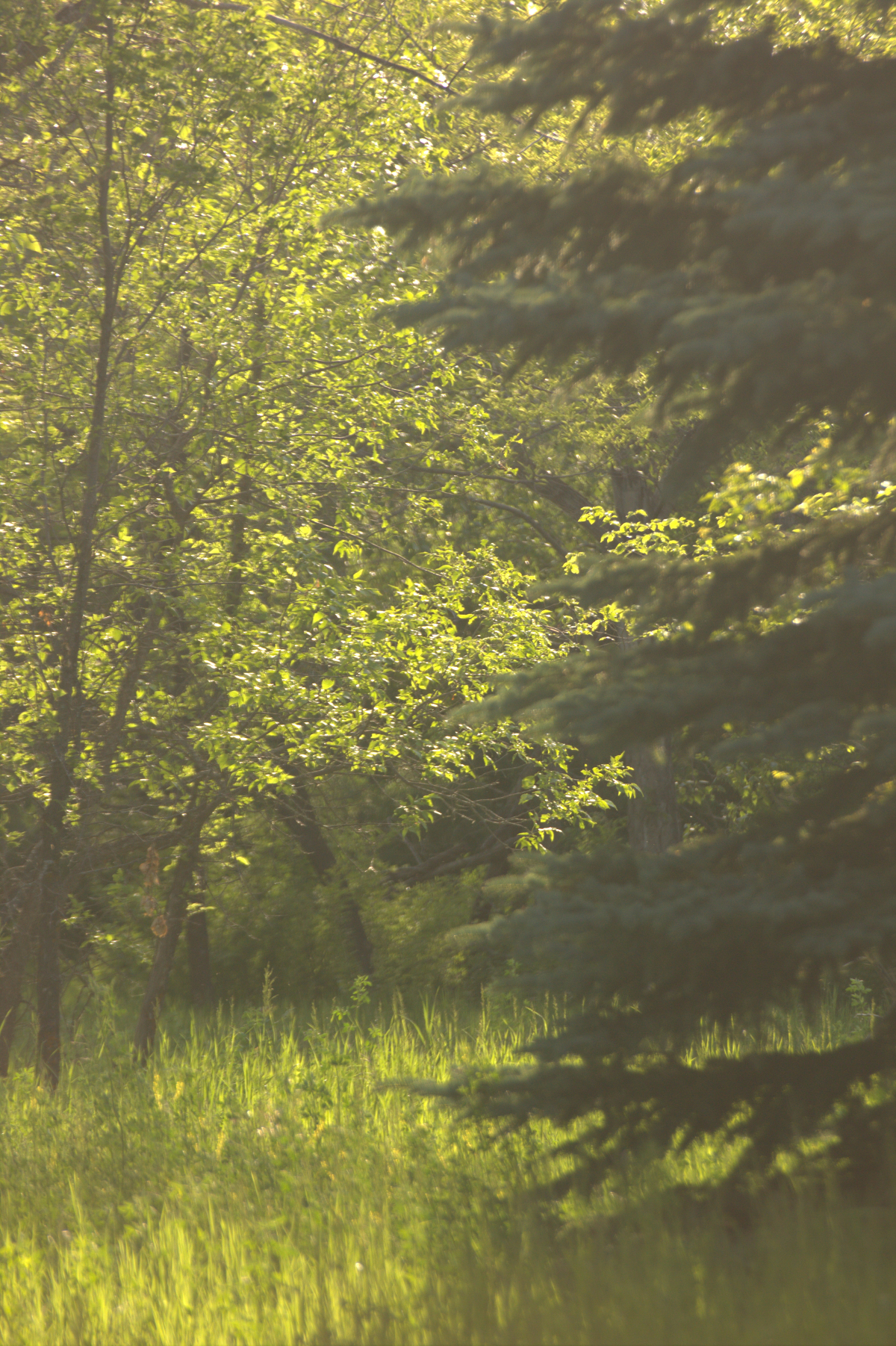
The elm, with its sweeping arch of green, has long been the cathedral tree of our northern cities. Its vaulted canopy shades our streets, cools our homes, and whispers to us of continuity with nature. In Saskatoon, nearly a quarter of the urban forest is elm—a treasure beyond measure. In the afforestation areas, too, Siberian Elms, and American Elms are a great portion of the canopy. Yet today, we face a dire crisis. The City has declared an ecological emergency as Dutch elm disease spreads with alarming speed. How to Identify an Elm. How to Spot Dutch Elm Disease Symptoms.

This is no ordinary ailment. Dutch elm disease (DED) is a ruthless invader, a fungus—Ophiostoma ulmi and its more virulent cousin Ophiostoma novo-ulmi—that enters the tree’s veins and clogs them, cutting off life itself. The carriers are small, inconspicuous elm bark beetles. On their wings, they bear spores like unwelcome cargo. Seeking places to lay their eggs, they search for damaged elm—pruned in the wrong season, broken by storm, or cut for careless firewood. From there, death marches through the canopy.

Richard St. Barbe Baker, silviculturist (forest doctor) has seen many forests suffer, but few plagues advance as swiftly as this. A tree that stood proudly in May may be yellowed and withered by August, its crown shriveling, its roots starving. So entire boulevards may fall silent, their green vaults gone, sunlight harsh and unbroken upon the pavement.

The Call to Action

The City has confirmed a record twelve cases this summer—more than ever before. Seven more trees show unmistakable signs and will be removed. Already, over 8,700 kilograms of elm wood have been gathered and destroyed, yet more remains.

Thai Hoang, Director of Parks, sounded the alarm plainly: “Do not store elm wood on your property. Do not burn it in your fire pit. About a quarter of our forest canopy is elm. This is not a minor issue—it is an ecological emergency.”

Indeed, the beetle thrives in neglected woodpiles. Every log, every stored branch, is a breeding ground. To keep elm wood is to endanger the very heart of our city.

Best Practices for Guardianship

We who love trees must become their guardians. There are simple yet essential practices:

  • Never transport or store elm wood. Dispose of it only at the City landfill, where handling is safe and free.
  • Obey the provincial pruning ban between April 1 and August 31. Fresh cuts draw the beetles like moths to a flame.
  • Water wisely. From April until mid-August, water deeply. Then let the trees harden for winter, with one or two final soakings before freeze-up.
  • Prune in very early spring. At that time, wounds heal quickly, and beetles are less active.
  • Maintain soil and roots. Fertilize thoughtfully, protect roots from damage during construction, and mulch well to prevent mower injury.

The elm is resilient if cared for. But neglect is its undoing.

The Mystery of the Survivor Elms

Yet even in this dark time, there is hope. Researchers tell us of survivor elms—trees that, though surrounded by the dying, endure. These are not unlike people who endured the scourge of COVID-19. Those with co-morbidities fared worse, while the strong sometimes resisted. So it is with elms. Healthy, vigorous trees may overcome where weakened ones fail.

In Minnesota and elsewhere, researchers funded by the MITPPC are studying these survivor trees, seeking to propagate their resilience. Early-flushing clones, resistant hybrids, and cultivars like Valley Forge, Prairie Expedition, and Jefferson may offer us a new generation of elms. Some of these hybrids draw strength from Asian species, which co-evolved with the fungus and are far less susceptible.

This is the field of hope: not only to protect the present, but to plant a future forest of resistance.

A Plea for Stewardship

Let us remember: the elm is more than wood and leaves. It is a shelter for birds, a fortress against wind, a cooling balm in summer, a companion in our daily walk. To lose it is to lose part of ourselves.

As Richard St. Barbe Baker often said, “if a man loses one-third of his skin he dies; if a tree loses one third of its bark, it too dies. If the Earth is a ‘sentient being’, would it not be reasonable to expect that if it loses one third of its trees and vegetable covering, it will also die?” The elm has stood beside us for generations; now we must stand for it.

The emergency in Saskatoon is real, but it need not be the end. With vigilance, with science, with love, and with law, we can yet preserve these cathedral trees. And in time, with resistant cultivars and survivor elms, we may restore what is lost.

But only if we act—together, now.

“The minimum for safety is one third of the total land area. I think what is happening to the elms must be alerting the whole country to the necessity of trees, of the need for more trees. The elm has the largest leaf surface of any tree in Britain. If you …. put the leaves together edge to edge, they would cover ten acres. So naturally, the first tree to suffer from air pollution was the elm and, of course, when an elm is suffering from fatigue it is subject to attack by disease: the elm bark beetle, the carrier of the elm fungus, comes along and the tree succumbs.

I look at it this way. If a person is living a normal life and not abusing themselves – not smoking too much, not eating too much, not drinking too much – but living normally and eating the right food – they will be fit and well. It is only when they start abusing themselves that they are prone to attack by disease. It is the same with trees.

The next tree to go (the next tree with the largest leaf surface after the elm) is probably the beech: after that the sycamore: and so on. Finally it will be Man’s turn. We forget that we owe our existence to the presence of trees and as far as forest cover goes, we have never been in such a vulnerable position as we are today. The only answer is to plant more trees – to plant for our lives.
Richard St. Barbe Baker answers the first question above” Richard St. Barbe Baker.


Bibliography


Addresses:

Part SE 23-36-6 – Richard St. Barbe Baker Afforestation Area – 241 Township Road 362-A

Part SE 23-36-6 – SW Off-Leash Recreation Area (Richard St. Barbe Baker Afforestation Area ) – 355 Township Road 362-A

S ½ 22-36-6 Richard St. Barbe Baker Afforestation Area (West of SW OLRA) – 467 Township Road 362-A

NE 21-36-6 “George Genereux” Afforestation Area – 133 Range Road 3063

Wikimapia Map: type in Richard St. Barbe Baker Afforestation Area or

Google Maps South West Off Leash area location pin at parking lot

Web page: https://stbarbebaker.wordpress.com

Where is the Richard St. Barbe Baker Afforestation Area? with map

Where is the George Genereux Urban Regional Park (Afforestation Area)?with map

Pinterest richardstbarbeb

Blogger: FriendsAfforestation

Tumblr friendsafforestation.tumblr.comFacebook Group Page: Users of the George Genereux Urban Regional Park

Facebook: StBarbeBaker Afforestation Area

Facebook for the non profit Charity Friends of the Saskatoon Afforestation Areas Inc. FriendsAreas

Facebook group page : Users of the St Barbe Baker Afforestation Area

Facebook: South West OLRA

Reddit: FriendsAfforestation

BlueSky Social

Mix: friendsareas

YouTube

Support via Zeffy

Please help protect / enhance your afforestation areas, please contact the Friends of the Saskatoon Afforestation Areas Inc. (e-mail / e-transfers )

Donate your old vehicle, here’s how!  

Support using Canada Helps

Support via a recycling bottle donation and Join the plastic-recycle challenge!

United Nations Decade on Ecosystem Restoration

““Be like a tree in pursuit of your cause. Stand firm, grip hard, thrust upward. Bend to the winds of heaven..”

Richard St. Barbe Baker
How to Identify an Elm

To stand as guardians of the elm, we must first know how to recognize it. The elm (Ulmus genus) is among the most graceful of trees, with hallmarks that set it apart from all others. How to Spot Dutch Elm Disease Symptoms. Guardians of the Elm. Saskatoon’s Ecological Emergency!

1. The Shape

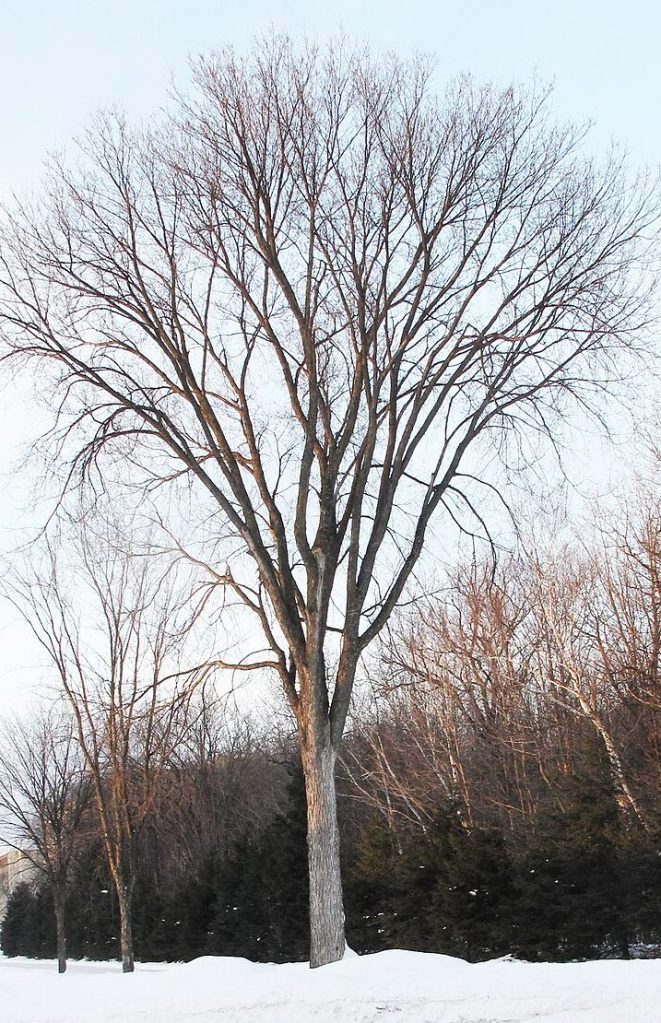
The American elm, our most familiar, forms a vase-like silhouette. The trunk rises tall and straight, then branches arch outward and upward, meeting high above the street like the roof of a Gothic cathedral. From a distance, this vaulting canopy is unmistakable.

Elm Silhouette:
Silhouette of an American elm (Ulmus americana), its tall trunk rising into a graceful, vase-like form. The arching branches sweep upward and outward, creating a broad, fan-shaped crown that spreads wide like an open canopy, a classic hallmark of the species.
Elm Silhouette: Silhouette of an American elm (Ulmus americana), its tall trunk rising into a graceful, vase-like form. The arching branches sweep upward and outward, creating a broad, fan-shaped crown that spreads wide like an open canopy, a classic hallmark of the species.

2. The Leaves

Elm leaves are simple, oval, and finely toothed along the edge. They have a distinct asymmetrical base—one side of the leaf blade longer than the other where it meets the stem. This “uneven foot” is a true signature. The veins are bold and parallel, running straight from the midrib to each tooth of the margin.

3. The Bark

On young elms, bark is smooth and gray. As the tree matures, the bark becomes dark, deeply furrowed, and rough to the touch. These ridges may twist and interlace, giving the trunk an ancient, rugged strength.

Close-up of an American elm (Ulmus americana) trunk, showing the characteristic gray-brown bark with a distinctive lattice-like pattern of intersecting ridges and furrows. Other identifiable features include irregular, rough-textured plates and shallow fissures that run both vertically and horizontally along the trunk, giving the elm its iconic textured appearance.

4. The Seeds

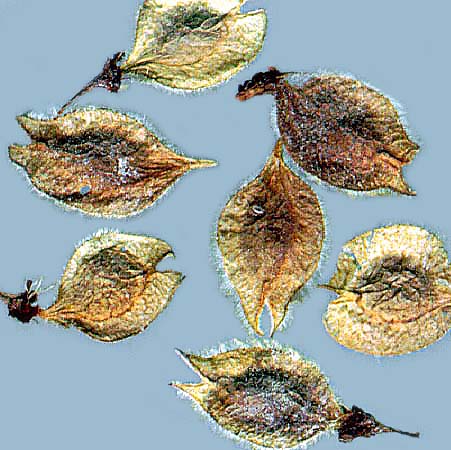
Elms produce seeds in spring, often in great abundance. Each seed is round and flat, encased in a papery wing (a samara) that spins through the air like a coin tossed by the wind.

Close-up of American elm (Ulmus americana) seeds showing the small, oval to slightly round seed bodies. The surface is smooth to lightly textured, with a central embryo visible within each seed.
Courtesy Gmihail, CC BY 3.0
Close-up of American elm (Ulmus americana) seeds showing the small, oval to slightly round seed bodies. The surface is smooth to lightly textured, with a central embryo visible within each seed. Courtesy Gmihail, CC BY 3.0

5. Species in Saskatoon

In our city, you may encounter:

  • American elm (Ulmus americana) – the classic vase-shaped elm, most common in boulevards.
  • Siberian elm (Ulmus pumila) – smaller, faster-growing, but brittle; often used in shelterbelts.
  • Japanese elm (Ulmus japonica) – less common, sometimes planted as a hardy ornamental.

Siberian Elm (Ulmus pumila)

  • Buds: Tiny, dark, and rounded, resembling peppercorns with a flaky outer layer; 3 or more overlapping scales.
  • Twig: Young twigs hairy to sparsely hairy, initially green, maturing to gray-brown.
  • Bud Size: About 1/8 inch long; purplish-brown scales somewhat hairy, especially at the edges.

American Elm (Ulmus americana)

  • Buds: Oval-shaped with a pointed tip, scale-like pattern; projected in the same direction as the subtending branch.
  • Twig: Young twigs brown, hairy or smooth.
  • Bud Color & Texture: Brown with reddish scales, somewhat hairy at edges; longer and less squat than Siberian elm buds.

Key Differences:

  • Siberian elm buds are round and peppercorn-like; American elm buds are oval and pointed.
  • Siberian elm twigs are initially green, American elm twigs are brown.
  • Bud projection: American elm buds grow aligned with the branch, while Siberian elm buds are more rounded and sitting atop the twig.

Why It Matters

Elm bark beetles do not discriminate between species. All are vulnerable to Dutch elm disease. By learning to recognize these noble trees, you can help watch over them, notice early symptoms of DED, and take steps to protect Saskatoon’s canopy.

Did you Know?

“The City of Saskatoon started a unique project for the prairies called Afforestation, of “Man-made Forest”…aimed at improving the future environment of the City. The selection of plant material is based on the soil types, lay of the land, and type of planting scheme.

The following tree species were used:

American and Siberian Elm, Manitoba Maple, Green Ash, Poplar, Willow, Colorado Spruce, Scotch Pine and Caragana.” from a report written by A.L. Ligtermoet Assistant Parks Superintendent, City of Saskatoon. January 4, 1974 CoS archives.

These afforestation areas became known as Richard St. Barbe Baker Afforestation Area and George Genereux Urban Regional Park.


“To know a tree by name is the beginning of kinship. And when we know the elm, we see in it not just a tree, but a guardian of the land.”


“The minimum for safety is one third of the total land area. I think what is happening to the elms must be alerting the whole country to the necessity of trees, of the need for more trees. The elm has the largest leaf surface of any tree in Britain. If you …. put the leaves together edge to edge, they would cover ten acres. So naturally, the first tree to suffer from air pollution was the elm and, of course, when an elm is suffering from fatigue it is subject to attack by disease: the elm bark beetle, the carrier of the elm fungus, comes along and the tree succumbs.

I look at it this way. If a person is living a normal life and not abusing themselves – not smoking too much, not eating too much, not drinking too much – but living normally and eating the right food – they will be fit and well. It is only when they start abusing themselves that they are prone to attack by disease. It is the same with trees.

The next tree to go (the next tree with the largest leaf surface after the elm) is probably the beech: after that the sycamore: and so on. Finally it will be Man’s turn. We forget that we owe our existence to the presence of trees and as far as forest cover goes, we have never been in such a vulnerable position as we are today. The only answer is to plant more trees – to plant for our lives.
Richard St. Barbe Baker answers the first question above” Richard St. Barbe Baker.


Addresses:

Part SE 23-36-6 – Richard St. Barbe Baker Afforestation Area – 241 Township Road 362-A

Part SE 23-36-6 – SW Off-Leash Recreation Area (Richard St. Barbe Baker Afforestation Area ) – 355 Township Road 362-A

S ½ 22-36-6 Richard St. Barbe Baker Afforestation Area (West of SW OLRA) – 467 Township Road 362-A

NE 21-36-6 “George Genereux” Afforestation Area – 133 Range Road 3063

Wikimapia Map: type in Richard St. Barbe Baker Afforestation Area or

Google Maps South West Off Leash area location pin at parking lot

Web page: https://stbarbebaker.wordpress.com

Where is the Richard St. Barbe Baker Afforestation Area? with map

Where is the George Genereux Urban Regional Park (Afforestation Area)?with map

Pinterest richardstbarbeb

Blogger: FriendsAfforestation

Tumblr friendsafforestation.tumblr.comFacebook Group Page: Users of the George Genereux Urban Regional Park

Facebook: StBarbeBaker Afforestation Area

Facebook for the non profit Charity Friends of the Saskatoon Afforestation Areas Inc. FriendsAreas

Facebook group page : Users of the St Barbe Baker Afforestation Area

Facebook: South West OLRA

Reddit: FriendsAfforestation

BlueSky Social

Mix: friendsareas

YouTube

Support via Zeffy

Please help protect / enhance your afforestation areas, please contact the Friends of the Saskatoon Afforestation Areas Inc. (e-mail / e-transfers )

Donate your old vehicle, here’s how!  

Support using Canada Helps

Support via a recycling bottle donation and Join the plastic-recycle challenge!

United Nations Decade on Ecosystem Restoration

““Be like a tree in pursuit of your cause. Stand firm, grip hard, thrust upward. Bend to the winds of heaven..”

Richard St. Barbe Baker

The Elm, Majestic and Stately

Elm Trees_CC-BY-SA-2.0 BriYYZ
American Elm Trees Ulmus Americana Photo credit BriYYZ CC-BY-SA-2.0

Remembering the Elm Tree

“The great elms murmur in low, inarticulate tones, and the shadows at their feet hide themselves from the moon, moving noiselessly through all the summer night. The woods in the distance stand motionless in the wealth of their massed foliage, keeping guard over the unbroken silence that reigns in all their branching aisles. Beyond the far-spreading waters lie white and dreamlike, and tempt the thought to the fairylands that sleep just beyond the line of the horizon. A sweet and restful mystery, like a bridal veil, hides the face of Nature, and he only can venture to lift it who has won the privilege by long and faithful devotion.”~Hamilton Wright Mabie


Siberian Elm Fruit Seed Ulmus pumila samaras Photo credit Luis Fernández García L. Fdez. cc-by-sa-2.1 Ulmus-pumila-samaras

“Down through the maple avenue you will take your pleasant route, past the willow and alder clumps, and the ancient mill, that hangs its idle arms listlessly by its sides—on and on, over the little style, and the rustic bridge, which spans the rivulet, until you reach the giant elm that spreads its broad branches far and wide. Books and work are scattered about on the verdant turf, bright flowers peep forth from amid the green, and many a fair face greets you with its frank and cordial welcome. The sky is very blue and clear, and the summer’s breath comes refreshingly to you through the leafy screen, as you seat yourself upon a mossy stone and join in the merriments of the happy circle gathered there.” ~ F. Irene Burge Smith

American Elm Ulmus Americana autumn leaf

“The hours in which we come in contact with great souls are always memorable in our history, often the crises in our intellectual life; it is the recollection of such hours that gives those bending elms an imperishable charm, and lends to this landscape a deathless interest.”~ F. Irene Burge Smith

“Love needs new leaves every summer of life, as much as your elm-tree, and new branches to grow broader and wider, and new flowers to cover the ground.”
Harriet Beecher Stowe

June_7787

“It was the summer time, and he remembers that the old elm under which he sat was just in the fullness and glory of its foliage; the hour, too, is distinctly in his memory; the dreary and sad twilight, and the breeze’s soft play over the waving grass, and the hum of the insects, and the murmur of the city’s noise that came pleasantly from the distance, like the moving of far-off waters. Oh! these things can never die out of his remembrance. How can they! Doesn’t he cherish them religiously, coming always at the vesper time to the same spot to live them over and over again?

Even through the dreary winters he but closes his eyes and the verdure is there, and the beauty.”~ F. Irene Burge Smith

IMG_9539

“The minimum [re-afforestation] for safety is one third of the total land area. I think what is happening to the elms must be alerting the whole country to the necessity of trees, of the need for more trees. The elm has the largest leaf surface of any tree in Britain. If you defoliate a large elm and put the leaves together edge to edge, they would cover ten acres. So naturally, the first tree to suffer from air pollution was the elm and, of course, when an elm is suffering from fatigue it is subject to attack by disease: the elm bark beetle, the carrier of the elm fungus, comes along and the tree succumbs.

I look at it this way. If a person is living a normal life and not abusing themselves – not smoking too much, not eating too much, not drinking too much – but living normally and eating the right food – they will be fit and well. It is only when they start abusing themselves that they are prone to attack by disease. It is the same with trees.

The next tree to go (the next tree with the largest leaf surface after the elm) is probably the beech: after that the sycamore: and so on. Finally it will be Man’s turn. We forget that we owe our existence to the presence of trees and as far as forest cover goes, we have never been in such a vulnerable position as we are today. The only answer is to plant more trees – to plant for our lives.” ~Richard St. Barbe Baker

For directions as to how to drive to “George Genereux” Urban Regional Park

For directions on how to drive to Richard St. Barbe Baker Afforestation Area

For more information:

Blairmore Sector Plan Report; planning for the Richard St. Barbe Baker Afforestation Area,  George Genereux Urban Regional Park and West Swale and areas around them inside of Saskatoon city limits

P4G Saskatoon North Partnership for Growth The P4G consists of the Cities of Saskatoon, Warman, and Martensville, the Town of Osler and the Rural Municipality of Corman Park; planning for areas around the afforestation area and West Swale outside of Saskatoon city limits

Richard St. Barbe Baker Afforestation Area is located in Saskatoon, Saskatchewan, Canada north of Cedar Villa Road, within city limits, in the furthest south west area of the city. 52° 06′ 106° 45′
Addresses:
Part SE 23-36-6 – Afforestation Area – 241 Township Road 362-A
Part SE 23-36-6 – SW Off-Leash Recreation Area (Richard St. Barbe Baker Afforestation Area ) – 355 Township Road 362-A
S ½ 22-36-6 Richard St. Barbe Baker Afforestation Area (West of SW OLRA) – 467 Township Road 362-A
NE 21-36-6 “George Genereux” Afforestation Area – 133 Range Road 3063
Wikimapia Map: type in Richard St. Barbe Baker Afforestation Area
Google Maps South West Off Leash area location pin at parking lot
Web page: https://stbarbebaker.wordpress.com
Where is the Richard St. Barbe Baker Afforestation Area? with map
Where is the George Genereux Urban Regional Park (Afforestation Area)? with map

Pinterest richardstbarbeb

Facebook Group Page: Users of the George Genereux Urban Regional Park

Facebook: StBarbeBaker

Facebook group page : Users of the St Barbe Baker Afforestation Area

Facebook: South West OLRA

Twitter: StBarbeBaker

Please help protect / enhance /commemorate your afforestation areas, please contact the Friends of the Saskatoon Afforestation Areas Inc. (e-mail)

Support the afforestation areas with your donation or membership ($20.00/year).  Please donate by paypal using the e-mail friendsafforestation AT gmail.com, or by using e-transfers  Please and thank you!  Your donation and membership is greatly appreciated.  Members e-mail your contact information to be kept up to date!

QR Code FOR PAYPAL DONATIONS to the Friends of the Saskatoon Afforestation Areas Inc.
Paypal

Payment Options
Membership : $20.00 CAD – yearly
Membership with donation : $50.00 CAD
Membership with donation : $100.00 CAD

1./ Learn.

2./ Experience

3./ Do Something: ***


“St. Barbe’s unique capacity to pass on his enthusiasm to others. . . Many foresters all over the world found their vocations as a result of hearing ‘The Man of the Trees’ speak. I certainly did, but his impact has been much wider than that. Through his global lecture tours, St. Barbe has made millions of people aware of the importance of trees and forests to our planet.” Allan Grainger

“We forget that we owe our existence to the presence of Trees. As far as forest cover goes, we have never been in such a vulnerable position as we are today. The only answer is to plant more Trees – to Plant Trees for Our Lives.” ~ Richard St. Barbe Baker

“Act. Don’t react. See a need, fix it first. Worry about the details later. If you wait until you are asked you have just missed a golden opportunity. They are fleeting and rare.” Philip Wollen founder of Winsome Kindness Trust

Design a site like this with WordPress.com
Get started