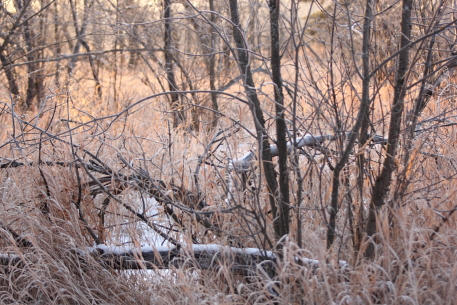
Update on the George Genereux Urban Regional Park Wildfire Area

Update on the George Genereux Urban Regional Park Wildfire Area

We received a follow-up report regarding the wildfire that occurred in George Genereux Urban Regional Park.

The Saskatoon Fire Department requested assistance from Urban Forestry staff to assess vegetation damage and determine whether any ongoing safety concerns remained within the affected area. Following a site inspection, an Urban Forestry supervisor reported that 44 small dead trees along the pathway were identified and marked with spray paint. The overall risk was assessed as low due to the area’s relatively low level of use, the low likelihood of tree failure, and the minimal potential for injury should a tree fall. While these trees should eventually be removed to prevent them from falling onto the pathway, they do not currently present an immediate hazard to the public.

As a result of this assessment, all identified safety concerns have now been addressed, and the area may continue to be used by the public. While some visible impacts from the wildfire remain, they do not pose a risk that would warrant restricting access to the site.

Visitors should be aware that tick populations remain very high in the area. The fire did not eliminate ticks, so appropriate precautions are strongly recommended, including wearing long clothing, staying on designated trails where possible, and conducting tick checks after visiting.

To help protect public health, natural areas, and reduce the risk of future wildfires, smoking and vaping are prohibited in all outdoor public spaces owned or operated by the City of Saskatoon under Smoking Control Bylaw No. 8286. This restriction applies to all tobacco products, cannabis products, and electronic cigarettes. Open fires, campfires, and any unauthorized flame-producing activities are also prohibited. Visitors are encouraged to respect these regulations to help safeguard forests, wetlands, wildlife habitat, and fellow park users.

The burned area also presents a valuable opportunity for ecological learning. Post-fire landscapes serve as living laboratories where environmental organizations such as the Friends of the Saskatoon Afforestation Areas can observe ecological succession and natural recovery processes firsthand. Over time, pioneering plants, insects, fungi, birds, and mammals gradually recolonize the site, demonstrating the resilience of natural ecosystems. Monitoring these changes can provide important information about biodiversity recovery, soil health, habitat restoration, carbon storage, and climate adaptation. Such areas also offer meaningful educational opportunities, helping visitors understand the role that fire can play in ecosystem renewal and fostering a deeper appreciation for the natural processes that shape and sustain healthy landscapes.

Previous posts about the grass fire.

Grass Fire Monitoring Continues Amid Extreme Dry Conditions

Grass and Brush Fire Response Underway

Understanding Wildfire Risk: The 30-30-30 Rule

When it comes to predicting how aggressively a wildfire will behave, Canadian firefighters and meteorologists look for a critical atmospheric tipping point known as the “crossover” effect. This danger zone is easily remembered by the 30-30-30 rule of thumb, which identifies the exact combination of weather conditions that cause small fires to rapidly explode out of control.

The rule states that wildfire danger reaches extreme levels when three specific conditions are met simultaneously:

  • Temperature: 30°C or higher.
  • Relative Humidity: 30% or lower.
  • Wind Speed: 30 km/h or faster.

Why This Combination is So Dangerous

When the air becomes that hot and dry, it acts like a sponge, rapidly evaporating moisture from forest vegetation, grass, and soil. This creates a massive amount of highly flammable fuel. Once you add sustained wind speeds of 30 km/h into the mix, a spark can instantly turn into an intense, fast-moving blaze. The wind not only supplies oxygen to the flames but also carries burning embers far ahead of the main fire line, igniting new flare-ups and making containment incredibly difficult for emergency crews.

When a region hits this “crossover” threshold, fire safety officials go on high alert, as any new ignition has the potential to become an unmanageable wildfire.
Addresses:

Part SE 23-36-6 – Richard St. Barbe Baker Afforestation Area – 241 Township Road 362-A

Part SE 23-36-6 – SW Off-Leash Recreation Area (Richard St. Barbe Baker Afforestation Area ) – 355 Township Road 362-A

S ½ 22-36-6 Richard St. Barbe Baker Afforestation Area (West of SW OLRA) – 467 Township Road 362-A

NE 21-36-6 “George Genereux” Afforestation Area – 133 Range Road 3063

Coming soon the Clavet Memorial Healing Forest honouring the Humboldt Broncos

Wikimapia Map: type in Richard St. Barbe Baker Afforestation Area or

Google Maps South West Off Leash area location pin at parking lot

Web page: https://stbarbebaker.wordpress.com

Where is the Richard St. Barbe Baker Afforestation Area? with map

Where is the George Genereux Urban Regional Park (Afforestation Area)?with map

Pinterest richardstbarbeb

Blogger: FriendsAfforestation

Tumblr friendsafforestation.tumblr.comFacebook Group Page: Users of the George Genereux Urban Regional Park

Facebook: StBarbeBaker Afforestation Area

Facebook for the non profit Charity Friends of the Saskatoon Afforestation Areas Inc. FriendsAreas

Facebook group page : Users of the St Barbe Baker Afforestation Area

Facebook: South West OLRA

Reddit: FriendsAfforestation

BlueSky Social

Mix: friendsareas

YouTube

Support via Zeffy

Please help protect / enhance your afforestation areas, please contact the Friends of the Saskatoon Afforestation Areas Inc. (e-mail / e-transfers )

Donate your old vehicle, here’s how!  

Support using Canada Helps

Support via a recycling bottle donation and Join the plastic-recycle challenge!

United Nations Decade on Ecosystem Restoration

““Be like a tree in pursuit of your cause. Stand firm, grip hard, thrust upward. Bend to the winds of heaven..”Richard St. Barbe Baker

Grass Fire Monitoring Continues Amid Extreme Dry Conditions

Grass Fire Monitoring Continues at George Genereux Urban Regional Park Amid Extreme Dry Conditions

The Saskatoon Fire Department continues monitoring a significant grass and brush fire within George Genereux Urban Regional Park following the initial emergency response on Tuesday, May 26, 2026. CLOSED REOPENED June 4, 2026

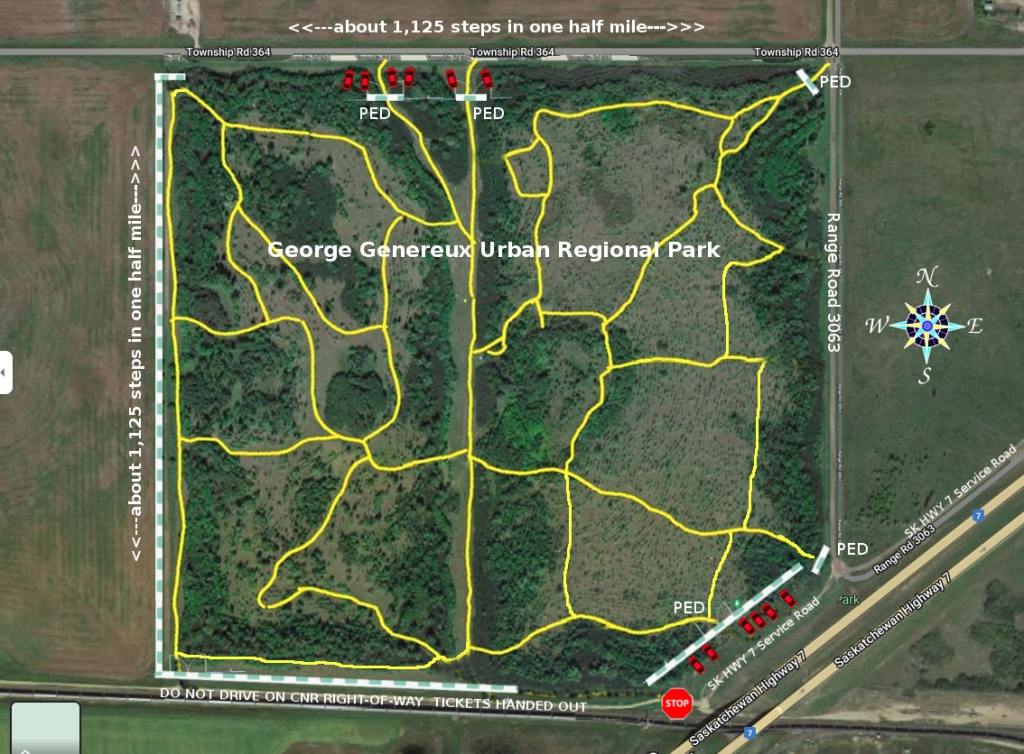
The fire occurred in the southwest portion of Saskatoon within the Blairmore Sector near Saskatchewan Highway 7 and Township Road 364, alongside the SaskPower right-of-way and nearby CNR rail corridor. Fire crews returned to the site again on Wednesday, May 27, where hot spots continued smouldering east of the SaskPower corridor under ongoing hot, dry, and windy conditions. Rest assured, due to the extreme dry conditions, the Saskatoon Fire Department will need to monitor this location, for a couple of months! What an expense for a totally preventable fire caused by the carelessness of humans!

The fire occurred in the southwest portion of Saskatoon within the Blairmore Sector near Saskatchewan Highway 7 and Township Road 364, alongside the SaskPower right-of-way and nearby CNR rail corridor. Fire crews returned to the site again on Wednesday, May 27, where hot spots continued smouldering east of the SaskPower corridor under ongoing hot, dry, and windy conditions.

According to reports, firefighters expect to continue monitoring the area for an extended period due to persistent drought conditions, dry vegetation, and the potential for flare-ups. Initial response crews encountered rapidly spreading grassland and wildland fire conditions fuelled by strong winds and critically dry grasses. Multiple fire apparatus, brush trucks, tankers, command units, and fire personnel were deployed to contain and extinguish the blaze.

The entire half of the 148 acre greenspace east of the Sask Power right of way— was impacted by the fire.

The cause of the fire remains under investigation. However, concern has been raised regarding possible human causes, including improperly discarded smoking materials, vaping products, open flames, and reports of individuals allegedly burning plastic wire casings to remove copper from electrical spools. Bylaw No. 8286 The Smoking Control Bylaw prohibits smoking or vaping in outdoor public places owned or operated by the City.Residents are encouraged to immediately report suspicious activity involving wire burning, illegal fires, smoke, or abandoned wire spools to local authorities.

This incident follows another human-caused fire response on May 11, 2026, within Richard St. Barbe Baker Afforestation Area where firefighters responded to a fire that had not been properly extinguished. Human activity remains one of the leading causes of wildland and grass fires across Canada, with people responsible for the vast majority of preventable fires in many provinces, including Saskatchewan.

Residents are reminded that under the City of Saskatoon Smoking Control Bylaw No. 8286, smoking and vaping — including tobacco, cannabis, and e-cigarettes — are prohibited in outdoor public places owned or operated by the City, including parks, trails, and naturalized green spaces.

The public is being asked to not visit nor travel to or near George Genereux Urban Regional Park while emergency monitoring continues. Smoke may remain visible as crews manage lingering hot spots and smouldering vegetation. Avoiding active response areas helps protect public safety while allowing firefighters unobstructed access to service roads, trails, and containment zones.

The approximately 148-acre urban regional park is an important ecological area within Saskatoon’s west side, providing valuable habitat for birds, pollinators, small and large mammals, native grasses, and biodiversity within the city’s naturalized landscape. Dry spring conditions, low moisture levels, accumulated plant litter, and strong winds have created extreme fire conditions throughout Saskatchewan, increasing the risk of rapidly spreading grass and brush fires.

Urban naturalized parks provide critical ecological services including wildlife habitat, biodiversity conservation, stormwater management, carbon storage, air quality improvement, recreation, environmental education, and climate resilience. Protecting these spaces from preventable fires is essential for both environmental sustainability and public safety.

Residents are strongly encouraged to:

  • Avoid unnecessary outdoor burning
  • Properly extinguish cigarettes and smoking materials
  • Use caution with equipment, trailers, and machinery
  • Respect fire bans, advisories, and restrictions
  • Report smoke, suspicious activity, or unattended fires immediately

Extreme fire conditions across Saskatchewan mean that even a small spark can quickly become a major wildfire event.

A sincere note of appreciation is extended to the members of the Saskatoon Fire Department for their rapid response, professionalism, and continued dedication in protecting Saskatoon residents, infrastructure, wildlife habitat, and urban ecosystems during this challenging fire event.

Saskatchewan Spatial Fire Management EXTREME FIRE RISK

Saskatoon firefighters battle grassland fire Tuesday

The 30-30-30 Rule: A Formula for Wildfire Danger

In wildfire management, a critical environmental threshold called “crossover” indicates when fire behavior transitions from manageable to extreme. This high-risk state occurs when three weather elements hit the number 30 at the same time:

  • Heat: Temperatures reach 30°C or above.
  • Dryness: Relative humidity drops to 30% or lower.
  • Wind: Sustained wind speeds hit 30 km/h or faster.

The Bottom Line: When these conditions align, forests and grasslands dry out rapidly, allowing fires to ignite instantly, spread at terrifying speeds, and easily bypass containment lines.

Addresses:

Part SE 23-36-6 – Richard St. Barbe Baker Afforestation Area – 241 Township Road 362-A

Part SE 23-36-6 – SW Off-Leash Recreation Area (Richard St. Barbe Baker Afforestation Area ) – 355 Township Road 362-A

S ½ 22-36-6 Richard St. Barbe Baker Afforestation Area (West of SW OLRA) – 467 Township Road 362-A

NE 21-36-6 “George Genereux” Afforestation Area – 133 Range Road 3063

Wikimapia Map: type in Richard St. Barbe Baker Afforestation Area or
Google Maps South West Off Leash area location pin at parking lot

Web page: https://stbarbebaker.wordpress.com

Where is the Richard St. Barbe Baker Afforestation Area? with map

Where is the George Genereux Urban Regional Park (Afforestation Area)?with map

Pinterest richardstbarbeb

Blogger: FriendsAfforestation

Tumblr friendsafforestation.tumblr.comFacebook Group Page: Users of the George Genereux Urban Regional Park

Facebook: StBarbeBaker Afforestation Area

Facebook for the non profit Charity Friends of the Saskatoon Afforestation Areas Inc. FriendsAreas

Facebook group page : Users of the St Barbe Baker Afforestation Area

Facebook: South West OLRA

Reddit: FriendsAfforestation

BlueSky Social

Mix: friendsareas

YouTube

Support via Zeffy

Please help protect / enhance your afforestation areas, please contact the Friends of the Saskatoon Afforestation Areas Inc. (e-mail / e-transfers )

Donate your old vehicle, here’s how!  

Support using Canada Helps

Support via a recycling bottle donation and Join the plastic-recycle challenge!

United Nations Decade on Ecosystem Restoration

““Be like a tree in pursuit of your cause. Stand firm, grip hard, thrust upward. Bend to the winds of heaven..”

Grass and Brush Fire Response Underway

Grass and Brush Fire Response Underway Near George Genereux Urban Regional Park

Residents are being asked to avoid the entire area surrounding George Genereux Urban Regional Park on Tuesday, May 26, as the Saskatoon Fire Department responds to a grass and brush fire located along the western edge of the park near the CNR rail corridor. George Genereux Urban Regional Park IS CLOSED till further notice stay tuned to the City of Saskatoon. Re-opened June 4, 2026

Emergency crews are actively working to contain the fire and protect surrounding green spaces, infrastructure, and nearby habitats. Smoke may be visible from surrounding neighbourhoods as firefighters manage hot spots and prevent the flames from spreading through dry grasses and brush.

The 148-acre urban regional park is an important naturalized area within Saskatoon’s west side, providing habitat for birds, pollinators, small mammals, and native vegetation. During dry spring conditions, grasslands and brush areas can become highly vulnerable to fast-moving fires, especially during windy weather or periods of low moisture.

Members of the public are encouraged to stay clear of the area while emergency operations continue. Avoiding the site helps ensure public safety and allows firefighters unobstructed access to trails, service roads, and fire response zones.

Grass and brush fires can spread rapidly through naturalized urban areas due to dry vegetation, accumulated plant litter, and changing wind conditions. Firefighters often work quickly to create containment lines, extinguish smouldering vegetation, and monitor surrounding areas for flare-ups.

Urban naturalized parks play an important ecological role by supporting biodiversity, improving air quality, reducing stormwater runoff, and providing opportunities for recreation and environmental education. Protecting these spaces during wildfire or brush fire events is important not only for public safety, but also for maintaining healthy urban ecosystems.

Residents are reminded to use caution during dry conditions by properly disposing of cigarettes, not smoking nor vaping in city greenspace park areas, avoiding open flames near grasslands, and reporting signs of smoke or fire immediately to emergency services and DO NOT use George Genereux Urban Regional Park until notice is given by the City of Saskatoon please.

Further updates regarding trail access or reopening of the area may become available following fire suppression and safety assessments by local authorities.

A sincere note of thanks and appreciation is extended to the members of the Saskatoon Fire Department for their rapid response, professionalism, and dedicated efforts in protecting both public safety and the natural environment during this grass and brush fire incident. Their work safeguarding Saskatoon’s communities, green spaces, wildlife habitat, and urban ecosystems is deeply appreciated.

The 30-30-30 Rule: A Formula for Wildfire Danger

In wildfire management, a critical environmental threshold called “crossover” indicates when fire behavior transitions from manageable to extreme. This high-risk state occurs when three weather elements hit the number 30 at the same time:

  • Heat: Temperatures reach 30°C or above.
  • Dryness: Relative humidity drops to 30% or lower.
  • Wind: Sustained wind speeds hit 30 km/h or faster.

The Bottom Line: When these conditions align, forests and grasslands dry out rapidly, allowing fires to ignite instantly, spread at terrifying speeds, and easily bypass containment lines.

Saskatoon firefighters battle grassland fire Tuesday

Addresses:

Part SE 23-36-6 – Richard St. Barbe Baker Afforestation Area – 241 Township Road 362-A
Part SE 23-36-6 – SW Off-Leash Recreation Area (Richard St. Barbe Baker Afforestation Area ) – 355 Township Road 362-A
S ½ 22-36-6 Richard St. Barbe Baker Afforestation Area (West of SW OLRA) – 467 Township Road 362-A

NE 21-36-6 “George Genereux” Afforestation Area – 133 Range Road 3063

Wikimapia Map: type in Richard St. Barbe Baker Afforestation Area or

Google Maps South West Off Leash area location pin at parking lot

Web page: https://stbarbebaker.wordpress.com

Where is the Richard St. Barbe Baker Afforestation Area? with map

Where is the George Genereux Urban Regional Park (Afforestation Area)?with map

Pinterest richardstbarbeb

Blogger: FriendsAfforestation

Tumblr friendsafforestation.tumblr.comFacebook Group Page: Users of the George Genereux Urban Regional Park

Facebook: StBarbeBaker Afforestation Area

Facebook for the non profit Charity Friends of the Saskatoon Afforestation Areas Inc. FriendsAreas

Facebook group page : Users of the St Barbe Baker Afforestation Area

Facebook: South West OLRA

Reddit: FriendsAfforestation

BlueSky Social

Mix: friendsareas

YouTube

Support via Zeffy

Please help protect / enhance your afforestation areas, please contact the Friends of the Saskatoon Afforestation Areas Inc. (e-mail / e-transfers )

Donate your old vehicle, here’s how!  

Support using Canada Helps

Support via a recycling bottle donation and Join the plastic-recycle challenge!

United Nations Decade on Ecosystem Restoration

““Be like a tree in pursuit of your cause. Stand firm, grip hard, thrust upward. Bend to the winds of heaven..”

The Language of Conks: What Shelf Fungi Teach Us About Caring for Trees and Forests

In the hush of an old woodland, where trembling aspens flicker like coins of light and spruce roots braid themselves through centuries of memory, there is another kingdom quietly at work beneath the bark. It is neither plant nor animal, but something older in spirit and stranger in form — the fungal realm. To kneel beside a weathered trunk and notice a shelf fungus protruding from its side is to glimpse the forest speaking in another language.

These woody shelves, called polypores, are the fruiting bodies of immense underground and internal fungal networks. The name “polypore” refers to the tiny pores beneath the cap, replacing the delicate gills of other mushrooms. When these fungi harden into woody, hoof-shaped structures, arborists and foragers alike call them conks. They are the visible punctuation marks of a hidden process: decomposition, renewal, and the recycling of life itself.

The forest does not waste.

A conk may seem lifeless at first glance — gray as stone, ridged with age, fixed immovably to the trunk. Yet within it are millions of spores waiting for the right wind, the right wound, the right moment. Like rings in a tree, many shelf fungi add a fresh layer of spore-producing tissue each growing season. Some years produce two flushes of growth, making time itself difficult to measure precisely. One conk with eight visible layers may be four years old, or perhaps eight. Fungi, like forests, resist human impatience.

Among the most recognizable is Fomes fomentarius, the tinder conk, hard and gray, shaped uncannily like the hoof of a horse. Nearby may grow Ganoderma applanatum, known as artist’s conk because its creamy white underside bruises dark when touched, preserving every line like charcoal on parchment. A child can sketch a bird upon it with a fingertip, and the forest will keep the drawing for years.

These organisms are not invaders in the simple sense. They are recyclers, chemists, undertakers, and midwives of succession. Roughly 1,700 species of wood-rotting polypores have been documented in North America alone, each evolved to unlock the dense architecture of wood. Trees build themselves from sunlight, water, minerals, and carbon dioxide. Fungi dismantle those structures molecule by molecule, returning nutrients to soil and life to the ecosystem.

Without fungi, forests would choke upon their own dead.

Yet their appearance on a living tree often tells a more sobering story. Shelf fungi are usually dead-wood dependent organisms, thriving on weakened, wounded, scarred or dying tissue. Most wood decay begins when airborne spores enter exposed wood through injury. A broken limb. A careless pruning cut. A scar from construction equipment. Fire, lightning, drought, sunscald, insects boring into bark — all become doorways.

The fungus does not create the weakness alone. Often, it merely answers an invitation.

A stressed tree becomes vulnerable. Heat waves, compacted soils, severed roots, and prolonged drought leave trees physiologically exhausted, less able to compartmentalize decay. The fungal mycelium moves silently through sapwood and heartwood, digesting lignin — the very compound that gives wood its strength. What appears externally as a single shelf may conceal columns of internal decay extending metres above and below the fruiting body.

Knock on such a trunk with your knuckles or a sounding hammer and the tree may answer with a hollow resonance, a wooden echo hinting at unseen rot within.

And still, the forest persists.

Woodpeckers arrive next. Sapsuckers drill neat rows into stressed bark to drink rising sap. Beetles tunnel through softened wood. Mosses gather moisture in fissures. Cavities become homes for owls, chickadees, squirrels, and raccoons. What humans call decay, ecosystems call opportunity.

A wildlife tree is not a failed tree. It is a standing community.

This understanding lies at the heart of wise forestry and compassionate arboriculture. Too often, those appreciating our urban forests treat trees as isolated ornaments rather than members of a living network. We prune aggressively, wound roots, compact soil, and sterilize deadwood from greenspaces as though death itself were untidy. Yet forests thrive through cycles of growth, injury, decomposition, and renewal.

The great mycologist-naturalists remind us to look deeper. Paul Stamets writes of fungi as Earth’s neurological network, threading intelligence through ecosystems. Merlin Sheldrake invites us to see forests not as collections of individuals but as entangled conversations. David Arora teaches us to approach mushrooms with curiosity, humility, and delight — to kneel in the leaf litter and truly observe.

And observation changes stewardship.

If we wish to care for our trees and forests, we must first stop imagining ourselves outside of them.

The Kenyan initiative Watu Wa Miti — “People of the Trees” — understood this profoundly. Founded in 1922 by Richard St. Barbe Baker alongside Chief Josiah Njonjo, the movement began with a deceptively simple pledge: plant ten trees every year, protect trees everywhere, and perform one good deed daily. It was not merely a forestry campaign. It was a moral philosophy rooted in reciprocity.

To care for forests is to care for future shade we may never sit beneath.

Modern arborists know there is no true cure once aggressive wood-decay fungi establish themselves deeply within a tree. Species such as Phellinus tremulae (Aspen Bracket) and Schizophyllum commune (Common Split Gill) colonize stressed wood and produce characteristic fruiting bodies that reveal internal decline already underway. By the time conks appear, the hidden mycelial network may have occupied large portions of the trunk or roots.

The task, then, is prevention and respect.

Protect roots from compaction. Avoid unnecessary wounds. Prune properly and sparingly. Water young trees deeply during drought. Preserve diverse forests rather than monocultures. Leave some deadwood in naturalized areas so fungal and insect communities can continue nutrient cycling. Understand that fungi are not enemies to eradicate, but indicators of ecological imbalance and participants in renewal.

And perhaps most importantly: do not destroy the evidence.

Removing a conk from a tree does not remove the fungus within. The visible mushroom is merely the reproductive structure, while the true organism — the mycelium — permeates the wood invisibly. Tearing off fruiting bodies may reduce spore dispersal, but it does not halt decay. In damp weather, such disturbance may even aid spore spread.

The forest is subtler than our attempts to control it.

To walk among trees is to walk among beings engaged in constant transformation. A fallen birch nourishes fungi. Fungi nourish soil. Soil nourishes seedlings. Seedlings become forests. Forests shape climate, hold water, soften wind, cool cities, and shelter life.

Every conk on a trunk is both warning and wisdom.

It tells us that trees are mortal. That wounds matter. That ecosystems recycle grief into fertility. And that caring for forests means more than planting trees — it means protecting relationships: between roots and rain, fungi and woodpeckers, insects and bark, people and the living earth.

If we listen closely enough, even a silent shelf fungus can teach us how to belong to the forest again.

Thank you to Scott Kindrachuk, Supervisor with Urban Forestry in the City of Saskatoon Parks Department. From June 9–11, arborists will be working in the Richard St. Barbe Baker Afforestation Area to professionally remove selected standing dead trees identified as potential falling hazards, fire risks, or disease concerns. These trees will be marked with a spray-painted dot prior to the commencement of work.

Part SE 23-36-6 – Richard St. Barbe Baker Afforestation Area – 241 Township Road 362-A

Part SE 23-36-6 – SW Off-Leash Recreation Area (Richard St. Barbe Baker Afforestation Area ) – 355 Township Road 362-A

S ½ 22-36-6 Richard St. Barbe Baker Afforestation Area (West of SW OLRA) – 467 Township Road 362-A

NE 21-36-6 “George Genereux” Afforestation Area – 133 Range Road 3063

Wikimapia Map: type in Richard St. Barbe Baker Afforestation Area or

Google Maps South West Off Leash area location pin at parking lot

Web page: https://stbarbebaker.wordpress.com

Where is the Richard St. Barbe Baker Afforestation Area? with map

Where is the George Genereux Urban Regional Park (Afforestation Area)?with map

Pinterest richardstbarbeb

Blogger: FriendsAfforestation

Tumblr friendsafforestation.tumblr.comFacebook Group Page: Users of the George Genereux Urban Regional Park

Facebook: StBarbeBaker Afforestation Area

Facebook for the non profit Charity Friends of the Saskatoon Afforestation Areas Inc. FriendsAreas

Facebook group page : Users of the St Barbe Baker Afforestation Area

Facebook: South West OLRA

Reddit: FriendsAfforestation

BlueSky Social

Mix: friendsareas

YouTube

Support via Zeffy

Please help protect / enhance your afforestation areas, please contact the Friends of the Saskatoon Afforestation Areas Inc. (e-mail / e-transfers )

Donate your old vehicle, here’s how!  

Support using Canada Helps

Support via a recycling bottle donation and Join the plastic-recycle challenge!

United Nations Decade on Ecosystem Restoration

““Be like a tree in pursuit of your cause. Stand firm, grip hard, thrust upward. Bend to the winds of heaven..” Richard St. Barbe Baker

World Biodiversity Day 2026

Acting Locally for Global Impact in Saskatoon’s Afforestation Areas

Today, May 22, marks World Biodiversity Day, a global celebration recognizing the extraordinary variety of life sustaining our planet. This year’s theme, “Acting Locally for Global Impact,” reminds us that meaningful environmental stewardship begins within our own communities, parks, wetlands, and forests.

In Saskatoon, the afforestation areas cared for and advocated by the Friends of the Saskatoon Afforestation Areas demonstrate how local conservation contributes directly toward global biodiversity goals. These urban forests are more than collections of trees; they are living ecosystems supporting birds, mammals, insects, pollinators, fungi, microorganisms, and native prairie biodiversity within Saskatchewan’s moist mixed grassland region.

West Swale and Richard St. Barbe Baker AFforestation Area wildlife Urban Forest Semi-Wilderness Area. Mountain Bluebird, White Tailed Deer Fawn. Barred Tiger Salamander or western tiger salamander. American Pelican, Mallard Duckling

The afforestation areas provide important ecological layers essential for healthy biodiversity. Towering canopy species such as native American Elm, Balsam Poplar, Manitoba Maple, Trembling Aspen, Bur Oak, Colorado Blue Spruce and White Spruce shelter birds and wildlife while stabilizing soils and moderating temperatures. Beneath them grow shrubs and understory plants including Saskatoon berry, chokecherry, red-osier dogwood, snowberry, buffaloberry, silverberry, gooseberries, currants, roses, and willow species which provide food, nesting habitat, pollen, nectar, and protection for pollinators, songbirds, mammals, and beneficial insects.

These forests also provide habitat corridors for wildlife including white-tailed deer, moose, rabbits, squirrels, owls, hawks, woodpeckers, migratory songbirds, and countless invertebrate species. Native flowering shrubs such as prairie rose, woods rose, silver buffaloberry, wolf willow, and western snowberry sustain pollinator populations critical to ecosystem resilience and agricultural health.

Biodiversity conservation also means understanding ecological challenges. Within the afforestation areas, introduced and invasive species such as European buckthorn require careful monitoring and community science participation. The Friends of the Saskatoon Afforestation Areas encourage the public to assist with observations through iNaturalist to help identify invasive species locations, monitor biodiversity, and contribute valuable ecological data supporting conservation efforts.

American Beaver, Porcupine, Red-winged Blackbird, Fawn, Mallard Ducks, Waxwing, Rabbit, Deer Chappell Marsh. West Swale Wetlands. Richard St. Barbe Baker Afforestation Area. Saskatoon, SK, CA

Several species found within the afforestation areas also carry conservation significance. American Elm and Green Ash are listed on the IUCN Red List because of threats from disease and environmental pressures. The Red-Berried Elder is ranked as a rare species within Saskatchewan. Every healthy urban forest supporting these species contributes to broader ecological resilience and conservation awareness.

Urban forests are increasingly recognized as essential climate adaptation infrastructure. Trees absorb carbon, reduce urban heat, improve air quality, retain stormwater, provide wildlife habitat, and contribute to mental and physical wellbeing for surrounding communities. In rapidly changing environments, afforestation areas become critical refuges not only for biodiversity, but also for people seeking connection with nature.

The Friends of the Saskatoon Afforestation Areas believe biodiversity protection begins with education, stewardship, and community participation. Every bird observation, invasive species report, pollinator garden, tree planting initiative, and conservation conversation helps strengthen environmental resilience locally while contributing to international biodiversity goals.

World Biodiversity Day reminds us that protecting ecosystems does not happen only within distant wilderness parks. It happens where communities choose to care for the landscapes around them. Saskatoon’s afforestation areas stand as living examples of how local environmental stewardship can create lasting global impact for biodiversity, climate resilience, and future generations.

Afforestation Area Addresses:

Part SE 23-36-6 – Richard St. Barbe Baker Afforestation Area – 241 Township Road 362-A

Part SE 23-36-6 – SW Off-Leash Recreation Area (Richard St. Barbe Baker Afforestation Area ) – 355 Township Road 362-A

S ½ 22-36-6 Richard St. Barbe Baker Afforestation Area (West of SW OLRA) – 467 Township Road 362-A

NE 21-36-6 “George Genereux” Afforestation Area – 133 Range Road 3063

Clavet Memorial Healing Forest honouring the Humboldt Broncos.

Wikimapia Map: type in Richard St. Barbe Baker Afforestation Area or

Google Maps South West Off Leash area location pin at parking lot

Web page: https://stbarbebaker.wordpress.com

Where is the Richard St. Barbe Baker Afforestation Area? with map

Where is the George Genereux Urban Regional Park (Afforestation Area)?with map

Pinterest richardstbarbeb

Blogger: FriendsAfforestation

Tumblr friendsafforestation.tumblr.comFacebook Group Page: Users of the George Genereux Urban Regional Park

Facebook: StBarbeBaker Afforestation Area

Facebook for the non profit Charity Friends of the Saskatoon Afforestation Areas Inc. FriendsAreas

Facebook group page : Users of the St Barbe Baker Afforestation Area

Facebook: South West OLRA

Reddit: FriendsAfforestation

BlueSky Social

Mix: friendsareas

YouTube

Support via Zeffy

Please help protect / enhance your afforestation areas, please contact the Friends of the Saskatoon Afforestation Areas Inc. (e-mail / e-transfers )

Donate your old vehicle, here’s how!  

Support using Canada Helps

Support via a recycling bottle donation and Join the plastic-recycle challenge!

United Nations Decade on Ecosystem Restoration

“Be like a tree in pursuit of your cause. Stand firm, grip hard, thrust upward. Bend to the winds of heaven..” – Richard St. Barbe Baker

Moose Sightings in Saskatoon: Why Reporting Matters

Mother Moose and Baby Calf Roam Saskatoon’s Urban Forests

Saskatoon Residents Asked to Report Moose (large animal) Sightings in Urban Green Spaces

Residents enjoying walks through the forest trails of the Richard St. Barbe Baker Afforestation Area or the nearby Southwest Off Leash Recreation Area may be fortunate enough to witness an extraordinary wildlife encounter: a mother moose browsing quietly beside her calf. These majestic animals remind us that Saskatoon’s naturalized green spaces continue to provide important habitat and travel corridors for wildlife.

Recently, sightings of a cow moose and calf have raised community interest and concern. Saskatchewan conservation professionals emphasize that public reporting plays a vital role in monitoring wildlife movement within urban areas. Officials make management decisions based largely upon the number, timing, and location of reported sightings.

If you observe moose within Saskatoon city limits, residents are encouraged to contact the Saskatchewan Ministry of Environment TIPPS reporting line. In Saskatoon, sightings may be reported by calling 306-933-6240. Across Saskatchewan, the provincial TIPPS line can also be reached toll free at 1-800-567-4224.

Reporting is especially important if the animals remain in the afforestation area or the Southwest Off Leash Dog Park over multiple days. If the only sighting occurred yesterday, May 20, the animals may already have moved beyond the area. However, repeated sightings help conservation officers determine whether the moose are temporarily passing through or establishing a more regular presence nearby.

Wildlife specialists note there may be two possible explanations for the behaviour being observed. One scenario is that the younger moose may actually be last year’s calf. Cow moose often encourage yearlings to separate in spring as they prepare for a new season and new territory. Alternatively, if the calf was born this year, it will usually remain closely beside its mother throughout its early development.

Park visitors should continue exercising caution around all wildlife. Moose, especially mothers with calves, can become defensive if approached too closely. Dogs should remain leashed, and observers should always maintain a respectful distance while allowing wildlife clear space to move away naturally.

Urban forests such as the Richard St. Barbe Baker Afforestation Area provide valuable ecological refuge not only for birds and pollinators, but also for large mammals seeking food, shelter, and safe movement corridors. Community cooperation and timely reporting help conservation professionals protect both public safety and wildlife wellbeing.

Residents are encouraged to stay alert, enjoy wildlife responsibly, and report ongoing sightings so Saskatchewan conservation officers can continue monitoring the situation carefully.

Walking – Cycling Safely Among Moose

Afforestation Area Addresses:

Part SE 23-36-6 – Richard St. Barbe Baker Afforestation Area – 241 Township Road 362-A

Part SE 23-36-6 – SW Off-Leash Recreation Area (Richard St. Barbe Baker Afforestation Area ) – 355 Township Road 362-A

S ½ 22-36-6 Richard St. Barbe Baker Afforestation Area (West of SW OLRA) – 467 Township Road 362-A

NE 21-36-6 “George Genereux” Afforestation Area – 133 Range Road 3063

Clavet Memorial Healing Forest honouring the Humboldt Broncos.

Wikimapia Map: type in Richard St. Barbe Baker Afforestation Area or

Google Maps South West Off Leash area location pin at parking lot

Web page: https://stbarbebaker.wordpress.com

Where is the Richard St. Barbe Baker Afforestation Area? with map

Where is the George Genereux Urban Regional Park (Afforestation Area)?with map

Pinterest richardstbarbeb

Blogger: FriendsAfforestation

Tumblr friendsafforestation.tumblr.comFacebook Group Page: Users of the George Genereux Urban Regional Park

Facebook: StBarbeBaker Afforestation Area

Facebook for the non profit Charity Friends of the Saskatoon Afforestation Areas Inc. FriendsAreas

Facebook group page : Users of the St Barbe Baker Afforestation Area

Facebook: South West OLRA

Reddit: FriendsAfforestation

BlueSky Social

Mix: friendsareas

YouTube

Support via Zeffy

Please help protect / enhance your afforestation areas, please contact the Friends of the Saskatoon Afforestation Areas Inc. (e-mail / e-transfers )

Donate your old vehicle, here’s how!  

Support using Canada Helps

Support via a recycling bottle donation and Join the plastic-recycle challenge!

United Nations Decade on Ecosystem Restoration

“Be like a tree in pursuit of your cause. Stand firm, grip hard, thrust upward. Bend to the winds of heaven..” – Richard St. Barbe Baker

Saskatoon’s Canopy: The Heart of the City is Rooted in You

This is a story of growth, right in your own backyard. Tonight, the focus is on Saskatoon—not just the City of Bridges, but a city that is fighting to stay green. It’s a mission for the planet, and it’s happening at the curb outside your front door.”

“Now, let’s take a look at what’s happening in your neck of the woods! The City has released its Greener Together newsletter, and folks, you’re going to want to check those mailboxes. Whether it’s in your bill insert or that ‘Protect Your Urban Forest’ pamphlet, there is a lot of great stuff going on across the country—and by that, I mean right there on your boulevard and naturalized park spaces!” A brief summary is herewith attached.

“But there is a serious note tonight. A threat is looming. Dutch Elm Disease is hitting record highs, and we have to act now. From the pruning ban starting April 1st to the way you handle firewood, the stakes for our canopy have never been higher. Let’s get to the facts and see how you can help this forest thrive.”


Feature Article: Guardians of the Canopy

In Saskatoon, the trees are more than just a backdrop—they are a hardworking infrastructure. According to the City’s latest guide, “Protect Your Urban Forest,” these leafy giants do everything from cleaning our air and cooling our pavement to managing stormwater. But as the city grows, so does the responsibility of the residents who live under their shade.

The Golden Rules of Tree Care The City manages its trees, but it’s the “extra mile” from residents that helps them truly thrive. A little water during a prairie dry spell or keeping the base of a boulevard tree tidy can ensure these assets flourish for generations. However, there are strict “don’ts” to keep in mind: you may not prune, apply pesticides, or attach items to City trees without official approval.

Planning a Project? Check the Radius If you are planning to renovate or landscape, keep your measuring tape handy. Any construction within six meters of a City tree requires a Tree Permit. The good news? These permits are completely free and are usually processed within four business days. It’s a small step that ensures construction equipment doesn’t accidentally damage the root systems of our shared forest.

A Free Legacy Looking to add some shade to your street? The City is currently offering free boulevard trees to both homeowners and businesses. By requesting a tree, you aren’t just beautifying your property; you’re investing in the city’s long-term health.

The Fight Against Dutch Elm Disease (DED) The most urgent dispatch from the City involves our majestic Elms. DED cases are at an all-time high, and prevention is the only cure. Residents are urged to follow these critical steps:

  • The Pruning Ban: Never prune elm trees between April 1 and August 31.
  • Wood Disposal: Never store elm wood or branches. All elm wood must be taken to the landfill immediately.
  • Report It: If you see a tree that looks diseased or dead, request a professional inspection via the City’s website.

To stay updated on all sustainability efforts, residents can subscribe to the Greener Together newsletter here. Together, we can ensure the “City of Green” lives up to its name.

Part SE 23-36-6 – Richard St. Barbe Baker Afforestation Area – 241 Township Road 362-A

Part SE 23-36-6 – SW Off-Leash Recreation Area (Richard St. Barbe Baker Afforestation Area ) – 355 Township Road 362-A

S ½ 22-36-6 Richard St. Barbe Baker Afforestation Area (West of SW OLRA) – 467 Township Road 362-A

NE 21-36-6 “George Genereux” Afforestation Area – 133 Range Road 3063

Wikimapia Map: type in Richard St. Barbe Baker Afforestation Area or

Google Maps South West Off Leash area location pin at parking lot

Web page: https://stbarbebaker.wordpress.com

Where is the Richard St. Barbe Baker Afforestation Area? with map

Where is the George Genereux Urban Regional Park (Afforestation Area)?with map

Pinterest richardstbarbeb

Blogger: FriendsAfforestation

Tumblr friendsafforestation.tumblr.comFacebook Group Page: Users of the George Genereux Urban Regional Park

Facebook: StBarbeBaker Afforestation Area

Facebook for the non profit Charity Friends of the Saskatoon Afforestation Areas Inc. FriendsAreas

Facebook group page : Users of the St Barbe Baker Afforestation Area

Facebook: South West OLRA

Reddit: FriendsAfforestation

BlueSky Social

Mix: friendsareas

YouTube

Support via Zeffy

Please help protect / enhance your afforestation areas, please contact the Friends of the Saskatoon Afforestation Areas Inc. (e-mail / e-transfers )

Donate your old vehicle, here’s how!  

Support using Canada Helps

Support via a recycling bottle donation and Join the plastic-recycle challenge!

United Nations Decade on Ecosystem Restoration

““Be like a tree in pursuit of your cause. Stand firm, grip hard, thrust upward. Bend to the winds of heaven..”

Design a site like this with WordPress.com
Get started