Richard St. Barbe Baker Afforestation Area. George Genereux Urban Regional Park. Humboldt Broncos Memorial Forest. Come to Nature. Come to Life. Friends of the Saskatoon Afforestationk Areas Inc. friendsareas.ca
Celebrate Arbor Week in the heart of the Richard St. Barbe Baker Afforestation Area! This special event falls on National Smile Day (May 31), and we believe there is no better reason to smile than standing in the presence of our towering leafy friends. Whether you are a tree-hugger, a budding botanist, or a family looking for a Sunday adventure, join us as we uncover the stories of the forest. For more information or to sign up now!
The Grand Arboretum Tour
Every tree in our afforestation area has a narrative—some are ancient native residents, others are resilient immigrants, and some are “visitors” we need to watch closely.
An arboretum is a specialized botanical garden or “living museum” dedicated exclusively to the cultivation, study, and display of a wide variety of trees and woody plants. These sites, often termed “tree museums,” feature specimens used for education, scientific research, and conservation efforts.
We will be spotting and discussing a wide variety of species, including:
Heritage & Native Giants: Learn about the American Elm and Green Ash (both on the IUCN Red List), the Bur Oak, and the iconic Trembling Aspen.
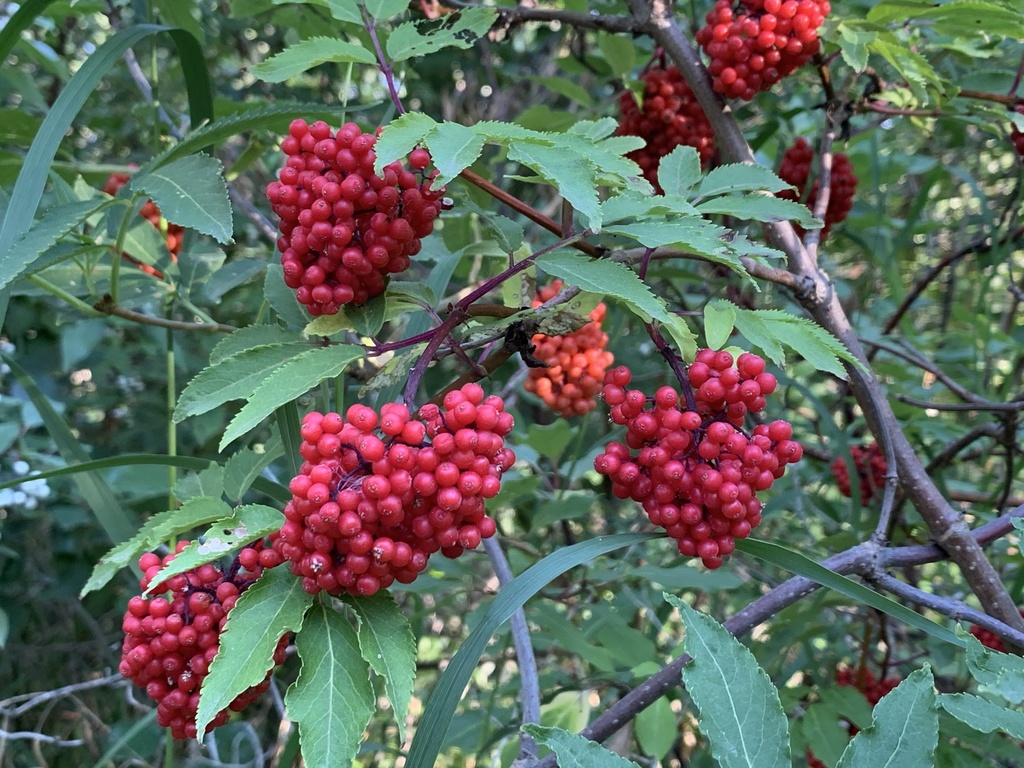
The Rare & Elusive: Keep your eyes peeled for the Red-Berried Elder (a rare S2 species) and the Smooth Rose (S1 ranked)—help us make history if we find it!
The Travelers: We’ll discuss introduced species like the Amur Maple, Scots Pine, and the Siberian Peashrub (Caragana).
The Watchlist: Help us protect our forest by identifying the highly invasive European Buckthorn on iNaturalist.
💰 The $50 Linden Tree Challenge!
In 1984, a Linden Tree (Tiliaceae) was planted somewhere within the area. We are offering a $50 prize to the first participant to find it and record a verified observation on iNaturalist during the event!
Focus: Conservation, preservation, and the joy of nature.
What to Bring: Comfortable walking shoes, a smartphone with the iNaturalist app, and your best National Smile Day grin!
What We’ll See (The Short List):
From the Silver Buffaloberry and Wild Black Currant to the Colorado Blue Spruce and Balsam Poplar, we will explore the diverse layers of our urban canopy. We’ll talk about the medicinal history of the Kinnikinnick (Red Bearberry) and the resilience of our various Willow species. ( The long list 😉 )
Come for the trees, stay for the smiles! Let’s honor the legacy of Richard St. Barbe Baker—the Man of the Trees—by connecting with the giants he inspired us to protect.
The plants found in the Richard St. Barbe Baker Afforestation Area and George Genereux Urban Regional Park are a mix of rugged prairie natives and hardy introduced species. Because these areas were originally part of afforestation efforts, the soil often has to support both deep-rooted trees and shallow-rooted wildflowers.
Here is a breakdown of the soil requirements for the key groups you listed, categorized by their “soil appetite.”
1. The Nitrogen Fixers (Improve Soil Quality)
These plants are unique because they “make their own fertilizer” by taking nitrogen from the air and putting it into the soil. They thrive in low-nitrogen areas where other plants struggle.
Wild Licorice, Alfalfa, Caragana, Sweetclover, American Vetch: * Soil: They prefer loamy to sandy soil.
Nutrients: They are heavy users of Phosphorus and Potassium but don’t need Nitrogen added to the soil.
Condition: They are very tolerant of alkaline (high pH) soils, which are common in Saskatoon.
2. The Heavy Hitters (Trees and Large Shrubs)
These species define the “Afforestation” look and require specific textures to keep their massive structures stable.
Pines & Spruces (Scots Pine, Blue Spruce, White Spruce):
Soil: Prefer sandy to loamy textures.
Condition: They actually prefer slightly acidic soil (which they help create with their needles), but local varieties are adapted to our alkaline Saskatoon dirt. They need well-drained spots; they hate “wet feet.”
Green Ash, Elms, Bur Oak, Box Elder (Manitoba Maple):
Soil: These are “clay-tolerant.” They can handle the heavy, sticky B Horizon clay.
Nutrients: They need high levels of Nitrogen to grow their large leaf canopies.
Saskatoon, Chokecherry, Buffaloberry:
Soil: Very adaptable, but they fruit best in loamy soil rich in organic matter (O and A horizons).
3. The Moisture Seekers (Wetland & Swale Plants)
If you find these, you are likely near the West Swale or a low-lying depression where water collects.
Red Osier Dogwood & Bebb’s Willow:
Soil:Clay or Silty Clay. * Condition: They need high moisture and can survive in “anaerobic” (low oxygen) soil where water sits for long periods.
Yellow Lady’s Slipper (Orchid):
Soil: Requires a very specific moist, loamy soil with high organic content and a relationship with soil fungi.
4. The Prairie Survivors (Tough Wildflowers & Grasses)
These plants are adapted to the “C Horizon”—the raw glacial till left behind by the ice age.
Goldenrods, Asters, Yarrow, Fleabane:
Soil:Sandy to Loamy.
Nutrients: They are low-demand plants. Too much nitrogen actually makes them “leggy” and weak. They thrive on the natural mineral balance of the prairies.
Needle-and-Thread Grass & Prairie Junegrass:
Soil:Sandy. They need the air pockets found in coarse sand to keep their roots healthy. Summary Table: Soil “Wishlist”
Plant Group
Texture Preference
Primary Nutrient Need
pH Preference
Nitrogen Fixers (Alfalfa/Caragana)
Sandy/Loamy
Phosphorus (P)
Alkaline (High pH)
Conifers (Pine/Spruce)
Well-drained Sand
Potassium (K)
Slightly Acidic
Deciduous Trees (Ash/Elm)
Heavy Clay/Loam
Nitrogen (N)
Neutral to Alkaline
Wildflowers (Asters/Goldenrod)
Gritty Sand/Silt
Low Nutrients
Neutral
Wetland Shrubs (Willow/Dogwood)
Heavy Clay
High Moisture
Neutral
Why this matters for the Citizen Scientists:
When you use iNaturalist to record these plants, look at the soil around them. When you examine the soil, realize that the plants around you are also helping you to “read” the soil characteristics. If you see Silver Buffaloberry, you are likely in a spot with high Nitrogen-fixing potential. If you see Blue Spruce, the soil is likely better drained. The plants are essentially “living labels” for the soil types beneath your feet!
Which of these plants are you most excited to hunt for during your walk and exploration?
Why this matters for Naturalists:
When you use iNaturalist to record these plants, look at the soil around them. If you see Silver Buffaloberry, you are likely in a spot with high Nitrogen-fixing potential. If you see Blue Spruce, the soil is likely better drained. The plants are essentially “living labels” for the soil types beneath your feet!
Which of these plants are you most excited to hunt for during the walk?
Living Labels: What Wildflowers Tell Us About the Earth
The “Nitrogen Factory”: Notice how many of your listed plants (Alfalfa, Caragana, Buffaloberry, Vetch) are Nitrogen fixers. These plants are working to “build” the soil with high nitrogen.
Alkalinity: Most of these species are selected for their ability to handle Calcium Carbonate (Lime) in the soil, which is a hallmark of the Saskatoon “C Horizon.”
Texture Matters: You will find the Willows and Dogwoods in the low spots (more clay/water) and the Pines and Needle Grass on the higher, sandier ridges.
By identifying the plant, you are essentially identifying the “hidden” chemistry of the soil beneath it.
Think of it as a two-way conversation between the earth and the sky: by identifying a plant, you are essentially reading a “chemical map” of the hidden soil layers beneath it. Conversely, by exploring the soil’s texture, and color and therefore its mineral content, you can predict exactly which species are best adapted to thrive there, turning a simple patch of dirt into a prediction for the entire habitat.
The Symbiotic Connection
Here are two ways to look at that relationship:
Plants as Bio-Indicators: If you see Silver Buffaloberry or Caragana, the “hidden chemistry” is a lack of nitrogen; these plants act as the soil’s natural fertilization team. If you see Red Osier Dogwood, the soil is whispering that it is heavy, wet, and oxygen-poor.
Soil as a Habitat Blueprint: When you dig a small pit and find a gritty, pale C Horizon, you’ve discovered a site where only drought-tolerant “pioneer” species like Needle-and-Thread Grass can survive. The soil’s high lime content acts as a gatekeeper, choosing the specific residents of the Richard St. Barbe Baker Afforestation Area.
In the Richard St. Barbe Baker Afforestation Area and in George Genereux Urban Regional Park, the land is a stage where the drama of life unfolds in cycles of growth and transformation. This narrative begins with the quiet miracle of germination, a pivotal event in the life of a plant. Germination is not merely the sprouting of a seed, spore, or reproductive body; it is a complex process influenced by various environmental factors that herald the beginning of a new life.
The Process of Germination
As seeds lie dormant, waiting for the perfect conditions to awaken, they anticipate the arrival of water, temperature changes, and light. The absorption of water—imbibition—starts the process, causing the seed to swell and the cellular activities to resume. This rehydration leads to an increase in respiration rates and the revival of metabolic processes that were suspended during dormancy.
In the afforestation areas, diverse plant species each have their unique requirements for germination. For instance, the bearberry (Arctostaphylos uva-ursi) and American elm (Ulmus americana) each embark on their growth journey with different needs. The bearberry’s seeds require a period of cold stratification to break dormancy, while the elm seeds thrive when exposed to consistent moisture and moderate temperatures.
The Early Stages of Growth
Once germination begins, the newly sprouted seedling must navigate its environment. For instance, in hypogeal germination, like in Wood’s Rose (Rosa woodsii),and Cutleaf Anemone (Anemone multifida), , the cotyledons remain underground, while in epigeal germination, such as in Alaskan Bellflower (Campanula alaskana), and Silverberry (Elaeagnus commutata), the cotyledons emerge above ground. The young plant’s radicle, or embryonic root, anchors itself in the soil through geotropism, seeking out water and nutrients necessary for growth.
Epigeal or Hypogeal germination courtesy Kat1992
The soil’s composition plays a crucial role in this early stage. It must be aerated and moist but not waterlogged, as overwatering can suffocate the seedling by preventing adequate gas exchange. The right balance of moisture and aeration supports the seedling’s respiration, allowing it to access the oxygen needed for growth.
The Role of Light and Temperature
Sunlight and temperature are vital for the development of seedlings into mature plants. Sunlight warms the soil and stimulates photosynthesis once the plant has emerged, providing the energy necessary for growth. Some seeds even require direct sunlight to germinate such as Bog Wintergreen (Pyrola asarifolia) and Box Elder (Acer negundo), while others, like the Fireweed (Chamaenerion angustifolium) and Prickly Wild Rose (Rosa acicularis), develop within the ovule, pushing out roots before the flower detaches. (see more on wild roses here)
Temperature also affects growth rates. Cool-season grasses, such as bluegrasses and fine fescues, flourish in the cooler weather of spring and fall, while warm-season grasses, like buffalo grass, thrive in the summer heat. The optimum temperature range for these grasses ensures robust growth and establishment, whether in the cooler or warmer seasons.
Flowering and Reproduction
As plants mature, they enter the flowering stage, a critical phase for reproduction. Here, all the energy accumulated through growth is invested in producing flowers, fruit, and seeds. This stage is essential for the continuation of plant species and involves the intricate pollination processes that ensure genetic diversity and the health of the ecosystem.
Canada Goldenrod-Solidago canadiensis- courtesy hedera.balticagermination-dicotyledon type of plant – two cotyledons (seed leaves)watering plants, and transplanting seedlings to the earthScots Pine Cone and seed
The Interdependence of Life
The afforestation areas showcase the interdependence among plants, animals, and the environment. Trees like the Scotch pine and Colorado blue spruce, introduced as part of afforestation efforts, contribute to the ecosystem by providing habitat and supporting biodiversity. Native species, such as the prairie rose and silver buffaloberry, part of the naturalizing process of the moist mixed prairie grasslands ecosystem play roles in maintaining ecological balance and supporting local wildlife.
There are many environmental benefits provided by these plants. They stabilize soil, enhance water retention, and contribute to nutrient cycling. The rich tapestry of life in these areas, from the smallest microbes to the largest trees, illustrates the complex and beautiful web of relationships that sustain the natural world.
Scots pine (Pinus_sylvestris) tree, branch_and seeds Courtesy Dorota Paczesniak DpaczesniakUlmus americana seeds Courtesy Gmihail
Conclusion
In the Richard St. Barbe Baker Afforestation Area and in George Genereux Urban Regional Park, the journey from seed germination to mature plant is a testament to nature’s resilience and the intricate dance of life. By understanding these processes and the factors that influence them, we gain insight into the delicate balance that supports our ecosystems and the importance of preserving and enhancing these natural habitats for future generations.
Activities
Germination Investigation: Epigeal vs. Hypogeal
Objective: Students will observe and compare two types of germination.
Materials: Seeds of plants with epigeal and hypogeal germination (e.g., beans for epigeal, corn for hypogeal), soil, pots, water. Choose the relevant plant species from the following listing if starting your own pollinator garden.
Activity: Plant the seeds in separate pots and observe their growth over time. Have students record the differences in how the seedlings emerge and how the cotyledons (seed leaves) behave. Discuss why different plants use different types of germination.
Sunlight and Seedling Growth Experiment
Objective: To understand how sunlight affects seedling growth.
Materials: Two sets of identical seedlings, one set placed in a sunny area and the other in a dark area, pots, soil, water.
Activity: Grow two sets of seedlings under different light conditions. Have students measure and record the height, leaf color, and overall health of the seedlings. Discuss how sunlight affects the growth and development of plants.
Design a Seed Garden
Objective: To create a mini-garden with plants that require different light conditions.
Materials: Seeds of various plants (some needing sunlight, some not), small pots, soil, markers for labeling.
Activity: Have students design and plant a small garden in pots, choosing plants with different sunlight needs. They should plan where to place each plant to meet its light requirements. Students will then monitor and record the growth of their garden over time.
Germination Observation Journal
Objective: To document and analyze the germination process of different seeds.
Materials: Various seeds, magnifying glasses, journals or worksheets, water, soil, pots.
Activity: Students plant different types of seeds and keep a daily or weekly journal of their observations. They should note when the seeds start to sprout, how they grow, and any differences between the types of seeds. Share findings and discuss patterns in germination.
Sunlight and Shadow Exploration
Objective: To explore how shadows affect plant growth.
Materials: Small plants, a sunny area, objects to create shadows (e.g., boxes or paper).
Activity: Place plants in different positions to create varying amounts of shadow and sunlight. Have students observe how the shadows affect plant growth and discuss why some plants might need more sunlight than others.
Bonus activity Discovering Monocots and Dicots: Choose from the following listing of the dicots and monocots plant species of the afforestation areas. **Exploring Germination Patterns: How does the process of germination differ between monocots like corn and dicots like beans, and what are the implications of these differences for their growth and development? **Investigating Root Systems: How do the root systems formed during germination of monocots like corn differ from those of dicots like beans, and what impact does this have on the plant’s ability to absorb nutrients and water? **Comparing Leaf Development: What are the differences in leaf development between monocots and dicots during the germination phase, and how might these differences influence their adaptation to various environments? **Impact of Germination on Growth: How does the type of germination (epigeal or hypogeal) affect the initial growth and survival of monocots and dicots in different soil conditions? **Practical Applications: How can understanding the differences in germination between monocots and dicots help sustainability restoration processes in choosing the right plants for their greenspace?
Questions
Why do some seeds need sunlight to germinate, while others do not?
Encourage students to think about the different environments seeds might encounter and why light might be necessary for some seeds but not others.
How might a plant’s germination type (epigeal vs. hypogeal) help it survive in different environments?
This question invites students to consider how different types of germination might be an adaptation to the plant’s habitat.
What do you think would happen if a plant that needs sunlight for germination was planted in complete darkness?
Prompt students to think about the consequences of not meeting a plant’s basic needs and how that affects its growth and development.
Why do you think plants that use hypogeal germination might have an advantage in certain climates or conditions?
Encourage students to hypothesize about the benefits of hypogeal germination in specific environments, such as cold or dry areas.
How can humans help plants that need sunlight to grow in places where there isn’t much light?
This question encourages students to think about practical solutions and how human actions can support plant growth in less-than-ideal conditions.
These activities and questions aim to engage students in hands-on exploration and critical thinking about plant germination and the factors that influence plant growth.
Epigeal Germination
These plants of the afforestation areas typically undergo epigeal germination (where the cotyledons emerge above the soil surface and the hypocotyl elongates to push the cotyledons out of the soil) include:
Bearberry (Arctostaphylos uva-ursi)
Spreading Dogbane (Apocynum androsaemifolium)
California Pigweed (Amaranthus californicus)
Longroot Smartweed (Persicaria amphibia var. emersa)
Three-flowered False Solomon’s Seal (Maianthemum trifolium)
Littleleaf Pussytoes (Antennaria microphylla)
Canada Aniseroot (Osmorhiza longistylis)
Pale Vetchling (Lathyrus ochroleucus)
Virginia Strawberry (Fragaria virginiana)
Squashberry Low Bush Cranberry (Viburnum edule)
Sweetberry Honeysuckle (Lonicera caerulea)
Wild Honeysuckle (Lonicera dioica)
Smooth Fleabane (Erigeron glabellus)
Purple Meadow-rue (Thalictrum dasycarpum)
Veiny Meadow-rue (Thalictrum venulosum)
Common Sneezeweed (Helenium autumnale)
Canada Hawkweed (Hieracium umbellatum)
Ground / Velvety Goldenrod (Solidago mollis)
Missouri Goldenrod (Solidago missouriensis)
Tall Goldenrod (Solidago altissima)
Stiff-leaved Goldenrod (Solidago rigida)
Canada Goldenrod (Solidago canadensis)
Nuttall’s Sunflower (Helianthus nuttallii)
Common Sunflower (Helianthus annuus)
Golden Bean (Thermopsis rhombifolia)
Upright Prairie Coneflower (Ratibida columnifera)
Rough Cinquefoil (Potentilla norvegica)
Prairie Cinquefoil (Potentilla pennsylvanica)
Curlycup Gumweed (Grindelia squarrosa)
Heart-leaf Golden Alexander (Zizia aptera)
Common Silverweed (Argentina anserina)
Cursed Crowfoot (Ranunculus sceleratus)
Alkali Buttercup (Halerpestes cymbalaria)
Yellow Lady’s Slipper (Cypripedium parviflorum)
American Black Currant (Ribes americanum)
Canadian Gooseberry (Ribes oxyacanthoides)
Silver Wormwood (Artemisia ludoviciana)
Fringed Sagebrush (Artemisia frigida)
Field Sagewort (Artemisia campestris)
Biennial Wormwood (Artemisia biennis)
Silver Buffaloberry (Shepherdia argentea)
Common Hops (Humulus lupulus)
Fringed Loosestrife (Lysimachia ciliata)
Sea Milkwort (Lysimachia maritima)
Many-flowered Stickseed (Hackelia floribunda)
Golden Dock (Rumex fugiens)
Western Dock (Rumex occidentalis)
Greater Plantain (Plantago major)
Shinleaf White Wintergreen (Pyrola elliptica)
Box Elder (Acer negundo)
Western Snowberry (Symphoricarpos occidentalis)
Common Snowberry (Symphoricarpos albus)
Bastard Toadflax (Comandra umbellata)
Whereas, these plants of the Saskatoon Afforestation Areas have their cotyledons exposed to the air and light during germination. This type of germination allows the seedling to quickly establish above-ground growth and is common in many herbaceous and some woody plants.
Hypogeal Germination
Among the plants listed, those that typically undergo hypogeal germination (where the cotyledons remain underground and the embryonic stem, or hypocotyl, stays below the soil surface) include:
American Elm (Ulmus americana)
Red Baneberry (Actaea rubra)
Prickly Wild Rose (Rosa acicularis)
Prairie Rose (Rosa arkansas)
Wood’s Rose (Rosa woodsii)
Cutleaf Anemone (Anemone multifida)
Fireweed (Chamaenerion angustifolium)
Prairie Smoke (Geum triflorum)
Slender Stinging Nettle (Urtica gracilis)
Common Blue Lettuce (Lactuca pulchella)
American vetch (Vicia americana)
Canadian Milkvetch (Astragalus canadensis)
Prairie Pasqueflower (Pulsatilla nuttalliana)
Purple Prairie Coneflower (Dalea purpurea)
Common Yarrow (Achillea millefolium)
Saskatoon (Amelanchier alnifolia)
Red-Osier Dogwood (Cornus sericea)
Squashberry Low Bush Cranberry (Viburnum edule)
Sweetberry Honeysuckle (Lonicera caerulea)
Bog Wintergreen (Pyrola asarifolia)
Box Elder (Acer negundo)
These plants have their cotyledons or seed leaves remaining underground while the hypocotyl emerges above the soil. This strategy can help protect the cotyledons from environmental stress and predators while still allowing the plant to establish its initial growth.
Direct Sunlight Required for Germination
For the plants of the afforestation areas, these are the plant species that require direct sunlight to germinate are:
California Pigweed (Amaranthus californicus) – Amaranth seeds often require light for germination.
Common Blue Lettuce (Lactuca pulchella) – Lettuce seeds generally need light to germinate.
Common Yarrow (Achillea millefolium) – Yarrow seeds prefer light conditions for germination.
Rayless Annual Aster (Symphyotrichum ciliatum) – Asters often need light for germination.
Common Sunflower (Helianthus annuus) – Sunflower seeds usually benefit from light exposure during germination.
Golden Bean (Thermopsis rhombifolia) – This species can require light for successful germination.
Purple Prairie Coneflower (Dalea purpurea) – Coneflower seeds often need light for germination.
These plants have seeds that either need light to break dormancy or germinate more successfully when exposed to light. This trait helps ensure that they germinate in environments where they can grow and compete effectively.
Viviparous Germination.
Seeds that develop within the ovule and push out roots before the flower detaches are known for their “intraseed germination” or “viviparous germination.” Here are some plants from your list that exhibit this trait:
American Elm (Ulmus americana) – Elm seeds can start germination while still attached to the parent tree.
Fireweed (Chamaenerion angustifolium) – Fireweed seeds may start to develop before they are dispersed.
Prickly Wild Rose (Rosa acicularis) – Rose seeds can exhibit viviparous germination, where they germinate inside the fruit.
This adaptation allows these plants to take advantage of immediate environmental conditions and can be particularly useful in stable or predictable environments.
Dicots or Monocots
Here’s a list of plants from the afforestation areas, categorized by their classification as dicotyledons (dicots). Dicots are characterized by having two cotyledons (seed leaves) in their seeds, and they typically have net-like leaf venation, flower parts in multiples of four or five, and vascular bundles in a ring.
Monocotyledons, or monocots, are one of the two major groups of flowering plants (angiosperms), the other being dicotyledons (dicots). Here are the key characteristics that define monocots:
Characteristics of Monocots
Cotyledons: Monocots have one cotyledon (seed leaf) in their seeds. This is where they get their name (“mono” meaning one, and “cotyledon” referring to the seed leaf).
Leaf Venation: The leaves of monocots typically have parallel venation. This means that the veins run parallel to each other from the base to the tip of the leaf.
Flower Parts: Monocots usually have flower parts (such as petals, sepals, and stamens) in multiples of three. For example, flowers might have three or six petals.
Root System: Monocots generally have a fibrous root system, where the roots spread out in a network-like fashion rather than forming a main central root.
Stem Vascular Arrangement: In monocots, vascular bundles (the arrangements of xylem and phloem) are scattered throughout the stem’s cross-section, rather than being arranged in a ring as in dicots.
Pollen Structure: The pollen grains of monocots typically have one furrow or pore (monosulcate) as opposed to dicots, which usually have three furrows or pores.
Secondary Growth: Monocots usually lack secondary growth, meaning they do not typically increase in girth (thickness) through the formation of secondary tissues like wood.
Please note that while most of these plants of the afforestation areas are categorized based on their typical classification as dicots or monocots, it’s always good to verify with a local botanist or a reliable plant classification resource if you need to confirm specific details.
For the past century, the notion of a beautiful yard has been synonymous with meticulously manicured lawns, possibly adorned with a few well-tended flowers. However, we’re all aware of the environmental toll it takes to maintain this conventional standard of beauty – the pesticides, fossil fuels, and synthetic fertilizers that go into making that “beautiful” lawn. It’s gotten to the point where plastic grass is even considered an acceptable definition of beauty. But what if we expanded our definition of beauty to include the “wild”?
Imagine if tall grass prairies and wildflowers were seen as beautiful rather than a “nuisance.” What if our yards were spaces where native plants and bees thrived, allowing us to coexist harmoniously with the wild prairie, rather than constantly trying to control it? This vision represents a shift, a transformation of our yards into something more than just green spaces.
In this transformation, our yards become a process, an ongoing journey. They are planted with native grasses and prairie wildflowers, lovingly tended to daily to remove unwanted intruders and noxious invasives. Native pollinator gardens become a multi-year endeavor, a translation of our conventional concept of beauty into a prairie wild yard. It challenges the very essence of what we consider beautiful.
Now, let’s apply this redefined concept of beauty to the afforestation areas in Saskatoon. These areas were originally planted around native trembling aspen bluffs, and a variety of trees, including snowberry, chokecherry, silver buffaloberry, and red-osier dogwood, were allowed to thrive. The afforested tree species encompass both exotic and native selections, chosen for their hardiness and drought resistance, nurturing the fledgling tree nurseries 50 years ago.
Today, after five decades of growth and stewardship, the afforestation areas have transformed into mature, diverse landscapes. These areas feature dramatic and varied topography, characterized by natural features like swales and wetlands, and a wide array of mature trees, shrubs, plants, and ponds that collectively create a pastoral panorama. Covering approximately 428 acres, the landscape has been thoughtfully laid out in a park-like fashion, adhering to the principles of the “picturesque” style of design. The placement and juxtaposition of afforested and natural elements within these areas create panoramic views enriched by the presence of mature trees and shrubs.
One of the defining features of these afforestation areas is the preservation of the original indigenous aspen groves and extensive tracts of undisturbed, uncultivated emergent vegetation around the wetlands, and the adaptation of the moist mixed grass prairie vegetation. This prairie environment has been providing habitats throughout the park’s framework.
Moreover, these areas serve as vital green corridors along the West Swale or Yorath Island Glacial Spillway connecting to the South Saskatchewan River, providing habitats for a diverse range of indigenous plants, trees, and wildlife, while also hosting exotic tree species. This biodiversity aligns with international commitments, such as the United Nations Framework Convention on Climate Change, by featuring closed forest formations with various storeys and undergrowth.
In addition, the afforestation areas adhere to the forest concept outlined in the United Nations Convention on Biological Diversity. They represent a complex, continuous, mature forest system, supporting a rich tapestry of trees, animals, and humans.
The mixed-age forests within these areas play a crucial role in maintaining biodiversity, mitigating floods, purifying water, controlling micro- and macro-climates, storing carbon, preserving healthy soils, and facilitating nutrient cycling.
Situated within the South Saskatchewan River watershed, these afforestation areas are part of the Moist Mixed Grasslands near Saskatoon. Here, you’ll find Cottonwood, Aspen Grove, and Mixed Woodland forests, numerous springs, wetlands, marshes, and more. It’s a thriving ecosystem that underscores the importance of embracing a broader definition of beauty – one that encompasses the wild and the natural.
So, as we redefine beauty in our own yards, let us also celebrate and appreciate the remarkable beauty and ecological significance of Saskatoon’s afforestation areas. These green spaces stand as living testaments to the harmonious coexistence and potential of human stewardship and the wild, reimagining our conventional notions of what is truly beautiful in nature.
Discover the afforestation areas during events held for National Forest Week Sept 17 – 23! To express your interest in the above activities or action plans or collaboration, or to inquire further about the non profit environmental charity as supporter, volunteer or to become a board member, please reach out to us at email: friendsafforestation@gmail.com.
Not at the top of a mountain, nor at the bottom depths of the ocean. Not in Cambodia nor in Greater Meekong. A new species has been discovered by Daniel L. Hubert, Morgan D. Jackson, and James J. Smith of the Michigan State University and University of Guelph. Wow!!!
“Speciation is the process by which life diversifies into discrete forms, and understanding its underlying mechanisms remains a primary focus for biologists. …The speciation mechanism he proposed described a situation where a subpopulation of a herbivore specialist species begins to oviposit (lay eggs) in a host plant species other than its own, and within a “sufficient number” of generations, the laws of inheritance reinforce this subpopulation’s fidelity for that host such that it becomes a ‘phytophagic variety’ distinct from its ancestors. ”
Rhagolitis Bushi a new species of Tephritidae and the bush Shepherdia argentea, commonly called silver buffaloberry bull berry, or thorny buffaloberry. CC-BY-SA-3.0 credit Julia Adamson
An absolutely beautiful little “Peacock fly” referred to as Rhagoletis Bushi is the name of the new species. The Tephritidae fly family are often referred to as “Peacock Flies” due to their colourful and intricate markings. This nick name is quite puzzling as the Greek root tephros translates as “ash grey.” Rhagoletis Bushi is not ash grey at all, but rather has a russet or ruddy head, white wings with russet banding, and striping across the thorax longitudinally from head towards abdomen. Wheras the abdomen has circular striping colors and similar markings of dangerous arthropods such as wasps which may help Rhagoletis Bushi avoid predation. Rhagoletis Bushi is a fly and does not have a stinger. Ironically the natural enemies include tiny wasps belonging to the family Diapriidae and parasitoid wasps of the Braconidae family.
God knows Himself and every created thing perfectly. Not a blade of grass or the tiniest insect escapes His eye. Mother Angelica
Rhagoletis Bushi has a unique wing banding pattern which other tabellaria species do not have.
The other identifying feature is that Rhagoletis Bushi loves the fruit of the silver buffaloberry (S. Argentea).
“A human being should be able to change a diaper, plan an invasion, butcher a hog, conn a ship, design a building, write a sonnet, balance accounts, build a wall, set a bone, comfort the dying, take orders, give orders, cooperate, act alone, solve equations, analyze a new problem, pitch manure, program a computer, cook a tasty meal, fight efficiently, die gallantly. Specialization is for insects.”
— Robert Heinlein
Shepherdia argentea, commonly called silver buffaloberry bull berry, or thorny buffaloberry. CC-BY-SA-3.0 credit Julia Adamson
To locate a cute little Rhagoletis Bushi, find a patch of Silver Buffaloberry (S. Argentea) shrubs. These small trees grow 1-6 meters [3-20 feet] high, and have large thorns. The berries can be formed into cakes, smoked over a wood fire, and eaten, or added to pemmican [a combination of berry and buffalo meat]. Though the Silver Buffaloberry fruit is described as sout or bitter similar to the chokecherry [Prunus viriniana L.], it is great for pies, james, jellies and wine and have a high Vitamin C content. Edible Wild Plants: A North American Field Guide introudecs presentation of the berries, for beverage, sauce, dessert or jelly.
Besides Rhagoletis Bushi, elk, mule deer, white-tailed deer, grouse, and birds love the berries of the Silver Buffaloberry. As a matter of fact, the buffalo berry is a staple food for the Sharp-tailed grouse diet, the provincial bird of Saskatchewan.
Shepherdia argentea, commonly called silver buffaloberry bull berry, or thorny buffaloberry. CC-BY-SA-3.0 credit Julia Adamson
The Silver Buffaloberry improves the habitat, and has been used for watershed management. Thickets of buffaloberry arise from root stocks which produce clones of dense bush and vegetation affording both food and cover for wildlife. Additionally Silver Buffaloberry is nitrogen fixing for the soil. Look for the Silver buffaloberry across the prairie parklands as it is a native bush, along wet meadows, marshy areas, near streams, and rivers.
Quite often in nature plants will support endangered species. Mardon skipper (Polites mardon) butterfly, and Zerene fritillaries (Speyeria zerene) are two butterflies which depend upon the Early-Blue Violet (Viola adunca) for instance. In this case, the thorny buffaloberry Shepherdia argentea supports Rhagoletis Bushi, a specialized frugivore [fruit eater], with a particular taste for this host plant. The buffaloberry fruit is about 5 to 6.35 mm in diameter or 0.2 to 0.25 inches
According to Hulbert, “the flies themselves don’t cause too much trouble for the buffaloberry especially considering they’re both native to North America and have evolved with each other over the course of millennia or more.” In regards to the Richard St. Barbe Baker Afforestation area, he continues to say; “This fly is one (albeit small) part of the area’s richness!”
Insect Hotels keep good bugscozy according to Susan Mulvihill. So if you are set on aiding the plight of pollinators and beneficial insects, one way is to construct an insect hotel, or create a botanical garden with native species of plants. And another is to plant Silver Buffaloberry (S. Argentea)
This autumn, when you are out walking past the Silver Buffaloberry bush, keep your eye peeled for the new species just discovered, Rhagoletis Bushi. “In North America the genus Rhagoletis, is represented by 24 species widely distributed in temperate regions of Canada and the U.S.A. (Bush, 1966; Berlocher & Bush, 1982; Berlocher, 1984; Foote
et al., 1993).[2] “And now there are 25 species!!! Generally speaking, Tephritidae are small to medium-sized (2.5–10 mm or 0.0984-.39 inches) flies, so keep your eyes peeled; the coloration and markings of Rhagoletis Bushi will make the search quite worthwhile!
So Happy New Year, with a New Species
All the best to you and yours in 2018
Nature will bear the closest inspection. She invites us to lay our eye level with her smallest leaf, and take an insect view of its plain. Henry David Thoreau
Kingdom — Animalia. Animal
Subkingdom Bilateria
Superphylum Ecdysozoa
Phylum Arthropoda (from Greek ἄρθρον arthron, “joint” and πούς pous, “foot”) an invertebrate animal having an exoskeleton (external skeleton), a segmented body, and paired jointed appendages
Subphylum Hexapoda: Insects from the Greek for six legs featuring a consolidated thorax with three pairs of legs.
Class Insecta – insects
Subclass Pterygota [Greek pterugōtós, “winged”] includes the winged insects.
Superorder Holometabola. Endopterygota Holometablous complete metamorphism, with four life stages – as an embryo or egg, a larva, a pupa and an imago or adult.
Wings develop within body during pupation
Immatures (larvae) do not resemble adults
Order Diptera {from Greek di- “two”, and pteron “wings”} True Flies bearing considerable ecological and human importance.
Suborder Brachycera
Infraorder Muscomorpha
Section Schizophora
Subsection Acalyptratae having the alula or calypter small or absent. This alula [calypter is defined as a small membranous flap at the base of the hind edge. Alula is latin for winged, and acts as a “Thumb” to help prevent stalling when landing or flying at low speeds. Where Calypter comes from the Greek kalypter translated as covering, or sheath.
Superfamily Tephritoidea also from the Greek a- and Calyptratae.
Family Tephritidae “true fruit flies” or “peacock flies” not to be confused with genus Drosophila “common fruit fly” (in the family Drosophilidae)
Subfamily: Trypetinae
Tribe: Carpomyiini
Subtribe: Carpomyina
Genus: Rhagoletis. Morphology described in source [1]
If all mankind were to disappear, the world would regenerate back to the rich state of equilibrium that existed ten thousand years ago. If insects were to vanish, the environment would collapse into chaos.
— Edward O. Wilson
3. Hulbert, Daniel L., Morgan D. Jackson and James J. Smith. A New Species of Rhagoletis [Diptera: Tephritidae] in the tabellaria species group: morphology, molecular phylogenetics, and host-plant use. Insect Molecular Evolutionary Genetics Laboratory Michigan State University, and University of Guelph. 2017. Scientific Conference ~ The Entomological Society of America annual meeting.
“A single swallow, it is said, devours ten millions of insects every year. The supplying of these insects I take to be a signal instance of the Creator’s bounty in providing for the lives of His creatures.”
— Ambrose Bierce
Please help protect / enhance /commemorate your afforestation areas, please contact the Friends of the Saskatoon Afforestation Areas Inc. (e-mail)
Support the afforestation areas with your donation or membership ($20.00/year). Please donate by paypal using the e-mail friendsafforestation AT gmail.com, or by using e-transfers Please and thank you! Your donation and membership is greatly appreciated. Members e-mail your contact information to be kept up to date!
“St. Barbe’s unique capacity to pass on his enthusiasm to others. . . Many foresters all over the world found their vocations as a result of hearing ‘The Man of the Trees’ speak. I certainly did, but his impact has been much wider than that. Through his global lecture tours, St. Barbe has made millions of people aware of the importance of trees and forests to our planet.” Allan Grainger
“The science of forestry arose from the recognition of a universal need. It embodies the spirit of service to mankind in attempting to provide a means of supplying forever a necessity of life and, in addition, ministering to man’s aesthetic tastes and recreational interests. Besides, the spiritual side of human nature needs the refreshing inspiration which comes from trees and woodlands. If a nation saves its trees, the trees will save the nation. And nations as well as tribes may be brought together in this great movement, based on the ideal of beautifying the world by the cultivation of one of God’s loveliest creatures – the tree.” ~ Richard St. Barbe Baker.
“Act. Don’t react. See a need, fix it first. Worry about the details later. If you wait until you are asked you have just missed a golden opportunity. They are fleeting and rare.” Philip Wollen founder of Winsome Kindness Trust










 Forests of Memory. Forests of Learning. Forests for Life.