Richard St. Barbe Baker Afforestation Area. George Genereux Urban Regional Park. Humboldt Broncos Memorial Forest. Come to Nature. Come to Life. Friends of the Saskatoon Afforestationk Areas Inc. friendsareas.ca
In the heart of the natural world, where seasons weave their magic into every leaf and breeze, lies the profound connection between weather and life cycles. Imagine stepping into a landscape where the shifting seasons narrate the story of nature’s intricate dance. This is where phenology—the study of the seasonal timing of life cycle events—comes to life, guiding us through the seasonal transitions with remarkable precision.
As temperatures rise and fall, the seasonal rhythm dictates the blooming of flowers, the migration of animals, and the emergence of new life. In temperate regions, this rhythm is driven by accumulated heat and daylight, creating a predictable pattern that signals when certain events will occur. From the earliest leaf buds of spring to the final leaf fall of autumn, phenological events mark the passage of time in the natural world.
Traditional Phenological Knowledge (TPK), passed down through generations of Indigenous peoples, offers a rich tapestry of understanding about these seasonal rhythms. This knowledge is embedded in cultural practices and beliefs, linking the life cycles of plants and animals with the cycles of the seasons. For instance, the blooming of wild roses signifies the readiness of soapberries (Shepherdia canadensis, Canada buffaloberry, russet buffaloberry, soopolallie, or foamberry) for harvest to be made into soap or Indigenous ice cream, also known as sxusem, while the appearance of buffalo beans (Thermopsis rhombifolia) marks the return of bison to their grazing grounds. Such observations not only guide subsistence activities but also reflect a deep connection with the environment.
Shepherdia argentea, commonly called silver buffaloberry bull berry, or thorny buffaloberry. CC-BY-SA-3.0 credit Julia Adamson
In mid-summer, when Saskatoon berries (Amelanchier alnifolia), known as smisâskwatômina or “the fruit of the tree of many branches” in Plains Cree, reach their peak ripeness, the bands of the tribe would gather for the Sun Dance. This major tribal ceremony was a Rite of Intensification, uniting the loosely organized tribal bands in a single location. Following this communal gathering, the bands would disperse to their wintering areas, while the bison began their seasonal migration into the region. Drawn by the availability of water and richer forage compared to the dried summer grasses, the bison’s arrival signalled a shift in the landscape, marking the start of a new phase in the seasonal cycle.
Phenological indicators, like the timing of plant flowering or animal behaviors, serve as biological timepieces, providing insight into the health of ecosystems and the impact of changing weather conditions. For example, bison once roamed the grasslands of Manitoba and Saskatchewan, their movements and seasonal behaviors intricately linked to the environment. During rutting season, the rough bark of trees became a crucial element in their courtship rituals. The scent marks left behind served as silent invitations to potential mates, while the bison’s thick fur played a role in seed dispersal and soil enrichment. Seeds from plants such as buffalo grass and the burrs from Wild Licorice clung to their hair as they move, enabling these plants to colonize new areas. American licorice is highly promising for the restoration of degraded and barren lands.
Shepherdia argentea, commonly called silver buffaloberry bull berry, or thorny buffaloberry. CC-BY-SA-3.0 credit Julia AdamsonThermopsis rhombifolia flowers – Buffalo Bean Nadiatalent CCx4
The interaction between weather patterns—temperature, wind speed, sunlight, precipitation, and humidity—and these natural cycles is profound. Rainfall patterns can trigger the onset of flowering or animal migration, demonstrating how weather influences ecological events. As Richard St. Barbe Baker’s work on the Sahara Desert, and Dr. Paul Schreiber’s research highlights, forests and their transpiration processes can influence local rainfall patterns, similar to the effects of elevated terrain. Additionally, the timing of the southern cottonwood’s seed release signals the spawning of pickerel, illustrating the interconnectedness of species and their environment.
However, not all ecosystems thrive under changing conditions. Prairie chickens, or pinnated grouse, have seen their populations diminish to rare habitats. These grouse depended on seasonal grazing by bison—a keystone or indicator species — that helped “open the grass”—and their decline paralleled the decline of bison herds.
Traditional knowledge and modern scientific research provide complementary perspectives on these ecological changes. Richard St. Barbe Baker’s desertification work, and Rudolph Geiger’s pioneering work on microclimates and the observations of Indigenous peoples underscore the importance of understanding how seasonal changes affect ecosystems. By integrating these insights, we gain a holistic view of climate impacts and can develop more effective conservation strategies.
As we navigate the complexities of a changing climate, the wisdom embedded in traditional knowledge offers valuable insights into the natural world. Respecting and integrating these perspectives with modern science enhances our understanding of the delicate balance of seasons and their impact on our environment.
So, as you observe the shifting seasons and the life cycles they bring, remember the profound connections that weave through the natural world. Each season, each weather pattern, and each phenological event tells a story of life, change, and resilience. How would phenological cycles help to monitor and adapt to climate change?
Inquiry-Based Learning Activities
1. Phenology Exploration Project:
Activity: Students will research and create a presentation on how different plants and animals respond to seasonal changes. They will use resources like books, videos, and interviews with local experts.
Objective: Understand how phenological events, such as blooming or migration, are linked to seasonal changes and weather conditions.
2. Local Weather and Animal Behavior Diary:
Activity: Students keep a diary for two weeks, recording daily weather conditions and observing how local animals (e.g., birds, insects) behave. They will then analyze patterns or changes.
Objective: Explore the relationship between local weather patterns and animal behavior.
3. Traditional vs. Scientific Weather Indicators:
Activity: Compare traditional knowledge (e.g., Indigenous practices) about weather indicators with modern scientific methods. Create a Venn diagram to show similarities and differences.
Objective: Examine how traditional knowledge and scientific methods can both contribute to understanding weather impacts on the environment.
4. Bison and Ecosystem Dynamics Model:
Activity: Build a model or create a simulation showing how bison affect the environment, including plant growth and soil health, based on seasonal migration patterns.
Objective: Understand the role of keystone species like bison in ecosystems and how their behaviors influence the environment.
5. Create a Phenological Calendar:
Activity: Develop a calendar that tracks phenological events such as plant blooming, animal migrations, and weather patterns over a year. Include observations and data collected from local wildlife.
Objective: Learn to recognize and predict seasonal events and their connection to weather changes.
6. Science and Traditional Knowledge Comparison:
Activity: Compare scientific explanations of animal behavior in relation to weather with traditional knowledge from different cultures. Create a Venn diagram to illustrate similarities and differences.
Objective: Investigate how science and traditional knowledge can complement each other in understanding animal behavior and weather.
7. Traditional Knowledge Exploration:
Activity: Research and present how indigenous peoples historically used animal behaviors to predict weather changes (e.g., how the migration of certain birds indicated seasonal changes).
Objective: Explore the role of traditional knowledge in understanding weather and animal behavior.
8. Traditional six season vs. four Seasons Exploration:
Activity: Compare and contrast the four seasons—spring, summer, autumn, and winter—with the six traditional seasons recognized by the nêhiyawak (Plains Cree). Students will research and create a visual representation of both seasonal systems. What are the seasonal recognitions by the francophone, Métis, nakawē Saulteaux, and yankton and yanktonai Nakota people?
Objective: Understand different cultural perspectives on seasons and how they influence environmental patterns and human activities.
pipon. It is winter. sīkwan. It is spring. miyoskamin. It is spring. Ice break up. nīpin. It is summer. takwākin. It is fall. mikiskāw. It is late fall/first frost. Water freeze up.(Cree language of the Plains)
Related Questions
How do specific weather conditions, such as temperature and rainfall, influence the blooming of plants and the migration patterns of animals?
Objective: Explore the impact of weather on plant and animal life cycles.
What did you learn from your local weather and animal behavior diary, and how did the observations help you understand the relationship between weather and animal activities?
Objective: Analyze and reflect on how weather influences animal behavior.
How do traditional weather indicators used by Indigenous peoples compare with modern scientific methods in predicting weather and understanding ecological changes?
Objective: Compare and contrast traditional knowledge and scientific approaches.
What role do keystone species like bison play in maintaining the health of an ecosystem, and how do their seasonal behaviors impact other species?
Objective: Investigate the influence of keystone species on their environment.
In what ways can tracking phenological events help us monitor and adapt to climate change, and how does this approach integrate both traditional and scientific knowledge?
Objective: Evaluate the effectiveness of using phenological cycles to understand and respond to climate change.
How do you think the behavior of animals like birds and squirrels changes before and after a rainstorm?Objective: To observe and understand animal behavior in response to weather changes.
Richard St. Barbe Baker Afforestation Area is located in Saskatoon, Saskatchewan, Canada north of Cedar Villa Road, within city limits, in the furthest south west area of the city. 52° 06′ 106° 45′
Addresses:
Part SE 23-36-6 – Afforestation Area – 241 Township Road 362-A
Part SE 23-36-6 – SW Off-Leash Recreation Area (Richard St. Barbe Baker Afforestation Area ) – 355 Township Road 362-A
S ½ 22-36-6 Richard St. Barbe Baker Afforestation Area (West of SW OLRA) – 467 Township Road 362-A
NE 21-36-6 “George Genereux” Afforestation Area – 133 Range Road 3063
Wikimapia Map: type in Richard St. Barbe Baker Afforestation Area
Google Maps South West Off Leash area location pin at parking lot
The Dance of Weather: How Trees and Forests Shape Our World
Imagine standing beneath the vast canopy of the Richard St. Barbe Baker Afforestation Area or George Genereux Urban Regional Park, where the intricate dance of weather unfolds before your eyes. Here, local weather patterns intertwine with the natural rhythms of the forest, revealing a fascinating interplay between temperature, wind, sunlight, precipitation, humidity, and cloud cover.
As you explore, you’ll notice how the forest responds to various weather conditions. On a sunny day, the temperature rises as the sun’s rays filter through the leafy canopy, casting dappled shadows on the forest floor. The trees, with their lush foliage, play a crucial role in moderating this heat. They absorb and transpire water, releasing it into the atmosphere and cooling the air around them. Richard St. Barbe Baker once observed, “A high tree will transpire as much as from 100 gallons to 500 gallons of water a day into the air,” illustrating the trees’ vital role in regulating temperature and humidity.
Clouds in the sky
When wind sweeps through the forest, it carries the fresh, earthy scent of the trees and the soft rustle of leaves. The direction and speed of the wind influence how air moves through the forest, dispersing seeds and aiding in pollination. The forest’s microclimate is shaped by these wind patterns, affecting everything from temperature to the distribution of moisture.
Precipitation, whether it falls as rain or snow, is another key player in this dynamic system. When rainstorm clouds gather, the canopy of trees acts as a natural buffer. The leaves and branches intercept and slow down the rainfall, allowing it to gently reach the forest floor. The layer of fallen leaves and humus beneath acts like a sponge, absorbing and slowly releasing water into the soil. This process not only conserves water but also prevents soil erosion and reduces the risk of floods and droughts. Richard St. Barbe Baker noted, “The trees not only conserve water but they also conserve the soil and in this way tend to prevent floods and droughts.”
It is well known that water vapor in the air, when forced to rise by mountain ranges, cools, condenses, and falls as rain; water transpired by forests has a similar cooling effect on the air and ‘seeds’ rain clouds. Dr. Paul Schreiber, a meteorologist who conducted extensive research in this field, concluded that a region covered by forest increases rainfall to the same degree as elevating the region by approximately 650 feet. Other observers maintain that the vertical influence of the forest can extend to thousands of feet. Forests also protect the soil from desiccating winds, with their beneficial influence extending up to thirty times their average height. This underscores the role of forests in creating rain within a locality and region, highlighting the importance of treating the hydrologic and climate-cooling effects of trees and forests as a top priority.
Richard St. Barbe Baker Afforestation Area. Chappell Marsh. West Swale Wetlands. Saskatoon, SK, CA Yellow-headed Blackbird (Xanthocephalus xanthocephalus) This is the brightly colored male. The female of the species will use the cattails, reeds or rushes standing above the surface of the water to weave a nest, and lay 2-5 eggs.
Cloud cover and relative humidity are essential in maintaining the forest’s balance. On cloudy days, the forest enjoys a respite from the sun’s intense heat, while high humidity levels help sustain the forest’s diverse plant and animal life. The interplay of these weather elements influences the growth and health of the forest, highlighting the interconnectedness of weather and ecosystem.
Pioneering research by Rudolph Geiger in Germany established microclimatology as a significant field of study which revealed that distinct microclimates are determined by canopy cover, species composition, rain interception, and dew formation, among other factors. This research has helped us understand the profound impact of forests on local and regional climates.
On a broader scale, understanding local, national, and global weather patterns helps us address various weather-related challenges. Air movement and solar energy transfer drive global weather systems, influencing everything from seasonal changes to extreme weather events. By studying these patterns, scientists can better predict and prepare for weather impacts on society and the environment.
The wisdom of Richard St. Barbe Baker reminds us of the profound relationship between trees, water, and weather. He observed, “Men and trees, water and trees, man and water are inseparable. This is the trinity of life.” The health of our forests is intrinsically linked to the stability of our climate and the well-being of our communities.
Watch and observe weather signs in the forest, when the leaves of a trembling aspen turn over, it’s a sign that rain is on its way. Dandelion flowers love the sunshine and close up when it’s cloudy or rainy making another excellent weather forecaster.
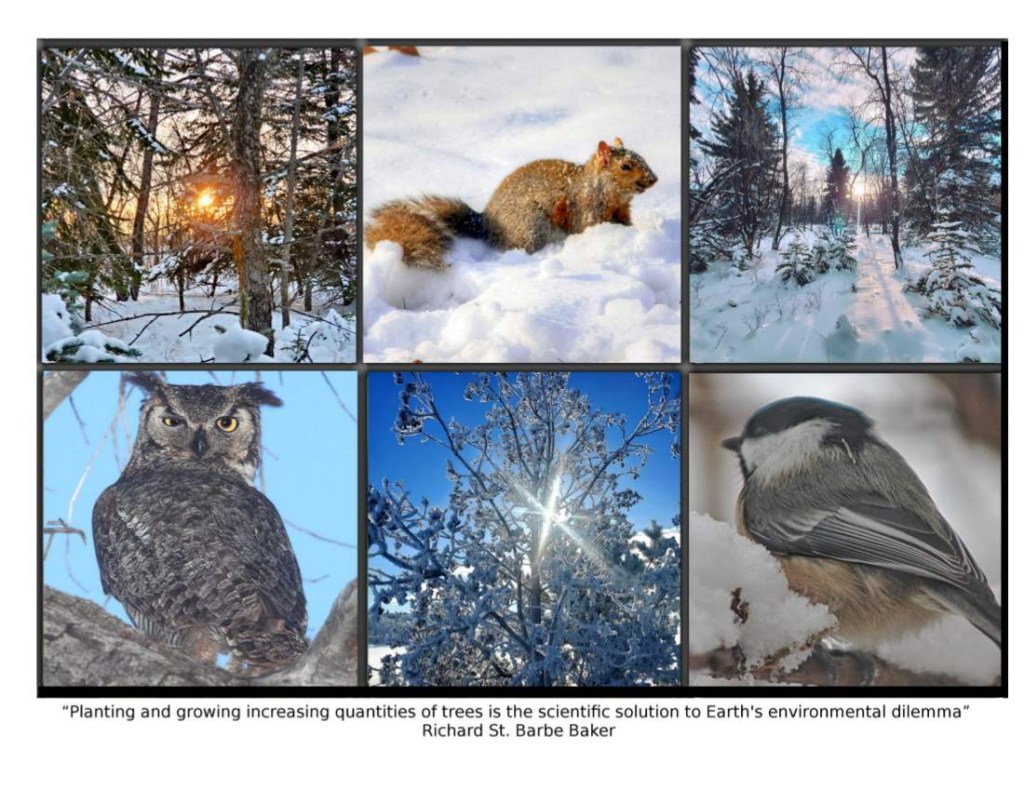
The winter season Landscapes courtesy Vivian Allan. Richard St. Barbe Baker Afforestation Area and George Genereux Urban Regional Park in Saskatoon
1. Weather and Community Impact Research Project:
Activity: Investigate how short- and long-term weather forecasts are used in your community. Create a presentation on how local weather affects daily activities such as choosing food, clothing, and transportation. For example; How do you think year(s) of drought or year(s) of spring flooding, or summer(s) of rains would affect the Saskatoon berry plant, misaskwatomin (nêhiyawak Plains Cree), gozigwaakomin (nakawē Saulteaux), wípazutkȟaŋ / wipazuka(yankton and yanktonai Nakota people), lii pwayr (Michif language of the Métis), L’Amélanchier à feuilles d’aulne ou Aronie fleuri (Français language of the francophone or French speaking people)
Objective: Understand the practical applications of weather forecasting in daily life and its impact on community decisions.
2. Traditional Weather Terms Exploration:
Activity: Research weather-related vocabulary in different languages, including Francophone, Métis, nêhiyawak (Plains Cree), Nakawē Saulteaux, and Yankton Nakota. Create a bilingual weather glossary to display and/or a poster with images.
Objective: Learn about the cultural significance and diversity of weather terms across different languages.
3. Forest Weather Interaction Investigation:
Activity: Conduct a field study in a local forest area to observe how different weather conditions affect trees and the surrounding ecosystem. Document findings and compare them with the observations of Richard St. Barbe Baker and Dr. Paul Schreiber.
Objective: Explore the relationship between weather patterns and forest ecosystems.
4. Long-Term Weather Effects Analysis:
Activity: Research how long-term changes in weather have affected local, national, and global communities. Create a timeline or infographic showing these impacts on different regions.
Objective: Examine the broader effects of weather changes on societies and environments around the world.
5. Organism -plant and animal- Behavior and Weather Patterns Study:
Activity: Observe local organisms and their behaviors in response to changing weather conditions. Compare these observations with the behaviors of organisms mentioned in the story, such as the trembling aspen and dandelion flowers.
Objective: Understand how animals adapt to weather changes and how this knowledge can be used to predict weather patterns.
Related Questions
How do short- and long-term weather forecasts influence daily activities and decisions in your community?
Objective: Explore the practical applications of weather forecasts.
What are some traditional weather terms used in different languages, and how do they reflect cultural perspectives on weather?
Objective: Investigate the diversity and significance of weather-related vocabulary.
In what ways do different weather conditions impact the health and functioning of forest ecosystems, as observed by Richard St. Barbe Baker and Dr. Paul Schreiber?
Objective: Understand the relationship between weather patterns and forest health.
How have long-term changes in weather affected local and global communities, and what are some examples of these impacts?
Objective: Analyze the broader effects of weather changes on societies and environments.
How do the behaviors of local animals in response to weather conditions compare to those described in the story, such as the trembling aspen and dandelion flowers?
Objective: Explore how animal behaviors reflect weather patterns and contribute to our understanding of meteorology.
Richard St. Barbe Baker Afforestation Area is located in Saskatoon, Saskatchewan, Canada north of Cedar Villa Road, within city limits, in the furthest south west area of the city. 52° 06′ 106° 45′
Addresses:
Part SE 23-36-6 – Afforestation Area – 241 Township Road 362-A
Part SE 23-36-6 – SW Off-Leash Recreation Area (Richard St. Barbe Baker Afforestation Area ) – 355 Township Road 362-A
S ½ 22-36-6 Richard St. Barbe Baker Afforestation Area (West of SW OLRA) – 467 Township Road 362-A
NE 21-36-6 “George Genereux” Afforestation Area – 133 Range Road 3063
Wikimapia Map: type in Richard St. Barbe Baker Afforestation Area
Google Maps South West Off Leash area location pin at parking lot
In the fight against climate change, trees are among our strongest allies. Not only do they absorb carbon dioxide from the atmosphere, but they also cool our planet through a process called transpiration. This cooling effect has recently been studied in the Eastern United States, where researchers found that reforestation has significantly cooled the land surface and air temperature, providing a natural solution to the warming climate.
The study, led by Mallory L. Barnes from Indiana University, investigated the impact of reforestation on the climate of the Eastern United States (EUS) during the 20th century. The research team found that forests cool the land surface by 1–2°C annually compared to nearby grasslands and croplands, with the strongest cooling effect during midday in the growing season, when cooling is 2–5°C. Young forests (20–40 years) have the strongest cooling effect on surface temperature. This cooling effect also extends to the near-surface air, with forests reducing midday air temperature by up to 1°C compared to nearby non-forests.
The study’s findings have important implications for climate change mitigation and adaptation. Reforestation in temperate regions, such as the EUS, could provide a complementary set of benefits: mitigating climate change by removing carbon dioxide from the atmosphere, while also helping with adaptation to rising temperatures by cooling surface and air temperatures over large areas.
This research has received widespread attention, including an article by The Guardian, which described the study’s findings as a “stunning feat” in curtailing the soaring temperatures caused by the climate crisis. The recovery of forests in the Eastern United States has helped stall the effects of global heating through transpiration, in which water is drawn up through the roots to the leaves and then released into the air as vapor, slightly cooling the surrounding area.
As we continue to face the impacts of climate change, the importance of trees in mitigating and adapting to these changes cannot be overstated. The Friends of the Saskatoon Afforestation Areas are dedicated to preserving and restoring our forests, recognizing the critical role they play in protecting our planet. Through our efforts, we aim to contribute to a more sustainable and resilient future for all.
“Plant Trees, Save the World: The Ultimate Cooling Solution!”
References: Barnes, M. L., Zhang, Q., Robeson, S. M., Young, L., Burakowski, E. A., Oishi, A. C., Stoy, P. C., Katul, G., & Novick, K. A. (2022). A Century of Reforestation Reduced Anthropogenic Warming in the Eastern United States. Geophysical Research Letters, 49(2), e2021GL097144. https://doi.org/10.1029/2021GL097144
Restoring and preserving the world’s forests are promising natural pathways to mitigate some aspects of climate change. In addition to regulating atmospheric carbon dioxide concentrations, forests modify surface and near-surface air temperatures through biophysical processes. In the eastern United States (EUS), widespread reforestation during the 20th century coincided with an anomalous lack of warming, raising questions about reforestation’s contribution to local cooling and climate mitigation. Using new cross-scale approaches and multiple independent sources of data, we uncovered links between reforestation and the response of both surface and air temperature in the EUS. Ground- and satellite-based observations showed that EUS forests cool the land surface by 1–2°C annually compared to nearby grasslands and croplands, with the strongest cooling effect during midday in the growing season, when cooling is 2–5°C. Young forests (20–40 years) have the strongest cooling effect on surface temperature. Surface cooling extends to the near-surface air, with forests reducing midday air temperature by up to 1°C compared to nearby non-forests. Analyses of historical land cover and air temperature trends showed that the cooling benefits of reforestation extend across the landscape. Locations surrounded by reforestation were up to 1°C cooler than neighboring locations that did not undergo land cover change, and areas dominated by regrowing forests were associated with cooling temperature trends in much of the EUS. Our work indicates reforestation contributed to the historically slow pace of warming in the EUS, underscoring reforestation’s potential as a local climate adaptation strategy in temperate regions.
Various hypotheses have been proposed to explain the observed lack of 20th-century warming in the eastern United States (e.g., Meehl et al., 2012; Z. Pan et al., 2004; Partridge et al., 2018; Tosca et al., 2017). The work here does not identify widespread reforestation as the sole factor causing the EUS warming hole or its trend, but multiple independent data sources suggest it can be an important contributor to this lack of historic regional warming. Beyond that, the study provides robust evidence of local biophysical climate benefits of reforestation in the EUS. The strong and persistent increase in forest cover throughout the region in the 20th century contributed to cooling, which is consistent with observed temperature changes. In addition, the findings demonstrate that reforestation has a consistent cooling effect on both surface and air temperatures, especially during midsummer periods when high temperatures can be most harmful. These findings emphasize the potential for reforestation to provide local climate adaptation benefits in temperate regions such as the EUS, highlighting the importance of biophysical co-benefits of nature-based climate solutions.
The Enigmatic Emergence: Plains Garter Snakes’ Spring Celebration
As winter’s icy grip loosens its hold on the land, and the first signs of spring appear, a remarkable phenomenon takes place in the heart of the prairies. The Plains Garter snakes, guardians of the underground, awaken from their slumber, heralding the arrival of a new season. However, the timing of their grand emergence remains shrouded in mystery, dependent on the capricious whims of weather. Each year, for around 10 glorious days, these serpentine creatures engage in a mesmerizing dance of celebration as they leave their hibernaculum. But predicting the exact moment of this event proves to be an elusive task, leaving nature enthusiasts and curious onlookers eagerly awaiting the spectacle.
Plains Garter Snake Thamnophis radix Harmless to Humans, can co-exist peacefully, and enjoy their helpful presence in the ecosystemPlains Garter Snake Thamnophis radix Harmless to Humans, can co-exist peacefully, and enjoy their helpful presence in the ecosystemPlains Garter Snake Thamnophis radix Harmless to Humans, can co-exist peacefully, and enjoy their helpful presence in the ecosystemPlains Garter Snake Thamnophis radix skin Garter snakes shed their skins in the spring or late summer, typically shedding two to three times a year. Their scales, made of keratin like human fingernails, require shedding as the snake grows, slithering along rocks and debris to facilitate the process. This shedding, or ecdysis, is vital for the snake’s growth and health, as it removes harmful parasites and prevents potential issues like blindness or loss of body parts if the skin doesn’t shed properly.
Plains Garter Snake Thamnophis radix Harmless to Humans, can co-exist peacefully, and enjoy their helpful presence in the ecosystem
A Weather-Dependent Reappearance
The emergence of Plains Garter snakes is intrinsically linked to the weather conditions prevailing during the transition from winter to spring. Clouds, cool temperatures, and rain can all play a role in influencing when these secretive snakes decide to venture above ground. Their appearance is not determined by a fixed calendar date but is rather dictated by the subtle nuances of nature’s rhythms. Mother Nature holds the reins, and her ever-changing moods dictate the timing of this captivating phenomenon.
Unveiling Nature’s Mystery: The Annual Dance of Plains Garter Snakes
Every spring, as temperatures begin to rise, a fascinating phenomenon takes place in the grasslands – the emergence of Plains Garter Snakes (Thamnophis radix). However, the timing of this spectacle remains an enigma, as expert herpetologist Dr. Amanda Bennett PhD from the Canadian Herpetological Society explains;
The exact emergence of these slithering serpents is dependent on various factors. The air temperature outside of their hibernaculum and the temperature gradient within it play crucial roles. These factors can fluctuate from year to year, influenced by the number of snakes inside, snowpack, moisture levels, and overall spring weather conditions.
Dr. Bennett suggests looking back at previous years to predict this year’s emergence. Analyzing weather patterns, the presence of snow, and temperatures in the weeks leading up to the event can provide valuable clues. She also mentions that the blooming of crocuses may not directly affect the snakes but can be an indicator of similar temperature changes, potentially helping as a guide.
Unlike some garter snake species known for communal hibernation, the Plains Garter Snakes may not gather in large numbers at a single site. Therefore, expectations of witnessing a massive spectacle, akin to other snake dens, such as the Red-sided Gartersnakes observed at Narcisse are not typical for Plains Garter Snakes
The idea of observing hatching is an interesting point raised by Dr. Bennett. Gartersnakes, about 70% of snakes lay eggs, while others don’t including the Plains Garter Snakes, who give birth to live young, and emergence from eggs would be attributed to other snake species.
As the emergence of these elusive snakes remains weather-dependent and hard to predict, their appearance adds a touch of mystery and wonder to the awe-inspiring cycles of nature. Mother Nature keeps her secrets well-guarded, and observing the Plains Garter Snakes’ springtime celebration reminds us of the marvels yet to be fully understood.
A Serpentine Celebration
When the right atmospheric conditions align, the Plains Garter snakes awaken from their winter hibernation sites, which lie hidden deep beneath the earth’s surface. As they emerge into the spring air, their dark, glistening bodies form a sinuous procession, weaving through the prairie grasses with grace and purpose. It is during this period that their celebration truly begins.
For one early morning emergence, these charming reptiles engage in a captivating cavort. Undulating movements create a symphony of serpentine choreography, as they explore their surroundings, seeking mates and nourishment. The air is filled with anticipation and delight, as nature enthusiasts and families make their way to witness this annual spectacle.
A Fickle Schedule: Mother’s Day Outing or Delayed Celebration
The Plains Garter snakes’ emergence, though a cherished tradition for many, remains enigmatic and fickle. Some years, they emerge just in time to make Mother’s Day a truly unique and unforgettable experience. Families gather, armed with curiosity and excitement, to celebrate nature’s wonders, sharing moments of joy as they watch the snakes bask in the warmth of the sun.
However, not all springs unfold in this timely fashion. Some years, the snakes decide to extend their underground sojourn, perhaps seeking the comfort of cooler and less turbulent conditions. The result? A delayed emergence that leaves eager spectators awaiting the snakes’ triumphant appearance with bated breath. At times with a particularly chilly spring, naturalists may see their appearance toward the end of May, as if teasing those who anxiously anticipated their arrival.
The Plains Garter Snakes: Guardians of the Grasslands
Beyond their beguiling spring rituals, the Plains Garter snakes play a vital role in the prairie ecosystem. As inconspicuous predators, they help maintain a delicate balance by controlling rodent populations, thereby supporting the biodiversity of the grasslands they call home.
Rest assured, the Plains Garter snake poses no threat to humans in the afforestation areas. Like all their garter snake counterparts, they are almost universally classified as harmless, as supported by Live Science. It is essential to treat them with respect to coexist harmoniously with these captivating organisms in the prairie landscape and wonder at their very existence.
Embracing the Mystery of Nature
While modern technology allows us to predict and plan many aspects of our lives, the emergence of Plains Garter snakes reminds us of nature’s untamed beauty and unpredictability. As they slither and celebrate amidst the prairie flora, these mysterious creatures invite us to embrace the wonder of the natural world and the joy of its unexpected surprises.
So, as spring approaches, we find ourselves peering eagerly at the sky, eagerly awaiting the subtle cues that signal the Plains Garter snakes’ emergence. A celebration like no other, their dance reminds us of the marvels that unfold beyond our control, beckoning us to marvel at the intricate tapestry of life. We are reminded to appreciate the fleeting moments of connection with the wild creatures that inhabit our world and to cherish the mysteries that nature presents.
As the Plains Garter snakes continue their graceful movements, their journey serves as a poignant reminder of the interconnectedness of all living beings. They remind us to observe and respect the delicate balance of ecosystems, for each creature has its place and purpose.
For those fortunate enough to witness their dance, the memories forged in the prairie grasses will forever be etched in their hearts. The sight of these enchanting serpents, the whispers of the wind, and the palpable sense of anticipation will create a lasting bond with the natural world.
In the quest to capture this mesmerizing spectacle on film, challenges arise. Dr. Amanda Bennett, an esteemed herpetologist, offers guidance, suggesting diligent monitoring of the hibernaculum and keen attention to the initial signs of emergence. With a combination of a precise weather forecast and vigilance, there is a glimmer of hope that a film crew may capture the essence of this celebration, immortalizing the Plains Garter snakes’ enchanting dance.
In the pursuit of knowledge, Dr. Bennett shares a valuable resource—an insightful link to a Master’s thesis on Plains Garter snakes in Alberta. This scholarly work sheds light on the natural history of these captivating creatures, drawing parallels between their behavior in different regions.
As the email from Dr. Bennett concludes, it leaves room for further inquiries and curiosity. The intricacies of the Plains Garter snakes’ emergence, their communal dynamics, and the potential for observing hatching remain intriguing mysteries waiting to be unraveled.
With gratitude for the guidance provided, nature enthusiasts and researchers alike embark on their quest to understand and preserve the enchanting legacy of the Plains Garter snakes. Their emergence stands as a testament to the resilience and beauty of the natural world, inspiring a deeper connection with the earth and all its inhabitants.
And so, as the days grow longer and the chill of winter dissipates, we eagerly await the elusive moment when the Plains Garter snakes emerge from their hidden abodes. The stage is set for a celebration like no other, where nature takes center stage and reminds us of the untamed magic that resides in the heart of the prairies.
The Trembling Aspen is also referred to as the Quaking Aspen (Populus tremuloides Michx)
Trembling Aspen grove Richard St. Barbe Baker Afforestation Area Saskatoon, Saskatchewan, CA
Trembling Aspen grove Richard St. Barbe Baker Afforestation Area Saskatoon, Saskatchewan, CA
A ramet is an individual plant belonging to a clone. The botanical term for a sucker is ramet. The clone originates from one ortet. An ortet is the original or mother plant. A clonal colony is also referred to as a genet. A genet is the group of genetically identical individuals, such as plants, fungi, or bacteria, that have grown in a given location, all originating vegetatively, not sexually, from a single ancestor. In plants, an individual in such a population is referred to as a ramet. All plants (ramets) reproduced asexually from a common ancestor (ortet) and have identical genotypes which means it is an exact clone or perfect copy of the original ortet. A genotype is the genetic constitution of an individual organism.
The Trembling Aspen May 25, 2019
Tomáš Herben of the Department of Botany, Faculty of Science, Charles University and at the Institute of Botany, Czech Academy of Science relates rhizomes to clonal growth. Rhizome is from both Latin and Greek root rhizoma meaning “mass of tree roots”, and from the root rhizoun meaning “cause to strike root, root into the ground” and from the Green rhiz meaning “root” and -ome. In botany, rhizome is a horizontal, underground plant stem which is able to produce the shoot and root systems of a new plant. Duana A. Pelzer, also states that “Aspen (Populus tremuloides) dominates the southern treeline in western Canada, has long‐lived below ground connections between mother and daughter ramets, and reproduces vegetatively via resprouting rhizomes.” The Trembling Aspen clone can be called rhizomatous.
The Trembling Aspen May 25, 2019
Scientists, foresters or gardeners can practice vegetative propagation using rooted cuttings, grafting, or tissue culture. In the case of the Trembling Aspen, the original plant is also called the ortet.
The Trembling Aspen root suckers are produced from meristems featured in the cork cambium of the root systems. The Cambium is a layer of tissue between the wood and the bark from the Latin cambium meaning “exchange” and Latin cambiare “change. The cork cambrium, also called a phellogen, produces an outer protective barrier or corky tissue, and an inner phelloderm- a thin, food conducting vascular tissue.
The Trembling Aspen tree bark May 25, 2019
The roots twist, coil and undulate underground. Growing sideways, laterally, they do not reach lower than 40 cm (16 inches) below the surface of the soil and most often stay within 2 to 10 cm (1 to 4 in) from the soil surface.
A meristem is a collection of cells forming plant tissue in the zones where plant growth can take place. These undifferentiated cells (meristematic cells) have the capability for cell division, promoting growth and change. Meristem comes from the Greek root “merizein” which means “to divide” which is the main function of the merismatic cells, to change and divide thus providing new growth for the tree. Differentiated plant cells cannot produce new growth, as they cannot change.
The shoots develop following apical dominance. Apical dominance occurs when the shoot apex inhibits the growth of lateral buds so that the plant may grow vertically upwards towards the light. These shoots however, lie in wait, remaining dormant due to hormones called “Auxin” expressed by the main Trembling Aspen clone. High soil temperature, depletion of carbohydrate food sources, or excess soil moisture may inhibit the formation of suckers. If the Aspen Grove is disturbed, the hormonal balance is upset within the Trembling Aspen grove. There is a decrease in Auxin allowing meristem to develop into buds, then into shoots above ground, finally developing fully producing ramets which can be visibly seen above ground as part of the Trembling Aspen grove. Suckers originate after disturbances such as clearcutting, girdling, tree defoliation or fire.
The Trembling Aspen Dioecious Catkin or Ament May 25, 2019
When the suckers start to form, the parent root changes. The suckering rhizomatous root system has four parts:
The root collar, stump or root cap
The distal parent root
The proximal parent root
The adventitious roots
The root collar is the underground area of the Trembling Aspen sucker where it adjoins the stem. This root collar is the protective layer, so that apical meristem (upward changing new growth) is not affected by rocks, dirt or pathogens (germs.) The sucker roots and the parent roots cannot be distinguished from each other at the root collar, root cap or stump.
The distal parent root grows quite large to accommodate the new sucker formation. The distal parent root fills with juicy sap, and is quite succulent and tender. Distal means situated on the outside edge away from the point of attachment to the parent.
The proximal root which is on the close side of the root collar, or stump formation. Proximal means to be on the nearest to the point of attachment.
The adventitious roots of the newly initiated root suckers reveal growth downwards on the distal end of the roots reaching down to the root cambium of the Trembling Aspen clone or grove. Adventitious means formed accidentally or in an unusual anatomical position. These sucker roots will rely on the parent root for water and nutrients for the first few years. In some cases the suckers rely on the parent roots for more than 20 years. This interplay between parent root and ramet gives the sucker a distinct advantage over Aspen seedlings and other species arising on the forest floor.
Whereas shoots arising inside the meristem are one way to give rise to shoots as above, there are also shoots which arise from the exterior surface of Aspen roots from pre-existing primordia. It is believed that these primordia arise from injury or disturbance to the root system, perhaps by a grazing animal. Primordia comes from the Latin root prīmōrdiālis which is the earliest stage of development of the organism.
Root sprouting is the most commonly seen means of reproduction for the Trembling Aspen. This is referred to as vegetative asexual reproduction.
The Trembling Aspen is also referred to as the Quaking Aspen (Populus tremuloides Michx) Leafy branchlet, Female Ament or catkin, Young Male Ament or catkin, Fruit, Floral Bract.
A Trembling Aspen grove or stand of trees is connected underground by this common root system originating from the ortet. Each Aspen Clone is dioecious. One Aspen stand of trees may be composed of a mosaic of clones with their roots interspersed with each other. Dioecious means that there are distinct male and female organisms, or boy and girl clones. A stamen is the pollen producing male organ of the flower. Pistils arise on the flowers of the female Trembling Aspen stands, and feature a base ovary, a style or pillar which extends from the ovary to the stigma. The stigma is sticky enabling it to capture the pollen from the male Trembling Aspen clone.
The Trembling Aspen Dioecious Catkin or Ament
A Trembling Aspen feature aments, also referred to as catkins. Each catkin bears many tiny dense flowers. The name catkin comes from the German root “kätzchen,” or in Dutch “katteken” meaning kitten. The aments look like the furry tail of a kitten. The catkins can be anywhere from 1 to 8 cm in length (1-1/2” – 3”) The flowers with red stigmas are female flowers. The flowers bearing black, dark anthers are male flowers. The seeds will spread in the wind across distances of 500 meters (1,600 feet) up to several kilometers in heavy winds. The seeds are plumose, which means having many fine filaments or branches which give a feathery appearance. Seedlings have barriers to establishment because early spring rainfall in the semi-arid prairie regions may be followed by a dry period ~ killing newly germinated seedlings.
The Trembling Aspen Dioecious Catkin or Ament
Trembling Aspen will hybridize, or cross with other species of poplar trees (Populus)
The extent of a single Trembling Aspen clone of trees can be determined by several features; morphology, and phenology. These two methods bring in the observation of the leaf size and shape, the character and colour of the bark, and the changes in the season. Morphological analysis is the study of the form and structure of organisms and their specific structural features such as the outward appearance of the shape, structure, colour, pattern and size of the visible aspects. Morphology has as its roots the Greek word, morphé “form” and logos “the study of.” The study of periodic plant and animal life cycle events and how these are influenced by seasonal and interannual variations in climate, as well as habitat factors (such as elevation) is the science referred to as phenology. Phenology means the study of the influence of climate on recurring natural phenomena, and is derived from phainō, which is Greek for “to show, to bring to light, make to appear” and logos.
Taking the observations one step further would be to employ a procedure called digital morphometrics. This digital approach utilizing scanned leaf images carefully tracking the location and statistics of each leaf, and comparing the digital scans of each leaf recording the analysis and observation of the morphology of each digital leaf scan. Specific and unique clone signatures appear under the observation of discernible patterns.
Aspens feature leaf dimorphism which arise from two types of leaflets, featuring short fixed shoot (stem) growth, and long free shoot growth. Short shoots can only produce embroynic early leaves, and are the very first set of leaves which appear in the spring from the winter bud. Embroyo is from the Greek embryon, “a young one”, or “one that grows at an early stage of development.” This is referred to as the spring flush. The first late leaves are also present in the winter bud, but they are arrested primordia or stopped at the beginning. Primordia comes from primus meaning ”first” and ordior “to begin”.
The Trembling Aspen Autumn foliage
Lateral long shoots may produce “early” or “late” leaves. The fact that the long shoots can produce two types of leaves means that they are called heterophyllous stems or shoots. Heterophyllous meaning having two different kinds of leaves on the same stem comes from the Greek root heteros meaning “other”, and phyllon, “leaf”. Late leaves have more variety in their shape than the early leaves. Gland-tipped teeth are featured around the leaf margins on late leaves only.
A Trembling Aspen Clone leaf flush will occur at the same time because clones share the same genotype. Likewise, since the Trembling Aspen genet is all one clone, the entire genet will change colour all at once in the autumn.
Scientists have studied how to differentiate one clone of Trembling Aspens from another, and there is much discussion and preferences stated on the criteria and methods used. Hana Jelı´nkova et al have determined that finding the unique signature morphological traits to be superior to the use of spring phenology for successful analysis.
Spring phenology is more accurate than autumn phenological changes according to Michael Grant, and J.M.I. McGrath et al wrote that the phenology during spring flush showed a variety in morphology depending upon climate change variations. Both first and second leaf flushes, and their characteristics (morphology) were studied by Samuel B. St. Clair’s team. Defoliation of the leaves by insects, may require the trees to flush out a second time, as would drought and temperature extremes such as a late spring frost causing damage and defoliation of the first flush. Defoliation is to destroy or cause widespread loss of leaves.
The Trembling Aspen Leaflets and Dioecious Catkin or Ament May 25, 2019
The size and shape of leaves showed a variety between Trembling Aspen groves depending upon if the trees were in an area of elevated oxygen or Carbon Dioxide. In an interesting data collection, Reimo Lutter et al studied spring and autumn phenology on the Aspen tree from one year to the next, and found that the growing season has been lengthening.
“The timing of bud break and bud set represents events in survival and growth, discernment of these mechanisms and their interactions with climatic variables is a key to understand the consequences of the projected climate change for Populus forests”(Sivadasan, 2017). Leaf phenology has been shifting in response to earlier leaf flushing due to warm winters in relation to climate change state Yongshuo et al. Now then, Joyce G. Greene suggested that it would be wise to look at six different features to seperate Aspen clones;
“Sex
Time of leafing, and of leaf fall
Spring and Autumn leaf colour
Shape and Size of leaves,
Leave serration
Pubescence of dormant buds.”(DeByle, 1985)
Burton V. Barnes developed another set of criteria for distinguishing clones, by season and in order of usefulness.
All Seasons
Bark
1. Texture
Color
Stem Characteristics
Form
Branching habit (angle, length, and internode length)
Susceptibility to injury
Sunscald
Frost crack
Insect and disease injury Miscellaneous
Self-pruning
Galls ~ Plant galls are abnormal swelling outgrowth of plant tissues caused by various parasites, from viruses, fungi and bacteria, to other plants, insects and mites.
Spring
Sex
Time of flowering, and flower characteristics
Time, color, and rate of leaf flushing
Summer
Leaf shape (width : length ratio), color, and size
Shape of leaf blade base
Leaf margin; number, size, and shape of teeth
Shape of leaf tip
Leaf rust infection
Autumn
Leaf color
Time and rate of leaf fall”
(DeByle, 1985)
Note: Pages 149-152 of Norbert V DeByle book features an appendix entitled, Wild Mammals and Birds Found in Aspen and Aspen-Conifer Mixed Forests of Western United States and Adjacent Canada.
Article copyright Julia Adamson
The Trembling Aspen Autumn foliage
Citizen Science:
Use these tools to track the morphology and the phenology of the Trembling Aspens out at Richard St. Barbe Baker Afforestation Area, and in the George Genereux Urban Regional park. There is more than one Trembling Aspen stand in both the afforestation greenspaces.
A great way to engage in citizen science at the Richard St. Barbe Baker Afforestation Area, and in the George Genereux Urban Regional park is to post your images on their facebook pages!
Is it easy or difficult to determine how the Trembling Aspen clone groves are distinct from each other in the Richard St. Barbe Baker Afforestation Area, and in the George Genereux Urban Regional park? Can this interesting experiment to study morphology and phenology in relation to clonal colonies be repeated to determine where one genet begins and another ends? How many female genets are there? How many male genets? How many Trembling Aspen groves are mixed mosaics of both female and male clones?
What is the role of Auxin?
Have you seen Heterophyllous long stem shoots?
What colour is the bark of the Trembling Aspen?
What colour is the Trembling Aspen leaf in the autumn?
What is a catkin?
What time of year would it be best to see a catkin – spring, summer, autumn or winter?
What does dioecious mean?
What is the difference between stoloniferous roots and those which are rhizomatous?
What is an ortet, and what is a ramet? Are they related to each other?
How do Trembling Aspens propagate?
What colour are Trembling Aspen stigmas? What colour are Trembling Aspen anthers?
What does plumose mean?
What does morphology mean?
What is phenology?
Would you prefer to use phenology or morphology to study an Trembling Aspen stand of trees to determine if it is a mosaic, or a male clone or a female clone?
What upsets the Trembling Aspen’s hormonal balance?
How can studying phenology with citizen science lay the methodology for observing the effects of climate change?
Herben, Tomáš (September 2001), Rhizome: a model of clonal grow(PDF), Department of Botany, Faculty of Science, Charles University and at the Institute of Botany, Czech Academy of Science, retrieved May 25, 2019
Schier, George A (May 29, 1972), Origin and Development of Aspen Root Suckers, U.S.D.A. Forest Service. Intermountain and Range Experiment Station, Ogden Utah, retrieved May 25, 2019
Sivadasan, Unnikrishnan; Randriamanana, Tendry; Chenhao, Cao; Virjamo, Virpi; Nybakken, Line; Julkunen‐Tiitto, Riitta (October 7 2017), Effect of climate change on bud phenology of young aspen plants (Populus tremula. L), Ecol Evol. 2017 Oct; 7(19): 7998–8007. Published online 2017 Sep 1. doi: 10.1002/ece3.3352, retrieved May 25, 2019
SPECIES: Populus tremuloides, Fire Effects Information System (FEIS) Index of Species Information Missoula Fire Sciences Laboratory, 2018, December 4, retrieved May 25, 2019
“Children’s experience with the natural world seems to be overlooked to a large extent in research on child development, but it would be interesting to examine children’s early experiences with nature and follow how those experiences in nature and follow how those experiences influence the child’s long-term comfort with and respect for the natural world ~ comfort and respect…Given the power of nature to calm and soothe us in our hurried lives, it also would be interesting to study how a family’s connection to nature influences the general quality of family relationships. Speaking from my own personal experience, my own family’s relationships have been nourished over years through shared experiences in nature ~ from sharing our toddler’s wonder upon turning over a rock and discovering a magnificent bug the size of a mouse, to paddling our old canoe down a nearby creek during the children’s school years, to hiking the mountains.” ~ Martha Farrell Erickson
“Healing the broken bond between children and nature may seem to be an overwhelming, even impossible task. But we must hold the conviction that the direction of this trend can be changed, or at least slowed. The alternative to holding and acting on that belief is unthinkable for human health and for the natural environment. The environmental attachment theory is a good guiding principle: attachment to land is good for child and land.” ~ Richard Louv
Please help protect / enhance your afforestation areas, please contact the Friends of the Saskatoon Afforestation Areas Inc. (e-mail)
Support the afforestation areas with your donation or membership ($20.00/year). Please donate by paypal using the e-mail friendsafforestation AT gmail.com, or by using e-transfers Please and thank you! Your donation and membership is greatly appreciated. Members e-mail your contact information to be kept up to date!
“They recognize that while knowledge about nature is vital; passion is the long-distance fuel for the struggle to save what is left of our natural heritage and ~ through an emerging green urbanism ~ to reconstitute lost land and water. Passion does not arrive on videotape or on a CD; passion is personal. Passion is lifted from the earth itself by the muddy hands of the young; it travels along grass-stained sleeves to the heart. If we are going to save environmentalism and the environment, we must also save an endangered indicator species: the child in nature.”~ Richard Louv.




 Forests of Memory. Forests of Learning. Forests for Life.
